 Plant As Deco
Gardening & Planting Tips
Hydrangea Indoors: The Gift Plant Past Its Bloom
By Plant As Deco · Updated 22 November 2026
The hydrangea sold in full bloom at the grocery store is not a houseplant. It is a greenhouse crop, forced early into flower so it looks perfect on a shelf, and it gives a beautiful few weeks indoors before the long odds begin. This guide keeps the show alive properly while it lasts, shows the three honest choices at the fork, and explains the one realistic path for a plant you want to keep.
Weekend-ready: $12–$40 for the plant, a cachepot and a saucer, one afternoon of setup.
1. What the gift hydrangea actually is
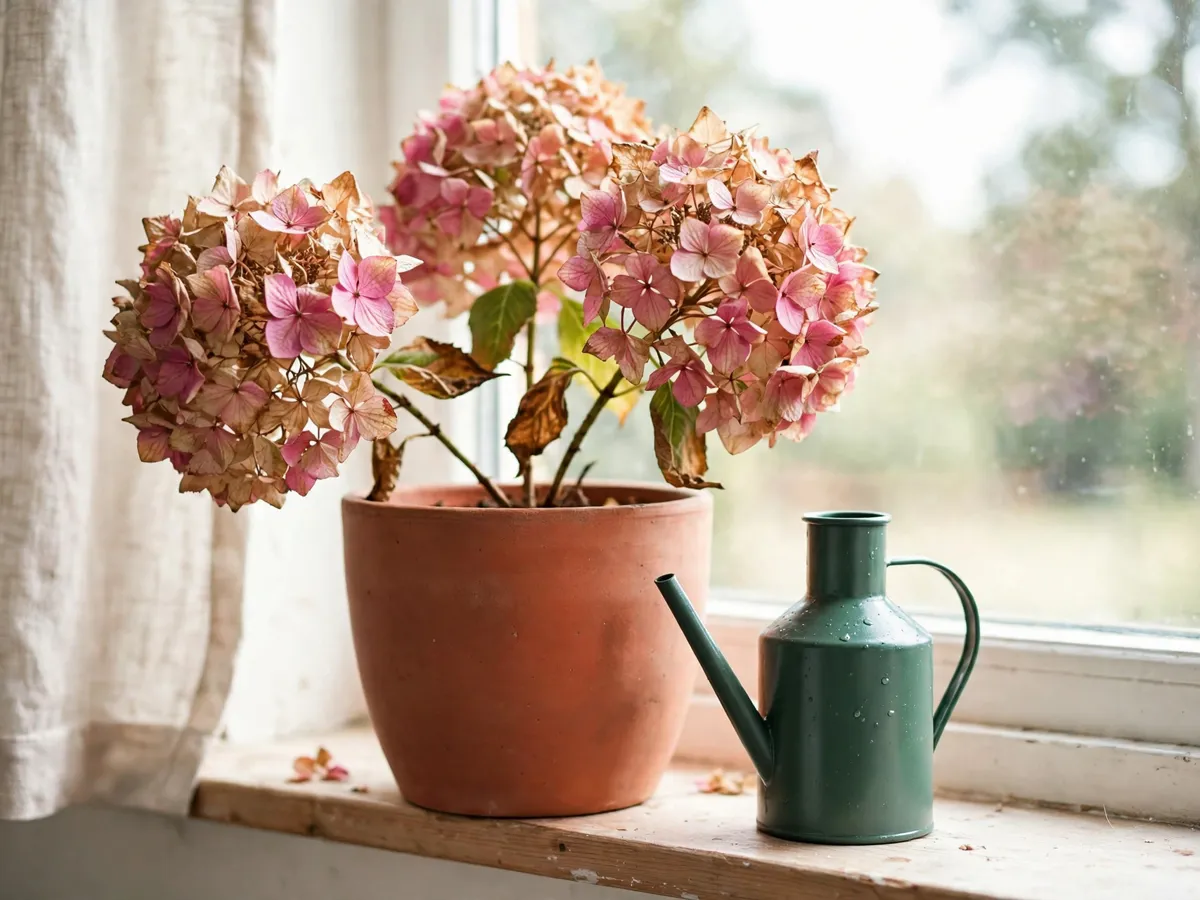
A hydrangea bought in bloom, whether it came from a florist or a grocery shelf, is a florist hydrangea. It is usually a bigleaf type, the same shrub that grows waist-high in gardens, raised in a greenhouse and pushed to flower months ahead of its outdoor schedule. Growers do it with controlled temperatures and day-length tricks, so the plant arrives in full color in late winter or early spring, when nothing in a garden is blooming.
It arrives in a small pot packed with roots, because a densely rooted pot holds a heavy head of blooms upright and ships without tipping. That root crowding is a shipping decision, not a life plan. The plant has spent its whole life in warm, humid, perfectly fed greenhouse air, and it has never met a cold night, a dry breeze, or a winter rest. It is a cut-flower crop with roots attached.
None of this makes it a bad buy. It makes it a temporary one. Treat the plant as what it is, a weeks-long living arrangement with an optional future, and every decision after that gets easier. The basic habits that keep ordinary houseplants alive still apply, but this plant carries a clock the others do not.
Cost: $0 to understand. Time: 5 minutes of reading. The plant is not broken, it is just on a different calendar than your home.
2. The foil wrap is the silent killer
The decorative foil or plastic wrap around the pot looks like packaging. It is a bathtub. Every watering pools in its bottom, and the nursery pot sits in that puddle for days, reabsorbing water through the drainage holes the wrap was supposed to hide. Roots that sit in standing water lose access to air, and within a week or two they begin to rot. The plant is dying before a single bloom fades.
Do one of two things the day the plant arrives. Take the wrap off entirely and set the pot on a proper saucer, or poke several holes in the bottom of the wrap so water drains through. Slide the pot out of the wrap to water at the sink, let it stop dripping, and return it. Water at the sink, in a stream, not a spray, and let the excess run off before the pot goes back on display.
The wrap can stay on as decoration if it drains. What cannot stay is a sealed pool. This single habit kills more gift hydrangeas than any other mistake, and the owner usually never sees it, because the water sits out of sight under the pot.
Cost: $0. Time: 2 minutes, once. Check again after every watering that no water hides under the wrap.
3. Bloom-week care: cool and bright beats warm and dim
While the blooms last, two conditions stretch the show: a cool room and a bright window. A room that holds roughly 60 to 65 degrees Fahrenheit near a bright window keeps flowers opening slowly for three to six weeks. The same plant in a warm room, the kind that sits at 72 or 75 with the heat running, fades in half that time. Warmth speeds everything up, and a bloom is a one-way countdown.
Bright light matters just as much. A dim corner starves the plant while it is paying for those enormous flower heads, and the blooms age to papery early. Give it the brightest spot you have that avoids hot afternoon sun, and keep it out of the direct path of a heating vent or a radiator, which combines warmth with drying air.
Water when the surface of the soil feels dry. A densely potted hydrangea in bloom drinks fast, and in a warm room it may need water every day or two. The rule stays the same as any houseplant: check the surface, water thoroughly, and empty the saucer after ten minutes. A narrow-spout watering bottle helps aim at the soil instead of soaking the leaves and blooms.
Never mist the blooms. Water sitting on petals leaves spots, and in still indoor air it invites botrytis, a gray mold that turns flower heads fuzzy and brown within days. If the air is very dry, water the soil more often instead of spraying anything. The blooms get their water through the plant, not on top of it.
Cost: $0. Time: about 2 minutes a day for the weeks the plant is in bloom. A warm room is the fastest way to shorten the show.
4. The theatrical wilt
A hydrangea in a pot wilts dramatically. Leaves go limp and the whole plant can look dead by late afternoon, then stand back up within an hour of watering. Big leaves, a small rootball and a greenhouse constitution make it one of the most theatrical wilters in the plant world, and this is genuinely useful.
Use the wilt as a teacher, not as a panic signal. A plant that wilts in afternoon warmth and recovers by evening is speaking normally. When the wilt arrives earlier in the day, or the leaves do not fully recover by morning, the plant is asking for more frequent water, or for a cooler spot, or for less root competition.
Be careful with the cure. Wilting invites overwatering, and an owner who waters an already-wet pot every time the leaves droop drowns the roots within weeks. Feel the soil before every watering. If it is still damp and the plant is limp, the problem is heat or crowded roots, not thirst, and more water makes it worse.
Cost: $0. Time: 30 seconds to check the soil before each watering. A wilt that recovers is normal, a wilt that does not is a signal.
5. Light indoors
Indoors, a hydrangea wants bright indirect light with some gentle direct morning sun. An east window that catches the first few hours of soft sun is close to ideal. A few feet back from a bright south or west window works too, as long as the leaves never sit in harsh afternoon sun.
The plant tells you when the light is wrong, in two directions. Too dim, and new stems stretch long and pale, with wide gaps between leaves, growth that leans hard toward the glass. Too much hot sun, and the big leaves scorch, with brown, dry patches appearing in the middle of the leaf where the sun hits hardest.
Adjust by moving the pot, not by feeding more or watering less. Light is the input, and stretched or scorched leaves are both placement problems. If the best window in your home is genuinely dark, this plant is the wrong candidate for it, and a guide to plants that tolerate low light is the honest alternative.
Cost: $0. Time: one move, and a week of watching. Stretching or scorch means move it, not feed it.
6. After the bloom: the three honest choices
When the blooms finally fade, the plant has no secret fourth act indoors. There are three real paths, and choosing among them honestly is the whole skill of keeping a gift hydrangea.
- Treat it as a long arrangement. Keep it watered and cool, enjoy the fading blooms as they turn papery, and compost the plant when the show is over. This is a legitimate, waste-free choice, the same deal you accept with a bouquet, and it is the most honest option for a warm apartment or a dark home.
- Keep it as a green plant. Cut the spent flower heads off, give it a bright cool windowsill and light feeding, and carry it through summer as a leafy shrub. It may not bloom again indoors, and the reasons why are the next section.
- Move it outside. Transition it out in spring, into the ground or a large sheltered pot, and give it the winter rest and seasonal cues it never got. This is the only path with realistic odds of flowers again.
What there is not is a fourth option where the plant blooms on a windowsill indefinitely. An owner chasing that outcome spends a summer watering a plant that slowly thins out. Pick a path early, on purpose, and the plant either serves its purpose or gets a real chance.
Cost: $0. Time: one decision after the blooms fade. Decide before summer, not in the middle of it.
7. Keeping it green indoors, and why it may never rebloom
The green-plant path is worth taking, with open eyes. Cut the spent flower heads back to a healthy pair of leaves, keep the pot on the brightest cool windowsill you have, and feed lightly through the growing months at half strength. Water when the surface dries, and expect the plant to settle into steady leafy growth through summer.
Here is the honest part: most bigleaf hydrangeas set their flower buds in response to shortening days and then weeks of cold, cues a living room never gives. A constant-temperature home with supplemental evening light signals an endless summer, and a plant that believes summer never ends does not prepare flowers for the following year.
A few determined owners report a stray indoor bloom, usually on a plant that spent autumn on a cool, dark, unheated porch. It is the exception, not the plan. Keep the plant indoors if you want a handsome green shrub and you like the experiment. Do not keep it indoors expecting flowers, because almost nobody gets them.
Cost: $5–$8 for a small bottle of liquid feed. Time: the usual 10 minutes a week. Expect leaves, not flowers, from this path.
8. Forcing versus outdoor rest: the logic that decides everything
This is the spine of the whole subject, so it is worth stating plainly. A florist hydrangea was forced. It was raised warm, fed hard, and tricked into bloom on a greenhouse schedule, which means it skipped the experiences its biology is built around: the shortening days of autumn and the sustained cold of winter.
Those are not optional luxuries for a bigleaf hydrangea. They are the signals that tell the plant to stop growing, harden its wood, and set next year's buds. A hydrangea that spent its whole bloom cycle indoors, then summer indoors, then another winter on a warm sill, has never once received those signals. It stays soft, keeps pushing weak growth, and almost never re-blooms. That is why the windowsill plant thins out instead of flowering, and it is the forcing-versus-rest truth in one sentence.
The correction is to let the plant catch up on the calendar it missed. A season outdoors in real weather, especially a real autumn with real cold, gives it a chance to act like a shrub again. Not a sure outcome, the transition itself is stressful and some plants are too exhausted to make it, but it is the only route that leads toward future blooms. Indoors, there is no route at all.
Cost: $0. Time: one season of patience. Forced plants carry a debt, and outdoor rest is how they repay it.
9. Planting it out
If your home has any outdoor ground or a real balcony, spring is the door. Wait until the risk of frost has passed, then move the pot outside into shade, a covered porch or the north side of the building, for a week or two. Then give it gentle morning sun for another week or two. The step-by-step transition is the difference between a plant that adapts and one that scorches in a day, the same hardening-off logic behind starting a balcony garden.
Bigleaf hydrangeas want morning sun and afternoon shade. Choose a spot that gets a few hours of gentle early sun and protection from the hot afternoon, then dig a hole about twice the width of the pot. Loosen the rootball gently before setting it at the same depth it grew in the container, and water deeply. A large outdoor pot works too, at least sixteen inches across, if the ground is not an option, and the container garden layout guide covers grouping pots like this.
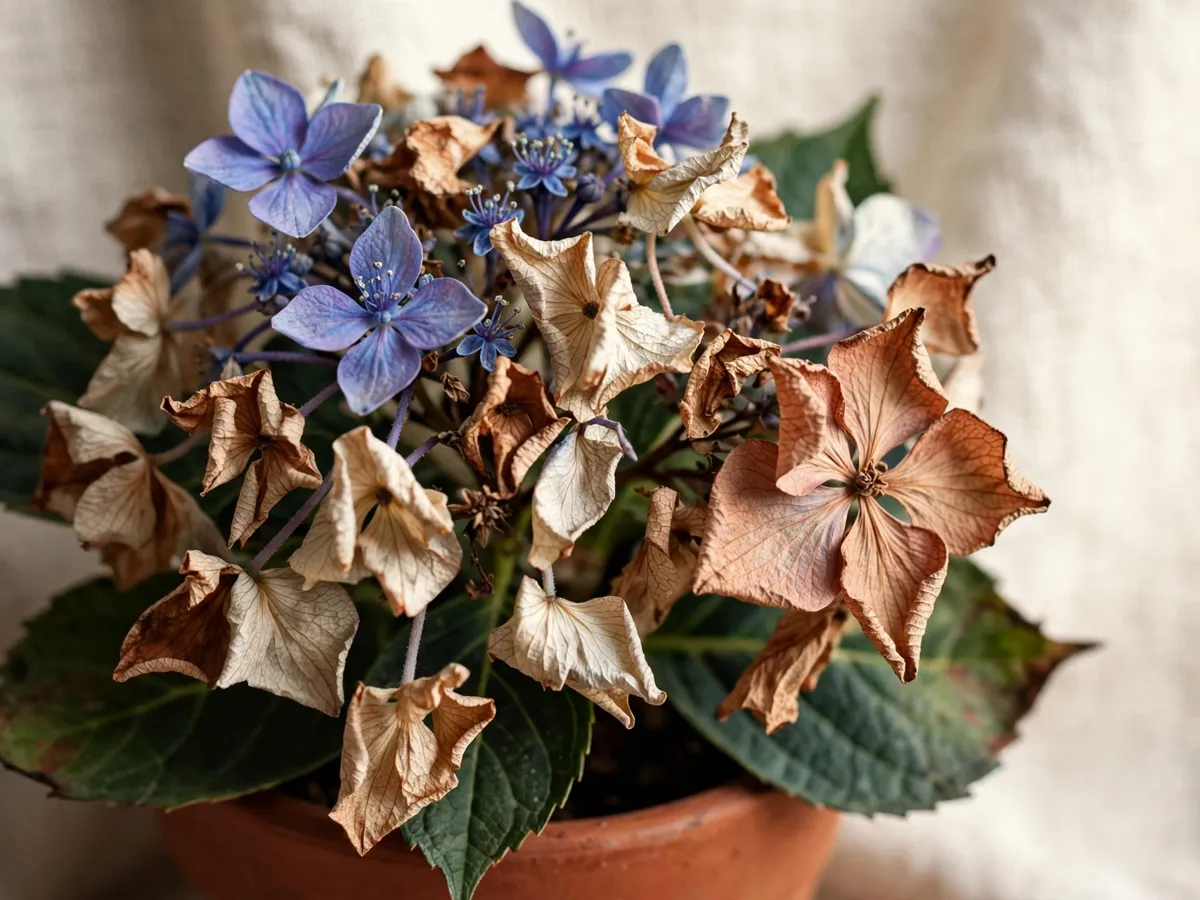
The first summer is all about consistent water. A newly planted hydrangea has a small root system supporting a large leaf area, and letting it dry hard even once in July can cost it. A generous mulch layer holds moisture, and weekly deep watering through the first season matters more than anything else you do for it.
One truth before you expect flowers, stated as a mechanism rather than a zone map. Many bigleaf types set their flower buds in fall on old wood, and those buds sit through winter on exposed stems. In a winter colder than the plant can take, the stems and their buds die back even though the plant survives at the roots and leafs out again in spring. That is why a gift hydrangea planted outdoors sometimes grows healthy leaves for years and never blooms again in a cold spot: the winter is killing the flower buds faster than the plant can carry them. In milder regions the same plant settles in and flowers freely, and rebloom varieties partially work around the problem by budding on new wood too.
Cost: $0–$25 for a bag of compost and mulch. Time: an afternoon to plant, weekly water the first summer. Cold-winter spots may grow leaves but not blooms.
10. The blue-pink chemistry, briefly
The color of many bigleaf hydrangeas depends on the soil. In acidic soil with available aluminum, the blooms lean blue. In alkaline soil where the plant cannot take up aluminum, they lean pink. This is a real, well-understood bit of chemistry, and it is the reason garden hydrangeas shift color slowly after planting.
A potted gift holds whatever color it was forced at, the grower chose the potting mix and the feed, and that color is locked in for the blooms it is carrying. Watering with tap water over months can nudge the soil chemistry one way or the other, which is why an indoor hydrangea sometimes drifts slightly as it ages.
Here is the honest framing: it is chemistry, not a dial you need to turn this week. Nothing you do to a blooming plant changes the blooms already open, and color-shifting additives are a garden project for a settled outdoor plant, not a rescue step for a windowsill one. Enjoy the color it came with.
Cost: $0. Time: 0 minutes. Color is set by soil chemistry, not by anything in a watering can this week.
11. Repot honestly, if you keep it
If the green-plant path is your choice, repot in spring, once, one size up. The gift plant's dense rootball is packed into the smallest pot that shipped it, and a slightly larger home with fresh mix buys a summer of sane watering intervals. Choose a pot with drainage holes, and use a rich, moisture-holding mix, because a hydrangea is a thirsty shrub that resents drying hard.
One size up means two inches wider, not six. A small rootball sitting in a big volume of wet soil is the classic trap: the soil stays saturated for days after each watering, the roots rot in the dark, and the plant declines no matter how carefully the top is watered. The full process, with the rootball check and the after care, lives in the repotting one size up guide.
If you intend to plant it out in spring, skip the repot entirely. The transition outdoors is easier from the rootball it has, and a fresh pot of new soil is one more change a stressed plant does not need. Save the effort for the hole in the ground.
Cost: $10–$18 for a pot and a bag of mix. Time: 20 minutes. Skip it entirely if the plant is headed outdoors.
12. Where it lives in a house with pets
Hydrangeas are toxic to cats and dogs. The leaves and blooms carry cyanogenic glycosides, compounds that release cyanide when chewed. Most cases involve stomach upset, drooling and vomiting after a pet chews foliage, and a large amount of plant material is a genuine veterinary concern. If a pet eats a serious quantity, call a veterinarian.
In practice this is a placement rule. A hydrangea on a dining table or a high shelf, where a cat cannot reach the blooms, is a low-risk arrangement. On a low table beside a couch, with a puppy in the house, it is an invitation. The plant is heavy and dramatic when it topples, so a stable, out-of-reach surface serves both problems at once.
If your home includes a determined leaf-chewer, a genuinely pet-safe plant is the better choice, and the pet-safe houseplants guide lists the ones that carry no toxicity concern.
Cost: $0. Time: one placement decision. Keep the blooms out of reach, and call a vet if a pet eats a large amount.
13. The buying read
When you pick one out, look for a plant with more buds than open blooms. A head that is half unopened buds has weeks of show left, where a fully open head is already at its peak and will age from here. Check the leaves too: firm, deep green foliage means a plant that was watered properly in transit, and soft, yellowing or browning leaves mean one that has already been stressed.
Look at the pot as well. Roots crowding out of the drainage holes are normal for this crop and not a dealbreaker, but water sloshing in the wrap is, because that plant has been sitting in a puddle on the shelf.
And keep the price honest. A grocery hydrangea costs around twelve dollars and delivers several weeks of enormous blooms. Cut flowers of the same size cost more and last a week. Enjoyed as a living arrangement, it is a fair deal, and letting it go at the end is not a failure. Everything after that, the green summer, the move outdoors, is a bonus you chose on purpose, not a debt you owe the plant.
Cost: $10–$15 for the plant. Time: 2 minutes of inspection. More buds than blooms is the single best predictor of a longer show.
14. Your first month, in order
- Day one, fix the wrap. Remove or drain the foil so the pot never sits in pooled water. Set it on a saucer and water at the sink until water runs through.
- Day one, place it. A cool room holding 60 to 65 degrees, near a bright window, out of direct hot afternoon sun and away from heating vents.
- Daily, check the surface. Water when the top of the soil dries. Expect the afternoon wilt, and trust a plant that recovers by evening.
- Weekly, groom. Pull spent petals off the saucer, remove fully brown florets, and keep the blooms dry when you water.
- At fade, choose. Compost it, keep it green with no bloom promises, or start the outdoor transition plan.
- In spring, if outdoors, move in steps. Porch shade for a week or two, morning sun next, then ground or a large pot after frost risk passes.
That is the entire honest program. The plant was forced for a moment, the moment is lovely, and the rest is a choice you make with clear odds. More guides for growing things in small spaces live in the gardening tips collection.
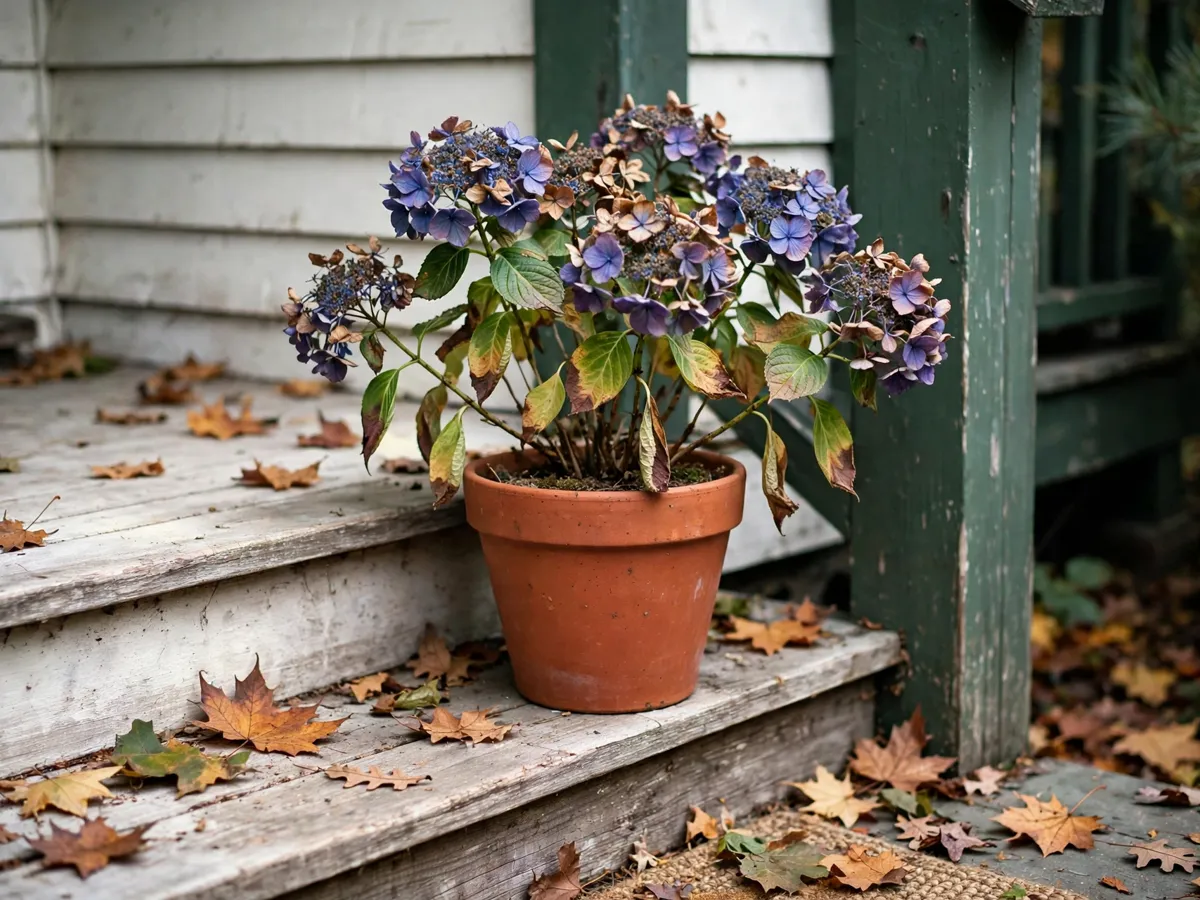
Cost: $0 beyond the plant itself. Time: a few minutes a week. The outdoor path is optional, never a debt.
Common questions
Can a hydrangea survive indoors?
It survives the bloom period easily, weeks of flowers with proper water, cool temperatures and bright light. Past that, the odds get long. Most gift hydrangeas die within months no matter how well they are cared for, because they are forced greenhouse crops, not houseplants. Keeping one alive long-term means growing it as a green plant without blooms, or moving it outdoors.
Will my potted hydrangea bloom again?
Indoors, almost never. Many bigleaf types set buds in response to shortening days followed by weeks of cold, and a living room provides neither. Outdoors in the ground or a large pot, after a real autumn and winter, the odds improve considerably, though in climates colder than the plant's buds can take, it may leaf out each spring without flowering.
Why is my indoor hydrangea wilting every day?
Hydrangeas wilt theatrically and recover theatrically. Big leaves, a dense rootball and a warm room make afternoon droop normal. Water when the soil surface is dry and the plant should stand back up within hours. If the soil is already damp when it wilts, the problem is heat or crowding, not thirst, and more water will make it worse.
What do I do with the foil wrap on the pot?
Remove it or poke drainage holes in the bottom. The wrap traps every watering in a hidden pool, and roots sitting in that water rot within weeks. Water at the sink with the wrap off, let the pot drain fully, then put it back on display.
Can I change my hydrangea from pink to blue?
Not on the blooms it is already carrying. Color in bigleaf hydrangeas comes from soil chemistry, aluminum availability and pH, and the blooms open the color the plant was grown at. Shifts happen slowly in garden soil over seasons, and they are a project for an outdoor plant, not a windowsill rescue step.
Are hydrangeas safe around cats and dogs?
No. Hydrangeas are toxic to both. Leaves and blooms contain cyanogenic glycosides, and chewing them typically causes stomach upset. Keep the plant on a surface pets cannot reach, and call a veterinarian if a pet eats a large amount.
Save these on Pinterest
Pin the foil-wrap fix and the three honest choices after bloom, the two decisions that decide what a gift hydrangea is worth in your home. This guide and the rest of the gardening tips live together there.