 Plant As Deco
Gardening & Planting Tips
Pet Safe Low Light Houseplants: 10 Non Toxic Picks for Shady Rooms
By Plant As Deco · Updated 19 November 2026
You do not have to choose between a green shelf and a pet that will be fine. The overlap between houseplants that tolerate a shady apartment corner and houseplants a curious cat or dog can chew without harm is small, but it is real, and it is about ten species deep. Most of the easy shade staples every beginner list pushes first belong to the unsafe half, which is why the intersection feels impossible until you read the toxicity column properly. Here is that list, plus the two things that decide whether it works in your rooms: how dark your dark actually is, and where you put the pot so the chewing stops.
Weekend-ready: $8–$45 per plant, one pot each, one bag of mix. Start with two pet safe picks and add a third once you know how your animals respond.
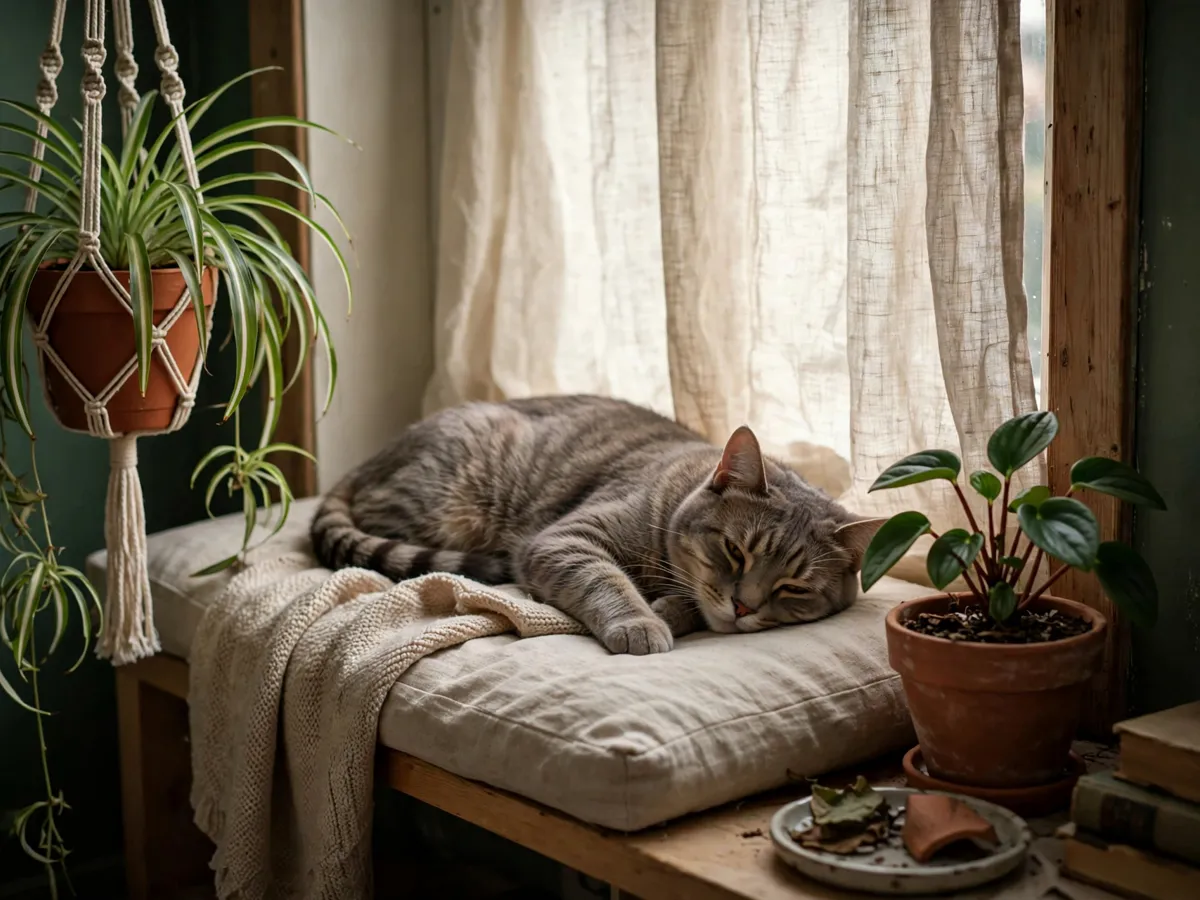
1. What "pet safe" actually means
"Non toxic" describes a likely outcome, not a promise of indifference. The reference most veterinarians and growers lean on is the ASPCA plant list, and its wording is careful: a plant called non-toxic is one for which no serious clinical signs are expected after a typical ingestion. Vomiting can still happen. Fibrous leaves are hard to digest, and a cat that eats a handful of almost anything may bring it back up within the hour.
Read the list in two tiers. Tier one is foliage a pet owner can relax about - spider plant, peperomia, calathea, Boston fern, areca palm, parlor palm, cast iron plant and the prayer plant family. Tier two is everything the list does not cover, which includes many houseplants that are simply untested rather than dangerous. In a home with a heavy chewer, tier one is the entire shop, and every pick below comes from it.
One distinction matters for every pet in the house: toxicity and irritation are not the same problem. Calcium oxalate crystals do not poison an animal - they lodge in mouth and throat tissue and cause burning, drooling and swelling. Non toxic means none of that is expected, which is a better category than "mild," and it is the only category worth shopping.
2. What "low light" means in a real apartment
Low light on a nursery tag almost never means a dark room. It means indirect illumination with no direct beam landing on the leaves for more than an hour - roughly the brightness of a north-facing window, or a spot three to five feet back from an east or west one. The test takes ten seconds and beats any app: stand where the plant will live at midday and try to read a page of a book. If you can without switching a lamp on, non toxic low light indoor plants will hold their leaves there. If you cannot, you are growing something that will quietly shed its way down to a stub.
Two things make a corner darker than it appears. Dark walls, charcoal sofas and heavy drapes swallow the light that would otherwise bounce around a room. And a shelf tucked under a cabinet or behind a stair railing receives a fraction of what an open sill gets. The walkthrough for reading a room this way lives in the low light indoor plants guide, and its rule is that you choose the spot before the species.
Accept one trade up front: less light means less energy, which means less variegation. A solid-green calathea, a plain peperomia and a green-centred spider plant will all outperform their striped cousins in the same shady corner, growing slower with tighter spacing between leaves. Want silver or cream in a genuinely dark room? That is a lamp problem, not a plant problem.
Expect the watering rhythm to change with the light. A houseplant in a bright window may drink every six days; the same plant in a corner may need two weeks, which is why the low light houseplants that need less water list exists. Pet safe plants that tolerate low light are almost never thirsty, and treating them like thirsty plants is how a harmless species ends up rotten.
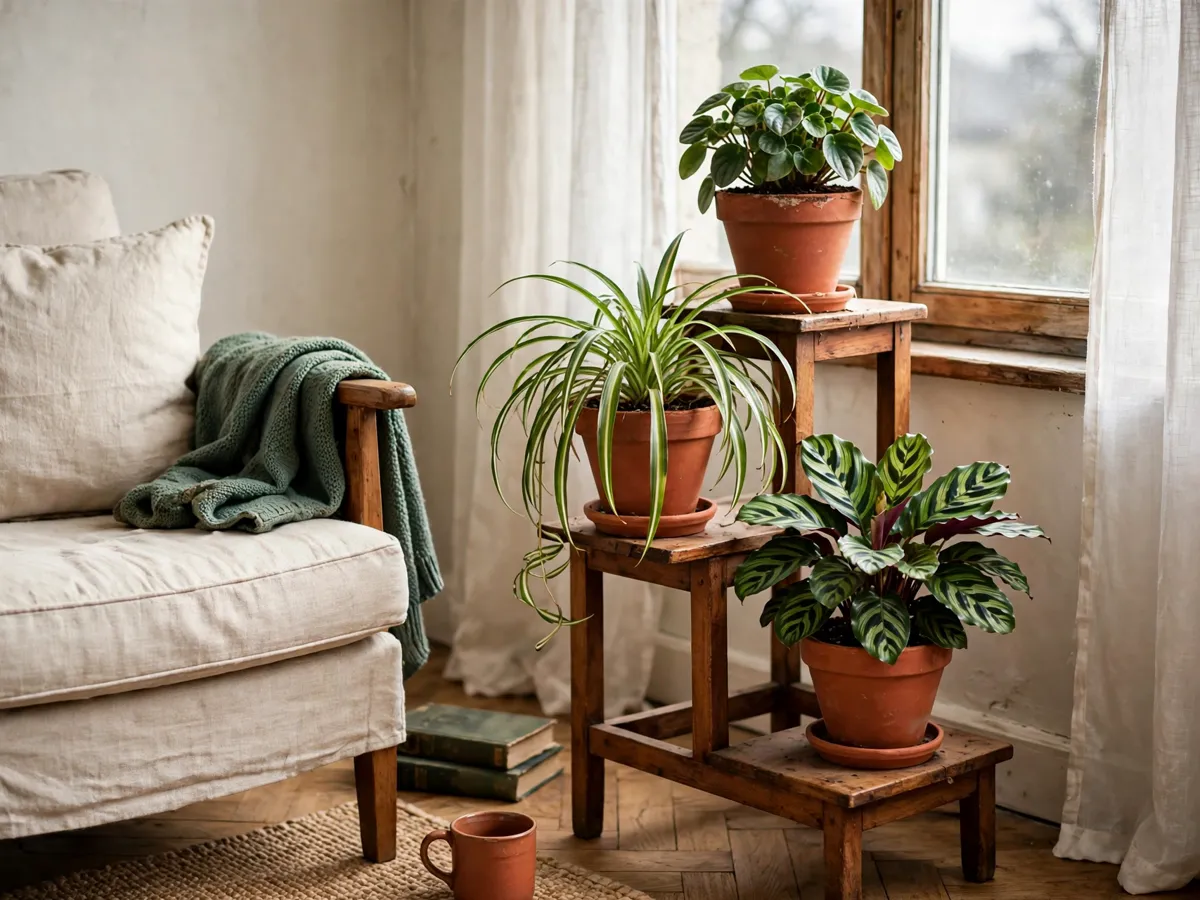
3. Spider plant - the one to buy first
If you take one thing from this page, take this. Spider plant (Chlorophytum comosum) is the workhorse of safe shade plants for cats and dogs: it shrugs off drought, cold drafts, cramped pots and tired soil, and a pet that nibbles it recovers without incident. It throws runners full of baby plantlets that root in a glass of water, which makes a Chlorophytum the cheapest way to fill a shelf over one year.
Give it a pot one size larger than the rootball, with drainage, in a general-purpose houseplant mix, and the brightest indirect spot you own. Water when the top inch of soil is dry to the first knuckle - in a low light corner that is usually every 10 to 14 days in summer and every three weeks in winter. Brown, crispy leaf tips are almost always about water quality rather than light, so if your tap runs hard, use filtered water or rainwater collected off a sill.
Then hang it. A spider plant suspended at head height keeps the arching foliage out of reach while it keeps its shape. Divide the clump in spring when it stops producing runners and you get two or three free plants out of the one you paid for.
4. Calathea - the colour that works in shade
Calathea is what people reach for when they want something interesting in a dark room, and it is genuinely non toxic for cats and dogs. The trade is that it is the fussiest name here. Calathea wants steady moisture, humidity above what a US apartment holds in January, and no direct sun at all - its leaves scorch within an afternoon on a south-facing sill, and the markings burn first.
Make it easy on yourself. Set the pot on a tray of pebbles filled with water just below the drainage holes, so evaporation lifts humidity around the leaves without sitting the roots in a puddle. Keep the mix evenly damp rather than wet-dry-wet, and use filtered water: the crisp brown edges most people blame on low light are usually minerals in tap water. A green-leaved calathea such as 'Freddie' is markedly more forgiving than the white-striped varieties, and in a truly shady flat it is the one that still looks good in month six.
The leaf movement is the reward. Calathea folds its leaves upward at night, and a plant that still does that is comfortable. Leaves that stay flat and drooping are telling you about water or cold; a calathea that stops moving them entirely is telling you about light. Put it on a closed cabinet or a shelf above desk height, because broad leaves are tempting to a pet that bats at things.
5. Boston fern - full, soft, and completely harmless
Ferns are the texture trick for a dim room: no flowers, no variegation, just mass. A Boston fern (Nephrolepis exaltata) is non toxic to cats, dogs and horses, and its fronds are soft enough that a curious pet usually loses interest after one mouthful. It prefers cool, shaded conditions and browns up fast in hot direct sun, which makes a north-facing corner its best seat in the house rather than a compromise.
The catch is water, and it is a real catch. A Boston fern dries out faster than anything else here and tells you within days by dropping pin fronds - the tiny inner foliage, not the long leaves you are looking at. Keep the mix consistently moist, grow the Nephrolepis in a pot with drainage sitting on a saucer you empty after 20 minutes, and set it on a pebble tray through the heating season.
Hang a Boston fern in a bathroom with a window, or in a hallway with an indirect source. A full Boston fern in a ten-inch pot reads as much decor as a much larger tree. Buy it in spring: a Boston fern that drops its fronds over a cold winter is not dead - it regrows from the crown if the roots stay moist.
6. Areca palm - the height pick, and parlor palm as the tougher alternative
When a room needs a vertical element, areca palm (Dypsis lutescens, also sold as golden cane palm) is the safe tall option. It is non toxic, it fills a corner with feathery fronds, and its canopy naturally sits above a cat's jump height. Parlor palm is the smaller, tougher alternative - slower, cheaper, and far more tolerant of a missed watering and a darker spot, which makes it the better first palm in a rental with no bright window.
Areca wants more light than a fern does: an east or west sill behind a sheer curtain, or three feet back from a south window. Water when the top two inches dry out, which in a shady room works out at roughly every 10 to 14 days. Yellow lower fronds on an areca are usually normal ageing; brown crispy tips point at dry air, and a pebble tray fixes more of those than a bigger watering does.
Buy the largest Dypsis your budget allows, because a palm takes years to make height. Repot only when roots circle the drainage holes. Rotate an areca a quarter turn every couple of weeks, since it leans hard toward the light in a low light room.
7. Peperomia - small rooms, shelves, and relentless chewers
Peperomia is the answer for a desk, a windowsill with a railing, or a cat that gets into everything. Its leaves are thick and slightly woody, which most chewers find unsatisfying, and the plant is non toxic regardless. A peperomia stores water in its foliage, so it behaves more like a desert species than a leafy one: let the top inch dry, then water properly, and forget about it for a fortnight without consequence.
It comes in compact shapes that read as decor at six to ten inches tall. 'Red Log' carries burgundy stems, obtusifolia gives you gloss in solid green, and argyreia has the silver watermelon stripe - though the silver forms want the brighter end of low light and fade in a truly dark corner. For a north-facing shelf, choose solid green peperomia and let the pot carry the colour.
Wrinkled, soft or mushy leaves mean a peperomia is sitting too wet, and that is nearly always a watering problem rather than a light one. Stop watering, unpot it, cut away brown stem, and re-root the healthy top. Together with the spider plant, peperomia covers most beginner use cases for a pet in the house: one for the shelf, one for the air.
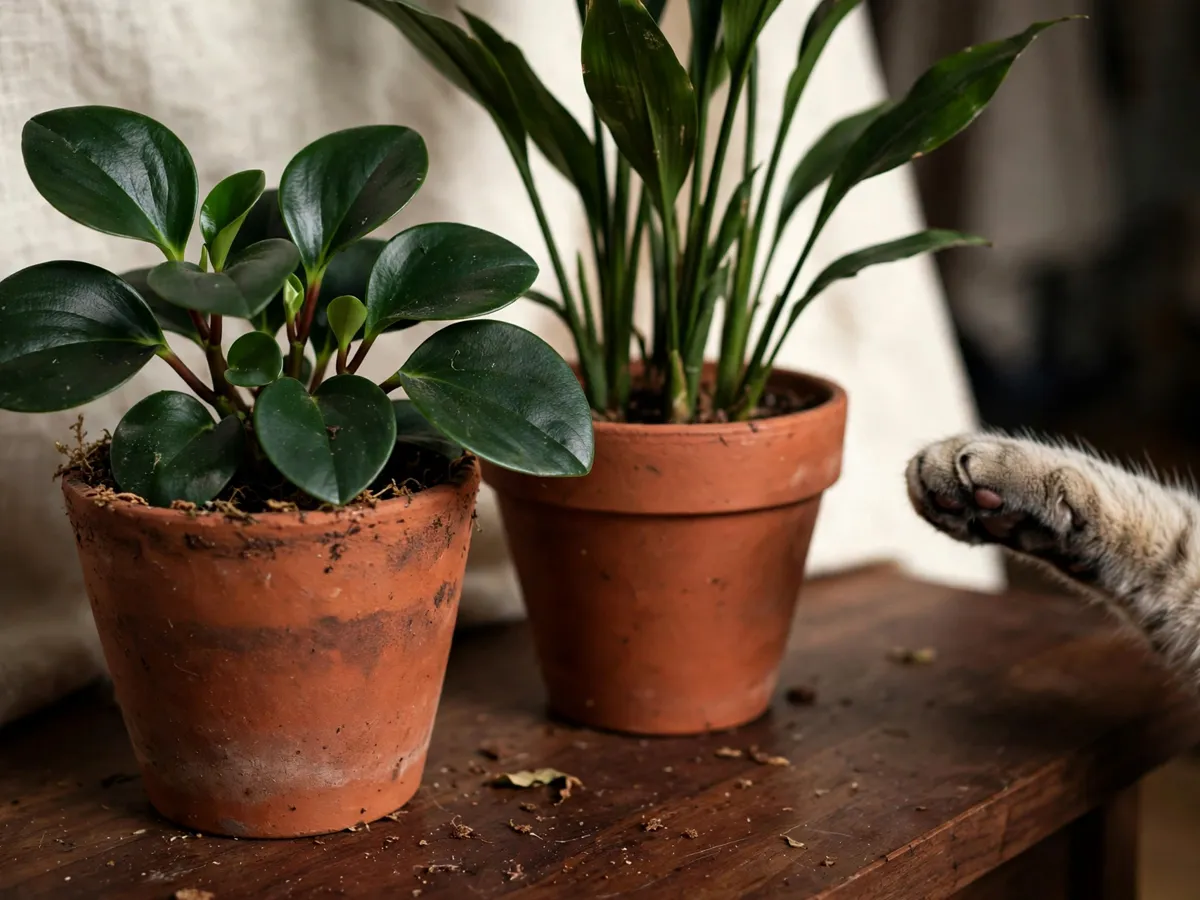
8. The watering and feeding rules that kill fewer plants than light does
More low light pet safe plants die from too much water than from darkness, and the reason is arithmetic rather than care. A plant in a shady corner transpires slowly, so it drinks slowly. The finger test beats any printed schedule: press one inch into the mix, and if it feels cool and clings to your finger, wait. Watering on a fixed Sunday routine is how a north-facing shelf turns to mush by February.
- Every pot has drainage holes, and every saucer gets emptied 20 minutes after watering. Standing water is the fastest way to lose a harmless plant.
- Water until it runs out of the bottom, then stop. Little daily sips keep the roots near the surface and permanently thirsty.
- Cut frequency by roughly a third through the heating season - most of these want a drink every 14 to 21 days in winter, and the full playbook is in the winter houseplant care guide.
- Feed at half strength, every other watering, spring to early autumn only. Never on dry soil, and never on a plant that is shedding.
- Wipe dusty fronds with a damp cloth monthly. Dust blocks the small amount of light a shady leaf is already struggling to use.
Pet friendly houseplants in low light handle dilution generously. A balanced liquid houseplant fertilizer at half the bottle rate is enough for ferns, palms and calathea; spider plants and peperomia grow happily on less. Skip slow-release pellets in a pet household - the granules look like food and sit on the surface where a bat can reach them. If you travel, water the day before you leave and group the pots in the coolest room.
9. Placement: keeping cat safe house plants low light corners can survive
Choosing the right species is half the job; the other half is where it sits. Cats clear a 30-inch dresser without breaking stride, so the practical heights are above 48 inches or fully enclosed. Hanging pots, the top of a bookcase, a cabinet with glass doors, and a shelf with a railing all work. A glass-fronted low cabinet is the single best cheap plant display in a home with a pet, and it turns the humidity-loving species into an untouchable feature.
Dogs are a different problem: they knock rather than climb. Keep pots off the ends of low tables and out of a tail's arc, and choose upright forms with heavy bases for the floor - cast iron plant, a parlor palm in a substantial pot, anything clumping that does not dangle foliage at hip height.
Then give the chewer a legal alternative, because this is the move that ends the damage. A low tray of cat grass, placed on purpose and refreshed every few weeks, absorbs the behaviour that would otherwise land on the good plants. It costs about four dollars against a forty-five dollar palm. If a plant keeps getting destroyed anyway, accept that the placement was the problem and not the pet.
10. What to avoid: the popular low light plants that are not safe
The plants to leave on the shelf are the ones every beginner list recommends first. Pothos is the most common houseplant in the country, it thrives in shade, and it is not pet safe - chewing it releases calcium oxalate crystals that irritate the mouth and throat. It deserves a specific warning rather than a passing mention: pothos is attractive, pothos survives a lot of neglect, and in a home with a heavy chewer it is the one to skip.
Philodendron, peace lily and dieffenbachia sit in the same category - shade-tolerant, irritating, and extremely popular. A monstera in a cat-free room is a fine plant; the same monstera with a kitten is a bet not worth taking. Snake plant and ZZ are widely listed as low light survivors and are only mildly toxic, which still means a vet call after a large bite.
Two traps worth memorising. Sago palm is severely toxic and has nothing in common with the true palms above, so check the botanical name before buying anything with the word "palm" on the label. And lilies, which arrive in bouquets rather than in the plant aisle, are an emergency for cats at any dose, including pollen on a pet's fur.
11. What it costs to build a shady, pet-safe shelf
Pricing is uneven, and the difference between a satisfying corner and a sad one is usually pot size rather than species choice. These are national garden-centre ranges rather than any one retailer.
- Peperomia, four-inch pot: $8–$15. The cheapest way to test whether a shelf works at all.
- Spider plant, six-inch with plantlets: $12–$22, and free from cuttings once you own one.
- Boston fern, ten-inch hanging: $18–$35, and it is the seasonal one - cheap in spring, patchy in autumn.
- Calathea, six-inch: $15–$30. Paying more for a green form usually means spending less on replacements.
- Areca or parlor palm: $22–$45 depending on height. The tall pick, and the one worth buying at maximum size.
- Pots, mix, pebble trays, a hanging hook: $30–$70 for the full set, and roughly half of that is hardware.
Poison free shade houseplants are also the cheapest to keep, because the failure mode is slow and visible. A calathea that is unhappy tells you weeks in advance, and a peperomia you overwatered can be unpotted and re-rooted. Budget $60–$120 for a corner of five plants in decent pots. The one non-plant item worth buying is a cheap hygrometer, around $10, so you know whether a corner sits below 35 percent humidity in winter.
12. Your first weekend, in order
Do these in sequence and you will know within a month whether your home suits a fuller shelf, without betting forty dollars on a plant that was never going to work there.
- Pick the spot first, not the plant. Stand in the corner at midday and run the book test. Write down which rooms pass and which fail.
- Buy two plants: a spider plant for the air and a peperomia for the shelf. Both are on the safe shade plants for cats and dogs shortlist with no caveats attached.
- Repot both into pots with drainage holes using a general-purpose mix. Decorative pots without holes are covers, not planters.
- Set the watering trigger in writing: one inch of dry finger test, plus a phone note for the longer winter interval.
- Move anything your pet has already chewed above 48 inches or behind glass. Do not assume the plant will outgrow the habit.
- Sow a small tray of cat grass on day one, so the legal alternative is ready before the good plants arrive.
- Wait four weeks before adding a third plant. If both are still pushing leaves, add the calathea or the areca; if either is sulking, fix the light or the watering before spending again.
- Photograph the shelf on day one and again on day thirty. The change in the photo is the only reliable feedback a slow-growing houseplant gives you in low light.
Non toxic low light indoor plants are a maintenance bargain, but only once you know how dark your dark actually is. Two cheap plants and four weeks of observation cost less than one wrong palm. Everything in the gardening tips collection assumes you make that measurement first.
Common questions
Are pet safe low light houseplants really safe if my cat keeps chewing them?
Non toxic means serious harm is not expected, not that the plant is food. Cats chew fibrous leaves for texture, and a stomachful of any foliage can bring on a day of vomiting. The five picks here - spider plant, peperomia, calathea, Boston fern, parlor palm - are the ones you can live with, because a chewed leaf ends with a grumpy pet and a trimmed plant. Treat repeated vomiting as a vet conversation regardless of species.
How dark is too dark for a non toxic low light indoor plants shelf?
If you cannot read a book at arm's length in the corner at noon without a lamp, most of these will slowly decline. The tolerance order, toughest first, is peperomia, cast iron plant, spider plant, parlor palm, areca, then calathea and Boston fern last. Anything with variegated or silver leaves needs more light than the green version of the same species.
Do I need a grow light for cat safe house plants in low light corners?
Rarely for the tough picks, and often for the pretty ones. Six hours of indirect window light keeps peperomia, spider plant and parlor palm content through the year. Calathea, ferns and the prayer plant family usually want a small lamp on a timer to hold their colour. A 15 W LED fixture six to eight inches above the shelf, run eight to ten hours a day, is the entire setup.
Why is my dog safe indoor plant in low light dropping leaves after a move?
Almost every plant on this list sulks for two to six weeks after a move, then recovers, and dropping the oldest leaves first is the normal version. Keep the new spot at the same light level as the old one, water only when the top inch is dry, and do not feed a plant that is shedding. Sudden leaf drop is also the standard response to a cold draft.
What is the single easiest plant on the ASPCA non toxic list?
Spider plant. It tolerates a missed week, a cold draft, a small pot and low light, and it makes plantlets you root in a glass of water for free. If you want one houseplant to test whether your home suits plants at all, start there, then add a peperomia for the shelf and a calathea for the colour once the first one is still growing.
Can I keep a pet safe plant in a bedroom with almost no light?
You can keep a peperomia or a parlor palm alive, but expect slow growth and no improvement in looks. A bedroom with one small window is the hardest room in most apartments, and the honest answer is a lamp on a timer or a plant that lives elsewhere.
Save these on Pinterest
Pin the ten-plant shortlist and the first-weekend checklist - the two pages that decide whether a shady corner gets green or gets an emergency vet visit. This guide and the rest of the gardening tips live together there.