 Plant As Deco
Gardening & Planting Tips
Low-Light Houseplants That Need Less Water: A Beginner Short List
By Plant As Deco · Updated 19 November 2026
The hardest part of keeping a houseplant alive is not the light or the water alone - it is the combination. A low-light corner kills a plant that needs sun, and a forgetful waterer kills a plant that needs steady moisture. The six houseplants on this list tolerate both at the same time: they survive a north-facing room and they forgive a skipped watering. That overlap is what makes them the honest beginner short list.
Weekend-ready: $8–$45 per plant, one pot, one bag of soil. The cheapest plant on the list is also the hardest to kill.
1. What low light actually means
A nursery tag that says "low light" is selling a feeling, not a measurement. Low light in a houseplant context means the plant photosynthesizes at the floor of what a windowless room provides - roughly 50 to 250 foot-candles, which is the reading from a north-facing window or a spot 8 to 10 feet back from a south-facing one. A phone light meter app gives a ballpark; a $20 lux meter gives the real number.
The practical test is the shadow test. Hold your hand 12 inches above a sheet of white paper at the spot where the plant will sit, at noon on a bright day. A sharp shadow means medium to high light. A soft, blurry shadow means low light. No visible shadow at all means the spot is too dark for any houseplant, and a grow light is the honest answer rather than a tougher plant.
None of the six plants on this list will thrive in a room with no window. They tolerate low light, which means they survive and hold their leaves, but they do not grow fast in the darkest months. The tradeoff is the point: low light trades growth for survival, and a beginner who wants survival gets it.
If the goal is a fuller look in a dim room, the low-light indoor plants guide covers the broader list, including a few that need more water than the six here. This page narrows to the overlap - low light and less water - because that is where a beginner stops killing plants.
Cost: $0 for the shadow test, $20 for a lux meter if you want numbers. Time: 10 minutes to read the room.
2. The double-tolerance trap
A plant that tolerates low light does not always tolerate dry soil, and the reverse is just as common. The trap is buying a plant for one tolerance and assuming it carries the other. A fern survives low light in a north window but needs soil that stays damp, and drying it out once kills half the fronds. A cactus survives dry soil for a month but needs direct sun, and a low-light corner etiolates it into a pale, stretched shape that never recovers.
The six plants below are the short list where both tolerances overlap. Each one has evolved to store water in a leaf, a stem or a rhizome, and each one photosynthesizes efficiently at low light levels. That is the combination that matters: a water-storage organ plus a low-light metabolism. A plant with only one of those traits fails in the hands of a beginner who skips a watering and keeps the blinds closed.
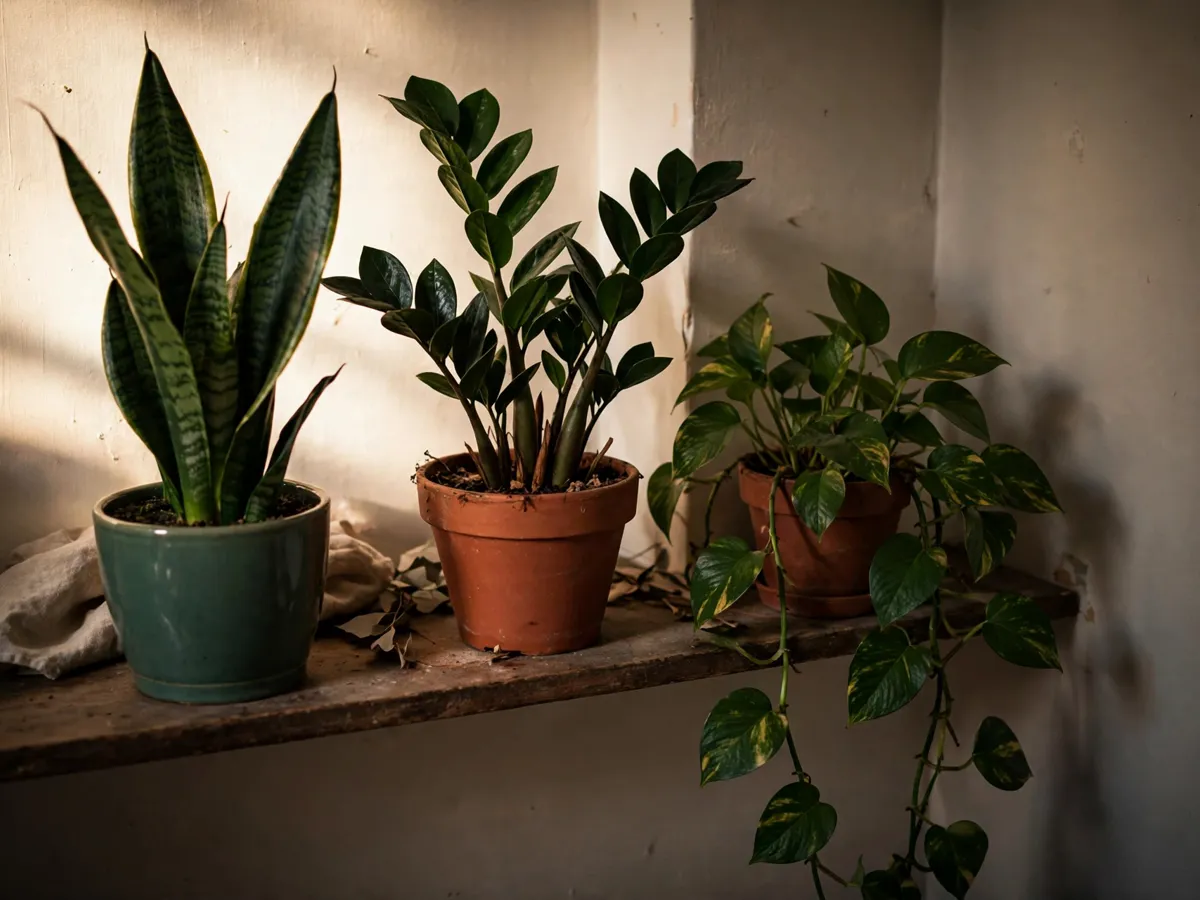
- Snake plant stores water in thick, upright leaves and photosynthesizes at extremely low light. Watering every 3 to 6 weeks is enough.
- ZZ plant stores water in a potato-like rhizome below the soil and tolerates the darkest corners of a room. Watering every 3 to 4 weeks.
- Pothos stores water in its trailing stems and forgives both low light and dry spells, though it tells you it is thirsty by drooping before it dies. Watering every 1 to 2 weeks.
- Cast-iron plant lives up to the name in low light and handles dry soil between waterings. Watering every 2 to 3 weeks.
- Aglaonema carries patterned leaves that brighten a dim corner and a stem that holds water through a missed week. Watering every 1 to 2 weeks.
A plant that droops and recovers is forgiving, and a plant that stays rigid until it is dead is not. Pothos droops at 9 days dry and stands back up within 3 hours of watering, which is the best teaching plant for a beginner learning to read a plant's signals. Snake plants never droop - they soften at the base and fall over weeks after the point of no return, so water them on a schedule rather than waiting for a signal.
Cost: $0 to know the trap. Time: 5 minutes to match the plant to the room and the waterer.
3. Snake plant (Sansevieria)
The snake plant is the default answer to "what plant survives my apartment" for a reason. Its thick, upright leaves store weeks of water, its root system is shallow and forgiving, and it photosynthesizes at light levels that kill most other houseplants. A 4-inch pot costs $8 to $12 at a big-box garden center, and the plant reaches 2 to 4 feet tall within three years even in low light.
- Light: tolerates a north window or a corner 6 to 8 feet from any window. Direct sun is fine but not required.
- Water: every 3 to 6 weeks in low light, every 2 to 3 weeks in brighter light. Let the soil dry completely to the bottom of the pot before the next watering.
- Soil: a cactus or succulent mix, or a standard potting mix cut 1:1 with perlite. Heavy garden soil holds too much water and the roots rot.
- Pot: a pot with a drainage hole, 1 inch wider than the root ball. Snake plants actually prefer being slightly root-bound, so resist the urge to up-pot early.
The snake plant's weakness is overwatering. A snake plant watered weekly in low light rots at the base within two months, and the leaves go soft and smell sweet before they fall. The fix is a schedule: mark the watering date on the pot and add three weeks to it every time. A beginner who waters a snake plant on a calendar rather than on a feeling keeps it for years.
Cost: $8–$25 for a 4-to-6-inch pot. Time: 5 minutes of care per month.
4. ZZ plant (Zamioculcas zamiifolia)
The ZZ plant is the snake plant's quieter cousin - same water-storing trick, same low-light tolerance, waxy dark-green leaves on arching stems instead of upright swords. The water storage lives in a rhizome that looks like a small potato just below the soil surface, and that rhizome is the reason a ZZ plant survives a month of neglect.
- Light: the darkest corner of a room, a north window, or under a fluorescent office light. The ZZ plant is the one to choose when no other plant survives.
- Water: every 3 to 4 weeks in low light. The rhizome holds enough water for two weeks on its own, so a missed watering does nothing.
- Soil: same as the snake plant - cactus mix or potting mix cut with perlite. The ZZ's rhizome rots in standing water faster than a snake plant's roots.
- Pot: a tight pot with drainage, 1 inch wider than the root ball. The ZZ grows slowly, and an oversized pot holds too much wet soil around the rhizome.
The ZZ plant grows at a pace that frustrates an impatient buyer. A new stem emerges every 2 to 4 months in low light, and the plant reaches 2 to 3 feet over several years. The payoff is a plant that looks the same in month 12 as it did in month 1, which is exactly what a low-maintenance room wants.
Cost: $15–$35 for a 6-inch pot. Time: 5 minutes of care per month.
5. Pothos (Epipremnum aureum)
Pothos is the trailing plant on this list, and it earns its place because it is the only one that communicates. A pothos that needs water droops - the leaves go soft and the vines hang lower - and it recovers within hours of watering. That feedback loop teaches a beginner to read a plant, and the lesson transfers to every other houseplant after it.
- Light: low to medium. A north window is ideal, a south window 6 feet back works. Direct sun burns the variegated varieties.
- Water: every 1 to 2 weeks. Wait until the top 2 inches of soil are dry, then water until it runs from the drainage hole. The droop signal appears at about day 10 in low light.
- Soil: standard potting mix. Pothos is not picky about drainage the way a snake plant is, but it still needs a hole in the pot.
- Pot: a pot 1 to 2 inches wider than the root ball, with drainage. Pothos fills a pot quickly and benefits from repotting every 12 to 18 months - the repotting guide walks through the one-size-up rule.
The trailing habit makes pothos the plant that changes a room. A 6-inch pot on a shelf sends vines 3 to 6 feet over a year, and the plant clips easily onto a wall hook or drapes over the edge of a bookcase. A golden pothos stays green in low light; a marble queen pothos keeps its white variegation only in brighter light, so choose the variety by the room, not by the photo.
Cost: $10–$20 for a 6-inch pot. Time: 10 minutes of care per week.
6. Cast-iron plant (Aspidistra elatior)
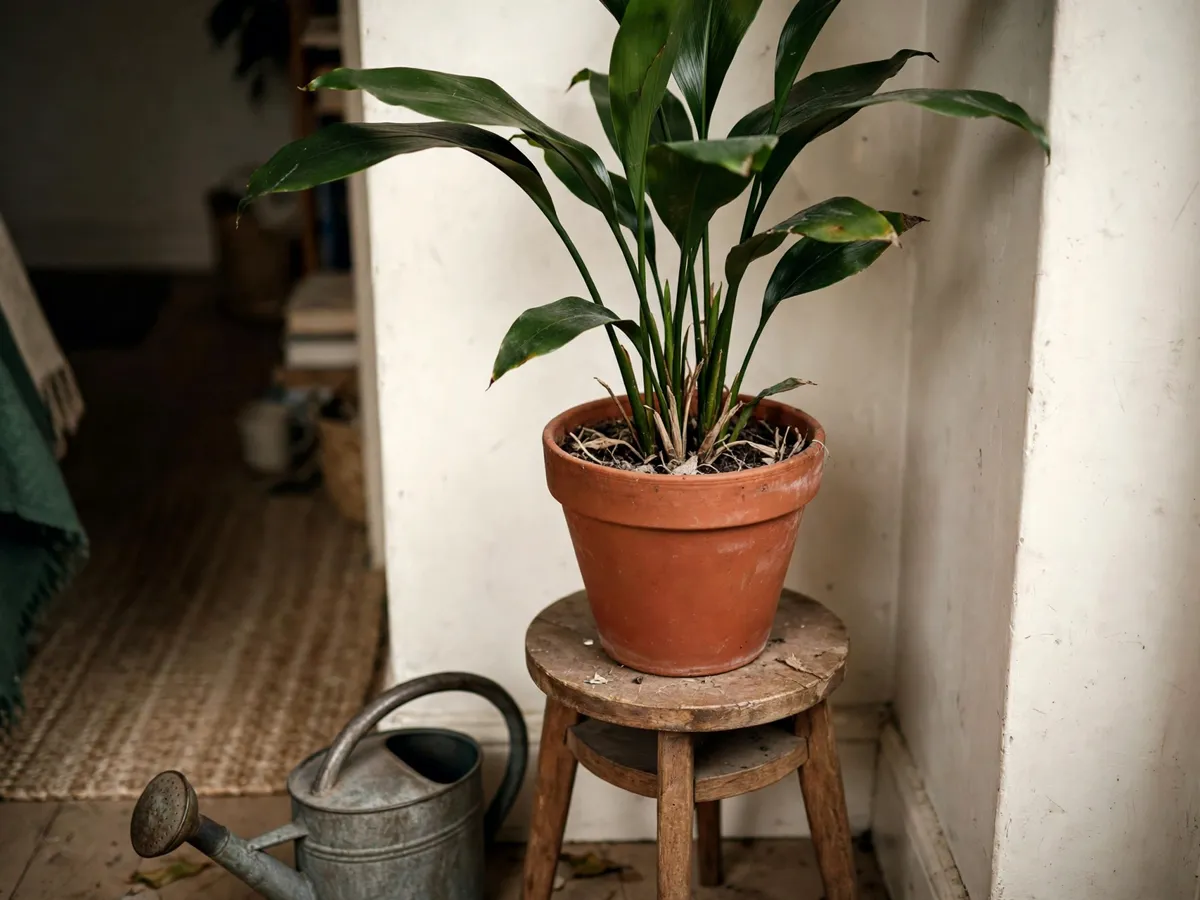
The cast-iron plant earned its name in Victorian parlors heated by coal and lit by gas - rooms darker and drier than any modern apartment. It survives low light, dry air, dry soil and general neglect, and it does it with wide, dark-green leaves that arch from short stems at the soil line. The cast-iron is the slowest grower on this list, which means it sits where you put it for years without outgrowing the spot.
- Light: low to medium. A north window or a corner away from any window. Direct sun scorches the leaves.
- Water: every 2 to 3 weeks. Let the top half of the soil dry between waterings. The cast-iron tolerates dry soil better than the plants above it on this list, but it does not store water in a visible organ, so the schedule is the signal.
- Soil: standard potting mix with a handful of perlite. The roots are tough and forgive a dense mix better than a snake plant.
- Pot: a heavy pot, because the cast-iron gets top-heavy as it grows. Terra-cotta is ideal - the weight and the breathability both help.
The cast-iron plant is the one on this list that looks least like a "houseplant" and most like a piece of furniture. Its broad leaves dust easily with a damp cloth, and a monthly wipe keeps the green deep. The plant rarely needs repotting - a cast-iron in a 10-inch pot stays in that pot for 5 years or more, and moving it up a size is a once-in-a-decade event.
Cost: $15–$35 for a 6-to-8-inch pot. Time: 5 minutes of care per month.
7. Aglaonema (Chinese evergreen)
Aglaonema is the plant on this list that brings color to a dark corner. The patterned leaves carry silver, pink or red depending on the variety, and those patterns hold in lower light than any other variegated houseplant. The stem is thick and holds water between waterings, and the plant forgives a beginner who forgets a week.
- Light: low to medium. The green varieties tolerate the darkest spots; the pink and red varieties hold their color best in medium light, so choose the variety by the room's brightness.
- Water: every 1 to 2 weeks. Let the top 2 inches of soil dry. The stem holds water for a week of neglect, but the leaf tips brown if the soil goes bone-dry for longer.
- Soil: standard potting mix. Aglaonema is one of the few plants on this list that tolerates a heavier mix, which makes it the right choice for a beginner whose potting soil is whatever the store had on the shelf.
- Pot: a pot 1 inch wider than the root ball, with drainage. The aglaonema grows faster than the snake plant or the cast-iron, so plan to repot every 18 to 24 months.
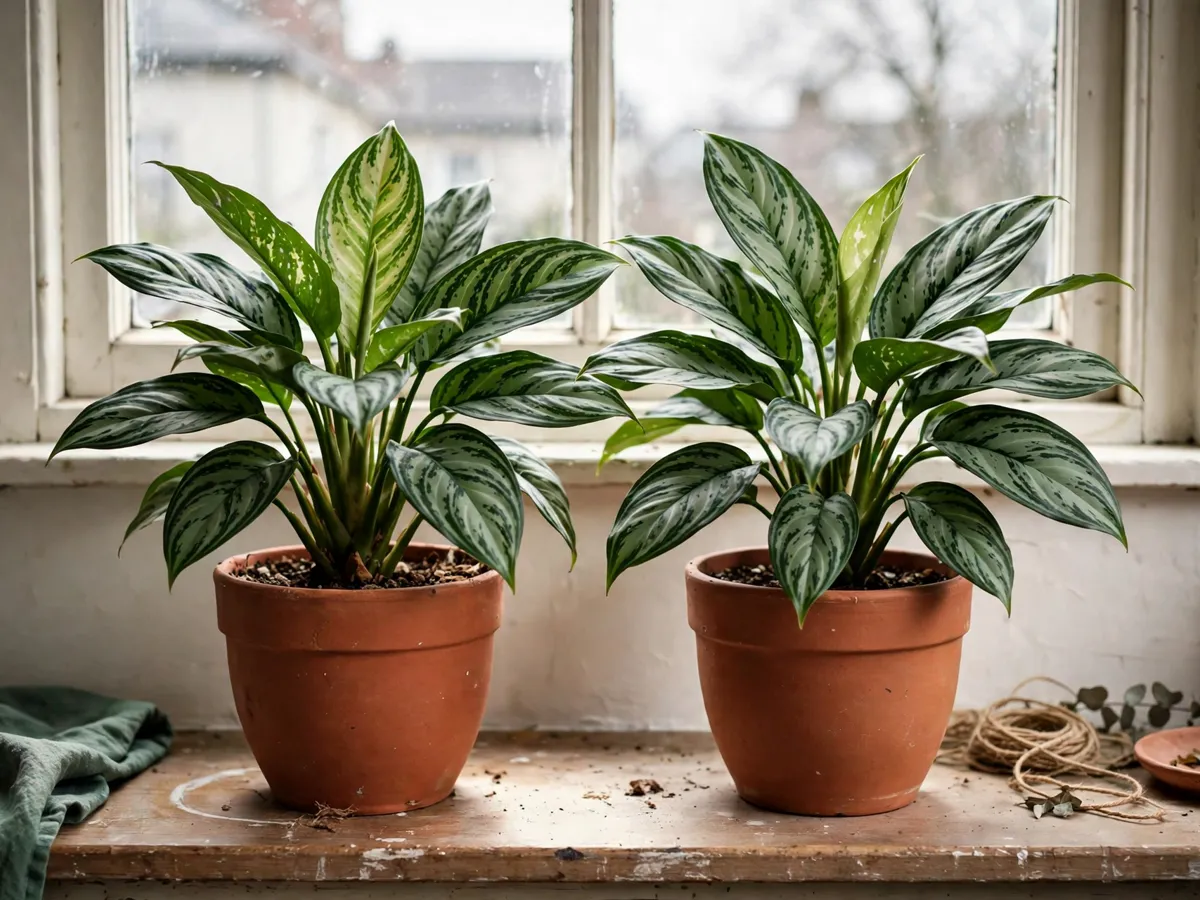
The tip-browning is the signal to watch. An aglaonema with crisp brown leaf tips is telling you the air is too dry or the soil went too long between waterings. Neither is fatal - trim the brown tips with clean scissors and adjust the schedule. A winter houseplant care routine handles the dry-air side, which is the harder one to fix.
Cost: $15–$45 for a 6-to-8-inch pot. Time: 10 minutes of care per week.
8. How to water less without killing the plant
Watering less is not about ignoring the plant. It is about changing the soil, the pot and the schedule so the plant goes longer between waterings by design rather than by neglect. Four changes cut a watering schedule in half:
- Cut the soil with drainage. A standard potting mix straight from the bag holds water for 7 to 10 days. The same mix cut 1:1 with perlite drains in 3 to 5 days, which halves the watering frequency without starving the roots.
- Use a pot one size smaller. A plant in a pot two sizes too large sits in wet soil for a week after each watering. One size up from the root ball dries in days, not weeks.
- Water deeply, not often. A cup of water every few days keeps the top wet and the bottom dry. A full soak until water runs from the drainage hole, every 2 to 3 weeks, wets the entire root ball and then lets it dry completely.
- Check with a finger, not a schedule. Push a finger 2 inches into the soil. If it feels dry at that depth, water. If it feels cool or damp, wait. The schedule is the fallback, not the rule.
The deep-soak rule is the one that matters most. A plant watered deeply every 2 weeks develops roots that reach the bottom of the pot, where the soil stays damp longest. A plant watered shallowly every 4 days develops roots only at the surface, where the soil dries first, and those roots die in the first missed watering.
Cost: $5 for a bag of perlite. Time: 2 minutes per watering with the finger test.
9. What not to buy for a low-light, low-water room
- Succulents and cacti. They survive dry soil but they need direct sun. A succulent in a low-light corner stretches into a pale, leggy shape within weeks, and it never recovers its compact form. A grow light fixes this, but at that point the "low light" advantage is gone.
- Ferns. They tolerate low light but they need consistently moist soil and humid air. A fern in a dry apartment with a forgetful waterer browns within two weeks and dies within a month. The cast-iron plant gives the same lush-green look without the moisture demand.
- Calathea and prayer plants. Beautiful leaves, demanding plants. They need filtered water (not tap, if the tap is hard), high humidity and soil that stays damp but not wet. A beginner who chooses a calathea for a dim corner loses it to crispy leaf edges within a month.
- Peace lily. It survives low light and it tells you when it is thirsty (dramatic droop), but it needs more water than the six on this list - every 5 to 7 days, not every 2 to 3 weeks. A peace lily is a fine plant; it is just not a low-water plant.
- Herbs. Basil, mint and rosemary need a sunny windowsill and daily checking. They are outdoor plants brought inside for a season, not houseplants, and a low-light corner kills them in days.
Cost: $0 to skip. Time: 2 minutes that save $30 in dead plants.
10. What it costs, honestly
Big-box garden center prices in a mid-size US market, 2026. The snake plant is the cheapest entry, the aglaonema is the most expensive, and the rest land in between:
- Snake plant - $8 to $25. A 4-inch pot is $8, a 6-inch is $15, a mature 10-inch floor plant is $25. The cheapest plant on the list.
- ZZ plant - $15 to $35. A 6-inch is $15, an 8-inch is $25 to $35. Slightly more than the snake plant for the same size.
- Pothos - $10 to $20. A 6-inch hanging pot is $12. The trailing growth means a small pot fills a shelf within a year.
- Cast-iron plant - $15 to $35. A 6-inch is $20, an 8-inch is $30. Rarely found at big-box stores; a local nursery or an online order is the usual source.
- Aglaonema - $15 to $45. A 6-inch green variety is $15, a pink or red variety in an 8-inch pot is $35 to $45. The color costs more.
- Shared supplies - $15 to $25. A bag of cactus soil $8, a bag of perlite $5, a terra-cotta pot with a drainage hole $5 to $12. Buy once, use across all six.
One plant plus supplies runs $23 to $50. Two plants plus shared supplies run $35 to $70. The full six-plant collection, if a room is large enough to hold them, runs $95 to $185 plus the one-time supply purchase. A beginner who starts with a snake plant and a pothos spends $25 and learns both watering styles - the schedule method and the signal method - in the first month.
Realistic all-in for the first plant and supplies: $25–$45. Time: one trip to the garden center.
The first-plant checklist
- Room read with the shadow test, and the spot confirmed as low light rather than no light.
- Plant chosen from the six above, matched to the spot and to the waterer's habit - a schedule waterer picks the snake plant or the ZZ, a signal-reader picks the pothos.
- Pot has a drainage hole, and it is 1 inch wider than the root ball - not two sizes up.
- Soil is cactus mix or standard mix cut with perlite, straight from the bag, never garden soil from the yard.
- Watering date written on the pot or on a phone reminder, three weeks out for the snake plant and the ZZ, two weeks for the rest.
- Finger test adopted as the real check - the schedule is the fallback, the finger is the rule.
- A spot in the gardening tips collection saved for the day the first plant survives and the second one is ready.
Cost: $0 to check. Time: 10 minutes before the garden center trip.
Common questions
How often should I water a low-light houseplant?
Every 2 to 4 weeks for the snake plant and the ZZ, every 1 to 2 weeks for the pothos, the cast-iron and the aglaonema. The rule is the finger test: push 2 inches into the soil and water only when it feels dry at that depth. A plant in low light uses water slowly, so the soil stays wet longer than it would in a bright window, and watering on a fixed weekly schedule is the most common way a beginner kills these plants.
Can these plants survive in a bathroom with no window?
A snake plant or a ZZ plant survives a windowless bathroom for 3 to 6 months, then the leaves slowly thin and the plant stops growing. The honest answer for a windowless room is a grow light, even a cheap LED bulb in a desk lamp pointed at the plant for 8 hours a day. The six plants on this list tolerate low light, but a room with zero natural light is below the floor they evolved for.
Are these plants safe around pets?
Three of the six - the snake plant, the ZZ plant and the pothos - contain calcium oxalates that are mildly toxic to cats and dogs if chewed. The cast-iron plant and the aglaonema are in the same boat, though the cast-iron is listed as non-toxic by some sources. A pet that chews houseplants is a separate problem from the plant's light and water needs, and the answer is either a high shelf the pet cannot reach or a plant known to be safe - a spider plant or a parlour palm, neither of which is on this list because both need more water than the six here.
Do I need to fertilize these plants?
Rarely, and only in the growing season. A low-light houseplant grows slowly, which means it uses nutrients slowly. A diluted balanced fertilizer once in spring and once in midsummer is enough for the snake plant and the ZZ. Skip it entirely from November through February, when the plant is dormant and the roots cannot use it - unused salts build up in the soil and burn the leaf tips.
Which plant should I buy first?
A pothos. It is $12, it grows fast enough to feel rewarding, and its droop signal teaches a beginner to read a plant within the first month. Build the habit on the pothos, then add the snake plant for the corner the pothos does not reach.
Save these on Pinterest
Pin the six-plant comparison and the first-plant checklist - the two pages that save $30 in dead plants and a month of second-guessing. This guide and the rest of the gardening tips live together there.