 Plant As Deco
Gardening & Planting Tips
Umbrella Plant Care: Light, Watering and the Branching Cut
By Plant As Deco · Updated 22 November 2026
The umbrella plant (most people call it schefflera) is one of the most forgiving tree-shaped houseplants you can own. It shrugs off a dim corner, a missed watering and dry winter air far better than a ficus. Its two real failure modes sit at opposite ends: too much kindness, which means soil that stays wet, and a corner with just enough light to survive but not enough to look good. This guide covers reading the plant between those two poles, plus the one pruning cut that turns a bare stem into a full silhouette.
Weekend-ready: $25–$60 for the plant, a terracotta pot and a saucer, one afternoon of setup.
1. The forgiving tree, honestly
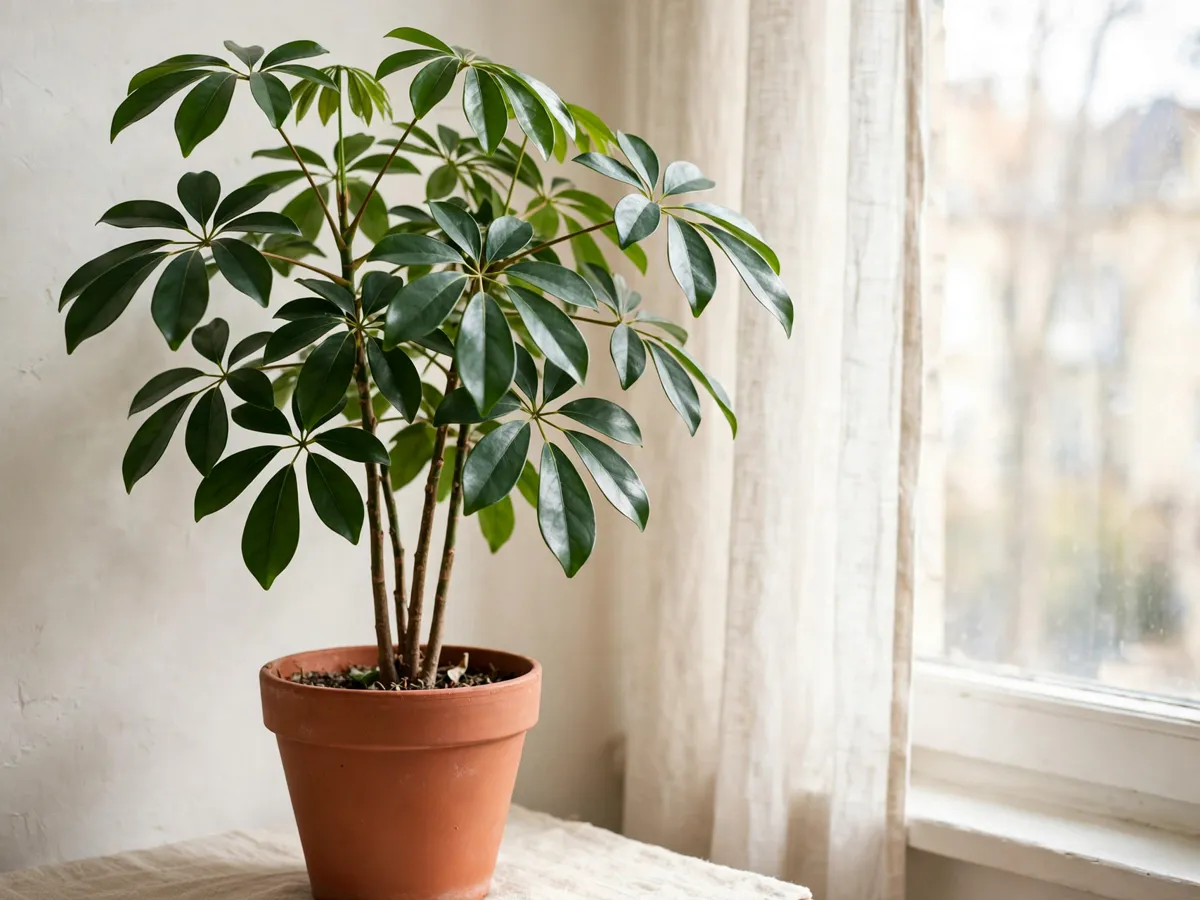
A schefflera earns its reputation as a beginner tree. Miss a watering and the leaf clusters go slightly soft and droop, then stand back up after the next drink. Park it in a dim corner for a season and it holds on where a ficus would shed half its leaves. Heated apartment air in winter barely bothers it. It wants to grow, and it puts up with a lot on the way.
The honest part is where the forgiveness ends. Wet soil is the plant's one true killer, and it kills slowly from the roots where you cannot see it. The second failure is quieter: a corner with enough light to stay alive but not enough to look good, which produces sparse, leggy stems over months. Both problems come from the same source, a plant that quietly tolerates conditions it is not thriving in, and neither announces itself loudly.
The rest of this guide is built around those two poles. Keep the roots aerated and the light honest, and an umbrella plant becomes one of the lowest-effort pieces of green structure you can put in a room. It is the same bargain most forgiving houseplants offer: simple care, as long as the two fundamentals are right.
Cost: $0 to change how you think about it. Time: five minutes to pick the right corner. The forgiving label holds only while the soil drains and the light is honest.
2. The light floor
Bright indirect light is where an umbrella plant performs. The leaf clusters stay tight, glossy and evenly spaced along the stem, and the plant holds the dense silhouette you bought it for. Near an east or west window, or a south window set back a few feet, is the sweet spot.
Medium light is fine too. Growth slows, the gaps between leaf clusters widen a little, and watering stretches out because the soil dries slower. Nothing about the plant looks wrong. A spot across the room from a decent window usually lands here.
A truly dim corner is where the honesty matters. The plant does not die, it slowly un-builds itself: long bare stretches of stem with a few sparse clusters reaching for whatever light exists. That look is the plant telling you it is surviving, not thriving. It can take some direct morning sun happily. Harsh afternoon sun through bare glass can bleach and scorch the leaves, so pull the pot back or add a sheer curtain for a south window in summer.
If your space cannot offer more than a dim corner and you want a plant that genuinely thrives there, the low light indoor plants guide lists species that actually prefer that spot.
Cost: $0. Time: two minutes to judge the window at midday. Some corners simply do not have enough light for a tree shape, and no watering habit fixes that.
3. The watering floor
The rule is simple: let the top inch or two of mix dry, then water thoroughly until it runs from the drainage hole, and empty the saucer ten minutes later. That is the whole floor. In a bright warm room it might mean weekly, in a cooler dim one closer to every two weeks. Check the soil, not the calendar.
What makes this plant genuinely forgiving is how it handles underwatering. A forgotten week reads clearly: the leaf clusters soften and droop, the whole plant looks sorry for itself, and within a day of a good watering it stands back up like nothing happened. One missed watering is a non-event, and it is far the safer direction to be wrong in.
Weeks of constantly wet soil is the other direction, and it is how umbrella plants actually die. Roots sitting in saturated mix rot from the bottom, and the cruel symptom is a plant that looks thirsty, wilting and drooping in soil that is already wet, which tempts people to water it more. That is the rot read: a persistent wilt that does not bounce after watering. By the time it shows, the roots are often mostly gone, and the honest odds of saving the plant are not good, though the chop-and-root rescue in section six can still rescue the top.
Cost: $0. Time: two minutes to check and water. When in doubt, wait a day, because dry is recoverable and wet is not.
4. One head or many: the silhouette decision
Stores sell two forms of the same plant. The single-stem tree is one slim trunk with a head of leaf clusters on top, the lollipop look, sometimes braided or grown tall like a small standard tree. The multi-stem bush is three or more stems from the soil, fuller at every height, and it reads more like a shrub.
Neither is better. They are two different silhouettes for two different corners. The single stem shows its shape: it suits a corner where the trunk and the clean head are part of the look, beside a chair or flanking a window, and it leaves the floor and lower wall visible. The multi-stem bush fills a bare spot faster and reads as a soft green mass, which suits an empty corner or behind a sofa where you want coverage, not architecture.
One practical note for renters and small-space owners: the single-stem tree takes less floor space for the same height, while the multi-stem bush needs a wider footprint to look right. Both grow at the same forgiving pace. If you are shopping with a specific corner in mind, the silhouette matters more than the size on the tag, and both forms eventually hit the same ceiling question covered at the end of this guide.
Cost: the same money either way, roughly $20–$50 at a typical size. Time: one shopping trip. The fuller-looking multi-stem and the lollipop tree are the same plant, so buy the shape, not the label.
5. The branching cut
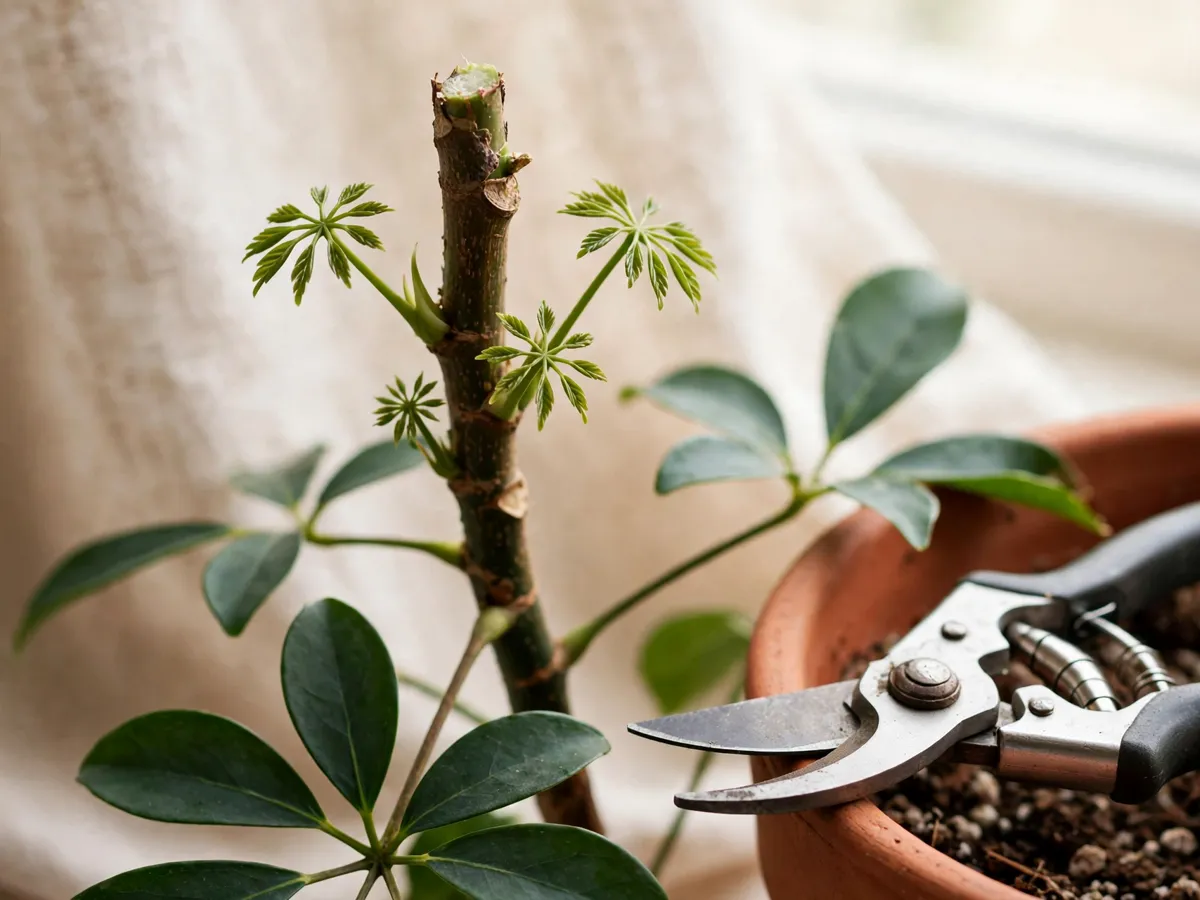
This is the one skill that separates a schefflera owner from a schefflera admirer. Left unpruned, each stem grows from a single tip, making a trunk with a tuft on top like a small palm. Cutting that growing tip off changes the plant's plan: dormant buds sitting below the cut are forced to sprout, and one cut usually produces two to four new heads along the stem.
The mechanics are friendly. Cut with a pair of clean pruners, straight across the stem just above a leaf cluster node, a few inches above where you want the new heads to appear. Anything below the cut stays as bare trunk, and anything above it is removed, so the cut placement is a decision about final height and shape, not just a trim.
Timing is flexible: do it anytime the plant is in active growth, which in most US homes means spring through early fall. A cut made during a winter growth pause just sits there for weeks before responding.
Be honest with yourself about the recovery timeline. The cut section stays bare, the stub does not heal into a leafy node, and the new clusters unfurl slowly over the following weeks. The reward is structural: instead of one lanky palm, you get a branching silhouette with the density where you chose it.
The long-term cycle is a yearly light prune during the growing season. One modest cut a year keeps a dense shape; no pruning at all gets you the lanky palm look, one tuft on a long bare stem. Both are legitimate choices, but only one of them is a decision.
Cost: $10–$20 for a small pair of clean pruners. Time: five minutes for the cut, weeks for the plant's response. A cut is not reversible, so measure twice and start higher than you think.
6. The chop-and-root rescue
A leggy umbrella plant, bare stems with a sparse tuft on top, does not have to be thrown out. Cut the stems down hard, anywhere from a few inches to half their height, and two things happen. The leafless stump left in the pot usually resprouts from dormant buds within weeks, and the cut tops, the leafy tips you removed, can be rooted as new plants.
Rooting the tops is genuinely easy. Strip the lowest leaf clusters so a few inches of bare stem sit in water or a jar, keep the water fresh, and set the jar in bright indirect light. Roots emerge from the stem over the following weeks, and once a healthy tangle fills the jar, pot the cutting into a standard mix. Treat it like a young plant: bright light, careful watering while it establishes.
The honest framing: the stump becomes a shorter bushier plant over a season, and the rooted tops become small new plants, so one leggy specimen turns into two or three decent ones instead of one sad one. That is usually a much better outcome than the trash can, and the same technique works on other forgiving houseplants covered in the water and soil propagation guide.
Cost: $0 plus a jar you already own. Time: ten minutes of cutting, weeks of waiting. Not every stump resprouts, so treat the rooted tops as your insurance.
7. Reading the leaf drop
Umbrella plants speak through their leaves, and most of what they say falls into four messages. Learn these and you can diagnose almost any plant in the corner without guesswork.
- A few lower leaves yellowing and dropping steadily. Normal aging plus dim light. The plant sheds its oldest leaves as it grows, and a dim corner speeds the turnover. A slow, steady trickle is fine; only a faster pattern calls for a brighter spot.
- Sudden heavy drop. A shock event, and usually one of three: a cold draft from a door or window gap, a big temperature swing, or soil that has stayed soggy. Check the recent history before the watering can.
- Persistent wilt that does not bounce after watering. The root-rot read from section three. Wet soil plus a wilt means the roots have already failed.
- Crispy brown edges. Dry heated air, almost always in winter. The plant tolerates dry air better than most, but forced-air heat right on the foliage will still crisp the leaf edges.
The leaf itself explains the plant's name. Each leaf is a set of leaflets arranged like fingers spreading from a central point, usually five to nine leaflets per leaf on mature growth, fewer on young or stressed growth. That umbrella shape is also why the plant reads as a tree: the leaf clusters are the canopy.
Cost: $0. Time: one minute of looking. One dropped leaf is nothing; the pattern and the speed are the real message.
8. Mix and pot
A standard quality potting mix works, and that is part of what makes this plant forgiving. Unlike succulents, it needs no special grit or amended blend. Buy one bag of decent all-purpose mix, and a plain terracotta pot with a drainage hole, and you are done. Terracotta suits it well because the walls breathe and the mix dries evenly.
The drainage hole is not negotiable. It is the one hardware feature standing between a forgiving plant and the wet-soil rot from section three. A saucer underneath, emptied after watering, completes the system. A cachepot without a hole can sit outside the real pot as decoration, but the plant itself lives in a pot that drains.
It can live pot-bound for years, which is also part of the forgiveness, but a badly root-bound plant stalls. The read: roots circling out of the drainage hole, and water running straight through the gap between rootball and pot wall without wetting anything. When you see that, repot one size up in spring, roughly every two to three years for a growing plant. Going up one size, not three, keeps the mix from staying wet around a small rootball.
Cost: $10–$20 for a bag of mix and a terracotta pot with a hole. Time: twenty minutes to pot, one afternoon every few years to repot. A pot without drainage is the only real setup mistake available here.
9. Dust and shine
The big hand-shaped leaves are dust collectors, and a dusty leaf is measurably dimmer, in the sense that the dust layer physically blocks light from reaching the leaf surface. For a plant already living in medium light, that loss matters. Cleaning the leaves counts as part of the light budget, and it deserves the same attention as the window.
The routine is a monthly wipe with a damp cloth. Support each leaf cluster from underneath and stroke from stem to leaflet tip, both sides of the leaflet. Two minutes for a mid-size plant.
For a big plant that has become a real job, use the shower-rinse trick: move the pot into the shower, use lukewarm water at a gentle spray, and rinse the whole plant top to bottom. Let it drip dry before returning it to its corner. Twice a year is usually enough alongside the monthly wipe.
Cost: $0. Time: two minutes monthly, ten minutes for a shower rinse. Clean leaves are simply light management.
10. Pests, read from the corner
The honest general rule: a stressed corner plant gets pests, and a healthy one mostly does not. An umbrella plant sitting in dry heated air all winter is the classic stressed corner plant, and its three usual visitors follow that pattern.
- Spider mites. The winter regular. The look is stippled, dull leaflets with fine webbing in the leaf axils where leaf stalk meets stem. The response is the shower-spray from section nine, washing the mites off, plus raising the humidity around the plant so the survivors cannot rebuild their dry-air colony.
- Mealybugs. Occasional white cottony clumps in the leaf joints. Dab each one with a cotton swab dipped in rubbing alcohol and recheck in a week, because they hide in crevices and one pass rarely clears them.
- Scale. Brown bumps fixed along the stems of older plants, easy to mistake for part of the bark. Scrape them off with a fingernail or the edge of the pruners and swab the spot with rubbing alcohol.
All three travel between plants, so isolate an infested pot until it is clear. The deeper fix is the corner itself, more light and more humidity, because a healthy schefflera in good conditions shrugs off small populations on its own.
Cost: $3 for rubbing alcohol and cotton swabs. Time: five minutes per check. The weekly look-over in the indoor plant pests guide catches all three before they spread.
11. Where it lives in a pet house
The honest note: umbrella plant is toxic to cats and dogs. It carries calcium oxalate crystals, the same family chemistry as pothos and philodendron, and chewing it causes oral irritation and vomiting. Nothing dramatic, and nothing you want either.
For a chewer household the placement rule is simple. Keep the plant out of reach, which for a tree form usually means a tall plant stand or a room the pet does not enter, because a floor plant with leafy stems at nose height is a standing invitation. Or skip the risk entirely and pick a genuinely pet-safe plant instead, the pet-safe low light houseplants guide lists the reliable options.
Cost: $0 to place it out of reach. Time: two minutes to check sightlines from the floor. A determined chewer and a floor-level umbrella plant are a bad pairing.
12. The buying read
Read the spacing before you read the price tag. A good plant has leaf clusters evenly spaced along the stems, leaves glossy and firm, and no wide bare gaps. A sparse plant with wide gaps and floppy stems has been living in the store's dim corner for months, and it will need that long again to recover its shape, even in a good window.
For the same money, the multi-stem bush usually reads fuller in the store than a single-stem tree of the same price, because three or more stems give more leaf clusters per dollar at small sizes. The single stem is buying shape and structure instead, a trunk with a clean head, which shows off in the right corner.
The honest note for the budget-minded: a small healthy plant becomes a corner tree in a few years with essentially zero effort, just the light and watering floors from sections two and three. Buying the small healthy one beats buying the big sparse one.
Cost: $20–$50 typical. Time: two minutes of reading before you buy. Even spacing and glossy leaves matter more than height.
13. The ceiling question, eventually
An umbrella plant can eventually hit the ceiling of a normal apartment. That is a decade-plus problem, not a first-year one, and it is a sign the plant is thriving rather than a warning. Nothing about the species is outgrowing a small apartment in the near term, so the small-space reader can buy one without hesitation.
When it does arrive, the branching cut from section five is the answer. Cutting the tall stems back forces new heads lower on the plant, and the chop-and-root rescue in section six turns the removed tops into new plants. The ceiling problem comes with its own solution built in, which is part of why the tree form suits long-term renters.
It belongs to the small group of large indoor plants that keep working in a small room, because the growth is slow and the response to pruning is predictable.
Cost: $0 now. Time: a decade before it matters. The pruning section is the answer when it arrives, not a reason to hesitate now.
Common questions
Is an umbrella plant good for beginners?
Yes, it is one of the better tree-form choices. It forgives a missed watering, tolerates dim light better than most indoor trees, and asks for no special soil. The one way beginners kill it is soil that stays wet, so err dry rather than damp.
How often should I water a schefflera?
When the top inch or two of mix has dried, which lands roughly weekly in a bright warm room and closer to every two weeks in a cooler, dimmer one. Water thoroughly, empty the saucer, and let the plant tell you the pace. A forgotten week is forgiven.
How do I make my umbrella plant bushier?
Cut the growing tips of the stems during active growth. Each cut forces two to four dormant buds below it to sprout new heads, which thickens the silhouette. A yearly light prune keeps the shape dense; left alone, the plant grows as bare stems with a tuft on top.
Can I grow an umbrella plant in low light?
It survives low light, but it slowly grows sparse and leggy there, long bare stems with wide gaps between leaf clusters. Medium light is fine and just slower. If the only spot you have is truly dim, a species that thrives there will look better than a schefflera surviving there.
Why is my umbrella plant dropping leaves?
A few lower leaves yellowing and dropping over weeks is normal aging, sped up by dim light. A sudden heavy drop points to a cold draft, a big temperature swing, or soggy roots. Crispy edges in winter mean dry heated air. Match the response to the pattern.
Can I cut back a leggy umbrella plant?
Yes, and you should. Cut the stems hard, root the leafy tops in a jar of water, and the leafless stumps usually resprout from dormant buds. One leggy plant becomes two or three decent ones, which beats throwing it out.
Is umbrella plant safe for cats and dogs?
No. Schefflera is toxic to both, causing oral irritation and vomiting if chewed, the same calcium oxalate chemistry as pothos and philodendron. Keep it out of a chewer's reach or choose a genuinely pet-safe plant instead.
Save these on Pinterest
Pin the watering floor, the branching cut and the chop-and-root rescue, the three ideas that keep an umbrella plant alive and full. This guide and the rest of the gardening tips live together there.