 Plant As Deco
Gardening & Planting Tips
String of Pearls Care: Water Math, Pots and Revival
By Plant As Deco · Updated 22 November 2026
A string of pearls (senecio rowleyanus, recently reclassified curio rowleyanus) looks like a hanging necklace and dies like a cactus, which is the trap. Almost every failure happens at the roots, out of sight. This guide teaches you to read the pearls instead of the calendar, water with soak-and-dry math, use the shallow pot trick, and revive a vine gone bare.
Weekend-ready: $15–$35 for the plant, a shallow terracotta bowl and a bag of grit, one afternoon. Five minutes a week after that.
1. Reading the pearls: the plant's water gauge
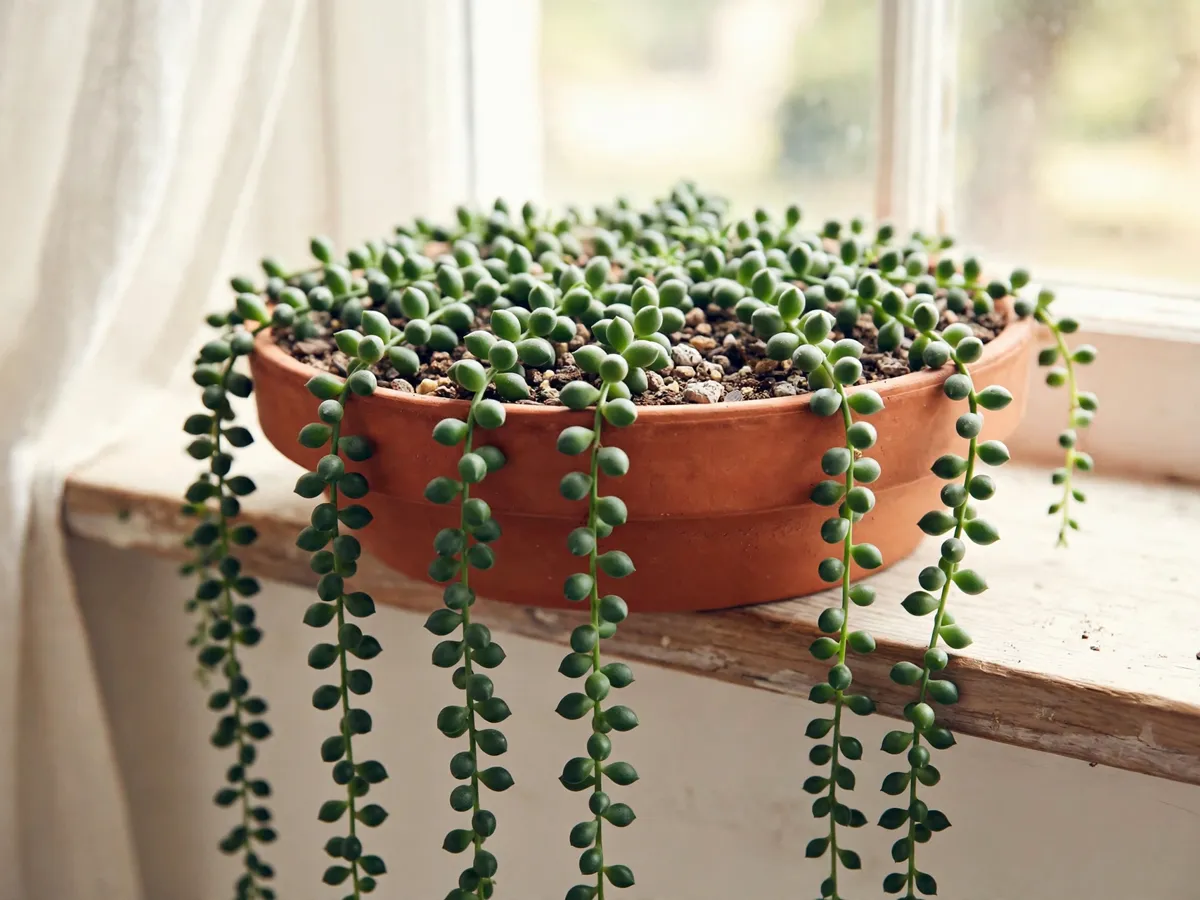
The pearls are the plant's built-in water gauge, and reading them beats any watering schedule. Each bead is a storage tank with a tiny window, a translucent stripe, on its side. A healthy strand carries firm, round pearls spaced closely along the stem, and the plant looks like beaded rope.
Soft and wrinkled pearls that dimple under a gentle squeeze mean thirsty. The plant is drawing down its reserves and the beads shrink as they empty. This is the signal to water, and it is a polite one: the plant holds enough reserve to wait a few days past the first wrinkle while you confirm with a finger in the mix.
Firm and plump means wait. Watering a full plant is the single most common way to kill it, because the roots of a succulent need to breathe between drinks. Translucent and mushy, a pearl that has gone glassy and dark, means rot: that bead has drowned, and by the time you see it the roots below have been sitting wet for weeks. Rot is the one reading you cannot fix with the watering can.
Cost: $0. Time: 30 seconds per plant, weekly. Caveat: one shriveled pearl on an old strand is aging, not thirst, so read the whole plant, not a single bead.
2. The two ways it dies
In habitat this plant hangs from dry South African shade, anchored in thin, gritty, fast-draining pockets where rain passes through and the air dries it out again. Its roots are shallow and sparse, its pearls store water, and nothing about its wiring expects a constantly damp pot. Nearly every death is a watering failure at the root, not damage to the pearls you can see.
The first way is the calendar waterer. A weekly splash, given on schedule regardless of the weather, keeps the top layer and the crown damp while the mix below never fully dries. The crown, the point where the strands emerge from the soil, is the most rot-prone spot on the plant, and wet pearls resting on damp soil mark at the contact point. The plant thins from the top down, strand by strand, while the pearls at the ends still look fine.
The second way is the underwaterer of shallow pots, and it is sneakier. In a wide, shallow bowl of gritty mix, the soil can dry all the way to hydrophobic dust, the stage where it shrinks from the pot walls and repels water. You pour, the water runs down the gap at the sides and out the drainage hole in ten seconds, and nothing inside the rootball gets wet. The plant sits dry through drink after drink and shrinks its pearls to crepe. The fix for both failures is in the next two sections: the pour technique, and the soak that resets dust-dry mix.
Cost: $0. Time: 5 minutes to learn the pattern. Caveat: both failures look identical for weeks, so the pearl read in section 1 is the only early warning.
3. Water math: soak through, then dry
The rhythm is a full cycle, not a schedule: soak the whole bowl through, then let it dry, then soak again. Half-measures serve neither failure mode. A splash wets only the surface where the crown sits, and a stingy pour on dust-dry mix runs straight down the sides.
The dry test runs deeper than it would for a leafy plant. For a pothos you water when the top inch is dry. For string of pearls, wait until the top third of the bowl is dry, checked with a finger or a wooden skewer pushed to the bottom. The skewer is the honest tool for a shallow bowl: damp grit clings to the wood, and when it comes out clean and dry the plant is ready. A wide, shallow bowl dries evenly and fast, which is exactly what this plant wants.
When you do water, pour slowly over the whole surface until water runs freely from the drainage holes, then let the bowl drain and empty the saucer after ten minutes. If the mix has gone dusty and pulled from the walls, take the bowl to the sink and let it sit in an inch of water for fifteen minutes to re-wet from the bottom up, then drain fully. That bottom soak is the reset for hydrophobic mix, and it is also the honest way to water a bowl sitting high on a shelf.
The pace shifts with the seasons. In summer, in a bright warm window, a shallow bowl can run dry in about a week and the cycle rolls along. In the cold months the plant near-stops drinking: light is short, growth pauses, and a bowl can sit two to four weeks between soaks. Cutting back in November is not neglect, it is the care the plant is asking for. The general frame lives in the care of houseplants routine; this plant simply runs the same logic one notch drier.
Cost: $0. Time: 5 minutes per soak, plus a weekly finger check. Caveat: never water on a fixed weekday, because the bowl's drying pace swings with the season and your heating.
4. The shallow pot trick
The roots of this plant are shallow and sparse, a thin mat that runs sideways near the surface. A deep, tall pot puts most of its soil below where the roots will ever reach, and that deep layer stays wet week after week while the top dries. You read a dry surface, you water, and the hidden bottom quietly stays saturated. That is how an underwaterer's plant still rots.
A wide, shallow bowl matches the root system and changes the physics. The whole soil volume sits in the zone the roots occupy, it dries evenly from top to bottom, and it dries fast, which this plant wants. An azalea-style bulb bowl or any low, wide vessel works. Unglazed terracotta is the best material: it breathes through its walls and wicks moisture out, which shortens every wet phase. A drainage hole, or several, is a hard rule in any material.
Size discipline matters more than usual. Because the roots are sparse, going up too big wraps the rootball in wet mix it cannot drink, the same trap as the deep pot. Choose a bowl one size up from the nursery pot at most, wide rather than tall, and let the rim height sit shallow enough that the strands can drape over the edge.
Cost: $8–$18 for an unglazed terracotta bowl with holes. Time: 20 minutes to repot. Caveat: a bowl without a hole is a decorative cover, not a planter, whatever the label says.
5. The drape-over-the-rim technique
The strands trail, and where they trail matters. A strand lying on damp soil does not root the way some vines do: its pearls rot at the contact point, each bead browning flat exactly where it touched the wet mix. The same plant that spills happily over a pot rim will thin out if the strands rest on the soil surface inside.
The technique is arrangement, not pruning. Pot the plant slightly off-center and slightly shallow, then train the strands over the rim so they hang in open air. Choose a bowl whose rim sits a few inches above the soil surface, so the strands clear the edge and drop freely. Inside the rim, keep the surface dressed with grit so any pearls that settle there stay dry.
For a plant on a shelf rather than in a hanger, the same logic applies: let the strands fall over the shelf edge, past the pot, and keep them from curling back onto the soil. Once the drape is set, the plant largely maintains it, because the strands grow toward the light and hang with their own weight. A rotation every few weeks keeps the drape even on both sides.
Cost: $0. Time: 5 minutes to arrange the strands. Caveat: the drape needs rechecking after any repot or a growth spurt, when new strands fall inward.
6. Light and the etiolation read
The sweet spot is a bright window with some direct morning sun: an east window, or a south window softened by a sheer curtain, or a south window in the months when the sun sits low. The plant wants hours of bright light, and a little direct morning sun keeps the pearls plump and the spacing tight. This is not a plant for a dim corner.
The etiolation read tells you when the light is short. The gaps between pearls widen, the new strands come in thin and pale, and the plant trades its beaded-rope look for a sparse one with visible stem between the beads. It is stretching for light that is not there, and no watering or feeding change fixes a light problem. The response is a brighter spot, moved into gradually over a week or two.
Too much light has its own signature. Harsh midday summer sun through untreated glass scorches the pearls into brown, flat, sunken spots on the side facing the window. The damage is cosmetic and permanent on those beads, but harmless to the plant. Pull the bowl back a foot or add a sheer curtain for midsummer, then let it sit close to the glass again in the softer months.
Winter deserves the honest sentence: a north window in December runs this plant ragged, and an east window that carries it in summer may not be enough in January. Days are short and the sun stays low, so etiolation shows up exactly when you cannot fix it with window choice alone. A full spectrum LED run eight to ten hours a day bridges the gap, and the grow lights for indoor plants guide covers choosing one honestly.
Cost: $0 to use the windows you have, $10–$15 for a sheer curtain, $20–$40 for a small grow light. Time: 5 minutes to read the strands. Caveat: scarring from a scorch stays on those beads; only the new growth comes in clean.
7. The gritty mix
The mix needs to be coarse and fast. A bagged cactus grit works off the shelf, or cut a regular potting mix heavily with perlite or grit, roughly one part soil to one part perlite, until the finished mix runs through your fingers like damp crumbs instead of clumping. Fine, dense, peat-heavy mix is the rot machine for this plant, because it holds water long past the point the roots can breathe.
The surface matters as much as the bulk. Dress the top of the soil with a layer of coarse grit, a quarter to half an inch, after potting. The dressing keeps the crown dry where the strands emerge, keeps any settling pearls off damp mix, and slows evaporation barely enough that the bowl still dries fast. Pale grit also bounces light up into the trailing strands, which the plant enjoys in a bright window.
Grit in the mix and grit on the surface do two different jobs, the first holding air spaces the roots need and the second keeping the crown zone dry. Both are cheap, and together they replace most of the cleverness people bring to this plant.
Cost: $6–$14 for a bag of cactus mix or perlite. Time: 10 minutes to mix and dress. Caveat: if water sits on the surface longer than a minute after a pour, the mix is too fine.
8. Repot barely
This plant dislikes disturbance more than it dislikes a tight bowl. The roots are shallow and sparse, and a heavy repot into fresh wet mix sets them back for weeks. The default is to leave it alone.
Repot only when the bowl is packed, meaning roots visibly crowd the surface, water runs straight through without wetting, or the strands have multiplied until the plant clearly outgrows the rim. Even then, go one size up, in spring when growth is returning, into the same gritty mix. Slide the whole rootball out, set it into the new bowl at the same depth, and fill the gap with dry mix around the sides. Water lightly after a few days rather than soaking a freshly disturbed plant.
Between repots, a top refresh is the gentler move: scrape off the top inch of old mix and grit and replace it with fresh. It buys a season without disturbing the roots. The full process, and what rootbound actually looks like, is covered in the repotting a houseplant one size up guide.
Cost: $8–$18 for mix and a bowl one size up. Time: 20 minutes. Caveat: a top refresh buys a season, not a pass, and a packed bowl still needs the real repot eventually.
9. Reviving a bare vine
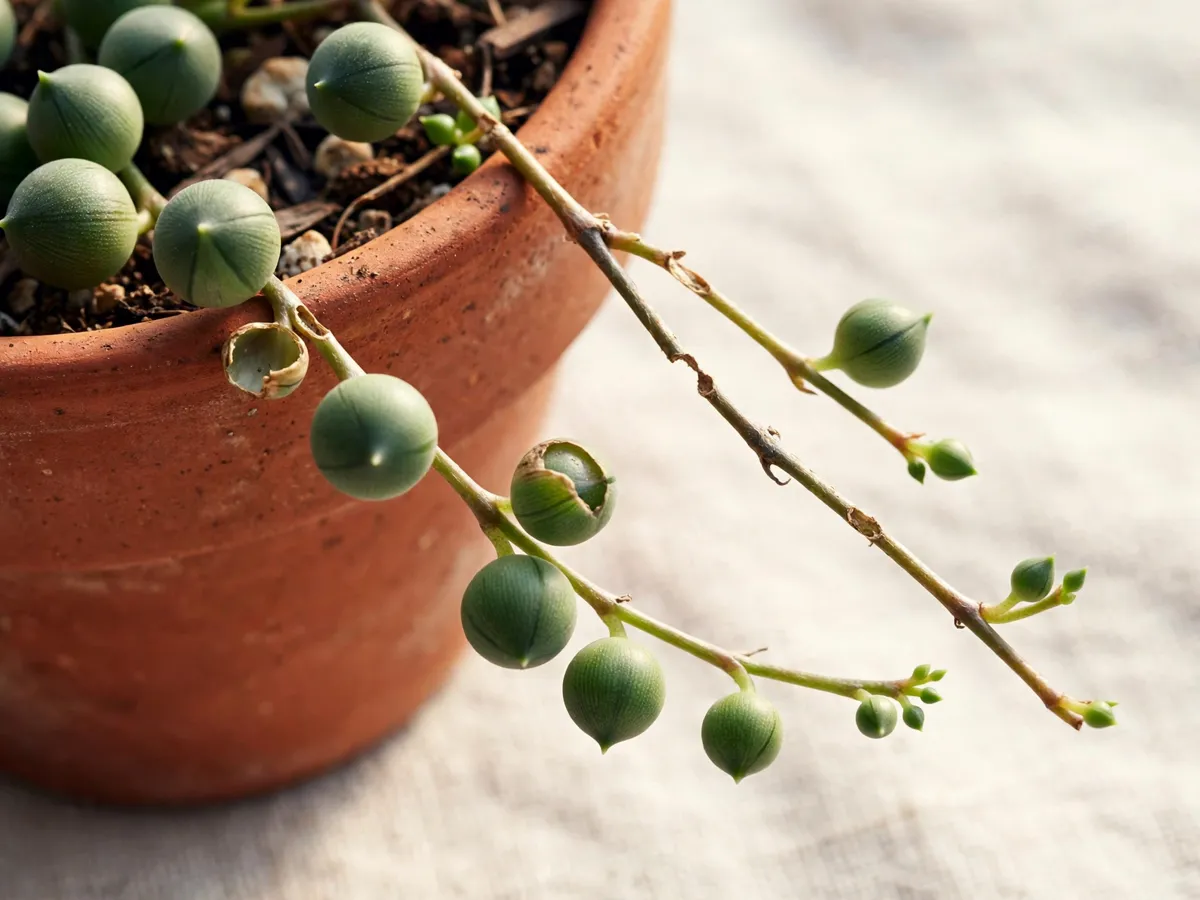
A strand goes bare at the top for one of three reasons: pearls drop naturally with age, drought stress empties and sheds them, or rot takes them from the crown down. The important fact is that the bare section is a green stem, and a green stem still works. It carries water to the pearled tip beyond it, and it can grow new pearls or new roots from its nodes.
The haircut-and-propagate move rebuilds the plant from its healthy tips. Cut the best strands back to where the pearls still run thick, taking tips three to four inches long. Look for the small bumps along the stem, the nodes, opposite or just below a pearl. Lay each cutting flat on moist, gritty mix, with the nodes touching the surface but the stem not buried. This node-on-surface method is the whole trick: buried stems rot, and stems resting on moist grit root. Keep the grit barely damp, in bright indirect light, and roots appear at the nodes in two to three weeks.
Then comes the honest decision about the mother plant. A crown that has rotted through, strands sliding loose from a soft base, is compost, and the cuttings are the rescue. A crown that is firm but bald, with bare stems and healthy roots, will regrow if you simply give it better light and steadier water, and the new cuttings thicken it in the meantime. You can even root the cuttings back into the same bowl, coiled around the mother, which turns one sparse plant into a full one.
Cost: $0 plus a little grit. Time: 15 minutes of cutting, then two to three weeks of waiting. Caveat: cuttings from a rotting plant root best, because the rot stays behind in the mother's base.
10. Propagation: coil and pin
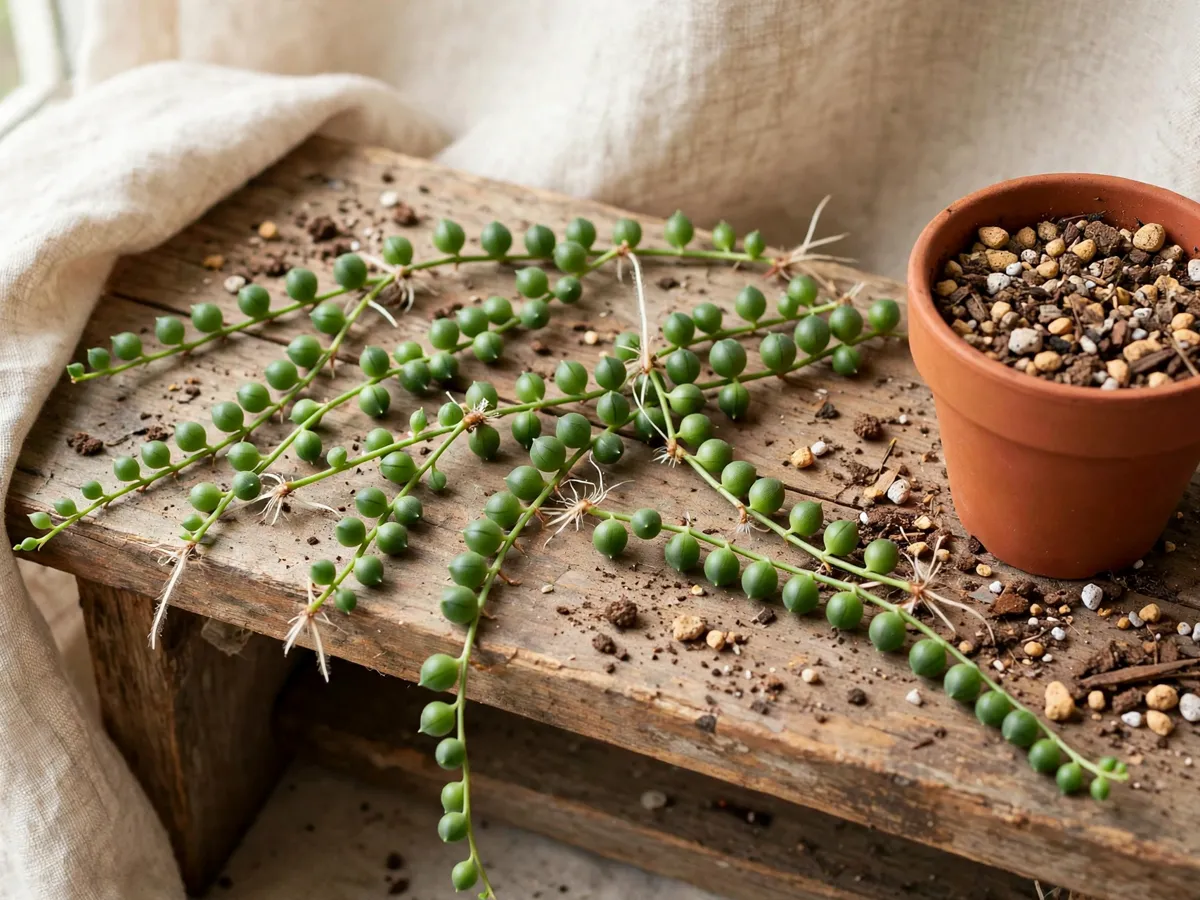
The coiled-on-soil method turns one strand into a whole mat. Take a strand several inches long, coil it in a flat circle on the surface of moist, gritty mix, and pin it gently down with hairpins or bent paperclips so the nodes stay in contact along its whole length. A strand pinned this way roots at multiple nodes at once, and each rooted node grows its own crown of new pearls. Within a season the circle reads as a small plant, not a cutting.
Keep the grit barely damp rather than wet, in bright indirect light, and remove the pins once the strand holds itself down. Roots show as pale nubs at the nodes in two to three weeks, and new pearls follow. The same strand-rooting logic works for a gift from a friend: a few healthy tips become a full bowl for the cost of grit, and section 9 shows the haircut that supplies them.
The jar-of-water method also works, and it is faster to show roots. A strand draped with its nodes in water roots within a couple of weeks. The honest comparison: water roots are structured for water, and a cutting moved from jar to mix often sulks, dropping pearls while it grows soil-adapted roots. Soil-rooted cuttings never make that transition. If you enjoy watching roots in glass, use the jar, just expect a rough month after transplant.
Cost: $0–$3 for pins and a little grit. Time: 15 minutes, then two to three weeks. Caveat: coiled strands root fastest in the growing season, and in winter most cuttings sit still.
11. The honest full-basket timeline
The hanging baskets in photographs, curtains of pearls spilling a foot or more, are almost never one plant grown out. They started with three or four plants potted together, or a season of rooted cuttings added in. A single nursery strand does not become that photo in a few weeks, and planning as if it will is how people overwater the poor thing trying to force growth.
The honest timeline: rooted cuttings take a season or two to build a full spilling basket, with visible progress each month in good light. Pot three or four rooted strands around the rim of a shallow basket, all pointing outward, and let them grow toward the edge at once. Growth compounds, so the second season adds more length than the first.
For a renter, the shelf-top bowl is the easier road to the same look. A wide terracotta bowl on a shelf or plant stand near the window lets the strands drape over the rim and down the side, no hardware, no hook, and it moves with you at the end of the lease. The trailing display ideas in the indoor hanging plants guide cover the hanging route when you are ready for the full basket.
Cost: $0 if you propagate your own, $12–$25 per nursery plant. Time: a season or two of growing. Caveat: the photo look is multiple plants, and buying one strand and waiting is the slow version of that truth.
12. Pests and problems
The worst pest on this plant is mealybugs, and the pearls are the worst place to treat them. The white cottony clumps hide between the beads, where a spray never reaches and a rinse cannot go. The honest tool is the alcohol swab: a cotton swab dipped in rubbing alcohol, pressed onto each clump, one at a time, repeated a week later because a first pass misses the ones tucked deeper. It takes patience, and patience is the method.
The shriveled single pearl is usually just aging. Pearls have a lifespan, and an old bead at the base of a strand shrivels and drops while the strand above stays healthy. One bead, no pattern, nothing to fix.
A string of plain bald stems is light or drought, not disease. The plant shed its pearls under stress and is still alive, so the fix is brighter light and steadier soak-and-dry water, plus the haircut in section 9 if you want the look back faster. Rot, the true disease risk, shows as translucent mushy pearls and strands sliding loose from a soft crown.
Root mealybug lives in the mix, and it announces itself as a white waxy crust on the roots or at the drainage hole, with the plant declining as if underwatered no matter how you water. The reset is unpotting: rinse the whole rootball under tepid water, remove the old mix, and restart the plant in fresh gritty mix, keeping watering light for a week. Check the rest of your plants, because it travels in shared mix and pots.
Cost: $3–$5 for alcohol and swabs. Time: 10 minutes per sweep. Caveat: mealybugs between the pearls come back without the second pass a week later.
13. Where it lives in a cat house
String of pearls is toxic to cats and dogs, the whole plant, and it deserves the plainest sentence on the page. Chewing it usually causes vomiting and diarrhea: unpleasant, normally passing, and still a reason to call the vet if the animal acts unwell.
The hard part is that the trailing strands are a literal cat toy, a dangling string of beads engineered by nature to be batted. Placement is the whole management plan: a high shelf or a hanging basket, genuinely out of reach, not floor level, not a coffee table, and not the usual path of a jumper. The comfortable assumption is that a cat who never bothers plants will keep never bothering them, until the day a bored cat discovers a swinging strand. Plan for that day.
If your home shares every surface with a pet, choose species that can live at nose height instead, and the pet safe low light houseplants guide lists them.
Cost: $0. Time: 10 minutes to decide where it lives. Caveat: no shelf is out of a determined cat's reach, only out of its usual path.
14. The buying read
Read a nursery plant before you pay. You want pearls firm and evenly spaced along the strands, close-set like beaded rope, with no wide gaps of bare stem and no glassy, dark beads hiding inside the tangle. Slide a finger gently along one strand: firm resistance is a plant in good water balance, and soft crepe beads mean it has been dry for weeks.
The etiolated discount plant is not a bargain. Sparse strands, pale thin growth, pearls widely spaced: it has been reaching on a dim shelf for months, and it needs a season of good light before it tightens up, if it ever fully does. Pay the clearance price only if you accept that timeline, and skip it entirely if the plant also shows the soft crown of rot.
The honest cheap start is a strand from a friend. Anyone growing this plant has strands to spare, a cutting roots easily by the coil-and-pin method in section 10, and a rooted strand costs a handful of grit. Between a discounted stretched plant and a free healthy cutting, the cutting is the better plant.
Cost: $12–$25 for a nursery plant, $0 for a friend's strand. Time: 5 minutes to read one in the store. Caveat: check the crown, the soil line, for firmness, because rot starts there and hides there.
Common questions
How often should I water string of pearls?
Water only when the top third of the bowl is dry, then soak through until water runs from the drainage holes. In a bright summer window that runs roughly weekly; in winter it can stretch to two to four weeks. Read the pearls and the mix, not the calendar, because pot size, mix and heating change the pace more than the season does.
Why are my pearls shriveling?
Soft, wrinkled, dimpled pearls mean the plant is thirsty and drawing down its storage. Check the mix: if it is dry, soak it, and if the mix has pulled from the pot walls, use the bottom soak in the sink to re-wet it. Translucent, mushy pearls mean rot from too much water, and the fix is unpotting and fresh mix, not more water.
Why is my string of pearls going bald at the top?
Pearls drop with age, drought stress, or rot, and the bare stem left behind is still alive and working. Cut the healthy tips, lay them on moist grit so the nodes touch the surface, and root new plants, while the mother regrows in better light and steadier water. If the strands slide loose from a soft base, the crown has rotted and the cuttings are the rescue.
What kind of pot does string of pearls need?
A wide, shallow, unglazed terracotta bowl with drainage holes. The roots run shallow and sideways, so a deep pot keeps its lower half wet where rot starts. The shallow bowl dries evenly and fast, the terracotta breathes, and the rim gives the strands somewhere to drape without resting on wet soil.
Can string of pearls grow in a north window?
It survives there and slowly thins out, stretching with wide gaps between pale pearls. It wants a bright window with some direct morning sun. In winter even an east window can run short, and a small grow light run eight to ten hours a day bridges the gap honestly.
Is string of pearls safe for cats and dogs?
No. The whole plant is toxic, and chewing it usually causes vomiting and diarrhea. The trailing strands invite play, so keep it on a high shelf or in a hanging basket genuinely out of reach, and choose genuinely pet safe species for nose height.
Save these on Pinterest
Pin the pearl-reading decoder and the bare-vine rescue, the two pages that decide whether this plant lives for years on your windowsill. This guide and the rest of the gardening tips live together there.