 Plant As Deco
Gardening & Planting Tips
Indoor Hanging Plants: The Beginner Guide to Trailing Green
By Plant As Deco · Updated 20 November 2026
A hanging plant uses the part of a small home nobody walks on: the air above a shelf, the corner beside a window, the gap between the top of a bookcase and the ceiling. A trailing vine softens a hard corner, breaks up a blank wall, and brings a living edge into the room while giving up one inch of floor space. The work is in three places — choosing a plant that trails in the light you actually have, mounting it where it cannot fall on anyone, and watering it without soaking the floor. Do those and a hanging houseplant outlasts most of what surrounds it.
Weekend-ready: $15–$90 total, one afternoon. Renter-safe: tension rods, adhesive hooks rated for the weight, and a watering routine that keeps the floor dry.
Why hanging plants solve small space problems
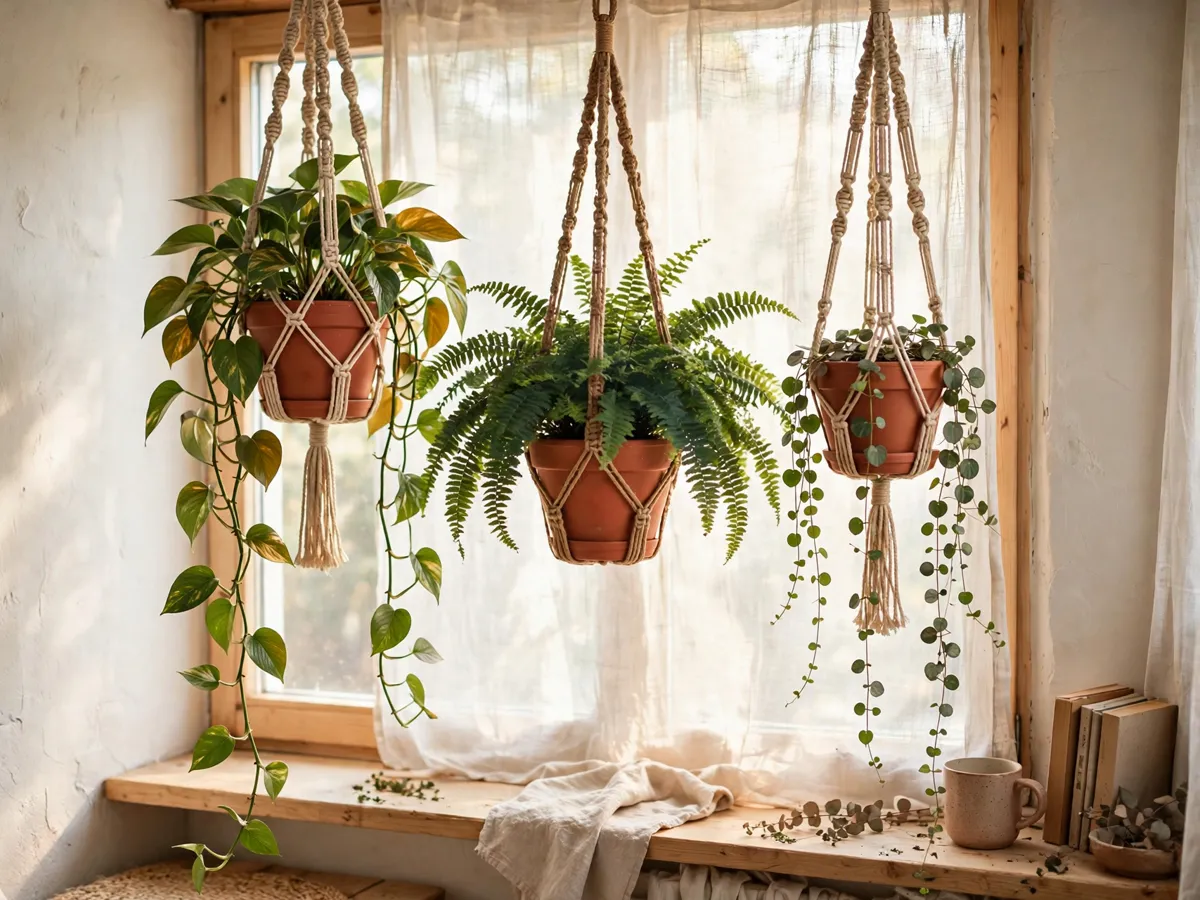
Every square foot of floor in a small home is spoken for. The furniture sits on it, the rug covers it, the walking path has to stay clear, and a plant on the floor is a plant you bump into with a vacuum. Hanging lifts the same living thing out of the traffic zone. A vine on a high shelf turns a dead corner into something you look at, and a basket hung from a ceiling hook fills vertical space that was doing nothing. That is the whole pitch of a hanging plant: it claims space nobody else was using.
The real advantage is the drape. A bushy houseplant holds one shape and stays there. A trailing plant changes the room as it grows, sending vines down past the shelf, across the wall, and around the basket. Over a season a single plant covers two or three feet of vertical drop, which is living decor you did not buy twice. Above a dresser that drape reads softer than a framed print in the same spot.
There is a trade. A floor plant is easy to water, easy to check, and easy to move. A hanging one is harder to reach, harder to inspect from above, and heavier to take down. So this guide is built around the reach problem first: pick plants that forgive a missed drink, hang them where a hand can reach the mix, and set a routine that does not ask you to climb on a chair every three days.
Match the plant to your light first
Most hanging plants fail for one reason: the trailing vine you fell for needs more light than the corner can give. A plant that trails well is a plant that is growing, and growth needs light. A bright spot beside a window carries almost anything in this guide. A dim corner across the room carries two or three of them, slowly, and the rest thin out.
Use the hand test. Stand where the basket will hang, at the hour you are usually awake, and hold a hand up about a foot from the wall. A sharp, dark shadow means bright light. A soft, fuzzy shadow means medium. Barely any shadow means low, and that narrows the choices fast. A spot two feet from an east or west window is usually enough for most trailers; a spot six feet back behind a wall is a low one, and the low-light indoor plants guide names which houseplants hold up there.
Distance counts more than people expect, because light falls off steeply indoors. A basket right beside the glass takes several times what a basket three feet back on the same wall takes. Put the hungriest trailer by the glass and the forgiving one on the dim wall, in that order. If the only wall available gets no usable daylight, a lamp is the honest answer, and the grow lights guide covers what works in a corner with no window.
The beginner five that actually trail
These are the plants beginners keep alive for years in a hanging basket. Each trails on its own, forgives a missed watering, and grows at a pace you can keep up with. All five want a bright enough spot, a pot with a drainage hole, and a routine you remember.
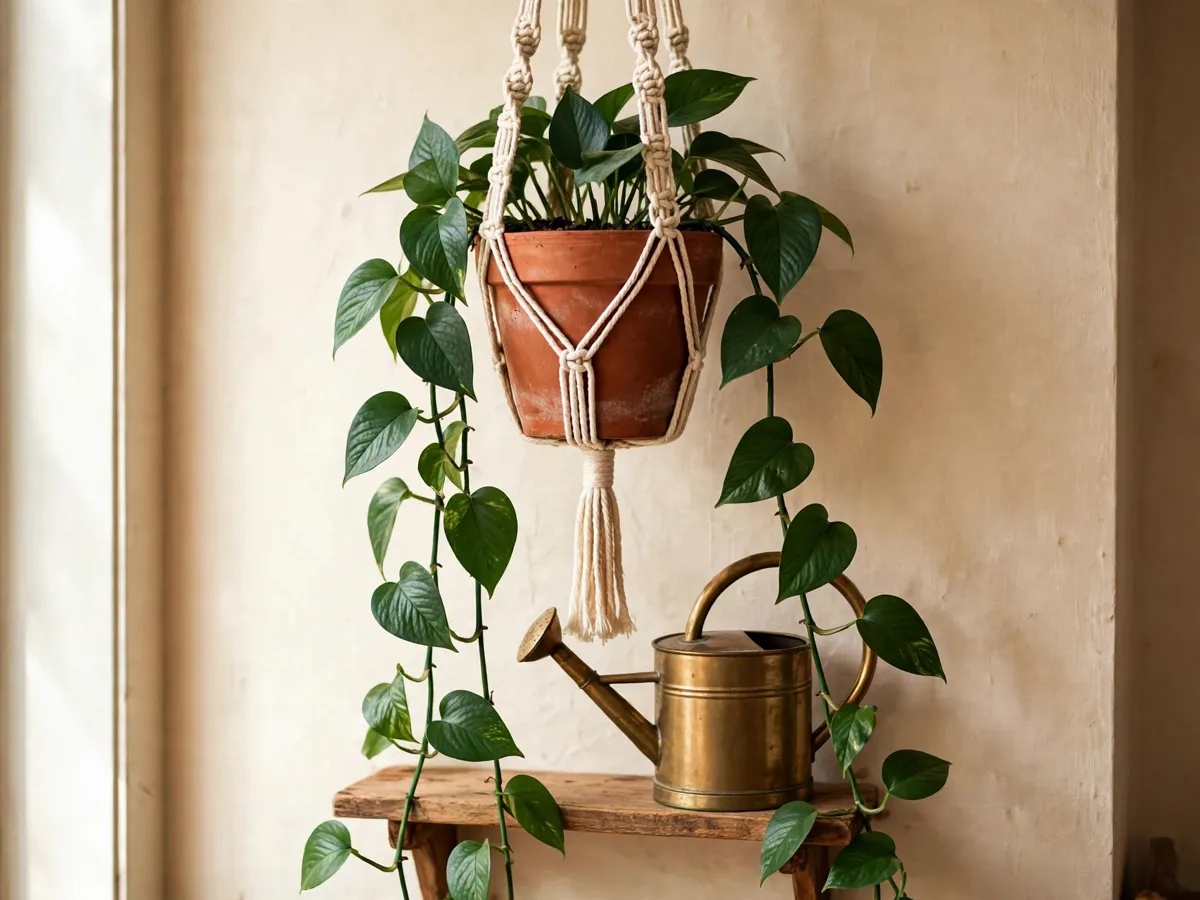
Pothos is the usual starting vine: it trails willingly, roots in a glass of water, and keeps going a few feet from a window. One vine runs two or three feet in a season, and a single plant in a ten-inch basket carries four or five of them. It is the safest pick for a bright spot and one of the few that still hangs in there on a dim wall, though slowly.
Heartleaf philodendron trails more softly, with thin vines and small heart-shaped leaves that drape cleanly. It grows steadily in medium light and outlasts a dry spell better than most. Two of them in matching baskets on either side of a window is a standard look, because the vines meet in the middle within a few months.
Spider plant arches out long stems with baby plants at the ends, and those babies root in water inside a week. It fills a basket faster than anything else here. It likes bright light and scorches in direct sun, so near the glass rather than in it.
English ivy brings a finer leaf and a vine that grips. It trails, and it also climbs a textured wall or a trellis if you offer one. Ivy prefers a cooler room than the tropical trailers, so a bedroom or a hallway that runs cold suits it. It is the thirstiest of the five, so check the mix more often.
String of pearls carries bead-like leaves on thin stems that cascade. It is a succulent at heart, so it wants bright light and a fully dry mix between drinks, and it thins out fast in a dim corner. Hang it by your brightest window and keep it to one plant until you have the feel of the watering. The cost runs higher than the other four, and it is the one to add second.
Cost: $8–$20 for a young philodendron or ivy in a 4-inch pot, $15–$35 for a spider plant already trailing, $12–$25 for the bead-leaved one. A budget of $40 covers two plants and two baskets.
Pet safety before you hang
A hanging plant is safer than a floor plant around a cat or a dog for one obvious reason: it sits up high. But a trailing vine is also an invitation, and a determined cat finds a way onto a chair arm and into a basket. Know which of the five are safe before you buy. Pothos, philodendron, and English ivy all contain calcium oxalates and are toxic to cats and dogs if chewed, so they belong hung high and well clear of anything climbable. Spider plants and kitten's tails are the gentler choices for a home with pets, though even a safe plant upsets a stomach if a pet eats enough of it.
Hanging height matters as much as the species. A basket at five feet with vines trailing to three feet is within reach of a cat standing on the back of a sofa. Hang the toxic ones higher, keep the trailers cut short until the pet loses interest, and trim any vine that grows into paw range. The full list of which houseplants are safe and which to skip lives in the pet-safe houseplants guide, and it is worth reading before you bring anything home.
Baskets, pots, and drainage
The basket is the look. The pot inside it is what keeps the plant alive. They are two separate things, and the usual mistake is treating a decorative basket with no drainage hole as a pot. Water has to leave the root zone or the roots sit in it and rot. Keep the plant in a plastic nursery pot with holes, set that pot inside the basket, and when you water, lift the inner pot out, soak it over the sink, let it drain fully, and put it back.
Woven baskets lined with a plastic drip tray are the classic choice, and they read warm in any room. A macrame hanger is the other common route and works with any pot whose rim the cords can grip. Keep macrame to one or two in a room and pair them with plain pots, because the cord is already a strong visual. Ceramic pots with built-in hangers are heavy and demand a sturdy ceiling hook rather than a tension rod.
Size the pot to the plant, not to the basket. A 4-inch nursery pot fits inside most baskets with room to spare, and a little sphagnum moss or a folded cloth pads the gap so the pot cannot tilt. Move up one size when the roots fill the current container, and never more than one, because extra mix stays wet around a small root ball. The mix itself should be light and airy: a standard houseplant mix worked full of perlite, so water runs through instead of sitting.
Renter-safe hooks and mounting
The mount has to hold the pot, the wet mix, and the plant together, because that is the heaviest a basket ever gets. A small hanging basket with a 4-inch pot and damp mix weighs three to five pounds. A larger one with a 6-inch pot and a mature vine runs eight to twelve. Read the rating on any hook before you hang, and never trust a hook rated for a picture frame with a plant.
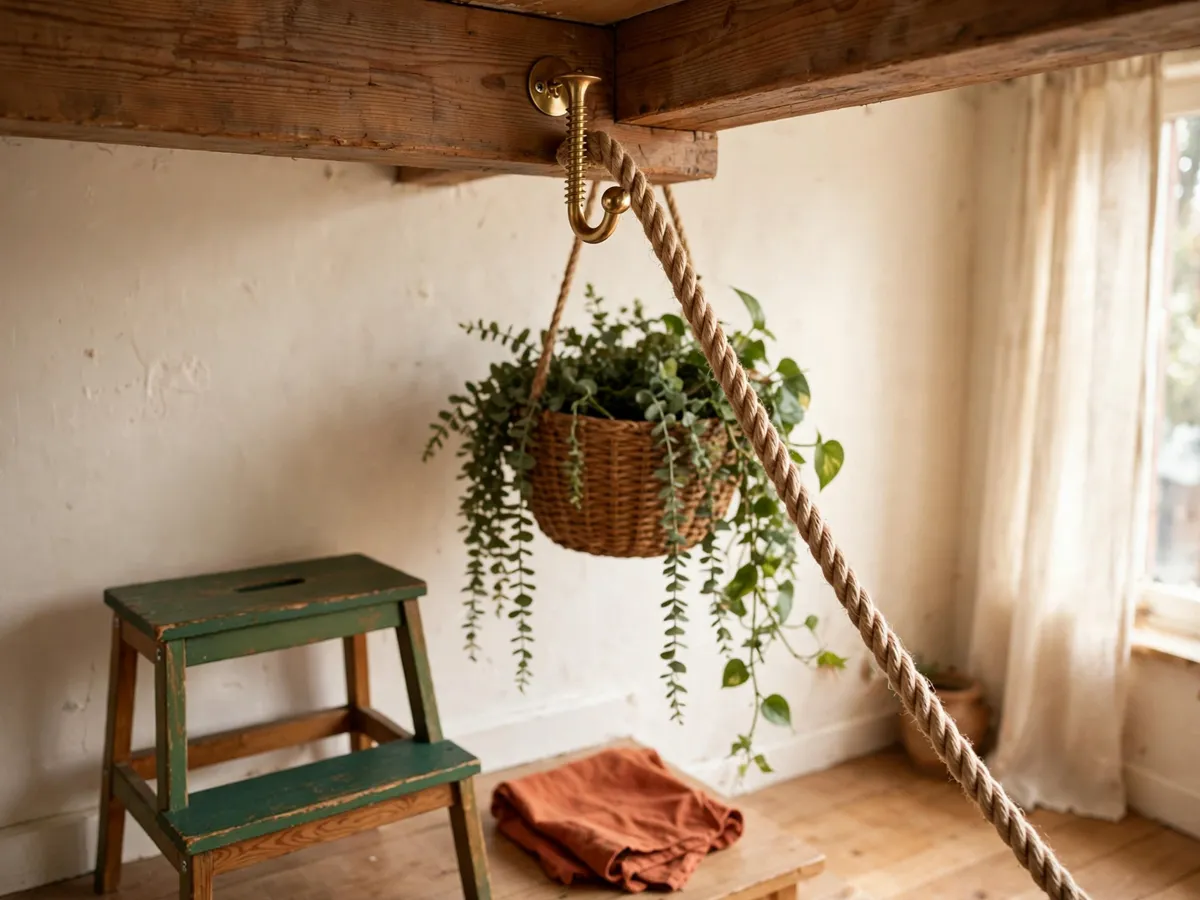
For a renter, the cleanest route is a tension rod inside a window frame, with the basket on a short cord and hook. It holds the smaller baskets, leaves no holes, and comes down clean at the end of a lease. For more weight, an adhesive hook rated for ten pounds on a smooth, clean surface is the next step up: apply it exactly as the packet says and give it the full cure time before anything hangs from it. A ceiling hook is the sturdiest option and the only one that needs a hole, so reserve it for a place you own or a landlord who has agreed.
Where you hang matters as much as how. Keep baskets out of the walking path, away from a door that swings into them, and clear of a radiator vent that dries the mix out fast. A corner beside a window is usually the best spot: it gets the light, it stays out of traffic, and a vine down the corner reads intentional. In a bathroom the shower humidity is a bonus for tropical trailers, but the light is usually low, so run the hand test there first and keep a bathroom basket in what daylight the window gives.
Cost: $4–$10 for a tension rod, $5–$12 for a rated adhesive hook, $3–$8 for a ceiling hook and anchor. The hardware should cost less than the plant.
Watering from a height
Watering is where hanging plants go wrong, in two directions. The first is drowning the plant on a fixed schedule whether it needs a drink or not. The second is skipping it, because the basket is up high and out of sight, until a vine collapses. One habit fixes both: check before you water, and make the check easy enough that you actually do it.
The finger test is the reliable version. Reach up, push a finger into the mix through the top of the basket, and read the top two inches. Cool and damp means wait. Dry, and the pot feels light when you lift it, means water. For a hanging basket the cleanest method is to lift the inner pot out, carry it to the sink, water until it runs from the drainage holes, let it drain a few minutes, and set it back. That keeps the floor dry and the roots soaked deeply instead of sponged on top.
Frequency follows the light, the season, and the species. A trailing vine in a bright spot in July may want water every five to seven days; the same plant in a dim corner in January may go two or three weeks. Kitten's tails want the mix dry right through between drinks, so ten days to two weeks in the growing season and less in winter. Let the plant set the schedule, and use the weight of the pot as the signal: a dry pot is noticeably lighter than a wet one, and you learn the difference within a week.
Time: five minutes per plant once a week for the check, with the watering only when the check calls for it.
Feeding and keeping vines lush
A hanging plant in one pot for a year uses up what is in the mix, and the vines slow and thin. Feeding keeps the trailing growth coming, and it is simple: a balanced liquid houseplant fertilizer at half strength, poured through once a month while the plant is growing. That window runs from spring to early fall, when the days are long and new leaves are appearing.
Stop feeding in winter. Shorter days and lower light mean the plant is barely growing, and a dose of fertilizer then pushes weak, pale growth you later have to cut back. The same logic holds for a basket in a dim spot all year: feed less, because it grows less, and a full dose on a slow plant only leaves salt behind in the mix. Every few months, water until it runs out of the drainage holes to flush that salt out.
Lush vines come from light and pruning as much as from food. When a vine goes long and bare at the top, cut it back to a leaf node and the plant branches from there. The cutting you remove roots in a glass of water on a sill in two or three weeks, and you can pot it up and return it to the same basket for density. That is how one starter plant becomes a thick, draped display in a year, on scissors and water.
Styling: heights, groups, and drape
One basket is a start. Two or three at staggered heights is a look, and it is the move that turns a plant in a room into a designed corner. Vary the heights and let the drape connect them: one high near the ceiling, one at mid-height beside the window, and the vines close the gap between them over a season.
Group by light, so the bright corner takes the hungrier trailers and the dim wall takes the tolerant ones, and inside each group keep the containers in one material family. Two woven baskets and a glazed ceramic pot in the same corner read busier than three alike. Let the vines do the mixing. For placement beyond the hanging corner, the indoor plants decor guide covers green through the rest of a small space.
Drape length is the last call. A vine trailing six inches reads tidy; one trailing two feet reads lush and a little wild, and that is the look most people want. It also means the vine reaches a walking path or a surface. Trim the ones heading for trouble and let the ones falling into open air run. A bedroom corner above a dresser carries a long drape, because nobody walks through it; a hallway wants a shorter, tidier cut.
Common failures and quick fixes
Yellow leaves dropping from the top of the vine is over-watering, almost every time. The mix stays wet too long and the roots begin to rot. Lift the inner pot out, feel how wet the mix is at the bottom, and let it dry before the next drink. Cut the frequency, and if the container is big for the root ball, move down a size.
Crispy brown leaf edges are usually dry air or too much direct sun. Tropical trailers want moisture in the room, and a heated, dry space in winter crisps the edges. Move the basket away from a heat source and group it with other plants to lift the local humidity. Old leaves do not heal, so trim the worst ones off; the new growth comes in clean.
Long, bare vines with small pale leaves is a light problem. The plant is stretching toward the window, so the gap between leaves lengthens while the leaves stay small. Move the basket closer to the glass and cut the bare vines back to a node, which brings fuller growth from there. Those cuttings root in water and go back into the pot.
A vine that wilts while the mix is still wet is root rot, and it is the serious one. The roots have died, so the plant cannot take up water even with the mix soaked. Take the plant out, cut away every soft brown root, and repot the healthy part in fresh dry mix in a clean pot. If most of the root system is gone, take cuttings and start them in water, because a plant with no roots will not come back in soil.
The pattern across all four: the plant tells you what is wrong before it dies, and the fix sits in the light or the water, rarely in the food.
Your first hanging plant plan
- One bright corner beside a window, confirmed with the hand test
- One trailing vine or spider plant in a 4-inch nursery pot, $8–$20
- One woven basket with a drip tray, sized to hold that pot, $12–$25
- One tension rod or one adhesive hook rated for ten pounds, $4–$12
- A pot with drainage holes, never the basket on its own
- Light, airy mix full of perlite, so water runs through
- Finger test before every drink; lift the inner pot out at the sink
- Half-strength liquid feed monthly, spring to early fall only
- Trim long vines back to a node so the growth stays full
- Root the cuttings in water and return them to the same basket
- Check pet safety first; hang toxic species out of climb range
Total for one corner and one plant: $24–$57. For two plants at staggered heights: $40–$90. One afternoon to set up, then five minutes a week.
Common questions
Which hanging plant is easiest for a beginner?
Pothos is the most forgiving beginner plant and the easiest hanging one to keep alive. It trails on its own, roots in water, shrugs off a missed watering, and grows in medium light in a small corner. A spider plant is the close second and the better pick in a home with pets, because it is non-toxic and it makes babies you can pot up for free.
How often should I water a hanging plant?
Check the mix with a finger before every watering and water only when the top two inches are dry. In a bright spot in summer that is often every five to seven days; in a dim corner in winter, every two to three weeks. The weight of the pot is the other cue, since a dry pot is clearly lighter than a wet one.
Can I hang a plant without drilling a hole?
Yes. A tension rod inside a window frame holds the smaller baskets and leaves no mark. An adhesive hook rated for ten pounds works on a smooth, clean wall if you apply and cure it as the packet says. Both come down clean. A ceiling hook is sturdier but needs a hole, so keep it for a place you own or a landlord who has agreed.
Why are the leaves on my hanging plant turning yellow?
Yellow leaves falling from the top of a vine usually mean the mix stays wet too long and the roots are rotting. Check the mix at the bottom of the pot, let it dry, and stretch the gap between drinks. If the container is large for the root ball, move down a size, since extra mix holds water longer.
Are hanging plants safe around cats and dogs?
Some are, some are not. Spider plants and kitten's tails are the gentler choices for a home with pets. Pothos, philodendron, and English ivy are toxic if chewed, so hang them well out of reach and clear of anything a cat can climb. Trim any vine that grows into paw range, and read the safe list before you buy.
Save these on Pinterest
Pin the hand test and the beginner five, because those are the two sections you will return to before buying another plant. The rest of the plans for renters and small spaces live in the Gardening & Planting Tips collection for trailing green, balcony gardens, and container basics you can start in a weekend.