 Plant As Deco
Gardening & Planting Tips
How to Keep Cats Out of Indoor Plants: Deterrents That Work
By Plant As Deco · Updated 20 November 2026
A cat and a houseplant pull at the same instinct: bite the green thing, dig the loose dirt. You cannot reason that behaviour away, but you can make every pot in the apartment unpleasant to stand on, dull to chew and awkward to reach. That is the method here: coarse texture over the soil, a citrus smell at the rim, a barrier where the plant lives, and one sacrificial tray of cat grass that is meant to be destroyed. Most setups cost under $60, take one afternoon, and hold for months once the cat learns the new rules. The plans that fail are the ones that put something toxic in a pet's mouth or lean on frightening the animal, and both sit on the avoid list further down.
Weekend-ready: $10–$60, one afternoon plus a second pass two weeks later. Apartment-safe: every deterrent here works indoors, no outdoor chemicals.
1. Why cats go after houseplants
One behaviour sits behind almost every chewed leaf, and it is older than the plant on your shelf. Cats are obligate carnivores and they eat green things anyway - grass, fallen leaves, the soft end of a houseplant stem. Nobody agrees on why. The working explanations are fibre, a stomach that settles better with something green in it, and plain boredom. A cat with one window and nothing to hunt will investigate the only object in the room that moves.
Then the soil. Loose mix in an open pot, an hour after you watered it, feels like a litter box, and digging in it is a normal, self-rewarding activity. The plant is collateral. That is why the same animal that ignores a ficus on a closed cabinet will tear into a pot on a low table within a week of you moving it there.
Swaying foliage is the third trigger. A batting paw pulls a leaf down, the leaf springs back, and the cat gets a reaction it can control. Chewing follows the bat, and the newest growth is the softest target. None of this is spite, and none of it can be trained out of the animal. What changes is the surface, the smell and the distance between the cat and the pot - the three preventive levers every section below pulls.
2. The three things cats actually do to plants
Three separate habits cause the damage, and each needs a different answer. Sort your own into these piles before spending anything.
- Chewing the foliage. The cat bites at leaves and stems, usually the newest growth, and spits out most of it. Damage looks like torn edges and missing tips. Answer it with scent, distance, and one legal alternative: a tray of cat grass meant to be eaten.
- Digging the soil. Paws rake the mix outward, roots get exposed, and dirt ends up across the boards. An exposed rootball dries out fast, and a tipped pot is finished whatever the leaves are made of. Answer it with textured coverage; a surface that stops paying off within a few attempts is not a deterrent.
- Lying on the plant. A warm rim, a broad leaf, a patch of sun on the sill. The cat has decided the pot is a bed. Stems snap under the weight and no spray moves an animal that likes the warmth. Answer it with a barrier and a better seat nearby.
Two of the three are cheap to fix tonight. The third is a placement problem, and you solve it by moving the pot rather than by correcting the cat. Treating all three as one problem is why most attempts collapse in the first week.
3. Texture deterrents that hold
Cover the dirt and you remove the reason a cat stands in the pot at all. This is the highest-value preventive fix here, the cheapest one, and the one to do before bed. The whole method is an unpleasant surface where the animal expects soft, diggable soil.
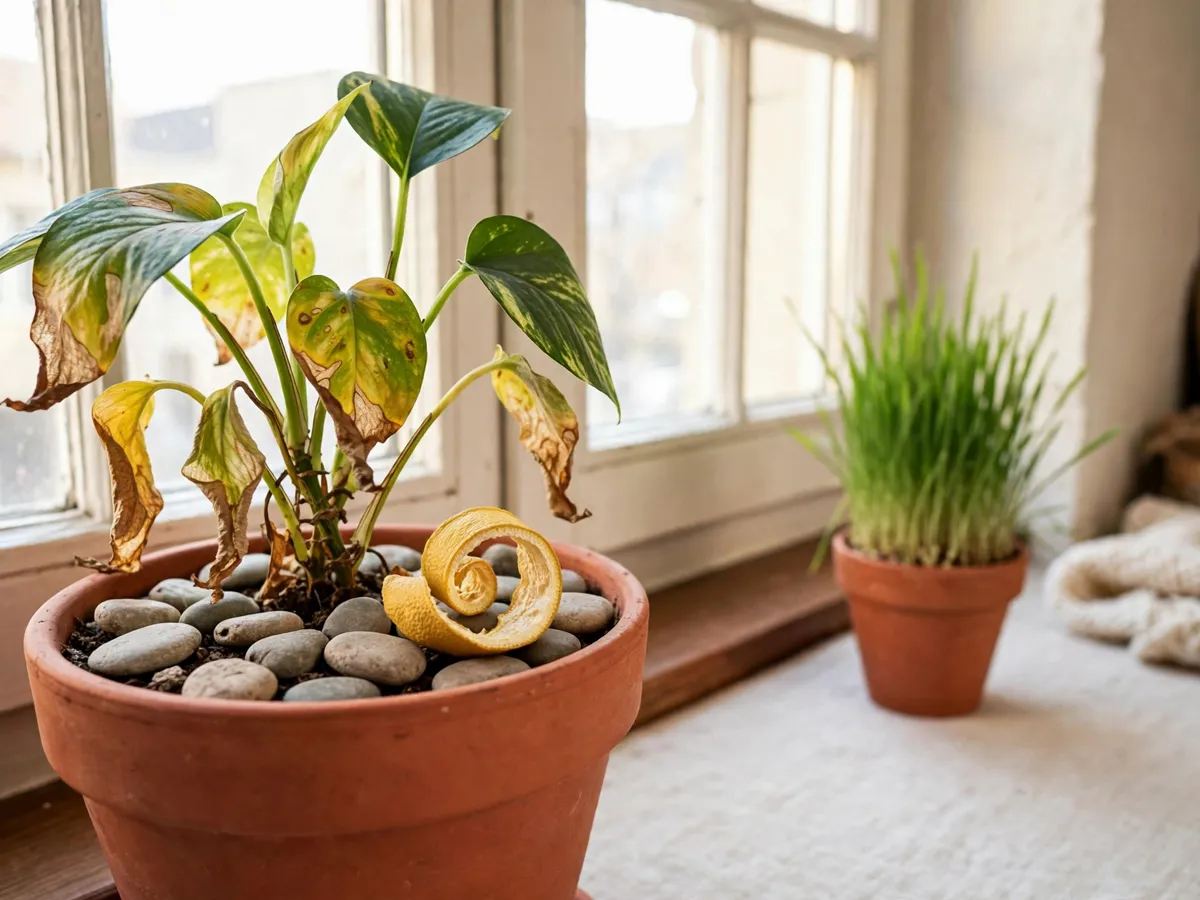
Smooth flat pebbles. A one- to two-inch layer of river pebbles pressed down to the rim. Stones do not shift under a paw the way loose grit does, so the digging stops rewarding the cat within a few tries. They also slow evaporation, which means lighter watering in a room with a bright window. Cost: $8–$14 for a bag that tops off six pots.
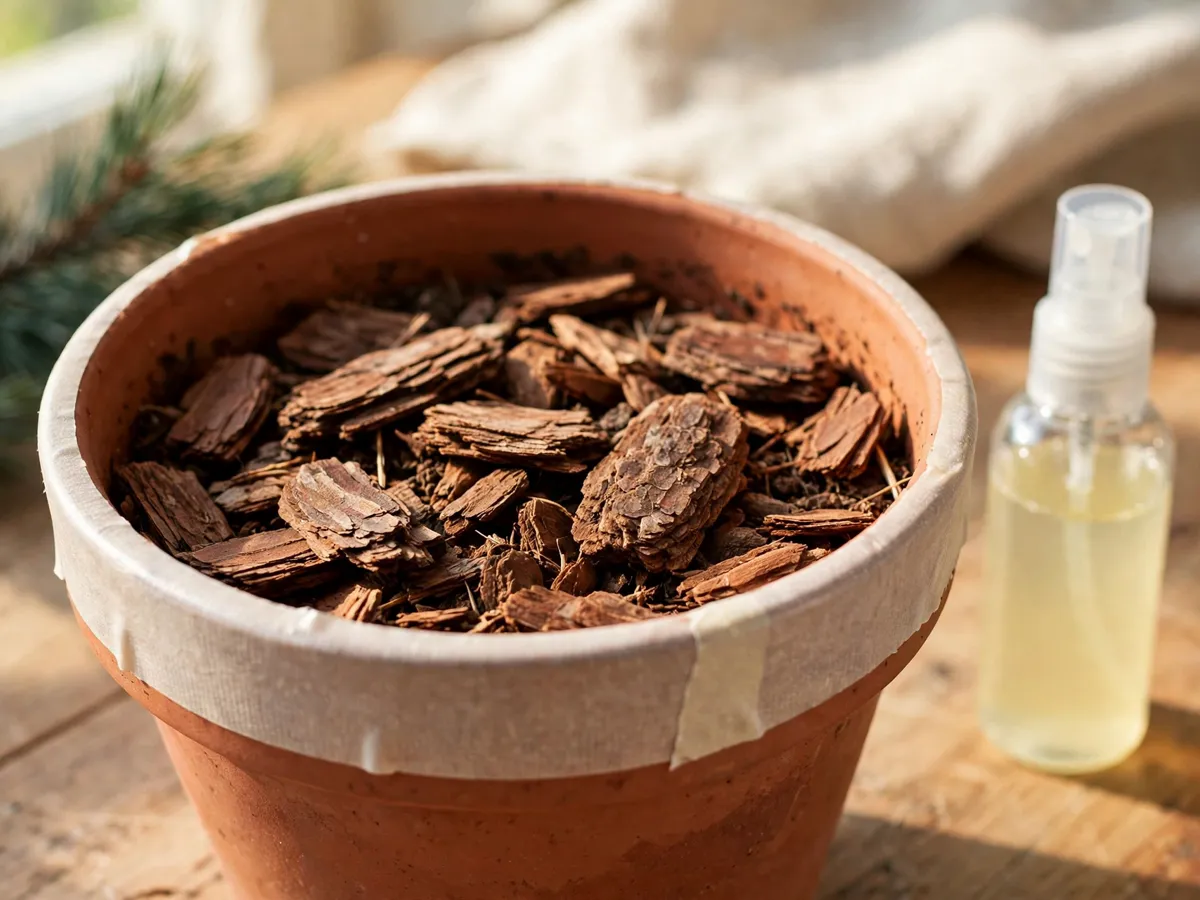
Coarse pine bark chips. Lighter and cheaper than stone, and the sharper edges are more unpleasant underfoot. Use the coarse grade, and press the chips down around the stem rather than against the roots. Skip cocoa-shell mulch; it is the one bark product with a genuine toxicity risk for a cat that mouths it.
A mesh under the top layer. Cut a square of plastic netting over the soil and hide it under pebbles or bark. The mesh keeps claws from finding the dirt even when the cat sweeps the stones aside, and it holds a whole season. Decorative stone over netting still reads well on a windowsill, which matters if the deterrent has to live in the room you sit in.
What does not hold: thin plastic spike mats, which a determined cat walks straight over, and anything sharp enough to injure a paw. The goal is an unwelcoming surface, never a harmful one, and a deterrent the animal beats in three days teaches it that your rules are suggestions.
4. Citrus and scent deterrents
Most cats dislike the smell of citrus, and the peel is the safe way to use it. Fresh lemon or orange peel, pressed into the top layer around the rim, replaced every three to five days before it dries out and stops giving off scent. Rinse the fruit first and use only the peel. A cat that bites a piece of peel is being discouraged rather than harmed, but the rind is not food, so swap it once it goes soft.
A spray stretches the same idea. Steep lemon or orange rind in warm water for a few hours, strain it well, and pour it into a bottle. Spray the pot rim, the saucer and the table around the plant rather than the foliage. Citrus juice on leaves leaves pale spots and dries the edges, and a scorched calathea is a worse trade than a nibbled one. Reapply every two to three days, because scent is the entire mechanism and it evaporates off a warm sill.
What belongs on the shelf instead. Essential oil blends - tea tree, eucalyptus and the concentrated citrus kinds - have no place in a cat's air or on a pot a cat will groom, and a repellent listing them should go back. Coffee grounds get recommended often and are a poor trade: they hold moisture, they grow mould, and they smell to you as much as to the animal. Onion, garlic and chocolate sit on the same avoid list.
Vinegar works in a small room for about a day, and then everyone in the apartment is smelling it. Ultrasonic units get mixed reports from owners of persistent cats; they cost $25 to test, and I would spend that on a plant stand first.
5. Barriers and physical separation
Some cats sit beside a plant and paw at it regardless of what covers the soil. For those, the answer is a surface they will not stand on plus a boundary they can see. This prevention needs neither refills nor scent.
Aluminum foil on the landing zone. A sheet of foil pressed flat on the table, the sill or the boards beside the pot stays cool, crinkles under a paw and throws light back. Most cats refuse the surface after two or three encounters. It is ugly, so put it where the sofa hides it.
Double-sided tape on the rim. A strip of double-sided tape around the outside of a pot, or across the wooden sill an animal uses as a launch pad, is the most reliable surface deterrent for a cat that likes to sit next to the greenery. Tape loses grip after a week of dust and pet hair, so press it down hard and check it on the same day each week.
A closed door. The room with the best light is usually a room you can shut, and three pots behind a closed door solve more than any spray will. Houseplant care covers how much light a plant can lose before it shows, so a temporary exile is rarely fatal.
Glass. A cabinet with a glass front, a repurposed display case, a shelf with a pane in it. This is the only barrier that holds without maintenance, and it reads as decor rather than as a trap. Pair one surface trick with one physical boundary: foil alone gets walked around, and a boundary alone gets jumped.
6. Moving plants out of reach
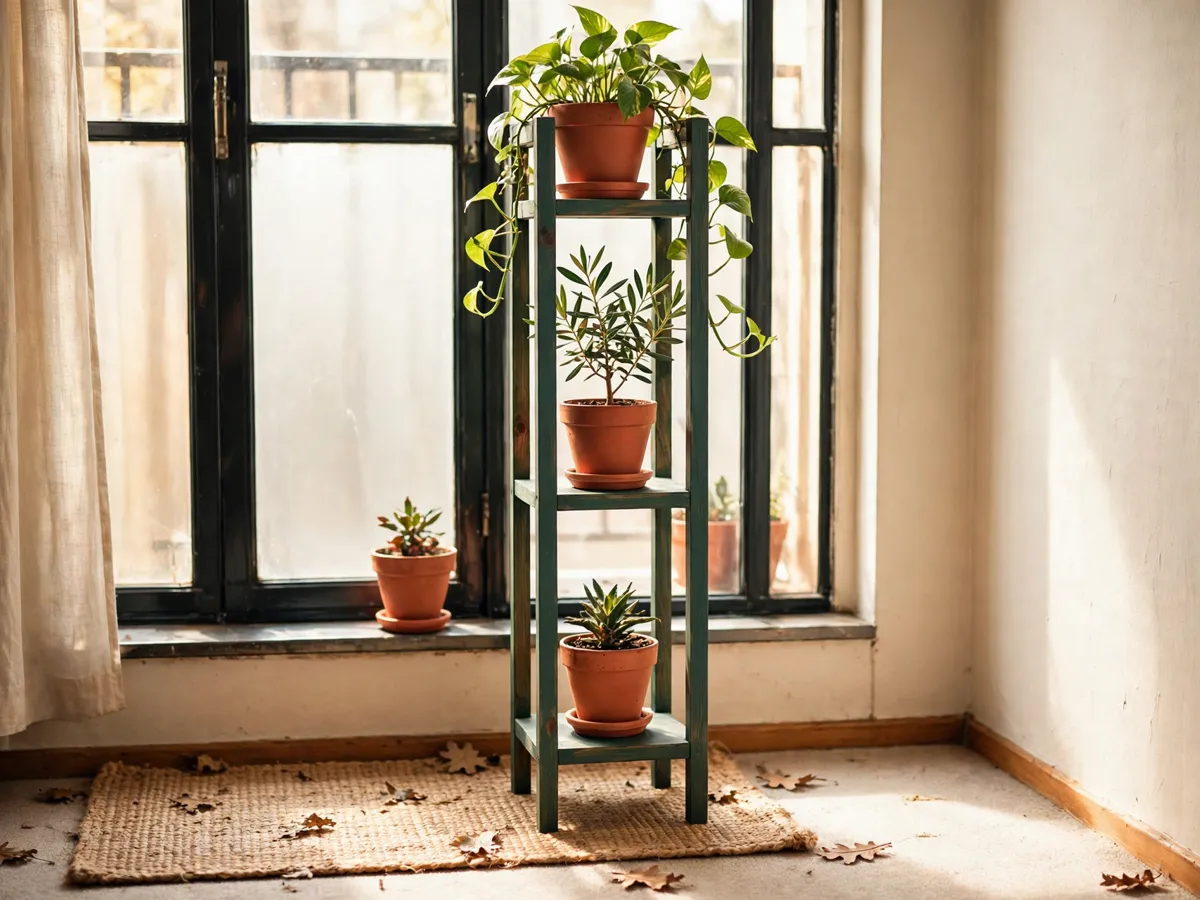
Height is the oldest deterrent in the book and the most dependable prevention in this guide, because it does not depend on the taste of the animal. A healthy adult cat clears a 30-inch surface from a standing start, so a low table, a bench under a window and a short plant stand all sit inside the jump. The working numbers are 48 inches and above, or fully suspended. Move the two plants taking the worst damage first rather than the whole collection: ten pots on high shelves is a furniture project, two pots on top of a bookcase is Tuesday.
- The top of a wardrobe, or a closed cabinet with a door you keep shut.
- A tall, narrow plant stand, each pot set back from the edge so a paw cannot hook it down. Weight matters: a light stand with a heavy pot on the top tier tips over.
- Suspended. A macrame hanger or a hook under a shelf puts the foliage above head height and out of reach of a jumping arc. The hanging plants guide covers which species trail well from a hook.
- The windowsill itself, if it is deep and the window stays shut: a pot pushed back against the glass, behind a strip of foil, forces a choice between the foil and the leaves.
Rotate the pots a quarter turn every couple of weeks anyway, since even growth is worth it, and change which one sits where once a month. A cat that cannot predict where the good chew is will spend less energy hunting for it.
7. Cat grass as an alternative
Give the chewing somewhere legal and the rest of the plan works faster. Cat grass is not a treat; it is a tray of young oat or wheat seedlings, sold grow-ready for about $4 to $8, or raised from a $3 packet of seed in a shallow dish. Grow cat grass (Avena sativa, the oat variety most trays use) and treat it as disposable by design. It is safe for cats in normal amounts, and its whole job is to be destroyed.
Set it low, in a shallow corner, a metre or two away from the plants you are protecting rather than beside them; a sacrificial pot next to a good one reads as part of the same buffet. Keep the mix damp and water it daily; grass that dries out goes tough and gets ignored. Trim the blades at four inches so the tray keeps pushing new growth, and start a second tray when the first looks shredded, which in a one-cat home is usually around two weeks.
Expect it to be chewed. A tray that survives untouched has failed at its only task. If your animal ignores grass entirely, try a wider shallow dish, or move the tray to the corner where it already spends the evening. Inspect the dish weekly and pull the matted roots before the soil surface hardens. This is the one step that gives the cat something rather than taking something away, and it is why the alternatives plan works better than barriers alone.
8. The plants to move or rehome
Some specimens should not be defended; they should be relocated. The first reason is toxicity. The ASPCA list is the reference here, and it is blunt about certain species: true lilies are the one houseplant emergency for a cat, while pothos, philodendron and snake plant all carry calcium oxalate irritation. The pet safe houseplants guide names the species that are safe to keep, and it is the page to read before you buy a replacement. The decision rule matters more: if a plant sits on the toxic side of that list and it is within reach, a deterrent is the wrong tool. Move it behind glass or out of the room.
The second reason is simpler. A calathea with forty torn leaves is not decor, and four months of deterrents on a plant the cat has already ruined costs more than the plant did. If a specimen has been chewed to stubs since spring, the honest question is whether you want it in the room at all. Bugs are a third reason, and they belong to the indoor plant pests guide rather than to this one.
To rehome: offer it to a friend with no animals, post it in a local plant-swap group, or take cuttings and pass those on instead. A plant going to a home without cats is not a failure. A plant surviving under foil and tape in your corner, half-leafed, is.
9. What to skip and what not to try
The tempting shortcuts split into two groups: things that damage the animal, and things that simply do not hold.
- A spray bottle aimed at the cat. It works in the moment and costs nothing, and it buys you an animal that flinches when you walk in. The reaction attaches to you rather than to the pot, so the plant survives and the trust does not. Water on a leaf is fine; water on a face is not.
- Concentrated repellents. Any spray whose label leads with a plant oil concentrate, in a room a cat sleeps in, is a step backwards from a tray of pebbles.
- Cayenne, chili powder and hot sauce. They irritate paws, eyes and noses, and an animal that gets a faceful learns to avoid the room rather than the pot.
- Household cleaners on the soil. Bleach, ammonia and phenol-based sprays leave residue a cat grooms straight off its paws.
- One deterrent, left in place for months. Change the texture monthly - bark chips now, pebbles later, foil on the sill between - or a clever cat solves the puzzle once and stops checking.
- Waiting for the habit to break on its own. Chewing is self-rewarding, and a plant that has survived two months of nibbling is one the animal has learned to trust. Every week of waiting adds to the damage.
Cinnamon, citrus-scented cleaners and the glitter someone online swore by all fall in the same category: noise that costs a weekend and teaches the cat nothing.
10. A week of changes that stick
Seven days, in order, cheapest moves first, so you learn which of the three habits you are dealing with.
- Day one - photograph and sort. Walk every room, photograph each damaged pot, and label the damage as chewing, digging or lying down. Pull off the dead leaves first; a tidier plant is easier to judge on day seven.
- Day two - cover every exposed pot. Pebbles or coarse pine bark chips, one to two inches, on all of them and not only the worst one. A cat that finds a single open patch will use it as a litter spot.
- Day three - the scent pass. Citrus peel pressed around each rim, and the spray on rims, saucers and table tops. Wipe the rims dry first so the tape from day four sticks.
- Day four - cat grass and surfaces. Set the tray in a corner, then foil along the sill and double-sided tape on every launch spot you photographed.
- Day five - move the top two offenders. Above 48 inches, or behind glass, whichever you already own.
- Day six - inspect. Re-seat the pebbles a cat kicked aside, press the tape back down, and check whether the grass tray is finished or ignored.
- Day seven - decide what worked. Same rooms, same angles, new photos. If one plant is still damaged, treat it as a placement problem rather than a deterrent problem: it moves, or it goes to a new home.
Weeks two and four are maintenance rather than new rules. Swap peels every three to four days, re-spray the rims twice a week, and check the tape for dust. Change one variable at a time, or you will never know which fix did the work.
11. What it costs and how long it takes
Prices are national big-box and nursery ranges read in November.
- Smooth river pebbles, one bag: $8–$14, enough for six to eight pots.
- Coarse pine bark chips: $6–$12, and a bag lasts a season.
- Citrus peel: whatever you did not cook with.
- A spray bottle and a steeped citrus mix: $5 if you own no bottle.
- Aluminum foil, one roll: $3–$5, and it covers every sill in a two-room apartment.
- Double-sided tape, one roll: $5–$8.
- Cat grass, a grow-ready tray: $4–$8, or $3 for oat seed and a shallow dish.
- A tall, narrow plant stand: $25–$60.
- A used glass-fronted cabinet: $60–$180, and it is the only barrier here that needs no refill.
The realistic budget for the first afternoon is $10–$60: texture on every pot, scent on the rims, foil and tape on the landing spots, and one tray of cat grass. Furniture is a separate decision, and nothing here costs more than the replacement plant it saves. Time is the other half of the bill. The first pass is two to three hours. Maintenance is ten minutes twice a week for the first month - peels, spray, tape, re-seated pebbles, one inspection. A habit takes two to four weeks to fade in most cats, and a determined animal takes longer or never changes, which is why moving a pot beats every purchase on this list. Everything else about keeping a collection alive sits in the full plant library, and the deterrent layer is only ever the first one.
Common questions
Will my cat simply wait until I am out of the room?
Often, yes, which is why the rules have to cover every pot rather than the three you noticed. A cat that finds one uncovered patch of soil on the fifth attempt will keep finding it. Do the whole apartment on day two, then inspect weekly for a rim the stones have slipped off. Consistency is the mechanism.
Are citrus peels actually safe if the cat bites one?
The peel is the safe form. It is not on the list of plant parts that cause serious harm, and the point of using it is that the smell discourages the visit. A cat that eats a large piece of any rind can still vomit, so rinse the fruit, press the peel into the top layer rather than leaving it loose, and swap it once it dries. Concentrated citrus oil is a different product and a different risk.
Why is vinegar not on the recommended list?
Because the smell lands on people as hard as on the cat, and undiluted acid etches a wooden sill or a stone top over time. It works for roughly a day in a small room. A steeped citrus spray is weaker, cheaper and livable, which is the trade most apartment growers prefer.
How long before the chewing actually stops?
Two to four weeks with texture on the soil, one scent deterrent on the rim and a legal alternative set low in the same room. Some cats never lose interest in a particular species, and that is not a failure of the method. If a plant is still being chewed after a month of consistent rules, move it up and back, or rehome it and buy something from the pet safe list instead.
My cat digs every pot on the windowsill - where do I start?
In this order, because it is the cheapest sequence that works: pebbles or coarse bark over the soil, then a tray of cat grass two metres away, then foil flat along the sill so the landing is unpleasant, then the two best offenders up onto a shelf. That is roughly $20 and one afternoon. Only after all four should you consider a cabinet.
Is a spray bottle of water ever the right answer?
For the plant, always; misting and watering are part of the routine. Aimed at the animal, no. It suppresses one moment and attaches the fear to you, and a cat that associates your hand with a burst of water will avoid you before it avoids the pot. Spend the $5 on the bottle and fill it with citrus water for the rims instead.