 Plant As Deco
Gardening & Planting Tips
Indoor Plants Decor Ideas: The Three-Layer Method for a Rental Living Room
By Plant As Deco · Updated 17 November 2026
A styled plant corner is not a shopping problem — it is a placement problem. The same three plants can read as clutter on one wall and as a deliberate moment on another, and the difference is heights, light and pots, in that order. This guide walks through the layering method we use in a rental living room: one anchor on the floor, a mid-level on stands and stools, a high level on shelves, matched to the light you actually have and potted so the floor stays clean.
Weekend-ready: $60–$150, one afternoon. Renter-safe, no drilling.
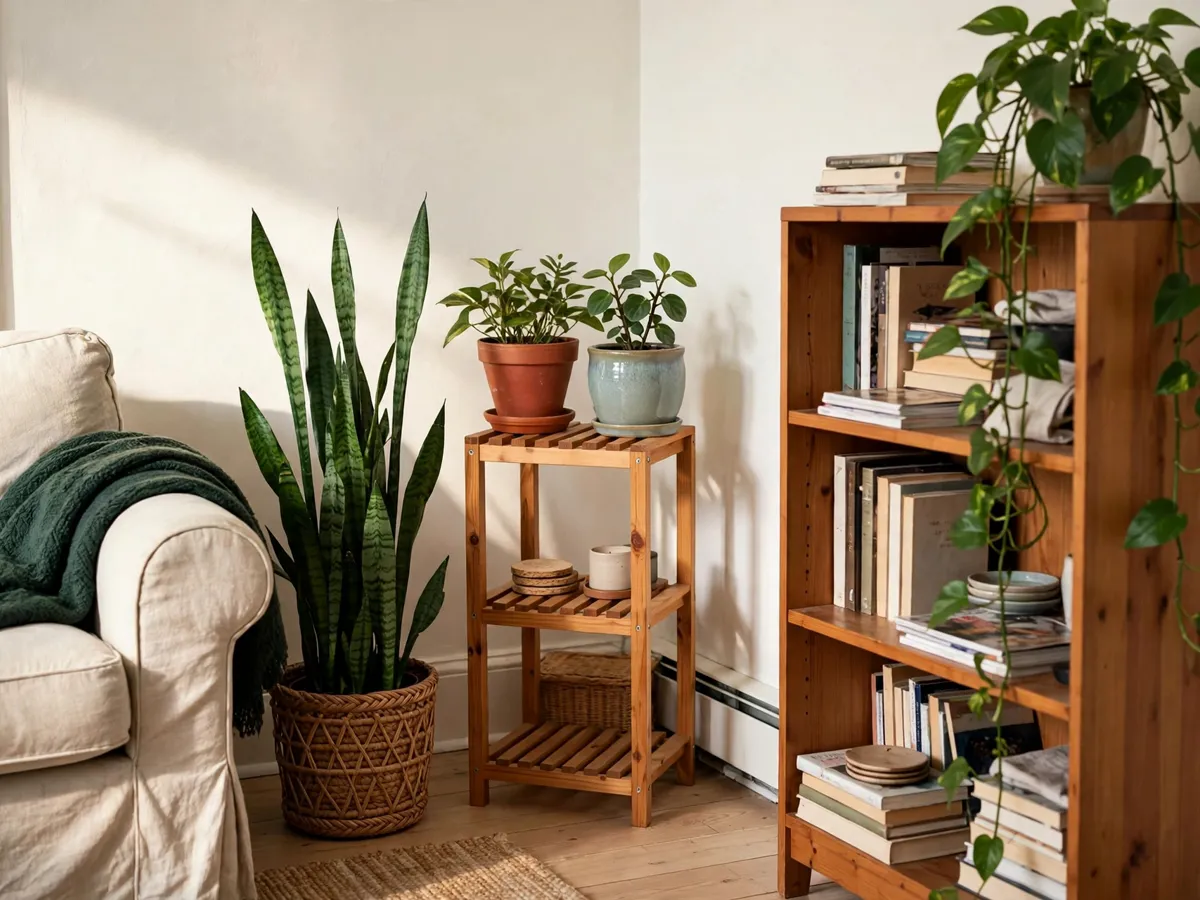
Layer by height: the floor, a stand, and a shelf
Start with the floor, because the floor is the only level that can hold a plant big enough to read as furniture. A statement plant four to six feet tall — a snake plant, a corn plant, a rubber tree grown tall — fills a dead corner the way an armchair does: it stops the eye and gives the room a full stop. Five small plants cannot do this job. They read as a collection; one tall plant reads as a decision.
The mid-level is where most of the styling actually happens, and it is the level renters skip. Plant stands eighteen to twenty-four inches tall lift a pot clear of the sofa arm and bring the leaves up to seated eye level; a cluster of two stands at different heights, or a stool pressed into service, turns three separate pots into one composition. Mid-level is also the fix for the most common mistake in a small living room — plants lined up along the baseboard like skirting boards, all at the same height, none of them visible past the sofa.
The high level is shelves, and it is where the trailing plants come from. A pothos spilling from the top of a bookcase, a string of pearls on the second shelf down — the high level connects the plants to the room instead of letting them sit in a row at one height. Wall-mounted planters are the one part of this that needs care in a rental: only with landlord-safe hardware, and only where the wall is yours to touch. The bookcase-top move in the last section does the same visual job with zero holes.
Within each level, group in odd numbers — three or five, one tall and two medium — and step the two mediums forward rather than lining them up shoulder to shoulder. The reason is how the eye reads a group: an odd group has a clear dominant element and a path to travel, tall to medium to small, so the cluster reads as one intentional object. An even group splits attention evenly between two equal elements, reads as a pair of bookends, and a pair of anything reads as symmetry — arranged, not collected. Scattered is the third failure mode: same-size pots at random heights spread along one wall, each competing to be the focal point, so none of them is.
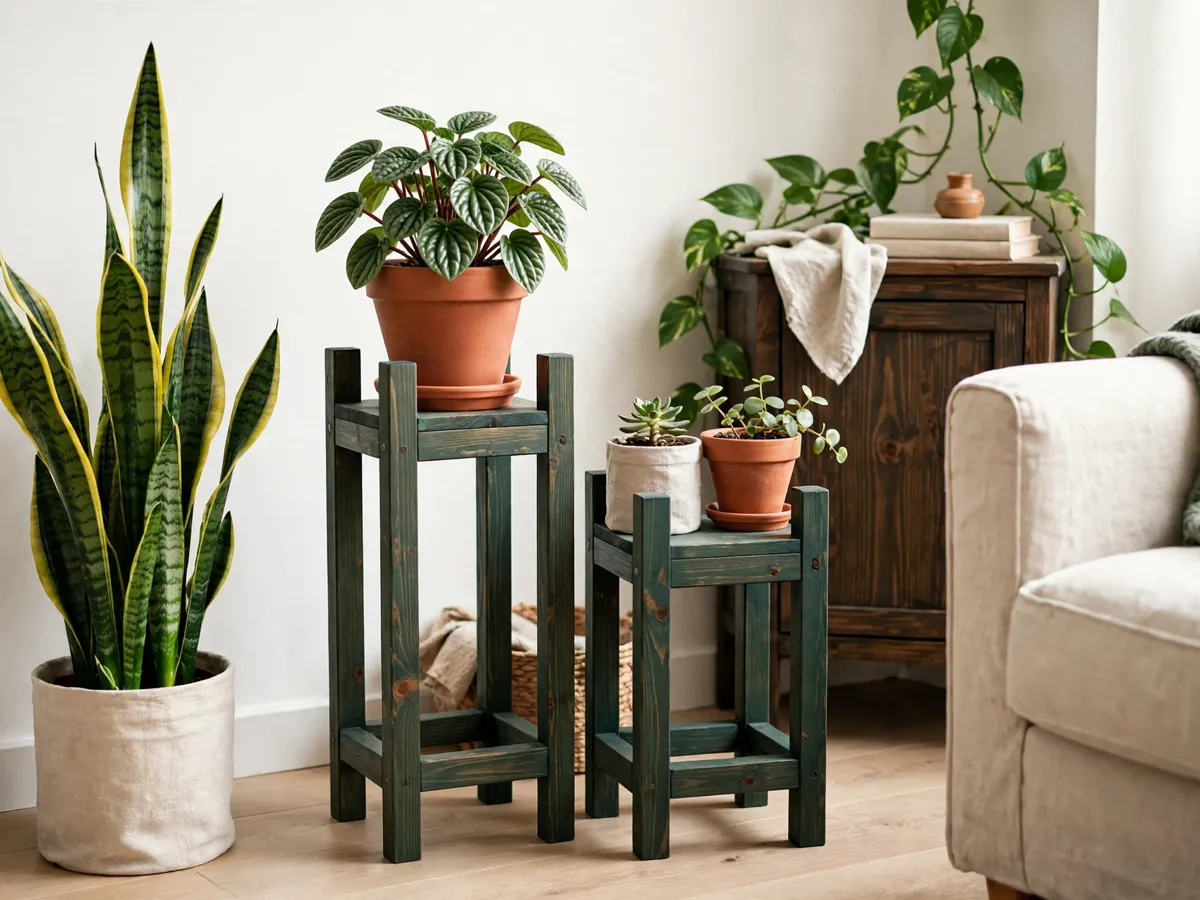
Cost: $60–$150 for the full three-level setup, or $25–$60 starting with one statement plant and pots you already own. Time: 30 minutes to place everything empty before buying a thing. Measure the corner — and the doorway — before you buy.
Light before style, every time
Here is the rule the pretty photos skip: the corner you love may be the corner the plant hates. Styling decisions are reversible; a plant slowly starving in a dark corner is not. So read the light first, choose which plant family earns the spot, and pick the pot last. The good news is that rental rooms come in three common light situations, and each has a short list of plants that genuinely live there.
Bright indirect is the first: the spot near a window with a sheer curtain, or two to four feet back from clear glass. This is the easy one. Pothos, philodendron, spider plant and a young monstera all manage here, and most of the common houseplants in the garden-center aisle were grown for exactly this condition.
The low-light corner is the second: six or more feet from any window. This is the corner that kills impulse buys. It is not hopeless — it just has a short guest list. Snake plant, ZZ plant and cast iron plant are the classic survivors, and they survive slowly: expect a plant that holds its own rather than grows much, and place it where its shape can be seen against a wall rather than lost beside one.
The north window is the third. In the northern hemisphere it is the dimmest, most even light in the room — steady through the day, never strong. Pothos and philodendron manage right on the sill, a snake plant tolerates it a foot back, and anything that flowers should be skipped because the light is simply not there for it.
That is the whole selection decision. What each plant needs after it is placed — watering intervals, the finger test, what dim light does to a watering schedule — is a care question, and it is covered properly in the low-light indoor plants guide. Match the family to the light here, then hand the plant over to that routine.
Cost: $0. Time: 20 minutes running the shadow test in each candidate spot. Check the light before you buy, never after — the test is free and the plant is not.
Pot materials: what each one does to the palette
Pots are the largest visible surface in a plant display, which makes the material a decor decision before it is a plant decision. Four material families cover nearly everything a renter will buy, and each changes the room differently.
Terracotta is the warm one: porous, orange-brown and cheap, and it pulls everything near it toward a warm, casual palette. The porosity is not just a look — a terracotta pot wicks moisture out of the mix and dries faster than a glazed one, which makes it the forgiving choice for anyone who waters on instinct rather than a schedule. Expect a white mineral crust on the surface over time; most people decide it reads as character.
Glazed ceramic is the color pop: one saturated glaze can carry a whole corner, and the weight keeps a tall plant from tipping. The trade is moisture — glaze holds water in the mix longer than bare terracotta, so the same watering habit that drowns nothing in terracotta can overwater a plant in ceramic. And always check the base: plenty of decorative ceramic is sold without a drainage hole at all.
The plastic nursery pot hidden inside a cache pot is the renter move. The nursery pot has the drainage holes; the cache pot has none; the plant stays in the first and lives inside the second. Water by lifting the inner pot out, letting it drain over the sink, and dropping it back — the floor never sees a saucer. This is how you get real drainage in a pot that looks like decor, and it costs almost nothing, because most plants come home from the store in a nursery pot anyway.
Woven baskets are the texture layer: they soften all the hard edges, and they hide an ugly nursery pot without hiding the plant. Keep a waterproof liner or a saucer inside the basket — a basket that takes drainage water directly will stain the floor and eventually rot the weave.
The cache-pot system also survives the plant’s next size up. When the roots fill the nursery pot, move the plant to the next pot size up — the repotting one size up guide covers when and how — and size the cache pot or basket to match. The styling does not change; only the hidden pot does.
| Material | Typical cost | What it does to the room | Watch out for |
|---|---|---|---|
| Terracotta, 6–8 in | $5–$15 | Warms the palette; reads casual and lived-in | Dries out fast — good for a forgetful waterer, hard on plants that want constant damp; needs a saucer |
| Glazed ceramic, 6–10 in | $15–$60 | One saturated color can carry the whole corner | Heavy to move; holds moisture longer; some are sold without a drainage hole |
| Plastic nursery pot | $2–$8, often included with the plant | Invisible when hidden — never a look on its own | Always cache-pot or basket it; never the final pot |
| Cache pot, no hole | $10–$30 | Clean floor, no saucer rings, any color you like | Lift the inner pot out to water; never plant straight into it |
| Woven basket, 8–12 in | $10–$35 | Texture and softness; hides the nursery pot | Needs a liner or saucer inside; moisture rots the weave |
One styling rule holds across all four families: pick one or two materials and repeat them, then break the pattern exactly once with a single color. A corner of five different materials reads as a pot shop; two materials and one accent read as a room.
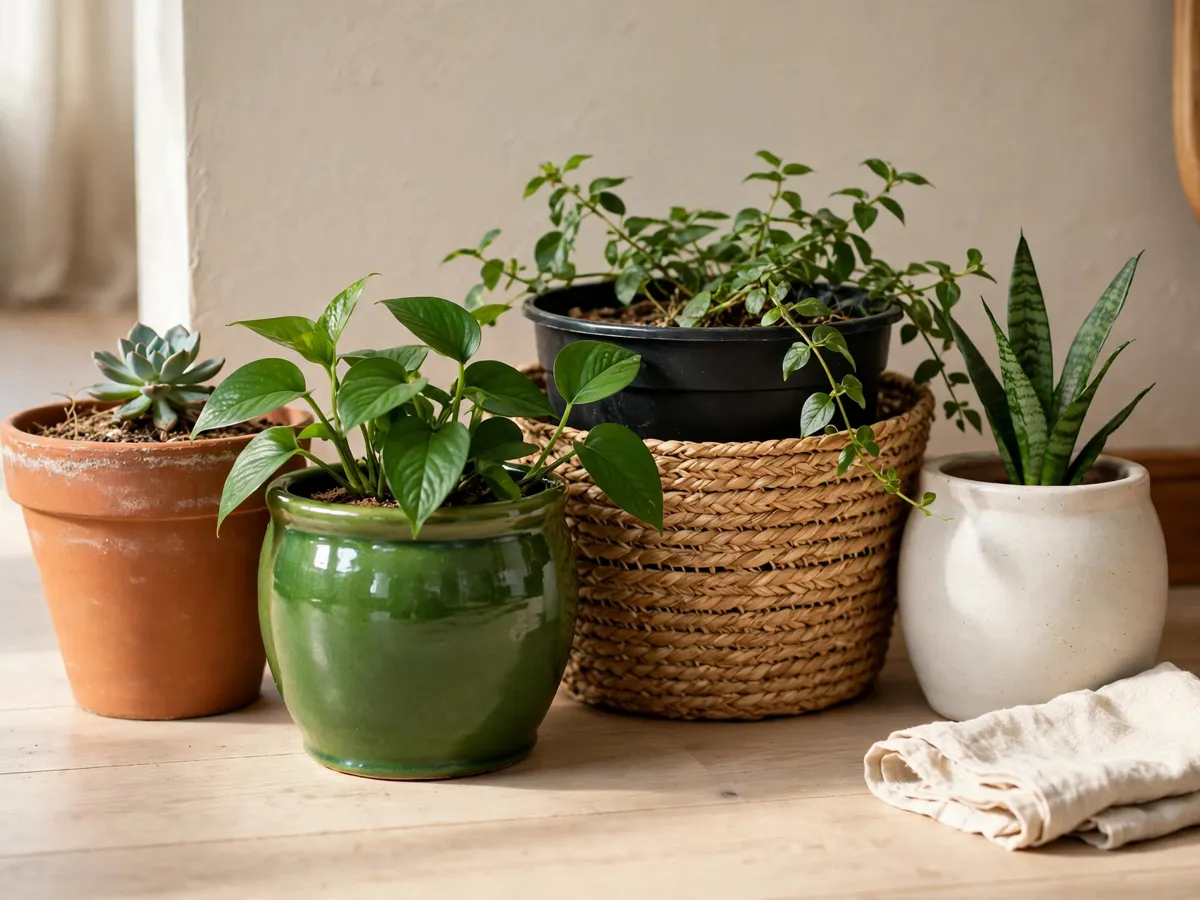
Cost: $5–$60 per pot depending on material. Time: 15 minutes to pick a family and decide where you will break it. Drainage decides before looks do — a beautiful pot with no plan for water is a slow mess.
Shelf, stand, or floor: the small-room math
In a small living room every plant placement is a purchase of floor space, so price each option in inches before you style anything.
The floor is the cheapest in hardware and the most expensive in space: the footprint of the pot is gone for good, which is exactly why it is reserved for the statement plant. One anchor owns its square foot; nothing else gets one.
A plant stand buys height without hardware. A 12-inch stand costs about one square foot of floor — a twelve-inch by twelve-inch footprint — and in exchange it lifts the pot 18 to 24 inches into the mid-level. Two stands at different heights cost two square feet and buy the entire mid-level of a corner; that is the trade, and in a small room it is usually worth it once, not twice.
A shelf costs zero floor inches, which makes it the default in a genuinely small room — with weight rules attached. Spread several small pots along the full span of the shelf rather than one heavy pot in the middle, and remember that a watered pot weighs far more than it looks on the shelf. In a rental, the freestanding bookshelf is the workhorse: no hardware, no holes, and a whole row of small pots on every level. Wall-mounted shelves and planters are the exception, not the rule — landlord permission, landlord-safe hardware, and only where the wall is yours to touch.
The trailing exception is the best space deal in the room: a pothos on top of a tall bookcase costs zero floor space, zero shelf space and zero holes, and it adds the high level to a corner that only had two. Lift it down and water it in the sink rather than pouring water over the books below. For the shelf itself — what to display around the pots and how to style the whole unit — the bookshelf ideas for small spaces guide covers the styling.
Cost: $0–$40 — nothing for the bookcase you already own, up to $40 for two stands. Time: 15 minutes with a tape measure. Check what a shelf is anchored to before it starts holding water.
What we would skip
- A fiddle-leaf fig in a low-light corner. It is the photogenic plant of the moment and it wants bright light; in a dim corner it declines slowly and expensively. Match the light situation first — the short list above is the honest version.
- Wall-mounted planters that need anchors. Drywall holes at move-out cost more than any planter, and the bookcase-top trailing plant does the same visual job for free.
- A matching set of five identical pots. Identical pots read as a store shelf, not a collection. Pick two material families, repeat them, and break the pattern once with one color.
- Five small plants where one statement plant belongs. The corner needs a full stop, and five small pots at ankle height cannot be it.
Cost: $0 to skip. Time: 5 minutes to strike them off the list.
The one-afternoon checklist
- Corner measured, statement plant sized 4–6 ft to fit it and the doorway
- Shadow test done in every candidate spot, at the hour you are usually home
- Each plant matched to its light situation before any pot was chosen
- Groups in odd numbers — three or five, one tall and two medium, mediums stepped forward
- Floor reserved for the one anchor; nothing else on the ground
- Nursery pots left on the plants, cache pots and baskets around them
- No saucers on the floor — lift-to-water cache pots instead
- Small pots spread along the shelf span, nothing heavy in the middle
- One trailing plant high on the bookcase, watered in the sink
- Pots in one or two material families, broken exactly once
Cost: $0 to run. Time: 20 minutes against the list.
Questions renters ask
How do I arrange indoor plants in a small living room?
Work in three heights: one statement plant on the floor, the mid-level on stands or a stool, and a trailing plant up high on a bookcase. Group in odd numbers — three or five, one tall and two medium — and let the mediums step forward instead of lining up. Three to five plants arranged this way beat nine scattered along one wall.
What pots should a renter use?
Keep the plant in its plastic nursery pot and set that inside a cache pot or a lined basket. The nursery pot carries the drainage holes, you lift it out to water over the sink, and the floor never sees a saucer. Terracotta warms a room and glazed ceramic adds one strong color — just check for a drainage hole before buying ceramic.
Can I put plants on a bookshelf I do not own?
Yes — that is the point of the shelf level. Spread several small pots along the full span rather than one heavy pot in the middle, and put a trailing plant like a pothos on top of the bookcase, which costs no shelf space at all. Save wall-mounted planters for walls you have permission to drill, with landlord-safe hardware.
Where should a big plant go in the room?
In the dead corner or beside the sofa — wherever the eye needs a full stop. Size it to the corner first, four to six feet for a statement plant, and check the light before you commit: bright indirect suits most common plants, while a corner six or more feet from a window belongs to the snake plant, ZZ plant or cast iron plant.
How many plants does it take to make a room look styled?
Fewer than you think: one statement plant, two mediums at a different height, and one trailer up high is a complete picture. Odd-numbered groups read as intentional because the eye gets a dominant element and a path; even-numbered pairs read as symmetry, and scattering reads as clutter. Spend on the anchor, style the rest.
Save these on Pinterest
Pin the three-height method — it is the page to open before the next plant purchase. The rest of the beginner planting guides live in the Gardening & Planting Tips collection for low-light plants, balcony gardens, and container basics you can start in a weekend.