 Plant As Deco
Gardening & Planting Tips
Raised Bed Soil Mixture: The Fill Recipe by Bed Size
By Plant As Deco · Updated 22 November 2026
A raised bed is a container with no floor, and what you fill it with decides the whole first season. This guide gives one ratio that works in any bed, shows how to convert bed size into cubic feet and bag counts, and names the mix mistakes that drown roots before July. No brand names, no product roundups, just the recipe and the honest price of each ingredient.
Weekend-ready: $60–$140 for one 4x4 bed from bagged topsoil, compost and one aeration material. One afternoon to fill.
1. What raised bed soil has to do
The fill inside a raised bed does four jobs at once, and every ingredient in the recipe is there to serve one of them.
- Drainage. Roots drown before they starve. The mix has to let water move through after a heavy rain, or the bed becomes a bathtub with plants in it.
- Nutrition. Vegetables and annual flowers pull hard for one season. The fill needs organic matter that feeds them for months, not weeks.
- Weight and structure. The mix has to be heavy enough to hold roots and tall plants upright in wind, but loose enough that a trowel goes in without a fight.
- Cost. A deep bed takes more soil than most people expect, and filling the full depth with premium bagged mix is the fastest way to spend the whole garden budget on dirt.
Every argument below comes back to these four. A mix that drains well but holds no nutrition grows stunted plants. A mix that is all compost costs too much and settles by midsummer. The recipe balances all four jobs at the lowest price per cubic foot, which is why the same ratio works for a first 4x4 bed and a full kitchen garden.
Cost: $0 to read this section. Time: five minutes. One caveat: the four jobs trade against each other, so no single ingredient scores well on all four.
2. The layer approach vs the mixed approach
Before you buy anything, decide how the bed will be filled, because the choice changes the bill. There are two approaches, and the depth of your bed picks the right one.
The mixed approach blends topsoil, compost and an aeration material evenly, then fills the whole bed with the blend. It suits shallow beds, roughly 6 to 12 inches deep, where the roots of lettuce, herbs and most annuals live in the top foot anyway. Every shovelful is the same mix, so drainage and nutrition are uniform from day one.
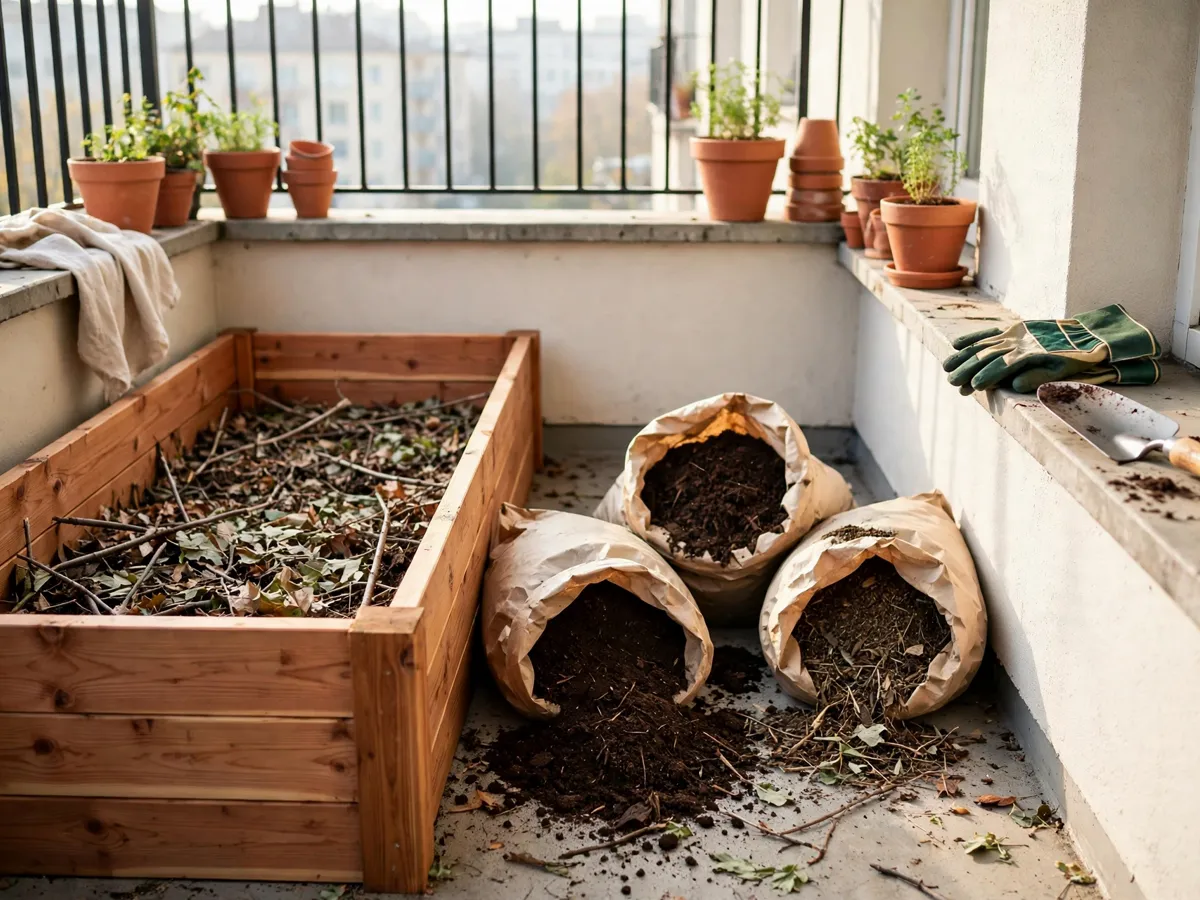
The layer approach fills the bottom third to half of a deep bed with bulky organic matter, then caps it with the mixed blend. Think of it as hugelkultur-lite: sticks, twigs, dry leaves and last autumn’s garden waste go in first, compacting over a couple of seasons while the good growing mix sits on top where the roots actually work. On an 18 to 24 inch bed it can cut the bought-soil bill roughly in half, and the decomposing bottom layer holds moisture through a dry August.
The line between the two is honest and practical: if the bed is shallower than about 12 inches, mixing the whole fill is simpler and there is no room for a bulky bottom layer anyway. If the bed is 18 inches or deeper, layer the bottom and save the money for plants. Between those depths, either works. The raised bed garden ideas guide covers sizing and materials before you commit, and the metal raised beds guide notes which tall kits genuinely need this layering to stay affordable.
Cost: $0 for the decision. Time: ten minutes with a tape measure. One caveat: a layered bottom settles, so top the bed off with an extra inch of mix the following spring.
3. The base ratio: 50-30-20 by volume
The recipe that survives a first season is a volume ratio, not a weight ratio: roughly 50 percent topsoil, 30 percent compost, 20 percent aeration and moisture material. Some gardeners describe the same blend as three parts topsoil, two parts compost, one part aeration, which is the 3-2-1 version of identical proportions. Volume matters here because a five-gallon bucket of compost weighs far more than a five-gallon bucket of perlite, and mixing by weight quietly doubles the aeration share.
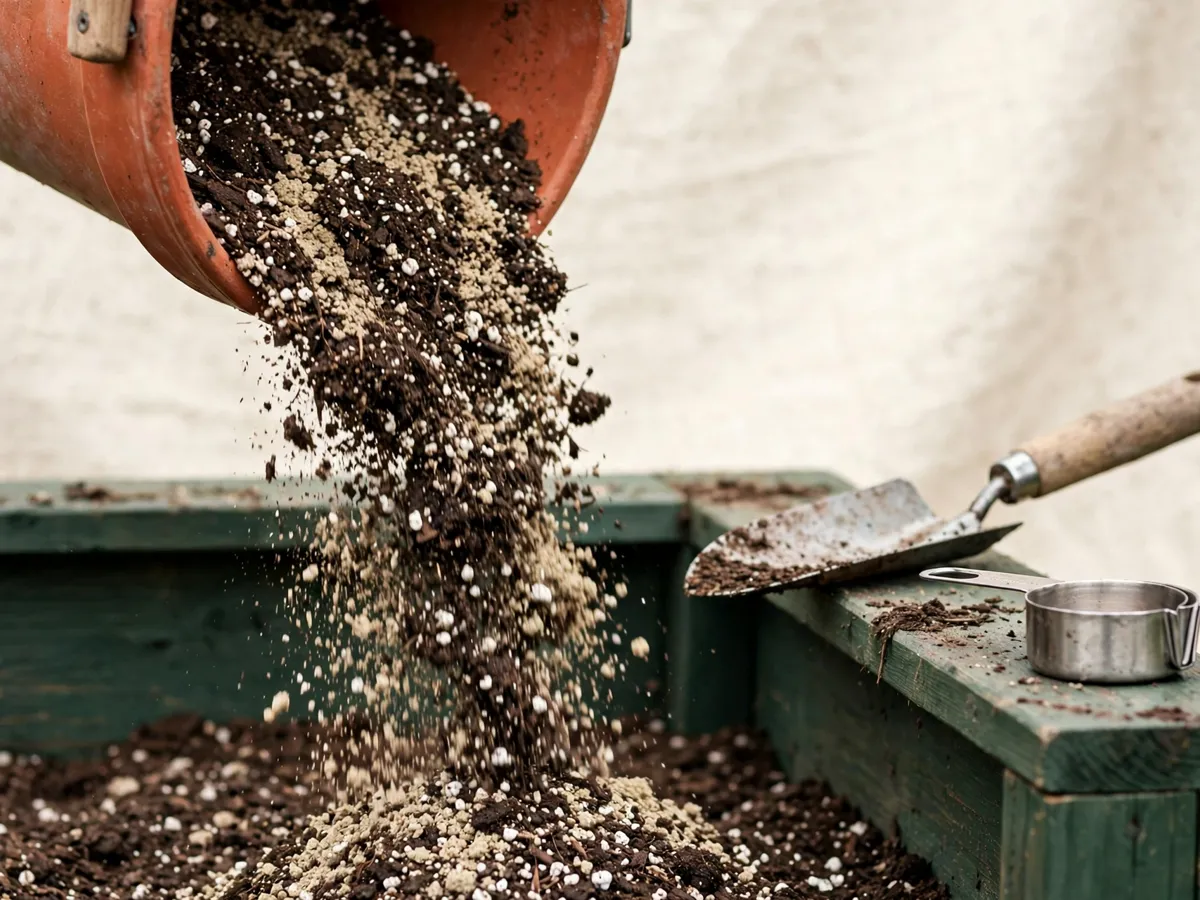
Measuring by volume is easy with any bucket you own. Count buckets into a wheelbarrow or onto a tarp: five of topsoil, three of compost, two of aeration material, then turn the pile a few times with a shovel until the color is even. One wheelbarrow load is roughly three cubic feet of finished mix, so a 4x4 bed that needs about 13 cubic feet takes four to five wheelbarrow loads.
Why not the classic equal-thirds mix, one part each of compost, peat and vermiculite? It works, but it is a container recipe scaled up, and bought by the bag it costs several times more per cubic foot. The 50-30-20 version leans on plain topsoil for bulk, which is the cheapest ingredient in any garden center, and keeps enough compost and aeration for real drainage. For a first bed on a budget, the difference in cost is the difference between filling one bed and filling two.
Cost: $0 for the ratio. Time: 20 minutes to blend one wheelbarrow load. One caveat: measure the bucket level-full, not heaped, or the compost share creeps up.
4. Topsoil: what to buy and what to avoid
Topsoil is half the mix, so getting it right matters more than any other decision on this page. The honest problem is the label confusion at the store, because three products that sound alike do completely different jobs.
- Topsoil is plain screened field soil. It is the cheapest per bag and the right bulk ingredient for a raised bed, though on its own it compacts and drains poorly, which is exactly why it gets cut with compost and aeration material.
- Garden soil is topsoil with some compost already blended in. It is a fair shortcut for the 50 percent share, but you are paying the store to do partial mixing for you.
- Potting mix is a light, soilless blend for containers, built from peat or coir with perlite. It is wrong for a raised bed: too light to anchor tall plants, far too expensive per cubic foot, and it holds water like a sponge when packed deep.
Buying by the bag suits one or two small beds. A typical 40-pound bag of topsoil runs about 0.75 cubic feet, so filling the topsoil share of a 4x4 bed means roughly nine bags. For anything bigger, bulk delivery wins: a cubic yard (27 cubic feet) of screened topsoil delivered by the truck costs about the same as twenty-plus bags and spares an afternoon of hauling.
What to avoid: heavy clay topsoil, the pale gray-yellow stuff that balls up when squeezed. In a raised bed it drains even worse than it does in the ground, because the bed walls stop water from spreading sideways. If a handful of the bulk soil you are quoted binds into a ribbon when wet, buy elsewhere or plan to double the aeration share in the recipe.
Cost: $2–$4 per 40-pound bag, $30–$60 per cubic yard delivered. Time: 30 minutes to unload bags, longer for bulk. One caveat: bag counts below assume 0.75-cubic-foot bags, so read the fine print before doing the math.
5. Compost: how much and what kind
Compost is the nutrition share, roughly 30 percent of the mix by volume. It also improves how the whole fill handles water, because well-rotted organic matter holds moisture like a reservoir while still letting air move through. Homemade compost is the cheapest version if you have a bin going, and one season of kitchen scraps and shredded leaves from a small yard covers a surprising share of one bed. The composting for beginners guide covers a setup that fits even an apartment.
Bagged compost is the backup, and a typical one-cubic-foot bag costs $3 to $6. Read the bag: finished compost should be dark, crumbly and smell like forest floor, not ammonia. Aged manure is a legitimate budget swap for part of the compost share, and a bagged aged-manure blend costs about the same per cubic foot as plain compost. If a local farm will sell or give you aged manure, it is the least expensive organic matter you will ever put in a bed.
The warning that matters: fresh manure is never a raised bed ingredient. It is too hot, meaning its raw nitrogen and salts burn seedling roots, and it can carry pathogens that belong nowhere near vegetables. Manure needs six months to a year of aging before it is safe in a growing bed. If it smells sharp, is visibly moist and strawy, or came straight from a stall this month, compost it first, then plant. One cautious first-season rule: buy compost you can see and smell before paying.
Cost: $0 homemade, $3–$6 per cubic-foot bag. Time: ten minutes to fork compost into the blend. One caveat: too much compost is a real failure mode, so hold the share near 30 percent rather than rounding up.
6. The aeration component: perlite vs vermiculite vs pumice vs rice hulls
The aeration material is the 20 percent of the recipe that keeps the blend from settling into a dense slab over one summer. All four options do the same structural job, but they behave differently and they cost very different amounts.
- Perlite is the popped volcanic glass that looks like white granules. It is inert, weighs almost nothing and never breaks down, so the drainage it adds is permanent. It is the default choice and costs about $5 to $10 for a two-cubic-foot bag.
- Vermiculite is the brown mineral flakes that hold water as well as opening the mix. It suits beds that dry out fast, but in a raised bed that already gets compost and mulch it holds more water than most seasons need. It also costs noticeably more per cubic foot than perlite.
- Pumice is the heavy porous stone. It aerates for decades without breaking down, and its weight anchors tall plants like tomatoes in wind. The trade is hauling: a bag of pumice weighs as much as gravel.
- Rice hulls are the budget wildcard. They are a genuine agricultural waste product, cost the least where available, and add both drainage and a slow organic feed as they break down. They decompose within a season or two, so a hull-aerated bed needs a yearly refresh to keep its openness.
What costs least depends on where you shop. Perlite is the reliable default at any big-box garden aisle. Pumice suits windy sites and deep-rooted crops if the weight does not put you off. Rice hulls win outright at farm-supply stores near rice country, and vermiculite earns its price only in a bed that bakes dry every July.
Cost: $5–$10 for a two-cubic-foot bag of perlite. Time: five minutes to cut it into the pile. One caveat: vermiculite is the price trap of the group, so compare cost per cubic foot before assuming the brown bag is the upgrade.
7. The moisture component: peat moss vs coconut coir
Peat moss and coconut coir do the moisture-holding work in premium mixes, and either can stand in for part of the aeration and moisture share in this recipe. The honest differences are acidity, rewetting and price.
Peat moss is acidic, with a pH well below neutral. In a small container the effect is corrected easily, but a raised bed filled largely with peat drifts acidic over the season, and most vegetables prefer near-neutral soil. Its nastier habit is rewetting: once a deep peat-heavy bed dries out completely in July heat, water beads off the surface and runs down the sides instead of soaking in, and the bed rewets only slowly and partially. Peat is also the least sustainable option, because it is strip-mined from slow-forming bogs.
Coconut coir is near-neutral in pH, rewets easily no matter how dry it got, and is a byproduct rather than a mined material. Compressed brick form makes it cheap to buy and awkward to hydrate, because a brick has to soak and fluff before use. A two-cubic-foot-equivalent of coir runs $10 to $15.
The practical take: in the 50-30-20 recipe neither is the star. Topsoil and compost already carry the water-holding work, and the 20 percent aeration share is small. Use perlite as the base of that share and treat coir or a small peat addition as a refinement if your summers run long and dry. That structure also avoids the classic first-season mistake, the bed mixed overwhelmingly from peat, which starts acidic, dries to a hydrophobic crust, and punishes seedlings twice.
Cost: $10–$15 per coir brick pack. Time: 30 minutes to hydrate coir before blending. One caveat: skip peat entirely if your tap water is already hard, since alkaline water and acidic peat fight each other all season.
8. How much you need: the cubic feet math
Every bag at the store states volume in quarts or cubic feet, and every bed states its size in inches. The bridge between them is one line of arithmetic: length x width x depth, all in feet, equals cubic feet. Convert the bed dimensions to feet first, multiply, and the result is the volume the bed holds.
- A 4x4 bed, 12 inches (one foot) deep: 4 x 4 x 1 = 16 cubic feet.
- A 4x4 bed, 6 inches deep: 4 x 4 x 0.5 = 8 cubic feet.
- A 4x8 bed, 12 inches deep: 4 x 8 x 1 = 32 cubic feet.
- A 4x8 bed, 18 inches (1.5 feet) deep: 4 x 8 x 1.5 = 48 cubic feet.
Bagged ingredients state their volume two ways. A 40-pound bag of topsoil is typically about 0.75 cubic feet. Compost and potting-mix style products usually quote quarts, and the conversion is honest but rarely printed: one cubic foot is about 25 dry quarts. So a common 20-quart bag of compost is 0.8 cubic feet, and the common 50-quart size is 2 cubic feet. Divide the bag volume into the bed volume to get the count.
Working it for a 4x4 bed, 12 inches deep, mixed fill with no layered bottom: 16 cubic feet total, so 8 cubic feet topsoil (about eleven 0.75-cubic-foot bags), 4.8 cubic feet compost (six 0.8- cubic-foot bags), 3.2 cubic feet aeration material (roughly one and a half 2-cubic-foot bags of perlite). Round up, because mixing is approximate and a spare half bag tops the bed off after the first watering settles everything.
Cost: $0 for the arithmetic. Time: five minutes with a calculator. One caveat: bag labels vary, so trust the printed volume on the bag in your hands over any rule of thumb here.
9. The layering order for deep beds
For a bed 18 inches or deeper, fill it from the bottom up in this order. Each layer is cheaper than the one above it, which is the quiet economics of the whole method.
- Sticks and twigs, four to six inches. The coarsest yard waste goes first. Small branches, prunings and corn stalks create air pockets and slowly rot into sponge-like material that holds water deep in the bed.
- Dry leaves and garden waste, four to six inches.Autumn leaves, spent mulch and pulled plants (disease-free) fill the voids between the sticks. Water this layer lightly as you go, because a bone-dry layer wicks moisture out of the mix above it in the first weeks.
- The 50-30-20 mix, most of the remaining depth.Blend and shovel the topsoil, compost and aeration material in, stopping two inches below the rim.
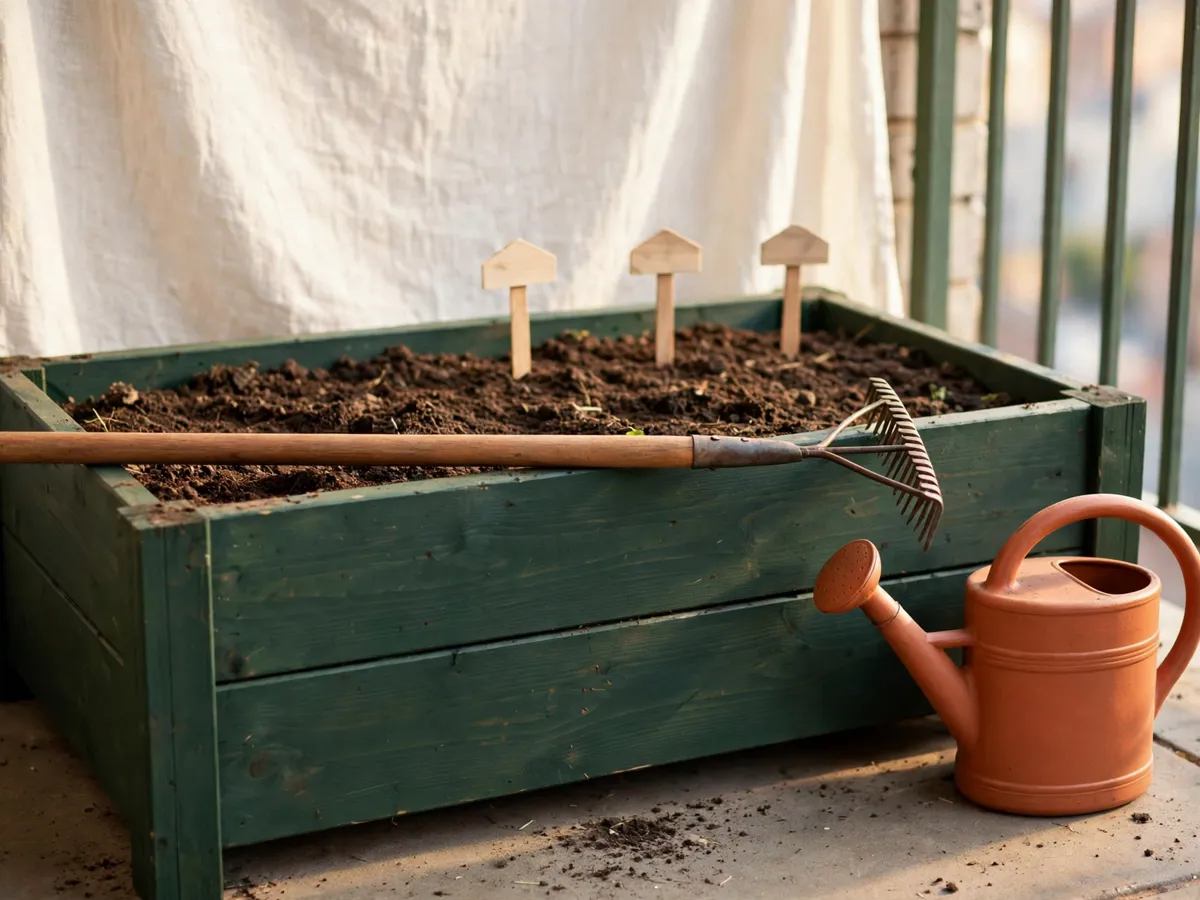
- Compost mulch, one to two inches on top. A thin final layer of finished compost or shredded leaves caps the bed, slowing evaporation and feeding the top foot where seedling roots start.
Plan on settling. The bottom layers compress by an inch or two in the first season as they decompose, so a bed filled level in April sits below the rim by June. That is fine, and topping it off with spare mix the following spring is a ten-minute job, not a re-fill.
Cost: $0 if the yard waste is your own. Time: 45 minutes to layer and fill one deep bed. One caveat: never use pressure-treated wood scraps or painted lumber in the bottom layer, since they do not belong near food crops.
10. What usually goes wrong
First-season raised bed failures are predictable, and almost all of them trace back to the fill. These are the five that drown roots or starve plants before the first tomato ripens.
- Too much peat. A peat-heavy bed starts acidic and develops a crust that sheds water once it dries. If the mix feels dusty and pale and water pools on top instead of soaking in, that is the peat problem, and the fix is working compost into the top few inches and mulching.
- No drainage path at all. Some beds sit on a concrete patio or a compacted pad with no holes drilled in the base. Water collects in the bottom, roots sit in it, and root rot follows. Any bed on a hard surface needs drainage holes and a gap for water to escape.
- Heavy clay topsoil. The cheap bulk soil that seemed like a deal turns the bed into a sealed tub after the first rains. If a wet handful ribbons between your fingers, cut it heavily with compost and aeration material, or replace part of it.
- Fresh manure burn. Raw manure added in spring is too hot for seedlings, and the burn shows up as dark, wilting young plants days after transplanting. Only fully aged, crumbly manure belongs in a growing bed.
- Overwatering a sealed bed. Even a well-mixed fill fails when watered daily on a schedule. Push a finger into the soil first: if the top two inches are still damp, wait. Raised beds dry faster than the ground, but a deep bed holds water longer than a shallow one, and the watering habit has to match the depth.
Cost: $0 to diagnose. Time: two minutes for the finger test. One caveat: most of these look identical from above in June, so check the soil with your hands before changing the routine.
11. Cost and time, honestly
Here is the real bill for the two most common bed sizes, using national-range bag prices and the 50-30-20 mixed fill. Prices move by region and season, so treat these as planning numbers, not quotes.
- 4x4 bed, 12 inches deep (16 cubic feet): about eleven 0.75-cubic-foot bags of topsoil at $2 to $4, six 0.8- cubic-foot bags of compost at $3 to $6, and one and a half 2- cubic-foot bags of perlite at $5 to $10. Total: roughly $60 to $140, and about 30 minutes of mixing plus 30 minutes of filling.
- 4x8 bed, 12 inches deep (32 cubic feet): about twenty-two bags of topsoil, twelve of compost, three of perlite. Total: roughly $120 to $270. This is where bulk topsoil delivery starts winning, because a single cubic yard (27 cubic feet) replaces twenty-plus topsoil bags at about $30 to $60 delivered.
- 4x8 bed, 18 inches deep (48 cubic feet): the layered approach fills the bottom 8 inches with free sticks and leaves, so only the top 10 inches needs the bought mix, about 27 cubic feet, at roughly $100 to $220.
The recurring yearly cost is smaller: one inch of compost over the top of each bed each spring, which for a 4x4 is about 1.3 cubic feet, or two bags, and ten minutes of work. That single refresh is what keeps the recipe working for years instead of one season.
Cost: $60–$140 for a 4x4, $120–$270 for a shallow 4x8. Time: one afternoon per bed. One caveat: buy by the printed bag volume, not the weight, when comparing prices.
Common questions
What is the best soil mixture for raised garden beds?
A volume blend of roughly 50 percent topsoil, 30 percent compost and 20 percent aeration material, mixed evenly for shallow beds and layered over free organic fill in deep ones. It is the ratio that balances drainage, nutrition, weight and cost at the lowest price per cubic foot, and it can be built from any garden center’s plain ingredients.
How much soil do I need for a 4x8 raised bed?
Multiply length x width x depth in feet. A 4x8 bed at 12 inches deep is 4 x 8 x 1 = 32 cubic feet, and at 18 inches deep it is 4 x 8 x 1.5 = 48 cubic feet. In bags, 32 cubic feet is about forty-three 0.75-cubic-foot bags of topsoil-style product, so a 4x8 is usually the point where bulk delivery becomes cheaper.
Can I fill a raised bed with just compost?
You can, but the season will show why you should not. Pure compost is loose, settles fast, holds water tightly against stems, and costs several times more per cubic foot than a blended fill. The compost share that works best is around 30 percent of the mix, with topsoil carrying the bulk.
Do I put anything in the bottom of a raised bed?
In a deep bed, yes: four to six inches of sticks and twigs, then four to six inches of dry leaves and garden waste, then the soil mix. These free layers take up volume, feed the bed slowly as they decompose, and hold moisture through dry weeks. Skip a gravel drainage layer, which does not help a bed on soil and can actually raise the waterline.
Is bagged garden soil the same as potting mix?
No, and the difference matters for raised beds. Garden soil is topsoil with compost blended in, made to be mixed into ground or raised beds. Potting mix is a light soilless blend for containers, built from peat or coir with perlite, and it is too light, too water-retentive and too expensive to fill a raised bed with.
Save these on Pinterest
Pin the ratio, the layering order and the cubic feet math - the three numbers that decide whether a first raised bed grows well or drowns. This guide and the rest of the gardening tips live together there.