 Plant As Deco
Gardening & Planting Tips
Begonia Care Indoors: Rex and Wax Light, Water and Recovery
By Plant As Deco · Updated 22 November 2026
Begonias as indoor plants split into two camps: rex, grown for its painted foliage, and wax, grown for its blooms. This guide covers the light each one wants, the watering rule that keeps fuzzy leaves out of fungal trouble, the honest verdict on tuberous types, and the way back from a leggy winter plant.
Weekend-ready: $20–$60 for one begonia, a pot with drainage and a bag of airy mix. One afternoon of setup, five minutes a week after.
1. What a begonia looks like in a room
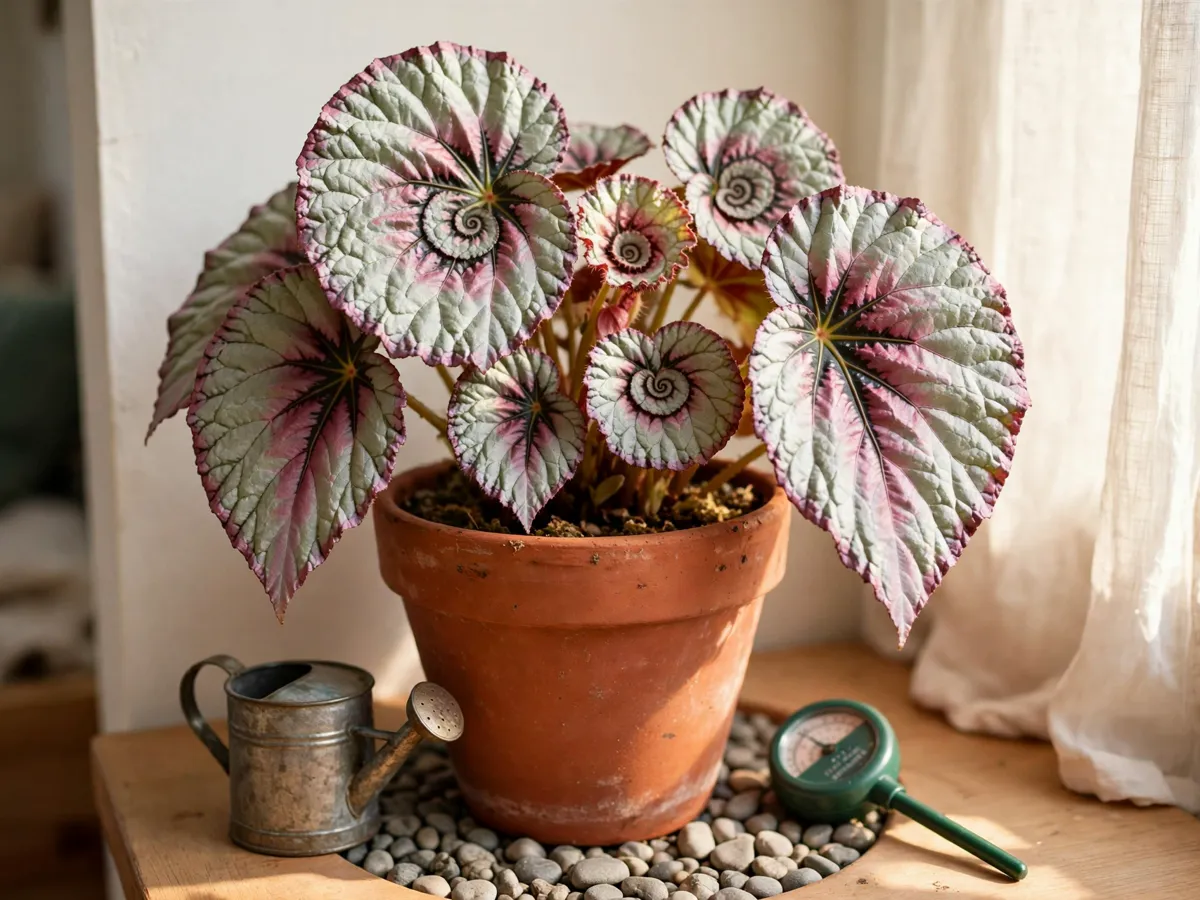
A rex begonia reads as a foliage sculpture. The rhizomatous types grown for leaves form a low, spreading mound twelve to eighteen inches across, with large asymmetrical leaves painted in swirls of green, silver, pink and burgundy. The surface carries a fine bristly fuzz, and that fuzz is not decorative trivia. It is the reason watering has a separate set of rules, which this guide gets to shortly.
A wax begonia reads as a tidy, rounded bloomer. It stays six to twelve inches tall, carries small glossy leaves, and produces clusters of white, pink or red flowers more or less continuously when the light is good. It is the bedding plant you have seen edging park beds, and it behaves indoors much the same way: undemanding, compact and generous with blooms.
Size and shape tell you what the plant wants before you touch anything else. The rex wants its leaves admired and its soil managed. The wax wants sun and pays you back in flowers. Neither one wants water poured over its head.
Cost: $0. Time: five minutes to read the plant instead of the tag. Caveat: nursery tags mix the groups up, so judge by the growth habit.
2. Rex or wax: the one distinction that changes care
Begonia care indoors comes down to a single distinction: is the plant grown for foliage or for flowers? Rex begonias are rhizomatous. They creep from a thick, horizontal stem called a rhizome that sits at the soil surface, and the roots that feed the plant grow off that rhizome. The habit makes them fussier about wet soil and far worse about water sitting anywhere on the plant.
Wax begonias are fibrous-rooted, the Semperflorens group. Roots fill the pot evenly from a normal stem, which makes them more forgiving. They shrug off a missed watering, tolerate a wider range of light, and are the type to buy first if you are unsure which camp your home suits.
Cane begonias, the angel wing types you see in older windows, are the third group. They grow upright on thick bamboo-like canes with wing-shaped leaves spotted silver. Their care sits closer to the wax side than the rex side, and they get tall instead of mounding.
Tuberous begonias are the fourth group, and the honest answer is that they fail indoors. They are grown for huge summer blooms, and as days shorten in autumn they drop their leaves and enter a real dormancy that is part of their cycle. In a dim winter room they decline while their owner waters a plant that is trying to rest. Grow tuberous types outdoors for the season, store the tuber dry and cool over winter, and keep your windowsill for rex and wax.
Cost: $0. Time: two minutes to place your plant in the right camp. Caveat: if the tag says tuberous, plan for an outdoor season instead.
3. The light tiers
Rex begonia indoor care starts with light, and the rule is bright indirect with a filter. An east window is close to ideal: direct morning sun, gentle and short, then bright indirect light the rest of the day. A south or west window works with a sheer curtain between the glass and the plant. Harsh direct sun bleaches rex leaves: the painted colors wash out to pale, flat patches and the edges crisp brown. That bleach test is your feedback loop. Washed out color means too much sun; dull color with long gaps between leaves means too little.
A wax begonia indoors asks for brighter light than a rex and rewards it with flowers. It takes more direct morning sun without complaint, and an unfiltered east window, or a south window with afternoon shade, pushes it to bloom through most of the year. In low light a wax begonia survives but stops flowering, which is the plant telling you the trade it wants to make.
Both types do best within about two feet of a window. Light intensity drops fast across a room, so a begonia on a shelf ten feet from the glass lives in a completely different climate than the same plant on the sill. Sheer curtains, a few feet of distance and one watchful week after any move are the whole adjustment kit.
Cost: $0–$15 for a sheer curtain if you need one. Time: ten minutes to place the pot and check it. Caveat: give any move a full week before you judge the result.
4. Water discipline: the soil, never the leaves
Water the soil, not the plant. That is the entire discipline, and it matters more for begonias than for almost any other houseplant you will bring home. Rex leaves carry a fine fuzz that holds water where it lands, and a leaf that stays wet in still air is an open invitation to fungus. Every watering method that wets the foliage, misting included, works against the plant.
Use the finger test. Push your index finger into the mix up to the first knuckle, about an inch. If it feels cool and damp, wait. If it feels dry, water. When you do, pour slowly around the soil surface until water runs from the drainage hole, then empty the saucer ten minutes later so the base is not sitting in a puddle.
Rex begonias rot faster than wax begonias because of where they grow from. The rhizome lies along the soil surface, half exposed, and a rhizome that sits in saturated mix for days starts turning soft and black from the middle. A wax begonia with its ordinary root system shrugs off a heavy watering that would finish a waterlogged rex.
The pot makes the rule enforceable: at least one drainage hole, terracotta if you tend to overwater since it breathes and dries evenly. If you like a decorative outer pot, keep the plant in its inner nursery pot, water the inner one, and lift it out to dump the runoff. The watering routine behind the finger test is the same for the whole collection, and the care of houseplants guide breaks it down step by step.
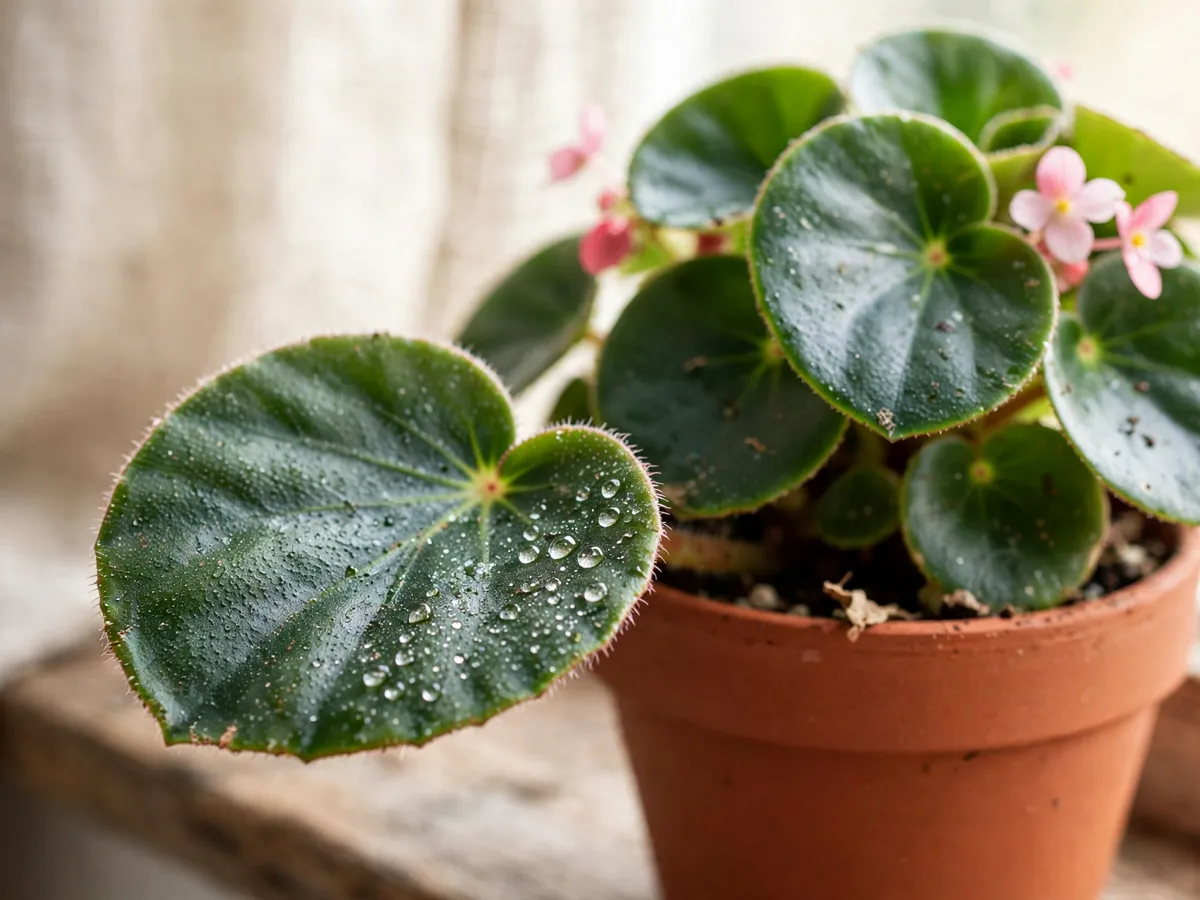
Cost: $0 for the finger test, $10–$20 if you are missing a watering can. Time: three minutes per plant. Caveat: one wet-leaf watering cancels a month of careful ones.
5. Soil and pots
Begonias want an airy, well-draining mix that holds a little moisture without packing solid. A standard bagged houseplant mix is the base; loosen it with a handful or two of perlite or fine bark so water runs through and air reaches the roots. Squeeze a fistful: it should spring back apart, not form a wet clay ball. Dense mix stays saturated, and saturated mix is how rhizomes rot.
Shallow pots suit the growth habit. A rex rhizome creeps sideways along the surface, so a wide, shallow container gives it room to travel, and the lower soil volume dries faster than a deep pot of the same mix. A wax begonia is less picky and grows fine in a standard pot, but shallow suits it too.
The saucer rule is not optional. Water that pools in a saucer wicks back up through the drainage hole and keeps the bottom of the rootball soaked. Empty every saucer ten minutes after watering, or water in a sink and let the pot drain before it returns to its tray. A pebble tray still works for humidity as long as the waterline sits below the pebbles and the pot base above the water.
Cost: $10–$15 for a bag of mix plus a small bag of perlite. Time: ten minutes to blend. Caveat: dense mix undoes every good watering habit you build.
6. Humidity, honestly
Average home air is drier than a begonia would choose, and rex types notice first, with crispy brown leaf edges. A pebble tray helps, with honest limits. Fill a shallow tray with pebbles, set the pot on top, and keep water in the tray below the tops of the pebbles. Evaporation lifts the moisture in the air right around the plant. What a pebble tray does not do is transform a dry heated room; the effect is local and modest, and it works alongside good watering rather than instead of it.
Grouping plants is the second free lift. Several pots within a foot of each other create a dammer pocket than one pot alone, because each plant releases moisture from its leaves and soil. A shelf of three plants helps the one that needs it most.
Misting is the wrong tool for begonias, and it is worth saying plainly. It wets the fuzzy leaves, and wet leaves in still air are the exact conditions powdery mildew and botrytis need. A spray bottle also raises the humidity of a room for about a minute before it evaporates. Keep foliage dry, water the soil, and let a tray and plant grouping do the humidity work.
Cost: $5–$10 for a tray and a bag of pebbles. Time: five minutes to set up. Caveat: keep the pot base above the waterline or you have built a sitting-water problem.
7. Temperature and placement
Begonias are comfortable in the same temperatures you are, roughly 65 to 75 degrees Fahrenheit. Growth slows in the low sixties and stalls below about 55, so a windowsill that turns cold at night in winter is worth watching. Rex types sulk harder in the cold than wax types do.
Placement is about avoiding two extremes. A cold draft from an exterior door or a single-pane window in January chills the roots and spots the leaves. A radiator or heating vent does the opposite damage: it bakes the foliage dry and strips the humidity the plant just gained. A spot a few feet from either, near bright indirect light, holds steady all year.
Cost: $0. Time: two minutes to pick the spot. Caveat: a door that swings open to freezing air counts as a draft, even indoors.
8. Feeding: light doses, growing months only
Feed begonias during the growing months and stop in winter. From spring through early autumn, add a balanced liquid feed diluted to quarter or half the label strength, poured onto already-damp soil, every third or fourth watering. Begonias are light feeders: full-strength fertilizer salts build up in the pot and burn the leaf edges brown, which looks exactly like the low-humidity damage you were trying to fix.
From late autumn through winter, stop. Growth is slow in the reduced light of the cold months, and a resting plant cannot use the feed. Resume when fresh leaves appear in spring. If you repot into fresh mix, skip feeding for the first couple of months entirely, because new mix carries nutrients of its own.
Cost: $10–$15 for a bottle of liquid feed that lasts a season. Time: one minute per feeding. Caveat: feed damp soil, because dry roots burn on contact.
9. Powdery mildew and other alarms
Most begonia problems announce themselves on the leaves, and three of them are water problems wearing different costumes.
Powdery mildew looks like a dusting of white flour across the leaf surface. It does not wipe off, and it spreads fastest on fuzzy leaves that stayed wet overnight in still air. Remove the worst leaves, space the plant so air moves around it, and switch to soil-only watering. The mildew usually stalls once the foliage stays dry.
Botrytis is the second fungal alarm: soft, gray-brown fuzzy patches on leaves and stems, usually where a wet leaf rested against another leaf or the pot rim. Trim the affected parts off with clean scissors, put them in the trash rather than the compost, and dry out the watering routine.
Root rot and underwatering can look alike, because both wilt the plant. The soil decides which one you have. Bone-dry mix with a wilted plant is thirst: water thoroughly and it perks up within hours. Wet or damp mix with a wilted plant is rot: the roots have failed and cannot drink even though water is there. Unpot, trim the soft black roots, and repot into fresh airy mix, in a smaller pot if most of the roots are gone.
Reading the leaf takes you the rest of the way. Pale washed-out patches mean too much sun. Small new leaves with long gaps between them mean too little. Crisp brown edges point at dry air or salt buildup from overfeeding. One yellowing older leaf now and then is normal shedding; a pattern across the whole plant is a message.
Cost: $0 if caught early, $10–$15 for fresh mix if roots are lost. Time: ten minutes to inspect and trim. Caveat: bin the sick leaves, because a compost pile spreads the spores.
10. The leggy winter recovery
Low winter light stretches begonias. A rex that held a tight mound in September turns sparse by February, stems lengthening with wide gaps between smaller leaves. The plant is reaching for light, and no feeding or watering schedule fixes that. The recovery is two moves: prune it back and give it brighter light.
Prune back to a node. With clean scissors, cut each stretched stem back to just above a node, the small bump where a leaf meets the stem. The plant regrows from those nodes into a tighter shape, and the regrowth comes in with whatever light you give it afterward, which is why the light move matters as much as the cut. Shift the pot closer to the window, or give it a sheer-curtained south exposure if you have one. The winter houseplant care guide covers the full cold-season adjustment, including how far light drops between November and February.
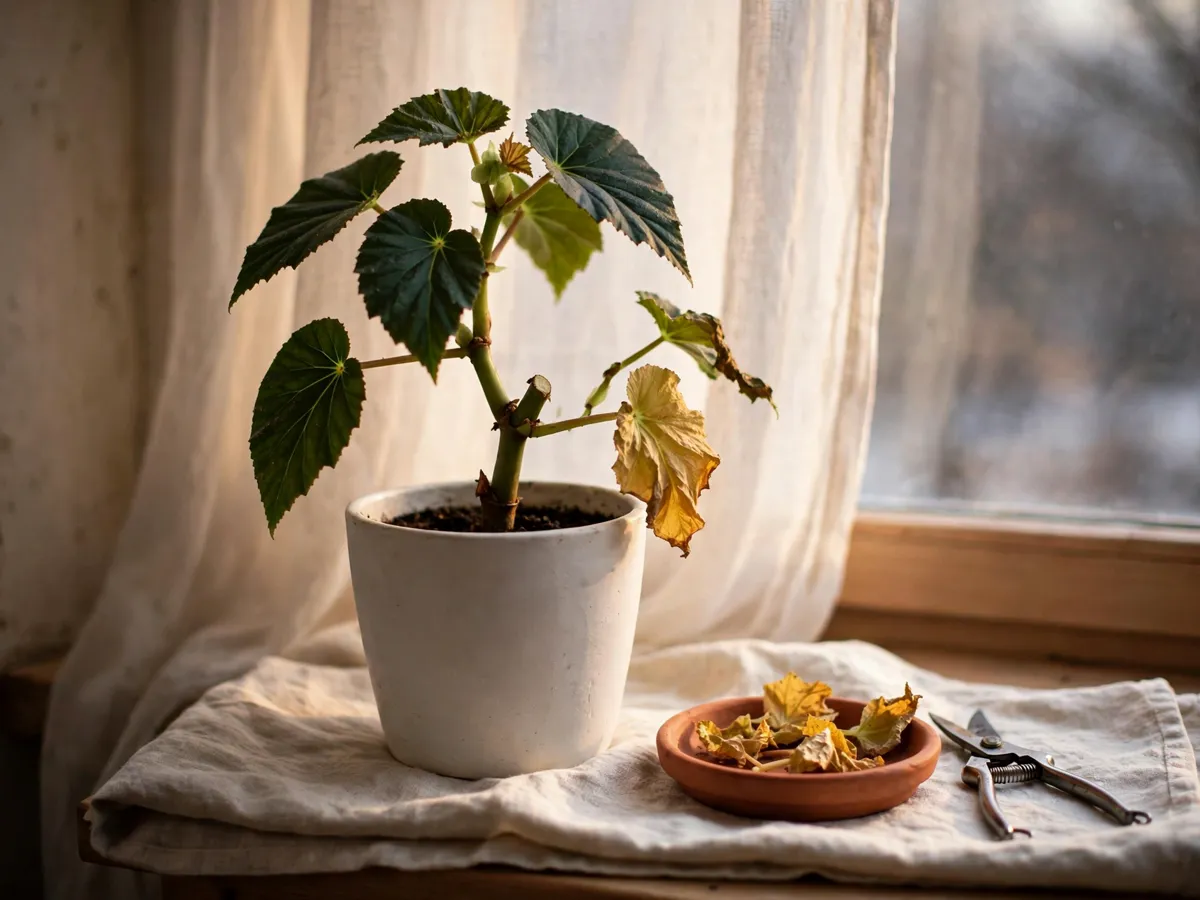
The cuttings are the honest by-product. A three to four inch tip cutting with two or three leaves roots easily: set the bare node in a small jar of water, or plant it straight into airy mix and keep it lightly damp. Roots show in a few weeks, and each cutting becomes a free plant. Rex begonias go one further: a wedge of a healthy leaf, pinned cut-side down on damp mix, can sprout plantlets of its own. The water and soil propagation guide walks through both rooting methods step by step. Winter cuttings root slower than spring ones, so expect some patience.
Cost: $0, since the cuttings are the bonus. Time: fifteen minutes to prune and pot. Caveat: recovery takes weeks, not days, and the new shape depends on the new light.
11. Repotting: shallow, wide, in spring
Repot when the plant asks rather than on a schedule. The signs are roots circling the pot or emerging from the drainage hole, water running straight through without wetting the mix, or growth stalling in good light during the growing season. For most begonias that lands every year or two.
Go shallow and wide rather than deep, one size up. A wider pot gives a rex rhizome fresh surface to creep across, and the modest soil increase dries predictably. Deep pots hold a saturated layer at the bottom that begonia roots never use. Spring is the timing window, because the plant is entering its growth phase and recovers fastest. The one size up repotting guide covers the process, including how to tell a rootbound plant from one that is simply hungry.
Cost: $8–$15 for a shallow pot and fresh mix. Time: twenty minutes. Caveat: spring repots recover fastest, so an autumn discovery can wait until April.
12. Are begonias pet safe?
No, and this is worth stating plainly rather than burying in small print. Begonias are toxic to cats and dogs. The plant contains soluble calcium oxalates, and the rhizome or tuber carries the highest concentration. A pet that chews a leaf typically gets mouth irritation, drooling and sometimes vomiting. A pet that digs into the pot and eats part of the rhizome can get much sicker, and that is the scenario to prevent.
Keep begonias on a high shelf or in a room the pet does not visit, and sweep dropped leaves quickly, since a fallen leaf still carries the oxalates. If your pet treats every plant as a chew toy, pick your windowsill from the pet safe low light houseplants list instead and enjoy begonias in other rooms.
Cost: $0. Time: two minutes to reposition the pot. Caveat: dropped leaves still count, so sweep before a pet finds them.
Common questions
How often should I water a rex begonia indoors?
Water when the top inch of soil feels dry on the finger test, which lands anywhere from every few days in a bright, warm room to about weekly in a cooler one. Pour onto the soil until water runs from the drainage hole, then empty the saucer ten minutes later. Check the soil each time rather than following a calendar, and keep the water off the leaves.
Can a wax begonia live indoors all year?
Yes. Wax begonias are fibrous-rooted and keep growing and blooming indoors through winter in good light, which is what makes them such a reliable windowsill plant. Tuberous begonias are the ones that fail as houseplants, because they need a real leafless dormancy each winter and decline in a dim room instead.
What is the white powder on my begonia leaves?
Almost certainly powdery mildew, a fungus that shows up as a white, flour-like film and does not wipe off. It takes hold on fuzzy leaves that stay wet in still air. Remove the worst leaves, give the plant breathing room, and switch to watering the soil only so the foliage stays dry.
How do I fix a leggy begonia?
Prune the stretched stems back to just above a node and move the plant into brighter light, because stretching is the response to low winter light and the regrowth follows the light you give it. Root the tip cuttings in a jar of water or straight into airy mix; each one grows into a new plant.
Are begonias safe for cats and dogs?
No. Begonias contain soluble calcium oxalates and are toxic to cats and dogs, with the rhizome or tuber the most concentrated part. Chewing a leaf causes mouth irritation and drooling, and eating the rhizome is worse. Keep the plant out of reach, sweep dropped leaves, or choose pet safe plants instead.
Save these on Pinterest
Pin the light tiers and the watering rule, the two pages of begonia care that decide whether the plant thrives. This guide and the rest of the gardening tips live together there.