 Plant As Deco
Gardening & Planting Tips
Indoor or Outdoor Plants: Per-Plant Verdicts and Timing
By Plant As Deco · Updated 22 November 2026
You bought a plant, and the question on your mind is one line: does it live on the windowsill or the balcony? This guide gives the verdict for five plants people ask about most, kalanchoe, poinsettia, croton, calla lily and aloe, with the hardiness, light and dormancy reasoning behind each call, plus the two dates a year when the answer changes.
Weekend-ready: $18–$50 per plant for the plant, a pot with a drainage hole and a bag of mix. One afternoon to settle it in, ten minutes a week to check on it.
1. How to read the verdicts
Behind almost every indoor-or-outdoor question sit three smaller questions, and answering them gives you the verdict for any plant, including the ones this guide never mentions.
- Hardiness. Can the plant survive the coldest night your address produces? Four of the five plants here are frost-tender: damage begins near 40 F and a freeze kills the roots. A plant like that lives outdoors year-round only where freezes never happen, roughly zone 10 and above. Everywhere else, the honest pattern is summers outside and winters in, and that pattern is a normal life cycle, not a compromise.
- Light. Can your window deliver what the plant wants? A window shines from one direction for part of the day; open sky shines from everywhere, all day. Plants that merely hold on at your brightest window grow actively in ordinary outdoor shade, which is why the summer holiday is worth the carrying.
- Dormancy. Does the plant need an annual rest? Some plants go dormant for weeks or months, a stretch of cool or dry conditions where growth stops and the plant lives on stored reserves. Winter care means protecting that rest, not watering and feeding through it.
The five verdicts below apply those checks one plant at a time. Sections 7 and 8 carry the move dates that apply to all of them, section 9 explains why the same plant grows differently on each side of the glass, and section 11 carries the pet flags. The weekly care of houseplants routine covers the ten minutes a week that keeps any of them alive indoors between verdicts.
Cost: $0. Time: 10 minutes to check your coldest nights and your window directions. Caveat: zone maps describe averages, not your patio.
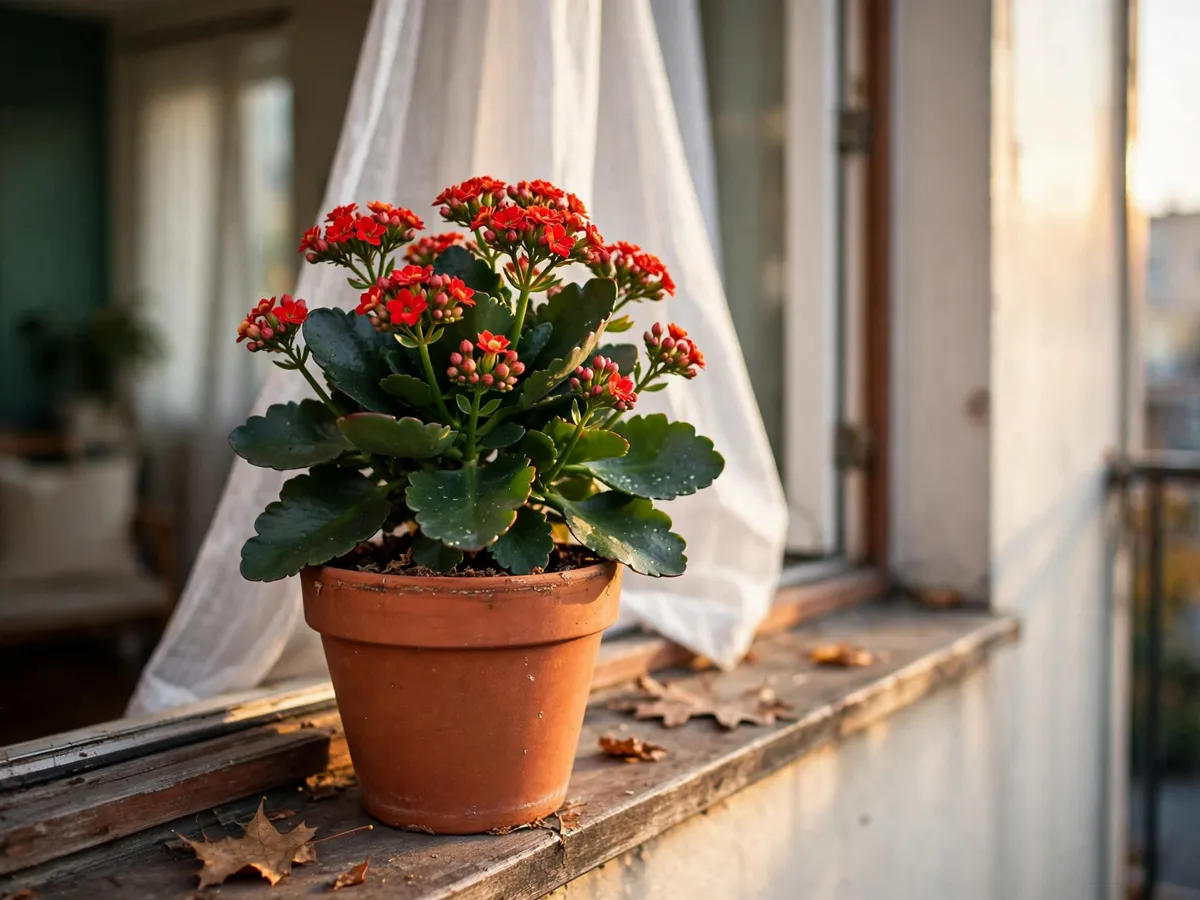
2. Kalanchoe: flexible indoor, summers outside
Verdict: kalanchoe is the flexible one, a genuinely good indoor plant that grows even better outdoors in summer. Frost and the rebloom routine are what decide the call.
Hardiness settles the winter half. Kalanchoe is a succulent from dry Madagascar with no spare cold tolerance: leaf damage starts around 40 F and frost is fatal. In frost-free climates it grows outdoors year-round as a small flowering bedding plant; across most of the US it spends winter on a windowsill and summer on a porch.
Light decides how well each half goes. Indoors, give it your brightest window, south or west facing, where the thick leaves stay compact and the flower clusters hold for weeks. Outdoors it takes full morning sun with light afternoon shade in hot regions.
Water discipline is the care part. It is a succulent: water thoroughly, then let the mix dry to the bottom of the pot before watering again, and cut the frequency roughly in half through winter. Soil that stays damp rots the roots, and a terracotta pot with gritty mix makes the rhythm easy to hold.
Reblooming is the patient part. Kalanchoe is a short-day plant, so to set buds again it needs about six weeks of long, uninterrupted nights in fall, roughly fourteen hours of darkness. A cardboard box over the plant each evening, or a spare room where nobody flips a switch at night, does the job. One stray reading lamp can break the cycle, which is why a kalanchoe that never reblooms usually failed the darkness routine rather than the watering.
Toxicity flag: kalanchoe is toxic to cats and dogs, seriously so. Section 11 has the details.
Cost: $8–$25 for the plant, $10–$20 for a pot and gritty mix. Time: 15 minutes to settle it in. Caveat: the rebloom is earned in the fall, not the spring.
3. Poinsettia: indoor seasonal, outdoor shrub only frost-free
Verdict: a poinsettia is a seasonal indoor plant across most of the US and a permanent outdoor shrub only where freezes never happen, roughly zones 9 to 11. The year runs on different rules in each place.
Outdoors where winters allow it, a poinsettia in the ground becomes a leggy shrub that can reach head height, drops its leaves in the dry season, and flushes red bracts on its own schedule each year. That is what the plant actually is, a dry-climate shrub from Mexico, not a decoration.
Indoors everywhere else, it arrives in December in full color, holds the bracts for two to three months, and then becomes a plain green plant that most people compost in January. Keeping it year-round is a patient hobby rather than a routine: after the color fades, cut the stems back by about a third, grow it as a leafy patio plant through summer, then start ten weeks of long nights in early fall, fourteen hours of unbroken darkness, which is what triggers the color. Miss a few nights and the bracts come in patchy or not at all. The reward is a plant that colors up again around late November, usually taller and looser than the store version.
Sap flag: cut stems drip a milky latex that is mildly irritating to skin and mouths. Wash your hands after pruning and keep cut stems away from pets and children.
Cost: $8–$20 for the seasonal plant, or $0 to keep last year going. Time: 10 minutes a week, plus the fall darkness routine. Caveat: composting it in January is a respectable choice.
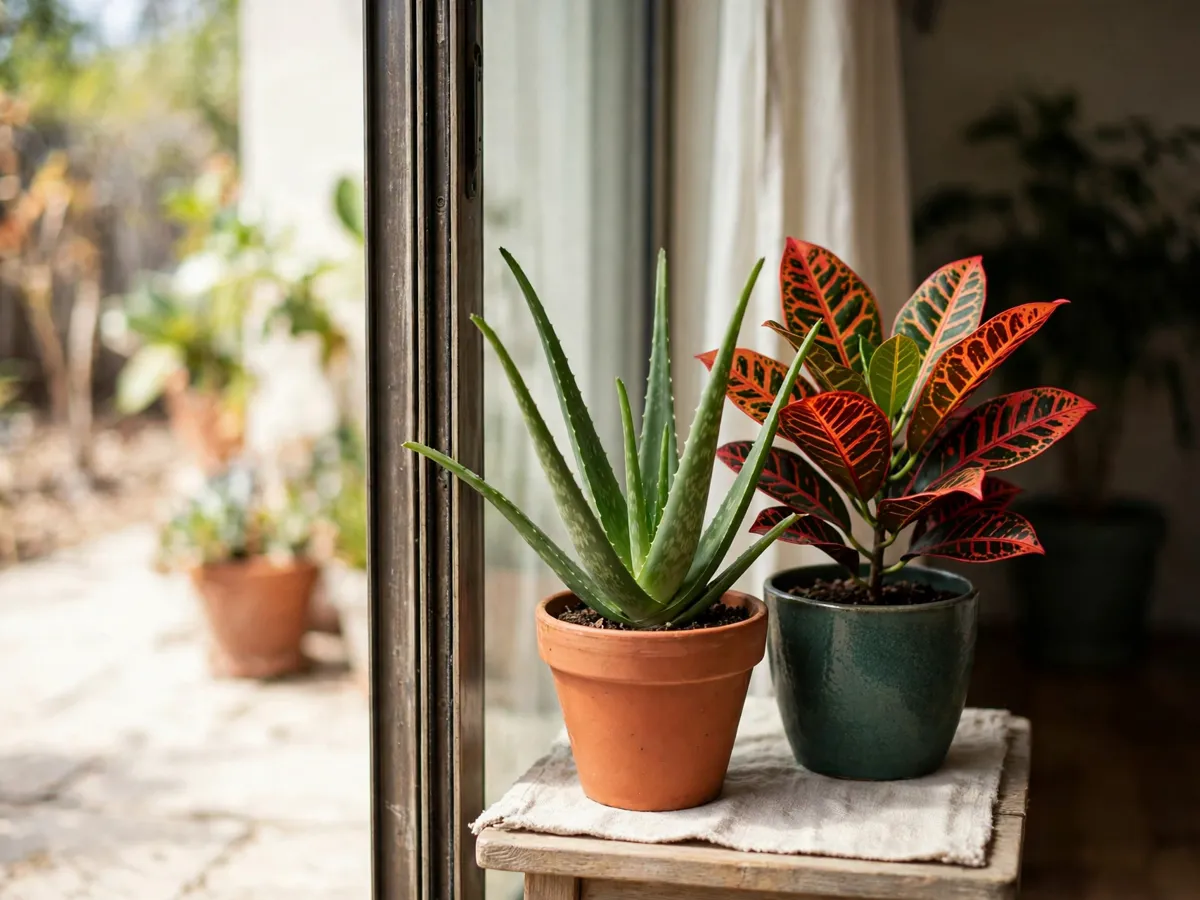
4. Croton: indoor in most homes, summers in bright warm shade
Verdict: a croton is an indoor plant for most US homes, one that goes outside only for summer vacations in bright, warm shade, and comes back in before the nights cool.
Hardiness is the strictest of the five. Crotons come from the warm South Pacific and Southeast Asia, and cold is their clearest weakness: a croton sulks below about 60 F, takes leaf damage in the 40s, and does not survive frost. That makes it a year-round windowsill plant through nearly every American winter, whatever the summer plan is.
Light runs the color. Indoors a croton wants your brightest window, and the foliage is the gauge: red, orange and yellow patterning holds in high light and washes toward plain green in dim rooms. If the color fades, the answer is a brighter window, not more water. The same color logic sorts the whole colorful houseplants list.
Outdoors, the right spot is bright warm shade: under a porch roof, beside a wall, in dappled tree shade. Gentle morning sun deepens the color in most climates; harsh afternoon sun can bleach and scorch the leaves. Give the pot shelter from wind, because a broad croton catches a lot of it.
The famous warning: crotons drop leaves when they are moved or chilled. A new plant sheds some lower leaves after you bring it home, a relocated plant sheds after the move, and a plant in the path of a cold draft or the dry rising heat off a radiator sheds steadily. Make each move once and gradually, and do not answer leaf drop with extra water, because soil is rarely the problem. Humidity is the other input: a croton in heated winter air benefits from a pebble tray or a place among other plants.
Sap flag: the sap is a skin and stomach irritant, and chewing any part of the plant is harmful to pets and children.
Cost: $15–$45 for the plant and a pot with drainage. Time: 15 minutes a week including leaf inspection. Caveat: some leaf drop after a move is normal, a bare stem is not.
5. Calla lily: outdoor in warm zones, container cycle elsewhere
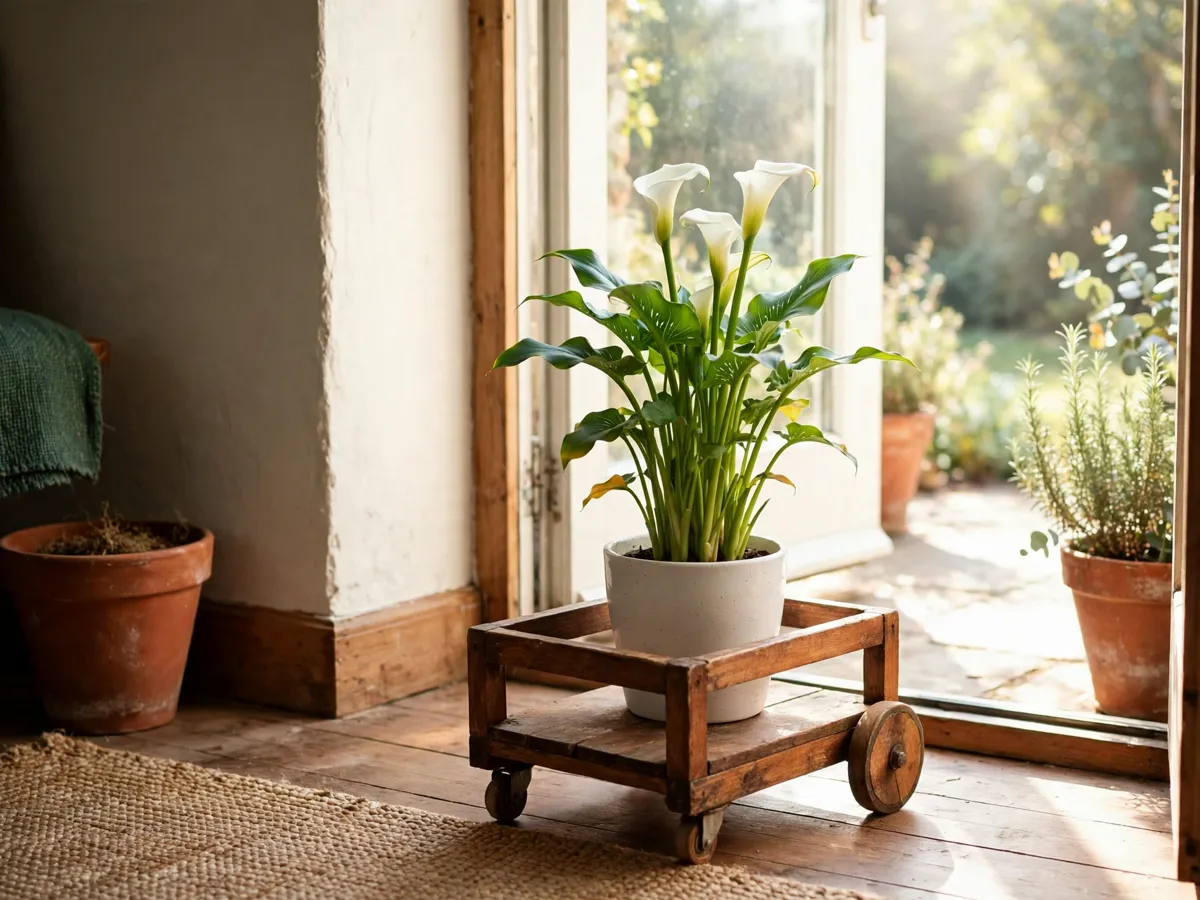
Verdict: a calla lily is a true outdoor plant in warm zones, roughly zones 8 to 10, and a container plant on an indoor-outdoor cycle everywhere else. It is the one plant in this guide whose honest default is outside.
Hardiness: callas grow from a rhizome, a chunky underground stem that stores the season. In the ground in zones 8 to 10 the rhizome survives mild winters, especially under a blanket of mulch, and the plant returns each spring on its own. Where winters freeze, the rhizome has to overwinter dry and cool: lift it after the foliage dies back, dry it for a few days, and store it cool, dark and frost-free until spring. The elephant ear plant guide walks the same storage pattern for another big rhizome plant.
Light: outdoors, full sun to part shade in garden soil or a large container. Indoors, a bright window while the plant is in active growth, with the honest note that an indoor calla carries fewer flowers than a garden one, because even a good window delivers less than a summer of open sky.
Dormancy is the honest part most people miss. After flowering, early to mid summer for most potted callas, the leaves yellow and fold flat, and the plant retreats into the rhizome. That is the rest, and it is normal. Taper the water as the leaves yellow, stop it once they are down, let the pot go dry, and keep the dormant rhizome somewhere cool and dim for two to three months before restarting it with water and light. In warm zones the garden version runs the same rest through the cool season and regrows on its own. A calla that is never allowed to rest grows weaker each year.
Toxicity flag: calla tissue carries oxalate crystals, needle shaped and sharp. Chewing any part causes an intense burning mouth, drooling and swelling in people and pets, and a swallowed piece warrants a call to the vet.
Cost: $10–$30 for a potted calla or packaged rhizomes. Time: 15 minutes to plant, then patience through the rest. Caveat: the dieback after bloom is a schedule, not a symptom.
6. Aloe vera: indoor at your brightest window, summers in gradual sun
Verdict: aloe is an indoor plant at your brightest window for most of the year, with a summer holiday outside that must be introduced gradually. Living outdoors year-round belongs to frost-free, dry climates only.
Hardiness: aloe is a desert succulent that shrugs off heat and drought but has no tolerance for frost or soggy soil. Leaf damage starts around 40 F. In frost-free, dry climates it grows into a clumping garden plant, and in wet climates it still needs sharp drainage and rain shelter even without frost, because a waterlogged aloe rots at the base through summer. For most of the country, the window is the honest home.
Indoor light is a south or west window, with the pot as close to the glass as the frame allows. Aloe stretches and leans in dim rooms, and the lean is the signal to move it, not to water it.
The sunburn lesson: an aloe that spent winter behind glass has thin, pale leaf skin, and a sudden move into full afternoon sun burns it. Leaves bleach to pink with pale white patches within days, and the damage stays on those leaves for good. Introduce sun in steps: a week of bright shade, a week of morning sun, then an hour or two of afternoon sun. A mild pink-brown tinge on a well-acclimated aloe is normal stress coloring; white or tan dead patches mean burn.
Water follows succulent discipline: soak it, then let the mix dry fully, which in a terracotta pot is often every two to three weeks indoors and weekly in hot summer sun.
Toxicity flag: mildly toxic to cats and dogs. Chewing a leaf causes vomiting and diarrhea, and the bitter latex just under the rind is the offending part, so a whole leaf is not a pet treat.
Cost: $10–$25 for the plant and a bag of gritty mix. Time: 10 minutes to pot and place it. Caveat: wide shallow pots suit aloe better than deep ones.
7. The move-out date
The rule: move plants outside when nights stay reliably warm, not when the first warm afternoon arrives. For the five plants here that means nights holding in the upper 50s F, usually late May over most of the country, a couple of weeks after your last frost date. A warm April day can still be followed by a 45 F night, and one cold night undoes the whole move.
Hardening off is the non-negotiable part. A plant raised indoors has soft tissue that has never met wind, real ultraviolet light, or a 30 degree swing between day and night. Over one to two weeks, start with two or three hours of gentle morning light in a sheltered spot, then add time and sun gradually.
The sudden-move lesson is written on the leaves. A croton carried from a still living room to a windy sunny patio in one step drops a third of its foliage in a week. An aloe or kalanchoe that has never felt real sun scalds white patches into its leaves in an afternoon. One gradual week avoids both.
Cost: $0. Time: 5 minutes a day for one to two weeks. Caveat: watch the forecast for the week after the move, cold snaps arrive late.
8. The move-in date
The rule for coming back in: move in early fall, while days are still warm and before nights fall into the low 50s F. Plants moved early adjust with barely a dropped leaf. Plants rescued at the first frost warning have already been chilled, and the leaf drop that follows is the plant saying so.
The inspection comes first, because a pot that spent a summer outside is a small ecosystem about to share your living room:
- Look under the leaves. Aphids cluster on new growth, spider mites spin fine webbing where leaves meet stems, and both ride in on summer air.
- Look at the soil. Fungus gnats hover over damp soil and their larvae live in the top inch of mix; letting the surface dry breaks the cycle.
- Check the rim and drainage hole. Ants, slugs and sowbugs move in for the moisture, and a slug can strip a tender plant overnight once it is indoors.
- Rinse and wipe. A firm hose spray or a damp cloth on each leaf removes most hitchhikers physically, and an inch of fresh top soil replaces the gnat layer.
Then isolate. Keep the returnees a couple of feet from the winter residents for two weeks and recheck before mixing the groups; anything that settles in is much harder to clear in January. The indoor plant pests guide has the fixes if an infestation does establish.
Cost: $0, or $8–$12 for a bottle of insecticidal soap as a backup. Time: 15 minutes per plant. Caveat: check the leaves you cannot see from above, pests collect underneath.
9. Light translation between rooms and patios
Here is the part that surprises people: outdoor light is much stronger than any window, even when the two spots look similar. Glass blocks a large share of the light that reaches it, and a window shines from one direction for part of the day, while open sky shines from everywhere, all day. Bright shade under a tree can deliver more usable light to a leaf than your best windowsill, which is the quiet reason the summer holiday works.
- Full summer sun is too much for four of the five plants here. It belongs to desert plants and vegetables.
- Morning sun, up to about noon, is gentle. Every plant in this guide takes it well once hardened off.
- Bright open shade, under a tree canopy or beside a wall, is the safe default, and it matches or beats a bright window.
- Deep shade, under a dense table or behind a wall, is dimmer than a good window. Plants stretch there the same way they stretch in a dark corner indoors.
The shadow test reads a spot in one look at midday: a sharp edged shadow means strong sun, a soft edged shadow means bright shade, and a shadow you can barely see means the spot is too dim. Bright shade outdoors equals a bright windowsill indoors; deep shade is a demotion on either side of the glass.
Cost: $0. Time: 5 minutes with the shadow test at midday. Caveat: the reading shifts with the season, check again in mid July.
10. Winter rest for the outdoor-half plants
For the plants that spent summer outside, winter indoors is more than shelter. It is the season that protects their rest, and the two failure modes repeat every year: a room that is too warm and a watering can that is too busy.
The placement rule is a cool, bright room. A bedroom window, a bright hallway, an enclosed porch that stays well above freezing, all beat the living room shelf next to a radiator. Radiators and heat vents do double damage: they push the temperature past what a resting plant wants, and they dry the air around the leaves. Humidity is the second half of that sentence: heated winter air runs low, and a pebble tray or a cluster of pots recovers some of it without any purchase.
- Kalanchoe rests half-heartedly, keeping its leaves but slowing down. Keep the mix on the dry side; the fall darkness routine set the buds that open in late winter.
- Calla rests completely if it went dormant. The rhizome in its dry pot wants cool, dark and undisturbed, with a monthly check for shriveling, and no water until the spring restart.
- Aloe rests only because the days are dim, so water it sparingly, roughly monthly, and hold it at the brightest window you have.
- Croton does not rest at all. It wants the brightest spot in the house, a pebble tray to raise the humidity around the leaves, and steady distance from cold drafts and hot vents. Winter is the season this plant is hardest to hold.
- Poinsettia overwinters as a green houseplant after its spring haircut, then starts the darkness routine in early fall, not in winter.
The wider cold-season routine, the watering cuts, the feeding pause, the heating-season problems, lives in the winter houseplant care guide. The short version: light stays as bright as you can give it, water thins out, and heat is the enemy of the rest you are protecting.
Cost: $0. Time: 5 minutes a week once the spots are chosen. Caveat: an unheated room that dips below freezing overnight is worse than a warm one.
11. Are these plants pet safe
The short answer, plainly: none of the five. Every plant in this guide carries a toxicity flag, and a home with a cat or dog that chews plants deserves the summary before any purchase.
- Kalanchoe is the most serious of the five. It carries compounds that affect the heart rhythm of cats and dogs, so a witnessed chewing is a same-day vet call, not a wait-and-see.
- Poinsettia is the mildest, and its fearsome reputation overstates it. The sap irritates mouths and skin, and a bite usually causes drooling and stomach upset rather than serious harm. Keep it away from pets anyway.
- Croton sap is an irritant inside and out, and chewing the leaves is harmful to cats, dogs and children.
- Calla lily carries those oxalate crystals. A bite causes intense mouth pain and swelling, and swallowing any part warrants a vet call.
- Aloe is mildly toxic to pets, causing vomiting and diarrhea, with the bitter latex under the rind as the offending part.
If pets and plants share your home, the pet safe low light houseplants guide lists genuinely non-toxic options for the same windows and the same watering rhythm, and keeping the flagged plants on high shelves or in rooms your pets cannot reach is the practical middle path. This is care guidance, not veterinary advice: a suspected exposure goes to your vet or a pet poison line, with the plant name in hand.
Cost: $0. Time: 5 minutes to place the flagged plants out of reach. Caveat: fallen leaves count too, sweep under the shelf.
Common questions
Can I put my kalanchoe outside for the summer?
Yes, once nights stay reliably in the upper 50s F, usually late May. Give it full morning sun with light afternoon shade in hot regions, and bring it back inside in early fall, before nights cool. Damage begins near 40 F and frost is fatal, so the summer holiday ends on the calendar rather than on the first frost warning.
Is a poinsettia an indoor or outdoor plant?
Both, depending on your winters. In frost-free zones, roughly 9 to 11, it is a landscape shrub that colors up each year on its own. Everywhere else it is a seasonal indoor plant, and keeping it for a second year is a patient hobby that needs about ten weeks of long, dark nights starting in early fall.
When should I move my outdoor plants back inside?
Early fall, while days are still warm and before nights fall into the low 50s F. Inspect each plant first: check leaf undersides for aphids and spider mites, check the soil for fungus gnats, rinse the foliage, and keep the returnees away from your other plants for two weeks.
Will my indoor aloe burn if I put it in full sun?
It will if the move happens in one step. A window-grown aloe has thin leaf skin, and sudden full afternoon sun bleaches pale patches into the leaves within days. Introduce sun gradually over one to two weeks, bright shade first, then morning sun, and watch for white or tan patches, which mean burn.
Are kalanchoe, poinsettia, croton, calla and aloe safe for pets?
No. All five are flagged for cats and dogs, with kalanchoe the most serious and poinsettia the mildest. If a pet chews plants, choose genuinely non-toxic species, keep these five out of reach, and call your vet for any suspected exposure.
Save these on Pinterest
Pin the verdict page and the two move dates, the reference that decides where each plant lives and when it travels. This guide and the rest of the gardening tips live together there.