 Plant As Deco
Gardening & Planting Tips
Jasmine Plant Care Indoors: Cool Rest, Bloom and Timing
By Plant As Deco · Updated 22 November 2026
An indoor jasmine is sold as an easy, fragrant houseplant, and it is not one. It wants a bright window, a cool winter rest, a summer outside and pruning at the right moment. This guide covers the care that decides whether a jasmine settles or blooms: the plant you have, light, the cool rest, water, soil, a trellis, feeding, pruning and pests.
Weekend-ready: $35–$65 for the plant, a pot with a drainage hole, a bag of potting mix and a small trellis. One afternoon of setup, ten minutes a week after.
1. What jasmine is, honestly
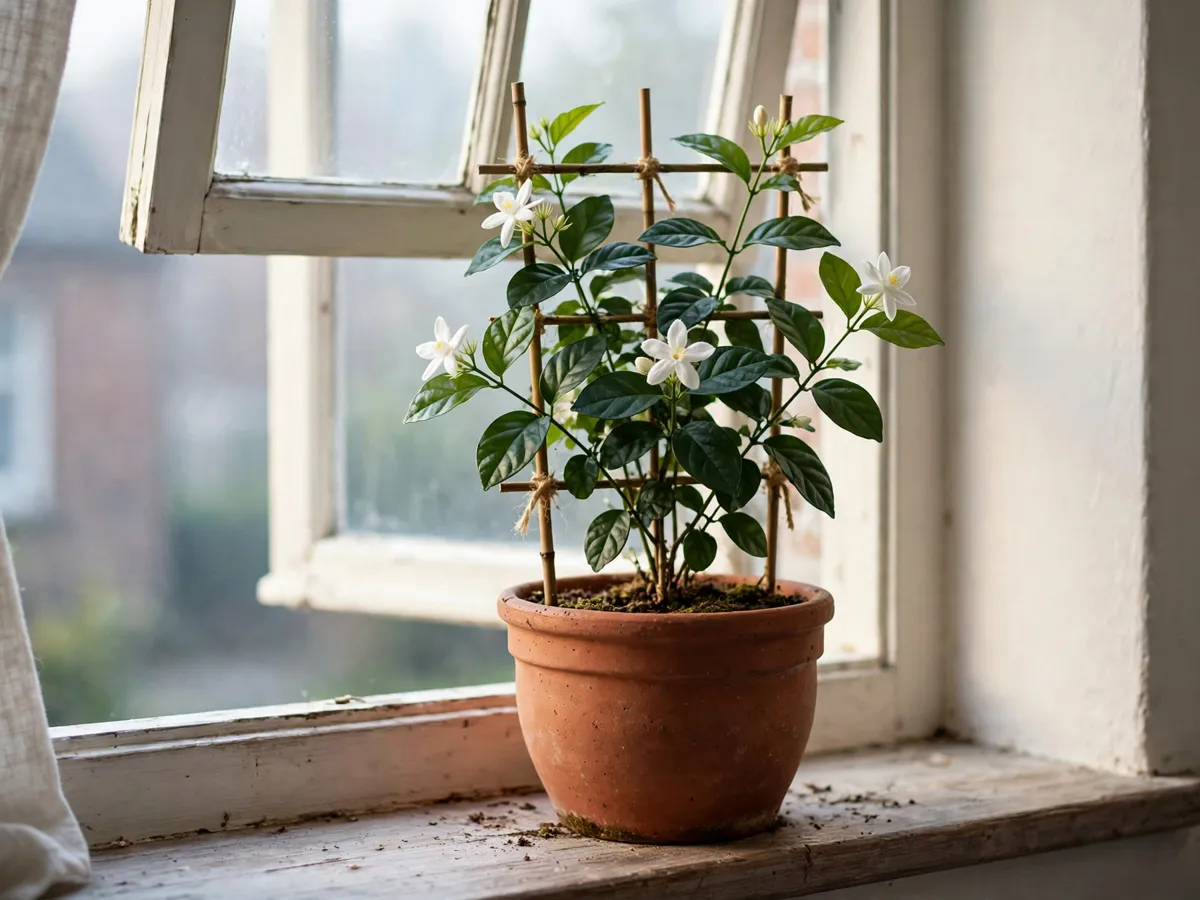
The jasmine sold for growing indoors in the US is usually one of two tender vines, and the care for both is close. The classic is Jasminum polyanthum, a vigorous twining vine sold trained around a wire hoop, carrying clusters of pink buds that open into small white stars in late winter and spring. This is the plant most labels mean by indoor jasmine, and the one this guide is mostly about. The other is Jasminum sambac, Arabian jasmine, a smaller, shrub-like plant with intensely fragrant flowers known as the tea jasmine. It asks for warmth rather than a cool rest, but the rest of the care below still applies.
Then there is star jasmine, Trachelospermum jasminoides. It is sold everywhere, it smells like jasmine, and it is not a true jasmine at all, it belongs to a different genus. The tells are small white pinwheel flowers and glossy leaves. It is an outdoor climber by nature across the warm parts of the US, sometimes kept in a pot.
The jasmines to leave for the yard are the garden ones. Winter jasmine, Jasminum nudiflorum, and common jasmine, Jasminum officinale, are hardy outdoor climbers for a wall or fence; they take freezes, and a heated room slowly wastes them.
The difficulty call, said plainly: an indoor jasmine is an intermediate houseplant, not a beginner one. Keeping it green is easy. Getting it to flower takes the seasonal habits in this guide, plus a first year that is usually leaves and vines while the plant settles.
Cost: $15–$35 for the plant. Time: ten minutes to read the label before buying. Caveat: a jasmine in bloom at the store was flowered in a commercial greenhouse; the bloom you earn at home is the second one.
2. Why blooming skips the first year
Here is the honest expectation to set before anything else: most indoor jasmine plants do not bloom in their first year at home, even with good care. If you buy one in autumn and it holds its leaves, climbs its trellis and makes new vines, it is doing exactly what a first-year jasmine does.
Two things are happening. First, a newly bought plant spends its energy on roots. Shipping and shelf time dry the rootball and shock the vines, so the first months indoors go into recovery rather than buds. Second, buds form on wood that has already matured. The shoots that carry flowers are the ones that grew through a full summer of light and then went through a cool rest. A plant that arrives in November has not built that wood yet.
The jasmine flowering in the shop was brought into bloom by a commercial grower with controlled greenhouses. What you are working toward is the second bloom, and that one is earned with seasons: a bright spot, a summer outside if you can manage it, a cool rest in winter, and pruning at the right time. So the goal of a first year is simply to keep it alive and let it grow. A plant that reaches its second winter healthy, with a summer of matured wood on the trellis, has something to set buds on.
Cost: $0. Time: ten minutes a month of honest looking. Caveat: a leafy first year is progress, not failure.
3. Light: more than most rooms give
In the growing season, from spring through summer, jasmine wants a bright window with real direct sun in it. An east or south window is ideal, and a west window works if you watch the hottest afternoons in midsummer. Bright for a jasmine means within a couple of feet of the glass, where a shadow thrown at midday still has edges.
The honest limit of window light: it keeps an indoor jasmine alive and green, and it rarely builds the growth that flowers. A full summer of real sun thickens the vines and fills the stored energy a bloom draws on. That is the case for the summer-outdoors habit in section 9, and it is the biggest difference between a jasmine that survives and one that flowers.
In winter the light is short and weak, and that is fine, because the plant is not supposed to be growing hard then. Give it the brightest window you have and let the coolness do its work. The mistake is pairing dim with warm: a dark warm corner produces the stretched vines described in the problems section.
Cost: $0. Time: five minutes to test the spot at midday. Caveat: a dark room is the one input feeding and watering cannot make up for.
4. The cool rest: the rule most homes break
This is the habit that decides the whole question of bloom, and it is the one most homes never provide. After the short days of late autumn arrive, jasmine wants a period of cool nights: roughly four to eight weeks with nights sitting around 45-55 F, running late autumn into winter. Somewhere in that stretch, on wood that is already mature, the plant sets the buds that open weeks later.
A constant living room works against it. A home held at 68-72 F all winter is, to a jasmine, an endless mild autumn, and the plant responds the way it would outdoors: it stays leafy, keeps creeping and never gets the signal to set buds. A warm, bright, well-watered jasmine with no flowers is the normal outcome of that, a healthy plant missing one season.
Where to put it: a cool bright bedroom, an unheated but enclosed porch, a bright stairwell, a hallway window that stays chilly. The floor is about 45 F, so keep it above freezing with a margin, and keep leaves off very cold glass. It is the nights that carry the signal; days can be brighter and slightly warmer.
Water less during the rest, see section 5, and do not feed at all. When the weeks have passed and buds show as tiny pinheads along the vines, ease the pot back to room temperature gradually and keep the watering steady while the flowers open. Buds formed in the cool can drop when they meet sudden heat or dry air. The wider cold-season adjustments are covered in the winter houseplant care guide.
Cost: $0. Time: five minutes to relocate a pot. Caveat: on nights that threaten to dip near freezing, a porch plant gets carried in until morning.
5. Watering: even, then tapered, then dry-ish
In the growing season, keep the mix evenly moist. Water when the top inch feels dry, then water thoroughly, until it runs freely from the drainage hole, and empty the saucer ten minutes later. The pot must have at least one hole.
In autumn, as the light falls, taper. Let the top inch or two dry before the next watering, and stretch the interval as the plant slows. Through the cool rest itself, keep the mix dry-ish: check it and water only sparingly, roughly every two weeks, just enough to keep the stems from wrinkling. A cool room plus a wet mix is the classic way to rot a jasmine right before it would have bloomed.
Use room-temperature water poured at the soil, and never let the pot stand in a filled saucer. When bloom starts and the room warms, bring the watering back up to even moisture.
Cost: $0. Time: two minutes to check and water. Caveat: the finger test beats any calendar, because a cool room dries a pot far more slowly than a warm one.
6. Soil and the small trellis
Indoor jasmine is happy in ordinary bagged potting mix, lightened for drainage. Stir in extra perlite or fine orchid bark, roughly a quarter of the volume, so water moves through instead of sitting. Dense, rich, garden-style soil is the wrong medium: it stays wet too long and the vine pays for it.
Then give it something to climb. Jasmine vines climb by twining, wrapping themselves around whatever slim thing they touch, and a pot without support turns into a self-tangling mound that shades its own interior. A slim trellis, a wire hoop or a small obelisk, roughly knee-high and anchored in the mix, is enough for years. Insert it at repotting time, so you are not stabbing the rootball later.
Guide the longest vines onto the support and tie them loosely with soft twine or plant clips, loose enough that each stem can thicken. New growth finds the trellis on its own once it is pointed at it. The wider setup decisions, moss poles and wall clips, are covered in the indoor climbing plants guide.
Cost: $10–$25 for a bag of mix and a small trellis. Time: twenty minutes to pot up and tie in. Caveat: check the ties every month or two and loosen any the stems have grown tight against.
7. Feeding: half strength, after bloom
Feed only after flowering, through the summer. Use a general liquid fertilizer at half the strength the label suggests, with a normal watering every two to three weeks. Half strength is deliberate: a full dose pushes soft, fast, weak growth and can build salts in a pot, while a dilute feed supports steady wood.
Fresh potting mix already carries a couple of months of nutrients, so a newly repotted plant needs nothing added. The stopping date matters as much as the start: stop feeding by early autumn, so the last growth of the season has weeks to harden before the cool rest arrives. Soft late growth, pushed out by feed and warmth in October, is the first growth to fail in a cool room. Never feed through the rest, and never feed a stressed plant.
Cost: $8–$15 for a bottle that lasts the season. Time: two minutes per feeding. Caveat: feed damp soil, never dry, so the roots are not burned.
8. Pruning after flowering, not in autumn
Jasmine flowers on the new growth that matures through the season, and that fact sets the pruning calendar. The right moment is right after flowering finishes, in late spring. Cut then, and every shoot you shorten has the whole summer to regrow, and that regrowth is the wood that carries the next round of buds after the winter rest.
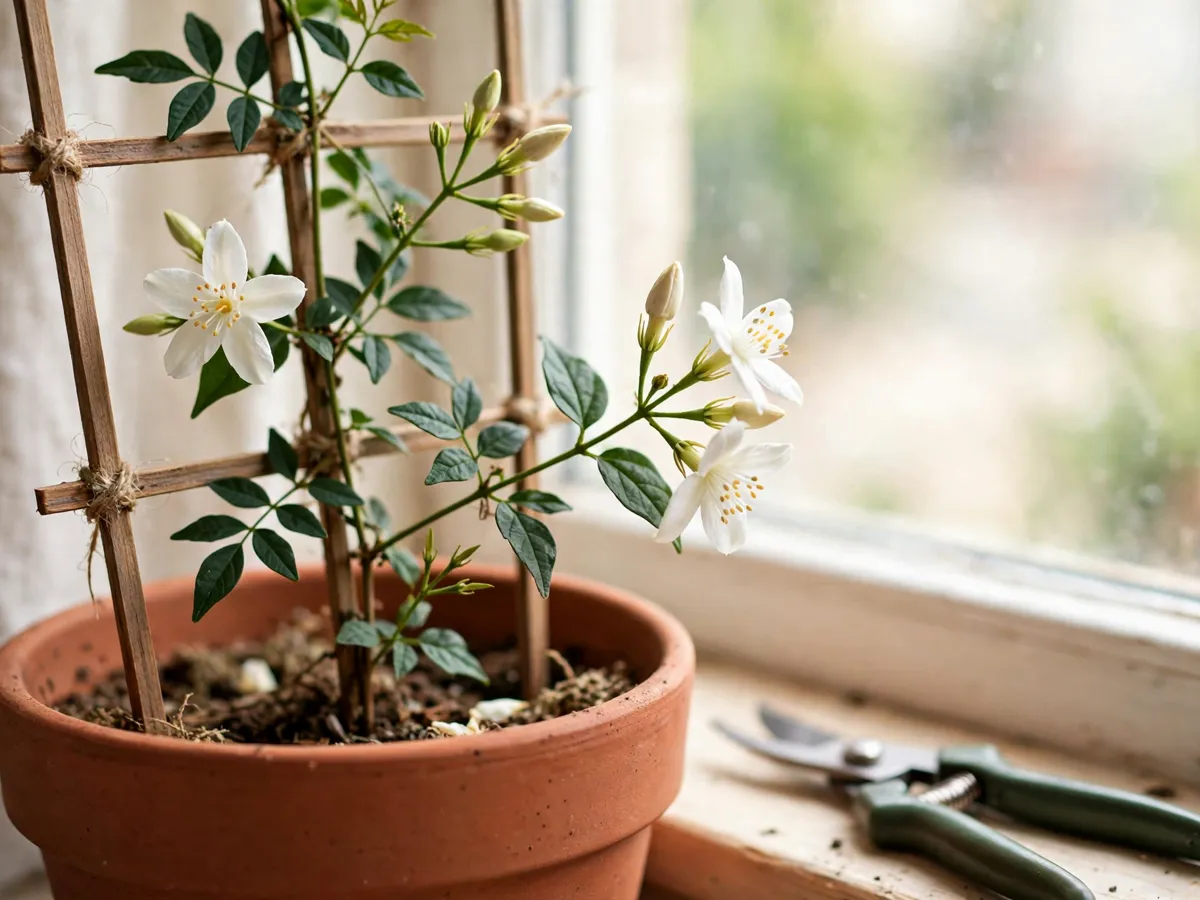
The pruning itself is simple. Thin the tangle first, removing crossing and dead stems at the base, then shorten the longest vines by about a third to shape the plant onto its trellis. Do not shear it into a ball; buds tend to form along the sides of stems, and a frame of stems spread across the support carries more flowering wood than stems running straight up. Use clean, sharp snips and cut just above a leaf joint.
The timing mistake to avoid: pruning in autumn. A plant cut back in September or October loses exactly the wood that was about to carry buds through the rest, and the year of bloom goes with it. If you inherit an overgrown jasmine in autumn, do the minimum and save the real cut for after whatever bloom comes.
Through the summer, pinch instead of prune. Nip the growing tips of long vines with your fingers every few weeks; each pinch forces side shoots, and side shoots are where the flower clusters sit.
Cost: $0 with any clean, sharp pair of snips. Time: twenty minutes once a year, plus a minute of pinching through summer. Caveat: a cut made in autumn can cost the whole following bloom.
9. The summer outdoors: where bloom is built
From late spring, once nights reliably stay above about 50 F and frost is past, until early fall, an indoor jasmine earns its keep outside. Full sun, warm air and moving air build the thick wood and stored energy that flowers, and a summer outdoors does more for the next bloom than any window does.
Acclimate it on the way out: a week or two in part shade first, then gradually into more sun, because leaves that grew behind glass sunburn easily. Outdoors in full sun a pot dries fast, so check the soil most days in hot weather.
Bring it back in before the first frost. Before it crosses the doorstep, inspect it: look at the undersides of leaves and along the stems for aphids, mites and hitchhikers, rinse the foliage with a firm stream of water, and keep the pot apart from your other houseplants for a couple of weeks. The inspection routine is covered in the indoor plant pests guide.
Cost: $0. Time: five minutes to carry it out, ten to check it back in. Caveat: leaves grown behind glass scorch in sudden full sun, so shade the plant the first week.
10. Bloom and the years after
A jasmine in bloom is the payoff: clusters of pink buds opening into small white stars, polyanthum especially, with a scent that carries across a room on a warm afternoon. The flush lasts a few weeks, and deadheading through it, snipping off each spent cluster, keeps the plant putting energy into the buds still to open.
Year two is the year things start. A plant that spent its first year settling, then a summer outside, then a real cool rest, enters its second winter with matured wood along the trellis, and that is the wood buds form on. Year three and beyond usually bring a fuller frame and a heavier flush, which is the quiet argument for keeping a bloomless first-year plant rather than replacing it.
As the years pass the care stays the same, with one addition: the pot. When roots circle or grow out of the drainage hole, or the plant dries out within a day of watering, move it up one size in spring, after flowering, with fresh mix. The process is the same as the general repotting a houseplant one size up guide.
Cost: $0. Time: two minutes of deadheading during the flush. Caveat: a settled plant in a small pot can need water daily by its second summer; that is a repot signal, not a watering problem.
11. Common problems: reading the vine
Most jasmine problems indoors come down to a few signals, and each points at a specific care decision above.
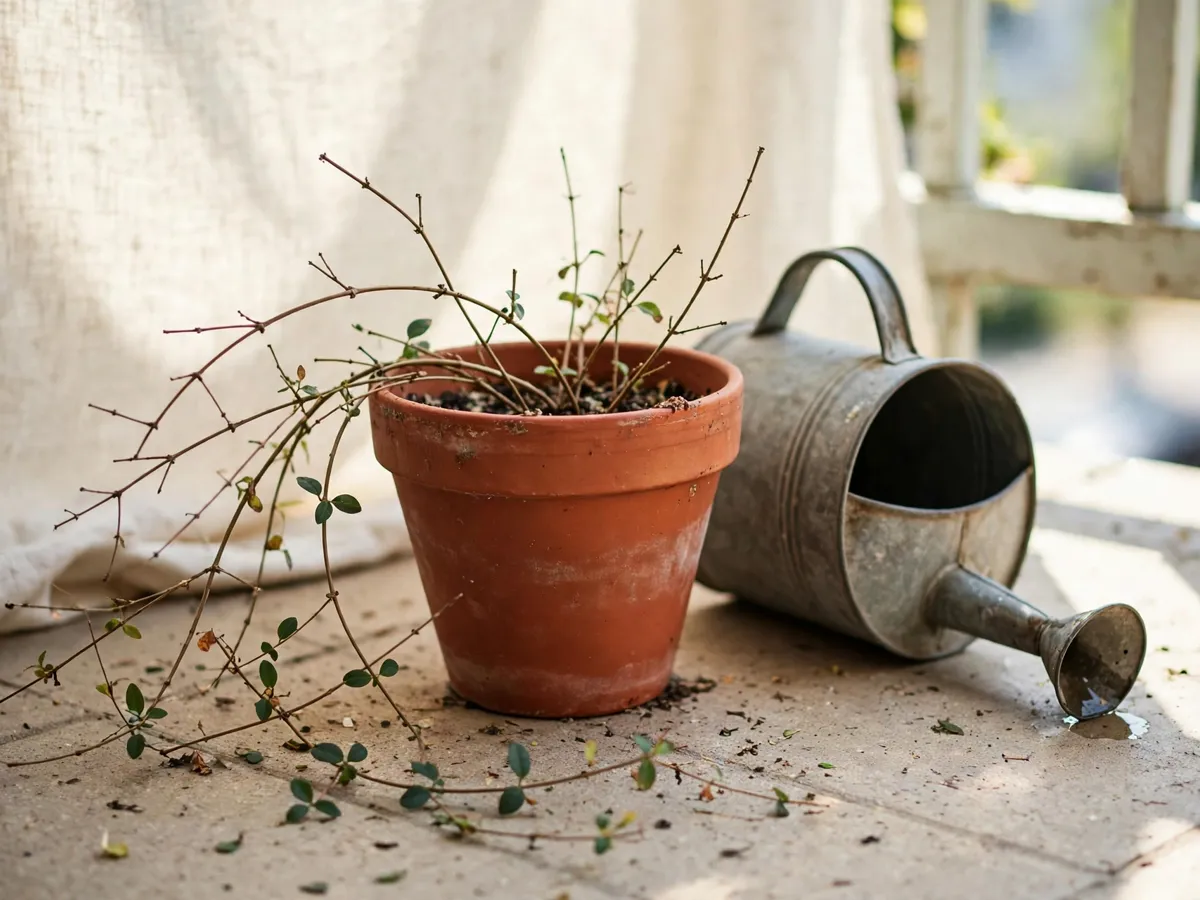
- Yellow leaves dropping while the soil stays wet. Overwatering, and it is most dangerous during the cool rest. Stop watering, let the mix dry further than feels comfortable, confirm the pot has a hole and the saucer is empty. If stems go soft at the base, the root damage may already be done.
- Green, healthy, growing, and no buds at all. Warm nights. The cool rest was skipped, shortened or interrupted. Nothing else produces this outcome, and no feed fixes it.
- Dull, mottled leaves with pale stippling and fine webbing. Spider mites, the pest of dry heated winter air. Wipe the stems and leaf undersides, rinse the plant, and raise the humidity around it; recheck weekly, because a second generation hatches.
- Long stretched vines with wide gaps between leaves. Not enough light. Move the pot closer to the glass, and plan the summer outdoors, because stretched wood is weak wood and carries few buds.
Read the vine, not the calendar. Leaf color, vine length and where the growth happens each point at a fix earlier in this guide.
Cost: $0. Time: two minutes of close looking each week. Caveat: the fix is a care change; removing a yellow leaf changes nothing.
12. Is jasmine pet safe?
True jasmine, the Jasminum species, is generally considered non-toxic to cats and dogs. That wording is deliberate, because toxicity lists are compiled from reported cases, and a plant that has never caused a report reads as safe. Chewing any houseplant can still upset a stomach, and a pet that eats a pile of leaves deserves a call to the vet.
Star jasmine is the exception worth knowing. It is not a true jasmine, and its milky sap can irritate skin and mouths; a cat or dog that chews it can end up drooling or uncomfortable. If you keep a Trachelospermum, place it out of reach.
For pets that chew everything, the safer road is a plant already known for indoor life with animals; the pet safe low light houseplants guide lists the reliable ones.
Cost: $0. Time: five minutes to place the pot where a pet cannot chew it. Caveat: this article is care guidance, not veterinary advice; confirm any exposure with your vet.
Common questions
Why is my indoor jasmine not flowering?
Almost always warmth. Jasmine sets buds after weeks of cool nights around 45-55 F in late autumn and winter, and a constant 68-72 F room keeps the plant leafy and bloomless. A first-year plant may simply be too new to flower, and autumn pruning can remove the wood that would have carried buds, but the usual cause is a winter that never got cool.
Can I keep jasmine indoors all year?
You can, and it will stay alive in a bright window with the right watering. But the plants that bloom best spend late spring to early fall outside in full sun, where the season builds the matured wood that flowers. An indoor-only jasmine can bloom with a generous window and a real cool rest, just with a lighter flush.
How cold can an indoor jasmine get?
Roughly 45-55 F at night for four to eight weeks is the target, and it must stay above freezing. Keep leaves off very cold glass, and carry a porch plant inside on nights that threaten frost.
When should I prune my jasmine?
Right after flowering finishes, in late spring. That gives the regrowth a full summer to mature into the wood that carries buds through the next rest. Pruning in autumn removes exactly that wood and can cost the following bloom. Pinch long vine tips through summer instead of hard-cutting.
Is jasmine safe for cats and dogs?
True jasmine, the Jasminum species, is generally considered non-toxic to both. Star jasmine is not a true jasmine and its sap can irritate mouths and skin, so keep it out of reach. Any chewed houseplant can cause stomach upset, so a pet that eats a pile of leaves gets a call to the vet.
Save these on Pinterest
Pin the cool rest schedule and the after-bloom pruning rules, the two habits that decide whether an indoor jasmine stays green or flowers. This guide and the rest of the gardening tips live together there.