 Plant As Deco
Gardening & Planting Tips
Yucca Plant Care Indoors: Light, Water and the Bare Stem
By Plant As Deco · Updated 22 November 2026
A yucca reads like an architecture piece in a living room, and it shrugs off a level of neglect that kills softer plants. This guide covers the species actually sold as an indoor yucca, how much light it honestly wants, the watering cycle that keeps the trunk from rotting, and what the bare stem means. Written for renters with bright windows.
Weekend-ready: $45–$120 for a small plant, an unglazed pot with a hole, and a bag of gritty mix. One afternoon of setup, ten minutes a week after that.
1. Which yucca you actually bought
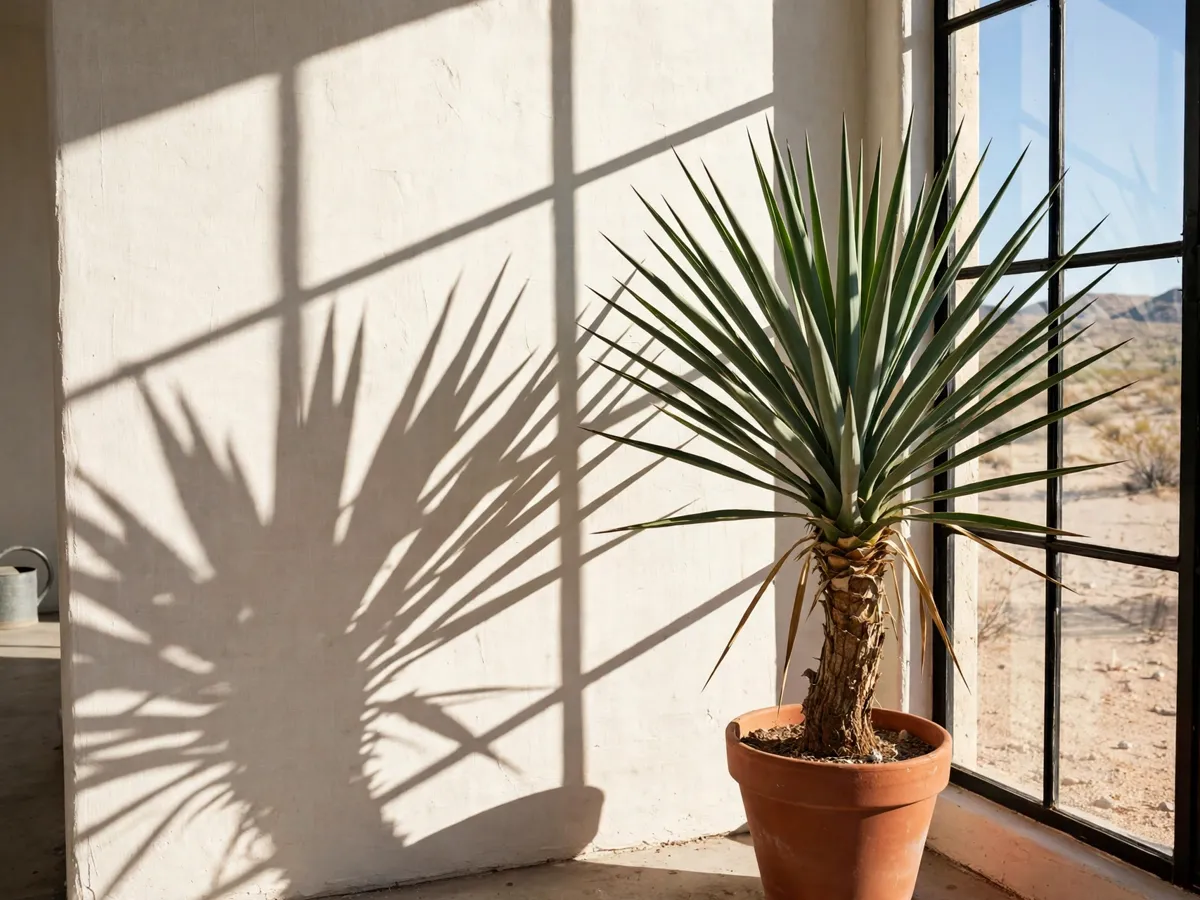
What is sold as an indoor yucca is almost always Yucca gigantea, formerly labeled Yucca elephantipes and sometimes called the elephant foot or spineless yucca. The leaves are long, sword-shaped and smooth, and the tips bend rather than ending in a rigid needle. That flexibility is why it works indoors, and it is the species this guide covers.
The ornamental desert yuccas are a different plant: stiff, rigid leaves with sharp needle tips, built for full sun outdoors in a yard or a rock garden. Indoors they rarely get enough light to hold their shape, and the tips draw blood when you brush past. If the leaves feel like a bayonet, it is an outdoor plant wearing an indoor price tag.
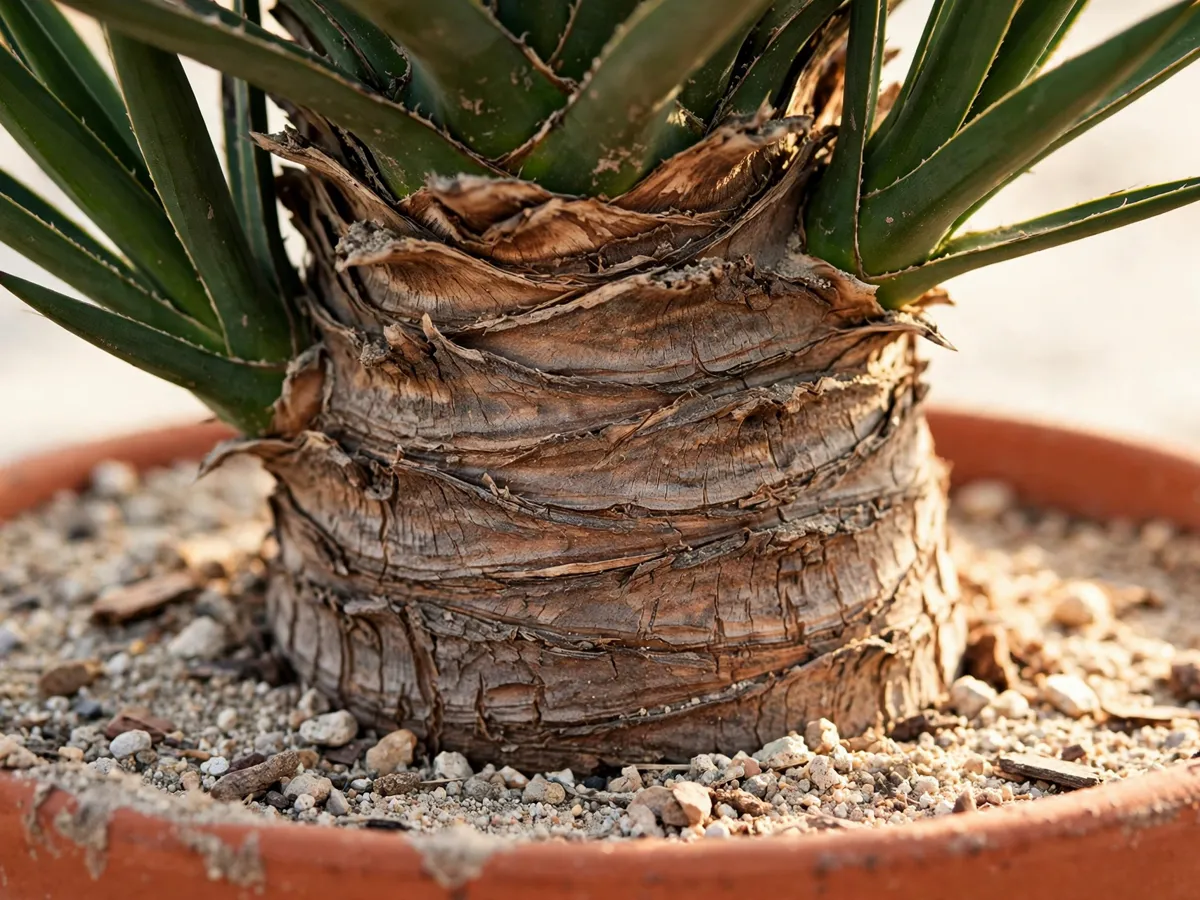
The indoor one grows on a trunk. Older specimens carry a thick woody cane with the leafy head on top, sometimes several heads where the grower has already cut and rebranched it. That cane look is the normal mature form of the species, not damage.
Know the scale before you buy, because renters discover it late. A yucca is a floor plant, and a happy one keeps growing until it wants six to ten feet of vertical space. The shelf-sized plant from the store becomes a tall cane within a few years, and a standard eight foot ceiling gives a full-grown one less headroom than it wants. For a silhouette that stays smaller, the large indoor plants guide compares the floor plants that fit a rental.
Cost: $45–$120 for a started plant with a visible cane. Time: 15 minutes to buy well. Caveat: anything sold cheap in a tiny pot with no trunk yet takes years to build one.
2. The light truth
Here is the part most care cards skip: an indoor yucca wants more light than almost any room provides. It grows in full sun in its native range. A yucca survives in moderate light, but surviving is not the same as looking good, and the difference shows up within months.
The signature failure is quiet. In weak light the head slowly stretches, new leaves come in thinner and softer than the old ones, gaps open between them, and the plant leans toward the window. Owners water more, feed more, repot, and nothing helps, because the missing input was light the whole time. If your yucca is leaning and thinning, move it before changing anything else.
A south-facing window is the honest minimum for a plant this light-hungry. East or west works if the spot is unobstructed and the pot sits right at the glass. A north window, a corner two steps back, or a hallway will not hold a yucca long-term. If the only wall available is dim, a grow light for indoor plants is a legitimate answer rather than a gimmick. The species that hold dark rooms are listed in the low light indoor plants guide, and a yucca is not one of them.
Cost: $0 for a better window, $20–$45 for a full-spectrum bulb and clamp lamp. Time: 10 minutes to move and position. Caveat: even a good south window is weaker in winter, so expect near-dormant growth through the short days rather than none at all.
3. Watering: soak, then bone dry
Overwatering is the thing that kills indoor yuccas. The thick trunk is a water tank, and the plant is built to ride out dry spells between drinks. Roots that sit in constantly wet soil rot, the rot climbs into the trunk from the base, and once the trunk is soft there is little left to save. A yucca that collapses this way goes from fine to falling over within days.
The cycle that works is soak, then bone dry. When the mix has dried out completely, water thoroughly until it runs from the drainage hole, then leave the plant alone until the pot feels light again. Check with a finger or a wooden skewer pushed to the bottom. In summer the cycle might repeat every week or two; in a dim, cool winter room it stretches to three or four weeks, and that is normal, not neglect.
Winter is the danger season, because the plant is near dormant and barely drinking while the room is cool. Taper the interval hard as the days shorten, and never water a cold, wet pot on schedule. The pot itself needs at least one real drainage hole, because a sealed planter holds a puddle against the roots, and with a yucca that is a rot machine. Soggy mix staying damp on top also breeds fungus gnats, which the dry-down cycle starves out. For the finger test and the habits that trip up beginners, the care of houseplants routine covers it in detail.
Cost: $0. Time: two minutes to check, five minutes to water deeply. Caveat: when in doubt, wait another day, because a thirsty yucca forgives and a soaked one does not.
4. Mix and pot
A yucca wants a gritty, fast-draining mix, not a rich, spongy one. Blend a standard houseplant mix with extra perlite, pumice or coarse sand until it feels loose and grainy, so water passes through in seconds and the root zone gets air. A dense peaty mix that stays wet for a week is exactly the condition that rots the trunk.
Unglazed terracotta is the natural partner for this plant. The clay walls let moisture evaporate through the pot itself, which shortens the wet phase of every cycle and covers beginner mistakes. Glazed ceramic and plastic work with a grittier mix and more restraint.
Weight and stability matter more than most guides admit. A tall yucca with a heavy head can tip a light plastic pot, so choose a container wide and heavy enough that a bump does not rock it. When roots circle the pot, move up one size at a time, never a jump of several, because excess wet mix around a small root ball stays soggy too long.
Cost: $10–$25 for mix and an unglazed pot per repot. Time: 30 minutes to repot. Caveat: wear gloves, because yucca leaf edges can still scratch even without needle tips.
5. Humidity and leaf tips
A yucca comes from dry climates and does not need the humid air tropical foliage plants demand. Average apartment humidity is fine, and a humidifier is unnecessary here. The catch is that heated winter air is dry enough to brown the leaf tips anyway, and that same dry warmth is where spider mites get their start, so winter placement matters more than any misting.
Tap water contributes too. Yuccas are sensitive to fluoride and to the chlorine and dissolved salts in treated water, and those minerals collect at the leaf tips, the farthest point the water travels, where they scorch the tissue. If your tap water is heavily treated, let an open jug sit overnight before watering.
Treat the browning as cosmetic. Trim the dead tip with clean scissors, following the natural pointed shape of the leaf so the cut is invisible at a glance. A few brown tips are not a crisis and not a reason to change the watering schedule. Move the plant off the radiator line and accept some winter tip wear in a heated apartment.
Cost: $0–$12 for clean scissors and a water jug. Time: 10 minutes to trim a whole head. Caveat: trimming is cosmetic, so fresh browning means the air or the water is still the problem.
6. Temperature and drafts
Average room temperatures suit a yucca well, and it overwinters fine at normal indoor warmth. It needs nothing special beyond being kept out of real cold.
Cold drafts are the one rule with no exceptions. Keep the plant away from a frequently opened door in winter, a leaky window frame, and the direct line of an air conditioner in summer. Chilled yucca leaves develop soft, grayish patches that do not recover.
The sneaky version is the winter window sill. Glass gets far colder than the room at night, and a pot pressed against it chills the root zone hour after hour even when the air feels fine in the afternoon. Pull the pot a hand width back from the glass during cold snaps, then return it close to the light once the weather eases. For the wider cold-season checklist, the houseplant winter routine covers heating, light and watering together.
Cost: $0. Time: 5 minutes to check for drafts and reposition. Caveat: a spot that feels fine at 3 p.m. can be the coldest place in the room at 3 a.m., so judge drafts at night.
7. The summer outdoors
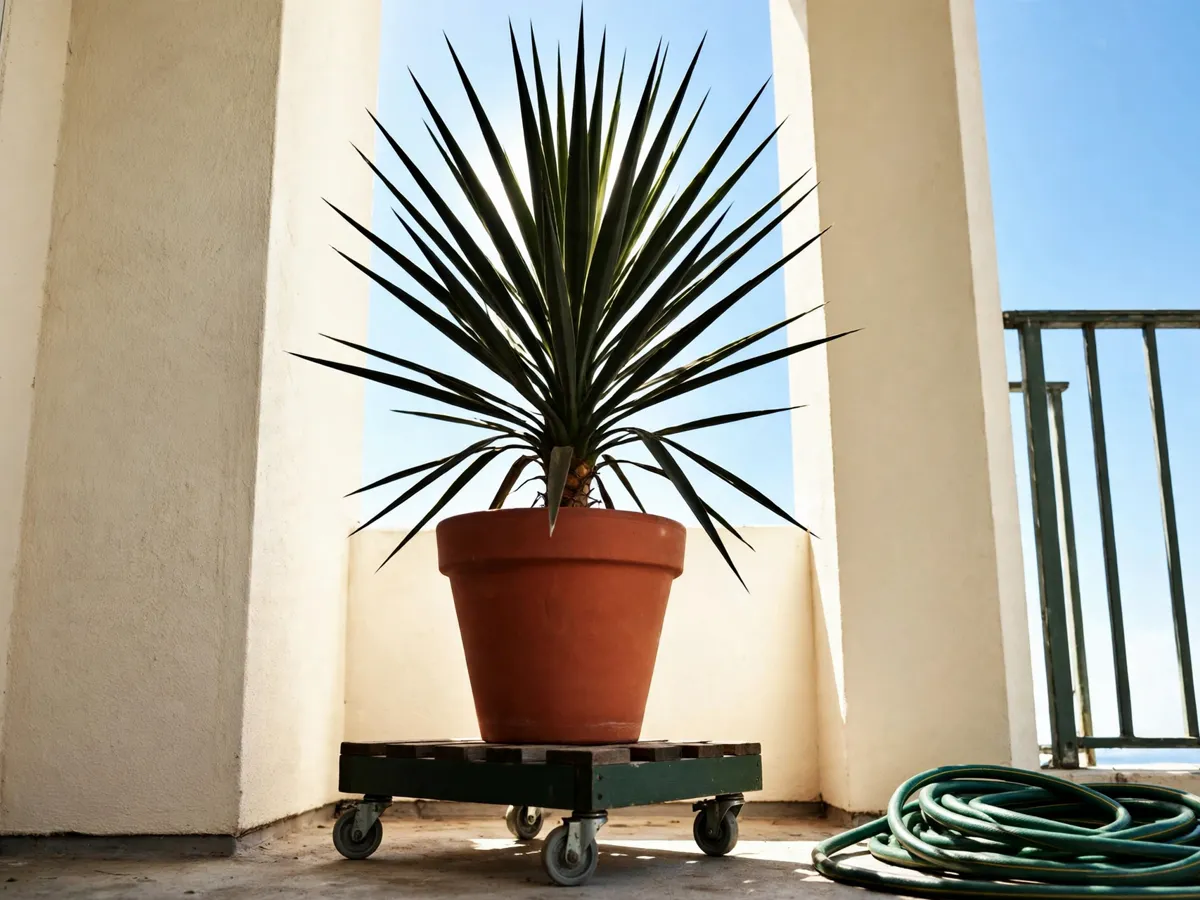
Summer outdoors is the single best thing you can do for an indoor yucca, and renters with a balcony or a front step should use it. Real sun and moving air firm up the head, push thicker new leaves and reset the stretch built up over the dim winter indoors.
Acclimate gradually, because a plant straight from indoors sunburns. Start with a few hours of morning sun in a sheltered spot, then extend the exposure over a week or two toward full-day sun. Sunburn shows as bleached, papery patches on the leaf faces aimed at the sun, and those scars are permanent. At the first bleaching, move the plant back and slow the schedule down.
Bring the plant home before the first frost, not on the night of it, because a potted yucca cannot overwinter outdoors anywhere with real winters. Inspect the trunk and the soil before it crosses the threshold, so outdoor pests do not ride in. Watering speeds up sharply outside, so check the pot more often, and adjust the interval again once it is back inside. The indoor plant pests guide covers what to look for at the door.
Cost: $0 beyond water. Time: 10 minutes to move, plus a week of gradual acclimation. Caveat: a sudden jump from shade to full sun scars the leaves, so the ramp is the whole trick.
8. The bare stem, honestly
At some point the lower leaves yellow, dry and drop, leaving bare woody cane under the green head. This is the question that fills plant forums, and the answer is almost always the calm one: that is normal aging. The plant sheds its oldest leaves as the head grows and the trunk lengthens, the same way a palm does.
A bare stem is not a care failure, and it is not proof of underwatering or disease in a plant that is otherwise firm, green and pushing new growth. The older the specimen, the more cane it shows. Read it with pattern logic: one or two lower leaves dropping over months while the head stays full is aging, while a head thinning fast or a trunk that gives when pressed is the rot alarm in section eleven. The difference is speed and scope, not the bare stem itself.
Cost: $0. Time: 2 minutes to press the trunk during the weekly once-over. Caveat: do not treat normal aging with rescue watering, because extra water aimed at a healthy cane causes the rot you feared.
9. Topping and rebranching
The rejuvenation move for a yucca that has grown tall and bare is to top it. Cut the main trunk cleanly partway up, above a node, and leave the root system and the lower trunk in the pot. Within weeks the dormant buds below the cut wake up and new leafy rosettes erupt from the sides of the trunk, turning one leggy head into two or three lower, fuller ones.
The removed top is not waste. Let the cut end dry for a day, stand it an inch deep in dry gritty mix, and it often roots into a second plant, the cheap way to fill a corner without buying again.
Do the cut in spring, when light and warmth are rising and the plant can answer with fast regrowth, and use a clean blade. Wipe the saw or knife with rubbing alcohol before and after, because a ragged, dirty cut into a trunk is an open door for rot. Water sparingly until new growth appears, since the plant drinks little while it re-sprouts.
Cost: $0 if you own a saw or a stout knife, plus rubbing alcohol. Time: 20 minutes. Caveat: timing matters, and a topping done in autumn regrows slowly in weak winter light.
10. Feeding: a light feeder
A yucca is a genuinely light feeder. Fresh gritty mix carries it for months, and a plant that grows slowly indoors needs far less fertilizer than the label assumes. Feeding hard does not make a yucca grow faster in weak light, it just stacks unused salts in the pot, and those salts show up as brown leaf tips.
In the growing months, spring through late summer, feed at half the label strength every third or fourth watering. Pour the dilute feed onto already-damp mix, never onto bone-dry roots, and stop entirely in autumn, because a dormant plant cannot use it.
If a white crust forms on the mix or the pot rim, that is accumulated salt. Flush the pot with a few passes of clean room-temperature water until it drains freely, then let it dry on the normal cycle and feed less afterward. The wider feeding rules live in the beginner care of houseplants guide.
Cost: $8–$15 for a bottle of balanced liquid feed that lasts years. Time: 5 minutes every third or fourth watering. Caveat: half strength means half, because this plant punishes generosity with burned tips.
11. Pests and alarms
The pests that bother an indoor yucca are the ones that trouble most woody houseplants. Mealybugs gather in white cottony clumps where leaves meet the trunk and along the base of the cane, easy to miss until the colony is large. Dab each one with a cotton swab dipped in rubbing alcohol and recheck a week later, because they hide in the texture of the bark.
Spider mites arrive with dry, warm air, the exact conditions a winter radiator creates. Look for fine webbing where leaves meet the cane and pale stippling on the leaf faces before yellowing starts. Wipe the cane and leaf bases weekly in winter, and move the plant off the direct heat line if they appear. The full treatment walkthrough is in the indoor plant pests guide.
Fungus gnats are the third and the least worrying. Tiny black flies over the soil mean the mix is staying damp too long, the same condition that threatens the trunk. Let the mix dry fully and the fungus gnats disappear without treatment.
Then there is the alarm that outranks every pest: a soft trunk. Press the cane firmly at the base. Healthy yucca wood is hard, dry and unyielding. If it gives, feels spongy or smells fermented, rot has entered the trunk from below and the plant is usually past rescue. This is the outcome every rule in the watering section exists to prevent. A firm trunk with a full green head is fine; a symptom spreading fast deserves action this week, not next.
Cost: $5–$10 for rubbing alcohol and cotton swabs. Time: 5 minutes per weekly sweep. Caveat: a soft base is fatal on a schedule measured in days, so check trunk firmness before treating anything smaller.
12. Is yucca pet safe
No, and it should be said plainly: yucca is mildly toxic to cats and dogs. The plant carries saponins, compounds that irritate the digestive tract. A pet that chews the leaves usually shows drooling, vomiting or diarrhea, which is unpleasant and normally passes, and the stiff leaves are also a mouth hazard. Serious outcomes are rare, but a bored cat and a yucca share a room badly.
If a pet has already chewed some and is acting unwell, call your vet rather than waiting it out, and bring a photo of the plant so the clinic can identify it fast. Prevention is simpler: keep the yucca in a room pets do not use, because a floor plant is out of reach only until a cat works out the jump.
For homes where a cat and the plant must coexist, the honest route is different species. The pet safe low light houseplants guide lists the options that survive a pet household, and the ways to keep cats out of indoor plants guide covers the deterrents that hold a line.
Cost: $0 to plan ahead. Time: 10 minutes to pick the right species for your home. Caveat: a floor plant is never truly out of reach of a cat, only out of easy reach.
Common questions
How often should I water an indoor yucca?
There is no fixed schedule. Water thoroughly, then wait until the mix has gone bone dry, which might take one to two weeks in a bright warm room and three to four weeks in a dim, cool winter one. Check with a finger or a wooden skewer pushed to the bottom, not the calendar.
Can a yucca live in low light?
It survives there, but it declines in appearance. The head stretches, the new leaves come in thin, and the plant leans toward the window. A south window is the honest minimum, and a room too dark for that calls for a grow light or a lower-light species.
Why is my yucca losing its bottom leaves?
Lower leaves dropping with age and leaving bare cane is normal for this species, the same way a palm sheds its oldest fronds. It is only a concern if the whole head thins fast or the trunk feels soft when pressed, which points to rot from overwatering instead.
Can I cut my yucca and have it grow back?
Yes. Cut the trunk cleanly above a node, ideally in spring, with a blade wiped in rubbing alcohol. New leafy rosettes sprout below the cut, and the removed top can be dried for a day and rooted in dry gritty mix as a second plant. Water the stump sparingly until growth appears.
Why are the tips of my yucca leaves turning brown?
Usually dry heated air or the fluoride, chlorine and salts in tap water, which collect at the leaf tips and scorch them. It is cosmetic, not a disease. Trim the dead tip along the natural shape of the leaf, move the plant off the radiator line, and let tap water sit uncovered overnight before use.
Save these on Pinterest
Pin the watering cycle and the bare-stem reality check, the two decisions that decide whether a yucca lasts years in a rental. This guide and the rest of the gardening tips live together there.