 Plant As Deco
Gardening & Planting Tips
Dragon Plant Care Indoors: Dracaena Marginata Neglect Guide
By Plant As Deco · Updated 22 November 2026
The dragon plant is the tall, spiky, red-edged houseplant that forgives two weeks of forgetting. This guide is for renters and first-home owners who want a statement plant that survives dim corners, missed waterings and travel: what the plant really is, the few decisions that matter, and one warning that belongs up front, that it is toxic to cats and dogs.
Weekend-ready: $45–$100 to start, one afternoon of setup. That covers a multi-cane dragon tree, a heavy pot with a drainage hole, and a bag of potting mix cut with perlite. Five minutes a week after that, and less in winter.
1. What the dragon plant actually is
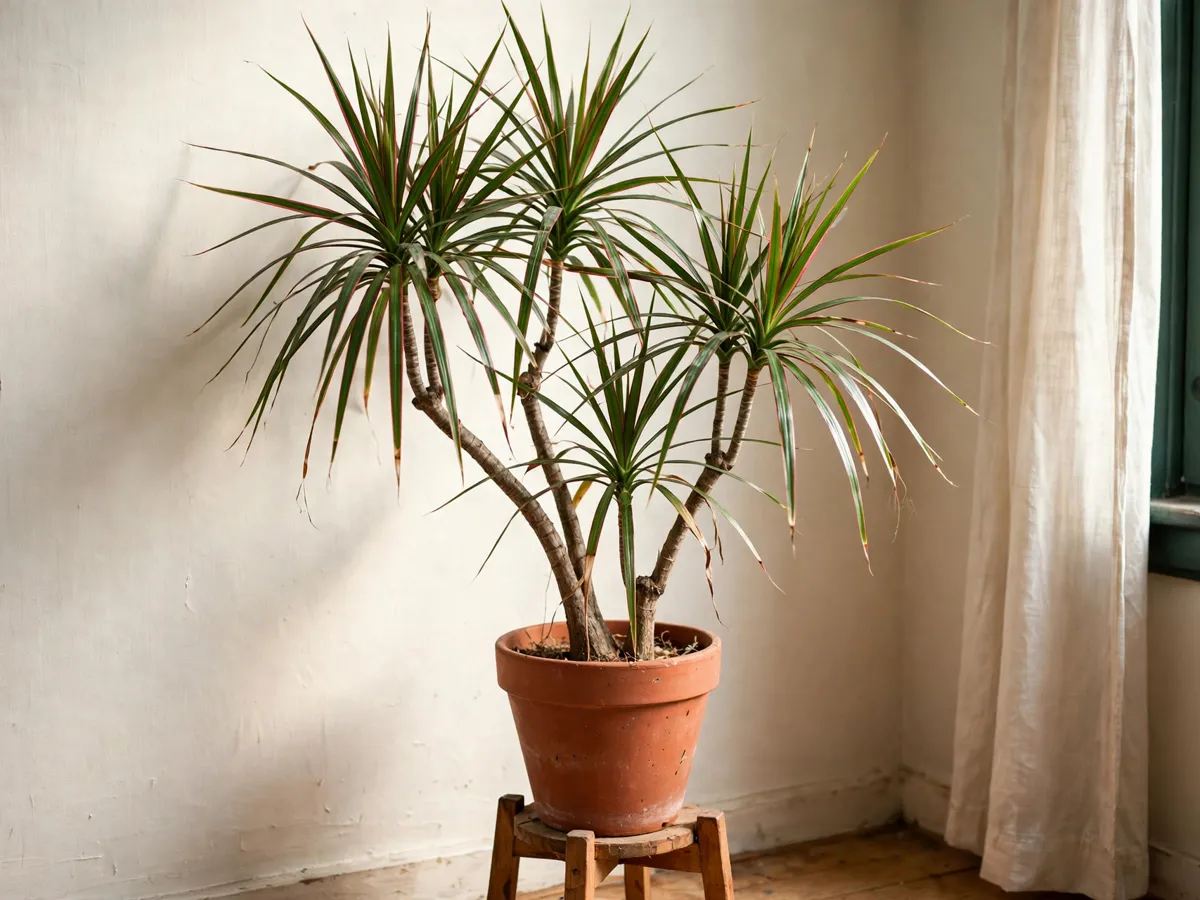
Two plants answer to the name dragon tree. The one sold for indoor growing is Dracaena marginata, from Madagascar: thin woody canes that bend as they climb, each ending in a rosette of long, slender leaves edged in dark red. Stores sell it as a dragon tree or a dragon plant, usually as three canes at staggered heights in one pot.
The true dragon tree, Dracaena draco, is a different plant: a slow outdoor succulent from the Canary Islands that grows a thick trunk and lives for centuries in gardens. Nobody sells it in a living-room pot. If you bought a dragon plant for indoors, you bought a marginata.
The silhouette explains the popularity. A mature marginata reaches five or six feet indoors on canes barely an inch thick, so it reads as a small tree while taking the floor space of a stool. That puts it on the short list of houseplants that can anchor a corner; the large indoor plants guide covers the others.
Cost: $20–$60 for the plant. Time: ten minutes to choose one. Caveat: press the cane bases before buying; a soft base means rot has already started.
2. The neglect tolerance, and its two limits
Here is the selling point, stated honestly: a marginata tolerates near-neglect better than almost any popular houseplant. It holds in dim corners where most floor plants thin out. Its canes store water, so a missed watering costs it almost nothing. A two-week trip, a busy month, a winter of half-attention: the plant waits.
The tolerance has two limits, and both are common. The first is soggy roots. Because the cane already stores water, a pot that stays wet leaves the roots nothing to do but drown, so a plant famous for surviving anything gets killed by kindness more often than by thirst. Lower leaves yellowing steadily on damp soil are the early sign. The second limit is brown tips: even a thriving marginata collects dry tips and edges from tap-water chemistry and dry air. Neglect tolerance buys survival; looking good still asks for the right light and the right water.
Cost: $0. Time: five minutes to check the plant after any trip. Caveat: tolerance means the plant survives; it does not mean it looks good.
3. Light: survives shade, grows in bright
A marginata survives in low light, which is rare for a plant of its size, and that survival feeds the neglect reputation. The honest version splits into two outcomes. In deep shade the plant stays alive, grows at its slowest, stretches thin gaps between leaves, and lets the red margins fade toward plain green. In bright indirect light it grows steadily, holds a compact rosette, and keeps the red edges that sold you on it.
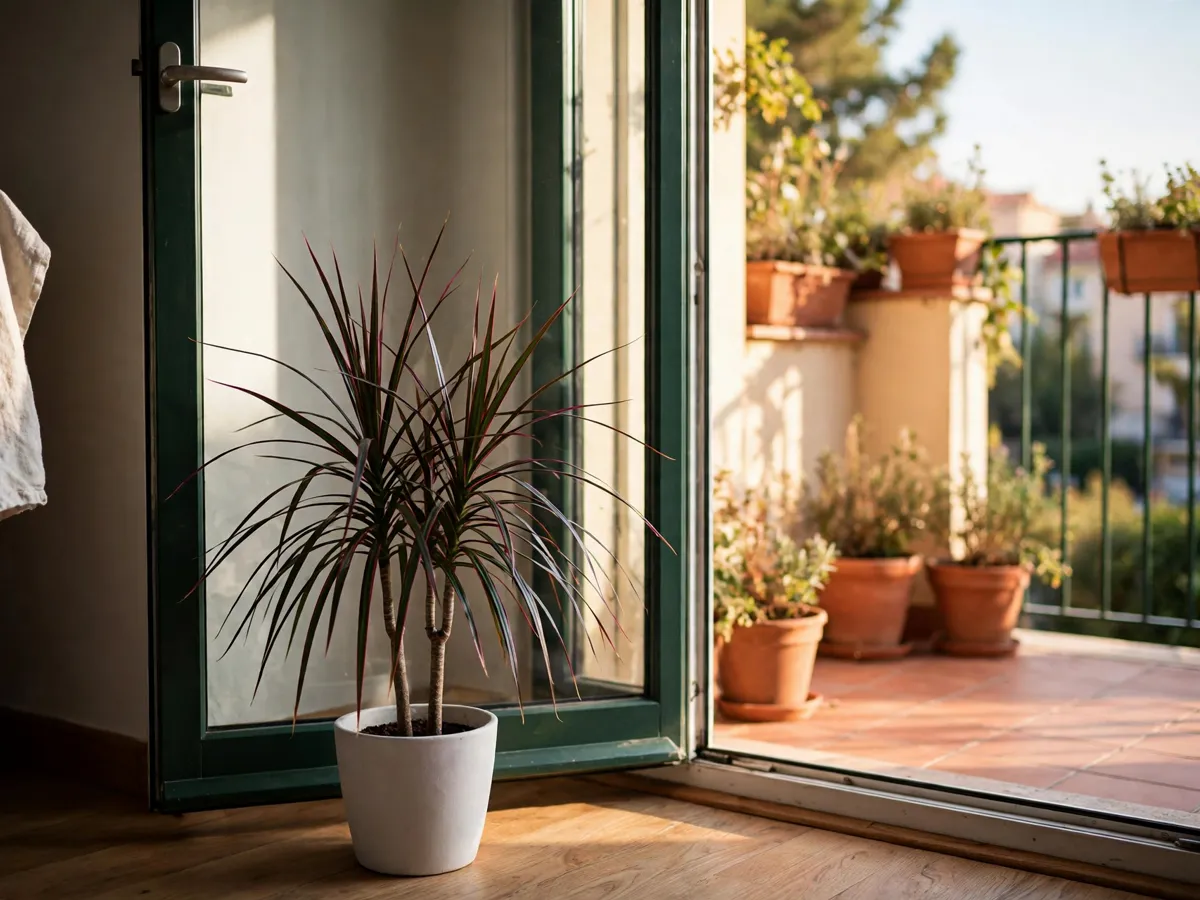
Bright indirect is the sweet spot, and it is easy to judge. Stand by the spot at midday and try to read a page: easy reading without squinting means the light is bright enough. An east or west window a few feet from the glass works, and a south window with a sheer curtain works through summer. Keep the leaves out of the direct midday beam, which scorches them.
For a genuinely dim room the marginata is one of the few tall plants worth trying; the low light indoor plants guide lists the shorter ones that hold up beside it.
A summer outdoors builds the strongest growth of the year: bright shade on a balcony, out of direct afternoon sun. Bring the plant back in before the first frost to overwinter in its usual corner, and expect a few yellow leaves as it readjusts.
Cost: $0 to move the pot, or $15–$30 for a sheer curtain. Time: five minutes to judge the spot. Caveat: direct midday sun scorches the thin leaves.
4. Watering: soak, then dry most of the way
The rhythm is drought, then soak. Water slowly around the whole surface until water runs from the drainage hole, then leave the plant alone until the mix has dried most of the way down. The canes hold reserves, and the roots want air between drinks, so a marginata prefers waiting a little too long to sitting wet.
To tell when it is time, push a finger or a wooden skewer into the mix: damp soil clings and feels cool, dry soil falls off the wood. The pot also tells you by weight, because a soaked rootball is noticeably heavier than a dry one. In bright, warm light the cycle lands roughly every one to two weeks; in dim light or in winter it stretches toward three. The plant is not fully dormant in winter, but it drinks like it is.
The pot needs a hole, and the saucer needs emptying. Water standing in the saucer re-enters the rootball from below and keeps the bottom saturated, which is the soggy-root failure described above. Pour, drain, empty, done.
The leaves decode mistakes. Lower leaves yellowing steadily on damp soil means too much water, and that is the dangerous one, because soft canes come next. Crisp brown edges with a bone-dry pot means too little, which is rarer and far more forgivable. The finger test and the drain-and-empty habit come from the general routine in the care of houseplants guide, which runs the same rhythm for every foliage plant a beginner is likely to own.
Cost: $0. Time: five minutes when the mix is dry. Caveat: check the soil, not the calendar; the plant sets its own schedule.
5. Water chemistry and brown tips
The signature complaint on a marginata is brown tips and brown edges on otherwise healthy leaves, and dracaenas are notoriously sensitive to two things in tap water: fluoride and chlorine. The thin leaf margins burn first, one section at a time, while the rest of the plant goes on looking fine.
The fix is a ladder. Start with water set out overnight in an open container: the chlorine dissipates as it sits, and room-temperature water suits tropical roots better than cold from the tap. Be clear what that step solves, because chlorine leaves and fluoride does not. If the tips keep browning, move up to filtered water or rainwater, which is where most plants settle.
The trim matters as much as the water. Take sharp scissors and cut only the dead brown portion, following the natural taper of the leaf so the tip ends in a point like an undamaged one; a straight cut across the tip stays visible. Dead tissue will not recover, so trimming is cosmetic, not curative.
The verdict on plain tap water: many homes run water mild enough that a marginata carries only slight tipping, and a plant that otherwise thrives is fine on the tap. Persistent heavy browning along the margins is the plant asking for different water, and the change is cheap.
Cost: $0 for water set out overnight, or $15–$25 for a filter jug. Time: one minute to fill the container, two to trim a leaf. Caveat: brown tips are cosmetic; they are not a sign the plant is failing.
6. Mix and pot
The mix should be gritty and fast-draining: a bagged houseplant mix cut with a quarter to a third of perlite or pumice is enough. Squeeze a handful; it should feel springy and fall apart, not pack into a wet ball. Dense mix that stays wet for a week after each watering is the soggy-root failure in slow motion, and it invites fungus gnats, which settle only in damp mixes.
The pot needs a drainage hole and enough weight to stay upright. A marginata carries its head high on thin canes, so it genuinely tips, and a heavy ceramic pot keeps it standing when a cat, a vacuum or a door draft tests it. Unglazed terracotta breathes through its walls and dries evenly, a safety margin for owners who water on memory; glazed ceramic and plastic hold moisture a few days longer, stretching the watering interval.
Repot every two to three years, in spring, one size up. The plant tolerates being rootbound far longer than it tolerates wet mix, so this is a when-you-get-to-it task. Going up one size at a time matters: a pot with far more soil than roots stays wet too long.
Cost: $10–$25 for a heavy pot, a bag of mix and a bag of perlite. Time: twenty minutes. Caveat: match the pot size to the rootball, not to the height of the plant.
7. Humidity and temperature
Average room humidity is fine. A marginata is not a humidity-demanding plant, and it does not need a humidifier for its own health. The dry-air problem is pest-shaped: heated winter air is when spider mites flare, and the radiators and vents that dry the room are the reason. The dryness that barely bothers the leaves suits the mites perfectly.
Temperature is simple: the range comfortable for you is comfortable for it, roughly the mid-60s through the 70s Fahrenheit. Keep it above the mid-50s, and away from cold drafts, winter doorways and radiators. Chilled leaves show grey-brown patches along the edges, and a plant left against a cold window in January pays for it.
Overwintering indoors is the easy part of owning this plant. The cold months ask for nothing special: water less, feed nothing, keep it out of the draft, and expect the slow season.
Cost: $0, or $25–$40 for a small humidifier when the winter air is very dry. Time: five minutes to check the placement. Caveat: the humidifier protects against mites, not against anything the plant itself needs.
8. The bare stem, honestly
Every marginata goes bare with age, and nothing you did caused it. Each rosette holds its leaves for a few years, sheds the oldest ones from the bottom, and grows new ones from the center. Year by year the cane below empties out, until the plant is a woody stem with a crown of leaves on top. That is the species.
The cluster complicates the picture. The three canes in one pot are usually three separate plants potted together, aging at different rates, so one cane can stand half-bare beside two full ones. The plant is not failing; the staggered look is normal for the shape nurseries build.
Whether the bare stem is a feature is a taste question. A tall bare cane with a crown of red-edged leaves is the mature form interior styling leans on, and older specimens cost more for exactly that look. If it reads as leggy to you instead, the next section is the fix.
Cost: $0 to accept the look. Time: zero minutes. Caveat: slow leaf loss on old canes is age; a fast drop of many leaves is a watering fault.
9. Topping and rebranching
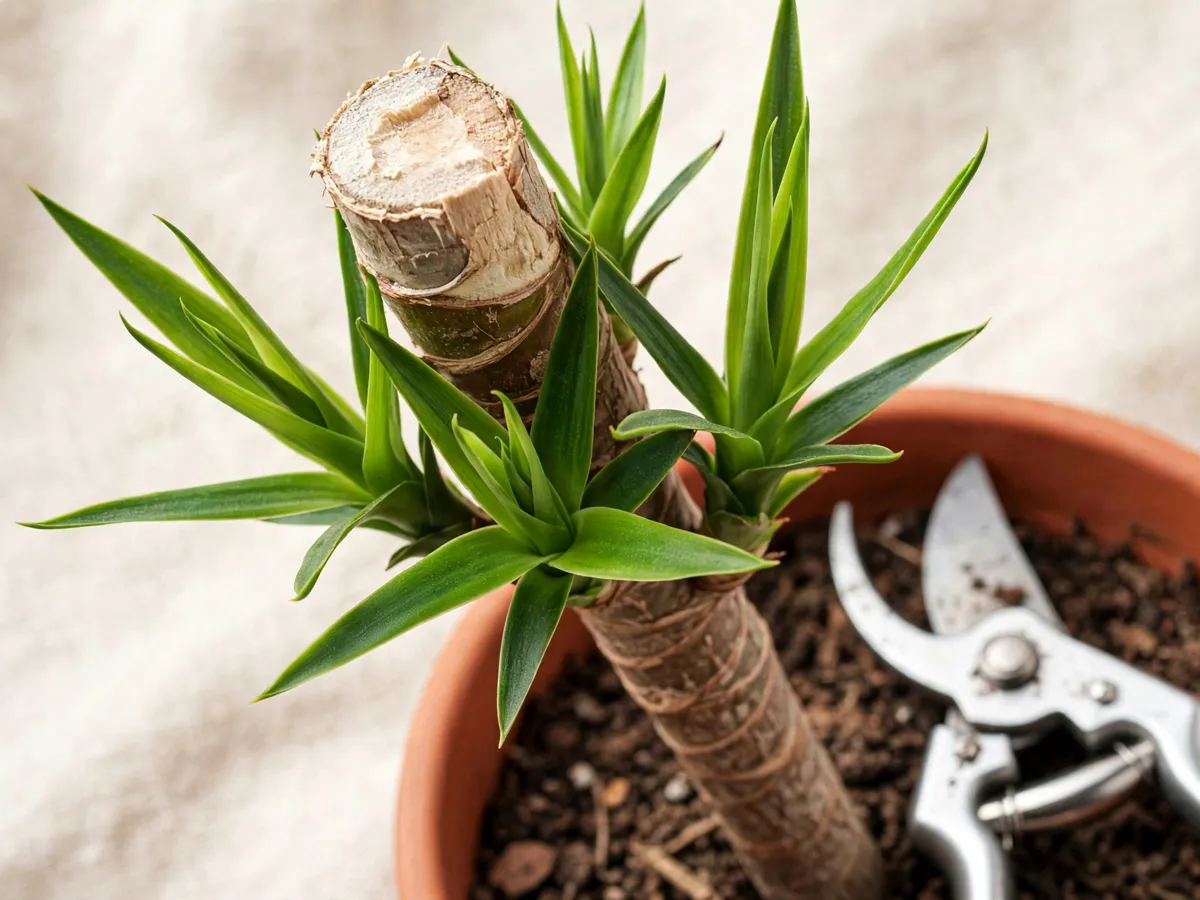
The bare-stem fix is to cut the cane and let it rebranch. Take clean bypass pruners and cut the cane just above a node, the faint ring where leaves once attached; everything above the cut comes off. Over the following weeks, one to three new rosettes erupt from the nodes just below the cut, and the cane regrows a fuller head than it had.
The cut top is not waste. Stand it in a jar of water or push the cut end into damp, gritty mix, and it roots over the following weeks, which makes the marginata one of the easiest houseplants to multiply: one tall plant becomes two. Give the cutting bright indirect light while it roots.
Sealing the cut stump is optional: some growers dab the wound with melted candle wax to slow drying, and plenty leave it open and it heals fine. Timing and patience matter more. Cut in spring, when growth is active, and the new rosettes show within a few weeks; a winter cut still works, but recovery crawls. The same cut is the height control for a tall plant in a small apartment.
Cost: $8–$15 for clean bypass pruners. Time: ten minutes to cut, weeks to see the result. Caveat: give the new head two months before judging the cut.
10. Feeding
Feed lightly, and only while the plant is growing. A balanced liquid feed at quarter to half the label rate, once a month through spring and summer, is plenty for a plant whose ambition is a few new rosettes a year. More is not better here, because marginata roots burn easily from concentrated salts.
Stop entirely from late autumn through winter, when growth slows to a near-dormant crawl. Feeding a dormant plant leaves the salts sitting in the mix, and the excess shows up as the same brown tipping the water section covers. Resume when you see new growth in spring.
Flush the pot a few times a year, especially if you feed regularly or your water is hard: pour clean water through the mix until it runs freely from the drainage hole, then let it drain fully. A white crust on the soil surface is salt buildup asking for exactly this.
Cost: $8–$12 for a bottle of balanced liquid feed. Time: two minutes per feeding. Caveat: when in doubt, skip the feeding; this plant grows slowly enough that a missed month changes nothing.
11. Pests and alarms
Spider mites are the main pest, and winter is their season. Heated indoor air runs dry enough that a population builds on the leaf undersides while the plant itself looks merely dusty. The signs arrive in order: fine webbing where the leaves meet the cane, then pale stippling on the leaf faces, then yellowing. Check the undersides in midwinter before you see any of it.
The first response is a shower. Put the pot in the tub and spray the whole plant with lukewarm water, both sides of every leaf, hard enough to wash the mites off but not hard enough to snap the canes. Repeat weekly for three or four weeks, because one rinse misses the eggs, and raise the humidity around the plant between rounds. A persistent case moves up to insecticidal soap.
Mealybugs appear occasionally as white cottony clumps where the leaves join the cane or at the cane base; a cotton swab dipped in rubbing alcohol removes each one, and a recheck a week later catches the ones hiding in the joints. Fungus gnats hover over the mix only when it stays soggy; they are a watering symptom, and they leave when the top inches dry between drinks.
Leaf yellowing is the alarm channel, and the pattern is the message. Lower leaves yellowing one at a time over weeks is age, the bare-stem process running normally. Several yellowing together on damp soil is overwatering, and soft cane bases turn it into an emergency. Yellowing with a bone-dry pot is thirst, and it fixes itself with one deep watering. The indoor plant pests guide walks through each close up, including what to do when a pest jumps between plants.
Cost: $0 for the shower spray, or $8–$10 for a bottle of insecticidal soap. Time: ten minutes per round. Caveat: repeat weekly; a single rinse leaves the next generation behind.
12. Is dragon plant pet safe?
No. Dracaena marginata is toxic to cats and dogs. The leaves carry saponins, compounds that irritate the digestive tract, and a pet that chews the plant can end up with vomiting, drooling, loss of appetite or an upset stomach. It is rarely a veterinary emergency, and it is always a real illness for the pet. Confirm any exposure with your vet.
The caveat deserves emphasis because of what this plant is. Neglect tolerance is exactly what puts dracaenas in reach of pets. A plant that asks for nothing gets placed casually, on the floor, in the corner by the window, and the owner stops thinking about it. A fussy plant gets watched and isolated; the plant you never fuss over is the plant you forget to guard. A floor-level dragon tree in a home with a young cat is a chewable hazard carrying a reputation for safety.
If a cat or dog in your home samples plants, the workarounds are honest but limited: a heavy pot and a citrus-scented deterrent work in some homes and not in others, and no floor-level plant is out of a cat's reach, because cats own the vertical world too. The safer route is non toxic plants from the start; the pet safe low light houseplants guide lists the ones that hold up in the same dim corners a marginata tolerates.
Cost: $0. Time: five minutes to decide where the plant stands. Caveat: this is care guidance, not veterinary advice; confirm any exposure with your vet.
Common questions
How often should I water a dragon plant indoors?
There is no fixed schedule. Water when the mix has dried most of the way down, then soak it until water runs from the drainage hole. In bright, warm light that lands roughly every one to two weeks; in dim light or in winter it stretches toward three. Check the soil with a finger or a skewer each week rather than on a fixed day.
Why are the tips of my dragon plant turning brown?
Usually the water. Dracaenas are sensitive to the fluoride and chlorine in many tap supplies, and the thin leaf margins burn first. Set water out overnight to let the chlorine dissipate, and switch to filtered water or rainwater if the browning continues. Trim the dead tips following the natural taper of the leaf.
Can a dragon plant live in low light?
It can survive there, which is unusual for a plant its size, but it will not thrive there. Deep shade brings the slowest growth, thin gaps between leaves, and red edges that fade toward plain green. Bright indirect light, such as near an east or west window, keeps the plant compact and colored.
Why is my dragon tree losing its bottom leaves?
Age, most likely. Each rosette sheds its oldest leaves a few at a time over years, and the cane below slowly goes bare; in a multi-cane pot the canes age at different rates, so one can thin out first. A fast drop of many leaves is a watering fault, and damp soil with yellowing leaves points at overwatering.
Is a dragon plant safe for cats and dogs?
No. Dracaena marginata is toxic to both; the saponins in the leaves cause vomiting, drooling and loss of appetite in pets that chew it. Because this plant tolerates neglect and often ends up sitting casually in reach, weigh the risk before you buy.
Save these on Pinterest
Pin the watering rhythm and the pet warning, the two facts that decide whether a dragon plant belongs in your home. This guide and the rest of the gardening tips live together there.