 Plant As Deco
Gardening & Planting Tips
Raised Garden Bed on Wheels: Casters, Weight and Crops
By Plant As Deco · Updated 22 November 2026
A raised bed on wheels lets you garden on a patio with no ground access, chase the sun around a shaded building, and roll the bed toward the truck on moving day. This guide covers the part most most product pages skip: how much a wet bed weighs, which caster rating that weight demands, the locks and frame that keep it safe, drainage off a deck, and the crops that make mobility worth it.
Weekend-ready: $60–$150 for casters, a lumber or plywood skid frame and a tray, one afternoon. Renter-reversible: unscrew the casters and the bed sits flat again.
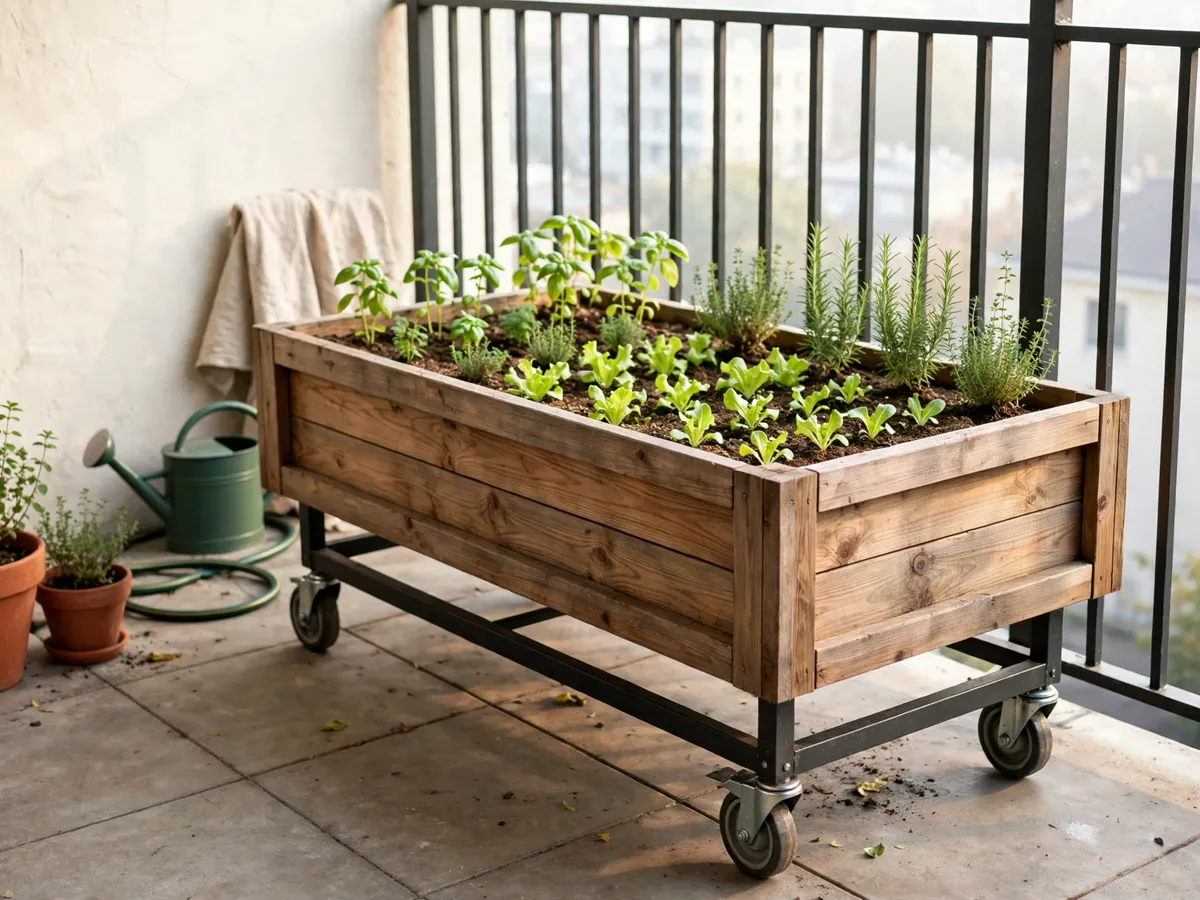
1. Is a rolling bed the right move
A rolling bed earns its wheels in three situations. The classic renter one: a concrete or wood patio with no ground access, where digging is off the table and the lease says no permanent changes. A shaded patio against a shared wall, where the only real sun lands in a strip a few feet wide and that strip moves with the season. And the move itself: a bed that rolls can follow you to the next apartment. If the surface is a balcony deck rather than a ground-floor patio, check the weight limits in the balcony garden ideas for beginners guide first.
Here is the honest verdict on what wheels buy you. A rolling bed is a roll-to-position-then-lock system, not a daily push toy. A wet bed weighs several hundred pounds, so rolling works when you do it a few times a season: out for the spring sun, back against the wall in a heatwave, off the walking line when you pressure wash the patio. If you imagine nudging it around every morning like a shopping cart, the weight section below will talk you out of it. If you have ground access and honest sun already, save the money: a bed that sits flat is simpler, cheaper and safer in the wind.
Cost: $0 to decide. Time: 15 minutes with your lease and a look at where the sun actually lands. If the patio floods or the only sunny spot is the walking path, wheels will not fix that.
2. The wet-weight arithmetic
Do this math before you buy anything, because every hardware choice below falls out of it. Moist soil is heavy: a cubic foot runs roughly 60 to 80 pounds. That is soil you have watered and planted, the weight your casters actually carry after a rain, not the lighter weight of dry bagged mix.
Now the bed. A common starter rolling bed is 4 feet long, 2 feet wide, 1 foot deep: 4 x 2 x 1 = 8 cubic feet of soil. At 60 to 80 pounds per cubic foot, that is 480 to 640 pounds of soil alone. Add the bed lumber, the skid frame and plants holding water, and the honest planning figure is 500 to 650 pounds. Write that number down. It picks your casters, your frame, and whether your back wants this bed at all.
Two ways to keep the number smaller. Shrink the bed: a 3 x 2 x 1-foot bed holds 6 cubic feet, or 360 to 480 pounds of soil. Or fill the bottom with something lighter, a layer of empty capped bottles, a false floor six inches up, or the stick-and-compost layering the raised bed soil mixture guide covers. You cannot skip the math, only the volume.
Cost: $0 and a phone calculator. Time: five minutes. Rounding the weight down is the mistake that breaks everything downstream.
3. Caster rating, not diameter
Shopping pages sell wheel size. The spec that actually matters is the rated load capacity per caster, printed on the listing or the box. Diameter matters a little, since larger wheels roll over deck-board gaps and patio seams more easily, but rating is what stops a wheel from failing under a wet bed.
And the obvious math is wrong. Four casters on a 600-pound bed is not 150 pounds per wheel. When you turn the bed the load swings; when you tip one corner up over a threshold, one or two casters briefly carry most of it. A caster rated exactly one-quarter of the total is already failing in those moments.
The honest rule: rate each caster at least half the total wet weight. On a 600-pound planning figure, that means 300 pounds or more each. Four of those survive corner-loading and turning with margin, and a fifth support point spreads it wider still. Choose steel-housing casters over plastic at this weight: plastic housings crack over a season of sun, cold and load.
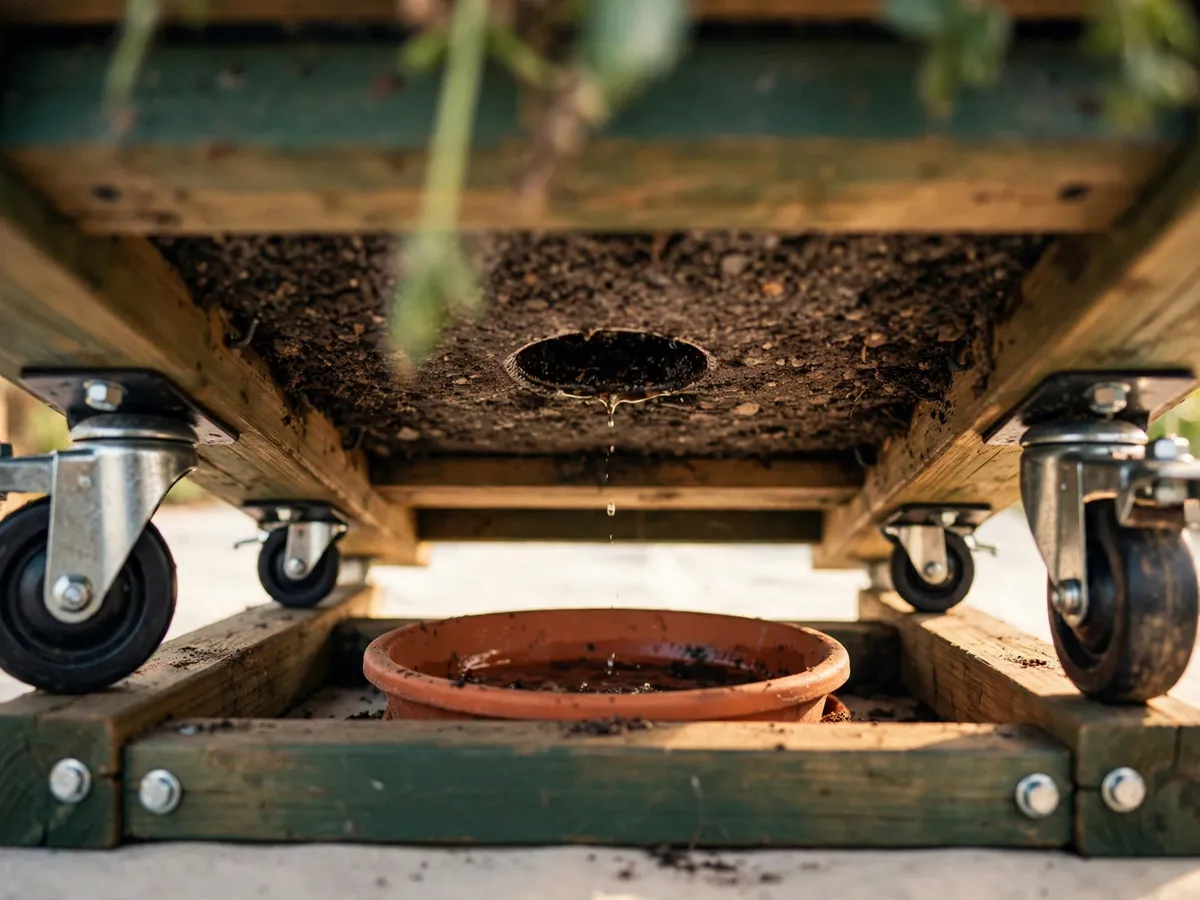
Cost: $40–$70 for four 300-lb-rated steel casters with locks. Time: 10 minutes of reading listings. A caster sold with no stated rating is a caster to skip.
4. The locks
Every rolling bed needs brakes. An unlocked bed on a patio with any slope creeps, a few inches a week, until it sits on the walking line or against a door. A dog leaning on the frame rolls it. A kid pushing it for fun finds out how fast 600 pounds moves. Wheel locks are the one component people skip to save a few dollars.
Two configurations work. Brakes on all four casters is simplest. Or brakes on two diagonal casters: the diagonal pair resists rotation in both directions, so the bed cannot pivot around an unlocked pair. If the surface has any real slope, go with all four. The brake is the pedal that presses against the wheel; step on it when the bed is parked and step off to roll.
Do the bump test once the bed is loaded and parked. Push the frame firmly at chest height the way a person would brush past it. If it shifts more than an inch, re-seat the locks; if it still travels, that slope needs chocks under the downhill wheels. A wheel chock is just a wedge block, and on a sloped patio it is the fix, not a defeat.
Cost: $0 extra when you buy brake casters up front, $10–$20 to add them to a lock-free set later. Time: 30 seconds to lock, 30 seconds to test. Brakes only hold on wheels that touch the ground evenly.
5. The frame under the bed
Casters bolt to a frame, not to the bed itself. The standard shape is a skid: a flat rectangle of plywood, or a rectangle of 2x4 lumber rails with cross pieces, sized to sit just inside the footprint of the bed. The bed rests on the skid and is screwed down through its bottom rails. The four casters mount at the skid corners, as close to the corners as the bolt pattern allows.
A 3/4-inch plywood skid cut to the bed footprint is enough for a 4x2 bed; a 2x4 rail frame with one or two cross members is stiffer and taller, which keeps the bed floor further off the wet patio. Whichever you choose, add a diagonal brace. A rectangle has no resistance to skewing sideways (racking), and a rolling bed gets pushed sideways every time it turns. One 2x4 run diagonally across the skid, or a plywood gusset at each back corner, kills the skew.
Fastening matters as much as lumber. Use bolts with nuts for the caster plates, four bolts per caster, not wood screws alone; a screw thread in wood works loose after a season of rolling. Use exterior screws to attach the bed to the skid. If you would rather build the bed itself from scratch, the DIY raised garden bed plans guide carries the cut lists; this article assumes that part exists and adds the mobility system under it.
Cost: $20–$45 in plywood or lumber plus hardware. Time: 60–90 minutes of cutting and assembly. Skip the diagonal brace and the frame teaches you about racking in about three months.
6. Drainage with wheels
Wheels lift the bed an inch and a half to five inches off the surface, and that gap is genuinely good for drainage and for the patio underneath. Water runs out of the bed floor and drips through air instead of pooling against wood or concrete, so the bed floor dries between waterings and the deck boards under it do not stain the way they do under a bed sitting flat on plastic sheeting.
The bed itself still needs holes. One is not enough for a 4x2 bed; drill a 3/8-inch hole at each corner and one in the middle of each side, sized so water exits rather than weeps. On a solid plywood floor, keep the holes clear of the skid cross members so water does not trap between bed and skid.
Then decide where the water goes. On a paved patio, direct runoff works: let it drip and hose the spot off now and then. On a wood deck, a drip tray under the skid protects the boards. The honesty about trays: a tray that never gets emptied defeats the point. The holes drain the bed, the tray catches the water, and if nobody dumps it the bed is sitting in a tub of its own runoff. A tray on a rolling bed needs a check after each watering and a lift-out or spout so it can be dumped without moving the bed. Watering slower, a watering can rather than a hose blast, keeps most of the overflow out of the tray in the first place.
Cost: $0 to drill the holes, $10–$25 for a tray. Time: 15 minutes plus two minutes per watering to empty the tray. Skip the tray on concrete; never skip it on a landlord's wood deck.
7. Assembly order
Build in this order and the heavy steps happen while everything is still light. Cut and assemble the skid frame first, with its diagonal brace. Bolt the casters on last, with the skid still empty, then flip the whole assembly caster-side down and check that all four wheels touch the floor. A skid that rocks on three wheels needs one caster shimmed or repositioned, and finding it now is a five-minute fix.
Set the bed on the skid, screw it down, and roll the empty assembly to its final spot before filling. Filling 8 cubic feet of soil adds 500-plus pounds in about ten minutes, and rolling a loaded bed is the hard way to learn why the order matters. Fill in place, plant, water, and roll nothing for a few days while the soil settles.
The two-person rule for the wet season: rolling a full, watered bed over a threshold or up a patio step takes two people even with good casters. One person steers and lifts from a corner using the skid as the handle surface, the other pushes low on the frame. Never lift from the bed's rim; the skid is the structural part. Once in position, level the skid by eye: if water pools at one end, shim a caster a quarter-inch and the pool flattens.
Cost: $0 beyond the parts above. Time: two hours empty, plus ten minutes to fill. The bed is light exactly once; treat that window with respect.
8. What to grow
The crops that suit a rolling bed keep the weight manageable and benefit from being moved. Salad greens top the list: lettuce, arugula and spinach have shallow roots, sit in light soil, and their reason for moving is real. In a heatwave you roll the bed into afternoon shade and the greens stop bolting instead of racing to seed. Herbs are next: basil, chives, parsley and thyme take shallow soil, stay light, and you wheel them to the kitchen door when you are cooking. Radishes, strawberries and green onions round out the shallow-root set, and on all of these the empty-to-full weight swing stays modest.
Tomatoes and peppers can live in a rolling bed at a 12-inch depth, and they yield well there. The honesty is weight: a tomato bed is a wet 12-inch mass with a cage and full-grown plants, so you will still roll it occasionally but not casually. Grow them in the rolling bed if the sun spot is the reason, and accept that the bed is now furniture. A cage also raises the center of gravity, which matters on wheels: park a caged bed with the lock side facing your push path.
The actual payoff of wheels is sun-chasing, so plan the bed around moves. Greens and herbs thrive in 6 to 8 inches of soil, so fill the bed shallow for them and the whole assembly stays light enough to move in one easy push. Two rolling beds instead of one deep one, a light greens bed and a heavy anchor bed, is the honest version of having it both ways. For what grows well together in one footprint, the container garden layout ideas guide maps the pairings.
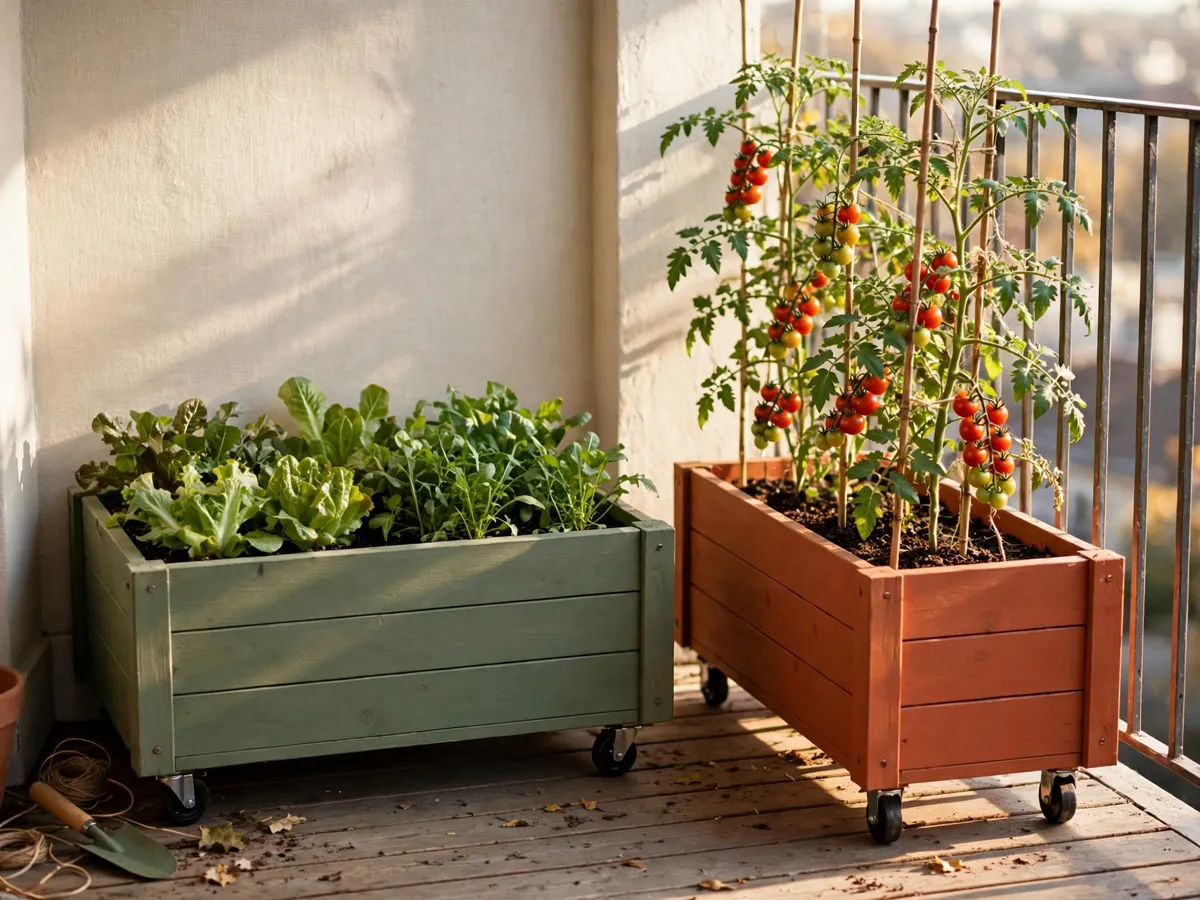
Cost: $10–$30 in seeds and starts. Time: 30 minutes to plant. One deep bed full of tomatoes rolls; two shallow beds roll easily.
9. Positioning through the season
The rolling bed pays rent in a handful of moves per season, and they are all light-tracking. In spring, when the sun is still low and a building to the south shades half the patio, park the bed in the strip that gets the most direct hours. Through June, watch the shade line move and give the bed one or two nudges to follow it: the sunny strip travels surprisingly far between April and July on a small patio.
In a heatwave, the move reverses: roll the greens bed into afternoon shade and they hold days longer before bolting, the single most valuable roll of the year. Tomatoes and peppers stay in the sun; they want the heat. Splitting crops into a light bed and a heavy bed works because the bed you want to move in July is the bed that is light enough to move in July.
And park with people in mind. A bed on wheels can sit off the walking line, then roll aside when you need the space for a table. Unlock, push, relock, five seconds. The recurring mistake is parking the bed where you brush past it daily; even with locks, the spot a body hits weekly is the spot that slowly drifts. If summer watering is the part you dread, the drip irrigation for raised beds guide explains a timer-and-tubing setup that works on a rolling bed parked near the faucet.
Cost: $0. Time: five minutes per move, a few moves a season. Every move ends with the locks stepped back down; the calendar of moves is shorter than you think.
10. Winter and storage
The weight math runs backward for winter, and that is the season the wheels earn their keep. An emptied bed leaves a few tens of pounds of lumber, and one person rolls it anywhere. If you overwinter hardy greens under frost fabric, leave the soil in the bed and keep it in its sunniest winter spot; move the bed empty instead and refill in spring if the winter spot is hard to reach.
Empty the tray before the first freeze. Water left in a plastic tray expands as it freezes, cracks the tray and leaves a rust-stained sheet of ice under the bed. Tip it out fully and store it upside down beside the parked bed. On a wood deck, also slide a tarp under the skid for the wettest months so runoff drains off the deck instead of through it.
Store the bed against a wall with the wheels chocked and locks on, out of the winter wind path. And prevent the seized caster: water sits in wheel bearings over winter, and a wheel that does not spin in spring is a wheel that skids. Before storing, spin each wheel, brush grit out of the caster fork, and oil the axle and swivel race. Steel casters survive this routine for years; plastic ones usually do not survive the first winter.
Cost: $5 in oil and a scrap tarp. Time: 20 minutes to winterize. A five-minute caster spin in March saves a full caster swap in April.
11. Failure modes
Every rolling-bed problem traces back to one of four failures, and each has a plain fix.
- The frame racks. The skid skews into a parallelogram, the bed floor twists, a corner drops. Cause: no diagonal brace on a rectangle frame pushed sideways. Fix: one diagonal 2x4 or corner gussets, plus checking the caster bolts are tight each spring.
- Casters rust or seize. A wheel stops spinning and skids, tearing the patio surface, then the housing cracks. Cause: plastic housing, or water sitting in the bearings over winter. Fix: steel housing casters rated as in section 3, a spin check and a drop of oil before storage.
- The bed tips. An empty, tall bed rolling over a threshold tips onto one wheel edge, or a caged, top-heavy bed goes over in wind. Cause: high center of gravity, small footprint. Fix: move an empty bed slowly with two people, keep the bed no taller than it is wide when deep, park a caged bed lock-side to the push path, and drain soil before any real move.
- Drainage stains the deck. Tea-colored water drips in one spot all season and leaves a dark patch. Cause: no tray on a wood deck, or a tray never emptied and overflowing. Fix: a lifted-out tray dumped after watering, slower watering, and hosing the drip zone on concrete.
None of these are exotic. They are the predictable results of several hundred pounds on four small wheels through a year of weather, and each is cheaper to prevent than to repair, in dollars and in the landlord conversation that follows a stained deck.
Cost: $0–$40 depending on which fix you skipped. Time: 10 minutes for any single fix, done before it is needed.
12. Cost and time, honestly
Building the mobility system yourself: four steel casters rated 300 pounds or more with locks run $40 to $70; plywood or 2x4 lumber for the skid and brace runs $20 to $45; hardware, drill bits and a tray add $10 to $35. Total $70 to $150 for the wheeled base under a bed you already have or build separately, and about two to three hours.
A prebuilt rolling planter from a garden center runs roughly $100 to $300 for a small one, and the honest difference is the caster rating and frame. Many prebuilts ship with light casters rated well under half their own wet weight and no serviceable skid, so by season two the savings have often reversed. If you buy prebuilt, check the listed caster rating before the price, and treat any product that does not state one as unrated.
The renter note: the whole system comes apart. Unscrew the bed from the skid, unbolt the casters, and you are left with a normal flat-bottomed bed, a bundle of lumber, and four casters that screw into the next skid at the next place. On moving day, roll the emptied bed to the vehicle instead of carrying it, and nothing about the build leaves a mark on the patio it stood on.
Cost: $70–$150 DIY base versus $100–$300 prebuilt. Time: two to three hours. The DIY route puts the money in the two parts that fail, the casters and the brace.
Common questions
How much does a raised bed on wheels weigh?
A 4x2x1-foot bed holds 8 cubic feet of soil, and moist soil runs roughly 60 to 80 pounds per cubic foot, so the soil alone is 480 to 640 pounds. With lumber, skid and plants, plan on 500 to 650 pounds wet and tens of pounds empty. Make every caster and frame choice against the wet number.
What caster rating do I need for a rolling raised bed?
Rate each caster at least half the total wet weight: 300-pound casters minimum on a 600-pound bed. The divide-by-four math fails because turning and tipping briefly load one or two casters with most of the bed. Steel housing outlasts plastic at this weight.
Can I roll a raised bed around every day?
Not comfortably, and that is not the design intent. The system works as roll-to-position-then-lock: a few deliberate moves a season, following the sun in spring, pulling greens into shade in a heatwave, clearing the walking line. Small shallow greens and herb beds are the exception; they stay light enough for casual moves.
Do rolling raised beds drain properly?
Yes, and better than a flat-sitting bed, because the wheels lift the floor so water drips through air instead of pooling against the surface. The bed still needs drainage holes (a 3/8-inch hole per corner plus one mid-side) and a paved surface or a drip tray to receive the runoff. Left unemptied, a tray turns the bed into a tub of its own runoff, so dump it after each watering.
What plants grow best in a raised bed on wheels?
Salad greens, herbs, radishes, strawberries and green onions: shallow roots let you keep the soil shallow and the weight low, which is what makes the bed genuinely movable. Tomatoes and peppers do fine at a 12-inch depth but push the weight up, so treat that bed as one you position a few times a season. The payoff of wheels is rolling the light bed to shade before greens bolt in heat.
Save these on Pinterest
Pin the wet-weight math and the caster rating rule, the two numbers that decide whether a rolling bed survives the season. This guide and the rest of the gardening tips live together there.