 Plant As Deco
Gardening & Planting Tips
Carnivorous Plants Indoors: Water, Light and Dormancy
By Plant As Deco · Updated 22 November 2026
Keeping carnivorous plants indoors comes down to three rules: water them with mineral-free water only, never feed them, and give the temperate ones a cold winter rest. This guide walks a renter through flytraps, pitcher plants, sundews and butterworts, from the water tray on the windowsill to the winter shutdown that kills most first plants.
Weekend-ready: $25–$45 to start, one afternoon of setup. That covers the plant, a pot, a bag of peat-free mix and a first jug of distilled water. Five minutes a week to top the tray.
1. The three rules, up front
Almost every indoor carnivorous plant that dies was killed by one of three mistakes, and none of them are exotic. Get these right and the plant is genuinely easy. Get one wrong and nothing else you do matters.
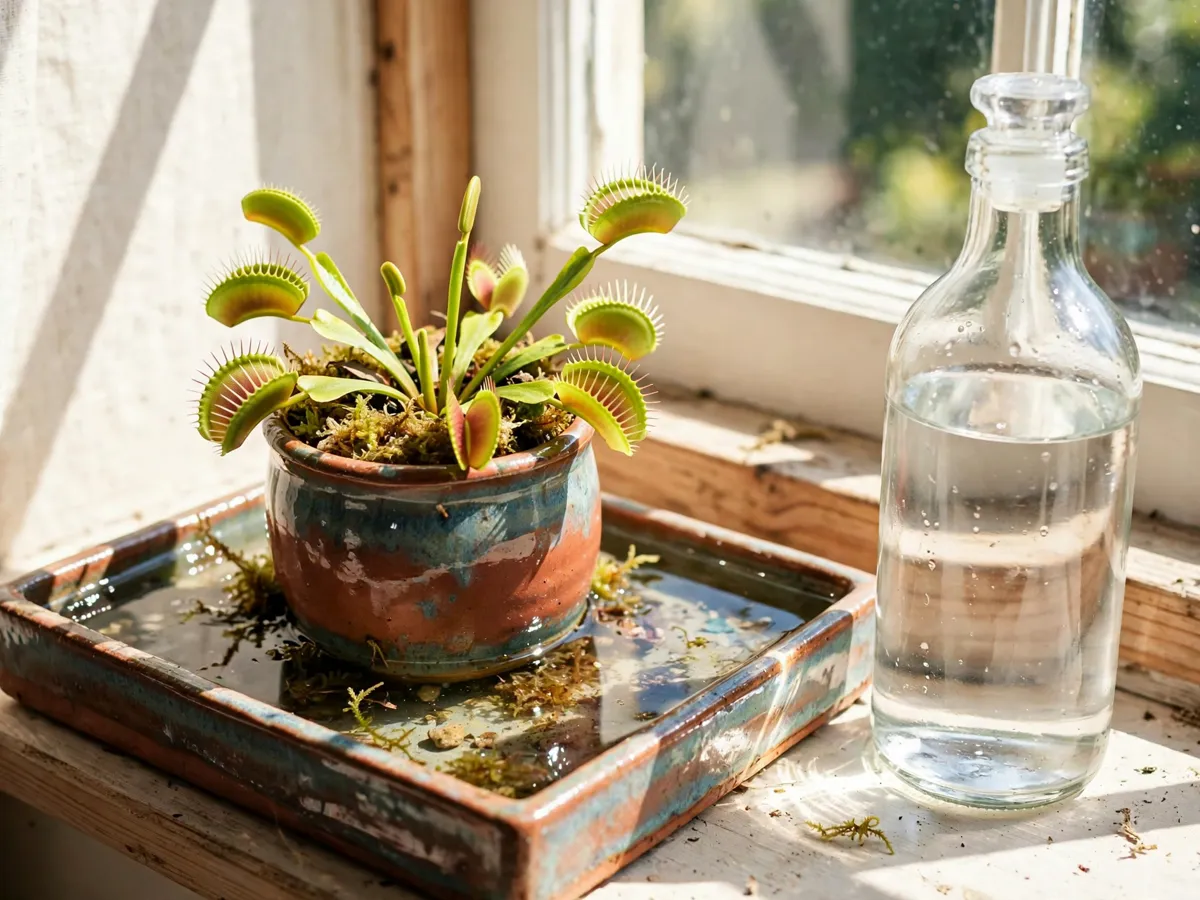
- Mineral-free water only. Distilled water, rainwater, or reverse-osmosis filtered water. Tap water carries dissolved minerals that build up in the soil and slowly kill the roots over weeks to months. This is the number one killer.
- Never feed it. A carnivorous plant that catches one bug a week on its own is eating plenty. A piece of meat or a dose of fertilizer burns the trap or the roots. Food is the fastest way to ruin a healthy plant.
- Most of them need dormancy. Venus flytraps and temperate pitcher plants expect a cool winter rest. Kept warm and dark year-round, they decline and die within a year or two. A plant that looks dead in January is often just sleeping.
The rest of this guide explains why each rule exists and how to actually run it in an apartment. The three rules repeat throughout, because they are the whole hobby. Everything else is detail.
Cost: $0 to learn these. Time: two minutes to read. Skip any one of the three and the other two stop mattering.
2. Why they eat bugs at all
Carnivorous plants grow in bogs: wet ground that is constantly rinsed by rain, acidic, and extremely poor in nutrients. There is almost no nitrogen in that soil, and nitrogen is the mineral plants need to build leaves and stems. So these plants evolved traps to pull nitrogen from insects instead of from the ground.
That means the trapping is a workaround, not a diet. A venus flytrap still photosynthesizes like every other plant on the windowsill. Sunlight and water build most of the plant; the digested bugs top up the nitrogen. A carnivorous plant that never catches a single bug still grows, just slower and smaller.
This one fact explains all three rules. The root system is built for poor, clean, rinsed soil, so fertilizer and tap-water minerals poison it. The plant expects a bog that stays wet with rainwater, so it wants a tray of clean water rather than a watering can of tap water. And the bog has real seasons, cold winters included, so the temperate species are wired to shut down every year. Learn the logic once and the care stops feeling arbitrary.
Cost: $0. Time: two minutes of understanding. Caveat: memorized rules fade, the bog logic sticks.
3. Water, the real requirement
Water is where carnivorous plant care differs from every other plant you own, and where most of them die. Use distilled water sold by the gallon, collected rainwater, or water from a reverse-osmosis filter. All three are effectively free of dissolved minerals.
Tap water fails, and so do filtered-pitcher water and bottled spring water. They all carry dissolved minerals in amounts that are fine for a pothos and fatal here. The kill is slow and quiet: minerals accumulate in the soil each time you water, the roots brown, the plant stops growing, and two months later it looks like it died of mystery causes. It did not. It died of dissolved solids.
The delivery method is a tray, not a watering schedule. Set the pot in a shallow plastic tray and keep half an inch of mineral-free water in it through the warm months. The peat-free mix stays waterlogged and wicks water up to the roots, exactly like a bog. Top the tray up when it runs low, which in a warm apartment is roughly weekly. In winter, drop to just damp rather than a standing puddle.
Honest note: a plastic tray of standing water is ugly on a nice shelf. The fix is a saucer-catcher, a low ceramic saucer that hides the plastic tray and reads as intentional decor. The water still sits in the plastic inside it, the shelf stays dry, and the room looks considered rather than improvised.
Cost: $1–$2 per gallon of distilled water, rainwater free. Time: one minute a week to top the tray. Caveat: one month of tap water is enough to start the decline.
4. The mix: deliberately poor soil
Standard houseplant potting mix kills carnivorous plants, because it is rich, and these roots evolved for ground with almost nothing in it. The mix should be a peat-free poor blend or long-fibered sphagnum moss, either alone or bulked with perlite or washed silica sand for airflow. It should hold water like a sponge and contain no nutrition at all.
Whatever you use, never add fertilizer, and never use a mix that already contains it. Check the bag. Anything described as feeding plants for months is the opposite of what this root system wants. Fertilizer on a carnivorous plant burns the roots the same way a double dose burns a seedling, except faster.
The pot situation is the one nuance. Use a pot with drainage holes, because the tray method depends on water wicking up through the holes from below. There is no drainage layer and no gravel at the bottom, the mix goes straight in. A plastic nursery pot inside a decorative cache pot works well and keeps the whole thing light enough to move to a cool window in winter.
Refresh the mix every year or two, in late winter just before growth resumes. Sphagnum breaks down slowly, compacts, and starts holding water the wrong way. The basics of moving a plant up one pot size are the same as for any houseplant, and the houseplant care routine covers them.
Cost: $10–$15 for a bag of mix. Time: twenty minutes to pot one plant. Caveat: reusing old houseplant mix is the common shortcut that ends the hobby early.
5. Light: the brightest window you have
Give a carnivorous plant the brightest window in the house. Venus flytraps and temperate pitcher plants want several hours of direct sun, not bright indirect light. A south-facing window is the honest answer in most US apartments; an east window is the fallback and a noticeably weaker one.
If the window is not enough, add a grow light rather than accepting a slow decline. A full-spectrum LED bar or bulb over the plant, running most of the day, covers the gap. The grow lights for indoor plants guide covers the options and the daily run times without brand worship.
You can read a light problem straight off the traps. A healthy flytrap in strong sun sits compact, with short sturdy leaves and red color inside the traps. A light-starved one stretches: long, pale, floppy leaves with wide gaps, small weak traps, and little or no red. That pale stretched look is the plant reaching for sun it is not getting, and it will not self-correct in the same spot.
Cost: $0 to move a pot, $20–$45 for a lamp. Time: ten minutes to place. Caveat: extra water cannot compensate for missing sun.
6. Feeding, or the lack of it
Never feed a carnivorous plant. This is the rule people find hardest to believe, because the whole point of owning one is watching it eat. But the plant is not relying on you for food. In reasonable light it photosynthesizes its energy, and one bug a week caught by itself supplies all the nitrogen it needs. Indoors, prey is scarce, and a healthy plant goes months without catching anything while growing fine.
A piece of steak or hamburger is the classic disaster. The trap closes on it, cannot digest that much dense material, and the leaf blackens and rots instead. Fertilizer is the same mistake at the root level. Both are cases of feeding a plant whose entire biology is built around scarcity.
The same logic covers the temptation to poke the traps for fun. Every closure costs the plant energy, and a trap that keeps opening and closing on nothing exhausts itself, browns early, and ages out before its time. Trigger a trap once to show a friend and it recovers. Trigger it every day and you are slowly eating the plant alive.
Brown edges on individual traps are usually not a problem at all. Each trap is a modified leaf with a working life of weeks to a few months, then it dies and a new one unfolds. One or two traps blackening while the rest of the plant looks strong is normal aging. A whole plant going black at once is a water or light problem, and section 11 covers that read.
Cost: $0. Time: zero, that is the point. Caveat: hands off the traps between guests.
7. Dormancy, the season people kill
This is the rule that ends most flytraps. Venus flytraps and temperate pitcher plants come from climates with real winters, and they are wired to rest through them. From roughly November to February the plant wants short days, cool temperatures, and just damp soil.
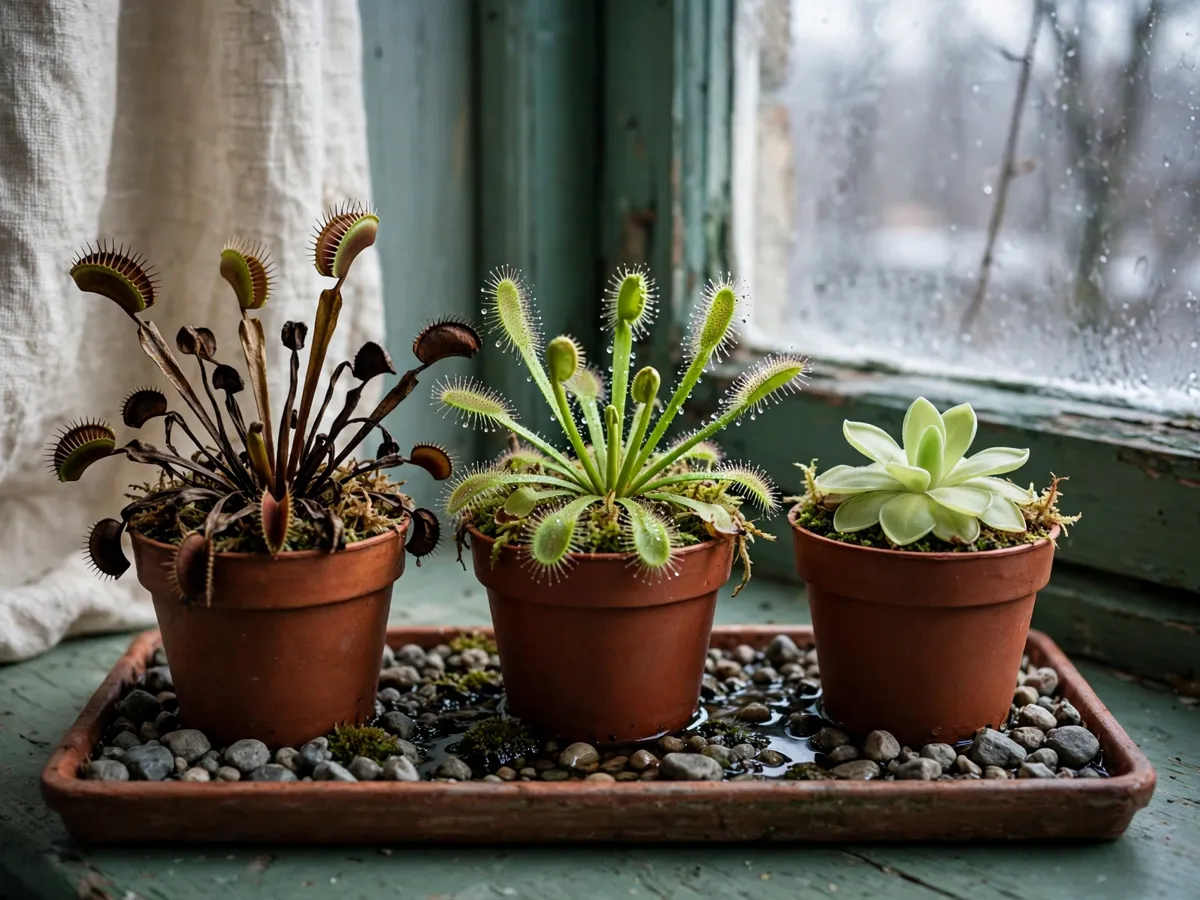
A flytrap entering dormancy looks alarming on purpose. The big summer traps die off, the leaves blacken, and the plant shrinks to a small scraggly rosette close to the soil. In January it looks dead. It is not. That is the rest, and a plant that skips it stays evergreen for a while, weakens through a season or two of warm winters, and then dies of exhaustion.
The fix is a cool, bright, unheated spot. An unheated room windowsill, or a garage window that stays above freezing but cool through winter, is close to ideal, roughly fridge-to-cellar temperatures rather than room temperature. Keep the soil just damp, skip the standing water, and move the pot back to its summer window when new growth appears in spring. The plant resumes like nothing happened.
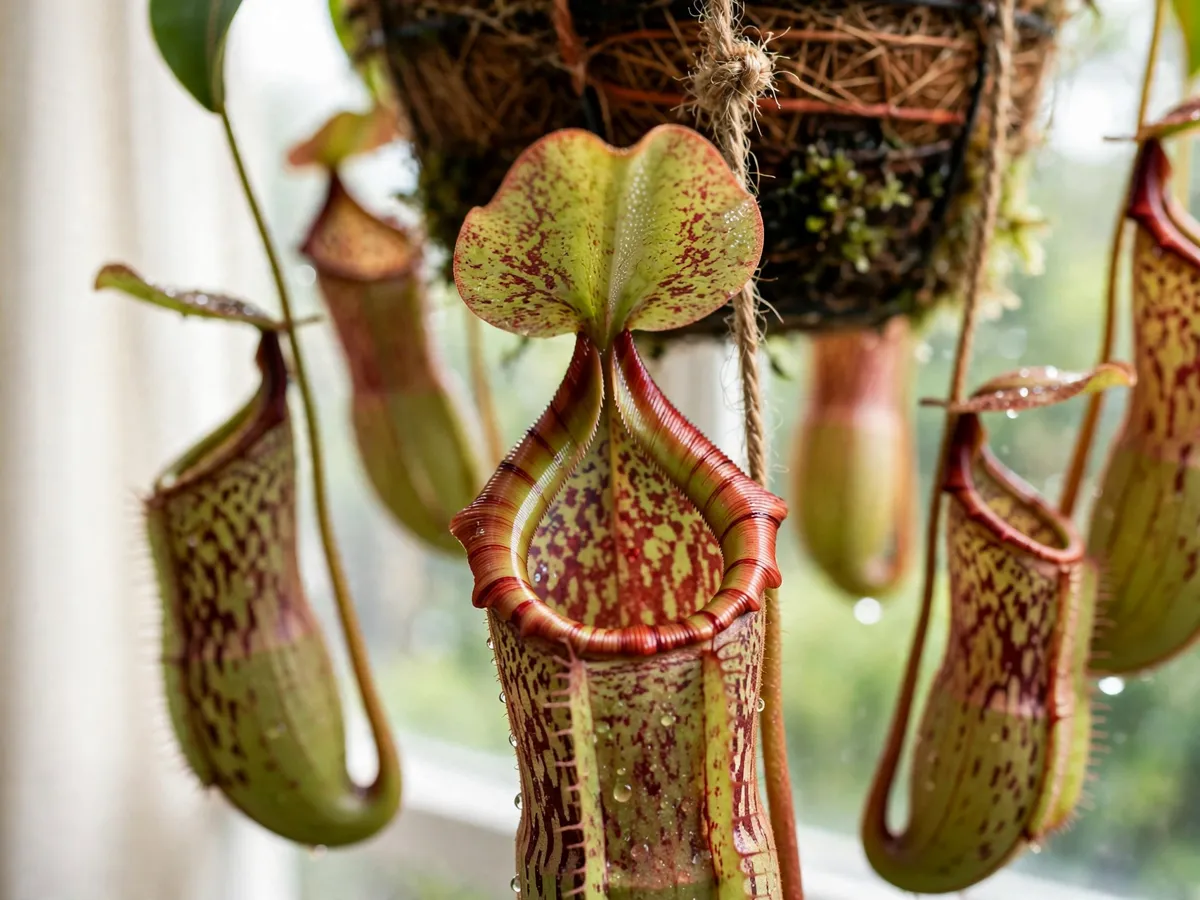
Tropical pitcher plants, the Nepenthes group, skip dormancy entirely. They come from warm climates and want the same conditions all year. What they ask for instead is humidity, which section 9 covers, and a bright spot without blasting direct sun. Buy by that difference: temperate plants rest in winter, tropical ones never do.
Cost: $0 to $5 for a spare saucer. Time: five minutes to move the pot. Caveat: this is the rule people skip because the plant looks dead anyway.
8. Which carnivorous plant to start with
The species choice decides how much of this guide applies to you. Here is the honest spread.
- Sundews. The genuinely easy starters. Flat or rosette leaves covered in sticky dew, no snapping mechanism to exhaust, tolerant of a range of windowsill light, and quietly excellent at catching the fungus gnats that already live in your other pots. A sundew forgives beginner mistakes that would kill a flytrap in a month.
- Butterworts. The other forgiving beginner plant. Small, flat, sticky leaves with a soft shine, pretty flowers, and a relaxed winter routine that involves drier soil rather than a dramatic black shutdown. Perfect for a terrarium-style jar or a small windowsill pot.
- Venus flytrap. The popular pick and the fussier one. It wants the direct sun, the cold dormancy, and strict mineral-free water discipline, all three, every week. It is also the most interactive and the most killed. Buy it second, after a sundew teaches you the water routine.
- Temperate pitcher plants (Sarracenia). The showpiece. Tall upright pitchers in copper and green, reliably impressive, but sun-hungry and bulky, and they need the same winter rest as a flytrap. Best for someone with a bright south window and room to spare.
- Tropical pitcher plants (Nepenthes). The humidity diva. Hanging or shelf pitchers, no dormancy, warm room all year, and it sulks without damp air. Skip the winter routine, accept the humidity work in section 9.
Cost: $8–$25 per plant depending on the group. Time: ten minutes to choose. Caveat: the flytrap is the famous one, not the easy one.
9. Humidity for the tropicals
Nepenthes is the group that actually needs damp air, and heated apartments are dry. The read is on the pitchers: lids crisping at the edges, rims browning, and new leaves that grow but never form pitchers. That is the plant saying the air is too dry, and no amount of tray water under the pot fixes it, because this is about the leaves, not the roots.
The cheap answers are a pebble tray beside the pot, grouping it with other plants so they humidify each other, and keeping it out of the direct line of a heating vent. Those three together lift the local air enough in many apartments to keep pitchers forming.
The reliable answer is a small humidifier near the plants, the same one that saves ferns and calatheas in January. Run it in the dry months, keep it clean, and the tropicals stop crisping. If you are not ready to run a humidifier for a plant, buy a sundew instead and save yourself the standoff.
Cost: $0–$10 for a pebble tray, $40–$60 for a small humidifier. Time: ten minutes to set up. Caveat: misting the leaves does almost nothing for more than a minute.
10. Pests and problems
A wet tray and wet mix attract their own problems, and the standard houseplant responses need a small edit here.
- Fungus gnats. Small black flies hovering over the constantly wet mix. The irony is that sundews eat the adults, but the larvae still live in the soil. Let the surface dry briefly between tray top-ups, and the larvae cannot complete their cycle. The sticky leaves of a sundew or butterwort sitting nearby will clear the adults.
- Aphids. Clusters on the newest growth, the softest tissue on the plant. Knock them off with a jet of mineral-free water in the sink or shower, and check the new growth weekly. The full identification walkthrough lives in the indoor plant pests guide.
- Algae in the water tray. A green film forms on the tray and the mix surface where light hits standing water. It is cosmetic on the tray and mildly smothering on the soil. Scrub the tray, refresh the water rather than only topping it up, and prefer an opaque or shaded tray over a clear one in a sunny window.
Skip the soaps and sprays you would use on other houseplants, at least without checking them, because the waxy dew on sundews and butterwort leaves is the working surface. Rinsing with plain mineral-free water is the safe default response.
Cost: $0–$5 for a spare tray. Time: five minutes a week of wiping and refreshing. Caveat: an algae-free tray still needs its water changed, not just topped.
11. What going wrong looks like
Read the plant, not the calendar. Each of these patterns points at one rule.
- Traps slow to close, or not closing at all. Weak plant, usually light. A trap closes with speed only when the plant has energy to spend. Move it to more sun or hang a lamp over it.
- Leaves blackening steadily through the growing season, plant shrinking. The tap-water signature. Minerals have built up in the mix. Switch to distilled or rainwater immediately, and flush the pot by letting clean water run through it, then repot into fresh mix if the plant is still holding leaves.
- Nepenthes growing leaves but no new pitchers, or lids crisping. Air too dry. Run the section 9 fixes on the shelf: pebble tray, grouping, humidifier.
- Pale, stretched leaves with wide gaps between them.Light again, the same read as a leggy houseplant. The plant is reaching.
- Whole plant black and shrunken in winter.Dormancy, and probably fine. Check the center of the rosette for any green, and wait for spring. If there is no green at the crown by late March, it is actually gone.
Cost: $0 to read the signs. Time: two minutes in the weekly check. Caveat: a dead-looking January plant gets thrown out a month early all the time.
12. Are carnivorous plants pet safe
Carnivorous plants are generally considered non-toxic to cats and dogs. A flytrap cannot hurt a cat: the trap is built to close on insect-sized prey, and a paw or a nose simply triggers it and moves on. The plants also contain none of the compounds that make lilies, pothos or sago palms dangerous to pets.
The real risk runs the other direction. A curious pet digging in the wet peat-free mix, tipping the tray of standing water, or chewing the traps makes a mess and damages the plant, and a tray dumped on a shelf or floor is the kind of accident that ends the setup. Put the pot where a cat cannot reach it, or use a heavy wide saucer that will not tip.
If you are building a whole pet-safe plant shelf, the wider list of species and the toxicity labels lives in the pet safe houseplants guide.
Cost: $0 to $10 for a heavy saucer. Time: five minutes to place the pot out of reach. Caveat: the water tray is the pet hazard, not the plant.
Common questions
Can I water my carnivorous plant with tap water?
No. Tap water carries dissolved minerals that build up in the peat-free mix and slowly kill the roots over weeks to months. Use distilled water, collected rainwater, or reverse-osmosis filtered water only, in the tray as well as in any top-up. If the plant has already had months of tap water, flush the pot with clean mineral-free water and repot into fresh mix.
Do I need to feed my venus flytrap?
No. The plant photosynthesizes for energy and needs only the nitrogen from roughly one bug a week, which it catches by itself near a bright window. Never offer meat, which the trap cannot digest and which rots the leaf, and never fertilize, which burns the roots. A plant that catches nothing for months still grows, just more slowly.
Why is my venus flytrap turning black?
Individual traps blacken and die after weeks to a few months of use, which is normal leaf aging. A whole plant blackening and shrinking in winter is dormancy, the cool rest it needs, and it should show green at the center and regrow in spring. Steady blackening during the growing season points at tap-water minerals or weak light instead.
What is the easiest carnivorous plant for a beginner?
A sundew or a butterwort. Both catch prey with sticky leaves rather than mechanical traps, tolerate ordinary windowsill conditions, and forgive beginner water mistakes that kill flytraps. The venus flytrap is the popular first purchase and the fussier one, because it demands direct sun, strict mineral-free water, and a cold winter dormancy.
Do carnivorous plants need dormancy?
The temperate ones do. Venus flytraps and Sarracenia pitcher plants want a cool winter rest, roughly November through February, on a bright unheated windowsill or garage window with just damp soil. Kept warm year-round they decline over a year or two. Tropical pitcher plants, the Nepenthes group, skip dormancy and want warmth and humidity all year instead.
Save these on Pinterest
Pin the three rules and the dormancy read, the two things that decide whether your first carnivorous plant sees spring. This guide and the rest of the gardening tips live together there.