 Plant As Deco
Gardening & Planting Tips
Aloe Vera Care: The Two Ways People Kill It
By Plant As Deco · Updated 22 November 2026
An aloe is the plant that forgives most sins, and it still dies from two opposite mistakes: water given too kindly, and light changed too fast. This guide is a failure-mode diagnostic rather than a list of virtues. Watering by season, the gritty mix, the acclimation rule for brighter windows, pups, repotting, and the pet warning, written for renters with bright windows.
Weekend-ready: $5–$15 for the plant, pot and grit, one afternoon. Ten minutes a week after that.
1. The two failure modes
An aloe stores weeks of water in its leaves and shrugs off a missed month of care. That is the plant that forgives most sins, and it is also why the way it dies surprises people: the killing moves are acts of kindness.
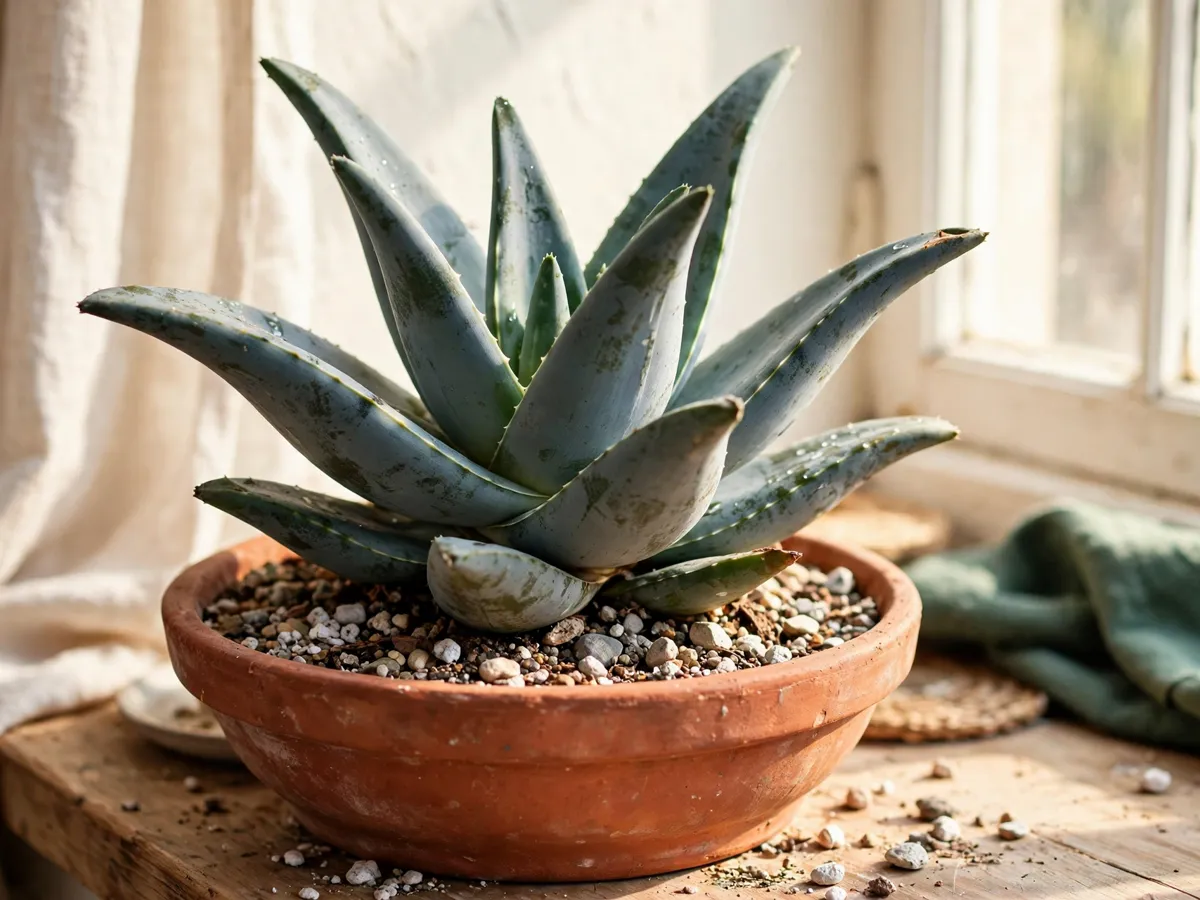
The first failure mode is rot from kindness. Water poured on a schedule, into a dense mix that holds it, keeps the roots sitting in wet soil with no air. Succulent roots rot quietly from the bottom up, and by the time the plant looks sick the base is already soft. This is the most common way an indoor aloe dies.
The second is sunburn from the wrong bright. An aloe grown indoors carries leaves built for the light it has been getting. Moved in one step from a shelf into a hot west window, the leaf tissue scorches into flat orange-brown patches on the side facing the glass. The plant wanted more light and got it too fast.
Everything in this guide hangs off those two failures. Water less, drain faster, change light slowly. The rest is detail, and every diagnostic below reads back to one of these two causes.
Cost: $0. Time: 5 minutes to learn the frame. Caveat: both failures move slowly, so both give you weeks of warning if you look.
2. Reading the leaf: the sink test
An aloe leaf is a water tank, and reading it tells you more than any calendar. The sink test takes ten seconds: take one leaf between your fingers and squeeze gently near the middle.
A plump leaf resists, then bends a little without folding. That is a hydrated plant, and it needs nothing. A thin leaf that has gone soft and wrinkled, almost like crepe, is thirsty, and the plant is drawing down its reserves. Water it.
A leaf that feels mushy and looks translucent, darker than its neighbors, is rotting, not thirsty. Extra water is the one thing it cannot use. That leaf is a diagnostic rather than a fixable object, and it should send you to the mix and pot section below rather than to the watering can.
Do this weekly instead of watering weekly. The plant tells you its state; the calendar only tells you yours.
Cost: $0. Time: 30 seconds per plant. Caveat: a leaf that folds flat or slips loose at the base has moved past thirst into rot.
3. Watering by season: soak, then nearly bone dry
The rhythm is soak, then nearly bone dry. When the mix has dried out, pour water slowly over the whole surface until it runs freely from the drainage hole. Then let the pot drain, and empty the saucer or cache pot ten minutes later. That last step is a rule, not a suggestion: a pot sitting in a saucer of water reabsorbs it through the hole, and the bottom of the rootball stays saturated for days. That is the exact condition rot comes from.
Between soaks, wait. Push a finger or a wooden skewer into the mix and water again when it comes out clean and dry nearly to the bottom. In a bright warm room through summer, that cycle runs roughly weekly. In winter, with short days and a cool room, an aloe barely drinks, and once a month or less is normal. Cutting back in November is not neglect; it is the care the plant is asking for.
Water the soil, not the plant. A spray bottle misting the leaves does nothing for a succulent and keeps the crown damp where the leaves meet the stem, which invites rot. Pour at the base with room temperature water and let the leaves stay dry. The wider habit of checking soil before every pour is the core of the care of houseplants routine.
Cost: $0. Time: 5 minutes to water and empty the saucer. Caveat: when in doubt, wait another day; a dry week is nothing to an aloe, and a wet one is where rot starts.
4. The mix and the pot: grit, a hole, no size jumps
A dense, peat-heavy mix is the rot machine. It holds water for a week or more after a thorough pour, and succulent roots, built to drink fast and then breathe, slowly suffocate in it. The fix is grit: a bagged cactus mix works straight off the shelf, or cut a regular potting soil with coarse perlite, two parts soil to one part perlite. The finished mix should run through your fingers like damp crumbs rather than clump like wet clay.
The pot matters as much as the mix. Unglazed terracotta breathes through its walls and pulls moisture out of the mix, which shortens every wet phase and quietly covers the forgetful waterer. A drainage hole is non-negotiable in any material, because a sealed pot is a bathtub with a plant in it. If a decorative ceramic has no hole, use it as a cover around a plain grower pot and lift the inner pot out to water at the sink.
Resist the urge to size up early. A too-big pot wraps a small rootball in mix it never drinks from, and that excess stays wet long after the roots have taken what they need. When a repot is due, go one size up only, and let the mix and the watering rhythm do the rest.
Cost: $8–$18 for cactus mix and a terracotta pot with a hole. Time: 20 minutes to repot. Caveat: a pot without a hole is a decorative cover, not a planter, whatever the label says.
5. Light: bright, but acclimated
An aloe wants bright light, several hours of it, ideally with some direct sun through the day. A south-facing window is the best home in most apartments, and east or west works if the pot sits close to the glass. What it cannot take is a sudden jump.
The acclimation rule: when a plant moves brighter, it moves over one to two weeks. A shelf plant heading for a sunny window spends its first days a step back from the glass for a few hours, then closer, then longer, until it is living in the full spot. Leaf tissue has to build its defenses against the new intensity, and that takes days, not hours.
In summer, a south window can be more than even a hardened aloe wants at midday. A sheer curtain is the fix: it turns harsh direct sun into bright diffused light and keeps the leaf faces from scorching while the plant keeps the brightest spot in the room. Pull the curtain back in the softer months and the same window carries the plant through winter, when every hour of light counts.
Cost: $0 to use the windows you have, $10–$15 for a sheer curtain. Time: 10 minutes of moving across two weeks. Caveat: the brightest spot is not automatically the right one; speed is what burns.
6. Sunburn versus stretch: the two light failures
These two look nothing alike, and they are the only two light failures an aloe has.
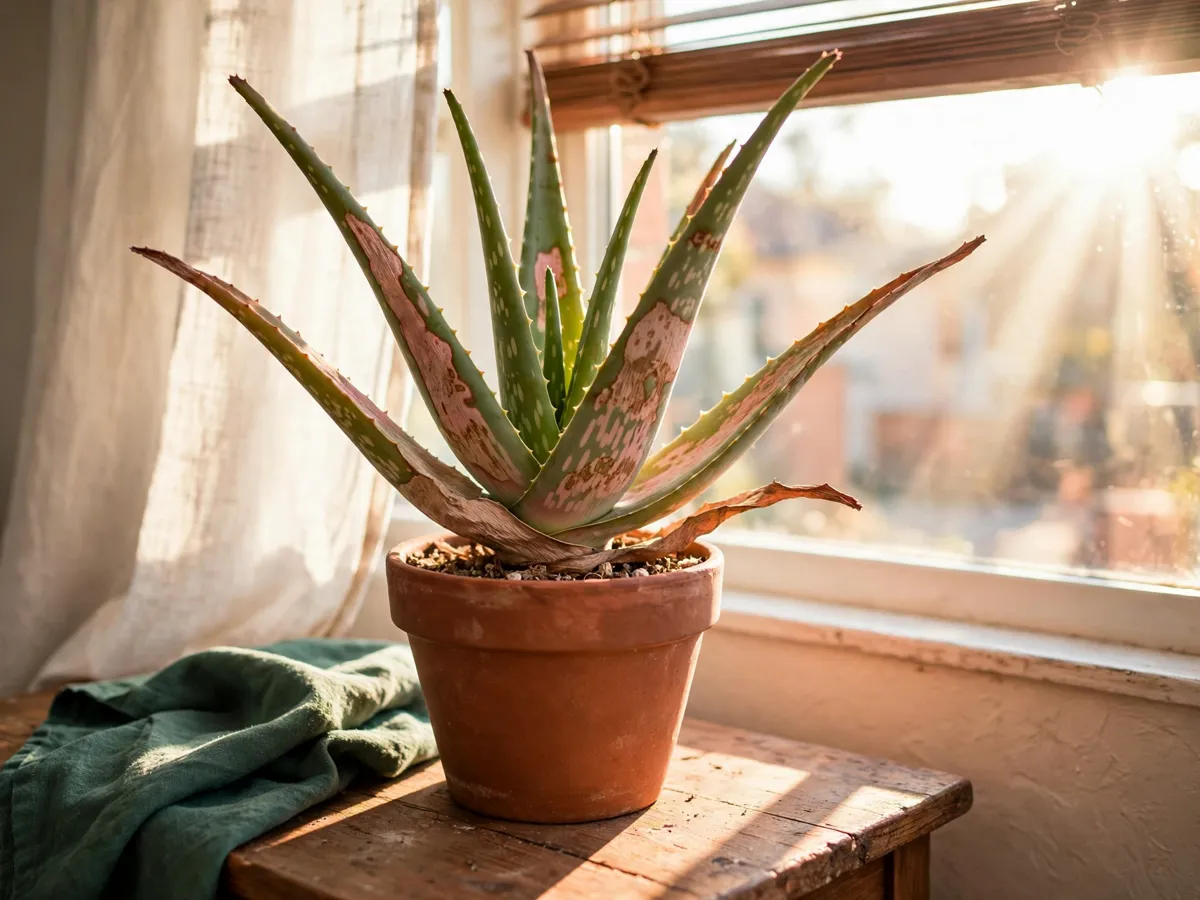
Sunburn shows as flat patches in orange-brown tones on the side of the plant facing the sun. The leaf stays firm; the color changes, then dries papery in the scar. It is cosmetic damage to that leaf, permanent on it, and harmless to the plant as a whole. The response is distance: move the pot back from the glass, add a sheer curtain in summer, and let new leaves come in clean.
Stretch shows as a plant leaning hard toward the window, leaves thinning and turning pale, gaps opening between them as the stem lengthens. The plant is reaching for light that is not there. Watering more, feeding more, repotting into fresh mix: none of it fixes a light problem, and a stretched aloe getting all three simply gets worse slowly. The response is a brighter window, moved into gradually.
If your home genuinely has no bright window, an aloe is the wrong plant for it, and choosing a species built for dim rooms is the honest fix. The low light houseplants that need less water guide lists the ones that hold a dark corner without stretching.
Cost: $0. Time: 5 minutes to read the leaves and move the pot. Caveat: sunburned patches stay scarred on that leaf; only the new growth comes in clean.
7. Pups and division
A mature aloe makes its own replacements. Offsets, usually called pups, sprout from the soil around the base of the mother plant, and in good light a healthy specimen produces a few every year. This is how aloe colonies spread in the wild: one plant, ringed by its offspring, slowly claiming a patch of ground.
Separate a pup when it stands a few inches tall and has roots of its own forming. The unpot-and-twist method is the clean one: slide the whole rootball out, crumble the mix away, and find where the pup joins the mother. Hold the pup at its base and twist it away; it usually breaks free with its own roots attached, and a clean break heals faster than a cut.
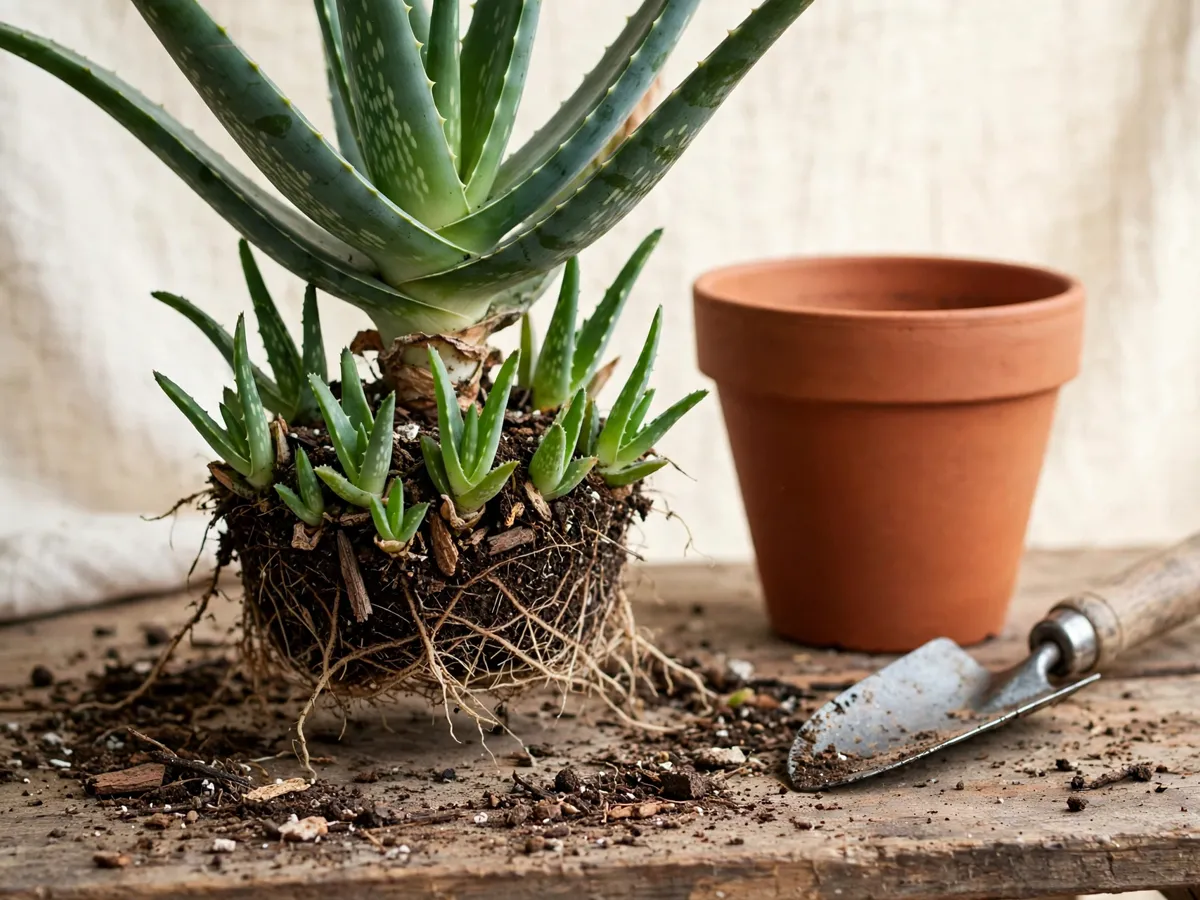
Let the pup rest bare-root for a day or two so the wound calluses over, then pot it shallow in a small container of gritty mix and wait a week before the first modest water. A pup potted into wet mix rots at the wound, which is the one way to lose a plant that was already free.
Cost: $0. Time: 30 minutes, most of it unpotting the mother. Caveat: a pup separated with no roots usually survives but sits still for weeks before it grows.
8. Repotting rhythm: every two or three years
An aloe does not need frequent repotting. Every two or three years is the working rhythm, and spring is the season, because rising light and warmth let a disturbed root system regrow fast.
The signals to act sooner: the pot tips over from the weight of a top-heavy plant, roots circle or escape the drainage hole, water runs straight through because the mix has broken down, or growth has stalled in a plant with good light. An aloe also likes being snug, and a slightly tight pot often pushes pup production, so do not read snug roots alone as a reason to repot.
When a plant gets too heavy to lift, the alternative to the full repot is a top dressing: scrape off the top inch or two of old mix and replace it with fresh gritty mix. It refreshes the surface and buys a season. It does not replace the real thing, because the bulk of the old mix and any circled roots stay below it. The one-size-up process, including what rootbound actually looks like, is covered in the repotting a houseplant one size up guide.
Cost: $8–$18 for mix and a pot one size up. Time: 30 minutes. Caveat: a top dressing buys a season, not a pass.
9. The gel, briefly and honestly
Under the rind of every leaf runs a layer of yellow latex, and it is an irritant to skin and stomach. The clear fillet deeper inside is the gel skincare products are made from, and the difference between those two layers is why a fresh leaf is not a pharmacy. Squeezing or breaking a leaf to test it weeps latex and wounds the plant, leaving a scar it has to spend energy sealing. For a kitchen burn, a tube product from the drugstore is the honest tool: made for the job, stored correctly, no latex. Let the aloe be a plant on the windowsill, and keep the medicine in the cabinet.
Cost: $0. Time: none. Caveat: a wounded leaf stays scarred and open to rot, so casual harvesting costs the plant.
10. Pests are rare, but check the axils
Aloe is one of the least bothered houseplants, and most years the pest routine is nothing. The one visitor worth knowing is mealybugs, which look like small white cottony clumps tucked where the leaves meet the base, in the axils, and along the underside edges. They stay hidden there, so a glance at the leaf faces finds nothing while the colony sits below.
The response is the alcohol swab: a cotton swab dipped in rubbing alcohol, pressed on each insect, repeated a week later because a first pass misses the ones down in the crevices. A plant that is dry, bright and watered correctly almost never hosts a serious infestation; the same plant kept soggy and dim invites one. Scale, small brown bumps that hold still on the leaves, responds to the same swab.
Cost: $3–$5 for rubbing alcohol and swabs. Time: 5 minutes per sweep. Caveat: check the axils, not the leaf faces, because that is where they hide.
11. Rot salvage, honestly
When rot reaches the base, the plant turns dark and mushy where the leaves meet the soil, and leaves start losing their grip, sliding loose one by one from a base gone soft. Caught early, before the rot climbs, an aloe usually recovers by ordinary means: unpot, cut away every dark root and any soft leaf bases, dry the rootball for a day, and restart in fresh gritty mix with water withheld for a week.
When the rot has entered the stem itself, the last resort is beheading. Cut the whole top of the plant off above the rot with a clean blade, and keep cutting upward until the cut surface is firm and pale with no dark line at the edge. Let the cut end dry in open air for several days until it calluses, then stand the rosette in barely damp gritty mix and wait for new roots.
The honest version of the odds: it sometimes works and sometimes does not, and the more stem that had to go, the worse the chance. An aloe whose rot has climbed past the halfway point of its stem is usually past saving, and replacing it with a pup from a healthy plant is the better use of the windowsill. Leaves cannot root on their own; only stem tissue grows roots.
Cost: $0. Time: 15 minutes of cutting, days of waiting. Caveat: the more tissue the rot claimed, the worse the odds, and no leaf roots without stem tissue attached.
12. Where it lives in a pet house
Aloe vera is toxic to cats and dogs, and this deserves the plainest sentence on the page. The leaves carry saponins, and a pet that chews them usually shows vomiting and diarrhea: unpleasant, normally passing, and still a reason to call the vet if the animal acts unwell. This is a real warning, not a footnote. Plenty of plant guides end with a generally nontoxic note, and aloe is not one of those plants.
Placement is the whole management plan. An aloe should not live on the floor, on a coffee table, or on any ledge a chewer can reach. A bright bathroom or laundry room window is a classic workaround, or a high shelf that still sits in the light. And do not conflate desert plants with safe plants: a yucca, the other common desert indoor, is also toxic, so checking each species before it comes home is the only habit that holds.
For a home where the plants and the pets share every room, the pet safe low light houseplants guide lists the species that can live at nose height.
Cost: $0. Time: 10 minutes to decide where the plant lives. Caveat: no shelf is out of a determined cat reach, only out of its usual path.
13. The buying read: five dollars, well spent
The store read is a two-minute inspection. A healthy aloe stands upright with plump, firm leaves that do not bend under their own weight. Pass on any plant with wrinkled, folded or thinning leaves, brown soft spots at the base, or a lean that says it has been reaching for light on a dim shelf for months.
The price is the good news. Small aloes sit on the cheap racks at big-box stores and garden centers for a few dollars, and the plain green one is the one to buy. The brightly colored and variegated forms cost more and forgive less, which is the wrong trade for a first plant.
The honest pitch is modest. A five dollar plant that survives a year of real life, needs almost nothing, and starts making pups is the entire value proposition, and nothing about an expensive specimen grows better than that. The cheap one is also the tuition-free way to learn the rhythm.
Cost: $3–$8 for the plant. Time: 10 minutes at the store. Caveat: a wrinkled clearance plant can recover, but pay the clearance price, not the full one.
Common questions
How often should I water aloe vera?
Soak thoroughly, then wait until the mix has gone nearly bone dry. In a bright warm room in summer that runs roughly weekly; in winter it can stretch to once a month or less. Use the leaf sink test and a finger in the mix rather than the calendar, because pot size, mix and room temperature change the pace more than the season does.
Why do aloe leaves turn brown or orange?
Flat orange-brown patches on one side are sunburn, and the fix is moving the plant back from the glass. A dark, soft, mushy base is rot from too much water in a dense mix, and the fix is unpotting and fresh gritty mix. Dry, crispy tips are usually thirst or minerals from hard tap water, and honestly can be either; check the mix moisture first.
Can aloe vera grow in low light?
It survives there and slowly falls apart, stretching toward the window with thin, pale, widely spaced leaves. Aloe wants bright light with some direct sun. If the brightest spot in your home is a north window, choose a plant built for dim rooms instead of an aloe.
Is aloe vera safe for cats and dogs?
No. It is toxic to both, and chewing the leaves usually causes vomiting and diarrhea. Keep it on a high shelf or in a room pets do not use, and keep genuinely pet safe species at nose height instead.
How do I separate aloe pups from the mother plant?
Wait until a pup stands a few inches tall with roots forming, unpot the whole plant, and twist the pup free at its base. Let the wound dry for a day or two, pot it shallow in gritty mix in a small pot, and hold water for the first week.
Do I need a special cactus mix?
A bagged cactus mix is the easy answer. The homemade equivalent is two parts regular potting soil cut with one part coarse perlite, which drains fast enough to keep succulent roots breathing. Straight potting soil in a pot without a hole is the combination that rots an aloe.
Save these on Pinterest
Pin the watering rhythm and the two-failure decoder, the two pages that decide whether an aloe lives for years on a rental windowsill. This guide and the rest of the gardening tips live together there.