 Plant As Deco
Gardening & Planting Tips
Arrowhead Vine Care: Light, Climbing and the Color Dial
By Plant As Deco · Updated 22 November 2026
The arrowhead vine is a chameleon. The same plant wears small arrow-shaped leaves at one age, broad lobed leaves at another, and its pink or cream color shifts with the light it receives. This guide covers what to expect as it changes, the climb-or-trail choice, watering, soil, pruning and propagation.
Weekend-ready: $10–$25 for the plant, a small pole and a bag of chunky mix. One afternoon to set up.
1. The plant that changes
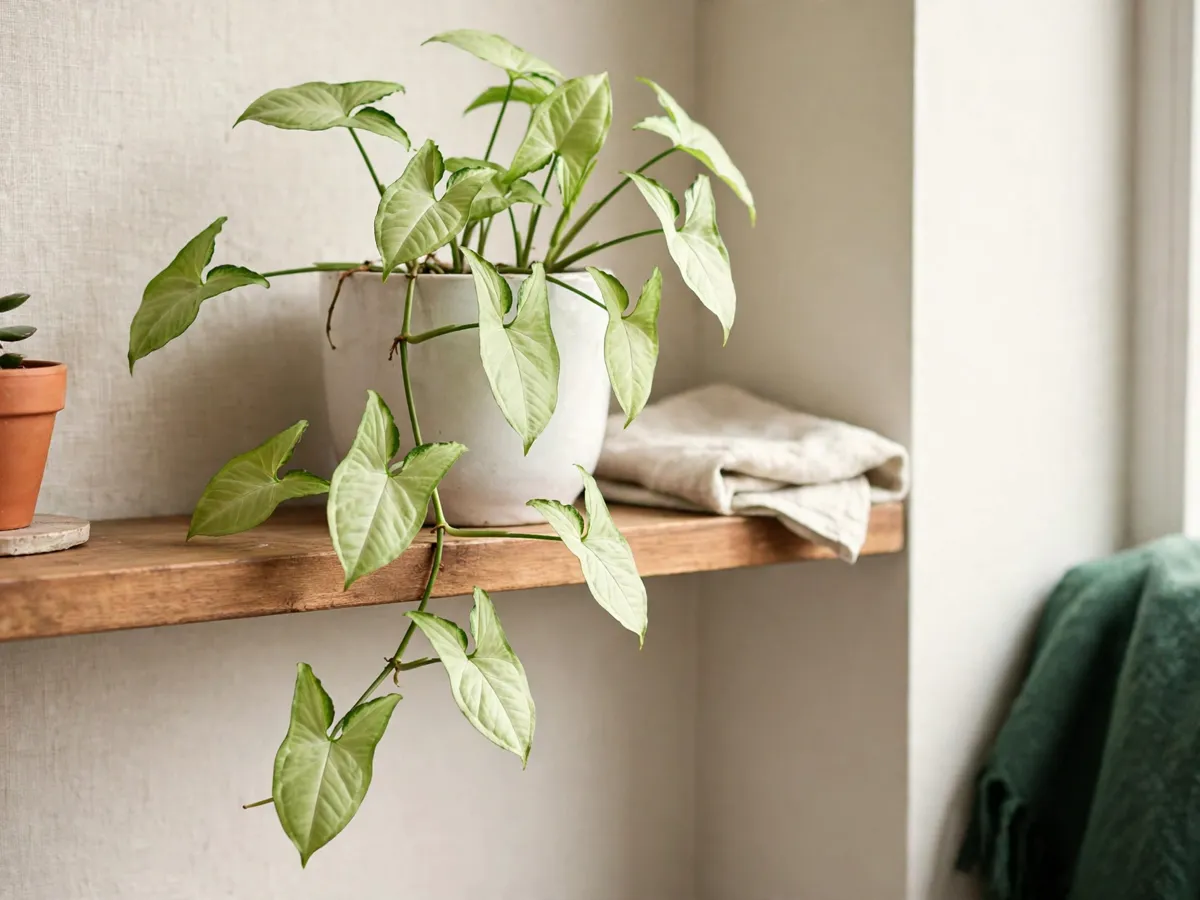
Most houseplants look the same the day you buy them and five years later. The arrowhead vine does not, and understanding that is the whole game. Botanically it is a syngonium, a tropical climber from Central and South American forest understories, and it carries a juvenile and an adult form in the same plant.
The young plant grows small, pointed arrowhead leaves on slender stems. That is the shelf plant everyone knows. Given age, light and something to climb, the same stems start producing broader leaves split into lobes, eventually three to five finger-like sections. The leaf gap between the two forms is wide enough that people sometimes assume the nursery swapped their plant. Nothing went wrong - it grew up.
Color moves on the same dial. Green types hold a dark base leaf with silver or white markings, pink types carry a blush over green. In more light the contrast sharpens. In less light the markings and blush fade toward plain green. You are not buying a fixed look - you are buying a plant that changes with its spot, which is either the fun of it or the confusion, depending on how much you read before you buy.
Cost: $0. Time: 2 minutes to read the label and check the leaf form. Caveat: a nursery plant sold in its juvenile form may look nothing like the mature photo on the tag.
2. Light is the color dial
Bright indirect light is the sweet spot, and with this plant you can literally see it working. Find the spot where a book is easy to read at midday without squinting, out of the direct path of the sun. Near an east or west window, or a south window softened by a sheer curtain, holds that condition most of the day. Two or three feet back from bright glass also works.
In low light the leaf is the tell. A green type loses its silvery-leaf contrast until it reads as a plain, dull houseplant. A pink type fades first - the blush drains out of the newest leaves until they open almost green. It is the same plant. It is not sick. It is running its color on a lower setting, because the pale zones on a leaf are the low-pigment parts, and the plant fills them in with green chlorophyll when light is scarce. Give it more light and the next leaves open with the color back.
Direct sun is the other extreme, and juvenile leaves pay for it. They are thin, and hours of hot summer sun through glass bleach them gray-white and crisp the edges within days. That damage never heals - the scar stays on that leaf until it drops. A few gentle morning rays from an east window are fine; a south window in July without a sheer is not. If you have no bright window, a simple full-spectrum bulb in a desk lamp running eight to ten hours a day holds the color, as covered in the low light indoor plants guide.
The honest note: this plant survives low light. It just does not perform there - the color flattens, the gaps between leaves widen, and it becomes a sparse green vine. A dim corner keeps it alive for a long time. If you want the plant you saw at the shop, it needs the bright spot.
Cost: $0 to move a pot, $15–$25 for a curtain or a bulb. Time: 5 minutes. Caveat: color returns only on new leaves, so recovery reads a month or two later, not overnight.
3. Climb or trail: the pole decision
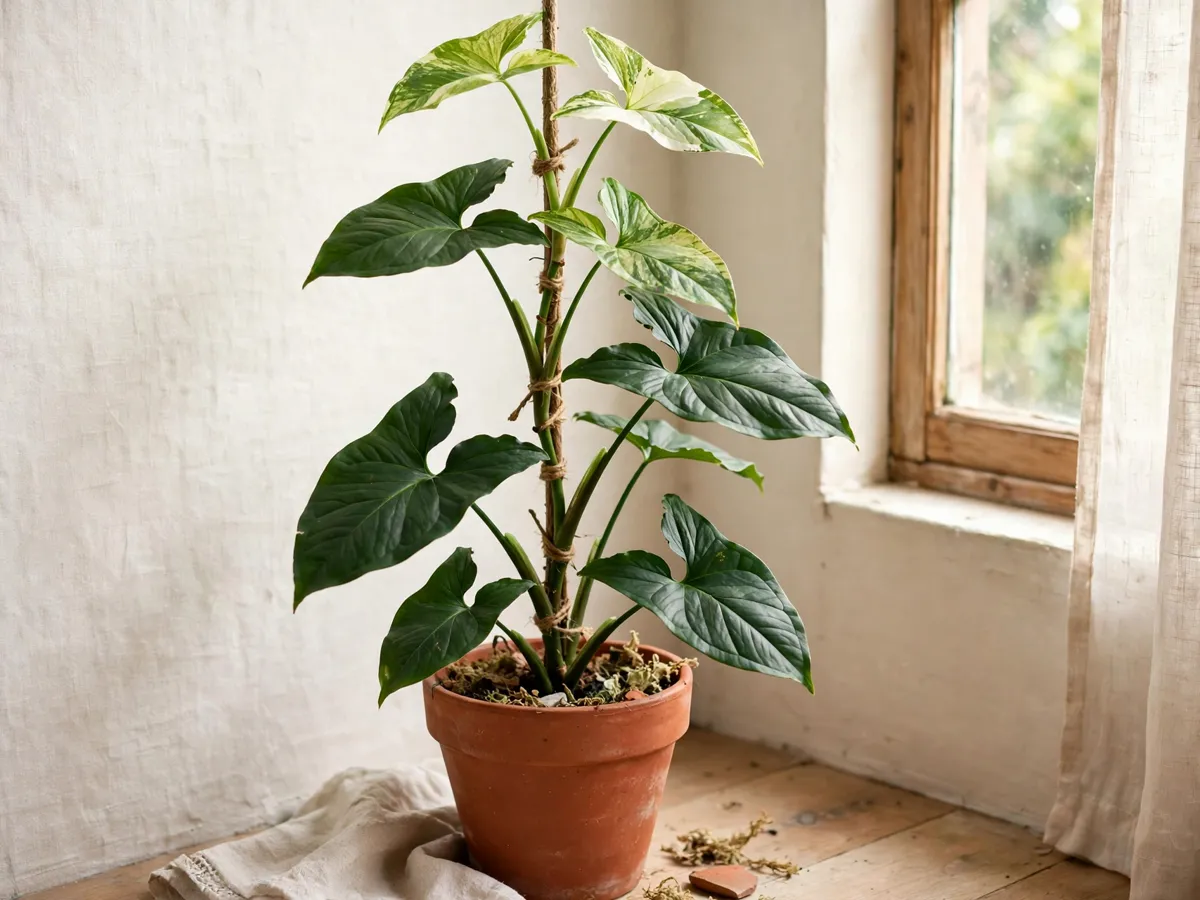
In nature this is a hemi-epiphyte. It starts life in the ground, scrambles up a tree trunk, and as it climbs the leaves get bigger and more lobed, feeding on the brighter light higher up. That climbing instinct survives in a pot. Give the vine something vertical and it pushes larger leaves along a thick stem that stays fairly compact. Leave it unpropped and gravity wins - it sprawls over the pot rim, thins out, and spends its energy on length instead of leaf size.
Neither is wrong, but they are different plants. Trailing down a shelf edge or a hanging planter, the juvenile look persists longer: lots of small arrowheads, relaxed, easy. Climbing a support, you trade footprint for maturity - the leaves broaden, the stem thickens, and it starts reading as a floor plant rather than a shelf plant.
The space-honest verdict for a renter shelf: a 12-inch pole inside a small pot. It is not a dramatic stake setup - a slim pole, a few soft plant ties or hairpins, the pot it already lives in. You get the compact upward habit, bigger leaves than a hanging pot would give, and a footprint that still fits a bookcase. A tall pole belongs to a floor pot in a bright corner, not a shelf, and you can always size up in a year if the plant earns it. More on the upward route in the indoor climbing plants guide, and on the downward one in the indoor hanging plants guide.
Cost: $5–$15 for a small pole and ties. Time: 10 minutes. Caveat: an unpropped vine only trails - it will not bush on its own without the pruning in section 6.
4. Watering and the polite droop
This is an aroid, and the watering rhythm is the family one: water thoroughly, then wait. Push a finger an inch or two into the mix. Damp and cool - do nothing. Dry and warm - pour slowly around the whole surface until water runs from the drainage hole, then empty the saucer ten minutes later. In a warm bright room that cycle might run every five to seven days; the same pot in a dim winter room can take two weeks.
The droop is the gift. An arrowhead vine asks for water visibly: the whole plant softens and the leaves sag, unmistakably, a day or two before real trouble. Water it and it stands back up within hours. Among beginner plants this is rare - a pothos sulks wordlessly for weeks. A syngonium tells you plainly, and that makes it one of the best teacher plants there is. After a few droop and recover cycles you stop needing a schedule, because you have learned how fast your pot actually dries.
Do not chase the droop too hard. A plant that droops but has wet soil is not thirsty - it is probably overwatered, and more water makes it worse. Check the mix first, then the calendar of your last watering, and only then the watering can. The winter taper matters too: from about November through February growth slows, the pot dries slowly, and the interval stretches. Watering on a summer rhythm into a cold room is how roots suffocate.
The caveat under all of it: this plant forgives dry more than wet. A missed week is a droop and a recovery. A month of soggy mix is yellowing leaves and rotting roots, and that does not bounce back. The care of houseplants guide covers the dry-down cycle in detail if this is your first plant.
Cost: $0. Time: 2 minutes per plant to check and water. Caveat: a droop with wet soil means stop watering, not start.
5. The chunky mix
Roots of a climbing forest plant need air as much as water, and a dense, bagged, all-purpose mix stays wet too long for them. The fix is a chunky, well-draining blend: take a standard houseplant mix and cut it with orchid bark, roughly a quarter to a third bark by volume, with a handful of perlite if you have it. Squeezed wet, it should feel springy and fall apart, not hold together like clay. This is close to what nurseries call an aroid mix, and it is the difference between a plant that tolerates your watering and one that rots from it.
The pot rule is non-negotiable: drainage holes, at least one. A sealed ceramic pot is a cover, not a home. Keep the plant in a nursery pot or a holed vessel and set it inside the pretty one. Material is your choice: terracotta breathes and dries faster, glazed ceramic and plastic hold moisture longer and stretch the watering interval a day or two.
The too-big pot is the quiet killer. A small rootball swimming in a large volume of mix stays wet for weeks after every watering, and the roots rot in the dark while the surface looks dry. Size up one step at a time - a six-inch rootball goes to an eight-inch pot, not a twelve. If the plant is newly bought, it can wait months in its nursery pot; repot when roots circle the bottom or push out of the hole, ideally in spring.
Cost: $10–$20 for a bag of mix and bark, $5–$15 for a pot with holes. Time: 20 minutes to blend and pot. Caveat: chunky mix dries faster than dense mix, so expect shorter watering intervals after the switch.
6. Leggy stems and the pinch
A leggy arrowhead vine is almost always two causes stacked: not enough light, and one unpruned stem left to run. In dim conditions the plant stretches for the window - the gaps between leaves widen until the vine is a bare cord with a tuft of leaves at the end. An unpruned single stem does the same in any light, because it has no reason to branch.
Fix the light first. Move the pot closer to the window or add the lamp, and watch the spacing of the new growth - it should tighten within a few weeks. No pruning choice repairs a dark shelf.
Then pinch. A syngonium branches from the node, the little bump along the stem where a leaf joins. Pinch or cut just above a node and the dormant bud there wakes and pushes a side shoot - one cut, two stems, a visibly fuller plant within a month. Pinch the growing tips of the longest stems whenever the plant looks stringy, spring through early autumn. Wear gloves and keep your hands off your face - the sap has the same irritating crystals as the leaves (section 11).
If the vine is genuinely far gone - a long bare stem with two sad leaves at the top - take the reset. Cut the whole stem back to about two nodes above the soil. It looks brutal. The plant responds by pushing several fresh shoots from low down, and in two months you have a young bushy plant instead of a tired rope. The cuttings you remove root in water (next section), so nothing is wasted - the reset is also a propagation harvest.
Cost: $0. Time: 5 minutes. Caveat: recovery shows on new growth, not on the already-bare stem - expect weeks, not days.
7. Propagation in a jar
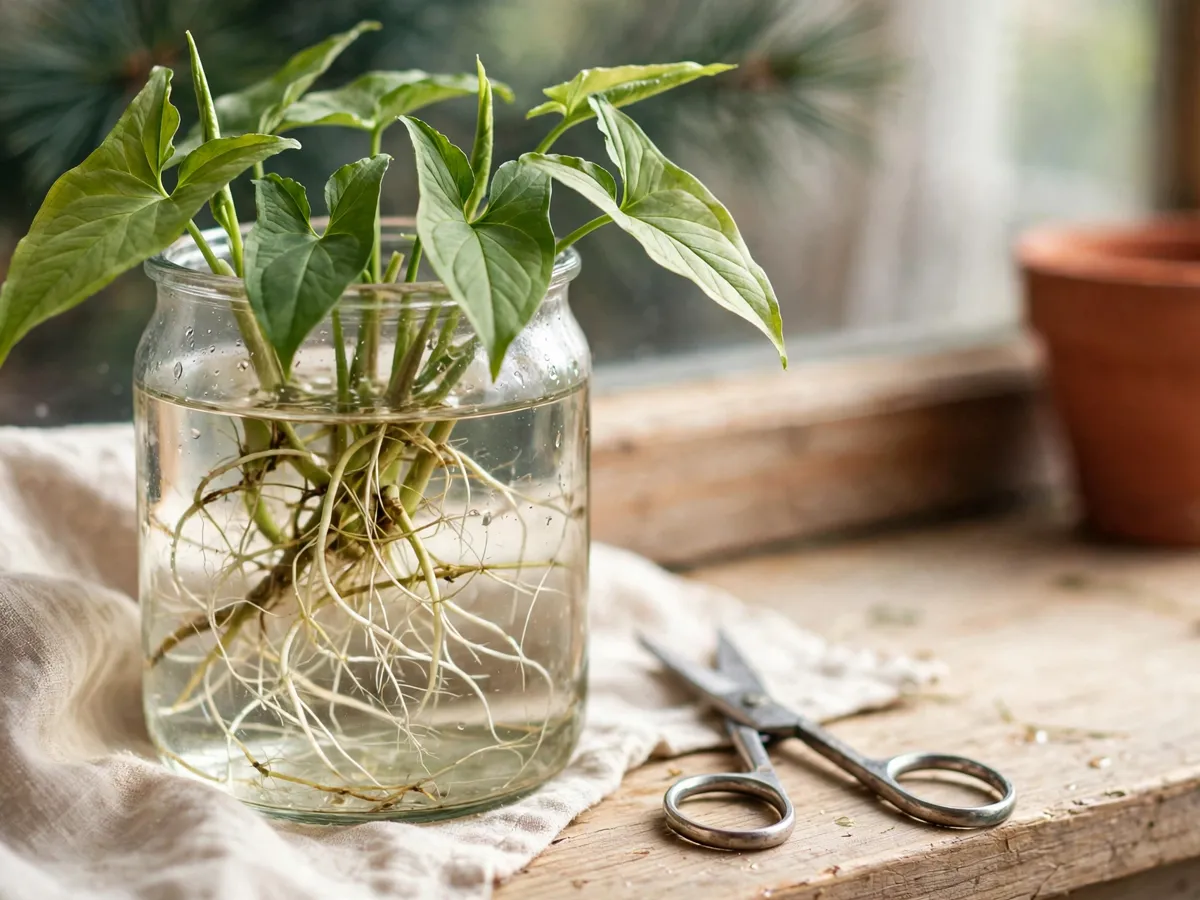
This is one of the easiest houseplants to propagate, and the cutting anatomy is the whole rule: the piece must include a node. A node is the small bump on the stem where a leaf attaches; roots emerge only from there. A leaf without a node, however healthy, sits in the jar and never roots. A stem section with one or two nodes, even leafless, roots fine.
Water propagation is the satisfying route. Cut a tip with two or three leaves and at least one node, strip the lowest leaf so that node sits bare, and stand it in a jar of room-temperature water on a bright sill - the same spot the mother plant likes, out of direct sun. Refresh the water when it clouds, every few days to a week. A white root line appears from the node within two to three weeks, followed by a little cluster of roots.
Pot the cutting when the roots are an inch or two long. Expect a short sulk: water roots are structured for water, and soil roots have to grow from scratch, so the young plant may hold still for a couple of weeks before the first new leaf. Use the chunky mix and a small pot, water it in, and keep it slightly more shaded than usual for the first week.
The direct route skips the jar: push the cut node straight into damp chunky mix, tent a clear bag over it if the air is dry, and roots form in place with no transfer shock at all. Slower to show, less fun to watch, and honestly easier. The full walkthrough of both routes, including soil-rooting hardwood pieces, is in the houseplant propagation in water and soil guide.
Cost: $0 for a jar you already own, $2–$5 for a small pot of mix. Time: 5 minutes to take the cutting, 2–3 weeks to roots. Caveat: no node, no roots - check the cutting before it goes in the water.
8. Humidity without the drama
Average apartment air is fine. The arrowhead vine comes from humid forests, but like its pothos and philodendron cousins it settles happily into the thirty to fifty percent of a normal heated home. It is not a diva - there is no misting schedule, no cloche, no drama. The rest of this section is for one season.
Winter heat is the exception. When the radiators come on, air drops into the twenties and the leaf edges turn brown and crisp - not the whole leaf, just a dry margin, usually on the oldest leaves first. The plant is losing water from its leaf edges faster than the roots can replace it. It is cosmetic more than dangerous, but it looks rough.
The fixes are cheap and quiet. Move the pot back from the radiator or vent. Group it with other plants - each pot transpires, and a cluster holds a damper pocket than a lone plant. Or set the pot on a pebble tray: a shallow dish, a layer of gravel, water just below the top of the stones, and the pot above the waterline, not touching it. Misting, for the record, wets the leaves for thirty seconds and does almost nothing; a small humidifier near the shelf does more if your winters are truly dry.
Cost: $0–$10 for a pebble tray, $30–$50 for a small humidifier. Time: 5 minutes to rearrange. Caveat: the brown edges already on a leaf stay - only new leaves come in clean.
9. Problems, read from the leaf
The arrowhead vine reports its problems in its foliage, and four signals cover almost everything you will meet.
- Yellow leaves. Overwatering is the first read. When the oldest leaves yellow a few at a time and the soil stays damp, the roots are drowning. Stretch the interval, check that the drainage hole is clear, and lift the pot to feel the weight of wet versus dry before every watering. One yellow leaf on a growing plant is normal retirement; a run of them is a message.
- Pale, faded color. Light, not disease. The markings on a green type or the blush on a pink type wash toward plain green in a dim spot. Move the pot brighter and the next leaves restore it.
- Crispy edges. Dry air in winter, or underwatering that has gone on too long. Check the soil first: bone dry and pulling from the pot rim means thirst; damp soil in a heated room means air. Each has a different fix - water the first, move or group the second.
- Droop that does not recover. A thirsty plant stands up within hours of watering. A plant that stays limp with wet soil is in root trouble - unpot it, trim any soft brown roots, and restart it in fresh, dry, chunky mix.
Feeding barely registers as a problem here. A plant in fresh mix needs nothing for two or three months, then half-strength liquid feed every third or fourth watering from spring through summer, and none from late autumn to late winter. Pale all-over growth in an old pot can mean hunger, but check the watering and the light first - they cause pale growth far more often.
Cost: $0 to diagnose. Time: 2 minutes. Caveat: read two signals together - yellow leaves plus damp soil points at water, yellow plus dry soil at light or hunger.
10. Pests, rare but real
For a common houseplant this one is lightly bothered - its frequency of trouble sits well below the fussy favorites. Two pests account for nearly all visits.
The first is mealybugs: white cottony fuzz tucked into the leaf joints and where the stems meet the soil. They are easy to miss until the plant looks sticky and dull. The response is wipe and isolate - dab every clump with a cotton swab dipped in rubbing alcohol, move the pot away from your other plants, and recheck weekly for a month, because they hide in crevices and one pass rarely clears them.
The second is spider mites, and they arrive with the same dry winter air that crisps the leaf edges. Fine webbing where leaves meet stems and a pale stippled look on the leaf surface are the signs. Wipe the stems and leaf undersides with a damp cloth weekly and raise the humidity around the plant; mites hate both. If the webbing is already heavy, rinse the plant in the sink or shower, then repeat the wipes.
The general habit costs nothing: whenever you water, look at the newest leaves and the joints underneath. Pests caught early are a cotton swab. Pests caught late cost the plant. The indoor plant pests guide covers the full list and the stronger treatments for an outbreak that has spread.
Cost: $3–$5 for alcohol and swabs. Time: 2 minutes a week during watering. Caveat: isolate first, treat second - the pest spreads pot to pot while you decide.
11. Where it lives in a pet house
The straight fact: the arrowhead vine is toxic to cats and dogs. Like pothos and philodendron, it carries calcium oxalate crystals - needle-shaped particles packed into the leaves and stems. Chewing them releases the needles into the mouth and throat: pain, oral irritation, drooling, difficulty swallowing. It is miserable and frightening rather than deadly, but it is a genuine veterinary problem, and the crystals are not cooked or rinsed away.
Handle it with respect yourself, too. The sap in cut stems irritates skin and eyes, so gloves for the pruning in section 6 and the cuttings in section 7, and wash your hands after.
The placement rule is simple and honest: out of reach, always. A high shelf the cat does not patronize, a sturdy hanging planter well clear of the landing zone of nearby furniture, a room the dog does not enter. Not a coffee table, not a low bench, not any pot your cat has already adopted as a bed. Trailing stems are the trap - a vine dangling at paw height is a toy on a string, so either keep the trailer short, wrap it up onto a pole, or site the hanging pot genuinely high. If you share your home with a determined plant-chewer, the safer route is a species that is non-toxic, covered in the pet safe low light houseplants guide.
Cost: $0–$30 for a sturdy hanger or wall bracket. Time: 10 minutes to move the plant. Caveat: a cat can reach a surprising height - judge the landing spots nearby, not just the shelf.
12. The buying read: pink versus green
At the shop you will mostly meet the pink-blush types - vines whose leaves carry a rosy wash over green, sometimes with cream. They are the popular ones, and they photograph beautifully, which is exactly why they are everywhere. The solid-green types are usually cheaper, plainer, and just as willing to grow.
Pick by your light, not by the tag photo. A pink type in a bright indirect spot holds and even deepens its blush - that is the color dial doing its job. The same plant on a dim shelf loses the pink leaf by leaf until it reads mostly green, and a stressed plant drops its color fastest. Before you conclude the nursery sold you a sick plant, check the window: a pale pink vine in low light is a light problem, not a disease.
Buy either one as a small, dense, juvenile plant with several stems and firm leaves, and expect it to change. The cheap green juvenile in a four-inch pot will still broaden its leaves and climb given a pole and a bright corner - it simply does it quietly, without the blush. That is the honest trade at the register: pink buys drama that depends on your window, green buys the same plant with no color anxiety.
Cost: $10–$25 for the plant. Time: 10 minutes to choose. Caveat: choose the bright window first - the plant you want depends on it.
Common questions
Is arrowhead vine the same as syngonium?
Yes - they are two names for the same plant. Syngonium is the botanical genus, and arrowhead vine or arrowhead plant are the household names, from the pointed arrow shape of the young leaves. Nephthytis is an older name you may still see on tags. Whatever the label says, the care is the same.
Why is my arrowhead vine turning green instead of pink?
Low light. The pink and cream zones on the leaf carry little green pigment, so the plant fills them in with chlorophyll when light is scarce - it is feeding itself, not dying. Move the pot to a bright indirect spot and new leaves open with the color back. Existing leaves will not re-pink.
Should I put my arrowhead vine on a pole?
If you want bigger leaves and a compact plant, yes. In nature it climbs tree trunks, and given a small pole it thickens its stem and broadens its leaves. Left unpropped it trails and thins. A 12-inch pole inside a small pot suits a shelf; a taller pole suits a floor pot in a bright corner.
Why is my arrowhead vine drooping?
Usually thirst. This plant droops politely a day or two before real trouble, and it stands back up within hours of watering. The exception is a droop with soil that is already wet - that points to overwatering or root trouble, and the response is to stop watering and check the roots, not to add more.
Can I grow arrowhead vine in just water?
You can for a long while. A cutting with a node roots in a jar in two to three weeks and will grow in water for months, even years, with regular water changes and a drop of liquid feed during the growing season. It stays small and the growth is softer than in soil. For a full-size plant, move it into chunky mix once the roots are an inch or two long.
Is arrowhead vine safe for cats and dogs?
No. It is toxic to both. The leaves and stems contain calcium oxalate crystals, the same irritant chemistry as pothos and philodendron, and chewing causes oral pain, drooling and difficulty swallowing. Keep it on a high shelf or in a hanging planter out of reach, and pick a genuinely pet-safe species if your animal chews plants.
How do I make my arrowhead vine bushy?
Light first, then pruning. A dim spot stretches any stem no matter what you pinch, so move it to bright indirect light. Then pinch or cut just above a node on the longest stems - the plant branches from there, and repeated pinching through spring and summer turns one stringy vine into a full plant. The cuttings root in water and can go back into the same pot to thicken it further.
Save these on Pinterest
Pin the color-dial read and the pole decision - the two calls that decide what your arrowhead vine becomes. This guide and the rest of the gardening tips live together there.