 Plant As Deco
Gardening & Planting Tips
Banana Plant Indoors: The Dwarf Pick, Light and Winter
By Plant As Deco · Updated 22 November 2026
An indoor banana plant is a fast-growing, thirsty, big-leaved commitment, not a small accent plant. It drinks nearly daily at the height of summer, it wants a large pot and the brightest window in the home, and it feeds harder than almost any houseplant. This guide covers what that actually means for a renter: the dwarf cultivars that stay honest, the watering and feeding rhythm, and how to get a fast grower through the dim months.
Weekend-ready: $45–$120 for a dwarf plant, a 14 to 20 inch pot with drainage, a bag of rich mix and a bottle of balanced feed. One afternoon of setup, a few minutes daily in summer.
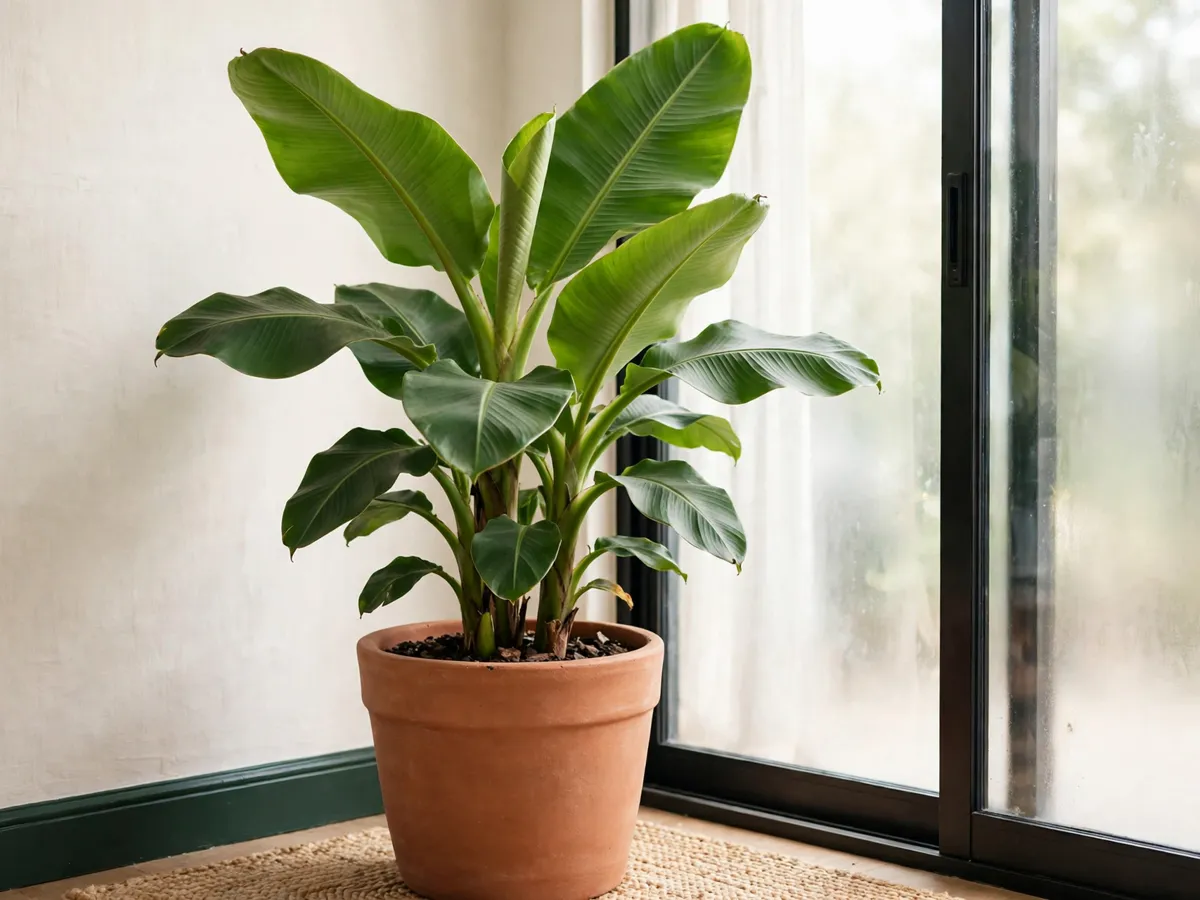
1. What you are actually bringing in
A banana plant is not a tree. It is a giant herb: a cluster of tightly wrapped leaf bases stacked into something that looks like a soft trunk, with the true growing point hidden in the middle. That "trunk" is layered leaf sheaths, not wood, and it explains most of the care that follows. A herb with leaves this large has to pump water fast to keep them upright, which is why a banana drinks daily in summer while a pothos sips weekly.
The size is the other honest part. A banana grown well does not stay the cute tabletop plant you carried home. Even the dwarf cultivars push toward four to six feet indoors within a couple of seasons, and the leaf span reaches out just as wide. A regular banana cultivar can double that and keep going toward the ceiling. Measure the corner you plan to use before you buy, not after.
The last thing to know on day one: banana leaves shred with age. The wide leaves split along their side veins as they mature and as wind or movement brushes them, so an older plant looks ragged even when it is perfectly healthy. That is normal tropical growth, not a care failure. If torn leaves would bother you every time you walk past, that matters more than any feeding schedule in this guide.
Cost: $0 to know this. Time: five minutes of measuring the corner. Ceiling height decides more than any plant food will.
2. The dwarf pick
Dwarf banana cultivars exist precisely because the full-size plant is unreasonable indoors. They grow to roughly three to six feet in a container, produce the same wide tropical leaves on a shorter stalk, and still put on growth fast enough to feel rewarding. For a renter with one bright corner, a dwarf plant is the honest starting point.
A regular banana cultivar is a different commitment. Outdoors it can reach ten feet or more, and indoors it keeps trying. You can slow one with a smaller pot, but you are then fighting the plant rather than growing it, and the leaves show the stress. If your space is a small room in an apartment, the regular cultivars are a verdict, not a maybe.
Buy by mature habit, not by what is on the shelf. Plant labels and listings often describe a young plant, and a young banana is small no matter the cultivar. Ask or search for the mature container height before paying. If the seller cannot tell you, treat it as the bigger one and plan accordingly.
Cost: $25–$60 for a young dwarf banana. Time: one afternoon to shop and set up. The plant will outgrow its first pot within a year.
3. Light: the brightest window or a lamp
Bananas want sun. Several hours of direct light a day is the target, which in practice means the brightest window in the home, close to the glass. A south-facing window is the natural fit; east or west can work if the spot is unobstructed. A plant parked back from the window or in a north-facing room will not thrive no matter how well the rest of the care goes.
The plant tells you when the light is short. New leaves emerge smaller and paler than the old ones, the stem stretches with wide gaps between leaves, and the whole plant leans hard toward the glass. That leggy, washed-out look is a light problem, and more water or more feed will not fix it. Move the pot closer first, then consider supplemental lighting.
If the brightest spot still is not bright enough, a full-spectrum grow lamp run for long days is the workable substitute. The grow lights for indoor plants guide covers the lamp choices, the distance and the daily hours that keep a sun-hungry plant compact and green.
Cost: $0 for the window move, $20–$60 for a lamp setup. Time: ten minutes to place or hang. Direct sun in summer is what makes the leaves size up.
4. The pot and the mix
Pot a banana in the largest container your floor can honestly hold, usually 14 to 20 inches wide, with generous drainage holes. A big pot means more water reserve for a thirsty plant and longer between necessary repotting. It also means a heavy pot, and that weight is a feature: a tall plant with a sail of leaves tips over in a light plastic pot when it dries or when a door drafts it.
The mix should be rich but drain fast. A quality general-purpose potting mix blended with extra perlite or bark, plus some compost, holds water on a hot day without turning into a bog. Plain garden soil is the wrong call, it compacts in a container and suffocates the roots. The mix should feel springy and open when you squeeze it, not dense.
Stability matters as much as drainage. Set the pot on a low plant stand with casters if you will move it seasonally, and remember the wet weight before you plan to carry it: a 20 inch pot of damp mix and a banana is a two-person lift. The large indoor plants guide covers floor loads, footprints and moving heavy pots without wrecking a floor or a back.
Cost: $20–$50 for the pot and mix. Time: one hour to pot up. Terracotta dries faster in summer, plastic holds water longer.
5. Watering: daily-ish in peak summer
In the height of summer a banana in a warm, bright spot can need water every day, sometimes twice on a heat wave. The leaves are the gauge: a thirsty banana droops, the whole crown folding down like an umbrella closing. It recovers within hours of a thorough watering, which is the tell that it was thirst and not root damage.
Check the mix, not the calendar. Push a finger or a skewer into the top couple of inches each morning in summer, and water when it comes out dry. Pour slowly until water runs freely from the drainage holes, then empty the saucer after ten minutes. A pot sitting in its own runoff is a pot re-drinking that water all night, and the roots pay for it.
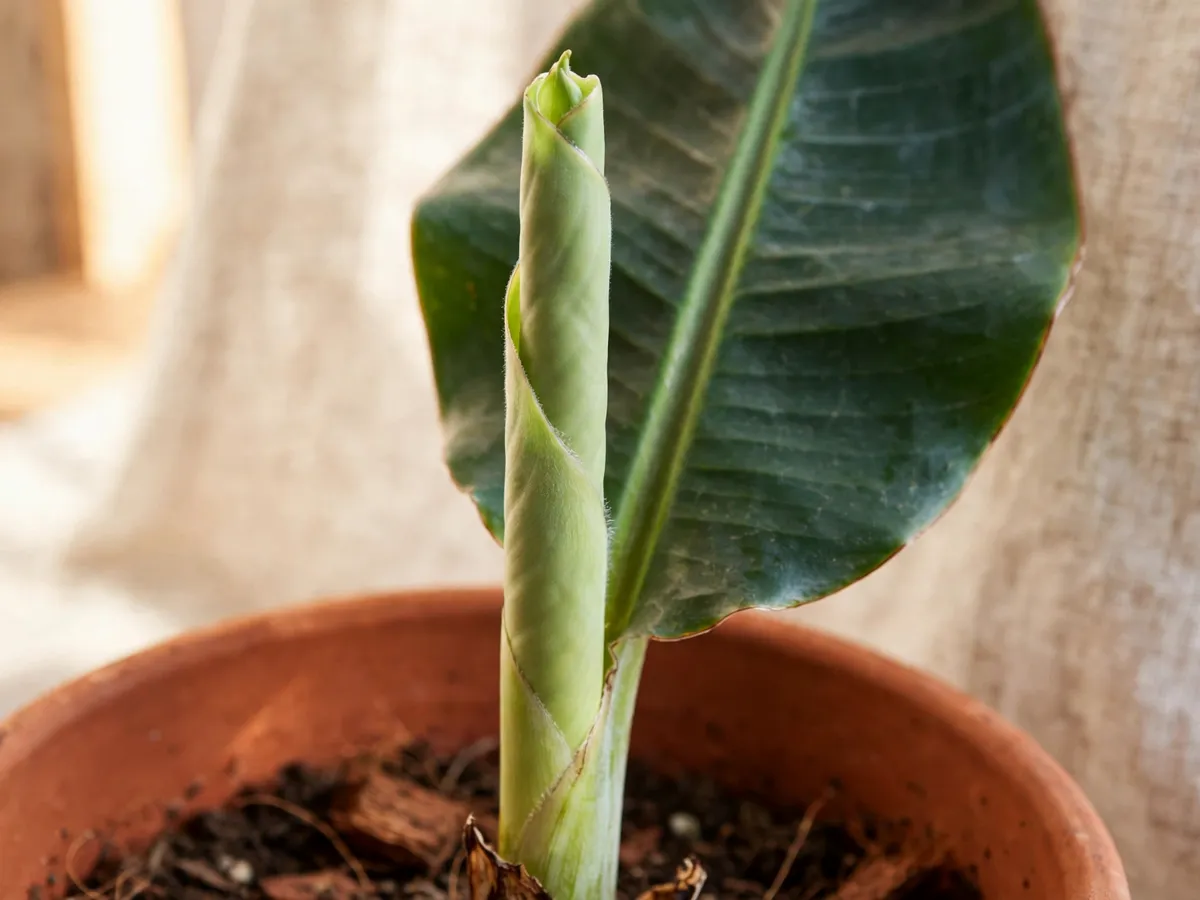
Never a bog. A banana wants lots of water moving through an open mix, not water standing in it. If the mix stays wet for days and the lower leaves yellow while the crown stays limp, the roots are drowning rather than drinking. That is the rot-from-soggy verdict, and it arrives faster in a pot without holes. If the top stays wet for more than three or four days, the light is too low or the mix is too dense.
Cost: $0 beyond the water. Time: two minutes a day in peak summer, weekly checks in winter. Empty the saucer every single time.
6. Feeding, the heavy part
A banana is a heavy feeder, the heaviest in most collections. It builds enormous leaves out of a limited pot of mix, and it strips that pot of nutrients faster than any typical houseplant. Expect to feed it far more often than you feed a pothos or a snake plant, and expect pale, slow new leaves when you forget.
Feed a growing banana regularly through the season: a balanced liquid feed diluted to half strength, applied with every second or third watering from spring into late summer. Half strength more often beats full strength rarely, because a steady gentle supply matches the plant's steady growth without salting the mix. Water with plain water in between to flush accumulating salts through the holes.
The fruiting question deserves honesty. Bananas are flowering plants and fruiting wants plenty of potassium, so feeds aimed at fruiting lean that way. Indoors, fruit is rare: container bananas flower only after several years of strong growth, often not at all in dim winter climates, and the plant is worth growing for the foliage look alone. Buy it for jungle leaves, treat a flower stalk as a bonus, not the goal.
Stop feeding when growth stops. From late autumn through winter the plant runs on stored reserves and low light, and feed poured on a resting plant just builds salts that crisp the leaf edges. Resume with the first strong flush of new leaves in spring, not on a calendar date, and keep the winter feeding at zero.
Cost: $10–$20 for a season of liquid feed. Time: one minute per watering. Salty white crust on the mix means flush with plain water.
7. Humidity and the brown-edge read
Dry heated air is hard on a plant with this much leaf surface. Through the heating season the margins of the leaves crisp brown, a slow march inward week by week. It is not fatal, but it is ugly, and it marks a plant losing water to the air faster than the roots replace it.
The fixes stack: a pebble tray filled with water under and around the pot, grouping the banana with other plants so they humidify each other, and best of all a small humidifier running in the room through winter. Misting is nearly useless, the leaves stay wet for minutes and the air stays dry.
Learn to tell the two leaf problems apart. Crisp brown edges on an otherwise intact leaf are dry air. Splits and tears running from the leaf margin inward, on a green healthy leaf, are the plant's normal design, they let a huge leaf flex in wind. Splitting is not a humidity failure and there is no fix, because nothing is broken.
Cost: $0 for grouping and a pebble tray, $30–$50 for a small humidifier. Time: five minutes to set up. Dry edges improve only on new leaves, old ones keep their scorch.
8. The summer outdoors
If you have a patio or balcony, summer outdoors is where a banana earns its keep. Real sun and moving air are what make the leaves actually size up, and a plant that spends June through August outside comes back visibly fuller than one that spent the season at the window. Outdoor weeks are also when the watering becomes truly daily, so plan for access to a tap.
Acclimate it over days, not hours. A plant raised behind glass has never met full sun, and one afternoon on a south-facing balcony can scorch the leaves white-brown. Start with a few hours of morning light in a sheltered corner, then extend the hours and the exposure across a week or so. Bring it in on cold nights, anything below about 55 degrees is a warning sign.
Inspect before it comes back inside. Check the leaf undersides, the stem creases and the soil surface for stowaways, and rinse the plant down with a firm stream of water while it is still outside. A few minutes of checking saves a winter of mites spreading to every plant in the room. For sizing a plant pot for balcony weight and wind, the balcony garden ideas for beginners guide walks the same decisions.
Cost: $0 for the move itself. Time: a week of gradual acclimation and ten minutes of pest inspection in autumn. Skip the check and you import the mites.
9. Winter, honestly
In the dim months a banana slows nearly to a stop. Growth pauses, the leaf count holds, and the plant simply sits, sometimes shedding its oldest leaf or two as it waits. That dormancy-ish rest is normal, and it is the reason winter care is mostly about not overdoing things.
Put it in the bright cool room, not the warm dark one. A bright room that runs a little cool keeps the plant ticking over slowly and holds its leaves. A warm room with little light pushes soft weak growth the plant cannot sustain, invites pests, and stretches the stem. If the choice is a cool spare room with one good window versus a cozy living room in shadow, the spare room wins every time.
Accept some leaf loss. A leaf that yellows fully and folds down was the plant's oldest, and letting it go is the plant funding the crown through winter. Water far less, maybe every one to two weeks, when the mix is dry well down, and keep the feed bottle closed until spring.
Cost: $0. Time: ten minutes a month. The plant that enters winter full-leaved never exits it that way.
10. Pups and the one-stem rhythm
A banana grows as a cluster, and a happy container plant throws side pups, small shoots rising from the base around the main stem. Left alone, the pot becomes a thicket of stems competing for the same water and feed, and every stem gets thinner and the whole thing gets unrulier.
The clean approach is one main stem at a time, maybe two on a large pot if you want a fuller silhouette. Thin the extra pups while they are still short, cutting them at the base with a clean blade. Keep a pup only when you want a successor, because the main stem that flowers eventually dies after fruiting and a retained pup is the plant's regeneration plan.
You can also grow a pup on into a new plant. Once a pup has two or three leaves of its own, slice it from the parent with a piece of root attached and pot it separately in moist, open mix. The rules are the same as for any cutting: clean blade, warm spot, moist mix, patience while new roots take hold.
Cost: $0 for thinning, $10 for a pot for a saved pup. Time: ten minutes with a clean blade. Do it while pups are short, they only get harder to separate.
11. Pests and alarms
Two pests account for most banana trouble indoors. Spider mites love the warm dry air a heated room provides, and a banana's big leaves are a banquet. Look for fine webbing where the leaf meets the stem and a pale dusty stippling across the leaf face. Wipe the undersides with a damp cloth weekly in winter and raise the humidity, mites hate both.
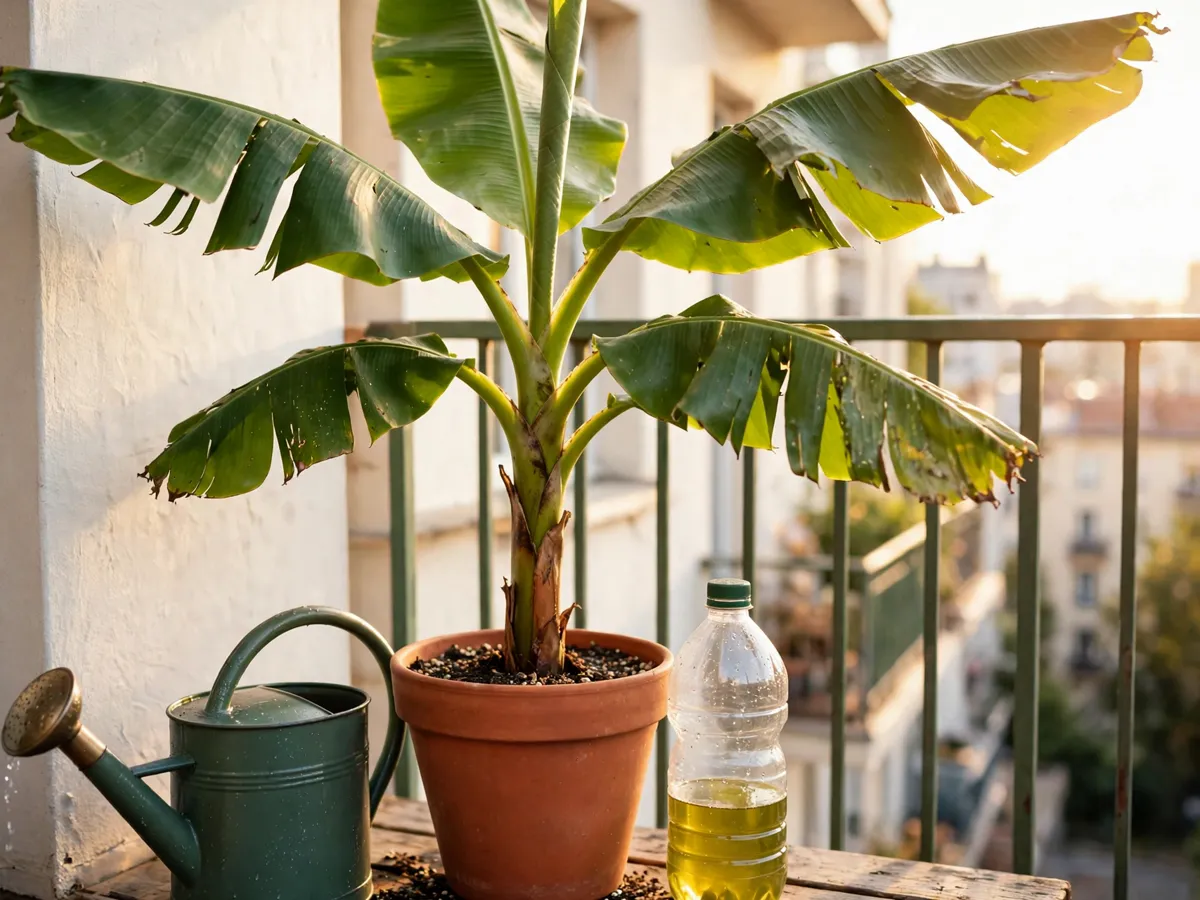
Fungus gnats are the second. Small black flies hovering over the pot mean the mix is staying wet and hosting larvae. The answer is a drier surface: let the top couple of inches dry properly between waterings rather than keeping it constantly damp. Both pests, and the treatments that actually work, are laid out in the indoor plant pests guide.
The serious alarm is soft rot. A stem that smells sour and gives under gentle pressure, with the plant collapsing from the base, is rot from a mix that stayed soggy. There is often no recovery at that stage, which is why the drainage and saucer rules above are the real pest control. When everything else fails, a healthy pup is the reset.
Cost: $5 for a cloth and neem option. Time: two minutes of leaf checks weekly. Webbing and stippling mean act now, not next week.
12. When it tops out
Every indoor banana reaches a limit. In a bright home with a good routine, a dwarf plant fills its pot and its corner in roughly two to four years, at which point repotting up means a pot too big for the room. The plant is pot-bound, growth slows, and watering becomes a daily negotiation with a small reservoir.
The options are honest ones. Give the plant away or take it to a community garden greenhouse where it can keep growing, compost it and keep a pup, or keep it in bounds by thinning pups and letting it live slower. Cutting a banana down is not killing it, the stem that flowers dies anyway, and the base regenerates through pups as long as the roots are alive.
The re-pup route is the satisfying one. When a plant tops out, thin to the strongest pup, let it take over the pot, and remove the spent old stem as it browns. You get a fresh young plant with the same footprint and none of the purchase cost. Planning for that day from the start is what makes the plant a renewable hobby rather than a disposal problem.
Cost: $0 to $15 for fresh mix at handover. Time: one afternoon. A gifted banana beats a composted one, ask around first.
13. Is a banana plant pet safe?
Banana plants are generally considered non-toxic to cats and dogs. A pet that nibbles a leaf edge is not in danger from the plant, which is one point in its favor for animal households, and something not every dramatic houseplant can claim.
The real issue is mess and structure, not poison. Those big soft leaves shred beautifully under a curious cat, and a puppy will tug and shred them like built-in toys. A tall plant in a tippable pot plus a climbing or boisterous pet is a combination worth thinking through before it lands on the floor. Place the pot where a swipe does not bring the whole thing down.
For a wider list of plants that share that non-toxic status, and the ones to avoid outright, the pet safe low light houseplants guide is the collection to check.
Cost: $0. Time: five minutes of placement thinking. Shredded leaves are cosmetic, but a pulled-over pot is not.
Common questions
How big does an indoor banana plant get?
A dwarf cultivar grown in a container reaches roughly three to six feet indoors, with a leaf span nearly as wide, usually within two seasons of strong growth. Regular banana cultivars grow far larger and keep heading for the ceiling, which is why the dwarf types are the practical pick for a small room.
How often should I water an indoor banana plant?
Daily or close to it at the height of summer in a warm, bright spot, tapering to every one to two weeks in winter when growth nearly stops. Check the top of the mix rather than following a calendar, and watch the drooping-leaf signal, a thirsty banana folds down and recovers within hours of a thorough watering.
Why are my banana plant leaves splitting?
Splitting is normal. The wide leaves tear along their side veins as they mature and as they move in air, which lets a huge leaf flex instead of snap. It is not a humidity failure and there is no fix because nothing is broken. Brown crisp edges, by contrast, are dry heated air, and those respond to a humidifier or grouping.
Will an indoor banana plant fruit?
Rarely. A container banana needs several years of strong growth and generous light before it can flower, and dim winters usually prevent it. The plant is worth growing for its foliage alone, so treat any flower stalk as a bonus. When flowering does happen, the main stem dies afterward and a pup carries the plant on.
Can a banana plant survive winter indoors?
Yes, by slowing down. In the dim months growth nearly stops, and the plant does best in a bright room that runs a little cool rather than a warm dark one. Water far less, stop feeding entirely, expect it to shed its oldest leaf or two, and check it for spider mites, which thrive in the same dry heated air it is sitting in.
Save these on Pinterest
Pin the watering rhythm and the winter slowdown, the two pages that decide whether a banana survives its first year indoors. This guide and the rest of the gardening tips collection live together there.