 Plant As Deco
Gardening & Planting Tips
Gardenia Care Indoors: Acidic Water, Humidity and Bud Drop
By Plant As Deco · Updated 22 November 2026
A gardenia is the most seductive plant in the shop and one of the hardest to keep alive indoors. This guide is for renters and first-home owners who want to try anyway: the water rule, the acidity and iron story, honest humidity, and the bud-drop diagnosis that decides whether the attempt lasts a season.
Weekend-ready: $30–$75 to start, one afternoon of setup. That covers a small gardenia, a pot with a drainage hole, a bag of acidic mix and a pebble tray. Ten minutes a week after that, and more attention once the heat comes on.
1. What a gardenia asks, said plainly
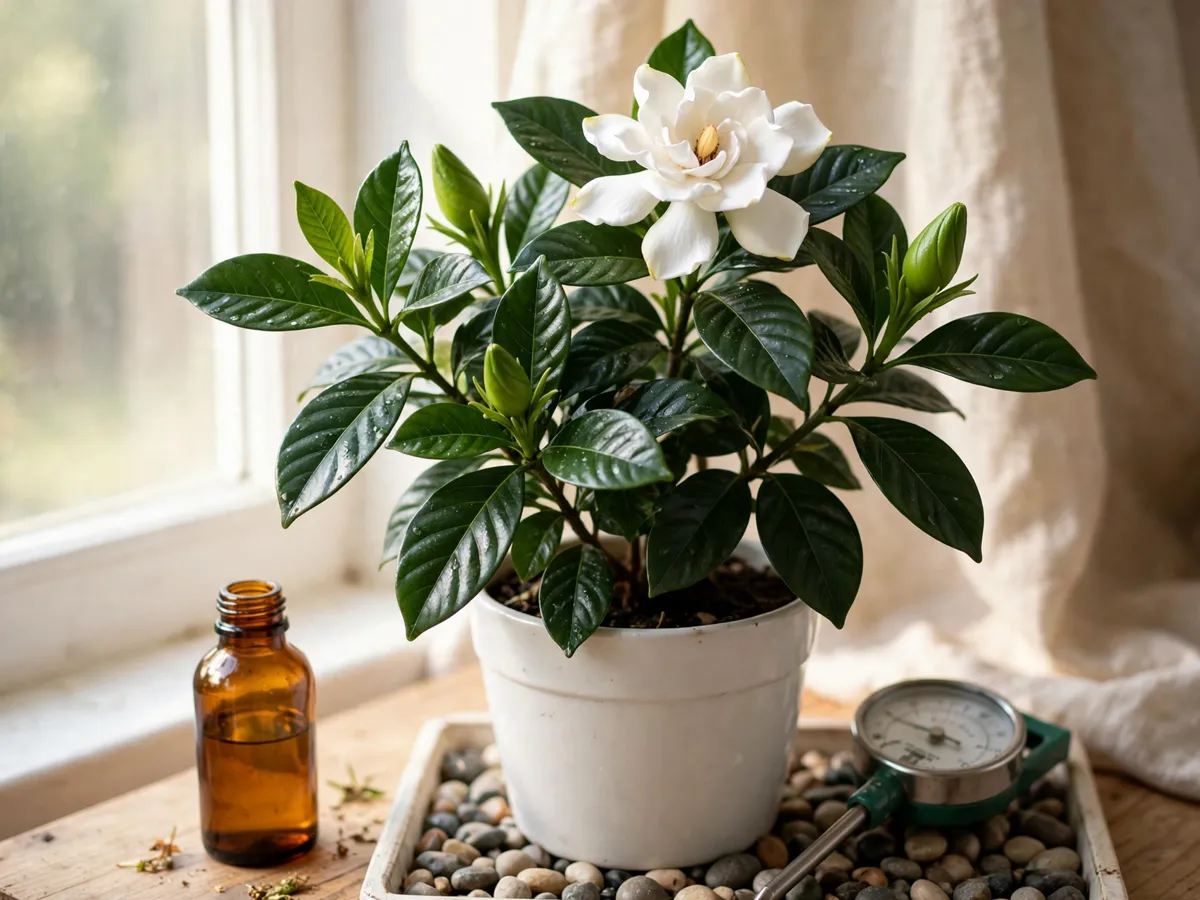
A gardenia asks for four things at once, and it asks for all of them constantly: acidic conditions at the roots, even moisture, real humidity in the air, and a bright spot that stays cool. Plenty of houseplants forgive a missed input. This one quietly gives up instead, dropping buds first and leaves second.
It earns its reputation honestly. The gardenia sold in a garden center or a grocery store florist section was raised in a production greenhouse: humid air, controlled warmth, filtered feed, steady light. It arrives in full bud, which is exactly the stage at which a plant is most fragile, and it moves from that world into a dry heated apartment in a single afternoon.
Most of these plants fail within a season, and the failure is less owner error than mismatch. A greenhouse plant sold as a fragrant gift is not the same thing as a houseplant that tolerates a house. Knowing that up front changes the plan: you are not keeping a normal houseplant alive, you are approximating a greenhouse on a windowsill.
Who should bother? Someone with a cool, bright window out of the radiator path, patience for watering with rainwater or filtered water, and a taste for a project. If the goal is simply a fragrant plant that behaves, a gardenia is the wrong purchase, and nothing in this guide changes that.
Cost: $20–$45 for the plant. Time: ten minutes to choose one. Caveat: a plant already shedding buds in the shop has started the failure already.
2. The water rule: damp, never dry, never soggy
Gardenia roots want the same moisture band every day: damp, never bone-dry, never soggy. The band is narrow, and the narrowness is where most people miss. A pothos tolerates a dry-down and a soak. A gardenia answers a dry-down by shedding buds and lower leaves, and answers a soggy pot by rotting the roots that feed it.
The check is the same finger test most houseplants get. Push a finger into the top of the mix, and when the top half inch feels dry, water thoroughly: slowly, around the whole surface, until water runs from the drainage hole. Empty the saucer ten minutes later so the pot never sits in standing water.
The pot matters more than the schedule. Drainage holes are non-negotiable, because the water that leaves is what keeps air in the mix. A decorative cover pot with no hole turns careful watering into swamp conditions within weeks.
The discipline is repetition. The same moisture band, checked on the same rhythm, matters most while buds are forming, because one forgotten dry-down during bud set can cost every bud on the plant within a week. The finger-test basics live in the care of houseplants guide, and they apply here with far less tolerance for drift.
Cost: $0. Time: one minute per check, a few minutes per watering. Caveat: the saucer has to be emptied, not just glanced at.
3. Acidity and hard water
Gardenias grow naturally in acidic soil, and their roots take up iron and other trace nutrients best when the root zone stays acidic. Ordinary tap water across much of the US is hard, carrying dissolved calcium and magnesium. Every watering deposits a little of that mineral load, and over months it pushes the mix toward alkaline.
The visible result arrives in the leaves: the tissue between the veins turns pale yellow while the veins stay green, starting on the younger leaves. The iron is usually still in the soil. It is locked up, chemically unavailable, because the root zone is no longer acidic enough to release it.
Two habits hold the line. Plant in an acidic azalea-type potting mix, the peat-heavy, airy blends sold for acid-loving plants, rather than a standard all-purpose mix. And water with rainwater, filtered water or distilled water rather than straight hard tap water.
One honest note on the folk advice: letting tap water sit uncovered overnight lets chlorine dissipate, which matters for some plants, but it does nothing about hardness. The minerals stay. If your tap runs hard, the water itself has to change, and the next section covers what happens when it does not.
Cost: $0 for rainwater, $10–$15 for a bag of acidic mix. Time: no extra minutes, a different habit. Caveat: a filtered-water habit dies quietly the day the pitcher sits empty.
4. Iron chlorosis: reading the leaf
The pattern deserves its own section because it is the most common gardenia leaf symptom and the most commonly misread. Iron chlorosis reads as yellow between green veins, on the youngest leaves first. Overwatering yellows the oldest leaves evenly. Nitrogen shortage yellows the whole plant gradually. Chlorosis draws a map, and the map points at chemistry.
The fix is a chelated-iron supplement, the form of iron that stays available to roots even when the root zone has drifted alkaline. Applied as the label directs, onto damp soil, it typically shows in new growth within a few weeks. Treat it as a correction, then hold the correction by returning to acidic water, or the pattern returns too.
The mistake to avoid is reaching for the feed bottle. More general fertilizer does not unlock iron, it adds salts, and a gardenia already stressed by alkaline conditions answers extra feed with burned leaf tips and brown edges. Feed has its place later in this guide, but chlorosis is a chemistry problem, not a hunger problem.
Cost: $8–$15 for a chelated-iron supplement. Time: five minutes to apply. Caveat: leaves already yellow will not re-green; watch the new growth instead.
5. Humidity, honestly
A gardenia wants air in the 60 percent range or damper. A heated US living room in winter runs roughly half that. The gap is the quiet engine behind most indoor gardenia failure: the plant stays watered, the light is fine, and the buds still dry and drop because the air is simply too dry.
The cheap measures help at the margins. A pebble tray, with the pot standing on stones above a layer of water that never touches the pot base, raises the humidity in the few inches around the leaves by a modest amount. Grouping the gardenia with several other plants works the same way, each pot releasing moisture into a shared pocket of air.
Misting, honestly, is a placebo. A spray of water wets the leaf surface for about a minute and changes nothing about the air in the room, and water sitting on buds and flowers invites the gray mold spotting that gardenias are prone to. People mist because it feels like care, and it is the one humidity ritual that does nothing.
In winter the only real tool is a humidifier. A small unit within a few feet of the plant holds the air around it comfortably damper, which is what keeps buds attached through the heating season. That is a purchase, and it is part of the honest cost of this plant in a heated apartment.
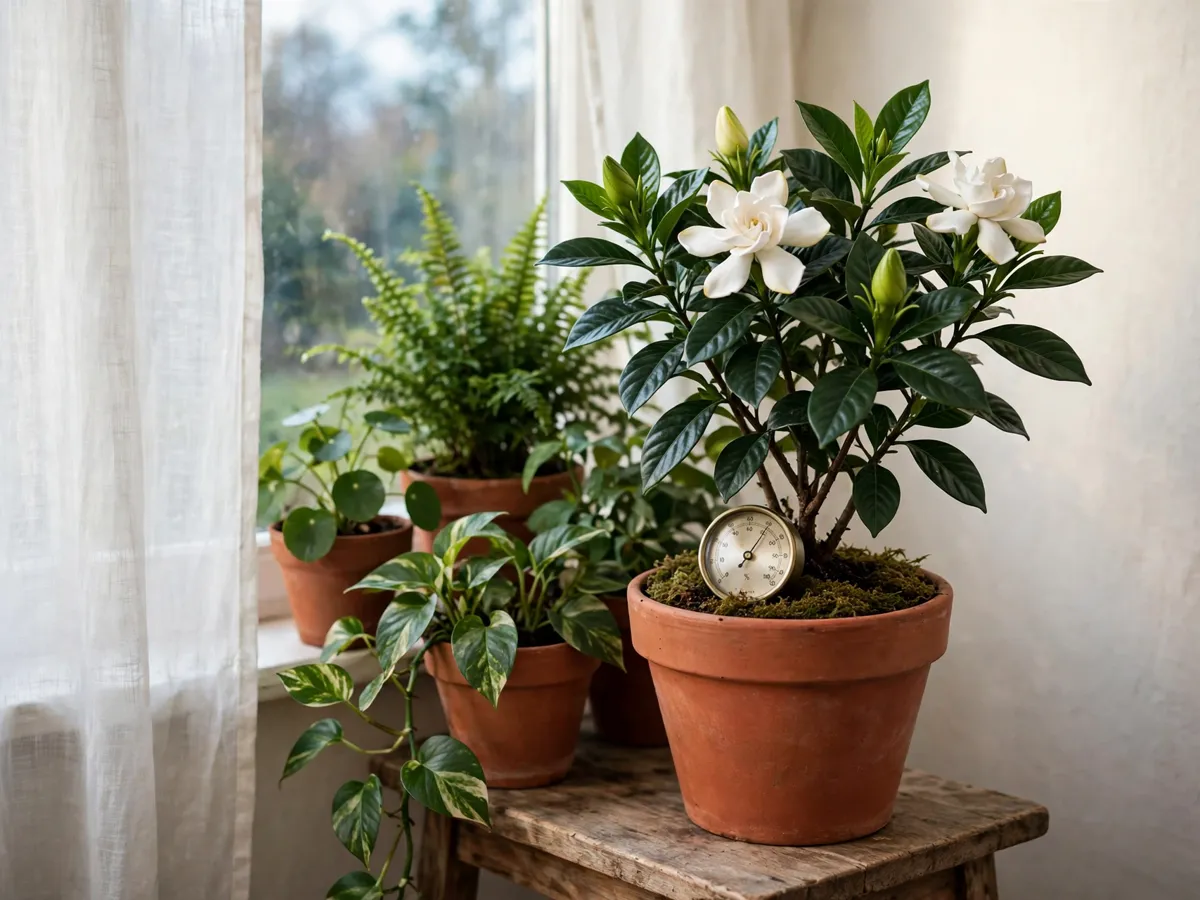
Cost: $0–$10 for a tray and pebbles, $40–$60 for a small humidifier. Time: five minutes to set up. Caveat: damp air needs some airflow, so keep the corner bright and breathing.
6. Light and the winter window trap
Gardenias want bright light with a few hours of gentle direct sun, and morning sun is the gentle kind. An east window is the classic fit: a couple of soft hours on the leaves at sunrise, then bright indirect light for the rest of the day. A west window works when the afternoon sun is filtered.
The trap is the winter south window. It is the brightest window in the apartment, so it feels like the right move in December, and it is often the worst one. The sun sits low and blazes through the glass for hours, while the radiator under that same window bakes the pot and dries the air above it. Bright, hot and dry together is the opposite of what this plant wants.
The compromise is cool plus bright. Keep the east or west window, or set the plant back from the south glass behind a sheer curtain, a few feet clear of any heat source. Watch the leaves rather than the compass: small, dull new growth says the light is short, and crisp brown edges say the spot runs hot.
Cost: $0 to move the pot, $8–$15 for a sheer curtain. Time: ten minutes. Caveat: rotate the pot a quarter turn each week so the plant grows evenly.
7. Temperature and the no-move rule
A gardenia likes warm days and clearly cooler nights, roughly 65 to 75 F through the day and ten degrees less at night. That day-and-night swing is part of what sets buds, which is why a plant parked in a constant 72-degree room often grows leaves and flowers nothing.
What it cannot absorb is swinging placement. A pot that spends the day beside a hot radiator and the evening near a cold window gap, or one carried between rooms chasing the sun, reads each change as a shock. The usual answer to a move is the one this plant is famous for: buds drop within days.
The rule that follows: choose one workable spot in a steady room and leave the plant there. Keep it out of the direct path of a radiator or heat vent, and away from cold drafts at doorways and leaky window frames. A cheap room thermometer settles the guessing faster than a hand near the glass.
Winter is the danger season, and not because of the dark. Heated air is dry air, radiators create hot zones, and windows create cold ones. The full cold-season adjustment, from reduced watering to humidity, is in the winter houseplant care guide, and gardenia is the plant that punishes skipping it hardest.
Cost: $0, or $10–$15 for a room thermometer. Time: five minutes to place the pot. Caveat: a cool bedroom often beats a warm living room for this plant.
8. Bud drop: the three causes and how to read them
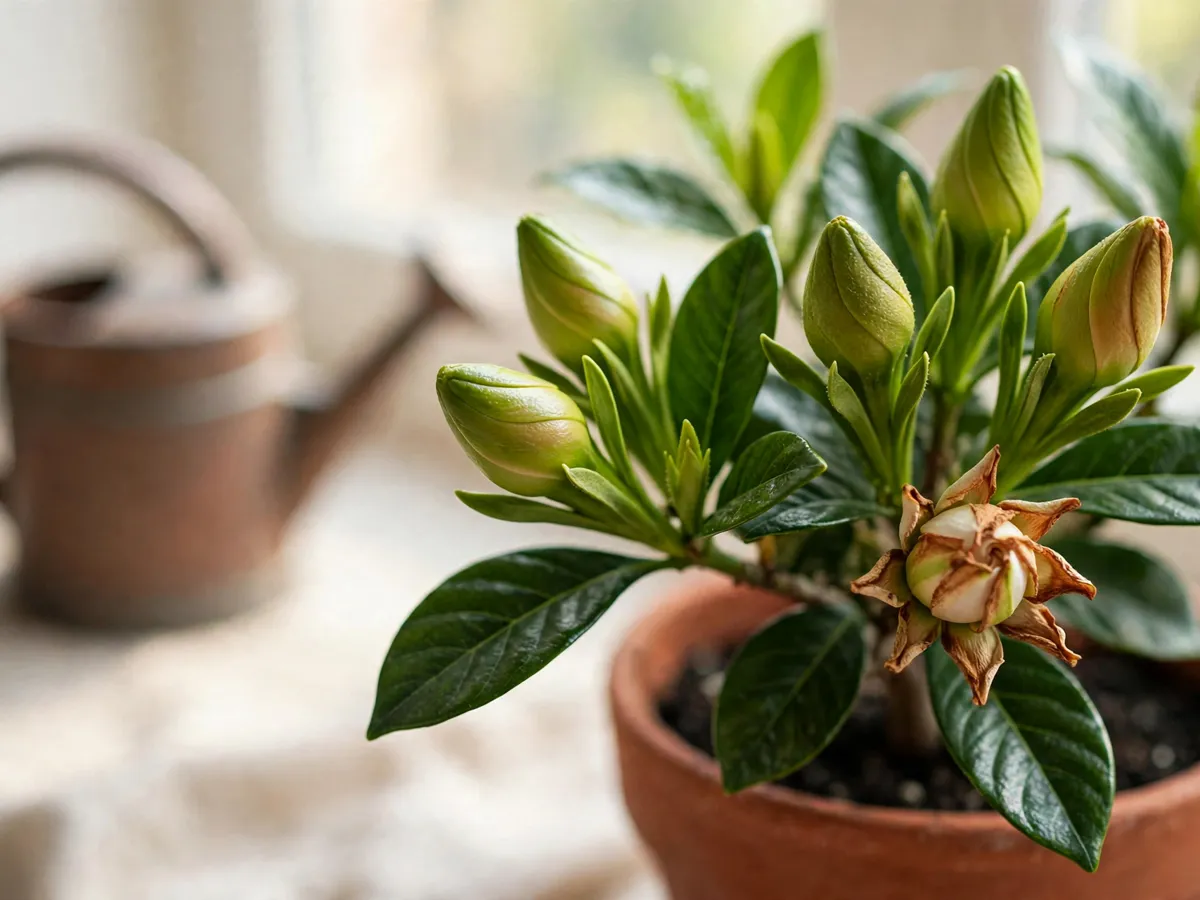
Bud drop is the signature gardenia failure, and it happens fast. Buds that looked plump and healthy in the evening are lying on the soil in the morning, sometimes a dozen at once, with the rest of the plant untouched. No other common houseplant fails in quite this way.
Three causes cover almost all of it. A humidity swing, when dry heated air settles over the plant. A move, when the pot changes rooms, light or temperature. And a draft, hot or cold, blowing across the buds. All three are changes, which is the useful pattern: buds rarely drop from a stable routine that has been working.
Reading the buds narrows the cause. Buds that dry, shrivel and turn papery brown before falling point to dry air, heat or a draft. Buds that stay plump but turn yellow before falling point at the roots, usually a mix that went too dry or stayed too wet. Dry and shriveled says fix the air. Plump and yellow says fix the water.
What saves them is honesty about timing. Buds already fallen are gone, and nothing recovers them. Once dropping starts, stop everything: no repotting, no moving, no feed experiments. Hold the moisture steady, raise the humidity, leave the pot exactly where it is, and let the plant settle. The next round of buds is the one your fixes protect.
Cost: $0. Time: two minutes to inspect the buds and the mix. Caveat: a plant that drops every bud can still leaf out and set again, the failure is rarely total.
9. Feeding: half strength, in season
Feed a gardenia at half strength, through the growing season only. A dilute liquid feed meant for acid-loving plants, mixed at half the label rate and poured onto already-damp soil every two to four weeks from spring through late summer, covers it. Full-strength feeding on this plant is how leaf tips burn.
Stop entirely once autumn arrives. From October through February the plant grows little in reduced light, and anything it cannot use sits in the mix as salt. That buildup shows up later as brown edges, and it compounds the exact alkaline drift the watering habit is fighting.
One repeat warning from the iron section: yellow leaves with green veins are not a feeding problem, and more feed will not green them. Feed is for growth, not for correction. If a gardenia is struggling, fix the water, the acidity and the air first.
Cost: $8–$15 for a bottle of feed. Time: five minutes per feeding, roughly monthly. Caveat: never feed a plant that is bone-dry or actively dropping buds.
10. Pruning and shaping after bloom
Prune after flowering, and only after flowering. Gardenias set their buds on growth that matures after a rest, so a haircut at the wrong time removes the flowers that were coming along with the shape. Once the main flush fades, shape freely.
The work is light. Snip spent blooms off as they brown, so the plant stops feeding fading flowers and the bush stays tidy. Then trim long, leggy shoots back by about a third to a leaf joint, which pushes growth inward and keeps the rounded, glossy habit gardenias are grown for.
A gardenia carries its leaves on the outer shell of the plant, and an unpruned one opens up into bare stems with a thin cap of foliage within a couple of years. Fifteen minutes of shaping after each bloom cycle is what keeps it dense. Clean the blades first, a clean cut heals fast.
Cost: $8–$15 for small shears. Time: fifteen minutes after the bloom flush. Caveat: a few yellowing leaves right after pruning is normal adjustment, not decline.
11. Repotting: one size up, in spring
Repot in spring, right after the bloom flush, one pot size up. A gardenia dropped into a much larger pot sits in wet, unused mix, and its fine roots rot in it. Go from a six-inch pot to an eight-inch, not to a twelve.
The mix matters as much as the size: a fresh, airy, acidic azalea-type blend, the same family as the planting mix from the acidity section. A dense or standard mix holds water longer than these roots tolerate.
The honest note about the roots: gardenias have a relatively shallow, fine network rather than a deep one. A wide, shallow pot serves them better than a tall deep pot of the same volume, and the top of the rootball should sit at the depth it sat before, never buried deeper. The full one-size-up process, with the rootbound signs to check first, is in the repotting a houseplant one size up guide.
Cost: $15–$30 for mix and a pot. Time: twenty minutes. Caveat: repotting a plant carrying buds is a near-certain bud drop, wait for the flush to finish.
12. Is gardenia pet safe?
No. Gardenia is toxic to cats and dogs. The plant carries saponins, and chewing leaves or flowers typically produces vomiting and an upset stomach. It sits on the toxic-plant lists that matter, and a fragrant plant scattering buds is exactly the kind of thing a bored cat investigates.
Placement is the control. A shelf or stand the pets cannot reach, cleared of fallen leaves and dropped buds, handles it in most homes. If a pet chews any part of the plant, skip the wait-and-see and call the vet or a pet poison line, particularly for a small animal already showing trouble.
For a home that wants foliage in a pet-shared room, the pet safe low light houseplants guide lists plants that do not carry this risk, and a gardenia is simply the wrong plant for that room.
Cost: $0. Time: five minutes to choose the spot. Caveat: this article is care guidance, not veterinary advice; confirm any exposure with your vet.
Common questions
Why is my gardenia dropping buds?
Almost always one of three changes: a swing toward dry heated air, a move to a different room or window, or a draft blowing across the plant. Buds that shrivel and brown before falling point to the air. Buds that stay plump but yellow point to the watering. Stop moving, repotting and feeding, hold the moisture steady, and raise the humidity.
Why are the leaves yellow with green veins?
That is iron chlorosis. Hard tap water and alkaline mix lock up the iron the plant needs, so the tissue between the veins yellows while the veins stay green, youngest leaves first. A chelated-iron supplement corrects it, and watering with rainwater or filtered water in an acidic azalea-type mix keeps it from returning. More ordinary feed will not fix it.
Can I water my gardenia with tap water?
It depends on how hard your tap runs. In soft-water areas plain tap water is usually fine. In hard-water areas the dissolved minerals push the root zone alkaline over months and the leaves begin to yellow between the veins. Rainwater, filtered water or distilled water avoids the problem. Letting water sit overnight removes chlorine, not minerals.
Where should a gardenia live indoors?
In one cool, bright spot that never changes. An east window with a few hours of gentle morning sun is the classic fit, and a filtered west window also works. Keep the pot a few feet from radiators and heat vents, out of cold drafts at doorways, and leave it there. Moving a gardenia between rooms is a reliable way to lose the buds.
Is gardenia safe for cats and dogs?
No. The plant carries saponins and is toxic to both. Chewing the leaves or flowers typically causes vomiting and an upset stomach. Keep it where pets cannot reach, clear the fallen buds and leaves, and call the vet or a pet poison line if any part of the plant gets eaten.
Save these on Pinterest
Pin the water rule and the bud-drop decoder, the two pages of this guide that decide whether a gardenia survives the season. This article and the rest of the gardening tips live together there.