 Plant As Deco
Gardening Tips
Metal Raised Garden Beds: Sizes, Soil and Setup That Last
By Plant As Deco · Updated 20 November 2026
A metal raised bed is the fastest way to put real soil on a balcony slab, a paved side yard, or ground you would rather not dig. The walls are thin, the frame weighs a few pounds empty, and it arrives ready to fill — nothing to cut, nothing to pour, no assembly beyond unfolding four side panels. The problem is choosing badly: a bed too shallow for the roots you want, too heavy once filled to ever move, or too thin-walled to keep its soil cool in July. This page settles those choices in order — coating, height, size, placement, fill — then covers the two failures that end metal beds early, the afternoon setup, and the care that keeps one productive for a decade.
Weekend-ready: $40–$180 per bed, one afternoon. Balcony-safe: the low heights sit on pavers with a saucer under every drain hole, and nothing here touches ground you do not own.
1. Why Metal Beds Fit Small Spaces
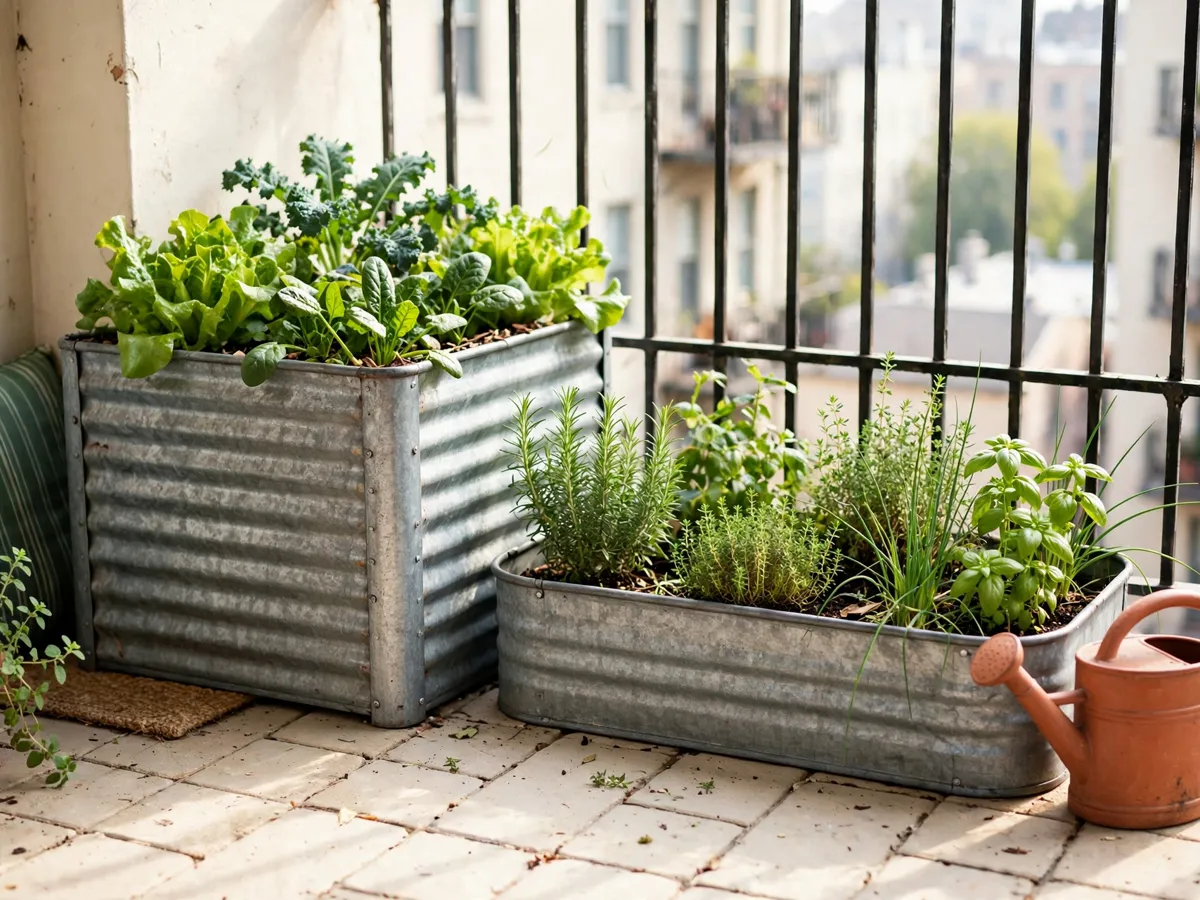
Concrete is the most common gardening surface in a rented home and the least forgiving one. There is no soil to work, no spade to swing, and usually a landlord whose idea of a garden is a row of pots he has to carry down the stairs himself. A metal bed answers that. It is its own container, shallow enough to stand on paving, and light enough that one person can move it empty.
Three traits make it the small-space choice. First, footprint: a galvanized trough can be 17 inches wide and still hold six inches of working soil, so it fits along a railing, a fence line, or the narrow strip beside a back door where a deep box would block the way. Second, weight: an empty steel trough of that size is a ten-pound lift, which means the bed can follow the sun across the day instead of your plants chasing light. Third, patience: the zinc coating on galvanized steel resists rot in a way a board frame never does, so the bed survives seasons left outside and travels with you when you move.
Most beginners start with one trough on the patio and add a second after the first real harvest. That is the right order. A metal bed is a tool for the space you already have, not a promise about the yard you are hoping for.
Cost: $40–$90 for a first trough. Time: 15 minutes to unbox and site it. Buy one bed, fill it, and let a season decide whether you want a second.
2. Galvanized Versus Powder-Coated Steel
Both beds are steel. The difference is the skin, and the skin decides your upkeep for the next ten years.
Galvanized steel is sheet dipped in molten zinc, so the coating is bonded to the metal rather than painted on it. It reads as matte silver-grey with the spangled pattern you see on gutters and fencing. That zinc does something paint cannot: it corrodes slowly at the edges and over scratches before the steel underneath can rust, which is why a bare galvanized trough shrugs off rain, snow and a forgotten off-season. Price runs $40–$90 depending on size, and the finish is food-safe as shipped.
Powder-coated steel starts as bare or galvanized sheet and gets a dry polyester powder baked on at high heat. The finish is smoother and comes in color — charcoal, sage, cream — so it reads as furniture instead of a utility bin. Expect $60–$180. The trade-off is that a coating is a barrier rather than a shield: a deep scratch or a chip from a dropped tool exposes bare steel, and that spot will start to rust unless you touch it up the same week.
For growing food, either is fine. Choose galvanized when the bed will live outside through rain and frost and you want the lowest cost per cubic foot of soil. Choose powder-coated when the bed sits in view of the kitchen window and the look earns its place. A wooden frame is the third option, warmer to the hand and shorter-lived in damp soil; the raised bed garden ideas guide compares the built materials side by side if you have real ground to set them in.
Cost: $40–$90 galvanized, $60–$180 powder-coated. Time: five minutes to compare. The coating decides the maintenance, not the harvest.
3. Picking the Right Height and Size
Height is the decision you feel at every watering, and size is the one you pay for in soil. Metal beds come in four rough height tiers, and each tier names the crops it will grow well.
- 6 to 8 inches. A top-dressing trough. Salad greens, strawberries along the front edge, herbs at the sunny end. Shallow roots, quick harvest, the cheapest fill.
- 12 inches. The everyday height and the beginner's default. Leafy crops, bush beans, peas, peppers and chard all reach their full size in 12 inches of loose mix.
- 17 inches. The comfortable height. You kneel beside it instead of crouching over it, and the extra depth carries root crops and caged tomatoes.
- 32 inches. The standing bed, and the accessibility choice for bad knees. It grows greens and herbs well and anything deeper-rooted badly, because the soil column stops at the floor of the box.
On width, resist the urge to go big. A trough 17 inches wide stays reachable from both sides for most adults; anything past 24 inches means stepping into the bed and compacting the soil you just paid for. Length follows the wall — 3 to 6 feet is the usual range, and a 4-foot length at 12 inches deep holds about 8 cubic feet. Measure the space twice and subtract: the bed needs a foot of clearance on the working side and room for the drain holes to drip clear of the wall.
Cost: $0. Time: 10 minutes with a tape measure. The height you can work at beats the height that photographs better in the catalog.
4. The Balcony and Patio Question
A filled metal bed is heavy, and a balcony is a structural promise made by someone who never met your soil. Wet mix weighs roughly 80 pounds per cubic foot, so a 4-foot trough 12 inches deep — about 8 cubic feet — lands near 600 pounds once saturated. That is a non-issue on a slab at ground level and a real question on a cantilevered balcony.
The honest answers, in order. Keep balcony beds at 2 × 2 feet or a narrow trough, which holds 4 to 5 cubic feet and lands around 300 pounds wet. Use the shallow heights. Fill the bottom third with clean empty cans to cut weight as well as cost. Set the bed on pavers or a stand so the load spreads instead of pressing on one spot. And ask the building office for the balcony load rating before the soil arrives rather than after.
Placement carries the rest of the decision. A tall trough on an open tenth-floor slab catches wind like a sail and tips, so the taller beds belong against a wall. Run a saucer or shallow tray under the drain holes — nobody on the balcony below should be wearing your runoff. Water in the morning so the excess is gone before evening. A single 2 × 2 bed on a stand, fed from a watering can, is a completely workable beginner balcony garden, and the balcony garden guide for beginners pairs a metal trough with rail pots and covers the rest of the layout.
Cost: $15 for pavers and a saucer. Time: 20 minutes to plan the load path. Weight, wind, drainage — in that order.
5. Soil Volume and What It Costs to Fill
A metal bed is entirely interior volume, which makes the soil math simpler than a built box: length × width × depth in inches, divided by 1,728, gives cubic feet. A 4 × 2 trough at 12 inches deep is 8 cubic feet. A 2 × 2 at 17 inches is just under 5.
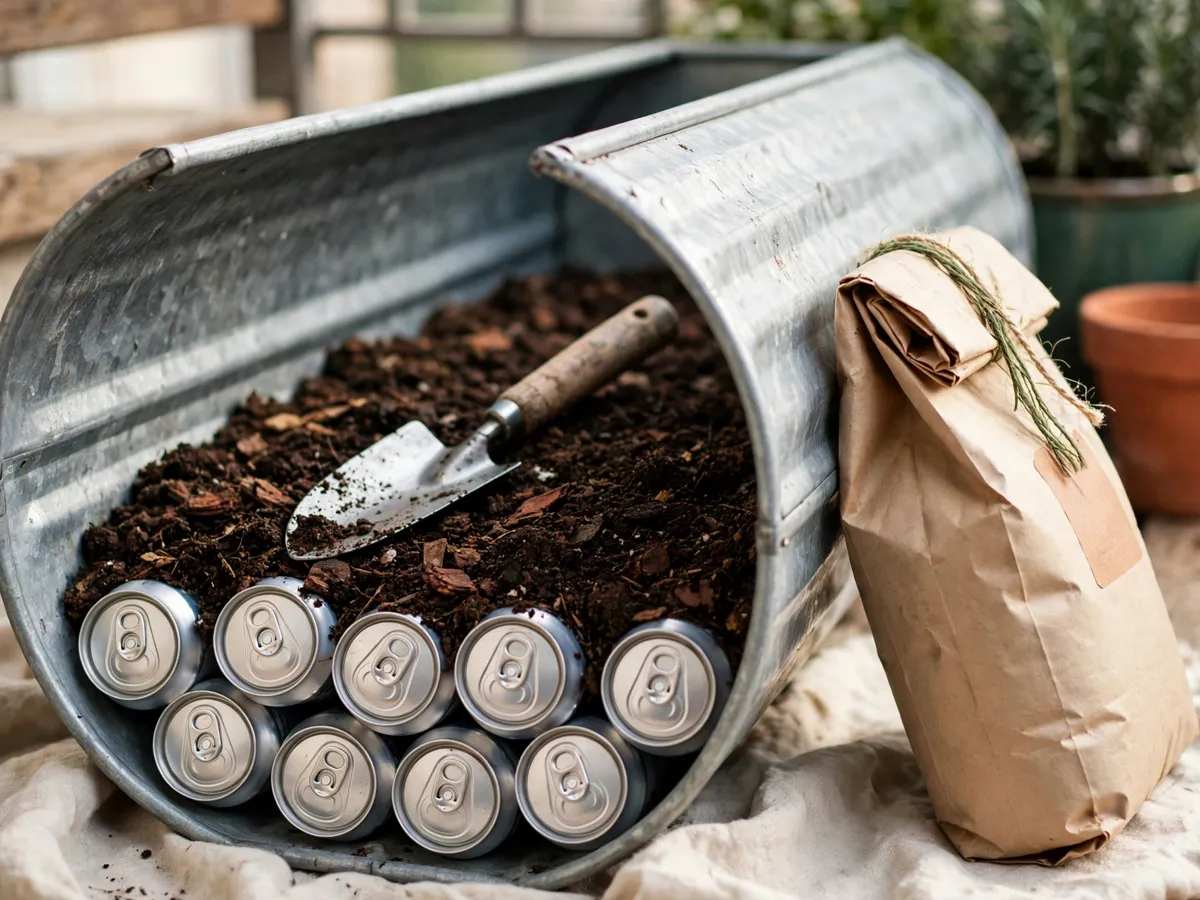
Do not fill all of it with bought mix. The bottom third of a metal bed takes up space cheaply: clean aluminum cans with their lids on, broken terracotta from a failed pot, or a thin layer of small stones. Those displace mix, cut the weight, and let water move through instead of sitting under it. The top two-thirds gets the good stuff — a bagged potting mix labeled for containers, which drains and stays loose, rather than a topsoil delivered by the yard.
Bagged mix runs $8–$15 per cubic foot, so an 8-cubic-foot trough costs $50–$90 filled straight through, or $25–$45 once a third of the volume is cans. Bulk delivery only beats the bag price past three beds, and hauling a cubic yard up any stairs is where beginner budgets go to die. For the layer-by-layer recipe, the raised bed soil guide has the full mix and what to top-dress with each spring.
Cost: $25–$90 per bed depending on how many cans you save. Time: 45 minutes to fill. The cheapest cubic foot of soil is the one a can replaced.
6. What Grows Best in a Metal Bed
A metal bed is a soil container with thin walls, so the crops that thrive are the ones that like loose, warm, well-drained soil and do not need a long run down to the water table. Match the crop to the depth and the bed does the rest.
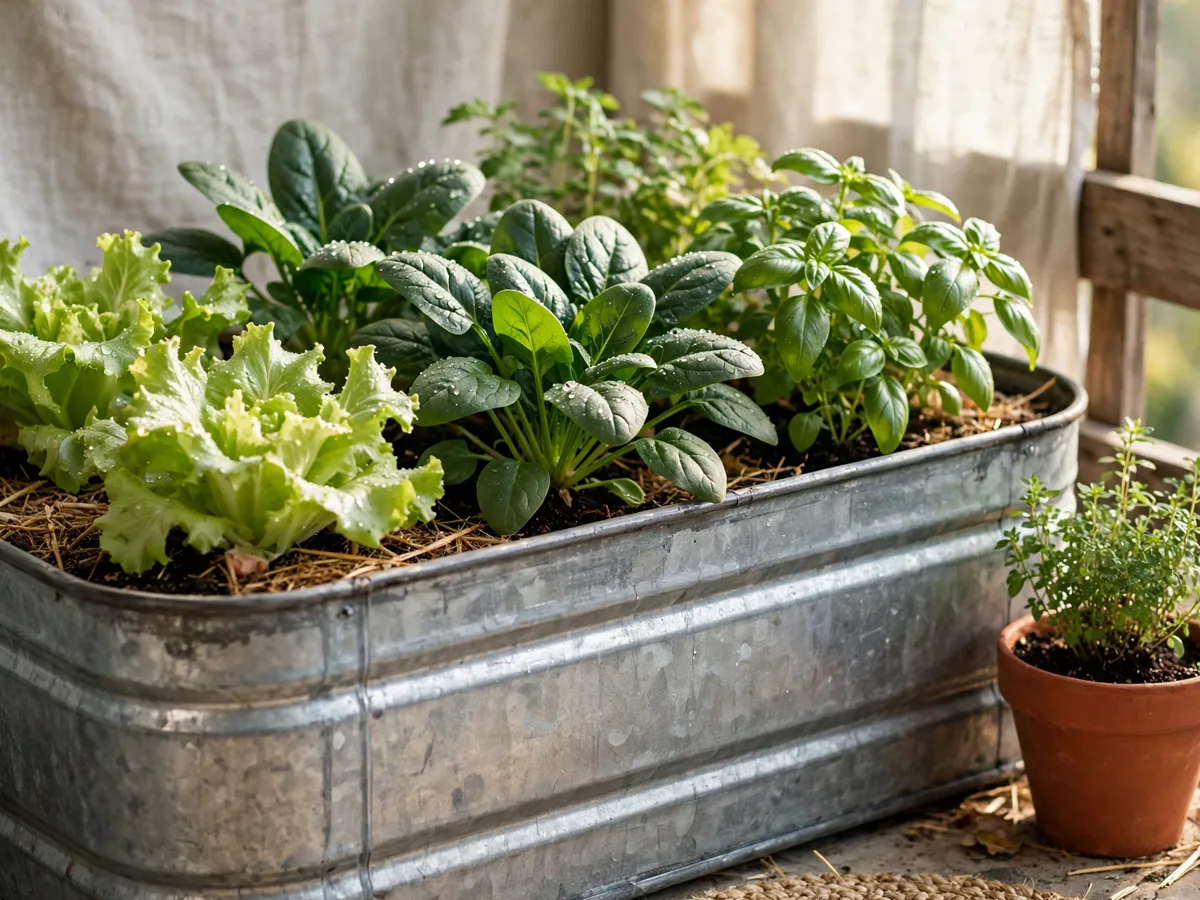
- Shallow troughs, 6 to 10 inches: lettuce, spinach, arugula, mustard greens, radishes, scallions, and strawberries trailing over the front edge. A 4-foot trough of these keeps two people in salad most of the season.
- Mid depth, 12 inches: bush beans, peas on a short trellis, peppers, chard, kale, and the herbs that want room — basil, cilantro and parsley. Mint goes in its own pot with a rim, or it will take the bed.
- Tall beds, 17 inches and up: caged tomatoes, eggplant, dwarf squash, beets and turnips. Carrots need 12 inches of genuinely loose soil, so a deep trough with the can layer left out works for them.
Pair the trough with pots around it instead of packing every inch with plants. A rail planter, two fabric grow bags and a terracotta pot on the railing cover the crops a single bed handles badly, and the container garden layout guide shows how to arrange them so nothing shades its neighbor. Grow the salad first: a metal bed earns its keep in leaves, not in a single row of corn that swallows the whole volume.
Cost: $15–$30 in seed and starts. Time: an afternoon to plant. Depth decides the list; the coating does not.
7. Heat: How Metal Beds Behave in Summer
Steel conducts, and this is the one real criticism of a metal bed, so it deserves a straight answer. On a 95-degree afternoon a south-facing trough with bare soil runs its edge soil warmer than a wooden bed would: the mix within two or three inches of the wall sits several degrees hotter, and shallow roots near the wall feel it. That is a reason to manage the soil surface, not a reason to skip the bed.
Three habits fix it. Mulch — two inches of straw, shredded leaves or bark over the soil cuts evaporation and shades the top layer, and it matters more in a metal bed than anywhere else in the garden. Water deeply in the morning rather than sprinkling at dusk, so the soil carries a reserve through the hottest hours. Use your own plants for shade — set the tender crops on the side where the taller ones throw shadow by midday, or site the bed where an awning or a fence takes the afternoon off it at four o'clock.
Dark powder-coated beds run hotter than bare galvanized in the same sun, which is a practical argument for the silver finish on a west-facing patio. In spring and autumn the same conductivity works for you: a metal bed warms earlier than ground soil, so greens started in it usually run a week ahead of the same seed planted in the yard.
Cost: $10–$20 for a season of mulch. Time: 20 minutes. Heat is a watering schedule, and metal simply makes the schedule non-negotiable.
8. Drainage and Rust: The Two Failures
Almost every metal bed that dies early dies from one of two causes, and both are preventable in the first hour of setup.
Drainage. Most troughs ship with holes punched in the floor; check before you fill, because a few budget beds arrive sealed. If the bottom is solid, drill eight to ten 3/8-inch holes across the length — a metal drill bit bites clean through galvanized sheet, and holes spaced about six inches apart are plenty. Then raise the bed off whatever it stands on: four pavers, a set of risers, or a cheap plant stand. A trough sitting flat on a patio slab holds its own runoff underneath, and the middle of the soil stays soggy through every warm week regardless of the weather.
Rust. Galvanizing is a sacrificial coating, so a scratch on a zinc bed heals itself at the edges. A powder-coat is not sacrificial: a chip that reaches bare metal bleeds orange rust within a season and spreads under the coating beside it. Fix small spots the week you notice them — 120-grit sandpaper down to bright metal, wipe the dust off, then brush on zinc-rich cold-galvanizing paint from an $8–$15 can. Ten minutes of touch-up protects a hundred-dollar bed.
Neither failure is a defect in the idea. Both are the two-minute habits that separate a bed still cropping in year ten from one recycled in year three.
Cost: $0 for holes you already have, $15 for touch-up paint. Time: 30 minutes at setup and ten each season. Check the drain holes and the scratches, and the bed mostly looks after itself.
9. Setting One Up in an Afternoon
Out of the box, a metal trough is four panels and a floor, and most arrive as a single folded piece you simply open. This is the sequence for a 4 × 2 bed, 12 inches deep, on a paved patio.
- Site it for light, not convenience (5 min). Six or more hours of direct sun, within reach of the tap, working side facing you.
- Level the base (10 min). A paver under each corner. A bed that rocks spills mix out of its drain holes all season.
- Check or drill the holes (10 min). Eight to ten 3/8-inch holes across the floor, then set the bed up on the risers.
- Line the floor, optional (5 min). A sheet of landscape fabric holds the soil in and lets water through. Skip plastic sheeting.
- Fill the cheap third (10 min). Clean cans or broken pot shards, leveled off at a third of the depth.
- Fill the top two-thirds with mix (20 min). Break the clods, level it, and leave two inches below the rim so watering stays inside the bed.
- Water it in, then plant (30 min). Soak, let it drain, then set out starts or press in seed.
- Mulch and label (5 min). Two inches of straw, and a tag for what you planted so October makes sense.
Cost: $40–$180 for the bed, $25–$90 for the fill. Time: about two hours, one person. The only power tool this needs is a drill, and only if the floor came sealed.
10. Care Through the Seasons
A metal bed asks for ten minutes a season and repays it with a decade of soil you do not have to buy twice.
- Spring: pull last season's spent plants, scratch an inch of fresh mix or compost over the top, and re-mulch. Walk the coating for winter damage — the edges and any scratch from a harvest hook are where rust starts. Hose the drain holes and confirm they still run free.
- Summer: water deeply and more often than ground beds need, since thin walls dry faster. Top up the mulch, and feed every three weeks with a liquid feed at half the label strength.
- Autumn: clear everything that is dead and leave what is still cropping. Spinach, kale and mizuna hold through a mild winter under a cloche, so cut those back only when they truly finish.
- Winter: leave the soil in place. An empty trough just collects rain and freezes solid, so throw a board, a tarp or an old rug over the top and let it rest. Where snow sits for weeks, brush it off so the melt does not pool against the coating.
Then the cycle repeats, and the bed that got ten minutes each season is the one still producing salad in year eight.
Cost: $10–$25 a season in fresh mix and mulch. Time: 10 minutes per season. A metal bed needs a check-up, not a tidy-up.
11. When a Metal Bed Is the Wrong Choice
Three cases should walk past this aisle, and it is worth saying so before you spend the money.
A very hot, very shallow, west-facing balcony. Thin metal plus six inches of soil plus reflected wall heat will cook lettuce roots in July. If your space is a fry pan from two to six, go deeper — a 17-inch or 32-inch bed, or a fabric pot with 15 inches of mix — or move the tender crops to the east side.
A permanent install you want to build once. A trough is movable and modest. If you have real ground and want a bed that becomes part of the yard, a frame set into the ground holds more soil, stays warmer to work, and outlasts a thin sheet of steel at the same budget.
Anything with a root system deeper than two feet. A trough is a soil box with a floor. dwarf fruit trees, asparagus and full-size grapes will reach that floor and tell you about it by year three.
If none of those describe your space, a galvanized trough is the shortest path from a paved balcony to a harvest, and it costs less than the season you lose waiting on a bigger project.
Cost: $0 to rule this out. Time: two minutes. The wrong bed in the right spot still grows the wrong crop.
Common questions
Are galvanized metal raised beds safe for growing vegetables?
Yes. The zinc coating is stable in soil and is the same galvanizing used on water tanks and food-handling equipment. Zinc does move into the soil at the edges of a scratch, but at levels home garden tests do not treat as a concern for leafy crops and fruiting vegetables. If you would rather not think about it, line the inside walls with a sheet of pond liner or heavy landscape fabric for $10. What you should skip is industrial scrap, a cut-open drum, or any steel bed of unknown history.
How much soil does a metal raised bed need?
Multiply length × width × depth in inches and divide by 1,728 for cubic feet. A 4 × 2 bed at 12 inches deep is 8 cubic feet; a 2 × 2 at 17 inches is just under 5. Fill the bottom third with clean cans or broken pot shards and buy only the top two-thirds, which brings an 8-cubic-foot bill down to about 5 cubic feet of mix.
Can I put a metal raised bed on an apartment balcony?
Yes, with the weight planned. Keep balcony beds to 2 × 2 feet or a narrow trough, use the shallow heights, set the bed on pavers to spread the load, and put a saucer under the drain holes. Ask the building office for the balcony load rating before you fill anything, and water in the morning so runoff is not dripping over the railing at dusk.
Do metal beds overheat in summer?
The walls run warm and the soil beside them follows, but a bed with 12 inches of mix and two inches of mulch stays workable through a heat wave. The overheating risk is real only for shallow beds under eight inches on a surface that takes full afternoon sun. Deepen the soil, mulch, and water early.
How long does a galvanized trough bed last?
Ten to twenty years outdoors is normal for a galvanized steel trough that is kept drained and touched up. A powder-coated bed lasts exactly as long as its coating, so a $12 can of zinc touch-up paint is the entire longevity plan. Either finish outlives a pine frame, and usually outlives the lease.
Save these on Pinterest
Pin the four numbers that carry the whole build — 12 inches of working soil, 80 pounds per cubic foot when wet, ten 3/8-inch drain holes, and two inches of mulch — and next season starts with a plan instead of a shopping cart. The size chart, the fill math and the rust touch-up routine all travel with you to the next place, and the rest of our beginner garden guides live in the gardening tips collection.