 Plant As Deco
Home Organization & Storage
Closet Organizer Wire Racks: The Wire-Shelf Reset
By Plant As Deco · Updated 25 November 2026
A wire shelf is a good idea that only works once you close the grid. Left open, it drops socks through the holes, tips thin bins onto their sides, and bows in the middle under a stack of folded jeans. None of that is a reason to rip the shelves out. It is a reason to add three cheap layers on top: a liner, containers that sit flat, and dividers that keep folds standing.
Weekend-ready: $10–$55, one weekend for the whole reset. Renter-safe: liners, bins and over-rod add-ons come off clean, and the two glued options peel away without a repair.
1. Why Wire Shelving Fails Small Things
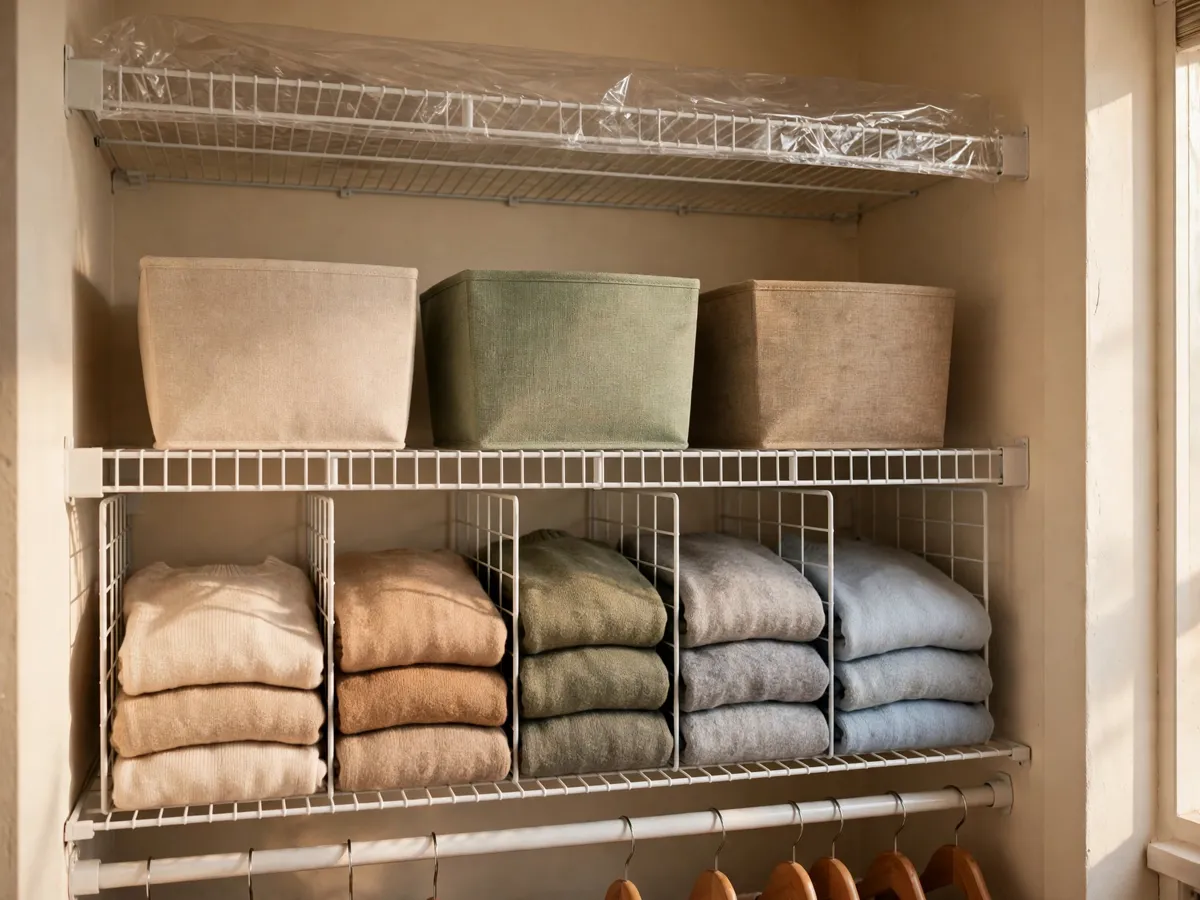
Wire shelving is sold on airflow and on the idea that you can see everything. In a small closet it fails at the one job a shelf has: holding what you put on it. The grid is the reason. A sock, a hair clip or a folded bandana has nothing to rest on between the wires, so it slides into the opening and stays there. You look at a tidy shelf and never see the thing that fell through.
The second problem is the sag. Wire shelves are thin, and most hang on a single long span between two brackets. Load the middle with folded sweaters or jeans and it drops, pushing the back row of the stack into the front.
Cost: $0. Time: 10 minutes. Pull everything off one shelf and look for the bow before you buy anything.
2. The Liner First: Fixing the Grid
A wire shelf liner is the cheapest fix here and the one that does the most work. It turns an open grid into a flat surface, so nothing falls through and nothing tips over. A clear roll liner is ribbed plastic that grips on both sides and wipes clean. A woven bast liner looks more like fabric and warms the shelf up.
Whatever you pick, measure the shelf depth and cut the liner a little short rather than a little long. A liner that curls up the back wall traps dust and bunches under bins. Wipe the shelf first, and lay the liner down flat. No glue: the wire texture holds a grippy liner in place on its own, and a glued sheet is the one part a landlord can charge you for.
Cost: $6–$14 per shelf. Time: 20 minutes. Cut short of the back wall, wipe before you lay, and skip the glue.
3. The One-Span Sag Rule
A sagging wire shelf almost never bows along its whole length. It bows in one span: the stretch of wire between two supports with nothing under the middle. Sight along the front edge of the shelf. If the middle dips below the line the brackets make, that span is the one to fix, and everything you stack on it will slide toward the dip.
Two fixes, in order of effort. A clamp-on support bracket underneath the middle of the span is the permanent one, and it is the one place a drill earns its keep, because the bracket screws into the wall or the shelf tower. The no-drill fix is to keep the heavy load off the middle: put the heaviest stack above a bracket and keep the span between brackets for light, flat things. The weight test: set a folded stack of bath towels on the middle of the span, sight along the edge again, and if the dip grows past a finger width, the span is overloaded.
Cost: $4–$9 for one support bracket. Time: 25 minutes. Sight the front edge first, load above brackets, towels as the test.
4. Sort by Reach, Not by Category
Most closets are sorted by type: all the shirts here, all the pants there, whether you wear them weekly or once a year. On a wire shelf that wastes the one thing the shelf is good at, which is keeping everything visible at arm height. Sort by reach instead. Pull the clothes off one shelf and run the thirty-second audit: what did you actually pull out in the last two weeks? Those go in one pile, everything else in a second.
The first pile is your weekly three, and it lives on the front of the middle shelf, at the height your hand lands without thinking. Everything else moves up or down a shelf. The same move makes a small closet work in general: small closet organization ideas starts from reach and works outward from there.
Cost: $0. Time: 30 minutes. Two weeks of honesty, weekly three at the front, categories second.
5. Bins That Sit Flat
A bin on a lined wire shelf finally has a flat floor, and that changes which bins are worth buying. Soft fabric bins sit flat, look calm, and hide the folded chaos inside; they suit the shelf you see every day. Rigid plastic bins with small drawers slide out instead of lifting, which keeps their contents sorted when you pull one, and they wipe clean, which matters near shoes. Both need a flat seat, which is what the liner gave you, so the order matters: liner first, bins second.
Measure before you buy. Wire shelves are sold in set depths, but the clear opening between the front edge and the back wall is usually two inches shorter than the shelf itself. Write down the opening width and the shelf-to-shelf height, then buy bins one inch narrower than the opening. One bin per clothing type, not one giant bin per shelf: socks, then workout gear, then scarves. A giant bin hides its own bottom.
Cost: $12–$28 for two or three bins. Time: 30 minutes. Opening width measured, one bin per type, nothing taller than the gap above it.
6. Shelf Dividers for the Folded Section
Stacking folded clothes flat is the habit that makes every stack lean, because only the top shirt in a pile is visible and the bottom one carries the weight. Upright folding, where each piece stands on its folded edge like a file in a drawer, fixes that on any shelf, and shelf dividers are what keep the files standing. Clip-on wire shelf dividers hook straight over the front edge of a wire shelf, no tools.
Space the dividers about ten to twelve inches apart, which is one stack of five to seven upright shirts. Socks and underwear get their own narrow slot near the front, because they are the things you grab two at a time and the things that vanish into a wide shelf. The folding itself is the same craft: sweater closet organization covers the fold geometry.
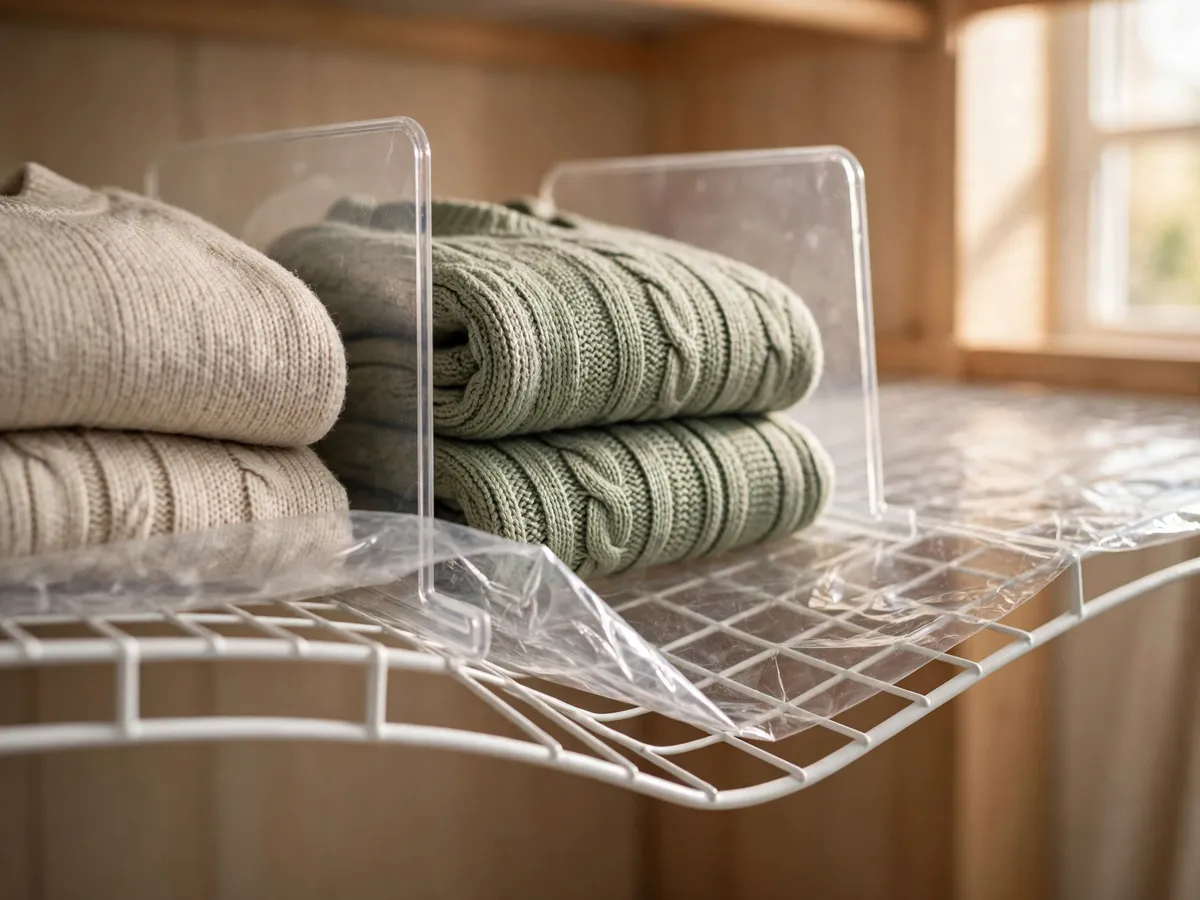
Cost: $10–$22 for a set of four. Time: 20 minutes. Upright folds, dividers a stack apart, socks in their own front slot.
7. Hanging Add-Ons That Double the Rod
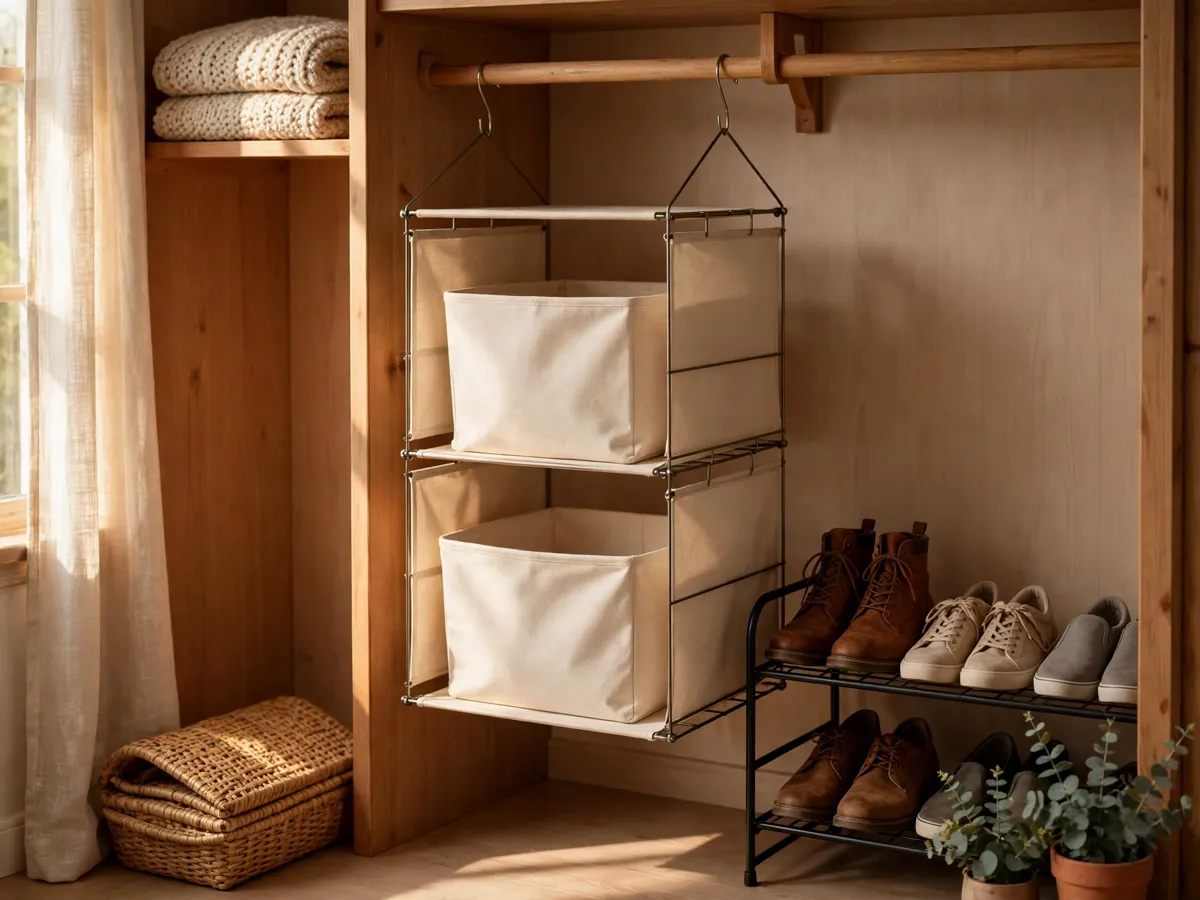
The space between the rod and the shelf above it is the most wasted square footage in a wire closet, and a hanging shelf doubler turns it into storage without touching the wall. A doubler is a frame of fabric or wire cubbies that hooks over the rod and hangs down, giving you five or six shallow shelves where there was one hanging bar. Load it with folded t-shirts, jeans and linens, lightest at the bottom, and the rod you thought was full does twice the work.
Where they actually fit is the part to check first. Measure the height from the rod down to the shelf below before you buy: a standard five-shelf doubler needs about forty inches of clear drop, and a short closet with a low rod wants the three-shelf version instead. Over-rod canvas cubbies hang above the rod on the same hook principle and take the light, flat things: hats, spare pillowcases, the folded blanket you only reach for in winter.
Cost: $15–$30 for one doubler. Time: 15 minutes. Measure the drop first, light loads low, canvases above the rod.
8. The Drawer Insert Question
A wire closet organizer with drawers is the step up from open bins, and it is worth the money for exactly one kind of clutter: the small stuff you dig through. Underwear, socks, belts and workout bands behave badly on any open shelf, because reaching for one moves the other five. A drawer insert, whether a fabric hanging drawer or a plastic unit that sits on the shelf, gives each of those a front you can pull instead of a top you dig into.
The clearance check decides whether it fits. A plastic drawer unit needs the full height between two shelves minus an inch for the pull. Measure the gap, subtract the pull, and compare the number to the drawer height on the box. On a narrow shelf, the fabric hanging version is safer, because it takes width from the rod instead of the shelf. For everything that lives folded inside a real dresser drawer: drawer organization ideas covers the drawer itself.
Cost: $18–$35 for one insert. Time: 20 minutes. Dig-prone small stuff into drawers, measure the gap minus the pull first.
9. Shoes and Hats on the Lower Shelf
The lower wire shelf is where shoes go, and the surface changes how you store them. Flat shoes, sneakers and loafers should lie flat in a single layer rather than stack, because the upper of a stacked shoe takes the weight of the one on top and creases across the toe box. On a lined shelf, one layer of shoes is easy, and because they lie flat you can see every pair. Set the pairs toe to wall so you can read the shelf from the doorway.
Boots are the problem that wire shelves create. Tall boots cannot lie flat, and balancing them on a wire shelf means their weight sits on two narrow wires and the leather dents at the fold. Give boots the floor or a low solid shelf, and use the lower wire shelf for the flat pairs instead. Hats have their own rule: a hat brim needs a flat seat wider than the crown, so lay them brim down on the liner. For a fuller floor plan: closet shoe organization.
Cost: $0. Time: 20 minutes. Flats flat in one layer, boots on the floor, hats brim down on the liner.
10. Renter versus Owner: What Needs a Drill
One part of this reset touches the wall: the support bracket for a bowed span. That is the only drilling in the whole guide. If you rent, ask the landlord in writing before you put a screw in anything, and keep a photo of the empty wall so the repair at move-out is a patch, not a negotiation. An adhesive raceway system is the alternative: it costs more, needs a clean wall, and peels away with a warm cloth when the lease ends.
Everything else on this page comes off clean and goes with you: liners peel up, bins and dividers lift off, and the hanging shelf doubler unhooks from the rod in a minute. Take the liner, the dividers and the doubler with you, and rebuild the same system in the next closet, because the numbers you measured travel with you. On a bigger space, the same rules scale up: walk-in closet organization works on the same reach logic, just across more shelves.
Cost: $0–$12 for adhesive strips. Time: 30 minutes. Written permission before a screw, clean removal, take the numbers with you.
11. The Off-Season Swap on Wire
Wire shelving has one genuine advantage for seasonal storage: air moves through it. In a summer closet with a closed solid shelf, warm air sits in the stack and moisture leaves the wool behind slowly. On a lined wire shelf, that air still moves, which is why the swap plan works better here than anywhere else. Keep one shelf for the season you are in, and move the other half to sealed bins somewhere cool, out of direct sun.
Sealed bins are the right call for wool, and the latched lid does the work, because it removes the open path that moths and damp use. Vacuum bags compress too far for knits, so fold wool loosely in a breathable bin instead. What wire shelving must not hold is damp clothing, wet towels, or a bin of damp laundry waiting for a wash: humidity held against the wires leaves rust marks and a smell that takes a season to clear. The rotation plan is covered in off-season clothing storage.
Cost: $12–$25 for two sealed bins. Time: 60 minutes. Cool and dark, wool loose, nothing damp left on the wire.
12. Mistakes That Reopen the Dust
Three mistakes undo most of this work. The first is overloading the span, because a shelf that held five folded stacks in the shop does not hold five stacks of jeans at home. Load the middle of a span with light, flat things and keep the heavy piles over the brackets. The second is skipping the liner cut: a liner that is too long folds up the back wall, and that curled edge becomes a shelf where dust collects and socks slide off.
The third is buying dividers before measuring. Shelf dividers come in fixed lengths and heights, and one that is too tall for the gap will not slide under the shelf above, and one that is too long will not sit square in a narrow opening. Measure the opening width, the shelf depth and the gap between shelves, then order.
Cost: $0. Time: 15 minutes. Light loads mid-span, liner cut short, dividers measured before ordering.
13. The Weekend Reset: Real Cost and Time
Here is the honest cost of the whole system, built from the four things that actually change how a wire closet behaves.
- A liner for the shelf you use most, usually $6 to $14, and this is the single item that stops small things falling through the grid.
- Two or three bins that sit flat on the lined shelf, about $12 to $28, measured against the opening width before you order.
- A set of shelf dividers, about $10 to $22, to keep folded clothes upright and visible instead of stacked and leaning.
- One hanging shelf doubler, about $15 to $30, to use the height between the rod and the shelf above it.
The time is one weekend for the full build, most of it measuring and cutting. If you only do one thing this weekend, line the shelf and stop there.
Cost: $10–$55 all-in. Time: 180 minutes. Liner first, bins second, dividers third, doubler last.
14. Problems Decoder: What Each Symptom Is Telling You
Socks on the floor under the shelf mean the grid is open, so the answer is a liner cut to the shelf depth. A shelf that bows in the middle means the span is carrying more than it should, so the answer is a support bracket or lighter loads over the dip. Bins that will not sit flat mean the opening is narrower than you measured, usually because you measured the shelf depth instead of the opening width between the front edge and the wall.
A dusty edge along the front of the liner means the liner was laid without the shelf wiped, or that the sheet is too long and curling at the back. Lift it, wipe, and cut it short. A closet where everything is visible but you still cannot find anything means the problem is the sorting, not the shelves: go back to the reach audit in section four. On a larger closet, the same decode applies across a bigger footprint: walk-in closet organization covers the layout that holds more than one person at once.
Cost: $0. Time: 15 minutes. Match the symptom to the fix above, and change one thing per shelf.
Frequently Asked Questions
Do wire shelves sag more than solid shelves?
Wire shelves are thinner than solid shelves, so a long single span dips in the middle under a folded stack. The dip does not mean the shelf is weak; it means the load sits between supports with nothing under the middle. A support bracket or lighter loads over the dip fixes it.
What is the best liner for wire closet shelves?
Buy for what sits on the shelf. A clear roll liner grips on both sides and wipes clean, so it suits the shelf with bins and shoes. A woven bast liner looks warmer under folded clothes. A thin foam liner is softest for a shelf you bump above a rod, but it compresses under heavy stacks. Cut all of them short of the back wall and skip the glue.
Can I put folded jeans on a wire shelf?
Yes, once the shelf is lined and the jeans are stacked upright rather than flat. Upright folds in a divider keep the weight spread along the pile instead of pressing straight down into the grid, and they stop the back row from sliding into the front. Jeans are heavy, so keep the tallest pile over a bracket rather than over the middle of the span.
Do hanging closet organizers damage the rod?
A hanging shelf doubler distributes its weight across the whole rod through the hooks, so a standard closet rod with a solid wall behind it handles it fine. The issue is weight, not contact: load the cubbies with light folded items, keep heavy items on the shelves, and make sure the rod is level and properly seated in its brackets first.
How do I measure my wire closet for organizers?
Write down six numbers: the shelf depth, the clear opening width between the front edge and the back wall, the vertical gap between shelves, the rod height above the floor, the clear drop from the rod down to the shelf below, and the total width between the side walls. The opening width and the vertical gap decide what fits, and the clear drop decides which hanging organizer you can buy.
Save these on Pinterest
The four parts of the reset are worth keeping in a fix-it order: the liner that stops small things falling, the bins that sit flat once the surface is lined, the shelf dividers that keep folded stacks upright, and the hanging add-ons that double the rod. Save this page and come back to the sequence later.
Every other home organization and storage guide lives in one place, so if the closet is one shelf in a bigger project, start from the collection: home organization and storage.