 Plant As Deco
Home Organization & Storage
Moving Out Cleaning Checklist: Room by Room for Renters
By Plant As Deco · Updated 29 November 2026
A move-out clean is not a deep clean that happens to be late. It is a one-time job with an outside judge, a fixed date, and a room you will never use again, which changes three things: the standard is someone else's eye at a walk-through, the surface has to survive being handed over rather than lived in, and you do not get a next week to fix what you missed. This guide covers the cleaning and the condition record, in order, room by room. It does not cover boxes, the truck, utilities or address changes, and it does not interpret a lease: what a deposit is, and what happens to one, is a matter of the agreement and the local rules around it, which this page deliberately leaves alone. Start with the emptying, because that pass has its own rules and ends where this one begins: room-by-room declutter checklist. If the flat has been kept on a weekly routine, that routine is what makes this list short rather than a second move, the small-apartment cleaning routine covered it, and this page never repeats it.
Weekend-ready: $22–$68, one weekend and a half day. Renter-safe: nothing here asks you to sand paint, remediate mold, repair a fixture or read a clause.
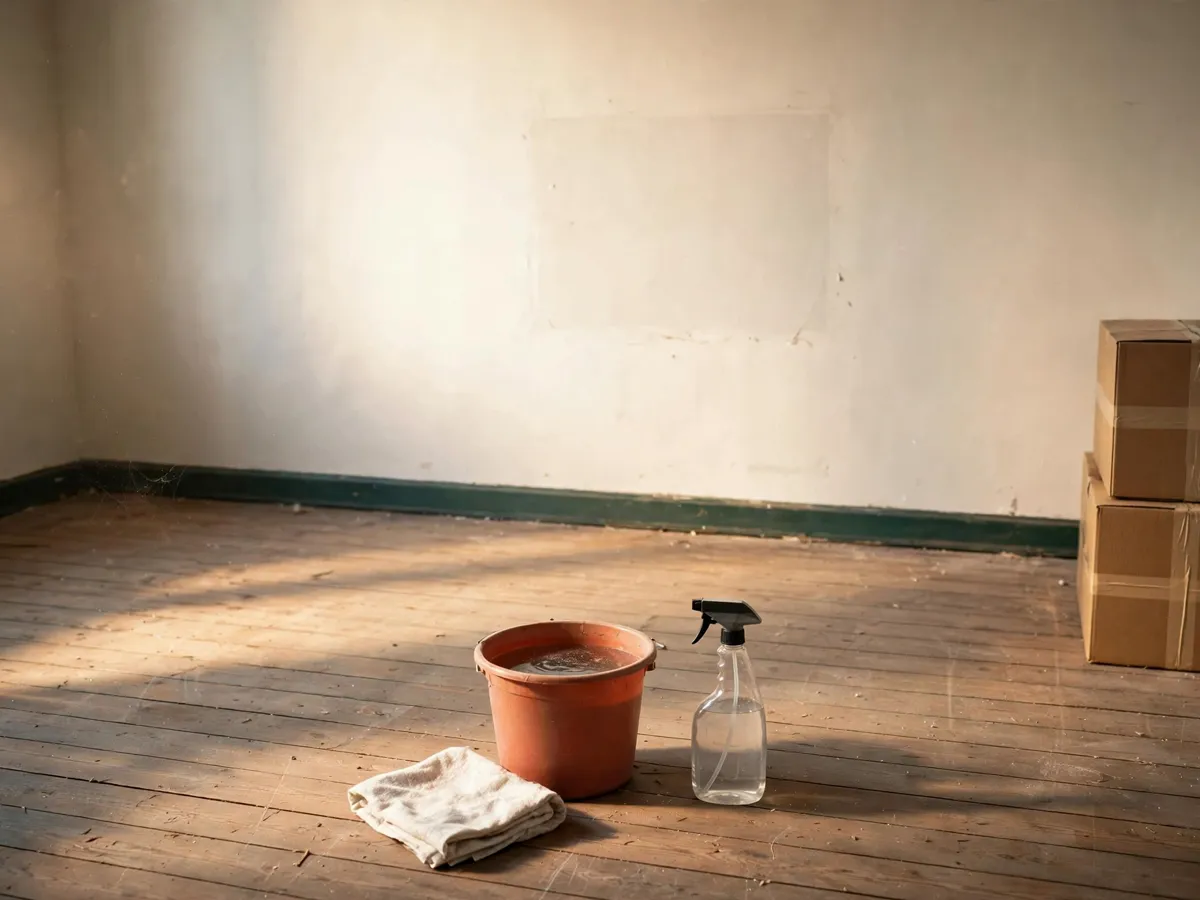
1. What a Move-Out Clean Is Judged By, and Why It Is Not a Deep Clean on a Calendar
Three differences separate the two jobs, and every decision in this list follows from them. The first is the judge. A routine clean is measured by your own standard, on your own clock, and you decide that the hob can wait until Sunday. A move-out clean is measured by another person, in person, on a date that does not move, walking the same rooms in one pass with the keys already in their pocket. The second is the scope. A routine lives on the surfaces you touch; a handover lives on the ones you do not, which is why the inside of the oven, the cabinet interiors, the window tracks, the skirting, the extractor filter and the back of the toilet pan matter more here than any countertop. The third is the evidence. Nobody photographs a Tuesday reset. A handover is a record as much as a clean, and the clean without the record is the half that gets argued about later.
So the honest framing is this: you are preparing a room for inspection by a stranger who has a reason to look closely, and you are doing it once. That is a different skill from keeping a flat, and it is why four weeks of weekly wiping does not substitute for the order below.
Cost: $0. Time: 20 minutes. Set the standard, walk the flat once with nothing in your hands and note every zone an outside eye lands on first.
2. The Order That Saves a Second Pass: Empty, Top-Down, Then the Two Rooms That Get Re-Dirtyed Last
The second pass is what makes a move-out clean miserable, and it is almost always an ordering fault rather than an effort fault. Four rules remove it. Empty before you clean, never during: a cloth worked around a half-full cabinet gets the same shelf done twice. Dry before wet: dust, cobwebs, crumbs and hair all turn to mud the moment a damp cloth meets them, so every room gets a dry pass before anything is sprayed. Top before bottom: shelves, tops of cupboards, tracks, then surfaces, then floors, so gravity works once instead of undoing you. And the two wet rooms last: the kitchen and the bathroom are where the water comes from, so the bedrooms and the living room get done first, their floors included, and the kitchen and bathroom floors close the job.
Written as a run order for a one-bedroom apartment: record everything (section 3), dry-pass every room, bedrooms and living room surfaces and closets, kitchen top to floor, bathroom top to floor, then all traffic floors and the entry. Two rooms never get walked through again after their floor is done, which is the whole trick.
Cost: $0. Time: 15 minutes to write the run order on one sheet before you buy or carry anything. Dry pass first, in every room, always.
3. Document Before You Clean: the Condition Record, Room by Room, and What to Photograph
This is the step every renter skips and the one that separates “that was already there” from a claim nobody can settle. Photograph the flat before a cloth touches it, not after, because a clean surface makes an old mark easy to dismiss and a dirty one makes it impossible to prove. Walk each room with your phone held low and the light coming across the surface rather than onto it, so a scratch, a dent, a scuff, a crack, a water stain and a worn patch in the carpet throw a shadow and become visible. Take one wide shot per room from the doorway, then close shots of every flaw you can find, then the things that are not surfaces at all: the meter readings, the number of keys and fobs in your possession, the remote, any window seal that is fogged, any door that does not latch.
Write one line per flaw on a single sheet, dated, in the room's order: “east bedroom, carpet edge near the radiator, dark mark, present on day one.” Then move the whole set off the phone the same day, to cloud storage or an email to yourself, so the record does not depend on one device surviving the move. Nothing in this step is a legal argument and nothing here claims what a record entitles you to. What it does is narrower and more useful: it puts the pre-existing damage on the table on day one instead of at the end, when it is somebody's word against yours.
Cost: $0. Time: 40 minutes for a one-bedroom apartment. Photograph first, clean second, and never describe a flaw in the past tense.
4. Kitchen: the Appliances Inside, the Degrease, the Cabinet Interiors and the Seal
The kitchen is where a move-out clean is won or lost, because it is the one room whose dirt is invisible from standing height. Work inside-out and top-down. Empty every cabinet and shelf first, and take the doors off their hinges only if two screws let you, which is a section 8 decision, not an assumption. Then the extractor filter, in hot water with a degreaser while you work; then the tops of the wall units, which collect a film nobody has looked at in two years; then the backsplash and the fronts; then the hob and the surround.
The oven and the fridge are the two appliances that get judged. Oven: work the interior with a paste of your own choosing, let it sit while you do the cabinets, then wipe and rinse, and keep the door glass out of the abrasive pass. Fridge and freezer: empty, unplug, leave the door open with a folded towel inside so nothing is sealed shut on the way out, and wipe the gaskets, which hold the crumbs a cloth aimed at the shelves misses. The dishwasher edge and the seal, the sink strainer and the pipe run you can reach by hand, and the bin itself, washed and dried, close the room.
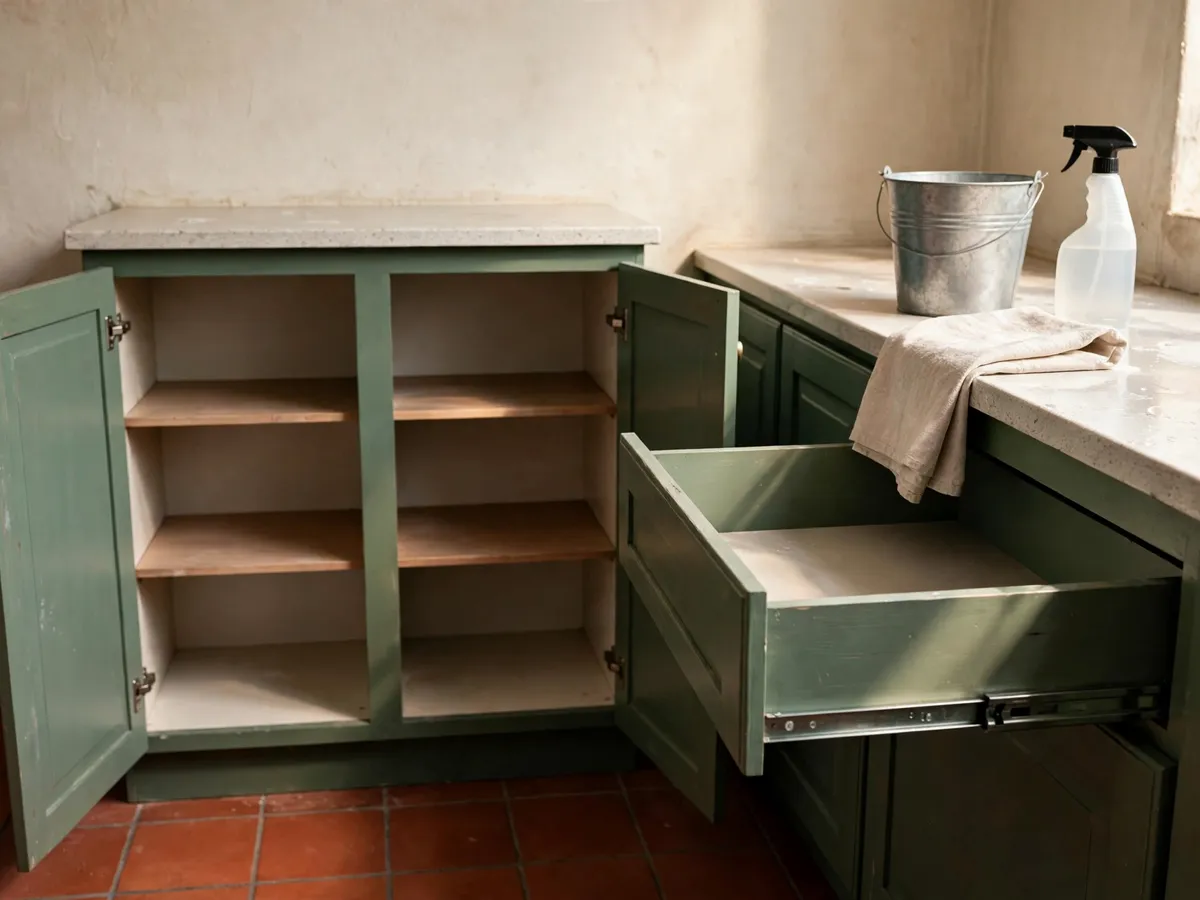
Two cautions. A cracked or hardened seal, a loose shelf bracket, a tap that drips: note them on the record rather than attempting a fix, because a repair you were not entitled to do is a new argument. And no product on this page needs a special name. A degreaser, a descaler, a paste, a spray bottle and two cloths in two colors, one for the kitchen and one for the bathroom, is the whole shopping list.
Cost: $8–$22 for a degreaser, a paste and two cloths. Time: 90 minutes, plus the oven sitting time you spend on the cabinets. Empty the interiors before you wipe a single front.
5. Bathroom: the Moisture Sources, the Limescale, the Drain and the One Thing Not to Attempt
A bathroom is judged on what you can see and inspected for what moisture has done, so the useful aim is the water, not the mold. The EPA mold course notes that moisture is the most important factor influencing mold growth indoors. The EPA mold course also notes that a little condensation can be enough for indoor mold growth. Open the EPA mold course chapter on moisture. Read as a cleaning instruction, that points at a short list: the ledge behind the toilet, the base of the door, the seam where the shower screen meets the tray, the silicone beads, the extractor fan cover, the pipe chase under the sink, and the window sill on a morning when the glass is wet. Those are the places a move-out bathroom pass aims at, and drying them is the job, not scrubbing them harder.
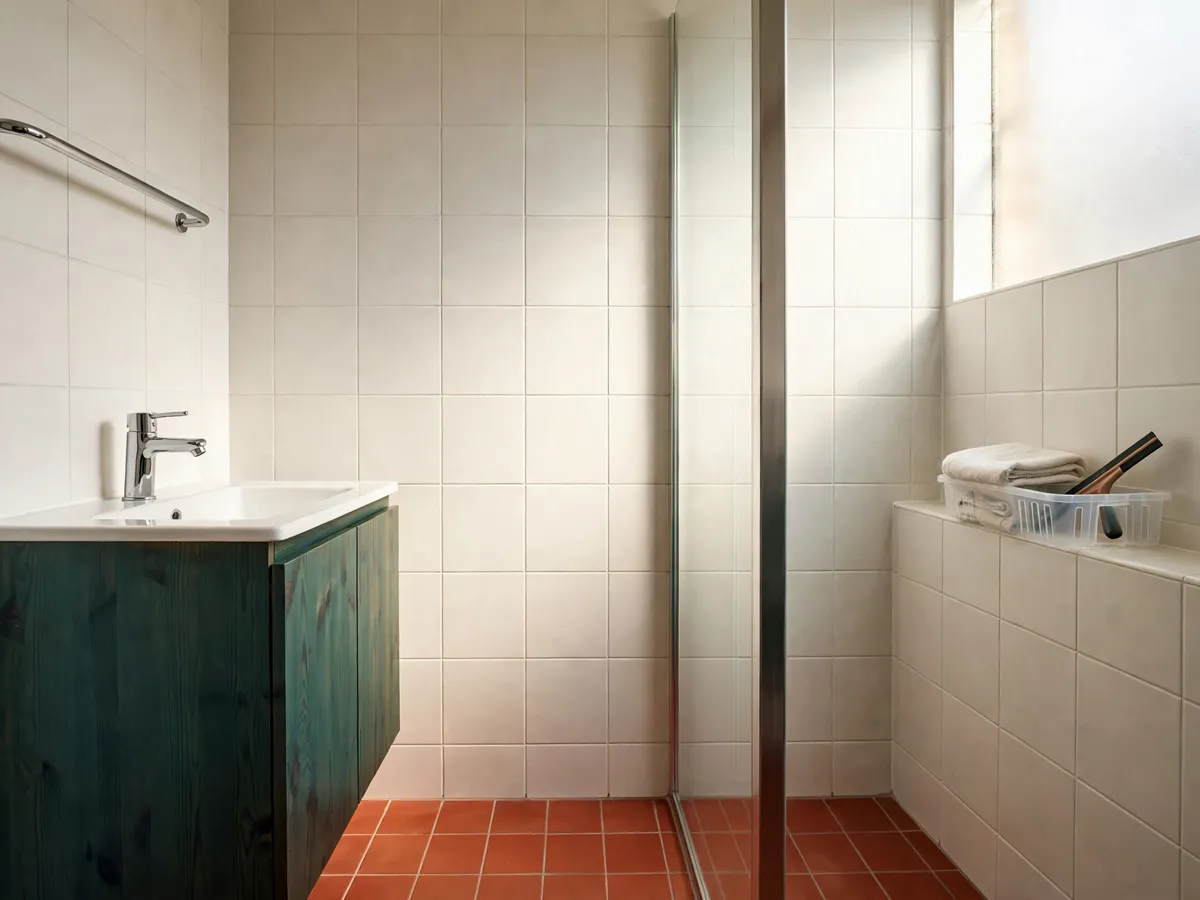
Limescale is the visible half: taps, the shower head face, the glass and the tray rim. Apply a descaler with a cloth rather than flooding the room with it, work one panel at a time, rinse, then dry with a separate cloth, because a rinse that is left to evaporate simply puts the same marks back. Follow the label on the bottle you chose and do not stack products in one session, one at a time, rinsed between. The drain: clear the strainer and the hair you can reach by hand, flush with hot water from the tap, and leave a slow drain alone with a note on the record rather than a bottle poured down it.
The one thing not to attempt: mold that has grown into a wall, behind a panel, under a sink inside a cupboard carcass, or anywhere it is a building problem rather than a surface one. Do not bleach it, do not scrub it, do not treat it. Photograph it, write it on the record, and tell whoever owns the property while they can still hear you. That is not a gap in your clean. It is a job that was never a cleaning job.
Cost: $6–$18 for a descaler, a squeegee and a second cloth color. Time: 60 minutes. Aim at the moisture sources and dry them; leave structural mold photographed and reported.
6. Bedrooms and Living Room: Surfaces, the Inside of Closets, Windows and the Skirting
These rooms are the fastest money in the list, because they are nearly dry and an inspector spends more time in them than in the bathroom. Four aims, in this order. Surfaces: every shelf, the tops of wardrobes and the back of the furniture that has been against a wall for two years, which is the mark that most often surprises people at a walk-through. Closets and wardrobes: empty, then wipe from the back edge forward, including the rod, the floor of the carcass and the inside of the door, and vacuum the corner where lint collects. Windows: the frame and the track first with a dry brush, then the glass, then a cloth run along the sill, and nothing soaked, because water left in a track finds its way into the reveal below it. Skirting: dry pass, then damp, working the length of the wall in one go, and any scuff, chip or pencil mark that was there on day one checked against the section 3 record while you are still in the room.
Do the doors last, both faces and the edges, and leave them unlocked and ajar at the end so nothing is sealed shut in an empty flat.
Cost: $5–$15 for a glass cloth and a soft brush. Time: 75 minutes for a bedroom and a living room. Back edge to front edge in every closet, and never soak a window track.
7. Floors Last, in the Right Order: Vacuum, Damp, Then the Carpet Case and What a Stain Costs You
Floors go last in every room for one reason: everything above them drops something. The order is vacuum, then damp, then leave. Vacuum slowly, in two directions, so the grit that would scratch a cloth across a laminate floor is gone before any water arrives, and take the threshold strips, the corner behind the toilet and the run under the last foot of baseboard. Then damp, with a well-wrung mop and clean water, changing it once mid-room, because a gray mop distributes the film instead of lifting it. Work from the farthest corner toward the door and do not cross a wet floor until it is dry, which is the same advice as the shoes you will not wear through the flat on the last day.
Carpet is its own case. If the flat has carpet, vacuum it twice in opposing directions before you consider a machine, and hire one only when the pile is genuinely gray rather than merely marked. Work a section, do not re-wet the whole room, and get the flat ventilated while it dries so nothing sits damp overnight in a room you are leaving.
And the stain that will not come out: this page makes no promise that any product lifts anything, because no result like that is a fact this guide can stand behind. What works is the record and the sentence. If the mark is on your day-one photographs, it is already documented. If it is new, say so at the walk-through, in the room, with the person holding the clipboard, rather than in a message three weeks later. A mark acknowledged on the spot is a different conversation from a mark discovered afterwards, and that is the only lever here that is genuinely yours.
Cost: $3–$13 for bags and a mop head, plus $30–$60 if you hire a carpet machine. Time: 60 minutes. Vacuum before any water, and let the floors dry before the keys go back.
8. Walls and the Undo List: Nails, Anchors, Adhesive, Filler, and the Pre-1978 Don't-Sand Warning
Every fixed thing in the flat is a small handover decision, and the list is mechanical rather than a matter of taste. Take everything you hung, including the picture rails and the tension rod you thought nobody would notice. Remove the adhesive strips, the hooks that claim to come off clean and the adhesive tape that promises no mark, slowly, with warmth from a hair dryer and a plastic edge rather than a metal one. Then the holes: a small tub of filler and a putty knife, filled flush, scraped level, wiped, and left unpainted, because repainting a patch to match is a job nobody is expected to do badly at speed.
The branch that stops people hurting themselves is the old-paint one. If your home was built before 1978, it is more likely to have lead-based paint. So do not sand, scrape or dry-rub old paint off trim, sashes, radiators or a door frame in a flat you are handing back. Fill your own nail holes and leave the paint alone. If the wall needs more than that, it is a property-owner job and it belongs on the record with a photograph, not in your last weekend.
The no-drill alternative, for anyone reading this before the fixtures go up, is a whole subject of its own: no-drill wall decor for renters. Nothing there needs filling or patching on the last day, which is the whole appeal of it for a renter.
Cost: $0. Time: 45 minutes. Take your own fixings, fill your own holes, and never sand or scrape paint you did not put there.
9. Leftover Products: Paint, Cleaner, Aerosols, What to Take, What to Leave and What Never to Pour Away
The last cabinet check produces a tray of half-used bottles that nobody thinks about until the door is closed, and it is the one step on this list that can cause damage outside the flat. Gather everything from the kitchen, bathroom, laundry, the entry cupboard and any shed or unit that came with the tenancy: paints and varnishes, old cleaner, solvent, oil, aerosols, garden chemicals, batteries. Products such as paints, cleaners, oils, batteries, and pesticides can contain hazardous ingredients and require special care when you dispose of them. Open the EPA household hazardous waste page. The practical rule follows directly: none of it goes down a drain and none of it goes into a household trash bin. Anything you are not taking goes to a household hazardous waste collection point, with its original label still on it and closed, and the collection rules are set locally, so read the label's own disposal line and look up the point that serves your address rather than guessing.
Safer Choice is an EPA pollution prevention program, which includes practices that reduce, eliminate, or prevent pollution at its source, such as using safer ingredients in products. Open the EPA Safer Choice program page. That is the reason a move-out is a sensible moment to buy fewer, simpler bottles for the next place, not a recommendation of any particular product, and nothing on this page endorses a label. Aerosols in particular: do not pierce them and do not put one near a flame, and take them to the same collection point.
Cost: $0. Time: 30 minutes to gather the tray and one trip. Nothing pours down a drain and nothing goes into household trash.
10. The Walk-Through, from Your Side: What to Check with the Landlord Present and What to Write Down
Ask for the inspection to happen jointly, in person, on the day the keys go back, and turn up with the section 3 record open on your phone and the printed sheet in your bag. Walk it in the same order you cleaned, not in theirs, and carry four things: a flashlight for the inside of cabinets and the base of appliances, a dry cloth to prove a surface you already believe is clean, the list of meter readings, and a count of every key, fob and remote being handed over. Say the flaws out loud before they are found. The mark on the carpet, the fogged seal, the scuff on the frame, the drain that runs slow: point at each one, show the day-one photograph, and let it be agreed in the room.
Then write down what was said, not what was concluded. Whose signature is on which document, what they asked you to fix, what they accepted, the date, and who was present. If they hand you a form, read it before you sign and keep a copy of the same sheet, not a photo of theirs. If something is disputed, note the disagreement and stop there: this page teaches the clean and the record, and what follows from either one is settled by the agreement and the rules around it, which this guide does not read for you.
Cost: $0. Time: 30 minutes with someone else in the flat. Photograph first, walk jointly, and write down what was said rather than what you hope it means.
11. The Five Things That Cost a Clean to Fail, and the Two That Are Not Your Job
Five ways a good clean still fails
- Cleaning before photographing, which throws away the only record that distinguishes old damage from new.
- Shutting the fridge, the freezer or a cupboard wet, so the smell arrives after the keys are gone.
- Doing the fronts and skipping the interiors, the one difference between a routine wipe and an inspection.
- Floors before surfaces, so the dry pass drops grit into a damp floor and the room gets done twice.
- Reloading the flat on the last day, boxes back through a clean doorway, the bathroom used the night before handover.
Two things are not on this list on purpose. Remediation of mold that has gone into a structure, and any repair, repainting or replacement of a fixture, a seal, an appliance or a piece of plumbing. Those belong to whoever owns the property, and attempting them at speed, in a flat you are leaving, turns a clean into damage. Note them, photograph them, report them, and let the walk-through be the place that conversation happens.
Cost: $0. Time: 10 minutes to check the flat against this list before the last bag leaves. Five failures are all ordering faults, and every one is free to avoid.
12. Cost, Time, and the One-Day Schedule That Fits a Last Weekend
The spend on this list is small and almost entirely consumable, and every figure below is this account's own honest budget rather than a quoted price, because nothing here is priced by a source.
- Kitchen, degreaser, paste and two cloths, about $8 to $22.
- Bathroom, descaler, squeegee and a third cloth, about $6 to $18.
- Bedrooms and living room, glass cloth and soft brush, about $5 to $15.
- Floors, bags and a mop head, about $3 to $13.
- Record, undo list, leftovers, walk-through and the failure check, $0.
- Optional and outside the range above: a hired carpet machine, about $30 to $60, only if the pile is gray rather than marked.
The time is a real eight hours, and the arithmetic is the sections added together: 20 plus 15 plus 40 for the standard, the run order and the record, 90 in the kitchen, 60 in the bathroom, 75 across the bedrooms and living room, 60 on floors, 45 on the undo list, 30 on leftovers, 30 at the walk-through and 10 on the final check. That is 475 minutes, and it fits two days with a margin, provided the emptying from the declutter pass is already done.
Run it as: Saturday, the record, the dry pass, the undo list and the kitchen. Sunday, the bedrooms and living room, the bathroom, then all floors in one go. The last half day, nothing new, only the leftovers trip, the final check against section 11 and the joint walk-through with the keys. If you want the twelve sections on one printable page to tick off in a room, the format is already worked out elsewhere, printable cleaning pages, and this list is a one-time job rather than a schedule, so it borrows the page and not the calendar.
Cost: $22–$68 all-in, with a hired carpet machine outside the range. Time: 475 minutes across two days and a final half day. Buy after the record, never before it.
Frequently Asked Questions
Is a move-out clean the same as a deep clean?
No, and the difference is the judge and the scope. A deep clean is your own standard on your own clock, aimed at the surfaces you use. A move-out clean is one pass, on a fixed date, inspected in person by somebody with a reason to look closely, and it targets the interiors you never touch: the oven, the cabinet carcasses, the extractor filter, the window tracks, the skirting and the back of the toilet pan.
Do I photograph before or after I clean?
Before, always, and the reason is in section 3. A clean surface makes an old mark easy to dismiss later and a dirty one makes it impossible to prove. Wide shot of each room from the doorway, close shots of every flaw in raking light, then the meters, the keys and any fogged seal, and the whole set moved off the phone the same day.
How long does a one-bedroom apartment actually take?
About eight hours of work, which is the 475 minutes added up in section 12, and it fits two days with a final half day for the leftovers trip and the walk-through. That assumes the emptying is finished. A flat still full of belongings is a declutter job with a cleaning job attached, and the room-by-room pass comes first.
Should I hire a carpet machine?
Only when the pile is genuinely gray rather than merely marked, and after two slow vacuum passes in opposing directions, which is where most of the visible improvement comes from anyway. It sits outside the $22 to $68 budget for a reason, and no product or machine on this page is promised to lift a specific stain.
What if I find mold when I open the cupboard under the sink?
Photograph it, write it on the record, and report it while the walk-through can still happen. Do not bleach it, scrub it or treat it, and do not take the panel off further. Mold inside a structure is a building problem rather than a cleaning job, and section 5 explains why the rest of the bathroom pass aims at moisture instead of at it.
Where do the half-used bottles go?
To a household hazardous waste collection point that serves your address, in their original labelled containers, or into your own car for the trip to the next place. Not down a drain and not into a household trash bin, and the local rules differ, so the label's own disposal line beats a guess. Section 9 covers paints, solvents, oils, aerosols and batteries together.
Save these on Pinterest
Save the spine of the list rather than the whole thing: record before you clean, empty before you wipe, dry before wet, top before bottom, wet rooms last, floors after everything, and the walk-through done jointly with the day-one photographs open. Then keep the two refusals handy too, the old paint you do not sand and the bottles that never reach a drain.
Browse the full collection for more small-space organization and storage checklists: home organization and storage.