 Plant As Deco
Small Room Decor
Faux Indoor Plants: Where Fake Beats Real, Honestly
By Plant As Deco · Updated 23 November 2026
This is a page about fake plants on a gardening site, so the first line belongs out loud: nothing here replaces the joy of a living plant, and fake greenery is a styling tool, never a lifestyle. What it solves is a light problem. A dark hallway, a windowless bathroom and a north-facing corner have no real-plant answer, and a real plant forced into one becomes a slow, expensive disappointment. This guide says where faux genuinely wins, what realism costs at each price tier, and the five checks that separate a believable tree from a prop.
Weekend-ready: $60–$180 for a believable fake corner, one afternoon. Renter-safe: nothing to water, nothing to patch, nothing that complains about a move.
1. The decision is light, not morals
Fake plants carry a strange guilt. People who buy them explain themselves, the way people apologize for a pre-made cake mix. The honest frame is simpler: a plant is a living thing with a light requirement, and most apartments contain at least one corner that does not meet it. Put a real tree there and it declines for months, dropping leaves one at a time, costing you the purchase price and the slow guilt of watching it. Put a fake one there and the corner is simply solved.
The same logic covers a travel-heavy schedule, a shared household where nobody agrees on the watering, and a bathroom with no window. Those are light-and-time problems, and faux greenery is a legitimate answer to them. Where real light exists, real plants still win, and this site will keep saying so for as long as it exists.
The spine of every decision below: use faux where real cannot live, use real where light exists, and mix the two in the same room so neither reads as a set. One more line worth pinning to the fridge: a fake plant is judged by its container and its dust, often more than by its leaves.
Cost: $0. Time: 10 minutes. Walk the apartment at midday and note the corners that stay dim; those are the faux list.
2. The three spots where real fails
The dark corner and the hallway. No houseplant genuinely thrives in a windowless hall; the tolerant ones survive there and grow at a pace that makes the purchase feel wasted. A faux tree in the hallway corner gives the space its height and green the way a real one never will at that light level.
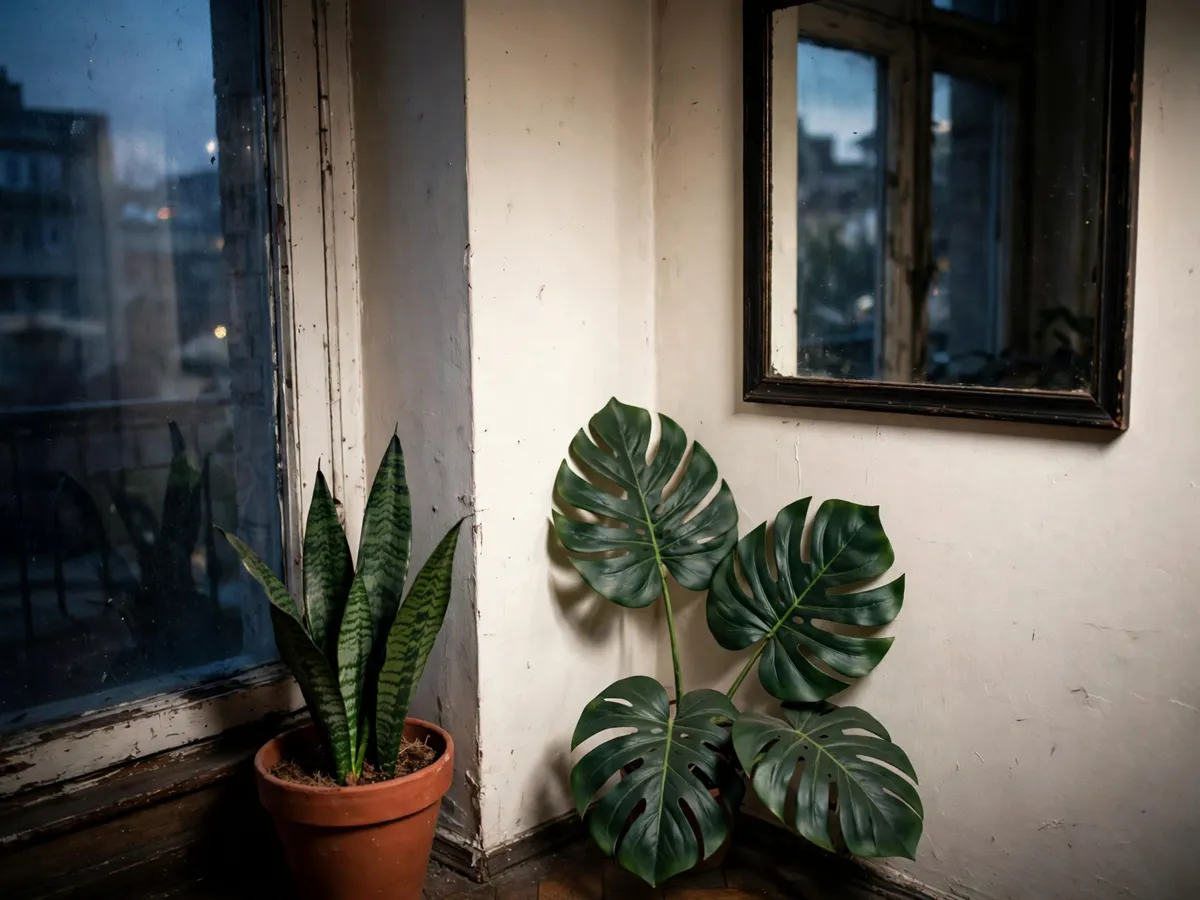
The humid, windowless bathroom. Real greenery in a steamy bathroom without a window mildews, rots or simply stops. A fake monstera or a small faux fern on the tank or a shelf stays exactly as bought, and the room gets its green without a watering routine you will not keep.
High shelves, mantels and ledges. Anything above a reach you make twice a year cannot have a watering routine, and a real plant up there is a brown trophy by spring. Faux on the high ledge is the honest low-effort choice, and it is the spot where nobody inspects the leaves anyway, which is exactly where a mid-tier fake performs best.
Cost: $25–$150 depending on which spot you fill. Time: 15 minutes to place. The hallway corner deserves the biggest share of the budget.
3. What realism costs at each tier
The $8–$15 tier: single stems, eucalyptus picks, small potted succulents. This tier is genuinely passable, and the reason is geometry. A eucalyptus stem is a wire with simple round leaves, and plastic does that shape well. In a vase on a table, at arm’s length, a $12 stem reads as greenery. Buy here freely.
The $25–$60 tier: mid-size plants in the 12 to 24 inch range. Hit and miss, and the misses share a pattern: sparse interiors you can see through, and identical stamped leaves. This tier demands the checklist in the next section before the purchase, because the photos on the listing rarely show the inside of the plant.
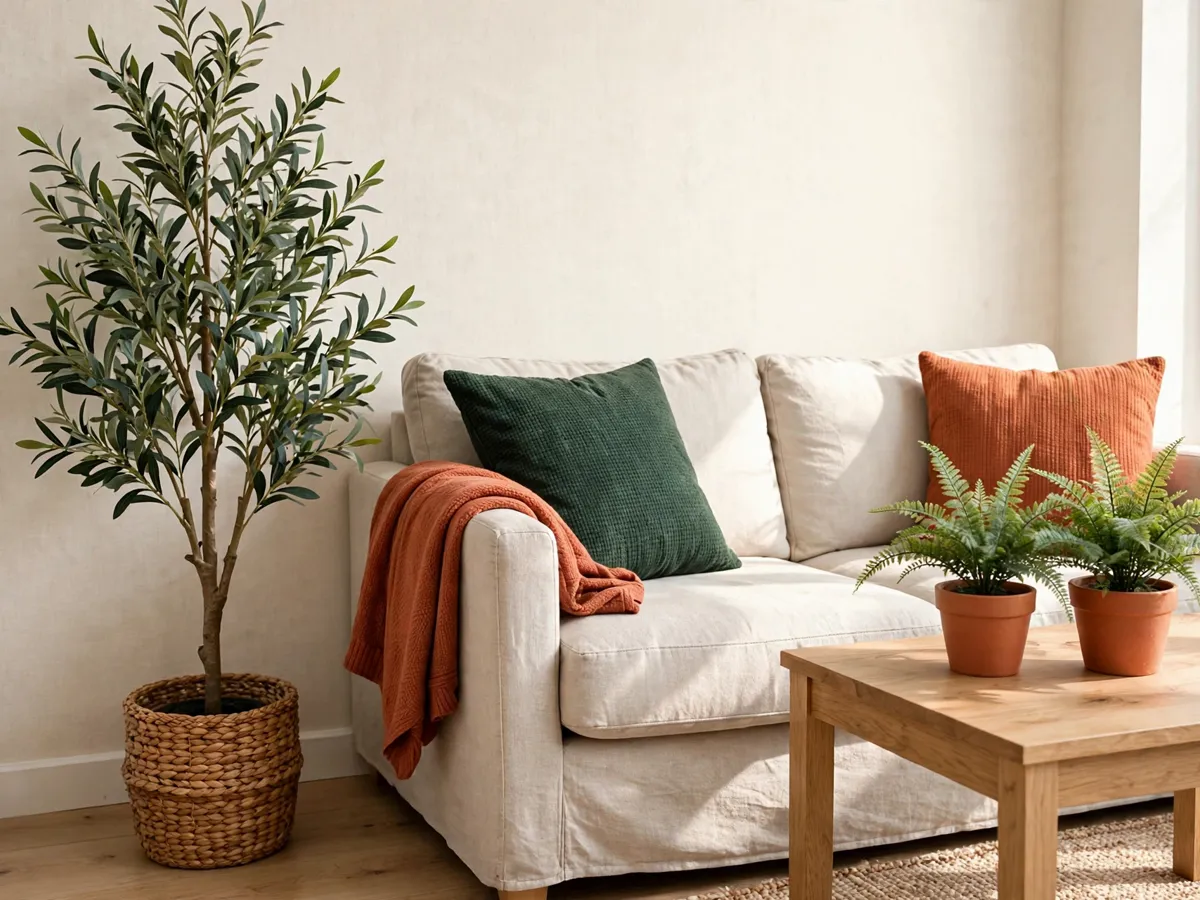
The $90–$250 tier: floor trees, the four to six foot faux olives and fiddle replicas. This is where realism actually lives. The stems are wired and shapeable, the foliage is layered all the way through, the leaves carry varied tones, and the finish is matte. A good tree here is the one fake a guest will walk past without registering.
The line worth repeating: cheap green is easy to fake, cheap shape is not. A $12 stem in a vase looks real, and a $12 tree looks like a bar prop. Spend on the silhouette and go cheap on the simple parts.
Cost: $8–$250 across the tiers. Time: an hour of comparing listings. One good tree plus cheap stems beats five mid-tier plants.
4. The five-point realism checklist
Leaf edges. Real leaves are irregular, slightly asymmetric, occasionally nicked. Stamped plastic repeats one perfect scallop hundreds of times, and the eye registers the repetition from a few feet even when the conscious mind does not. Look for leaves with variation at the margin, and a few deliberately imperfect ones.
Stem density. Cheap fakes skimp on the interior: two layers of foliage around a bare core, so you see through the plant. A believable one is filled all the way in, with smaller inner stems you only notice when you lean close. Photograph the listing’s inside shots, not the hero image.
Material finish. Matte or soft-touch, always. Glossy plastic catches the light in a way leaves never do and announces itself from across the room. The tell is strongest under the direct ceiling light most apartments run at night.
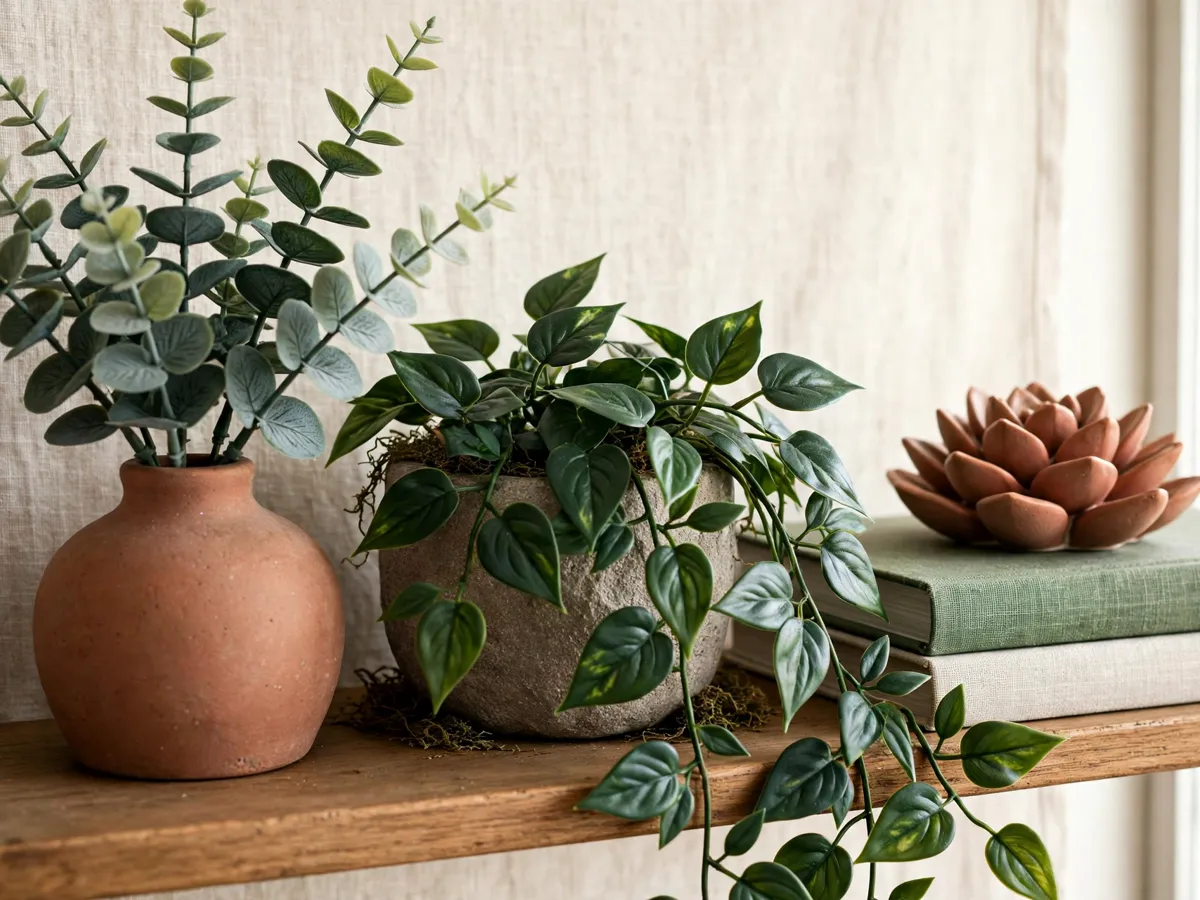
Color. Nature does not make one green. Real foliage carries varied tones through the plant: slightly yellowed older leaves, blue-toned new growth, pale undersides. A single flat green on every leaf is the factory signature, and it is the fastest tell at mid distance.
Pot honesty. Most fakes ship in a thin black nursery pot that reads as temporary from the sidewalk. The plant is judged by its container, and dropping the nursery pot into a real ceramic or stoneware planter, or a woven basket sized to the plant, is the single cheapest realism upgrade available.
Cost: $0 for the checks, $20–$60 for the pot. Time: 10 minutes per candidate. Run all five before the cart, not after.
5. Style rules that stop the plastic look
Never spotlight a fake alone. Greenery reads real in groups and under indirect light, and reads plastic when a single plant sits in direct light against a bare wall. Cluster it with books, a lamp, an object, and the eye stops auditing it leaf by leaf.
Cover the base. A collar of real sphagnum moss or bark chips over the fake soil surface fools every eye at conversational distance. The base is where the plastic rim and the moulded filler give the game away, and real moss costs under $10.
Shape the wired stems. The perfect radial arrangement is the factory tell, because real plants reach toward light and shed their shaded sides. Bend the wires into an asymmetric shape, one branch reaching a little, and let one lower area sit sparser than the rest.
Mix a real plant into the same corner. The eye assumes everything nearby shares a life, so one living pot beside two faux ones lifts the whole group. Put the real one where hands go, and the reader below on mixing gets the full rule.
Scale up. One large fake tree reads more real than five small ones, because the small ones live at the distance where inspection happens, and a big silhouette is granted the doubt before the eye gets close.
Cost: $10–$30 for moss, and a $25–$60 planter if the pot needs upgrading too. Time: 20 minutes per corner.
6. The dust job nobody warns about
Fake leaves collect a grey film. In a real home, with a window that opens and a floor that gets walked on, dust settles on the foliage within weeks, and the film flattens the color and kills the matte finish. A dusty fake plant looks worse than no plant at all, and this monthly five minutes is the actual price of fake greenery.
The sturdy ones take a shower rinse: cold water, gentle spray, shaken out and air-dried before they go back. Delicate stems get a microfiber wipe, leaf by leaf, which is the boring job the label does not mention. Dusty grasses and pampas respond to a hairdryer on cool held well back. Fabric-leaf plants cannot be rinsed at all; water warps them and leaves tide marks, so they are dust-only.
State the trade plainly: real plants cost care weekly, fake plants cost cleaning monthly. Neither is zero. The difference is the rhythm, and the monthly rhythm is the one a travel-heavy schedule survives.
Cost: $0 from a microfiber cloth already in the drawer. Time: five minutes a month. Set the reminder for the same day you change the smoke-detector batteries.
7. Formats: trees, trailers, stems, walls
Faux trees fill the empty corner and the space beside a door. The olive and fiddle replicas are the two formats done best at retail, and the floor footprint is where the big-ticket tier earns its price.
Trailing pothos and ivy solve shelves, bookcase fronts and the top of a kitchen cabinet. A trailer draped over a shelf edge reads real at almost any price, because the shape is simple and the placement is high, and the two together forgive a lot of the plastic.
Small potted stems suit the bathroom tank, the nightstand and the windowsill, and the succulent and cactus formats are the most believable miniatures sold. Stems in a vase, eucalyptus, pampas and the dried-look bouquets, belong on tables and dressers at arm’s length, where the simple geometry passes.
Wall greenery is the weakest format for realism and the strongest for the obviously decorative. Preserved moss panels and leaf walls for renters who cannot hang art read as a design choice rather than a plant, and that is fine, as long as nobody expects them to pass as living.
Cost: $10–$40 per trailer, $15–$30 per vase of stems, $90–$250 per tree. Time: 10 minutes each. One format per spot, decided before browsing.
8. The sun fades fakes too
Faux plants do not die, but they fade. Direct sun through glass washes cheap pigment over a season or two, and the leaf turns a pale blue-green ghost of its store color. The faded look is worse than the obviously fake look, because it reads as dead, and dead is what greenery is supposed to avoid.
UV-stabilized options exist, mostly sold for outdoor use, and they cost meaningfully more. For indoors the rule is simpler: keep the fakes out of the south-window hotspot you would give a real sun-lover. The corner that killed the real plant is exactly the corner that preserves the fake one, and the two rules point the same way.
Cost: $0 if you place them well, $40–$90 extra per item if you buy the UV grade for a bright spot. Time: 5 minutes to audit each placement against the window.
9. Mixing real and fake in one room
The mix is where this page earns its place on a gardening site, because the honest result is a room with more green, not less. Two rules carry it. First, real plants live at eye level and below, where touch happens: the visitor who reaches out to stroke a leaf must be stroking a real one, and the fake stays up high and in the dark where only the eyes go.
Second, never the same species side by side. A fake pothos on the shelf beside a real pothos is the strongest tell in the whole hobby, because the eye compares the two leaves at point blank and finds the difference immediately. Alternate species, and the comparison never starts.
Before surrendering a dim corner to the faux list, check what actually survives there. The low light indoor plants guide covers the living selection for deep shade, and the drought-tolerant list covers the ones that forgive a missed week. A real plant that thrives in the hallway is a different thing to live with than a real plant that barely hangs on.
Cost: $20–$60 for the real half of the mix, on top of the faux layer. Time: 10 minutes to place. The eye level belongs to the living things, always.
10. The renter math
Faux greenery is a no-commitment decor layer. There is no watering schedule to arrange travel around, no drainage stain on the landlord’s hardwood, no argument at move-out about the hole the hanging planter wanted. It packs into a hatchback, survives the move, and arrives looking the same as it left.
The cost comparison, stated once and honestly: a $120 fake olive that lasts five years costs about the same per year as killing two real olive trees in a dark apartment, plus the soil and the pots you bought trying. Faux is not cheaper up front. It is cheaper to keep, and the difference is attention, which is the scarcest thing a first job carries.
Cost: $60–$180 for the whole renter layer. Time: one afternoon to place, five minutes a month to dust. Nothing goes in the deposit report.
11. What not to buy
Pre-potted ready display sets in matching glossy pots. The set look is the fake look, and the matching pots are what give the game away before the leaves are even inspected. Buy the plants and the pots separately, always.
Anything with glitter or a frosted finish, and dyed blue or dyed purple designer foliage. Nature does not make those, and the eye knows it, and the item is a decorative object wearing a plant costume. Fine as an object, dishonest as greenery.
Giant fake ferns. Fern texture is where fake fails hardest: thousands of tiny frond edges, no mass-produced version nails it at a home price, and the big ones magnify the failure. If a fern look is the goal, a real Boston fern in a bright bathroom outperforms any plastic version, and the indoor plants and decor guide covers where living ferns actually work.
Any set of six identical mini plants. Repetition is the factory’s fingerprint, and the eye reads six same plants as one purchase, not six plants.
Cost: $0. Time: 2 minutes at the listing. Skip the whole set category and the budget goes to one better tree.
12. What it costs, honestly
A believable fake layer for a small living room runs $60–$180: one mid-size tree, two shelf trailers, one vase of stems. The fully believable corner, the one with a five foot tree and the wired stems shaped by hand, runs $150–$300 once the pot is counted.
The comparison line, one more time: fake costs more up front and almost nothing after; real costs little up front and costs weekly attention. The monthly five-minute dust cycle is the whole upkeep, and it is the only honest recurring cost on this page.
Cost: $60–$300 total depending on ambition. Time: one afternoon. The tree is the line item that decides whether the corner reads real.
Common questions
Do fake plants look obviously fake?
The cheap ones do, and so does any fake in a glossy pot, under a spotlight, or covered in dust. A wired-stem tree in a real planter, shaped asymmetrically and dusted monthly, passes at conversational distance, which is the only distance that matters in a living room.
How often should I clean faux plants?
Monthly is the honest rhythm. A shower rinse for the sturdy ones, a microfiber wipe for the delicate, a cool hairdryer for the grasses, and nothing but a dry wipe for fabric leaves. Households with pets and open windows may need the three-week version.
Is a fake plant worth it in a rental?
For the dark corners, yes, and it is the only answer those corners have. The bright spots still deserve a real pothos or snake plant, and the mix of the two, real at reach height and fake up high, gives the apartment more green than either choice alone.
Can I put faux plants in a sunny window?
They will fade. Direct sun through glass bleaches the pigment within a season or two unless the item is sold as UV-stabilized for outdoor use. Give the sunny spot to a real plant and keep the fake in the indirect light a real one would refuse.
What is the single cheapest realism upgrade?
The pot. Dropping the thin nursery container into a real ceramic or stoneware planter, and collaring the base with real moss, removes the two tells the leaves never had. $20–$60 and ten minutes, and it lifts a $30 plant above a $90 one in its original pot.
Save these on Pinterest
Pin the checklist before the next shopping tab opens, because the five checks do the work the listing photos will not. The tier rule fits on one line, spend on the silhouette and go cheap on the simple parts, and the dust cycle is the monthly five minutes that keeps the whole corner believable. Every room version lives in the Small Room Decor collection, and the living half of the mix has its home in the Gardening & Planting Tips collection.