 Plant As Deco
Small Room Decor
Feng Shui Indoor Plants: Where Each One Goes
By Plant As Deco · Updated 23 November 2026
Feng shui is the Chinese practice of arranging rooms so they feel settled, and plants sit near the center of it. The five classic picks each carry a traditional spot: a corner, an entryway, a shelf, a bedroom. This page gives you those placements as the tradition frames them, and it keeps one line honest: the benefit you can count on is a healthy plant in a spot you actually see and tend. The plant does not change your finances. The habit of placing something alive where your eye lands is the whole real reward.
Weekend-ready: $30–$80 for a three-plant starter set, one afternoon to place. Renter-safe: every placement here moves with the boxes.
1. What feng shui plant placement actually is (and what it is not)
In plain words, feng shui plant placement is a set of traditional rules about where living plants belong in a home. The plant goes in a corner tied to a theme, money, health, welcome, and stays out of other spots, like the bedroom of a poor sleeper or the line of the front door. The rules came out of centuries of Chinese household practice, and they arrive today filtered through books and shops.
What it is not is a mechanism. A plant placed in the money corner does not move a bank balance, a lucky bamboo does not summon luck, and no spot in a home is medicine. Anything promising that is selling something. What the rules do deliver, reliably, is intentional placement: a living object where you see it daily, a reason to check the soil on a schedule, a room arranged around comfort rather than clutter. Those are ordinary benefits, and they are what this page is for.
Cost: $0. Time: 10 minutes. Read this section twice before buying anything, because it sets the expectation for everything below.
2. The honest frame: tradition and psychology, not magic
The tradition deserves respect and clarity at the same time. Feng shui practitioners treat the money tree and the jade as symbols and anchors: the money tree for the wealth corner because its braided trunk reads as stored value, the jade for the entry because it lives for decades. The meaning is cultural and personal, in the same register as a horseshoe over a door.
The psychology half is where the practice earns its keep for a skeptic. A plant in the money corner sits in the far corner of the room from the door, the corner you glance at when you enter. Putting something alive there means your eye meets a healthy green thing every time you walk in, and rooms with one deliberate living object read calmer than rooms with seven scattered ones. It also sets up a care ritual: same corner, same weekly check, and the ritual is what keeps the plant alive. If the symbolism matters to you, enjoy it. If it does not, the placement logic still works.
Cost: $0. Time: 5 minutes. Decide before shopping whether you are following the tradition, the look, or both, so the budget follows the plan.
3. The map in one minute: command position, the money corner, the entry
Three placements carry most of the map. Command position: the spot farthest from the door that still faces it, traditionally the seat of stability; a plant on the table or shelf in that zone anchors the room. The money corner: stand at the front door looking in, and the far left corner of the room (the back left as you enter) is the wealth zone in the common bagua map. The entry: the area just inside the front door, the welcome zone, traditionally kept bright, clean and uncluttered.
Two rules refine the map. The door itself stays clear, because the tradition frames a blocked entry as blocked flow and the fire code agrees with the metaphor. And dead or dying plants come out of every zone, which section 10 covers in full. The full bagua with all nine zones is a deeper study; for plants, the three spots above place most of the traditional picks.
Cost: $0. Time: 5 minutes. Stand in the doorway, look in, point at the far left corner; that is the whole compass you need today.
4. The five classic plants and why each earned the spot
The traditional shortlist: the money tree (Pachira aquatica, the braided one), the jade plant (Crassula ovata), the pothos (Epipremnum aureum), lucky bamboo (Dracaena sanderiana, a dracaena and not true bamboo at all), and the peace lily (Spathiphyllum). Each earned its place through symbol and survivability: rounded leaves the tradition reads as wealth, easy care that keeps them alive in ordinary homes, and decades of gift culture.
The survivability half is why the list still works for a first apartment. All five forgive a missed watering, all live in ordinary indoor light, and none asks for a greenhouse. If you want a wider bench before choosing, the low maintenance indoor plants guide covers the forgiving list beyond the five.
Cost: $6–$35 per plant at the starter size. Time: 30 minutes of browsing with the list above. Buy small; every one of these grows into its spot.
5. Money tree: the braided trunk corner plant
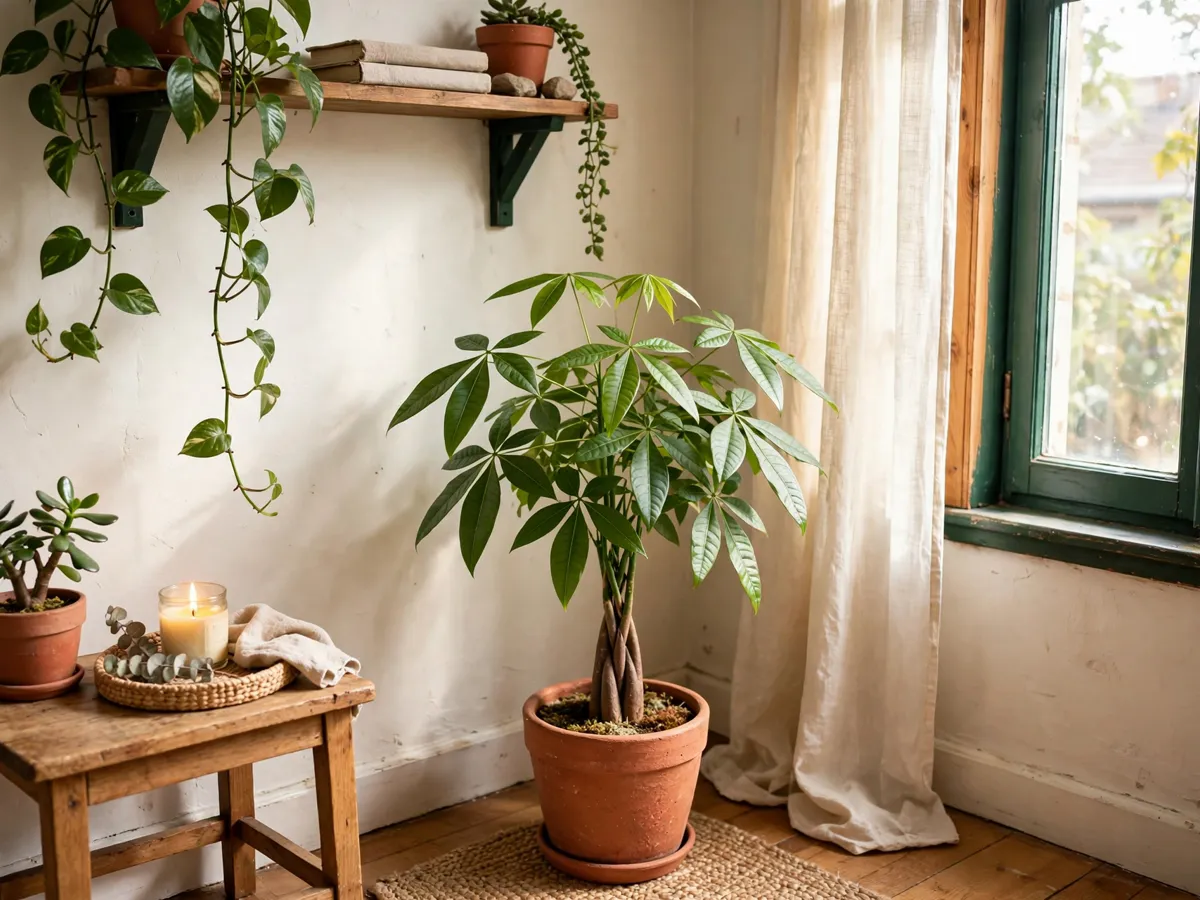
The money tree, Pachira aquatica, is the classic money-corner pick: a braided trunk, a hand-shaped canopy of glossy leaves, and a habit of growing to exactly the height between end table and bookshelf. The tradition reads the braid as stored fortune and the five-lobed leaves as abundance, which is how it became the default housewarming gift plant. Botanically it is a wetland tree from Central America: it likes even water and hates a swamp.
Placement: the far-left corner from the door, near a window but out of direct sun, in a pot with a drainage hole. Care runs to a deep watering when the top two inches of soil dry and a quarter turn every week so it leans evenly. The tree tells you its mood honestly: yellow dropping leaves say too much water, crispy edges say too much sun, and slow winter growth is normal, not failure.
Cost: $25–$45 for a braided 12–14 inch tree. Time: 10 minutes to place, 10 minutes a week to care. Skip the decorative no-drainage pot; corner plants are the easiest to overwater by accident.
6. Jade: the doorway plant that lives for decades
The jade plant, Crassula ovata, is the other wealth plant: plump coin-shaped leaves on thick branches, reading as a small tree within a few years. The tradition places it near the entry or the front window, where the east morning sun hits, because jade is a succulent and wants that light. It is also the plant most likely to outlive the lease: a jade kept dry-ish and bright can pass between homes as a cutting.
Care is the easy version of succulent care: water deeply, then wait until the soil is dry through the top inch, which in winter can mean three weeks between waterings. A windowsill near the door, a small terracotta pot, and restraint. The full care detail, including repot years, lives in the jade plant indoor care guide. For placement purposes: jade belongs where the eye catches it coming and going, which is exactly the job the entry does, and a plump healthy jade near the door reads as intentional in a way a half-empty vase never manages.
Cost: $8–$20 for a starter jade. Time: 5 minutes to place, 5 minutes a week. Jade punishes overwatering faster than neglect; when unsure, wait.
7. Pothos: the flowing-energy trailer
Pothos, Epipremnum aureum, is the trailer of the shortlist and the forgivingest houseplant in general circulation. The tradition reads its long runners as flowing energy, so it earns the job of softening a hard zone: the top of a bookcase, the lintel above a window. It also tolerates the lower light those spots have, which most trailers do not, and it roots in a glass of water.
Placement in a small apartment: up, not down. A pothos on the floor disappears behind furniture, while one running along the top of a shelf carries a blank wall the way a runner carries a hallway. The fuller vertical treatment, a grid of hanging planters, belongs to the indoor plant wall guide. Care for a shelf pothos: water when the leaves just begin to droop, and cut the runners back whenever they reach the ceiling. One note for a cat household: pothos is toxic to pets if chewed, so the flowing shelf edge needs to stay above leap height.
Cost: $10–$18 for a full starter pot. Time: 5 minutes to place, 5 minutes a week. Trail from height only; the runners lengthen faster than most shelves expect.
8. Lucky bamboo: the water-and-pebbles entry plant
Lucky bamboo is the entry plant: stalks of Dracaena sanderiana held upright in a shallow dish of water and pebbles. It is not bamboo, which matters for care, but the look is bamboo-like and the symbolism runs deep in East Asian gift culture, with the stalk count carrying meaning, three for growth, five for balance, eight for abundance. The tradition places it near the front door without blocking it.
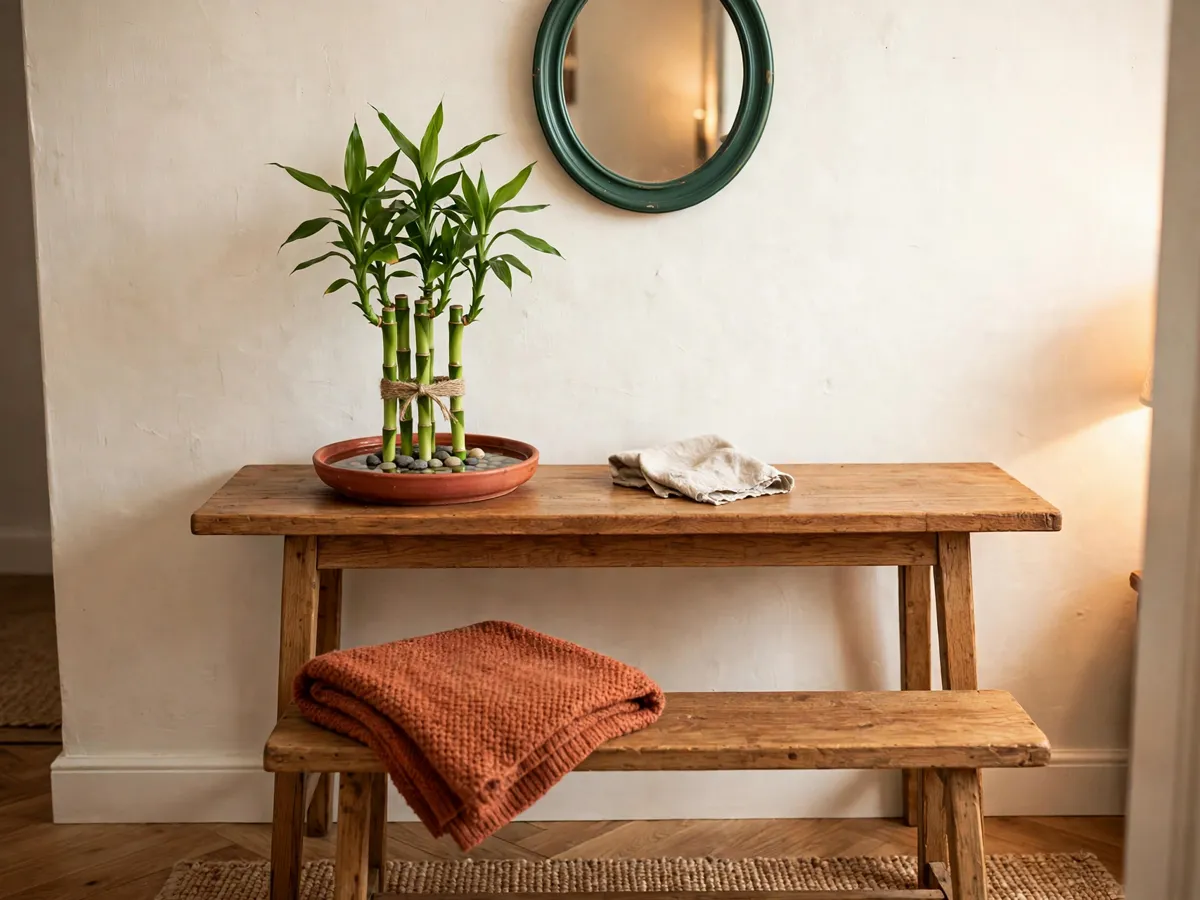
Care is water, not soil, and the rules are few: keep the roots covered in an inch of water, change the water weekly, and keep it on a bright indirect shelf out of direct sun. A small console by the door with the dish, a mirror and a key tray is the whole classic picture, and the entry around it wants to stay clear, which the entryway ideas for small spaces guide builds out for renters. One honest caution: Dracaena sanderiana is toxic to cats and dogs if chewed, so a pet household puts the dish on a console or shelf, not the floor by the door.
Cost: $8–$20 for a three-stalk dish arrangement. Time: 10 minutes to set up, 5 minutes a week for the water change. Use filtered or overnight-tap water in hard-water areas; fluoride tips the leaf edges brown.
9. Peace lily: the bedroom air-and-softness pick
The peace lily, Spathiphyllum, brings softness where the others bring structure: dark leaves, white spathes, a shape that reads calm. The tradition places it in rooms tied to rest and renewal, and in practice it handles a bedroom corner with lower light better than anything else on the list. The air-cleaning story is famous and modest in truth: a bedroom plant filters a bedroom corner, not a bedroom. Keep it for the softness, not the air promise.
Care: water when the top inch is dry, keep the leaves dusted, and accept the droop-and-revive cycle, since a peace lily flops theatrically when thirsty and stands back up within hours of a drink. Some homes keep it on a low corner shelf rather than a night table because of that drama. Two cautions, both honest. It is toxic to pets and humans if chewed, so it lives off the floor in a pet household, and the pet-safe low light houseplants list swaps it out entirely. And it flowers on its own calendar, mainly spring, so a winter plant with no white spathes is resting, not failing.
Cost: $15–$30 for a full plant. Time: 10 minutes to place, 10 minutes a week. The white spathes are the look; buy one already in bloom if that matters.
10. Thorns, dying plants and the removal rule (tradition interpreted)
Two traditional rules carry practical weight. The thorn rule: the tradition keeps sharp-leaved and thorny plants, cactus, some agaves, out of indoor rooms and especially out of entries and bedrooms, reading the spikes as unwelcoming at the threshold where you greet people. The interpretation here is household sense with a cultural frame: a spiky plant at hip height in a narrow hallway is an actual hazard in a small apartment, and the rule saves you the scrape. A cactus on a high sunny ledge away from the walking lines is a fair compromise.
The removal rule matters more: the tradition says a dying or dead plant must come out of every zone, promptly, because the room reads as neglected from the moment you stop seeing it. That rule is pure design sense in disguise: a brown half-shriven peace lily in the bedroom corner makes the room read sad, and the reading is automatic. Try one honest rescue month, better watering or better light, and if the plant keeps failing, replace it. This is the kindest reading of the whole practice: the rules mostly say keep the living things healthy and the paths clear.
Cost: $0 to remove, $10–$30 to replace. Time: 10 minutes. A rescue gets one month; a plant that stays ugly past that is costing the room more than the pot.
11. Small apartment placements: renter corners that work
The map meets a real one-bedroom and bends. The far-left corner from the door holds the TV stand in most rentals, so the money corner moves: one shelf of that stand carries the money tree, or a floor plant sits just left of it where the sightline still catches the plant. In a studio the money corner and the bedroom corner can be the same corner, which in practice means the peace lily takes it and the money tree moves to the window wall.
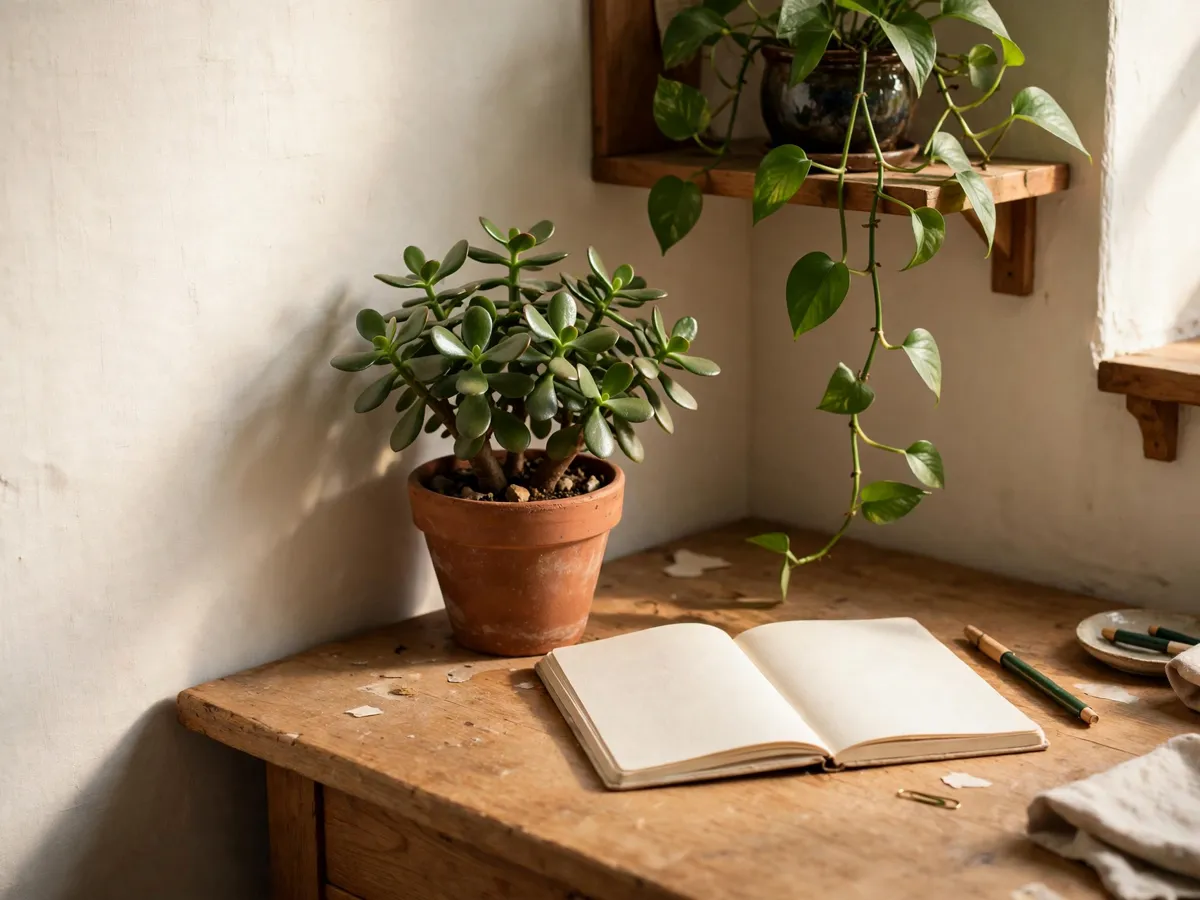
The entry in a rental is often four feet of wall and a radiator: the lucky bamboo dish goes on a narrow console or wall shelf beside the door, with the keys below it and nothing in the door swing. The desk placement is the renter bonus: a jade at the back corner of the desk where the window light lands, a pothos on the shelf above, and the work corner reads intentional on a $15 budget. Every placement is a pot on a surface, so the whole set moves on moving day. For the wider craft of grouping plants so a corner reads styled rather than stored, the indoor plants as decor ideas guide carries the composition half.
Cost: $0 beyond the plants. Time: 30 minutes to walk the apartment and choose the corners. Put the care check on the same day each week or the corner plants quietly fail.
12. Care reality: a dying lucky plant is the bad luck (the honest takeaway)
Here is the sentence the whole page supports: a dying plant helps nobody, and a healthy plant in a corner you tend is the real benefit, whatever corner it is. The tradition itself agrees, which is why the removal rule exists. A yellowing money tree in the money corner is worse than no money tree, because you walk past the failure every day and the room reads as a place where things are not kept up.
The practical bar is low. Pick plants for the light you actually have, water on one fixed morning a week rather than by guilt, and keep the count to what a ten-minute weekly check covers, about five plants. Rotate the pots a quarter turn on watering day, wipe the leaves monthly, and repot when the water runs straight through. Every plant in the classic five survives exactly that routine. If a plant still fails after a fair rescue month, replace it without ceremony: the corner deserves something alive.
Cost: $0 for the routine, $6–$35 for a replacement when needed. Time: 10 minutes a week, fixed day. Ten honest minutes on a schedule beats an hour of improvised attention.
13. The 3-plant starter set: $30–$80, one afternoon
The starter set covers the three placements that matter most: entry, corner, shelf. Entry, lucky bamboo in a three-stalk dish, $8–$20, on a console or shelf beside the door where the light is bright but not direct. Corner, the money tree, $25–$45 braided, in the far-left corner or its rented compromise near a window. Shelf, the pothos, $10–$18, running along a bookcase top wherever a blank wall needs the soften.
The afternoon: buy the three, place them, repot nothing yet, water once and mark the calendar. The first month is a placement trial: if one spot reads wrong after a week, move the pot while moving costs nothing. The set runs $30–$80 by plant size and pots, and after month one the additions worth making are a jade for the desk or a peace lily for the bedroom, each fitting the same weekly ten minutes.
Cost: $30–$80 total for the three plants and basic pots. Time: one afternoon plus 10 minutes a week. Swap any of the three for another classic if a spot needs it; the placements, not the specific plants, are the system.
Common questions
Do feng shui plants actually bring luck or money?
No, and any page promising that is overselling. Placing a money tree in the money corner does not change your finances. What the practice reliably delivers is a healthy plant in a spot you see daily, a weekly care ritual, and a calmer-looking room. The symbolism is real to the tradition and optional to you.
Where is the money corner in my apartment?
Stand in your front doorway looking into the home. The far left corner from that view, the back left as you enter, is the wealth zone in the common map. If that corner holds a TV stand or radiator, use the nearest shelf or floor spot your eye still catches when you walk in.
Which of the classic plants is easiest to keep alive?
Pothos, by a wide margin. It forgives missed waterings, tolerates lower light, and roots in plain water, so a failure restarts free. Lucky bamboo is a close second: it lives in a dish of water and asks only for a weekly change. Jade and money tree punish overwatering, so they suit careful waterers.
Are feng shui plants safe around cats and dogs?
Not all of them. Lucky bamboo, peace lily, pothos and jade are toxic to pets if chewed, so in a pet household they belong on shelves and consoles above leap height, not the floor. The pet-safe low light houseplants guide lists the swaps; a money tree is the usual pet-household corner pick.
What if I cannot put a plant where the map says?
Put it as close as the room allows and let the sightline decide. The corner behind the TV gets a shelf on that stand; the entry with no floor space gets a wall shelf or console by the door. The tradition has always adapted to real rooms, and the practical goal, a living plant your eye lands on every day, survives any amount of compromise.
Save these on Pinterest
Pin the money corner trick, the five classic plants with their spots, and the renter placements, so the next plant corner starts with a plan instead of a guess. The rest of the small-room ideas live in the Small Room Decor collection, and the plant care half lives in the Gardening & Planting Tips collection.