 Plant As Deco
Gardening & Planting Tips
Low Maintenance Indoor Plants: The Honest Effort Rank
By Plant As Deco · Updated 23 November 2026
For renters and first-home owners who like plants but not chores: this guide ranks houseplants by the time they cost you a month, and light tolerance is only one line in that math. Eight plants earn the low-effort label honestly, three lie about it, and the difference is worth knowing before you spend.
Weekend-ready: $10–$25 for the plant and the meter, ten minutes of setup. Effort is measured in weeks, not days.
1. What "low maintenance" actually means
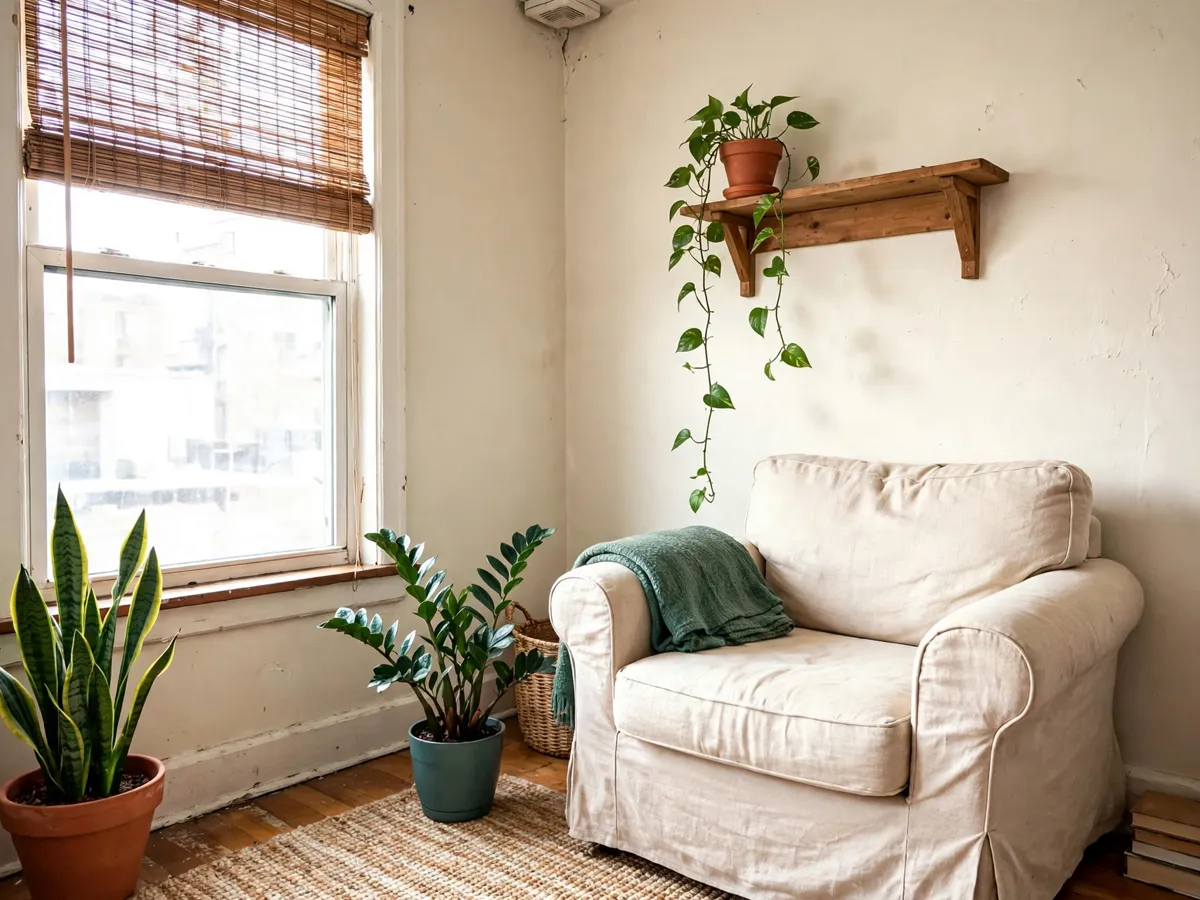
"Low maintenance" is the most overworked phrase in plant selling, because every plant is low maintenance in the one spot it likes. The tag never says whose job it is to find that spot. So this guide uses a definition you can check in your own home: a truly low-effort plant thrives on a routine measured in weeks, tolerates a missed watering without drama, stays tidy without pruning, feeds rarely, and forgives a vacation. A routine still exists. The low-effort version is a five-minute walk every two weeks, and everything on the honest list below fits that shape.
This is an effort ranking, so it does not repeat the hub's other plant lists. If your question is which plants survive the dimmest corner, that is the low-light indoor plants guide. If it is which ones drink least, that is the less-water houseplants guide. A few plants show up on those pages and here too, and that is because they are both dark-tolerant and genuinely cheap to keep, which the entry says plainly when it happens.
Cost: $0. Time: 5 minutes of reading. The definition above is the whole standard used for the rest of this page.
2. The effort math: what actually costs time
Break a houseplant's month into line items and the ranking writes itself:
- Watering frequency. The number one cost. A plant that wants water every four days demands twelve attention events a month; one that wants it every three weeks demands fewer than two. Twelve chances to forget, twelve trips to the sink.
- Grooming and pruning. The number two. Fast trailers and leggy growers need trims to stay presentable, and dead leaves need picking. A slow, self-tidy plant needs none of that.
- Repotting rate. Every year is a real chore with dirt on the floor. Every three or four years is an event you almost forget between.
- Pest pressure. A plant that attracts spider mites in dry winter air quietly adds a weekly inspection, and that is effort no label mentions.
- Feeding. Most houseplants want a weak feed a few times in the growing season only. Anything that wants more is a hobby, not decor.
- Failure consequences. The hidden multiplier. A plant that dies from one missed week is high effort whatever the tag says, because the cost of forgetting is total.
Add the items honestly and a pattern shows up. The plants that score well store water in thick leaves or stems, grow slowly, and keep their shape on their own. The plants that score badly have thin leaves, fast growth, or a humidity demand that drags a humidifier, a hygrometer and a watering rhythm behind it. None of the eight below is zero maintenance. Each one is weeks-between maintenance, which is the honest version of the promise.
Cost: $0. Time: 5 minutes with this list before the nursery trip. Count the line items, not the slogan on the tag.
3. The eight plants that earn the label
Each entry carries the numbers a store tag leaves out: roughly what the plant costs in care minutes a month (an honest estimate from owning them, not a measurement), the one way it usually fails, and the light it actually wants in a normal apartment.
ZZ plant (Zamioculcas)
The vacation champion. A ZZ stores water in potato-like rhizomes under the soil, so it holds weeks between waterings and shrugs off an empty apartment. Glossy, arching leaves on a plant that stays two to three feet tall, near-zero grooming, and it tolerates office-level light, which is the reason it fills lobbies and cubicle corners. Effort: roughly 10 minutes a month, most of it the watering itself. The one failure mode is a loving hand: soggy soil yellows the stems, so water only when the mix is dry halfway down. Light: anything from a bright window to a north corner, with slower growth at the dim end. It is dark-tolerant and low-effort, so it also appears on the low-light list, honestly.
Snake plant (Sansevieria / Dracaena trifasciata)
Upright, sword-shaped leaves that stay narrow, which makes it the one true plant for the sliver of floor beside a door or a radiator wall. It is the plant that survives a dark hallway, weeks between waterings, and almost no grooming, because the leaves hold their shape with no pinching or staking. Effort: about 10 minutes a month. Failure mode: the same as the ZZ, watering too often and rotting the base; wait until the mix is dry halfway down. Light: low to bright indirect, tolerant of the dark hallway but faster a few feet from a window. It earns its spot on the low-light list too, for the same honest reason.
Pothos (Epipremnum)
Fast, forgiving, and the best teacher on this list, because it tells you what it wants: a thirsty pothos droops visibly, and an hour after watering it stands back up. That signal alone removes the guesswork that makes beginners overwater. Trailing vines work on a shelf, a bathroom rack or the top of a bookcase, and grooming is an occasional trim with scissors plus pinching off a yellow leaf. Effort: 15 to 20 minutes a month. Failure mode: root rot from a watering schedule set by the calendar instead of the plant. Light: a window within a few feet, bright indirect; it survives dim corners but stops trailing there.
Cast iron plant (Aspidistra)
The historical champion, the plant that earned the nickname "cast iron" in dim Victorian parlors long before plant marketing existed. Deep-green, paddle-shaped leaves on a slow, tidy clump, tolerant of deep shade, cold corners and general neglect. It is unkillable in the nickname sense, which is a reputation and not a promise. Effort: about 10 minutes a month. The catch is patience: growth is slow, so a small plant fills out over years. Failure mode: spider mites in very dry winter air, worth a leaf check when you water. Light: the darkest floor corner of the eight, and no direct sun.
Heartleaf philodendron
Pothos's calmer cousin: the same forgiving water rhythm and the same trailing habit, with slower growth that means less pruning and fewer trims to keep it looking deliberate. Heart-shaped leaves on vining stems that root in water from a single cutting, which is how the second and third plant end up free. Effort: 15 minutes a month. Failure mode: yellow leaves from a mix that stays wet, the classic overwatering signature. Light: a window within a few feet, bright indirect; like the pothos, it slows in a dim corner without complaint.
Peace lily (Spathiphyllum)
The most dramatic low-effort plant, which is a feature: a thirsty peace lily wilts flat and theatrical within a day, then recovers standing within hours of a drink. No other plant on this list announces its needs that loudly, and the white flower spathes come reliably in medium light. Effort: 20 to 25 minutes a month, because it drinks more often than the thick-leaved eight. Failure mode: chronic overwatering, and brown leaf tips from very dry air. Light: medium, a few feet from a bright window; too dim and it stops flowering, direct sun scorches the leaves.
Hoya (wax plant)
Thick, waxy leaves store water, so weeks pass between drinks. Hoyas trail or climb, some kinds flower in clusters with age, and they prefer to be pot-bound, which means repotting is rare: the rare plant where a cramped pot is a compliment. Effort: 10 minutes a month. Failure mode: overwatering, again, plus impatience, since some hoyas take a few settled years to flower. Light: bright indirect, a window within a few feet; too dim and it grows but never blooms.
Jade plant (Crassula)
A succulent that reads as a real houseplant: a thick-trunked, tree-shaped little plant rather than a spiky desert thing, and it lives for decades, which is why jades get handed down through families. Water every two to three weeks, feed rarely, and expect a slow bonsai-like character with no pruning needed to keep the shape. Effort: 10 minutes a month. Failure mode, honestly: it drops leaves when overwatered, so err dry, and give it the brightest window you can spare. Light: the sunniest spot of the eight, a south or west window suits it best.
Cost: $10–$25 each in 4-to-6-inch pots. Time: 10–25 minutes of care per plant per month. The thick-leaved four (jade, hoya, ZZ, snake) sit at the bottom of that range.
4. The three plants that lie about it
These three get sold under the easy-care sign, and the reality is a weekly appointment. Each entry says what the label promises, what the plant actually costs, and the honest pick from the list above that scratches the same itch.
Fiddle-leaf fig
The promise: a designer tree, sculptural and effortless. The reality: a genuine diva that drops leaves in response to drafts, rotation, relocation and overwatering, which is most weeks in a rental with a heating schedule. The effort is high, and the common payoff is a bare lower trunk. If you want a big architectural plant honestly, the large indoor plants guide covers the ones that behave, and the ZZ plant here gives the same bold statement shape with a fraction of the attention.
Ferns, especially boston fern
The promise: a soft, classic, cottage-y houseplant, sold hanging in every garden section. The reality: steady humidity and consistently damp soil, which a radiator-heated apartment cannot offer without effort. The fronds crisp and shed when the air runs dry in winter, and the minimum honest commitment is weekly attention, water plus misting the air around it plus cleaning fallen fronds. For a full, soft, textured look without that schedule, a full pothos or a broad cast iron plant does the same job on the weeks-between rhythm.
Calathea and prayer plants
The promise: the most beautiful foliage in the shop, painted stripes and folds that move morning and evening. The reality: the leaves curl when the water is wrong, they want humidity above what a heated room holds, and they dislike the minerals in hard tap water, so filtered or distilled water becomes part of the routine. They are the most beautiful high-effort plants in the store, and nothing on the low-effort list matches their patterns. The honest scratch for the same itch is a peace lily, which gives patterned interest and white flowers with a much wider tolerance band.
Cost: $0 to skip these three. Time: 2 minutes of restraint that saves months of work. None of them survives on a two-week routine.
5. The routine that halves the effort
Effort is mostly friction, and friction is removable:
- One fixed watering day. A standing check every second Saturday, not a calendar guess. Plants on a rhythm are watered when they need it, and you stop re-deciding every day.
- The finger test. Two inches into the mix. Dry at that depth means water; damp means walk away. It beats any schedule and costs nothing.
- A watering can that lives with the plants. A trip to the kitchen sink is half the friction of plant care, and a long-spout can parked nearby removes it.
- One five-minute walk for all plants. Check everything in a single loop rather than plant-by-plant through the week. Clustered plants also share a slightly more humid pocket, which the cast iron plant appreciates.
- A moisture meter for the uncertain. $10–$15, and for a new owner it is the single cheapest effort-reducer in the kit: it replaces the guess that causes both missed waterings and the overwatering that kills most easy plants.
Honest limits: a routine makes any plant easier to keep alive, and it cannot make a fern stop wanting humidity or a fiddle-leaf stop hating drafts. The routine lowers the cost of the care a plant needs. It does not change which care that is, which is why the selection above comes first.
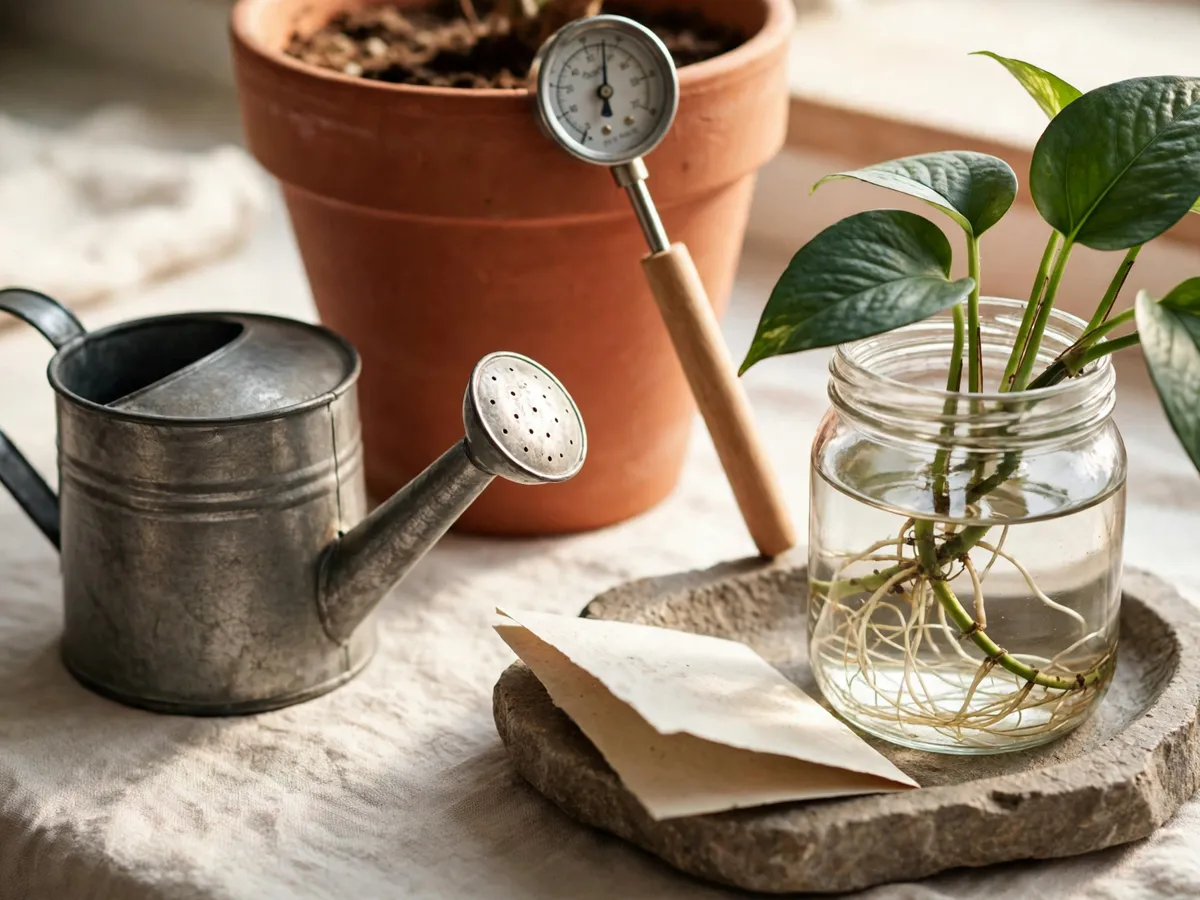
Cost: $10–$15 for the meter, $10–$20 for the can. Time: 5 minutes every two weeks once it is running. The routine takes a fortnight to become a habit.
6. The vacation test
Two weeks away is the honest test of a low-effort plant, and the eight above pass it with plain preparation: water everything deeply the day before you leave, pull the blinds to half so the rooms stay cooler and dimmer, and go. Ten to fourteen days alone in a normal apartment does not hurt a ZZ, a snake plant, a hoya or a jade at all, and the pothos, philodendron and cast iron at most droop a little and recover. A peace lily may wilt dramatically and still bounce back within hours of your return watering.
The dishonest advice is the self-watering gizmo for a two-week trip. A plant that needs a device to survive fourteen days is telling you its care floor, and a device left running on a timer can overwater in your absence with nobody there to notice. If you want the honest version of the technology for longer trips or everyday use, the self-watering planters guide covers what they do and do not fix, and the general care rhythms live in the houseplant care guide.
Cost: $0. Time: 15 minutes before the taxi. Blinds half-closed, full watering, and nothing plugged in.
7. Pests: the hidden line item
Spider mites and mealybugs are the two pests that turn an otherwise easy plant into a weekly inspection, and no plant label mentions it. Mites love dry air and thin leaves, which is the same reason a norfolk pine in a heated room struggles, and a plant that hosts them quietly adds checking, rinsing and repeat treatments to every month. The thick-leaved four from the list above, jade, hoya, ZZ and snake plant, resist both pests better than thin-leaved growth, which is part of why their effort score is so low.
The practical habit is to look at leaf undersides and stem joints while you water, since both pests are easiest to stop in their first week. Webbing and pale stippling mean mites; cottony white bits mean mealybugs. The full signs, rinses and alcohol-swab routine lives in the indoor plant pests guide.
Cost: $2 for alcohol and swabs, kept in a drawer. Time: 1 minute per plant, folded into the watering walk. Prevention is looking.
8. Light: one honest line for each of the eight
Low effort is not the same as no light, and the two get confused constantly. Every plant below needs the light it needs; the low-effort ones simply grow slower instead of dying when they get less. The ZZ and the snake plant tolerate a dark corner and grow about half as fast there, which is fine for an owner who wanted a static shape anyway. Pothos and heartleaf philodendron want a window within a few feet. The cast iron plant wants the dim corner and nothing direct. The peace lily wants medium light to flower, the hoya wants bright indirect to ever bloom, and the jade wants your sunniest sill.
When in doubt about what your corner actually delivers, the deep science of what survives where is the low-light indoor plants guide's job, and this ranking borrows only its conclusions.
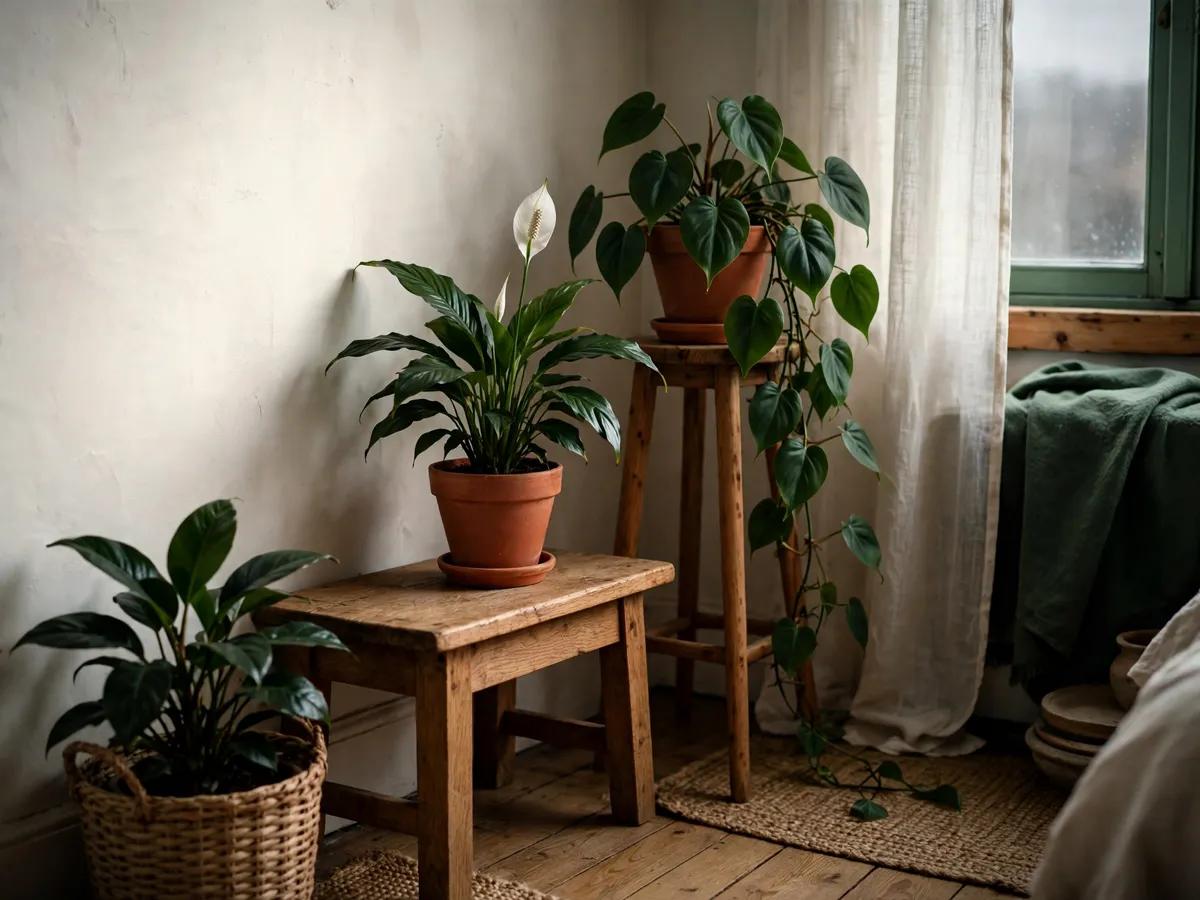
Cost: $0. Time: 1 minute per plant to match it to a window. Tolerant is the word; happy and fast needs the brighter spot.
9. The overwatering confession
The most valuable line in this guide, plainly: most "hard to kill" plants are killed by their owners watering them, not by neglect. The beginner's loving daily watering is the number one cause of death across this entire list, because every plant here rots before it dries out. The ZZ, snake, jade and hoya want dry spells, and a scheduled drink keeps their roots wet when they are asking for the opposite.
The rule that follows is one sentence: when in doubt, wait two more days. Nothing on the honest list is harmed by waiting, and the failure modes above are all versions of too much care rather than too little. If you want to be a good owner of low-effort plants, the skill to practice is restraint, and the finger test from section 5 is the tool that makes restraint easy.
Cost: $0. Time: 2 days of patience. Waiting is free and almost always right on this list.
10. What it costs, honestly
Big-box and nursery prices, mid-size US market: the eight plants above run $10–$25 each in 4-to-6-inch nursery pots, and $15–$40 in a display pot with a saucer. A cast iron plant or a large snake plant climbs toward the top of that range. The effort-reduction kit, a moisture meter, a long-spout watering can and a saucer set, is $30–$45 all together, and the saucers matter as much as the meter, because drainage is what keeps the whole list alive.
The honest line on the total: a low-effort collection costs less than a high-effort one, because you kill fewer of them. A fiddle-leaf fig bought twice plus a humidifier outprices a shelf of pothos and ZZ plants with the meter included. Start small, add a plant a month if the routine is sticking, and the collection grows at the speed it deserves.
Cost: $10–$25 per plant, $30–$45 for the full kit. Time: one nursery trip. Replacements are the hidden cost the easy list removes.
11. Where to start: if you buy one plant today
- A window-lit shelf: the pothos. It signals its needs by drooping and recovering, which is the fastest way to learn to read any plant, and cuttings make the next ones free.
- The dark corner: the ZZ plant. It asks almost nothing and holds its shape there, asking only that you do not water it on a schedule.
- The narrow spot beside a door: the snake plant.Stays slim, tolerates the hallway traffic and the low light, and forgives the weeks you forget it exists.
One plant, one window, one fixed watering day is the whole start. A rental with a busy schedule is exactly where the effort ranking earns its keep, because the difference between the pothos and the fiddle-leaf fig is the difference between decor that persists and decor that becomes a chore.
Cost: $10–$25 for the one plant, $10–$15 for the meter. Time: ten minutes of setup. One plant done well beats five done vaguely.
12. Small-space placement: every rental micro-spot covered
- Beside the entry: the snake plant, upright and narrow enough to live beside the door without blocking it.
- The bathroom shelf: the pothos, trailing and forgiving, and the steam from showers is humidity it enjoys.
- The dead floor corner: the cast iron plant or a floor ZZ, the two that fill a dim corner without demanding a window.
- The desk: the jade or a small hoya, compact, slow and happy to be looked at more than touched.
Between those four spots and the window shelves, a studio apartment holds the entire list without giving up floor space. Every plant here is also movable by one person, which matters on moving day, and none of them outgrows a rental the way a five-foot fiddle-leaf does.
Cost: $0 beyond the pots you already chose. Time: 5 minutes of matching plant to spot. Renter-friendly, in the literal sense.
Common questions
What is the lowest maintenance indoor plant of all?
On the effort math above, the ZZ plant. It stores water underground, tolerates dim light, grows slowly enough to need no pruning, resists the common pests, and forgives two-week absences. The snake plant is a close second for a narrow spot, and the cast iron plant for the darkest corner. All three fail the same way, from overwatering, so the care floor is restraint.
How often should I water low maintenance indoor plants?
Every two to three weeks for the ZZ, snake plant, jade and hoya, and roughly weekly to every ten days for the pothos, philodendron and peace lily in warm rooms, always checked with the finger test two inches down. Winter stretches every gap by a week or so, because the plants drink less in weak light. When in doubt, wait two more days.
Are low maintenance indoor plants safe for cats and dogs?
Not all of them. The pothos, heartleaf philodendron, peace lily, jade and snake plant carry compounds that irritate a pet that chews them, and the ZZ plant is similar. The spider plant is the usual pet-safe default, and the honest rule for a pet that chews is a shelf the animal cannot reach rather than trusting any species. Call a veterinarian promptly if a pet chews one.
Do low maintenance plants need fertilizer?
Lightly, and only in the growing season. A weak-strength balanced feed once a month from spring through late summer covers the whole list, and nothing at all in winter. These plants grow slowly by nature, and feeding harder pushes pale, soft growth rather than more of it.
Can I leave low maintenance plants for two weeks?
Yes, with the plain preparation from the vacation test: a full watering the day before, blinds half-closed, and no gadgets running. The ZZ, snake, jade, hoya and cast iron plant barely notice, and the pothos and philodendron recover from a droop within hours of the return watering. Skip the self-watering device for a two-week trip and trust the plants.
Which easy plant flowers indoors?
The peace lily, most reliably, with white spathes in medium light. The hoya flowers in dangling clusters, but only on older, settled, pot-bound plants, so it is a patience reward rather than a sure thing. Everything else on the list is grown for leaves, which is the lower-effort trade by design.
Save these on Pinterest
Pin the eight-plant effort ranking and the overwatering rule, the two parts of this guide that decide whether your plants are still alive next year. This guide and the rest of the gardening tips collection live together there.