 Plant As Deco
Gardening & Planting Tips
How to Clean Indoor Plant Leaves: Dust, Tools, Myths
By Plant As Deco · Updated 23 November 2026
Dust is the houseplant problem nobody plans for. The film that settles on a shelf does something worse than dulling the leaves: it sits between the leaf and the light the leaf eats with. This guide covers why that matters, the three methods that match a tool to a leaf type, the plants you must never wet, the remedies that backfire, and a ten-minute monthly routine.
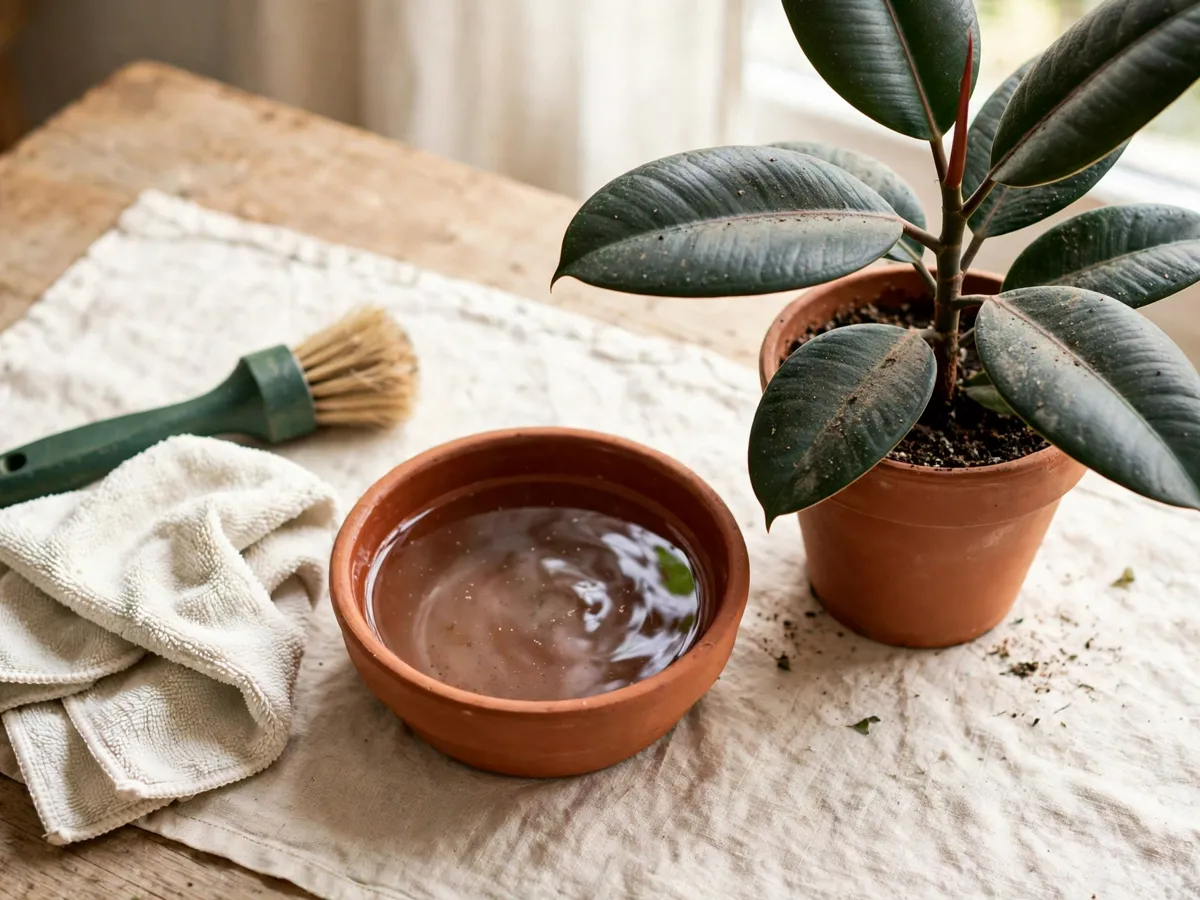
Weekend-ready: $8–$15 for a kit you buy once, about 10 minutes per plant, once a month. One cloth, one brush, a bowl of lukewarm water.
1. Why dust on leaves actually matters
A leaf is a light-catching surface, and household dust settles into its fine ridges rather than sitting on top of them. A film of skin cells, fabric fibres and street grit absorbs and scatters part of the light before it reaches the leaf, so less of it gets used. Nothing dramatic follows: a dusty plant does not collapse on a timetable. What follows is slower - less energy fixed each day, eventually smaller, paler new growth, most visible in a dim apartment. A dusty leaf also hides trouble - spider mite stippling, the first yellowing, a scale insect - so cleaning doubles as an early-warning system.
Cost: $0. Time: 5 minutes to read. Caveat: waiting for a symptom means waiting past the cheap fix.
2. The tool kit: cloth, brush and lukewarm water
- Two soft microfiber cloths, $3–$6. One damp, one dry for the finish. Microfiber lifts film without scratching the cuticle and washes clean; paper towels shed lint into the veins.
- A soft-bristled brush, $2–$5. A cheap makeup brush, a 1-inch soft artist brush or a clean pastry brush - the tool for fuzzy leaves, dense small foliage and anything you cannot wet.
- Lukewarm water in a small bowl. Not cold, not hot. Gentler on tropical tissue, and slow to dry so there is time to wipe before it spots.
- Optional: a spray bottle ($3–$5) and a top dressing ($5–$12). The bottle pre-wets very dusty foliage; the dressing keeps dry mix from scattering.
Deliberately missing: no leaf-shine product, no oil, no glass cleaner, no canned air - each costs the plant more than the dust does, and the myths section explains why.
Cost: $8–$15 for the whole kit, bought once. Time: 10 minutes to gather it. Caveat: wash the cloth between plants or it spreads pests.
3. Method 1: the wipe-down for glossy large leaves
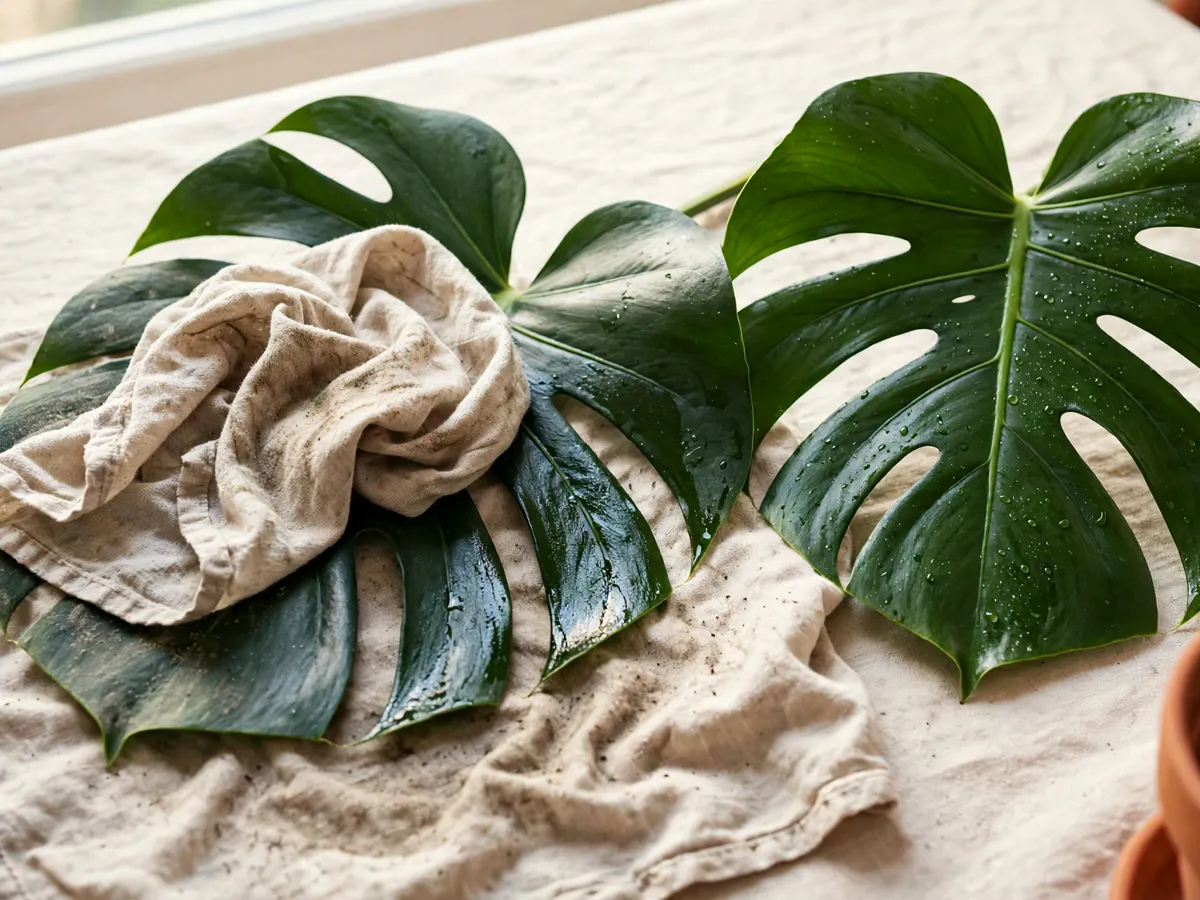
This is the method for plants whose leaves you can count: monstera, philodendron, pothos, rubber plant, fiddle-leaf fig, peace lily, aglaonema - big, smooth, stiff foliage a cloth can travel across.
Dampen the cloth and wring it until it is barely wet. For a floor plant, lift the leaf and lay it across your free palm: support the blade the whole way. Stroke from the midrib outward toward each edge, one or two passes, no scrubbing, and do the underside in the same motion - it carries most of the stomata and it is where spider mites and mealybugs settle. Keep water out of the crown and the leaf axils, where it sits against the stem and can start rot, and finish with the dry cloth so no droplet dries into a mineral spot. Work top to bottom so knocked-loose dust does not land on ground you already did.
Cost: $0 beyond the cloth. Time: 10 minutes for a five-leaf rubber plant, 15 to 20 for a large fiddle-leaf fig. Caveat: support the blade instead of pulling it - a leaf torn at the petiole does not reattach.
4. Method 2: the shower rinse for bushy plants
Some plants defeat the cloth. Boston fern, asparagus fern, spider plant, small-leaved figs, dracaena, a full hanging basket, a dense trailing pothos: hundreds of narrow surfaces that would take an hour each to wipe, and water does the same work in minutes.
The details matter more here. Warm the room first. Use lukewarm water at low pressure - the handheld head on its softest spray, or a cup poured over the foliage - never a hard jet on tender new fronds. Support the pot and the base of the stems with one hand, because a hanging basket tilted suddenly can snap at the crown. Cover the soil with a plastic bag if the mix is already damp. Rotate the pot so the water reaches the inner leaves and the undersides. Then let it drain completely in a warm spot out of direct sun for an hour - a wet plant set onto a cold draughty sill in January is how a fern turns brown.
Cost: $0. Time: 15 minutes including the drain. Caveat: do not rinse a plant that was just repotted or moved indoors; give it two weeks and use the dry brush instead.
5. Method 3: the dry brush for fuzzy leaves
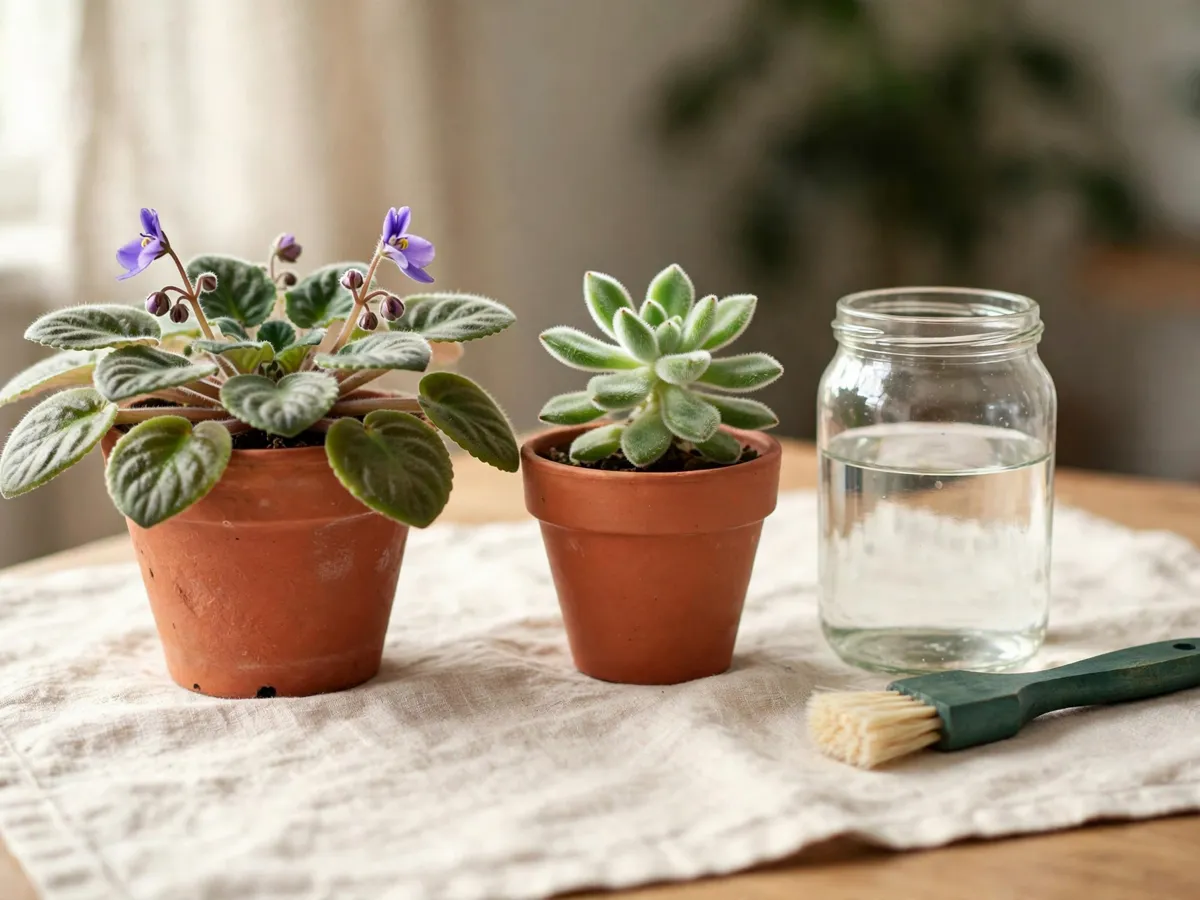
A fuzzy leaf is covered in trichomes, tiny hair-like structures that give African violets, episcia, many hoyas and some peperomia their velvet surface. Those hairs hold water against the leaf and let it sit there, and the result is the brown, corky, sunken scarring that fuzzy-leaf owners blame on the plant.
So the rule is absolute for these: dry tools only. Soft brush, light strokes, following the direction of the hairs, over a tray or sheet of paper so the dust has somewhere to fall. Brush the tops and the undersides, leaf by leaf, and let the pot stay where it is, because a gesneriad petiole snaps easily at the base. For very loose dust, a hair dryer on the coolest, lowest setting, held a foot back and moved constantly, works - never warm air, never close, never on soft new growth. Do not mist a fuzzy leaf as a compromise: a fine spray is still water.
Cost: $2–$5 for a soft brush if you do not own one. Time: 8 minutes for a pot of African violets. Caveat: water standing in leaf hairs causes the exact scarring the method prevents, so a fuzzy leaf never meets a wet cloth, a spray or a shower head.
6. What NOT to use: the leaf-shine and home-remedy myths
Each of these circulates online as real advice, and each trades a photo-worthy leaf today for damage that shows up in a month: all of them coat the surface rather than clearing it.
- Mayonnaise and cooking oil. It shines for about a week, then the film plugs the surface the leaf exchanges gases through, traps heat in a bright window, and stays sticky - so it catches dust faster than a clean leaf did. Within a month an oiled leaf is darker and dirtier than an unwiped one.
- Leaf-shine sprays and wipes. Mostly silicone or mineral oil: the same coating problem plus additives that burn the cuticle.
- Milk and beer. They leave dried protein and sugar behind - a sour film, a smell in a small apartment, and a surface that attracts fungus gnats.
- Glass cleaner. Ammonia and alcohols strip the waxy cuticle that keeps water inside the leaf.
- Feather dusters and canned air. A duster lifts dust into the air and it lands back within the hour; compressed air comes out cold enough to mark leaf tissue.
Oil used with a purpose is a different thing. Neem is a dilute treatment for specific insects on a schedule, then washed off - not buffed in as a polish. When the problem is bugs, not dust: neem oil for indoor plants covers the version that earns its shelf space. A dull-looking plant needs water and a cloth, not oil.
Cost: $0, this is a do-not-buy list. Time: 2 minutes to read. Caveat: the gloss you want comes from clean tissue, not from anything layered on top of it.
7. The cactus and succulent exception: brush, never wash
Desert plants carry a second reason to leave water alone: the bloom. Many cacti and succulents grow a powdery, often blue-white waxy coat over the epidermis - the farina on an echeveria, the dusty ribs of a cactus. It is a real surface, part of how the plant handles light and water, and it is not renewable: rub it off and that leaf or rib is permanently shiny where it used to be frosted.
So the treatment is the dry brush, with even lighter pressure than on a violet: soft strokes over the top and the flanks, working around spines rather than across them, and a cool-air pass for dust in the crevices. Never rinse a bloomed succulent, never hold it under a tap, never wipe a spined stem. Woolly areoles, the cotton-like tufts on an old-man cactus, behave like fuzzy leaves: water sits in them and rots the tissue underneath. A thin layer of dust also costs a slow-growing succulent less than a large monstera, so clean the foliage first and the cactus shelf last. A succulent filthy from repotting grit is picked clean with the brush and tweezers, never washed.
Cost: $0, the kit brush covers it. Time: 5 minutes per plant. Caveat: bloom rubbed off is gone for the life of that leaf or stem, so the dry brush is the ceiling of what is safe.
8. Cleaning around pests: what a wipe fixes and what it misses
Sometimes the grey film is not dust. A leaf that still feels tacky after you wipe it, a sticky sheen on the shelf under the pots, a black sooty film on the lower leaves: those are honeydew, the sugary excretion of sap-feeding insects such as scale, aphids, whitefly and mealybugs. Cleaning removes the honeydew and the dust it glues - worth doing, because the sticky layer grows sooty mold and hides the insects.
What a wipe does not do is treat the colony. A damp cloth knocks off a scattering of aphids, and a shower rinse knocks down spider mites and their webbing - both legitimate first moves. Neither reaches the eggs in a leaf axil, the scale cemented to a stem, or the thrips inside a folding new leaf. Wiping a pest plant, then moving to the next with the same cloth, also spreads the problem. Look, then clean, then decide, because the indoor plant pests guide covers very different answers for a mealybug and a fungus gnat, and the wrong one wastes a month. Cleaning is the diagnostic step, not the cure.
Cost: $0 for the wipe; $8–$15 if the answer turns out to be a treatment product. Time: 10 minutes per plant when something shows up. Caveat: the colony that survives the wipe keeps breeding.
9. Hard-water spots and the vinegar-dilution rule
The most common complaint after a first good cleaning: white or cloudy spots where the water dried. Tap water carries dissolved calcium and magnesium, and when a droplet evaporates the minerals stay behind on the cuticle. A rubber plant covered in spots looks worse than it did dusty.
Prevention beats every remedy and costs nothing: dry each leaf with the second cloth before the water can evaporate, use rainwater, distilled or filtered water if your tap is hard, and rinse in one low-pressure pass. For deposits already set, dilute white vinegar sharply and keep it on the cloth: one part vinegar to at least four parts water, or a tablespoon per litre to start gentler. Dampen a corner of the cloth, rub one spot, then wipe the same area with a clean cloth in plain water and dry it. Never full strength, never left to air-dry, never in a spray bottle - an uncontrolled mist lands on new growth and in the crown. Acetic acid attacks calcium carbonate, and the waxy cuticle pays the same price: etch marks and brown patches on ferns, calatheas, fuzzy leaves and any succulent. Keep it off the soil, where it shifts the mix pH against the root tips.
Cost: $2–$4 for white vinegar, $0 if you switch to filtered water. Time: 5 minutes per plant. Caveat: the same acidity that lifts the deposit can etch the leaf, so it stays diluted, on a cloth, and away from new growth.
10. The monthly routine: ten minutes per plant
The whole system compresses into one monthly session tied to a day you already have. Put cleaning on watering day: the kit goes on a tray, the tray goes under the plant, and you work the shelf in order.
- Small foliage plant. A pothos on a desk, a peperomia, a small philodendron. Wipe-down or dry brush, 3 to 5 minutes.
- Medium pot with large leaves. Rubber plant, monstera, peace lily. Both sides, 8 to 12 minutes.
- Floor plant. Fiddle-leaf fig, bird of paradise. Wipe the reachable leaves, 15 to 20 minutes.
- Bushy or hanging plant. Fern, spider plant, full basket. Shower rinse with the soil covered, 10 to 15 minutes.
- Fuzzy or bloomed plants. African violets, episcia, echeverias, cacti. Dry brush only, 5 to 8 minutes.
Between sessions, a five-second pass with the dry brush or a damp cloth on the plants you actually look at keeps the film from rebuilding. Skip new leaves: an unfurling blade is soft and easily bruised. In the heating months dry air and radiators keep particles airborne longer, so the heaviest shelf usually appears in January. Dust season is heating season: the winter houseplant care guide covers the rest of that season.
Cost: $0 a month once the kit exists. Time: 10 minutes per plant, 30 to 45 for a whole apartment shelf. Caveat: a plant that was just repotted or moved gets a dry brush pass only.
11. Prevention: placement, airflow and the topsoil source
Half of dusting is deciding where the dust comes from. In an apartment the suspects are predictable: a shelf directly under a forced-air vent or a ceiling fan, which gets a constant downward supply no wiping outruns; a plant on an open windowsill facing a street; dry, bare topsoil that scatters when you water; and the fabric furniture and rugs in the same room. The fixes are cheap. Move the display plant a foot from the fan drop zone. Dress the soil surface with bark, decorative stone or a thin layer of sphagnum. Wipe the shelf itself after the leaves, and clean the room with a damp cloth rather than a dry duster. Fewer plants, at eye level on a wipeable surface, beat a dozen in unreachable corners nobody ever cleans.
One category is not really a plant at all: artificial foliage collects the same dust on the same shelf and is the surface people forget. Fake leaves need cleaning too: the faux indoor plants guide covers how to keep them looking real. Fold them into the same session and the shelf reads as one clean set.
Cost: $5–$12 for a top dressing if bare soil is the source, $0 for the placement change. Time: 15 minutes for the shelf. Caveat: a plant parked under a running ceiling fan re-dusts in days.
12. After cleaning: the inspection habit
A clean leaf is a readable leaf, and the thirty seconds after the cloth is the most valuable part of the routine. Look at the undersides first, because that is where trouble starts. Tiny pale stippling with fine webbing near the joints points to spider mites. A cottony white lump at a leaf base is a mealybug. A raised brown bump that takes a fingernail to flip off is scale. Silvery streaks and small dark specks on new growth suggest thrips. A sticky film with no visible insect means something is feeding.
Then read the leaf as a leaf. One yellowing lower leaf on an otherwise healthy plant is ordinary shedding; yellowing between the veins on several leaves, or browning tips on a correctly watered plant, points elsewhere, and the care of houseplants routine walks the water, light and feeding checks that sort those out. Note what the plant looked like, in a line on your phone: a change is only visible against a record of what was normal.
Cost: $0. Time: 3 minutes per plant on top of the clean itself. Caveat: an inspection that finds nothing is the point.
13. Cost reality: $8–$15 for a permanent kit
Add it up and the number is small. Two microfiber cloths, $3–$6. One soft brush, $2–$5, and a cheap drugstore makeup brush does the job as well as a gardening-branded one. A bowl, a tray and a towel from the kitchen, $0. That is the working kit: $8–$15, bought once. The optional layer adds $6–$17: a spray bottle, a top dressing, a second dry brush for the fuzzy shelf.
Compare that with the road not taken. A leaf-shine spray is $6–$10 and is consumed, a recurring cost - and the coating makes the plant dust faster. There is no version of this routine where the products aisle wins.
Cost: $8–$15 once; the recurring cost is water and a laundry cycle. Time: 10 minutes to assemble. Caveat: the kit only stays $8–$15 if you resist the products aisle.
Common questions
How often should I clean my houseplant leaves?
Once a month is the honest default for a normal apartment shelf, done on watering day. Add a five-second dry-brush pass on the plants you look at every week, and a full clean twice a month through the heating season. A plant in a bright, low-dust room can go eight weeks.
Does dust really hurt a plant, or is it only cosmetic?
Both, and the cosmetic part is how you notice it. A film of dust intercepts some of the light before it reaches the leaf, so a badly dusty plant in already-dim light grows more slowly and puts out smaller new leaves. It does not kill a plant outright. The bigger cost is that a dusty leaf hides pests.
Can I just use a feather duster instead of wiping?
Not really. A duster lifts most of the dust into the air and it settles back onto the same shelf within an hour, and stiff feathers can scratch a glossy cuticle. Use a damp microfiber cloth so the dust leaves the plant on the cloth, and a dry soft brush for anything fuzzy or waxy.
Is mayonnaise or oil good for making leaves shiny?
No. It gives about a week of gloss, then the film plugs the surface the leaf exchanges gases through, traps heat in bright light, and stays sticky, so dust accumulates faster. A clean leaf under an intact cuticle is the shine you are after.
Do I need to wipe the undersides of the leaves too?
Yes, and it is the side worth more attention. The undersides carry most of the stomata and they are where spider mites, thrips and mealybugs settle, so a wipe there is half inspection. Support the blade with one hand and stroke outward from the midrib, lightly - never on a fuzzy leaf.
Save these on Pinterest
Pin the three-method chart - cloth for glossy leaves, shower for bushy ones, dry brush for fuzzy and bloomed - and the do-not-use list for the next time someone hands you a jar of mayonnaise. This page and the rest of the gardening tips collection live together there.