 Plant As Deco
Gardening & Planting Tips
Growing Peppers Indoors: The Windowsill Chili Plant
By Plant As Deco · Updated 23 November 2026
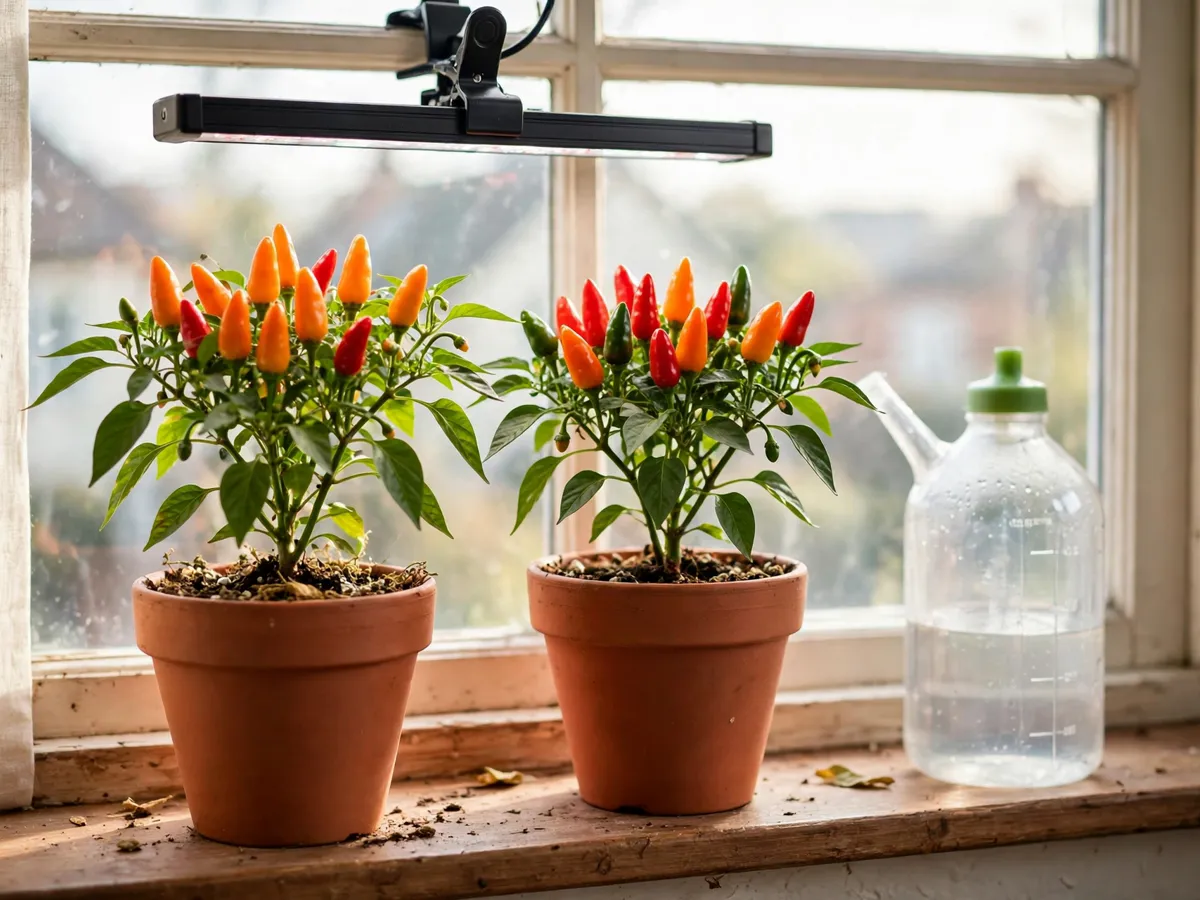
A pepper is the one fruiting crop that genuinely carries a windowsill. A dwarf chili wants a one gallon pot, the brightest window in the house, and a cotton swab. That last item is the one people skip, and it is why a plant loaded with white flowers produces nothing for six weeks. Light decides nearly every outcome here.
Weekend-ready: $10–$45 for the plant, the pot, the mix and the feed, one afternoon. Ten minutes of checking twice a week after that.
1. Why peppers work indoors (and why herbs beat them at first glance)
Almost every chili you can buy is one species, Capsicum annuum, a tender perennial rather than an annual vine. It grows as a compact branching shrub, twelve to twenty four inches in the dwarf forms, and its flowers are self-fertile, so one plant is enough. It does not need a long day to bloom, which is why it keeps setting fruit into autumn while the garden outside is finished.
Kitchen herbs still win the first-glance argument: basil holds a dim shelf and thyme tolerates being forgotten, while a pepper does neither. It wants more light, and it reports every mistake through its flowers rather than its leaves. The trade is fruit picked ripe the same morning, in heat levels the produce aisle never stocks. Learn the watering rhythm on the easier crop first: indoor herb garden ideas.
Cost: $0 to read the window you have, $12–$30 if you start on basil instead. Time: 10 minutes. Caveat: a pepper from a heated greenhouse is soft-grown and drops a few leaves settling into a drier room.
2. The light math: sun hours, the south window, the grow-light threshold
Count instead of guessing: the hours a day that direct sun actually lands on the leaves through the glass. Six or more carries a dwarf plant to harvest on its own. Four gives a foliage plant with a few stubborn blossoms. Two gives a plant that stretches, yellows and drops every flower it makes. A south window in July and in January is not the same object, because the sun sits lower and less light reaches the sill.
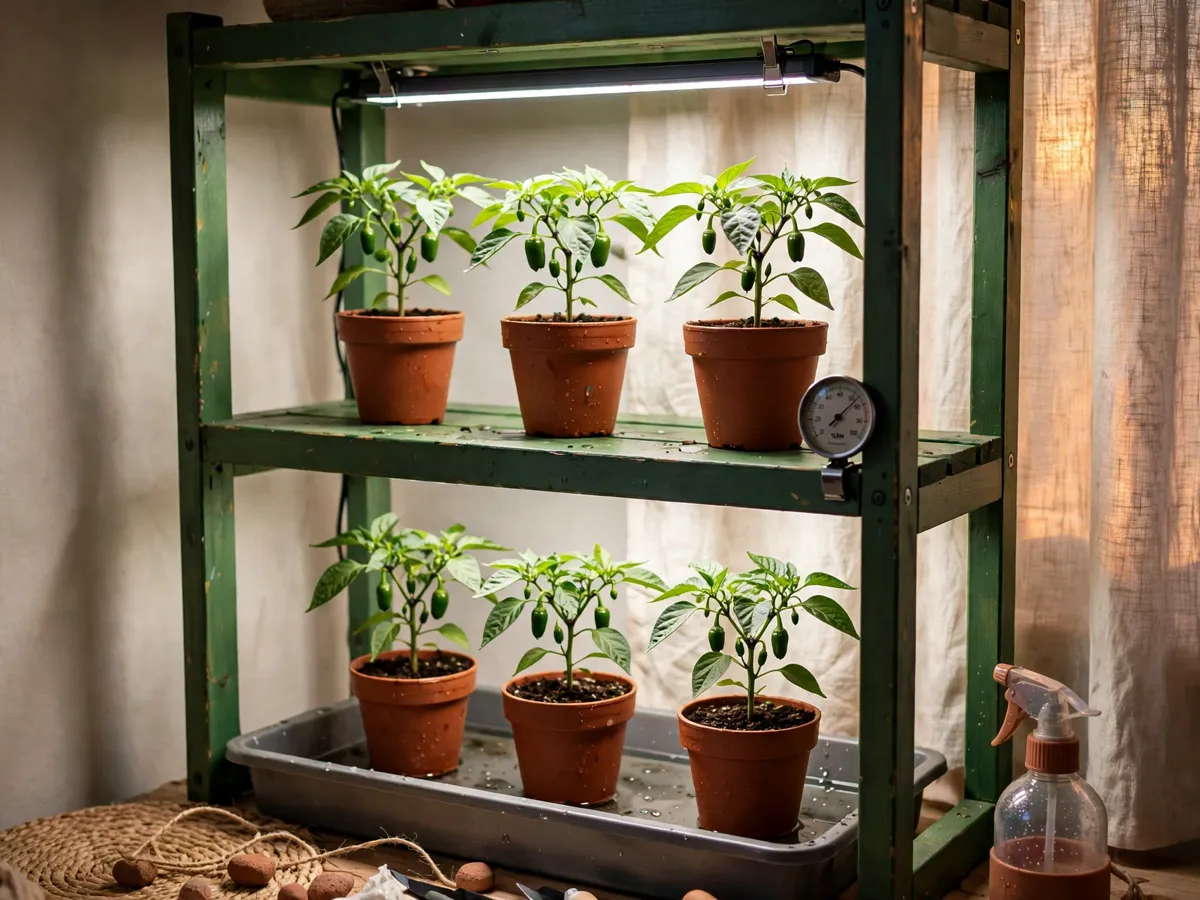
If honest direct sun falls short of six hours, add a light and run it twelve to fourteen hours a day on a timer. Not twenty four: peppers need a real dark period, and continuous light stresses the plant while doing nothing for fruit set. A modest LED bar six to twelve inches above the canopy, raised as the plant grows, changes the outcome more than any other purchase. Fixture choices: grow lights for indoor plants.
Cost: $0 for the sun count, $20–$45 for an LED bar and timer. Time: 10 minutes of watching the sill, then a timer set once. Caveat: the stretch already grown into a light-starved plant never tightens again, so fix the light before replacing the plant.
3. Varieties that fruit in a pot: dwarf, ornamental, small-fruit chilies
Three groups earn their place indoors. The ornamental class is bred compact and points its fruit upright over the foliage: types sold as Medusa, NuMex Twilight or Basket of Fire mature around twelve to eighteen inches, change color on the plant, and carry heat from jalapeño territory upward. The second is the dwarf version of a familiar eating chili: compact cayennes under two feet, a dwarf jalapeño that fits a one gallon pot and sets fruit early.
The third is any small-fruit type that is naturally prolific, light enough that a heavy crop does not snap the branches: bird's eye, Thai and tabasco chilies. Leave the bell class in the garden catalogue. A single bell outweighs a dwarf plant's stem structure, wants three to five gallons and a stake, and indoors it gives one disappointing fruit where a chili gives forty. Buy a starter plant your first season: seed starting indoors.
Cost: $3–$9 for a four inch starter, $2–$5 for a seed packet. Time: 10 minutes of reading the tag for mature height. Caveat: the same seed in a dim room gives foliage, so the window decides more than the label.
4. Pot size and drainage: the one-gallon rule and the saucer
One gallon is the working rule for a dwarf or ornamental pepper: roughly 3.8 liters of mix, a pot seven to eight inches across. That is enough root room for thirty to fifty small fruits, and small enough that the mix dries at the rate the leaves drink. A full-size cayenne wants three to five gallons. The failure mode is the generous pot, which holds water the roots cannot reach.
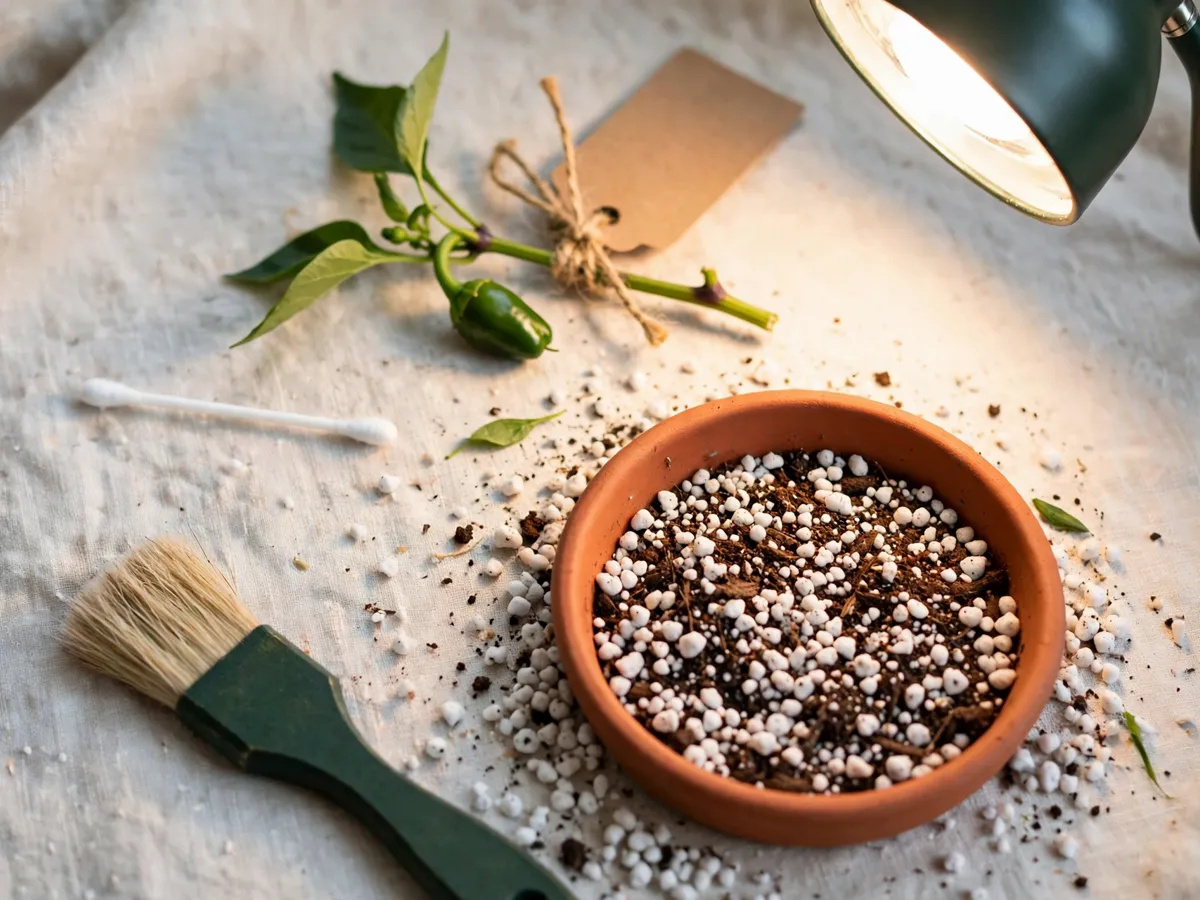
A drainage hole is not negotiable, and it is what a decorative pot most often lacks: a sealed container is a bathtub with a plant in it. If a ceramic pot you love has no hole, use it as a cover and lift the grower pot out to water. Empty the saucer ten minutes later, because standing water is drawn back up through the hole. Terracotta is the better default: porous clay pulls moisture out, and the weight keeps a loaded plant from tipping. Pot sizing for other crops: growing vegetables in pots.
Cost: $5–$12 for a one gallon pot with a hole, $3–$6 for a saucer. Time: 15 minutes to pot and place. Caveat: a heavy fruiting plant in a tall narrow pot tips onto a hard floor, so check the balance before the crop, not after.
5. Soil: the perlite-heavy mix that does not stay wet
A pepper wants a contradiction: moisture that never fully leaves, and drainage so good that nothing sits. It drinks more than a succulent, but its roots rot in a mix that stays sponge-wet. Two parts general-purpose potting mix to one part coarse perlite is the recipe, and a bagged cactus or tomato blend works straight from the bag. The finished mix should break apart when you squeeze it.
Never dig soil from a garden bed: it compacts to a brick inside a pot and carries fungus gnats and weed seed to a plant living three feet from your kitchen counter. Fresh mix each season beats reviving a two-year-old one, and if a blend clumps for a week, add more perlite rather than more watering discipline.
Cost: $8–$15 for a bag of mix, $6–$10 for perlite that lasts seasons. Time: 20 minutes to blend and fill. Caveat: a mix with water retainer added is the wrong choice, because it keeps the one thing these roots cannot have for days at a time.
6. Watering: the wilt signal peppers give that herbs do not
A pepper tells you out loud, and the signal is the leaves. Broad, thin leaves lose water faster than the roots can replace it, so a thirsty plant droops in the middle of the day. Woody kitchen plants never do this, which is why people carry the wrong instincts into pepper care and read the sign backwards. The check that matters is the soil: push a finger or a wooden skewer an inch into the mix. Dry means water now, slowly, until it runs from the drainage hole.
In a bright warm room that is roughly every three to five days in the fruiting season and half as often in winter, and a fixed weekly schedule is the most common way an indoor pepper is killed. Consistency matters more than the interval: a plant swung bone dry to soaked develops blossom-end rot, the dark leathery patch on the fruit tip, because calcium travels inside the water stream.
Cost: $0 for the skewer test. Time: 5 minutes per check, twice a week. Caveat: a plant that wilts repeatedly through a bloom cycle drops flowers before it drops leaves, so the loss shows up weeks after the mistake.
7. Feeding: blooms need phosphorus, leaves do not
Nitrogen builds leaves, and a young pepper wants that. Once the first open flowers appear, the same nitrogen builds a lush, heavy-foliaged plant with almost nothing on it, and this is the most common reason a windowsill pepper looks perfect and fruits late. Switch to a lower-nitrogen, higher-phosphorus formula, sold as a tomato or bloom type, from first flower onward.
Half strength beats exact frequency, because a container holds a small volume of mix and salts accumulate the way they never do in ground. Always water into a damp mix before feeding, since concentrated salts against dry root tips burn the fine feeding roots. Flush with plain water once a month, and stop entirely while the plant is dormant.
Cost: $8–$14 for a bottle that lasts a full season. Time: 5 minutes every two weeks. Caveat: feed never fixes a light problem, and a plant kept in shade only grows more leaves chasing what is not there.
8. Hand pollination: the cotton-swab pass that sets fruit
Every part of a pepper flower is inside one blossom: the pollen-bearing anthers and the receptive stigma sit together in the same white ring, and the flower is self-fertile. Outdoors a breeze or a buzzing insect shakes pollen loose. Indoors there is no wind, no insect, and the window is closed, so the blossoms open, hold for a day or two, and drop untouched while the plant looks healthy.
The pass takes three minutes. Flick the stem just below each flower cluster smartly with a fingertip, two or three times a day, and that alone sets most ornamental types. On a still sill, touch a dry cotton swab or a soft small paintbrush to the center of each open blossom in the mid-morning, then move on so pollen travels the whole plant.
The result is legible a week later: a pollinated flower drops its petals and leaves a small green knob at the base of the calyx, while an unpollinated one yellows and falls whole. A small plant aborts more blossoms than it can feed, which is normal.
Cost: $0 for a fingertip flick, $3–$6 for swabs and a brush. Time: 3 minutes, twice a day through each bloom wave. Caveat: a wet swab, or one that carried rubbing alcohol on an earlier pest round, kills pollen on contact, so use a fresh dry one.
9. Humidity and the dry-air fruit-drop problem
Peppers are not orchids, and average household air suits them through the mild months. The trouble is the season the room turns into a kiln: heating runs, the sill above the radiator bakes, and humidity falls well under the 40 to 60 percent range a pepper prefers. Dry air makes the plant abort blossoms it has already paid for, and spider mites, which thrive in hot dry conditions, find an undefended plant.
Temperature produces the same symptom. Daytime 70 to 80 degrees is comfortable, nights below about 60 slow the plant and misshape fruit, and days past 90 near baking glass drop blossoms outright. Dropped flowers are nearly always light, water swings or heat, in that order. Grouping pots costs nothing, a small humidifier is the only method that moves humidity for hours, and misting wets the leaves overnight where fungal spots start.
Cost: $0 for grouping and placement, $8–$14 for a hygrometer, $20–$40 for a small humidifier. Time: 10 minutes to rearrange the sill. Caveat: a plant dried out above a radiator in January shows the damage as a dormant season with no fruit, not as leaves.
10. From flower to first harvest: the 60 to 90 day count
The calendar is the part that breaks people, because a pepper looks finished long before it is. From a four inch starter bought in spring, expect the first open blossoms in three to six weeks and the first ripe chilies roughly 60 to 90 days after you brought it home. From seed, germination takes seven to fourteen days at 78 to 85 degrees, and first harvest lands around 120 to 150 days after sowing.
Harvest with snips, never by pulling: a chili breaks off at the joint and tears the branch with it, and the wound is where disease enters. Cut the stem an inch above the fruit, and pick on a rhythm rather than waiting for the whole plant to color. Green fruit is ripe fruit at an earlier stage.
The yield deserves honesty. A dwarf pepper in a one gallon pot on a good sill gives between a dozen and a few dozen small chilies across a season, which is a few cooking weeks rather than a preserving crop.
Cost: $0 for the calendar, $6–$10 for small snips if your scissors crush a stem. Time: 15 minutes a week of picking. Caveat: a plant stalled at the flower stage for a month is telling you about light or heat, not the variety.
11. Overwintering: the cut-back and the indoor carry-over
Capsicum annuum is a perennial in its own country, and it is one on a windowsill if you let it be. Frost ends it, cold does not: a plant kept above about 50 degrees keeps living, and one carried through winter comes back bigger and fruits earlier than a seedling, because the woody framework is already built. Expect it to look terrible for two months. That is the plan working.
The routine has four steps. Inspect hard before it crosses the threshold, because an outdoor pepper carries aphids and mites under every leaf, and the winter sill gives them a free pass to the house. Cut the plant back by a third to a half, removing fruit, flowers and the thinnest growth. Give it the brightest window or a light on a twelve hour timer. Then drop the feed and water only enough to keep the mix from going bone dry while it stays dormant.
Cost: $0 for the cut-back, $20–$45 for the light a winter plant effectively needs. Time: 45 minutes for the inspection, move and prune. Caveat: the fastest way to infest a whole shelf is an unchecked patio pepper carried inside in October.
12. Pests: aphids and spider mites on a fruiting plant
Two pests matter on a chili, and both target soft new growth and flower buds. Aphids cluster at the growing tips and under young leaves, curling them and leaving sticky residue on the fruit below; a glance at the top of the plant misses a hundred of them. Spider mites are the winter problem, showing as pale stippling and fine webbing in the branch forks.
Start every treatment physically. Take the plant to the sink and spray the undersides with lukewarm water firm enough to dislodge both pests. Then insecticidal soap or neem, applied as the label directs, repeated weekly for three rounds because the first pass misses eggs. Spray in the evening, since soap on a hot leaf burns. Fungus gnats, the small flies rising off the soil when you bump the pot, are a symptom of a mix that stays wet. On an edible crop, refuse anything labeled systemic, because a product that moves into the plant's tissue has no business in a fruit you pick a week later. Everything else that lands on a houseplant: indoor plant pests guide.
Cost: $6–$12 for soap or neem. Time: 10 minutes per round, three rounds a fortnight apart. Caveat: a pepper does not recover a dropped bloom cycle, so treat the pest before the plant loses flowers.
13. Cost reality: $10–$45 for a season of windowsill chilies
The season is cheap and the light is the only real expense. A four inch starter chili runs $3–$9, and buying the plant rather than the seed removes two months of germination risk. A one gallon terracotta pot with a drainage hole is $5–$12, a saucer $3–$6, a bag of mix $8–$15, perlite $6–$10, and a bottle of liquid feed $8–$14.
A hygrometer combo at $8–$14 tells you whether the winter sill is the problem before you spend a season guessing, and a small LED bar at $20–$45 decides whether you get fruit or foliage. The full setup lands around $45–$95 the first season, and the second costs almost nothing beyond fresh mix.
Do not pretend the arithmetic beats the grocery store: a dozen homegrown pods does not repay the setup in dollars. What it repays is fruit picked ripe the same morning, in a color and heat level no produce aisle stocks.
Cost: $10–$45 to start well, $45–$95 with a light. Time: 45 minutes of shopping and one afternoon of potting. Caveat: an $8 starter in a six hour south window out-yields a rare variety on a north sill, so spend on the light before the label.
Common questions
Do I have to hand-pollinate every single flower?
No. Pepper flowers are self-fertile, so the pollen only has to move inside one blossom. A firm flick of the stem below each cluster, two or three times a day through a bloom wave, sets most ornamental types. Use the swab on a plant in a still, closed room.
Why is my pepper plant dropping all its flowers?
Work the causes in order. Light first: fewer than about six hours of direct sun through glass produces blossoms that never set. Heat and cold second: days past 90 or nights below 60 both drop flowers. Water swings third, dry winter air fourth, and pollination only fifth.
Can I grow a chili from a seed in a pepper I bought to eat?
Yes, and it is the cheapest route there is. Scoop the seeds from a fully ripe store chili, rinse off the flesh, dry them on paper towel and sow a quarter inch deep at 78 to 85 degrees. One caution: if the label says F1 or hybrid, the plant will not match the fruit.
How many peppers will one indoor plant actually give?
Between a dozen and a few dozen small chilies over a season from a dwarf or ornamental plant in a one gallon pot on a bright sill. Treat the harvest as a fresh garnish picked at the exact heat you want, not a way to stock a freezer.
Are ornamental peppers edible, and how hot are they?
Every one is a real chili, grown for color and compact habit rather than pod size, and all of the fruit is edible. Ornamental types land from a few thousand Scoville units into the tens of thousands, so a Medusa pod is jalapeño-hot at minimum. Taste one small piece before cooking with a handful.
Save these on Pinterest
Pin the cotton-swab pass and the sun-hours count, the two sections that decide whether a windowsill pepper gives you chilies or only foliage. This guide and the rest of the gardening tips live together there.