 Plant As Deco
Gardening & Planting Tips
Indoor Plants for Bathroom: Steam, Low Light, and What Survives
By Plant As Deco · Updated 23 November 2026
A bathroom hands a plant two things at once: daily bursts of shower steam and, usually, not much light. Humidity is a gift and the low light is the price tag, and most houseplants want one of those, not both, so the honest bathroom list is short rather than hopeful. This page ranks the plants that genuinely make it, places them by shelf, tank and rod, names the five that always die there, and tells the truth about the windowless room before you spend anything.
Weekend-ready: $18–$55 for three small plants, saucers and one shelf tweak, one afternoon. After that, a ten minute check about once a week.
1. Why the bathroom is a special case: steam plus low light
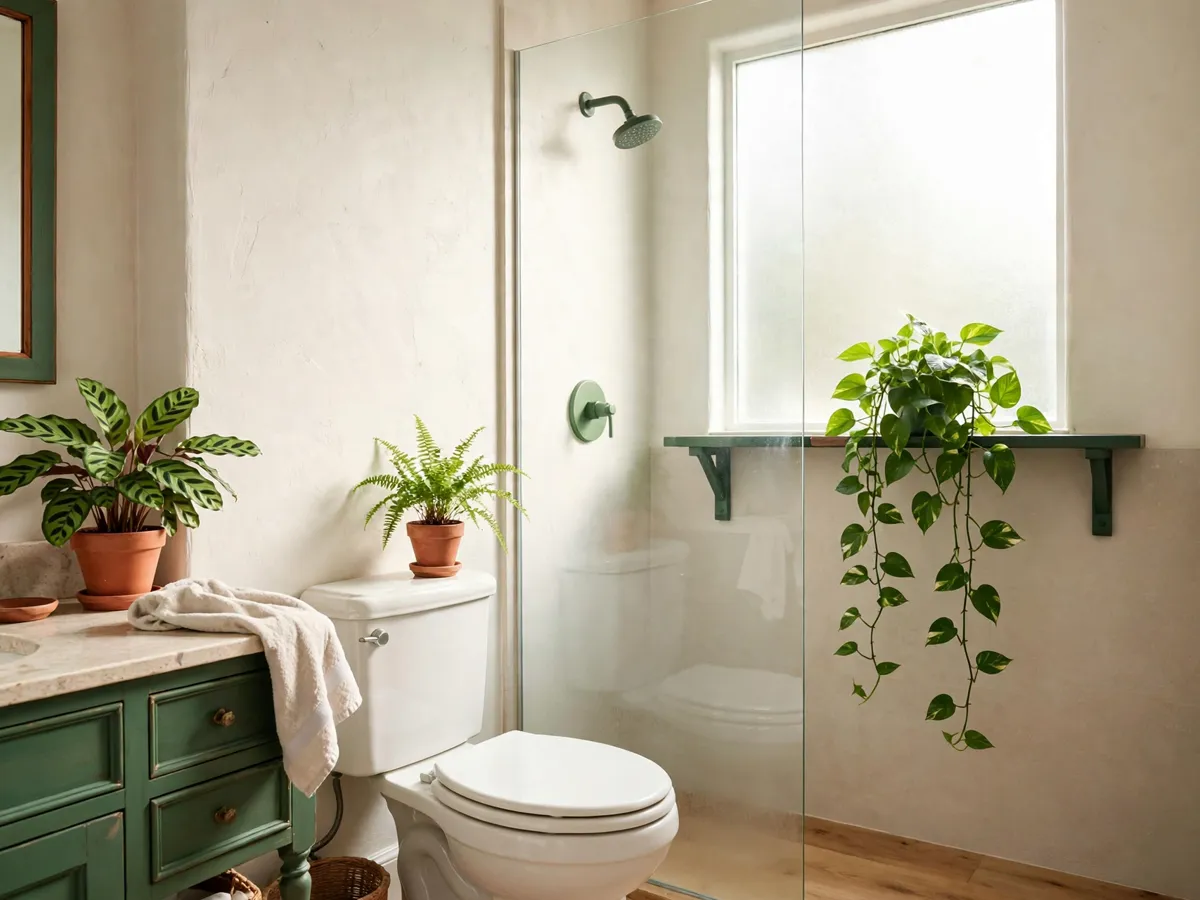
Every other room asks a plant one question. A bright living room asks can you handle sun. A dim hallway asks can you survive shade. The bathroom asks both at once, in the same day: steamy air through two showers, then hours of quiet gloom behind a frosted pane. A plant that passes this room is facing a double test, which is why the true bathroom list never matches the long lists in catalogs.
The steam is worth something real. Most houseplants are tropical understory species built for humid forest air, and a dry heated apartment is quietly hard on them: brown leaf tips, crisping fern fronds, spider mites that love dry air. A daily dose of shower humidity changes that balance, and the plants that love it answer with glossier leaves and fuller growth within weeks.
Cost: $0. Time: 5 minutes to look at the room before choosing anything. Caveat: a bathroom used once a week gives a plant none of the humidity advantage this page is built around.
2. The light verdict: window, skylight, or none at all
Before any plant names come the room facts, and the first is light. A bathroom with a window, any window, is a normal houseplant room with a humidity bonus. A frosted or north-facing pane is genuinely dim but the light is real, and the tolerant plants below sit happily within two feet of it. A skylight is the secret best case, and the room can carry almost any shade-loving tropical under one.
A bathroom with no window is a different room entirely, and it deserves a different answer rather than a hopeful one. The exhaust fan runs on a timer, the wall lights are on for minutes a day, and no plant makes food from that. The honest verdict comes in section 8: rotate real plants through a bright bedroom, or wire a small grow strip, and stop asking a fern to live in the dark. For the plants that cope best with the dim end, the windowless-friendly list: low light houseplants that need less water goes deeper than this page.
Cost: $0 to judge the room, $25–$40 if the verdict turns out to be a grow strip. Time: 10 minutes on a cloudy day to watch where the light lands. Caveat: a frosted window reads brighter than it is, so judge on an overcast morning.
3. Ranked by survival odds: the ten that genuinely thrive
This is the short list, ordered by how forgiving each plant is of the double test, not by how it photographs. The top four survive dim light and steam together and shrug off a missed week. The middle group loves the humidity but wants the brighter end.
Pothos first, the single best bathroom plant there is. It tolerates low light for months, drinks the steam through its leaves, forgives forgotten waterings, and vines down a shelf edge like the room was built for it. Heartleaf philodendron second, the same habits in a rounder leaf. Spider plant third, a tuber that stores its own water and sends out plantlets that root free in a glass on the vanity. Boston fern fourth only because it wants steady moisture; given it, nothing grows lusher in steam.
The second tier: bird's nest fern, compact and at home under a skylight. Calathea, famously fussy elsewhere, genuinely loves a shower room, and its leaf-curl complaint mostly disappears there. Air plants, which take water from the air itself. Peace lily, tolerant of deep shade, with a toxicity flag covered in section 11. ZZ plant and snake plant close the list: both tolerate the room but enjoy wet leaves not at all, so keep them out of the splash.
Cost: $6–$25 for any plant on this list in a four to six inch pot. Time: 15 minutes to pick by the room, not the photo. Caveat: a top-ranked pothos still dies in a sealed dark bathroom.
4. The shower-shelf picks: heat and splash tolerant
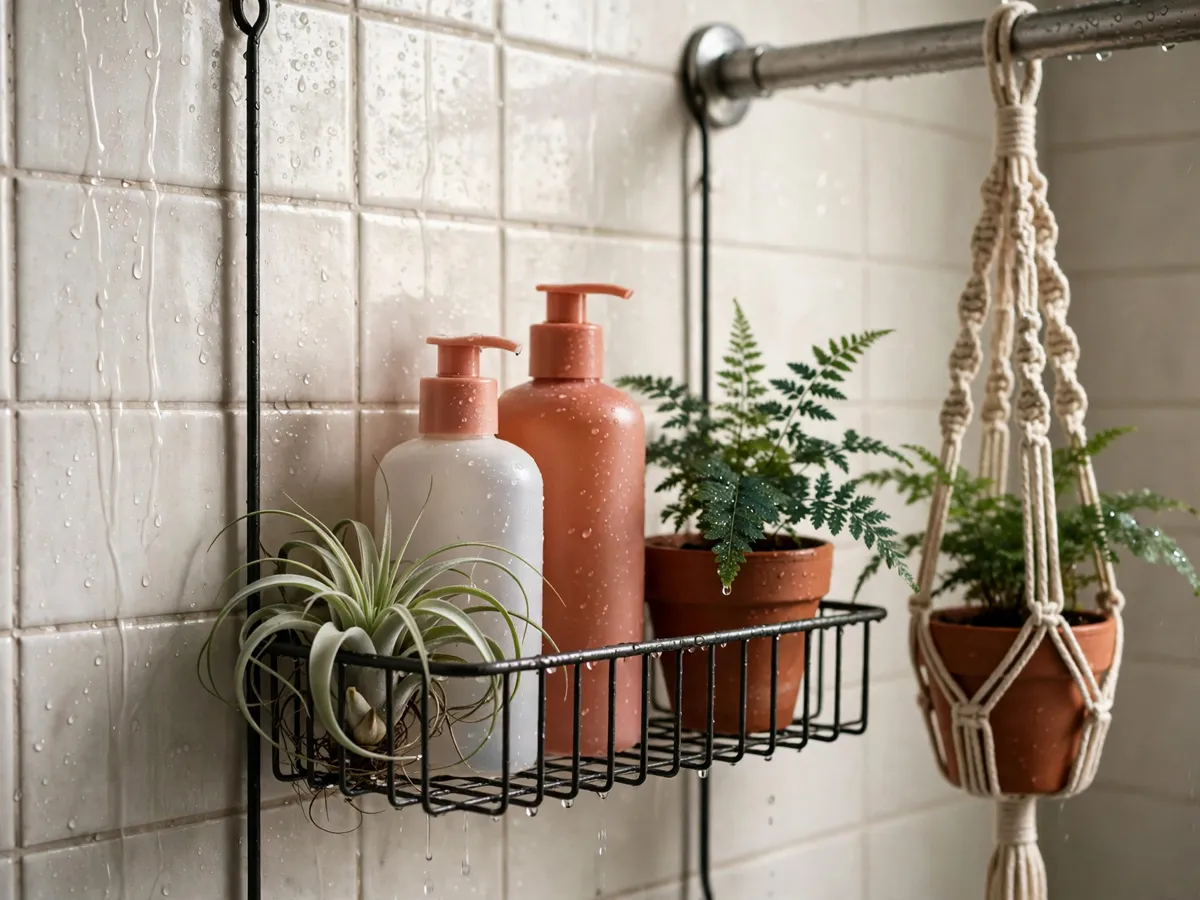
The shelf inside the shower stall is the most extreme micro climate in the home: direct splash, hot steam, and whatever light leaks around the curtain. Almost nothing sits there long term, so pick from the plants that handle it and keep them in pots that drain.
Air plants are the natural fit. No soil means no mud, and a weekly ten minute soak in a bowl replaces the rain they miss. A pothos cutting rooted in water works on the shelf corner if you accept a monthly trim. The bird's nest fern handles splash better than any potted plant and lives on the shelf edge for years. What does not belong there: any succulent, anything in a sealed outer pot, and anything a falling shampoo bottle would end.
Cost: $4–$12 per air plant or small fern. Time: 10 minutes a week for the soak. Caveat: the shower shelf stays humid but not always bright, so watch for stretching and move anything that goes pale.
5. The toilet-tank and vanity-top picks: small footprint
The tank lid and the vanity corner are the two flat surfaces a small bathroom offers, and each has rules. The tank lid is narrow and takes one small plant, not a row. The vanity corner has to stay usable, because a plant that blocks the faucet or the toothbrush zone gets moved within a week, and a moved plant is a stressed plant.
On the tank: a bird's nest fern or compact spider plant in a four inch pot with a saucer, on a folded towel to stop ring marks. On the vanity: a peace lily or calathea in a six inch pot at the corner nearest the mirror, away from the sink splash. A pothos works on either spot and trails to the floor if you let it. If the counter space is already spoken for, the shelf space you did not lose to a plant: bathroom organization ideas page settles the standoff first.
Cost: $8–$18 for one small plant, pot and saucer. Time: 5 minutes to place. Caveat: a tank lid is not a shelf rated for weight, so nothing heavier than a small pot, and nothing you would mourn if it slid.
6. Trailers for the shelf edge and the towel rod
A bathroom is a small room with tall empty walls, and trailer plants fill that air with green without drilling anything. Pothos is the answer again: a vine that tolerates low light, drinks steam and grows a foot a month in season is the plant the room was waiting for.
Placement is the styling. A pot on the shelf edge with the vine trained down the side softens a wall of tile. Two hooks and cotton cord hang a pot at window height, renter safe with adhesive hooks rated for tile. The spare towel rod works in a bathroom that has two: a light hanging pot from the empty one, or vines looped loosely along the bar. Keep trailers out of the splash zone, and turn the pot a quarter turn monthly.
Cost: $8–$20 for plant, pot, hook and cord. Time: 15 minutes to hang. Caveat: vines reach the floor and the shower curtain in one season, so a monthly snip is part of the look, not a chore that waits.
7. What never survives in a bathroom: five rejects and why
Every entry here fails for the same reason: constant moisture in the air or on the leaves, against a plant built for dry cycles. A bathroom in daily use is closer to a rainforest than any other room in the home, and plants that rot in steam do not adapt, they dissolve.
Succulents and cacti first, the most common mistake: echeveria, haworthia, jade, aloe, all of them store water for dry spells that never come, so the leaves swell soft and the base rots in a couple of months. String of pearls second, a succulent trailer that rots at the crown even faster. Lavender and rosemary third: herbs built for dry sun and airflow, mildewed in weeks. Ficus fourth, sulking at the temperature swings a door-heavy room produces. African violets fifth, because splash marks and crown rot claim their fuzzy leaves.
Cost: $0 to skip the wrong plant. Time: 2 minutes to check this list against the shopping cart. Caveat: a rarely used guest bathroom is dry enough for a succulent to limp along, but limping is not thriving.
8. The windowless bathroom: the honest options
No plant thrives in zero light. That sentence is the whole verdict, and every workaround below is a version of admitting it rather than defeating it. A bulb burning for minutes a day is not a light source to a leaf, and any list that promises a fern in a sealed dark bathroom is selling something.
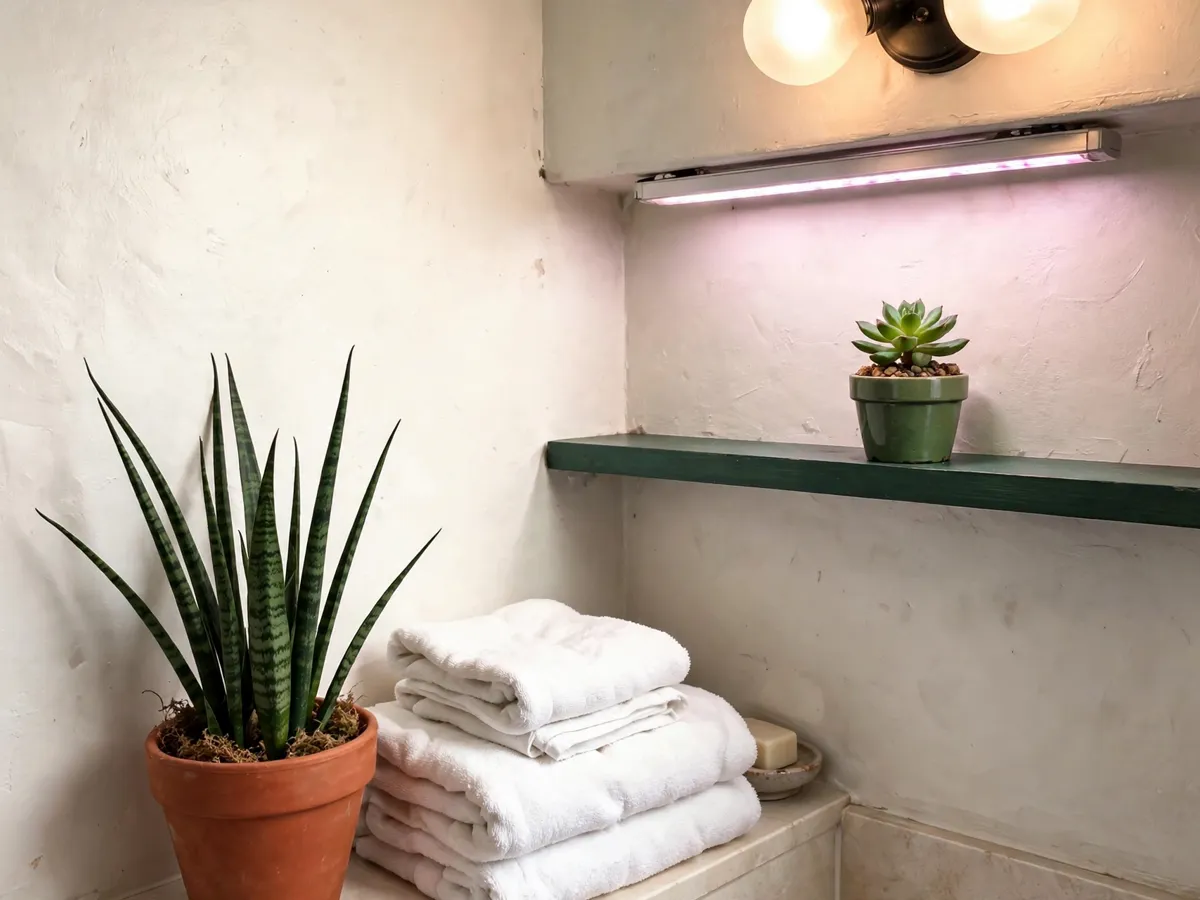
Option one, rotation: two plants per spot, one in the bathroom and one recovering in a bright bedroom window, swapped every two weeks. It is the cheapest real-plant answer. Option two, a grow strip: a small full spectrum bar wired under a shelf or the mirror, on the fan timer switch, and the room becomes a legitimate plant space. Budget $25–$40 with an adhesive mount, and keep plants within a foot of it.
Option three, faux, and it deserves no apology: a good artificial plant beside folded towels is a styling answer the room actually supports, and it beats a dying one. Option four, the dark room stays for towels and the green lives in the hallway where the light is. Mixing them is the practical answer: one real plant under a grow strip, faux for the deep corner, nothing slowly dying on a shelf.
Cost: $0 to rotate, $25–$40 for a grow strip, $10–$20 for good faux. Time: 15 minutes to set up any option. Caveat: rotation needs two plants and the discipline to swap them, which is why the grow strip quietly wins.
9. Watering in a humid room: why the schedule stretches
The counterintuitive rule of bathroom plants: the room is wet, so the pots dry out slower, not faster. Humid air slows evaporation from the soil surface, and a pot that needed weekly water in a dry living room can sit ten days or two weeks in the same light here. Watering on the calendar you use elsewhere is the fastest way to rot a bathroom plant.
Judge by weight and finger instead. Lift the pot: a light pot is a dry pot. Push a finger an inch into the mix and water only when that inch is dry. When you do, do it at the sink, pour until it runs from the drainage hole, and let the pot drain before it goes back, because a saucer left full in already humid air is standing water twice over. For a room that goes unvisited for weeks, the for a room you forget to water: self watering planters guide covers the reservoir pots that bridge the gap.
Cost: $0 to change the habit. Time: 2 minutes per pot, half as often as you expect. Caveat: a bathroom used rarely dries out like any other room, so test the mix rather than trusting the reputation of the room.
10. Dust, mineral spots and cleaning glossy leaves
Bathroom leaves collect something living rooms never see: a film of dried shower spray, tap water minerals and talc, which sits on glossy leaves as a grey haze and on dark leaves as white speckles. It is cosmetic rather than fatal, but it dulls the plant you chose the room for, and it builds fast on smooth leaves like pothos and philodendron.
The routine is a monthly wipe, nothing more. Support each leaf from underneath and wipe the top with a soft cloth dampened in tepid water; a drop of dish soap shifts the stubborn film. Skip leaf shine products, because they clog the pores a leaf breathes through and attract dust faster. Fuzzy leaved plants never get wiped, only a dry brush. The full method sits in the mineral spots from shower water: how to clean indoor plant leaves guide.
Cost: $0, a cloth and water. Time: 10 minutes a month for a three plant shelf. Caveat: wipe with the leaf, never against it, and a torn frond only browns.
11. Pets and kids: the toxicity check for a reachable room
A bathroom is a small room at exactly nose height for a cat or a crawling toddler, so the toxicity question matters here more than on a tall living room shelf. One plant on the main list needs a plain flag: the peace lily. It is listed as toxic to dogs and cats, and chewing it can cause vomiting, drooling and trouble swallowing. It is beautiful in dim corners and wrong for a floor-level pot in a home with a cat that chews.
The rest of the short list is far gentler. Pothos and philodendron carry milky crystals that irritate a mouth, so on a tank lid they are fine and in a puppy zone they are not. Spider plants, ferns, calathea and air plants are the ones to choose when paws share the room. For anything a pet can actually reach, the pets in the house: pet safe low light houseplants page lists the species cleared for nose height, and the same placement rule applies: a plant that can be knocked, chewed or climbed does not live there.
Cost: $0 to choose the safe plant. Time: 5 minutes to check one name. Caveat: this is care guidance, not veterinary advice, and any suspected chew is a call to your veterinarian.
12. The 3-plant bathroom starter: pot, saucer, tray
One plant is a decoration; three cover the light zones a bathroom offers, and the starter needs one shopping trip and no skill beyond this page.
Plant one, a pothos in a six inch pot, goes on the highest shelf edge and trails. Plant two, a bird's nest fern or spider plant in a four inch pot with its saucer, goes on the toilet tank. Plant three, an air plant or a small calathea if the window corner is bright enough, goes on the vanity. Every potted one gets a drainage hole and a saucer with a layer of pebbles so the roots never sit in runoff.
The tray is the one trick worth copying: a low tray or baking sheet under the tank and vanity plants catches watering drips and keeps rings off the surfaces, which is what makes the setup land with the person you share the bathroom with. Start there, and add a calathea only after a season of nothing dying.
Cost: $18–$55 for all three plants, pots, saucers and tray. Time: 45 minutes of shopping and placing. Caveat: buy the fern and the pothos from the same trip, because a starter staggered over weeks rarely finishes.
13. Cost reality: $18–$55 for a bathroom that stays green
The plants are the cheap part. A six inch pothos runs $10–$18 at a garden center, a four inch fern or spider plant $8–$14, an air plant $4–$8, and a calathea, the splurge of the list, $15–$25. Six inch pots with drainage run $5–$12 each, saucers $2–$4, and the pebble tray can be a baking sheet you own.
The full starter from section 12 lands at $18–$55 and is complete at that price: no feed the first season beyond a $6 bottle of balanced liquid feed at half strength once a month through summer, and no grow strip unless the room is windowless, in which case add the $25–$40 from section 8 first. At the store, two minutes of checking beats any price: firm leaves, no mush at the base, soil damp rather than soaking.
Cost: $18–$55 to start well, plants pots and tray included. Time: 45 minutes of shopping and placing. Caveat: the windowless room spends the grow strip first, or the plant budget is wasted on a dark shelf.
Common questions
What is the best plant for a bathroom with no window?
None in the long run, and the workaround matters more than the species. A ZZ plant or pothos tolerates deep shade for weeks, which makes either one the best candidate for a two week rotation with a brighter room, and a grow strip under a shelf at $25–$40 turns the room into real plant space. A quality faux beats a slow starvation.
Do plants actually need the humidity from my shower?
Many do. Ferns, calatheas and air plants come from humid forest air, and a daily steam burst visibly suits them: the crisping leaf tips they suffer in dry rooms stay away, and air plants take in some of their water straight from the air. It is why the same plants do better in a bathroom.
Can I put a succulent in the bathroom?
Not in a room used daily. Succulents and cacti store water for dry spells, and in constant steam the leaves swell soft and the base rots within months. A rarely used guest bathroom with a bright window can carry a small succulent; a daily-use room needs the ranked list in section 3.
Why do the leaves on my bathroom plant have white spots?
Usually dried shower spray: tap water minerals left behind each time steam and mist land on the leaves. It is cosmetic and wipes off with a soft cloth and tepid water, a drop of dish soap for the stubborn film. Keep leaf shine products away, and wipe with the leaf so nothing tears.
How often should I water plants in a humid bathroom?
Less often than in the rest of the home. Humid air slows the drying of the mix, so the same plant can stretch from weekly to every ten days or two weeks. Check by weight and by finger an inch deep, water at the sink until it drains freely, and let the pot empty before it goes back.
Save these on Pinterest
Pin the ranked survivor list and the windowless verdict, the two sections that decide whether a bathroom stays green on a rental budget. This guide and the rest of the gardening tips live together there.