 Plant As Deco
Gardening & Planting Tips
Amaryllis Care Indoors: The December Countdown Bulb
By Plant As Deco · Updated 23 November 2026
An amaryllis is the one houseplant you buy as a countdown: plant the big papery bulb in late November, and six to eight weeks later it opens trumpet flowers the width of your hand in the middle of winter. The care sheet is three sentences: sit the bulb two-thirds above the soil, give it the brightest window in the room, and water sparingly until the spike appears. The rest is the timeline: the daily quarter-turn that keeps a stem straight, what the leaves do after the flowers drop, and the dormant rest that decides whether a bulb earns a second January.
Weekend-ready: $10–$40 for a bulb, a snug pot and fresh mix, one afternoon. After that, a five-minute check about once a week while the countdown runs.
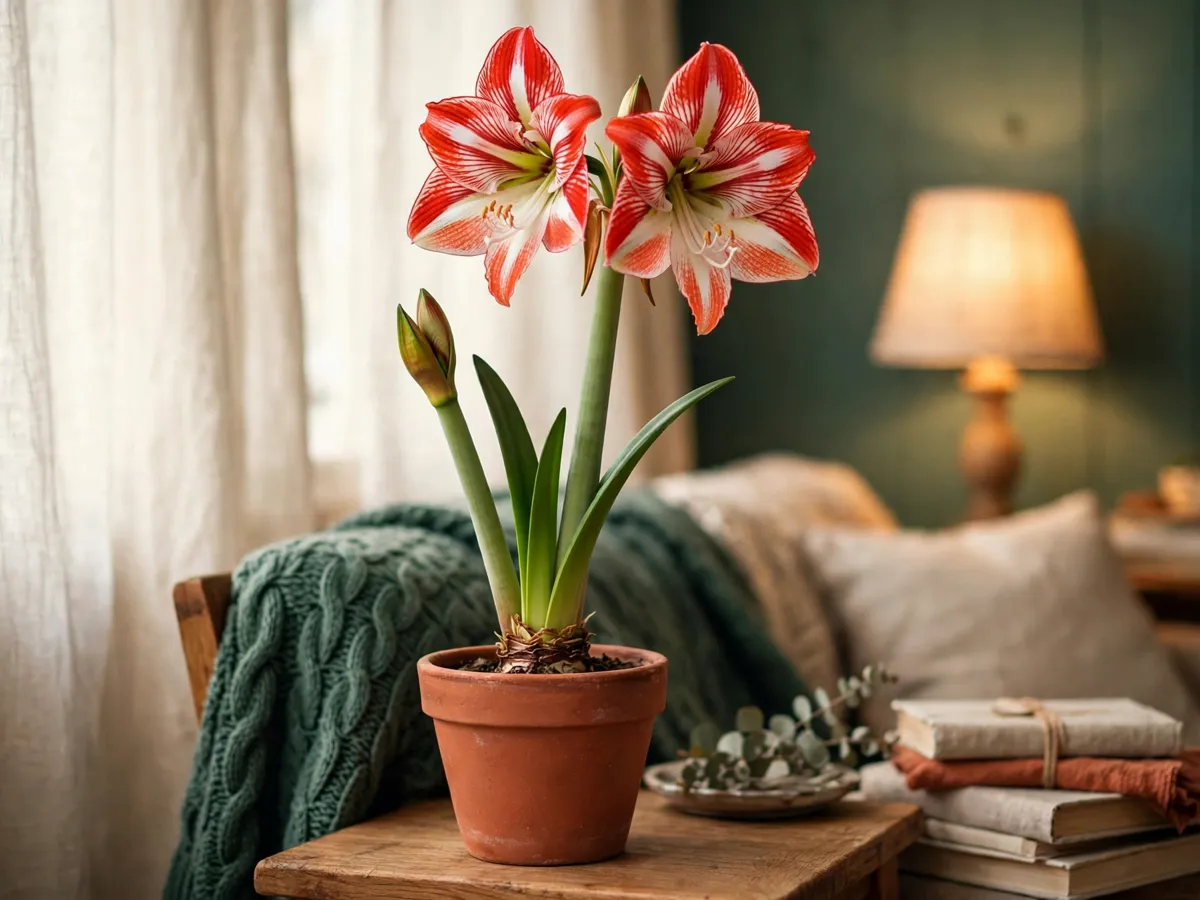
1. What an amaryllis actually is: Hippeastrum, the winter trumpet
The plant sold everywhere as an amaryllis is a Hippeastrum, a bulb from South American grasslands. The true Amaryllis, Amaryllis belladonna, is a different species: a South African garden plant that flowers outdoors in autumn and never appears in a holiday kit. The trade kept the old name, so the box says amaryllis and the bulb inside is a Hippeastrum. The distinction matters for honesty rather than care.
The trick is inside the bulb. A mature Hippeastrum already holds a complete flower bud, a stem and the start of its leaves, packed into storage tissue under a papery brown coat. Your job is not to grow a flower; it is to let the bulb spend what it carries. The other holiday bloomer has its own write-up: christmas cactus care.
Cost: $0. Time: 5 minutes to understand what you are holding. Caveat: a bulb labeled amaryllis is a Hippeastrum; the true Amaryllis belladonna is a garden plant, not a windowsill one.
2. Choosing a bulb: the firm heavy feel, size means stems
Late November is peak kit season, and the bulbs on the rack are not equal. Pick each one up: a good bulb is firm, heavy for its size, dry-skinned, with no soft spots and no red staining at the base. A soft patch is rot, and a damaged basal plate, the flat bottom where roots emerge, means the roots may never come.
Size predicts stems better than the label does. Bulbs are graded by circumference and a bigger bulb holds more pre-formed buds: a mid-size one usually sends a single flower stem, a top-size bulb two or three. Plain naked bulbs are the honest buy. Waxed bulbs, sealed in colored wax with no drainage, put on the same one-season show and almost never rebloom, because the wax walls the roots off from soil. A boxed kit with a pot and a coir disc is the easiest gift and the least control.
Cost: $10–$40 for the bulb itself. Time: 15 minutes in the store. Caveat: size on a soft bulb buys nothing; firmness comes first, circumference second.
3. The planting rule: two-thirds above the soil, snug pot
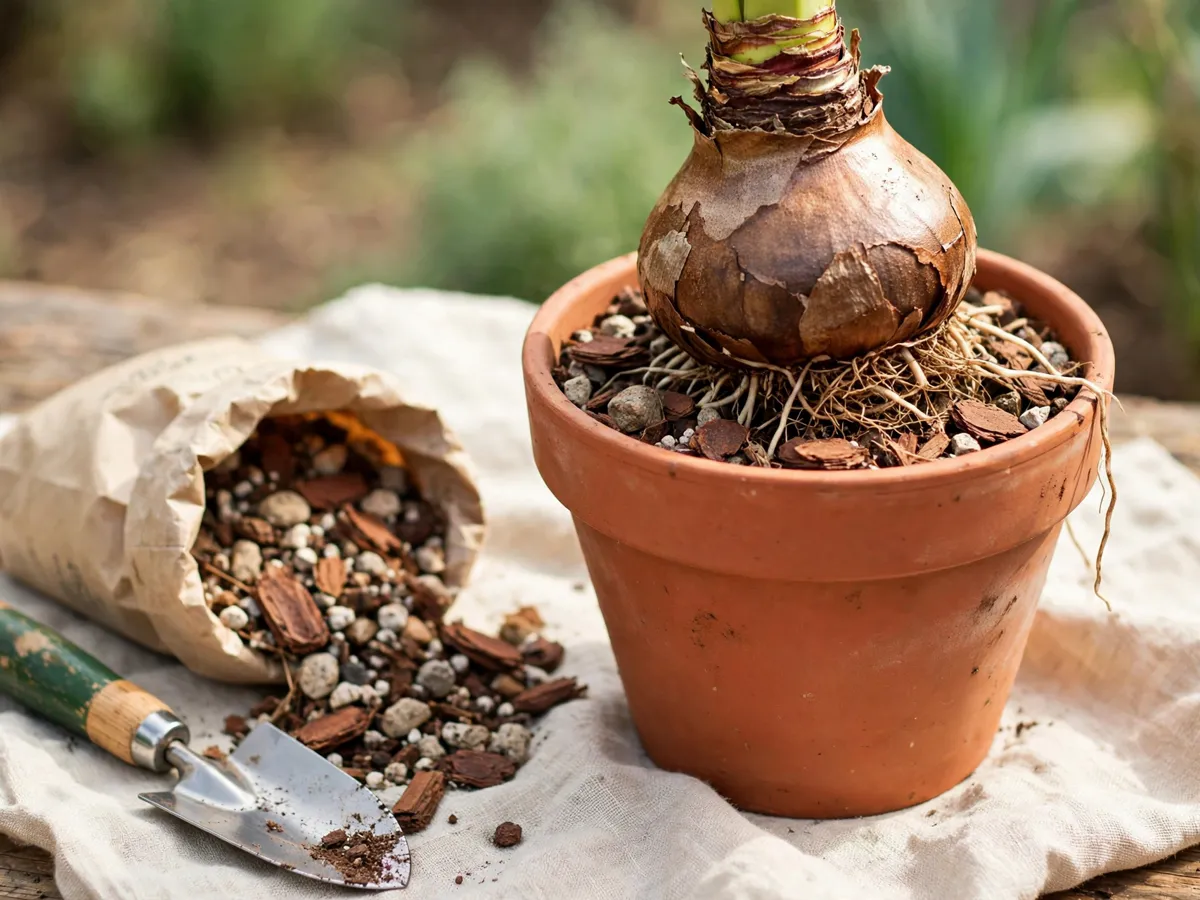
Planting is where amaryllis care splits from every other bulb you have met, and the rule is the whole section: leave the top two-thirds of the bulb above the soil line. Only the bottom third and the roots sit in mix. A bulb buried like a tulip keeps its neck wet at every watering, and a wet neck is where rot starts on this plant.
The pot is the second half of the rule. Choose one barely wider than the bulb, an inch of mix between the two, with a drainage hole. Hippeastrum roots are thick and they like resistance: a snug pot builds a tight root mass and a plant that holds itself up. Weight matters, because two tall stems with a heavy bud head make a small pot top-heavy in January, so clay or thick ceramic beats thin plastic. Loose potting soil cut with perlite drains fast around that buried third; the chunky mix it wants is covered in best potting soil for indoor plants.
Cost: $8–$18 for a heavy pot and fresh mix. Time: 20 minutes. Caveat: a decorative pot with no hole is a cover pot, not a planter; lift the inner pot out to water.
4. The first watering and the 6-8 week countdown
Water the newly planted bulb once, thoroughly, until water runs from the drainage hole, then stop pouring on a schedule. Until a green tip shows, the bulb drinks almost nothing, and a soaked pot around an idle bulb is the classic setup for rot. Keep the mix barely moist, check it with a finger once or twice a week, and hold the pot somewhere warm, 65 to 75 degrees, because warmth wakes the bud.
Then count. Planting to open flowers takes six to eight weeks, so a late November planting lands the bloom on the holidays and a mid-December one delivers flowers in gray mid-January, which plenty of people prefer. The first tip can be a flat bud sheath or a rolled leaf; both are normal, and some bulbs send the stem up before the leaves.
Cost: $0. Time: 5 minutes a week of checking. Caveat: a bulb showing no tip after three warm weeks may still be stirring from cold storage; keep it warm and wait rather than soaking it.
5. Light and rotation: the daily quarter-turn for a straight stem
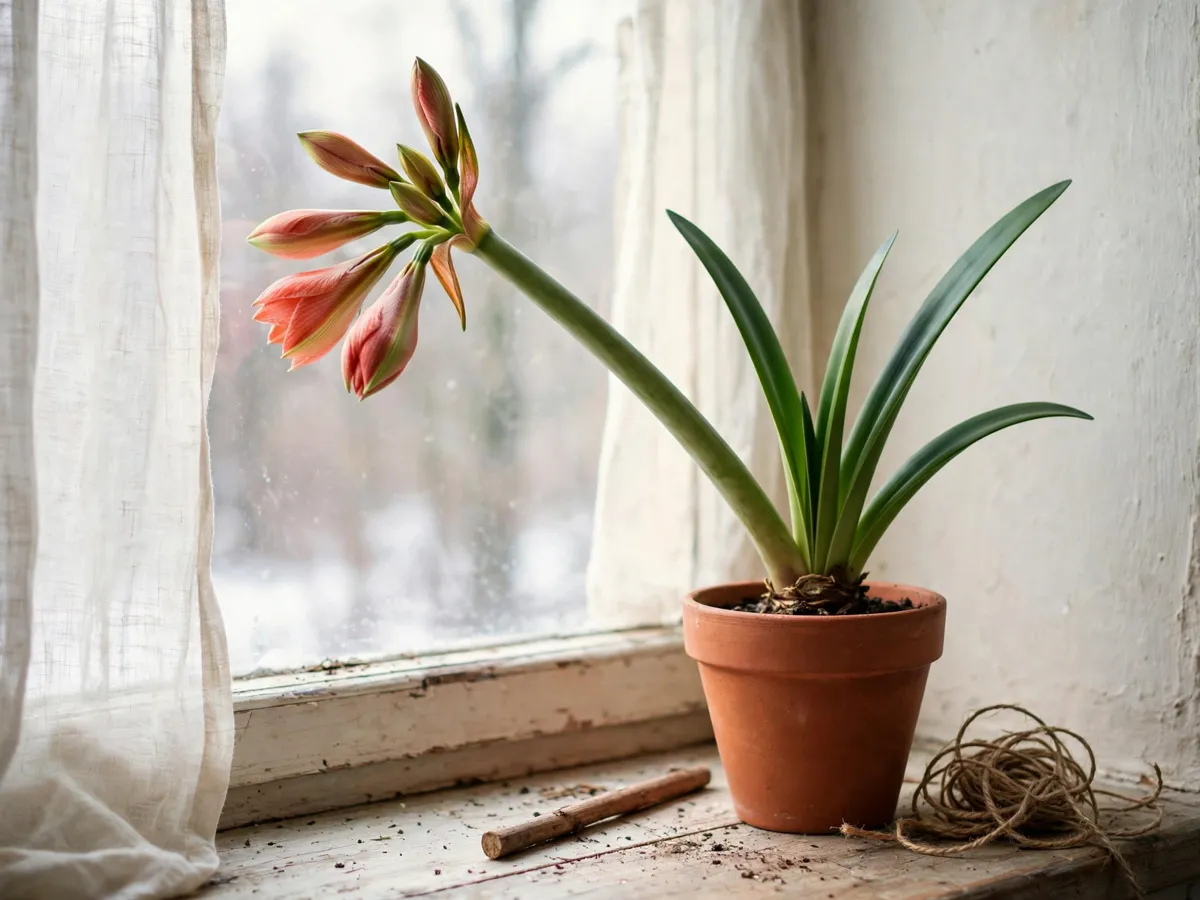
Once the spike appears, the brightest window in the room wins: south or west glass through winter, an east window as the runner-up. The stem grows fast at this stage, an inch or more in a good week, and every inch of it bends toward the glass.
The fix is the daily quarter-turn. Rotate the pot ninety degrees each day so the stem leans a different way every morning, and the net growth runs straight up. Thirty seconds a day buys a stem that stands vertical under a heavy flower head; skip a week and the stem bows hard toward the window, and a bowed stem carrying an opening bud head is the moment the whole pot starts to lean. A dim corner is the wrong home for this plant, because stems stretch and thin, and no feeding or watering fixes a light problem.
Cost: $0. Time: 30 seconds a day. Caveat: a stem already bowed does not straighten; the turns only keep the new growth honest.
6. Watering after the spike appears: the rhythm that stops the flop
Once the stem is up and the bud sheath is swelling, the plant starts drinking, and the rhythm changes from barely moist to a real soak cycle: water when the top inch of mix is dry, pour slowly around the rim, never into the neck or crown of the bulb, until water runs from the hole, then empty the saucer. Lukewarm water suits a warm-room plant better than cold tap.
The flop people blame on the plant is usually two things at once: a pot that dried out completely while the buds were coloring, and radiator heat blowing across the flowers. A thirsty amaryllis at bud stage can drop a whole head in a day. Hot, dry December air is the same enemy it is for every windowsill plant; the wider routine sits in the seasonal guide: winter houseplant care.
Cost: $0. Time: 5 minutes whenever the top inch dries. Caveat: water poured into the neck of the bulb invites rot at the exact spot the stem emerges; pour around the rim.
7. Staking: when the stem leans and the honest time to tie
An amaryllis stem is hollow, and it carries a flower head that gets heavy as four or five buds fatten at once. The honest moment to stake is when the bud cluster begins to nod, before the first trumpet opens, not after the stem is bent under the full weight. Too late does little, and too early leaves a stake standing in a pot for weeks doing nothing.
The hardware is one bamboo stake and soft twine or tape. Push it in at the edge of the pot, behind the stem, down to the pot floor so it anchors in the root mass. Tie a loose figure eight, twine around the stem, crossed, then around the stake, with a finger of slack so the stem can still sway and thicken. One tie under the bud head is usually enough; a two-stem bulb may want a second halfway up.
Cost: $2–$5 for a stake and ties. Time: 5 minutes. Caveat: a tight tie pinched into a swelling stem leaves a permanent mark; slack is the point.
8. Temperature: warm room for bloom, cooler for lasting flowers
Warmth opens the flowers; coolness holds them. While the buds swell, a room around 65 to 75 degrees keeps the countdown on schedule. The moment the first trumpet opens, a cooler spot, 60 to 65 degrees, stretches the show: each flower lasts days longer out of the heat, and a stem can hold color for over a week.
Placement beats climate control: out of the direct line of a radiator or heat vent, away from a door that blows cold air at every opening. The display logic follows the rest of the seasonal corner, and the holiday tree corner has its own guide: Norfolk Island pine care.
Cost: $0. Time: 5 minutes to move a pot. Caveat: a cold draft on opening buds can shrivel them the same day; the target is cool and still, not cold and windy.
9. After the flowers fade: cutting the stem, feeding the leaves
When the last trumpet on a stem drops, cut that stem off with a clean blade about two inches above the top of the bulb and let the stub dry back on its own. Do not pull or twist it: a wound torn from the neck of the bulb is an open door for rot. If a second stem is still in bud, the plant is only half finished; same window, same water.
Then comes the part that decides everything, and the part most people skip. The leaves that follow the flowers are not decoration; they are the refueling system. Through spring and summer they run the photosynthesis that refills the bulb with the reserves that become next winter stems. Keep the plant bright, water on the same top-inch rhythm, and feed a balanced liquid houseplant fertilizer at half strength about monthly. A plant that enters autumn with poor leaves has nothing stored, and nothing stored means no countdown next year. A summer outdoors in dappled light, once nights stay above 55, refuels faster than any windowsill; check the bulb and leaf bases for bugs before the pot comes back inside in early fall.
Cost: $6–$10 for a bottle of feed that lasts several seasons. Time: 10 minutes a month. Caveat: cutting the green leaves off after bloom cuts next year stems directly; the leaves are the bulb being rebuilt.
10. The dormancy question: the honest rebloom truth for year two
Here is the honest version, because the box copy never is. An amaryllis reblooms on a cycle, and the cycle has a mandatory rest. In September, stop watering entirely; the leaves yellow and flatten over a few weeks, and you cut them off once they dry. Move the pot somewhere dark and cool, a basement shelf or a spare room near 50 to 60 degrees, and leave it completely dry for eight to ten weeks.
After the rest, wake it deliberately: bring the pot into the light, refresh the top layer of mix or repot into fresh, soak once, and restart the countdown. Six to eight weeks later, flowers. The math repeats every year; only the bulb changes.
The truth in three parts. A second-year bulb usually makes a smaller show, often one stem instead of two, because it runs on what your window rebuilt rather than a grower season of feeding. Some bulbs skip a year, and that is normal rather than failure. A waxed bulb, roots sealed off from soil, is a single-season object; enjoy it and compost it.
Cost: $0–$10 for fresh mix at wakeup. Time: 15 minutes, plus eight to ten weeks of leaving it alone. Caveat: dormancy needs cool as well as dark; a warm closet lets the bulb crawl into pale winter growth instead of resting.
11. Pests and rot: red blotch, soft spots, the salvage rule
Red blotch, caused by the fungus Stagonospora, is the disease to know here. It shows as red spots and streaks on the leaves and, more tellingly, red patches on the bulb, and it spreads fastest on foliage kept wet in still air. The control is cultural: water the mix rather than the leaves, keep space between pots, and cut heavily spotted leaves with a blade wiped clean between cuts. A mild case is cosmetic; a plant streaking everywhere is losing leaf area it needs for refueling.
Rot announces itself as a soft spot, usually at the basal plate or where the bulb meets the mix. The salvage rule is honest surgery: unpot, cut away every soft brown tissue with a clean knife until you reach firm white flesh, let the cut dry for a day, and replant in fresh, barely damp mix with water withheld for a week. It works when the soft area is small and has not reached the bud core; if a third of the bulb is soft, the bulb is finished, and that mix goes in the bin. Spider mites are the exception on a dry December windowsill.
Cost: $0–$8 for a clean blade and fresh mix. Time: 20 minutes for salvage. Caveat: salvage is a chance rather than a certainty; a firm bulb in fresh mix is the only clean start.
12. Toxicity: the bulb is the dangerous part, pets and kids
Amaryllis, meaning Hippeastrum, is a toxic plant, and the sentence deserves to be plain. The bulb carries the highest concentration of the harmful compounds, the leaves and stems less, and a dog, cat or child that chews any part can come away with vomiting, drooling and stomach upset. The bulb is also the part that invites digging, because it sits half exposed above the soil line.
A suspected exposure is a phone call rather than a wait: your veterinarian or a pet poison helpline, with the plant name and roughly how much is missing. Mild cases are the usual outcome, but severity depends on the animal and the amount, and no plant guide gets to decide that. For kids the rule is the same as for pets: a plant you would not eat yourself does not live at grabbing height. Placement is the whole management plan: a side table the cat does not use rather than the floor, and the rule holds in spring too, because the bulb stays in the pot after the show ends. Which plants are safe around pets has its own list: pet safe low light houseplants.
Cost: $0. Time: 10 minutes to choose the spot. Caveat: this page is plant care rather than veterinary advice; confirm any exposure with your vet or a poison helpline.
13. Cost reality: $10–$40 for a waxed or naked bulb
The bulb is the whole budget, and the spread is wide. A plain naked bulb at a big-box rack runs $10–$20 in the common red, white and pink shades. Top-size bulbs at a garden center, grading 34 centimeters and up, run $25–$30, and doubles or the narrow-petaled cybister types sit above that. Waxed bulbs, the no-water gift version, cost $15–$40 and are a one-season object by design. A boxed kit with a pot and a coir disc runs $12–$25.
The rest of the setup is small: a heavy pot an inch wider than the bulb at $6–$12 if the kit included none, fresh loose mix at $6–$14, a stake and ties at $2–$5, and a bottle of balanced feed at $6–$10 that lasts several seasons. Year two, on a bulb you rested and regrew, costs a bag of mix and a corner of a closet. The honest first purchase is the heaviest naked bulb in the largest size you can find, bought in late November, plus the snug pot. Skip any bulb already sprouting long pale stems in a dim store corner: that growth was spent in the box and the countdown is partly over.
Cost: $10–$40 for the bulb, $8–$18 more for pot, mix, stake and feed. Time: 20 minutes to buy and plant. Caveat: the price buys stored stems and buds; the second year costs little and often delivers less, and that trade is the honest one.
Common questions
How long does an amaryllis take to bloom after planting?
Six to eight weeks from planting on a healthy bulb, which is why a late November planting flowers over the holidays and a mid-December one lands in mid-January. Warmth in the first weeks moves the count along. The flowers on one stem open in sequence, so the full show spans roughly ten days to two weeks.
What do I do with the plant after it finishes blooming?
Cut the finished stem about two inches above the bulb, keep the leaves on, and treat the plant as a leafy houseplant: brightest window, water when the top inch dries, half-strength feed about monthly. The leaves refill the bulb through spring and summer, and that stored food pays for the next countdown. In September, stop watering and start the dark, cool rest.
Will my amaryllis bloom again next year?
It can, when two things happen: the leaves grow well for a full summer, and the bulb then gets eight to ten weeks of dry, dark, cool rest before you restart it with water, fresh mix and light. Expect a smaller show than the first year, and accept that some bulbs skip a season. A waxed bulb is not built to rebloom at all.
My bulb grew a flower stem but no leaves. Is something wrong?
No. The flower bud is already fully formed inside the bulb at planting, and plenty of bulbs send the stem up first, with the leaves emerging during or after the bloom. Keep watering on the top-inch rhythm and keep the light bright; the leaves arrive on their own schedule. A bulb that never leafs out afterward was short of reserves to begin with.
Is an amaryllis safe to have around cats and dogs?
No. Hippeastrum is listed as toxic to cats and dogs, and the bulb holds the highest concentration. Chewing it can cause vomiting, drooling and stomach upset, and a suspected exposure is a call to your veterinarian or a pet poison helpline rather than a wait-and-see. Keep the pot out of reach, and choose genuinely pet-safe species for anything at nose height.
Save these on Pinterest
Pin the two-thirds planting rule and the dormancy timeline, the two parts of this countdown that decide whether one bulb delivers a single January or several. This guide and the rest of the gardening tips live together there.