 Plant As Deco
Gardening & Planting Tips
Bird of Paradise Plant Indoor: The Corner Tree
By Plant As Deco · Updated 23 November 2026
A bird of paradise is the floor plant that makes a small apartment look like it has a courtyard: upright paddle leaves, a bare trunk with age, and the silhouette of a much bigger room. The catch is that the name covers two different plants. The white one, Strelitzia nicolai, grows into a six-to-ten-foot tree. The orange one, Strelitzia reginae, stays a clumping three-to-four-footer. This page covers both: the light math that decides final height, the pot weight a six-foot plant asks, why split leaves are normal, and the honest bloom odds.
Weekend-ready: $35–$150 for a plant at the height you actually want, a pot with a drainage hole, and the chunky mix, one afternoon. Fifteen minutes of checking after that, about once a week.
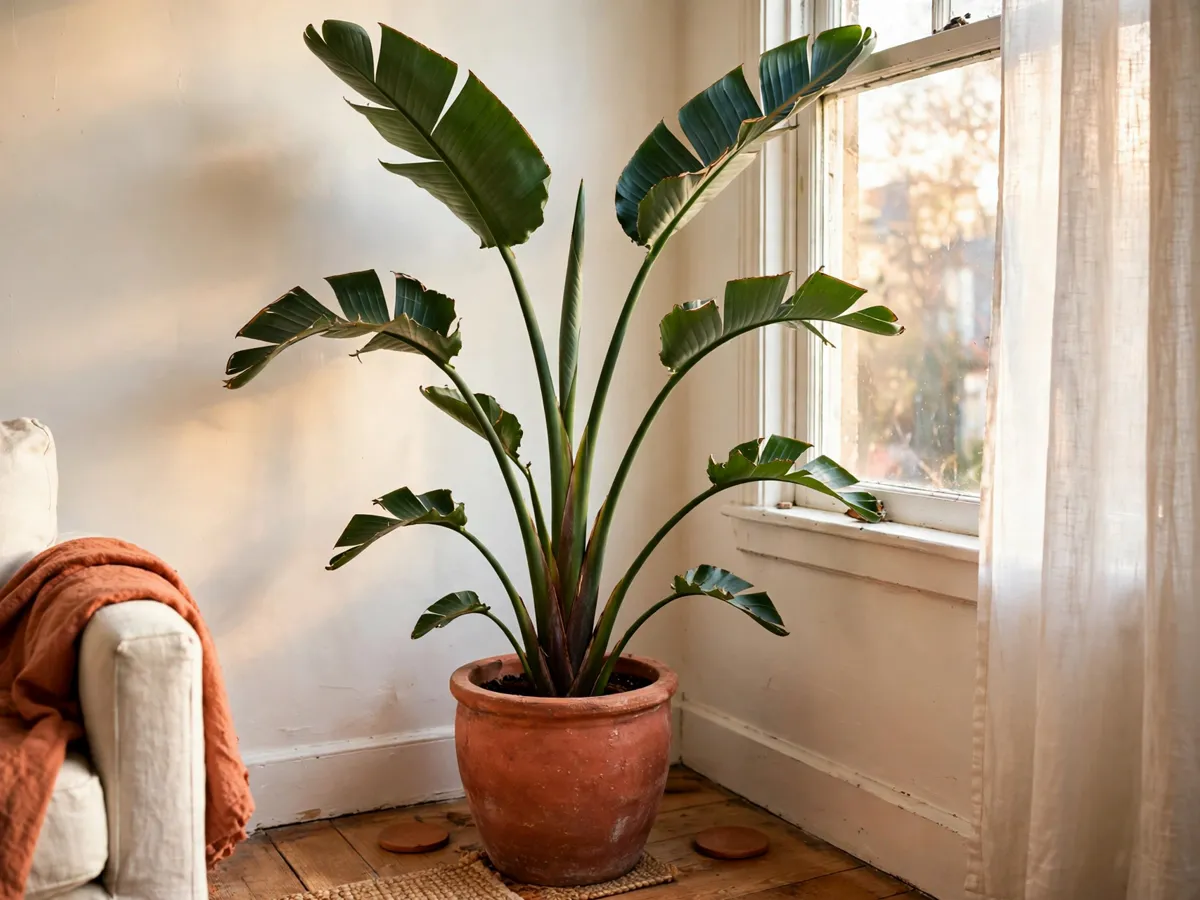
1. The two birds: nicolai the tree vs reginae the clumper
Both birds are Strelitzia, from coastal South Africa, and both carry the paddle leaves that make the plant read as sculpture. Beyond that they part ways. Strelitzia nicolai, the white bird of paradise, grows a woody trunk and behaves like a tree: five to six feet in a bright room within a few years, up to ten in a tall space with real sun. Its flower, a blue tongue inside a white sheath, almost never comes indoors.
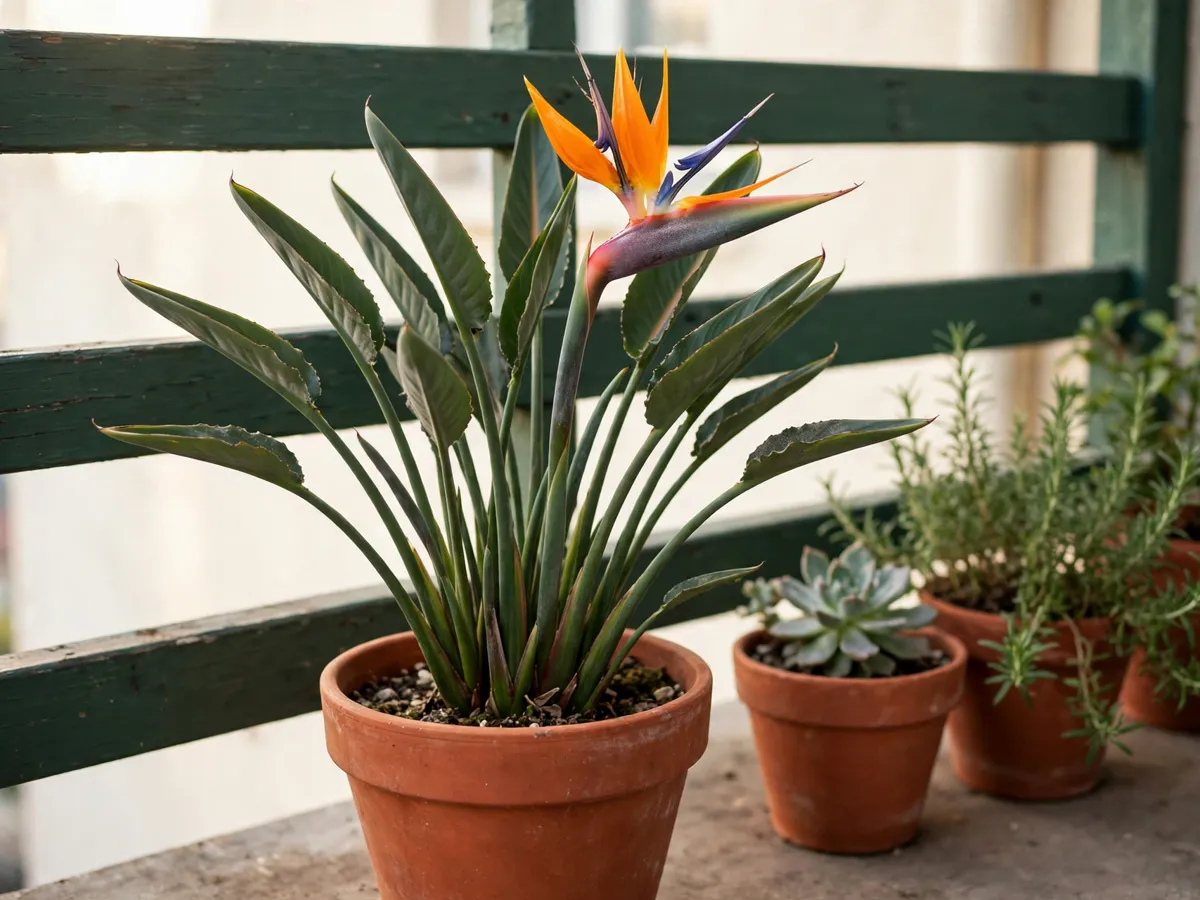
Strelitzia reginae, the orange bird of paradise or crane flower, clumps from the base instead of trunking: two, then four, then eight leafy shoots around one crown, topping out near three to four feet. It is the species behind the orange flowers on every safari poster, and the likelier indoor bloomer.
Shop tags are the honest shortcut. White bird of paradise means nicolai, plain bird of paradise usually means reginae, and a juvenile below two feet can pass for either, so buy where the species is printed. Both plants also sit on the tropical list: tropical houseplants for beginners that forgive a missed week.
Cost: $0. Time: 10 minutes of label reading at the shop. Caveat: a seller who cannot name the species is selling you a guess.
2. Which one fits your room: height, spread, and the ceiling math
Measure before you shop, because this is the floor plant that outgrows rooms. The ceiling math is subtraction: ceiling height, minus twelve inches of clearance so the top leaves never touch the paint, minus the finished pot at fourteen to eighteen inches. What remains is the plant. A standard eight-foot ceiling leaves roughly five and a half feet, and a nicolai climbs until it meets the paint and bends.
Spread matters as much as height. A mature nicolai carries its paddles in an arc three to four feet across, so the corner needs that clear; a reginae clump wants two. Tape the footprint on the floor before delivery, because a plant always reads smaller in an empty shop.
The floor-plant roundup: large indoor plants holds the same numbers for every other corner candidate.
Cost: $0. Time: 10 minutes with a tape measure. Caveat: also measure the path from the front door to the corner; a six-foot plant does not fold, and a narrow staircase is where deliveries end.
3. Light: the hours that decide whether it reaches 6 feet
Light is the growth budget, and the arithmetic is unkind. A nicolai that wants to reach six feet needs four to six hours of bright light a day, some of it direct; a reginae holds its shape on three to four. Below that the plant does not die, it shrugs: growth slows to a leaf or two a year, leaf stems stretch long and pale, and the final height quietly drops by a third.
One habit buys free height inside that budget: rotate the pot a quarter turn weekly, because a leaning plant loses its symmetry long before it loses the ceiling.
Cost: $0. Time: 2 minutes a week to rotate. Caveat: no feed and no pot upgrade replaces missing hours; the window sets the ceiling.
4. The window map: east, west, south and the curtain filter
South is the gold seat, especially from late autumn to early spring, when the sun sits low and its direct rays land gently on the paddles. In high summer the same window runs hot enough to scorch a young leaf at midday, which is what the curtain filter is for: a plain sheer turns harsh direct sun into bright filtered light.
West is the strong second, four hours of warm afternoon beam, the classic home of a happy nicolai. East is the gentle version, morning light that behaves like bright shade; a reginae holds well there and a nicolai grows slower and leans harder. North, in the northern hemisphere, takes no direct sun at any time of year and is a room for ferns rather than birds.
Cost: $10–$15 for a sheer curtain. Time: 5 minutes to hang. Caveat: keep the paddles a hand off cold winter glass; scorch and cold-burn marks are permanent, and only the next leaf comes in clean.
5. Pot and soil: the weight rule, drainage, and the chunky mix
Start with the weight rule, because nobody warns you. A six-foot nicolai in a fourteen-inch ceramic pot of damp soil weighs somewhere between sixty and ninety pounds, and the number climbs past a hundred after a full soak. Choose the final spot before you fill the pot, carry the plant by cradling the rootball rather than the trunk, and put casters under anything you might ever want to vacuum behind.
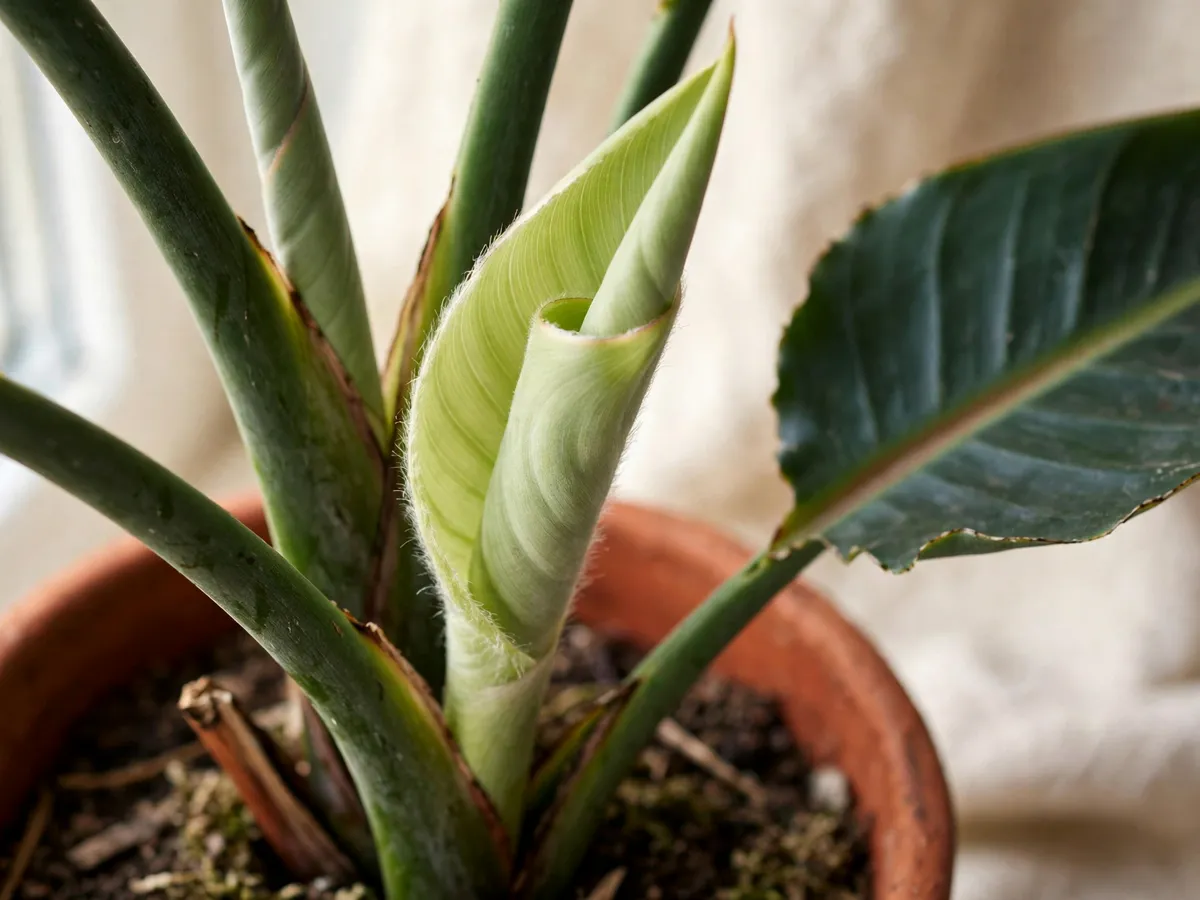
The clean workaround is the two-pot system: the plant lives in a plastic grower pot with drainage holes, dropped inside a heavier ceramic planter as the visible shell. Water by lifting the inner pot out, soaking it at the sink, sliding it back. The architecture stays and the weight stops being an argument.
Soil is the chunky mix the whole shelf uses: two parts potting soil, one part orchid bark, one part coarse perlite, stirred until water moves through instead of sitting. The chunky mix: best potting soil for indoor plants carries the full recipe.
Cost: $18–$40 for mix, a pot with a hole and a set of casters. Time: 30 minutes. Caveat: a big pot without a hole is a tub, and a tub drowns roots from the bottom up within weeks.
6. Watering a big plant: the deep-soak and the finger test
Big pots cheat your senses. The top two inches can feel dry while the bottom half of the rootball is still swampy, so the finger test has to go deep: press a finger, or better a bamboo skewer, two inches into the mix. Damp soil on the skewer means walk away; a clean skewer means water now.
When the time comes, water like rain, not like a drip tray refill: slowly over the whole surface until water runs freely from the drainage holes, then let the pot drain and empty the saucer after ten minutes. A deep soak pushes stale air out of the mix; a daily sip is how a large pot turns sour.
A pot that stays wet to the bottom has a second passenger: fungus gnats, the small flies that rise off the mix when you water. Fungus gnats are a symptom of the soak, not a leaf problem, and letting the top two inches dry between waterings is the whole cure.
Rhythm follows the season. Through the bright months a large bird drinks roughly weekly; from late autumn through winter the same pot holds moisture two or three weeks. Winter water goes on in the morning of a bright day. Never water a big plant on a fixed weekday: the skewer is the calendar.
Cost: $2–$4 for a pack of bamboo skewers. Time: 10 minutes per watering. Caveat: trust the skewer over the surface and over the schedule; in a pot this size the surface lies.
7. Leaf splits: why they happen and when to worry
The split leaf is the question every new owner asks, and the answer is usually good news. In habitat these plants stand in coastal trade winds all their lives, and a solid sail of a leaf would tear anyway, so the leaf is built to split first and let the wind pass through. Indoors the same splits arrive with leaf age, moving air from fans and doorways, and dry heated air.
So the rule: splits along the edges, with a firm green blade and a rolled new leaf rising in the center, are cosmetic and correct. Resist the urge to cut a split leaf; half its surface is still working.
Worry only when splitting travels with other signals. Splits plus soft brown at the leaf base point to a mix that stays too wet; splits plus pale, floppy stems point to light starvation; a leaf browning evenly from the tip back is usually dry air or salt crust. The split itself never tells you anything; the company it keeps does.
Cost: $0. Time: 5 minutes of looking. Caveat: an indoor bird with zero splits is the unusual one; no product keeps the leaves whole.
8. Humidity and the brown-edge rule
Coastal South Africa is humid, and the leaves remember it. Forty to sixty percent relative humidity is the comfortable band; heated winter apartments sit near thirty, and the leaf edges pay the difference in crisp brown rims. The brown-edge rule reads the cause in the texture: crisp, dry edges with a firm green center mean dry air, a nearby radiator, or salt buildup in the mix. Soft, damp brown patches mean too much water at the roots. Two opposite problems, one symptom, and the texture picks the fix.
The dry-air fix is ordinary: a pebble tray under the pot, plants grouped close enough to humidify one another, a small humidifier across the room, and three feet of distance between the pot and any radiator. A winter slowdown is rest, not decline: the plant is not dormant, it is quiet, and firm green leaves through the dark months prove it. Plants that overwinter badly are the ones parked on a heat source.
Dry air is also the weather spider mites prefer, so a crisp-edged bird earns a second look: pale stippling on the paddle face, then fine webbing at the leaf joint. Spider mites caught that early wash off under a lukewarm shower, both faces, once a week for three weeks.
Trim crisp tips with sharp scissors, following the natural leaf shape. The browned tissue never re-greens.
Cost: $6–$12 for a pebble tray, or $10–$14 for a hygrometer that settles the guess. Time: 10 minutes to set up. Caveat: a scissor trim is cosmetic; the real cure for brown edges is air, not a haircut.
9. Cleaning the paddles: dust, the shower, the reach problem
A leaf the size of a dinner plate is a dust shelf, and dust here is more than cosmetic: a dusty leaf face intercepts light, and light is the growth budget this plant runs on. Monthly cleaning is care, not grooming.
The technique: hold one flat hand beneath the midrib to carry the weight and wipe the top face with a damp microfiber cloth, from stem toward tip. Young leaves still unfurling are off limits; they bruise. Every couple of months give the whole plant a lukewarm shower, both faces of every leaf, tilted so the crown stays dry.
The reach problem is real on a six-footer: the top paddles sit above head height, and pulling a leaf down to wipe it is how leaf stems snap. Use a microfiber cloth on an extension pole, or a step stool. Dust on big paddles: how to clean indoor plant leaves covers the full routine.
Cost: $6–$10 for microfiber cloths and a dusting pole. Time: 15 minutes a month. Caveat: clean open leaves only; a leaf still furled is a leaf still tender.
10. Feeding: the spring-to-August rhythm for a big plant
A plant building leaves this large burns through the nutrients in a pot of fresh mix within a season. The rhythm that suits it is dilute and steady: a balanced liquid houseplant feed at half the label strength, once a month, from the first sign of spring growth through the end of August, onto mix that is already damp.
From September, stop. A plant slowing for winter and still being fed holds unused salts in the mix, and the salts show as a white crust at the pot rim and burned leaf tips. The cure is a flush: plain lukewarm water, twice the volume of the pot, run through and discarded. A bird that overwinters in a cool room may push no new leaf until April.
One rule without exception: never feed a dry pot. Salts against dry roots burn on contact.
Cost: $6–$10 for a bottle that outlasts the year at half strength. Time: 5 minutes, monthly in season. Caveat: feed is a top-up, not a substitute; the window does the growing and the bottle only refills the pot.
11. Repotting: the two-person job and the root-bound signal
The signals arrive in order. Pale roots circle the surface and peek from the drainage holes; water runs straight through channels instead of soaking in; growth stalls mid-season and the plant starts heaving itself up out of the pot. Any two together mean the time has come.
Past the three-foot size the job belongs to two people, and to spring. Water lightly the day before so the rootball holds together, lay the plant on newspaper, and have one person cradle the crown while the other taps the pot free. Move up one pot size only, trim the worst circling roots, and settle the plant at its original depth in fresh chunky mix. Water lightly and keep it out of direct sun for a week.
Moving up a pot: repotting houseplants walks the same job step by step, written for table plants and proven here on a ninety-pound corner tree.
Cost: $20–$45 for the pot, mix and a fresh set of casters. Time: 45 minutes with a helper. Caveat: jumping two sizes leaves a ring of permanently wet mix the roots never reach, and in a pot this size that ring is a swamp.
12. Bloom indoors: the honest odds and what raises them
The poster flower is why people buy the plant, so this gets a straight answer: indoors a bloom is uncommon, and the odds run on species, age and light, in that order.
Reginae is the realistic candidate. Raised from seed it needs four to six years to reach flowering maturity, sooner from a division, and it then wants the brightest window in the home, four or more hours of direct light, steady feeding through the season, and roots that are snug but not strangling. Given all that, an orange-and-blue flower on a living-room reginae happens, and when it does it holds for weeks.
Nicolai is the honest no. It flowers at a size and age a ceiling rarely grants, so the indoor record for nicolai is the foliage, which is what it is sold as anyway. Buy it for the leaves and treat any bloom as a surprise. What does not help: specialty bloom feeds, deliberate root pruning and drought-stress tricks borrowed from outdoor growers. An indoor bird flowers from age, light and steady care, or it does not.
Cost: $0 beyond the care already listed. Time: 10 minutes a week, sustained for years. Caveat: a bird of paradise that has never bloomed indoors is a normal plant, not a failed one.
13. Cost reality: $35–$150 for the size you actually want
The price ladder is really a patience ladder. A small starter in a six-inch pot, eight to fifteen inches of juvenile leaves, runs $35–$50 and needs two to three bright years to become a floor presence. The middle rung, $60–$100, buys a three-to-four-foot plant with five to eight mature paddles, and that is the honest buy: tall enough to read as architecture, small enough to carry home and repot alone.
The top rung, $120–$150 and beyond, is a five-or-six-foot specimen, usually nicolai, usually delivered, and worth it only after the ceiling math has passed and the corner has been taped out. Read the delivery terms and expect a few sulking weeks after the move.
The setup around any of them is small: a pot with a drainage hole at $12–$25, chunky mix at $10–$16, casters at $10–$15, a sheer curtain if the window runs hot. A stake is not on that list.
Cost: $35–$150 for the plant, $35–$55 of setup around it. Time: 45 minutes of shopping and one afternoon of potting. Caveat: the $150 six-footer saves two years of waiting, not two feet of ceiling; the room decides the ceiling.
Common questions
How tall does a bird of paradise grow indoors?
A nicolai, the white one, reaches five to six feet in a bright room within a few years, and up to ten in exceptional light. A reginae, the orange one, tops out near three to four feet. Light caps both: the same plant grows smaller in a dim room than in a south window, whatever the tag claims.
Why are my bird of paradise leaves splitting?
Splitting is the design, not damage. In habitat, wind tears solid leaves, so the leaf splits along the edges and lets the wind pass. Indoors the splits arrive with leaf age, moving air and dry heated air. A split leaf with a firm green blade is still working; cut it only when it browns overall.
How often should I water a bird of paradise indoors?
Test, then water: push a finger or bamboo skewer two inches into the mix and water only when it comes out clean. Through the bright months that lands near weekly; through winter, every two to three weeks. Soak until water runs from the holes, empty the saucer, and never run a fixed weekday schedule on a big pot.
Will my bird of paradise ever bloom indoors?
Sometimes, and it depends on the species. A mature reginae with four or more hours of direct light can carry an orange-and-blue flower for weeks. A nicolai almost never blooms at indoor sizes; indoors it is a foliage plant. Age, strong light, steady feeding and snug roots raise the odds, and nothing else does.
Is bird of paradise safe around cats and dogs?
No. The ASPCA lists Strelitzia as toxic to cats and dogs: chewing the leaves causes mouth irritation and stomach upset, and the sap can irritate skin, so wear gloves when cutting stems. A tall corner plant usually sits out of pet reach, which is the simplest placement. On any suspected chew, keep a piece of the leaf and phone the veterinarian the same hour.
Save these on Pinterest
Pin the two-birds decoder and the window map, the two charts that decide whether a corner and a ceiling can host one of these. This guide and the rest of the gardening tips live together there.