 Plant As Deco
Gardening & Planting Tips
Tradescantia Indoor Plant: The Three-Leaf Painter
By Plant As Deco · Updated 23 November 2026
A tradescantia is the trailing houseplant with leaves painted on both sides: metallic silver stripes over a deep purple underside, or pink and cream over green. It grows fast, roots from any node that touches damp soil, and runs bare at the base while the tips keep reaching. Care comes down to four things: bright indirect light so the color holds, water when the top inch has dried, a pinch every week or two, and a jar of water for the tips you pinch off. The rest of this page is what goes wrong and how to read it.
Weekend-ready: $6–$18 for a 4-inch pot, or one free cutting from a friend plus a pot and mix. One afternoon to pot it up, then a walk-around every two or three weeks.
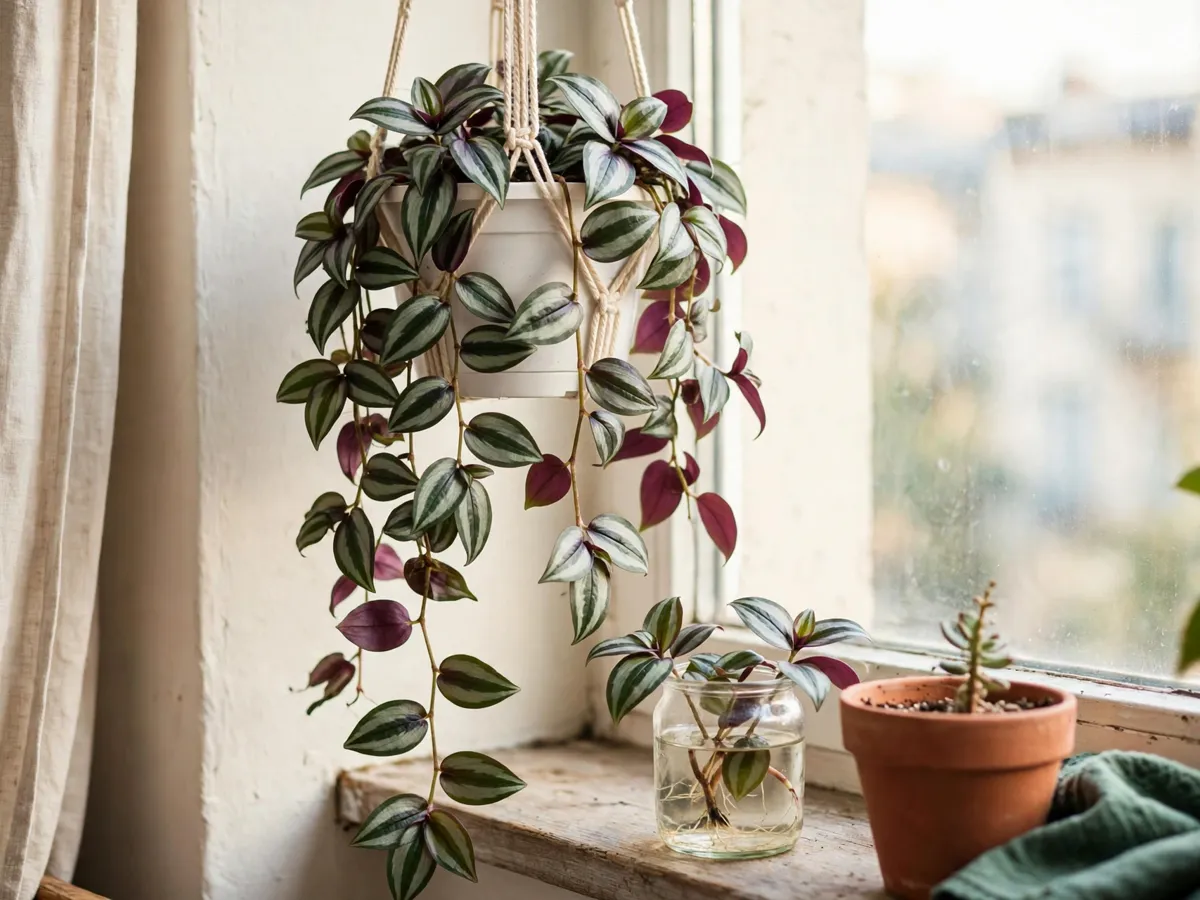
1. What a tradescantia is: three leaves to a node, then a runner
Tradescantia belongs to Commelinaceae, the dayflower family, and most houseplant species in it come from seasonally damp forest edges in Mexico and Central America.
Two features explain every rule here. The first is the leaf arrangement: at every node, leaves emerge in threes, wrapped around the stem, so a running vine reads as a stack of small pinwheels. New leaves push from the center of the previous whorl, so the tip is always the fullest part and the base the emptiest. The second is the habit. Stems elongate quickly and root from any node that lands on damp soil, the strategy of a ground cover that spreads rather than climbs.
Seen as a runner instead of a bush, the two complaints everyone brings here, bare stems and faded color, stop looking like failures.
Cost: $0. Time: 5 minutes to read one stem. Caveat: a plant sold as a tidy 4-inch mound is a season of work, not a finished shape.
2. Zebrina, nanouk, pallida: the three you will meet
Shop tags and older books also call this plant wandering Jew; Tradescantia is the current botanical name and the one used here. Three kinds carry almost every indoor sale.
Tradescantia zebrina is the silver one: three broad stripes of metallic silver over purple, with the whole underside deep violet. It is the fastest trailer of the three, and the silver is a fine dusty surface, so a rubbed leaf keeps a green mark that only the next leaf grows past.
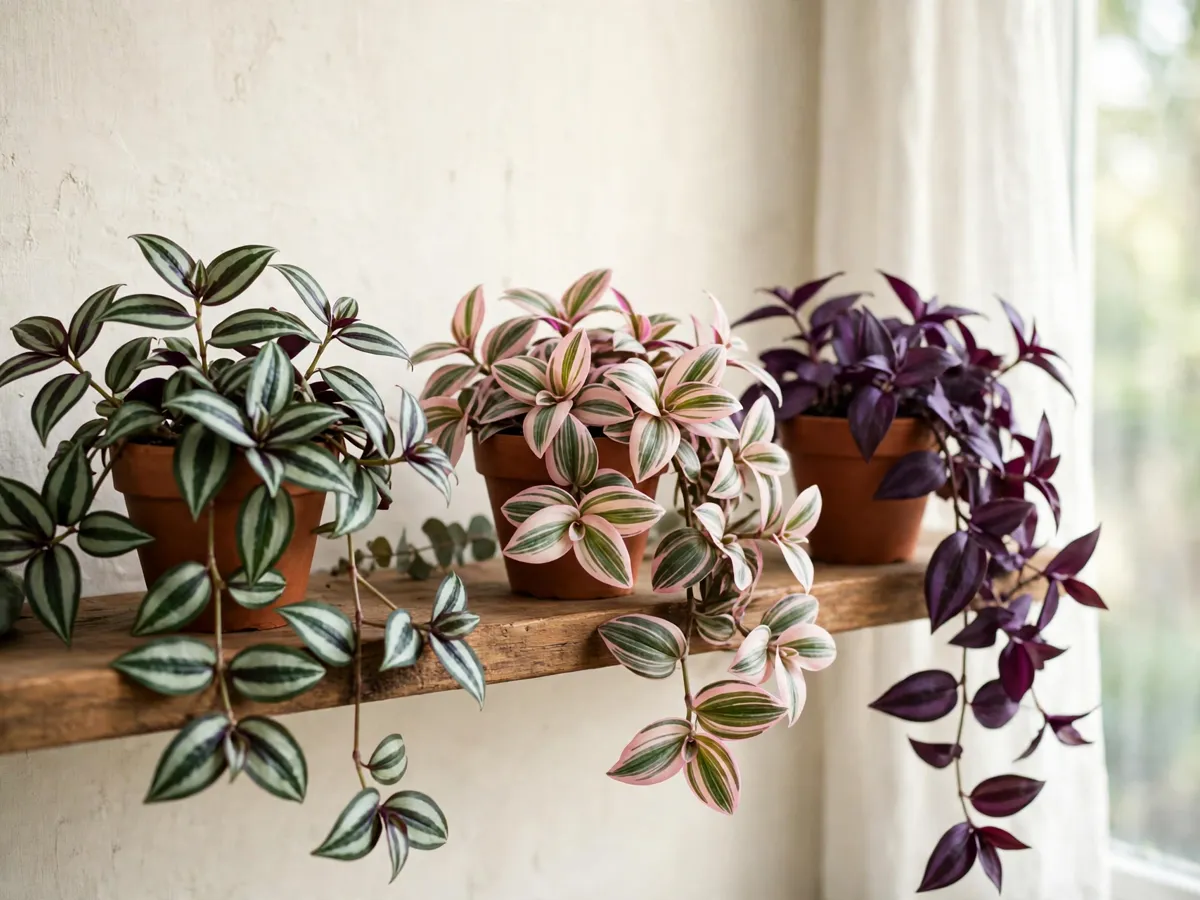
Tradescantia pallida 'Purpurea' is the purple one: narrow, pointed, solid plum leaves, tighter growth and a slower trail. It is the toughest of the three and takes more direct sun without bleaching. The third is nanouk, with thick, stiff leaves in pink, cream and green. It grows more upright and more slowly, costs more, and is the one most likely to sit in a wet pot and rot.
Cost: $6–$18 for zebrina or pallida, $15–$30 for nanouk. Time: 5 minutes of tag reading at the shop. Caveat: a nanouk that reverts throws all-green shoots, so pinch those out or the pink thins across the pot.
3. The light that sets the silver, and the fade tell
The color is bought with light. A tradescantia makes its silver and purple pigments in bright filtered glare and stops paying for them the moment the light drops, so the question here is never whether it survives but whether it still looks like the photo on the tag.
Read the fade in order: the silver stripes narrow and the green widens, then the purple underside dulls toward brown, then the spaces between leaves stretch. Fade plus stretch means light, every time. Fade with tight nodes means age, or on a nanouk, reversion.
An east window is the easy answer. Two or three feet back from an unfiltered south or west window works, and so does a sheer curtain on a bright one. Direct summer sun through glass bleaches a patch that never recolors. Because the days swing hard, the window that was perfect in July is gray in January: move the pot closer for the winter and turn it a quarter rotation each week.
Cost: $0 to use the window you have, $10–$15 for a sheer curtain if the bright spot runs hot. Time: 10 minutes to place and turn. Caveat: bleached leaves stay bleached; only the next leaves come in colored.
4. Watering: the forgiving middle
Water when the top inch has dried, then water slowly across the whole surface until it runs from the drainage hole, and empty the saucer ten minutes later. Finger the mix rather than the calendar: a 4-inch plastic pot in an east window and a hanging basket in a south one are two different plants on two different schedules.
The forgiving part is the droop. A thirsty tradescantia softens its leaves and the newest tip sags before the mix is dry, then stands back up within hours of a drink. In a bright warm room the rhythm lands near once every five to eight days; in winter it stretches to two or three weeks.
The unforgiving part is the base. Lowest leaves yellow, the stem at the soil line turns black and soft, and the plant collapses upward from the pot. That is rot, it moves in days. Salvage the firm tops as cuttings.
Cost: $0. Time: 10 minutes per watering. Caveat: when in doubt, wait a day; a dry droop comes back within hours and a wet week does not.
5. Leggy vines: the pinch-and-restart rule
Legginess is the default ending of a running vine: long bare spaces between the leaves, a tuft only at the tip, and a pot that looks half empty. Nothing is wrong with the plant. It is spending its energy on length, the way a ground cover does when it reaches for open ground.
Cut the vine back to where leaves still sit on the stem, usually four to six inches from the base, and pinch the tip just above a node. Two new shoots come out of that node. The bare half of the stem never fills in, because no amount of feeding puts leaves on old wood. Cutting it back is the only fix, and it is not a sacrifice, since the removed top is the next plant.
A second move keeps the vine long. Lay the bare section along the surface of the mix and hold it down with a bent hairpin. The node touches damp soil, roots within weeks, and the pot grows a second crown.
Cost: $0, or $3 for a packet of pins. Time: 10 minutes per pot. Caveat: a cut-back plant looks worse for two weeks before it looks better, so keep it out of direct sun while the new nodes wake up.
6. Pinching as routine: the full-plant habit
Pinching is the habit that separates a full basket from three ropes. Roll the newest tip off just above a leaf node. The stem answers by splitting into two growing points, and each of those splits again later.
Work on a few tips at a time rather than the whole plant at once, so the pot never loses all its leaves together. In the growing season, go around every two or three weeks. A hanging basket pinched through spring and summer roughly doubles its own density by September, and the leaves that come in after a pinch arrive with full silver.
Every pinch is propagation stock: a jar on the sill and a spare plant for a friend in three weeks.
Cost: $0. Time: 5 minutes for a walk-around every two or three weeks. Caveat: pinching a stressed plant adds stress to it, so pinch only one that is rooting and getting water.
7. Soil: the light mix that lets it trail
The mix is the least important decision on this page. All-purpose potting soil loosened with a third of its volume in coarse perlite drains well enough and costs almost nothing. A tradescantia is not an orchid and does not want bark around its roots.
What matters is the hole. A pot without drainage is a slow drowning, and a decorative sleeve only works when you lift the inner pot out to water it. Terracotta dries faster and suits a nanouk or any winter pot; plastic holds water longer and suits a zebrina in a hot bright room.
Keep the pot small. A 4 or 5 inch pot for a 6 inch cutting keeps the drying rate where the roots can use it, and a slightly crowded plant trails better than one in a bucket of soil. Move up one size only when roots reach the drainage hole, because a large pot of wet mix around a small rootball is the standard way this species rots.
Cost: $8–$14 for mix and perlite. Time: 20 minutes to pot a cutting. Caveat: bagged soil that has sat outdoors sheds water; soak it in a bucket first if it beads on the surface.
8. Humidity: the edge it does not need
Ordinary apartment air, anywhere from 30 to 50 percent relative humidity, suits it. A tradescantia comes from open forest edge rather than the deep humid understory, and its thick leaves hold water well between drinks.
The reason to care about humidity anyway is pest policy rather than plant policy. Heated winter air at 25 percent is exactly the weather spider mites want, and a dry shelf is where a colony starts. Grouping pots close together and keeping a pebble tray under the basket buys mite resistance, not better leaves.
Skip the misting bottle. It wets the foliage, leaves mineral spots on the silver, and evaporates within twenty minutes. If leaf edges crisp in January, check the watering and look under the newest leaves before blaming the air.
Cost: $0, or $6–$12 for a pebble tray. Time: 5 minutes to group the shelf. Caveat: a corner that stays damp and still is where fungal leaf spots start, so aim at the air and not the leaves.
9. Propagation: the water-rooting cutting
Propagation is the reason most people end up owning four of these. Take a 4 to 6 inch tip, strip the leaves off the bottom inch so one bare node shows, and stand it in a jar of water with that node submerged. Change the water every few days, keep the jar in bright indirect light, and roots appear in one to two weeks in the warm months.
The transplant is the delicate half. Water roots are thin and fragile, and the move is where beginners lose a cutting. Handle the stem by the leaves rather than the roots, plant shallow, keep the mix damp and the pot out of direct sun for ten days. Expect the cutting to droop on day one and stand back up by day three.
The alternative skips the shock: the same cutting, stuck straight into a small pot of damp mix under a clear plastic cup, roots in soil in about three weeks. Spring through early autumn is the fast season, and a winter cutting takes a month and a half on the brightest sill. The full comparison of both routes is in the guide to houseplant propagation.
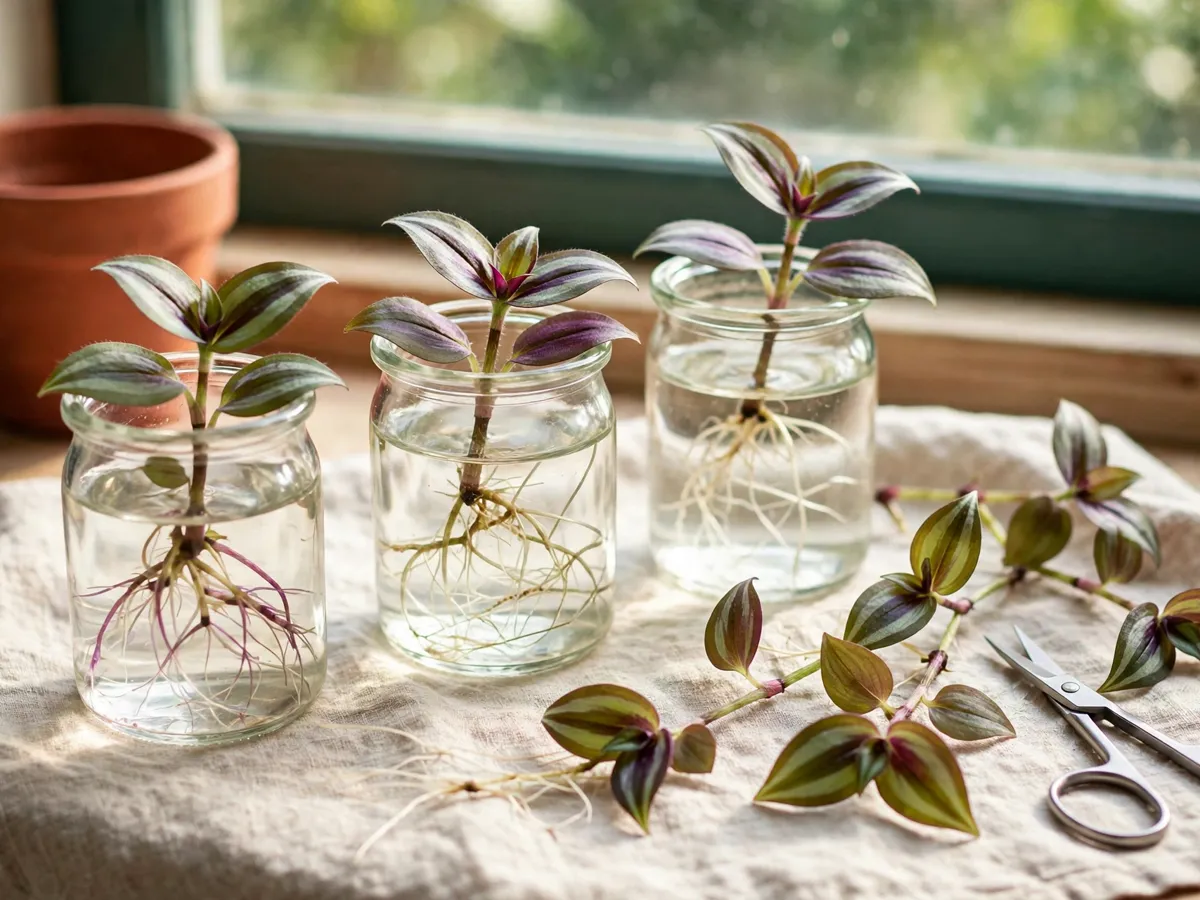
Cost: $0 for a jar and tap water. Time: 10 minutes to take cuttings, 15 to pot them. Caveat: cuttings from a plant in a dark corner grow on pale, so put the jar by the light on day one.
10. Pests: the two that find it
Two things find this plant, and both are symptoms of the air or the pot. Spider mites come first, in dry heated winter air. The early signs are a scatter of pale dots on the leaf faces, a dusty gray cast over the silver, and fine webbing at the nodes. The response is lukewarm water over the whole plant, both faces of every leaf, once a week for three weeks. Insecticidal soap handles what survives the wash, and raising the humidity afterward keeps the colony from restarting.
Fungus gnats come second, in a mix that stays wet. Small black flies hovering an inch above the soil name themselves. They are harmless to a strong plant but they are the alarm for a pot that never dries. Let the mix dry further between waters, top-dress the surface with coarse perlite, hang a yellow sticky card, and repot into a lighter mix if the flies return after a month.
Two things look like pests and are not: leaves dropped after a move or a cold pane, which is shock, and a black soft stem at the base, which is water. Check the underside of the newest leaves once a month through winter.
Cost: $0 for the shower, $8–$14 for soap and sticky cards if mites hold on. Time: 15 minutes per wash, three washes. Caveat: stopping after the first wash leaves eggs at the nodes and the colony restarts in ten days.
11. Toxicity: the mild sap note, pets and kids
Plain words, no drama. The sap of a tradescantia is mildly irritating to some skin, and the leaves are not food. Wash your hands after pruning or repotting and before eating. Most people never notice it at all.
For pets and children the rule is placement. A cat that takes a bite usually spits it out and walks away, because the leaf is unappealing. Keep the pot where grabbing is not an option: a hanging basket, a high sill, a shelf with no chair beside it. If a pet cannot be kept off the foliage, the shorter shopping trip is the list of pet safe low light houseplants.
If a pet chews repeatedly, or you see drooling, mouth swelling or vomiting, phone your veterinarian rather than waiting for the morning. The same goes for a child who bites a stem. This page is plant care guidance, not veterinary or medical advice.
Cost: $0. Time: 10 minutes to move the pot. Caveat: a hanging basket that swings within reach of a chair is not out of reach, so check the swing arc as well as the height.
12. Winter: the slow-down and the cutback
From November the plant slows and stops spending on color. New leaves come in smaller, the stripes narrow, the nodes lengthen, and by February the basket looks thinner. That is the season rather than a mistake. Water less often, feed not at all, and resist the urge to fix a plant that is only resting.
Three winter hazards, all cheap to undo. Cold glass: a leaf touching a pane overnight leaves a bleached patch that stays. A heater vent an inch from the foliage: dry, moving air, and the mite season opens early. The short sun: move the pot closer in December, and if the room has no bright spot, a grow light six inches above the shelf keeps the stripes silver.
The winter job worth doing is a rebuild. Take the best tops in late winter, root them by the rising light, and cut the mother plant back hard. Six fresh pots in March outperform one tired plant nursed until April. The month-by-month routine for the whole shelf sits in the winter houseplant care guide.
Cost: $0, or $18–$35 for a small grow light. Time: 20 minutes to move the pots and one afternoon to root the cuttings. Caveat: the commonest winter loss is not cold, it is watering a resting plant on the summer schedule.
13. Cost reality: $6–$18, and cuttings cheaper still
Zebrina and pallida are cheap. Grocery and big-box 4-inch pots run $6–$12, nursery and online stock $12–$18, and nanouk sits outside that band at $15–$30 because it grows slower. The inspection matters more than the price: firm stems at the base with no black soft spots, three leaves at every node, and color running all the way to the tip.
Setup is a 4 or 5 inch pot with a drainage hole at $4–$10, mix and perlite at $8–$14, and a hook or shelf bracket at $6–$12 if you want the trail rather than the mound. Insecticidal soap and sticky cards, $8–$14, only if the mites arrive. A quarter-strength houseplant feed every third watering in season costs $6–$10 and lasts the year.
The recurring cost is close to zero. One $9 pot in March becomes four baskets by October, since every pinch is a cutting and every cutting is a plant. Buy the cheap grocery zebrina, learn the light and the pinch rhythm on it, then spend on the nanouk once you know your window holds color. The wider field is in colorful houseplants, and when a trailing pot can live outside is settled in indoor or outdoor plants.
Cost: $6–$18 to start, pot and mix included. Time: 45 minutes of shopping and one afternoon of potting. Caveat: an $18 nanouk on a dim shelf goes green faster than a $6 zebrina by an east window.
Common questions
How often should I water a tradescantia indoors?
When the top inch has dried. Soak until water runs from the hole and empty the saucer ten minutes later. In a bright summer room that lands near every five to eight days in a 4-inch pot; in winter, every two or three weeks. The finger test beats any schedule.
Why is my tradescantia losing its silver?
Light, almost always. The stripes narrow and the green widens first, then the purple underside dulls, then the nodes stretch. Move the pot to a brighter spot with no direct beam, turn it a quarter rotation each week, and give it a month. The faded leaves stay faded.
Can I root a tradescantia cutting in water?
Yes, and it is the easiest version of propagation there is. A 4 to 6 inch tip with the lower leaves stripped off roots in a jar in one to two weeks during the warm months. Change the water every few days and transplant carefully, because water-grown roots are fragile through the first ten days.
Is a tradescantia safe around cats and children?
The sap is mildly irritating to some skin and the leaves are not food, so it is a placement question rather than a danger. Wash your hands after handling, keep the pot where grabbing is difficult, and phone a veterinarian if a pet chews repeatedly.
Why did my tradescantia get long bare stems?
That is the running habit combined with light that is a little short. Vines put their leaves at the tip and grow length between them. Cut back to where leaves remain and pinch above a node so two shoots restart, or lay the bare stem on the mix and let it root where it lies.
Save these on Pinterest
Pin the fade tell and the pinch-and-restart rule, the two that decide whether a $9 tradescantia becomes a full basket or a half-empty pot by spring. This guide and the rest of the gardening tips live together there.