 Plant As Deco
Gardening & Planting Tips
Ficus Indoor Plant: The Fig That Moves and Sulks
By Plant As Deco · Updated 23 November 2026
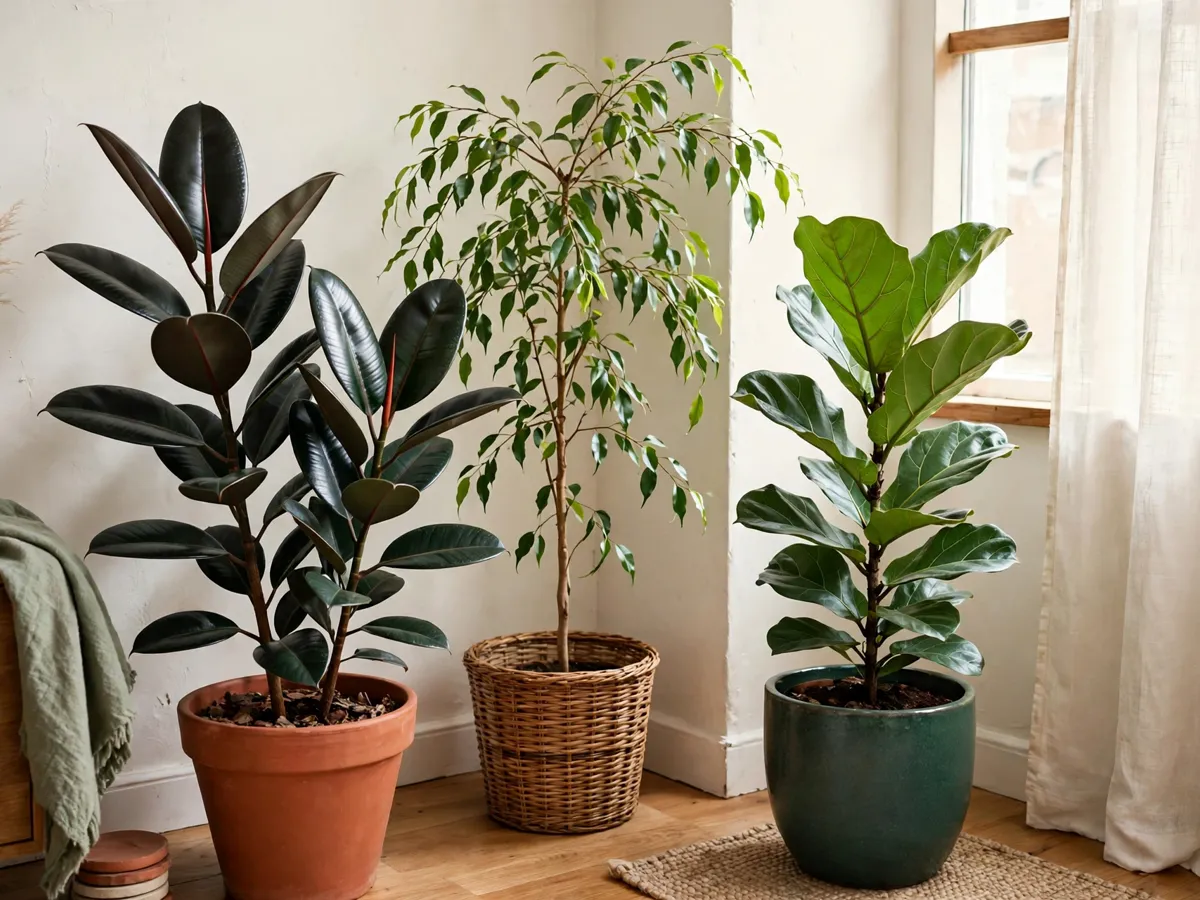
Ficus is one genus sold as three very different houseplants: the rubber plant with thick dark leaves, the weeping fig with a curtain of small glossy ones, and the fiddle-leaf fig with leaves the size of a dinner plate. They disagree about light, price and mature height. They agree on the fact that surprises every new owner, which is that a fig drops its leaves when you move it, not when you forget to water it.
Weekend-ready: $12–$120 for the plant depending on species and height, $30–$60 for pot, mix and gloves, one afternoon.
1. What counts as a ficus: one genus, three houseplants
Ficus sits in the mulberry family, Moraceae, and runs to roughly eight hundred species from warm parts of Asia, Africa and Australia. Only three are sold as foliage houseplants at any scale in the United States: elastica, benjamina and lyrata.
All three bleed a milky latex from any cut. All three harden their stems into grey-brown wood with age. All three answer stress by dropping whole leaves rather than browning their edges.
Two lookalikes cause the confusion. The umbrella plant on the same shelf is a Schefflera, a different family despite the similar droop, and the fig sold for patios is the common edible fig grown outdoors for a crop.
Cost: $0. Time: 2 minutes to read the label. Caveat: the cultivar name on the tag, Tineke or Burgundy, is a variety of one species and not a fourth plant.
2. Elastica: the rubber plant, the easy one
Ficus elastica carries thick, oval, leathery leaves eight to twelve inches long, deep green and glossy on top with a burgundy underside on older forms. Burgundy keeps near-black purple leaves and Tineke adds cream and pink splash across them.
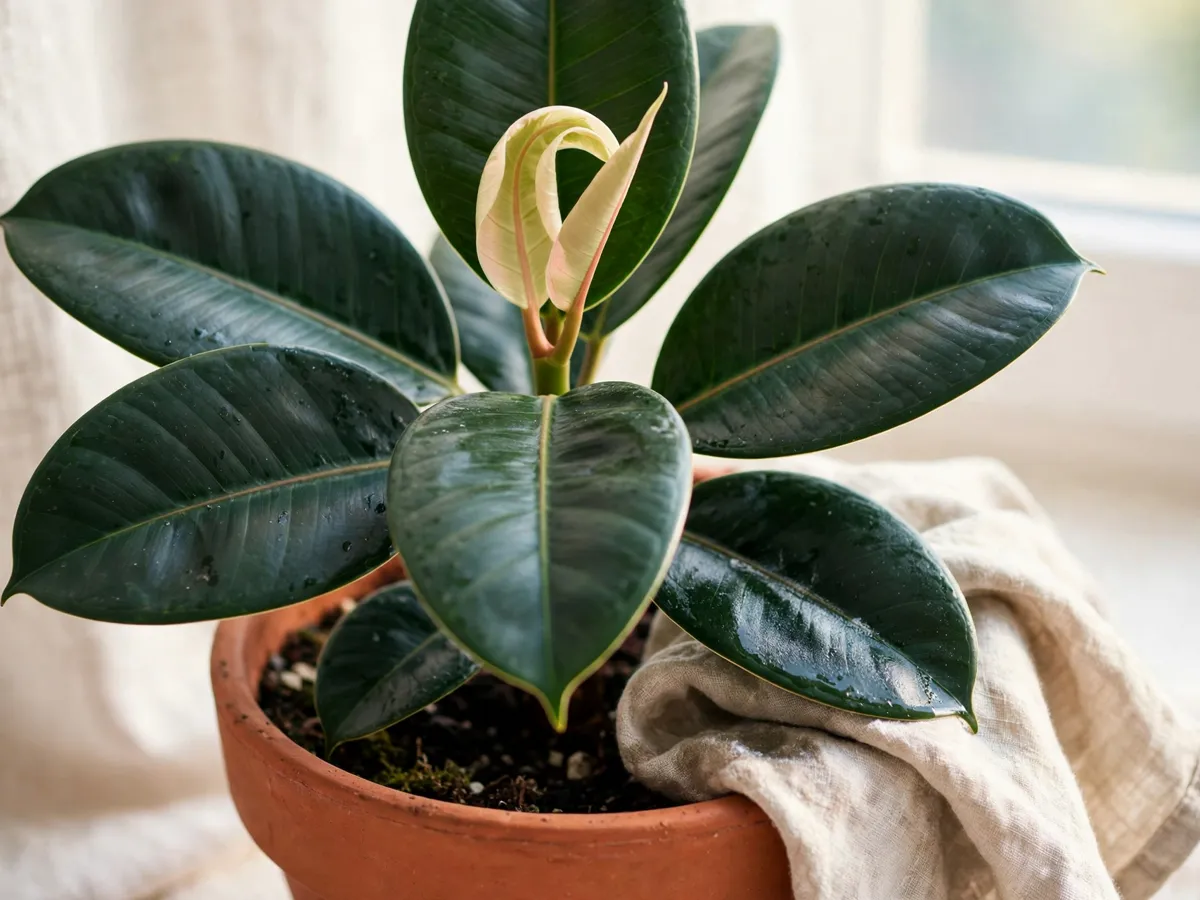
In a home it behaves like a small tree: one or two upright stems toward the ceiling, with branch points appearing where the top has been removed. Old specimens push thin aerial roots from the lower stem nodes, which are harmless and can be snipped flush. New leaves arrive rolled into a tight reddish sheath at the growing tip; leave it alone, because pulling it open tears the young blade.
Of the three, elastica is the forgiving one, and it is the fig to buy first.
Cost: $12–$45. Time: 10 minutes to choose one. Caveat: variegated Tineke asks for more light than plain green and fades in a dark room.
3. Benjamina: the weeping fig, the dramatic one
Ficus benjamina is the small-leaved fig: hundreds of glossy, pointed leaves on thin arching branches that layer into a curtain.
It is also the species responsible for the ficus reputation. A benjamina drops leaves in quantity after almost any change: a new room, a repot, a cold draft, the heating cycle switching on. Owners read that as dying and answer with water and feed, which is the wrong fix for the right diagnosis. The plant is rebalancing its leaf count against the light it now receives, and it pushes the leaves back from the same woody stems once conditions hold still.
Cost: $15–$60. Time: 10 minutes to name the permanent spot before you unbox it. Caveat: a benjamina bought to be rearranged will strip itself twice.
4. Lyrata: the fiddle-leaf fig, the tall one
Ficus lyrata is the one people know by silhouette. Its leaves are twelve to eighteen inches long, stiff, leathery and deeply veined, wide at the top and pinched at the base in the shape of a violin, held upright on a thick stem.
It is also the hungriest for light of the three, and the least willing to branch. Lyrata throws side shoots from old wood reluctantly, which is why a leggy fiddle-leaf is a harder renovation than a leggy rubber plant. Brown blotchy patches along the leaf margins, starting on the lowest leaves, are its typical complaint.
Cost: $15–$120 depending on height. Time: 15 minutes matching the plant to the window you own. Caveat: a tall lyrata bought for a room with one small north window arrives already in trouble.
5. The drop rule: it moved, so it sulks
Here is the mechanism, and it applies to all three species. A ficus balances the number of leaves it holds against the light and the stability it has right now. Change the location, and the plant reads the new balance as a loss and sheds until the remaining leaves match what the new spot can pay for. Watering failure is the second cause of leaf drop in a fig, not the first. Move it once and it sulks.
Learn the two shapes, because their fixes are opposite. A drop after a move sheds leaves that are green or yellow but firm, they detach cleanly at a soft point on the stem, and it settles within two to six weeks with nothing done to it. A drop from water sheds leaves that go soft and translucent, the trunk feels mushy where it meets the mix, and that plant needs the pot opened the same day.
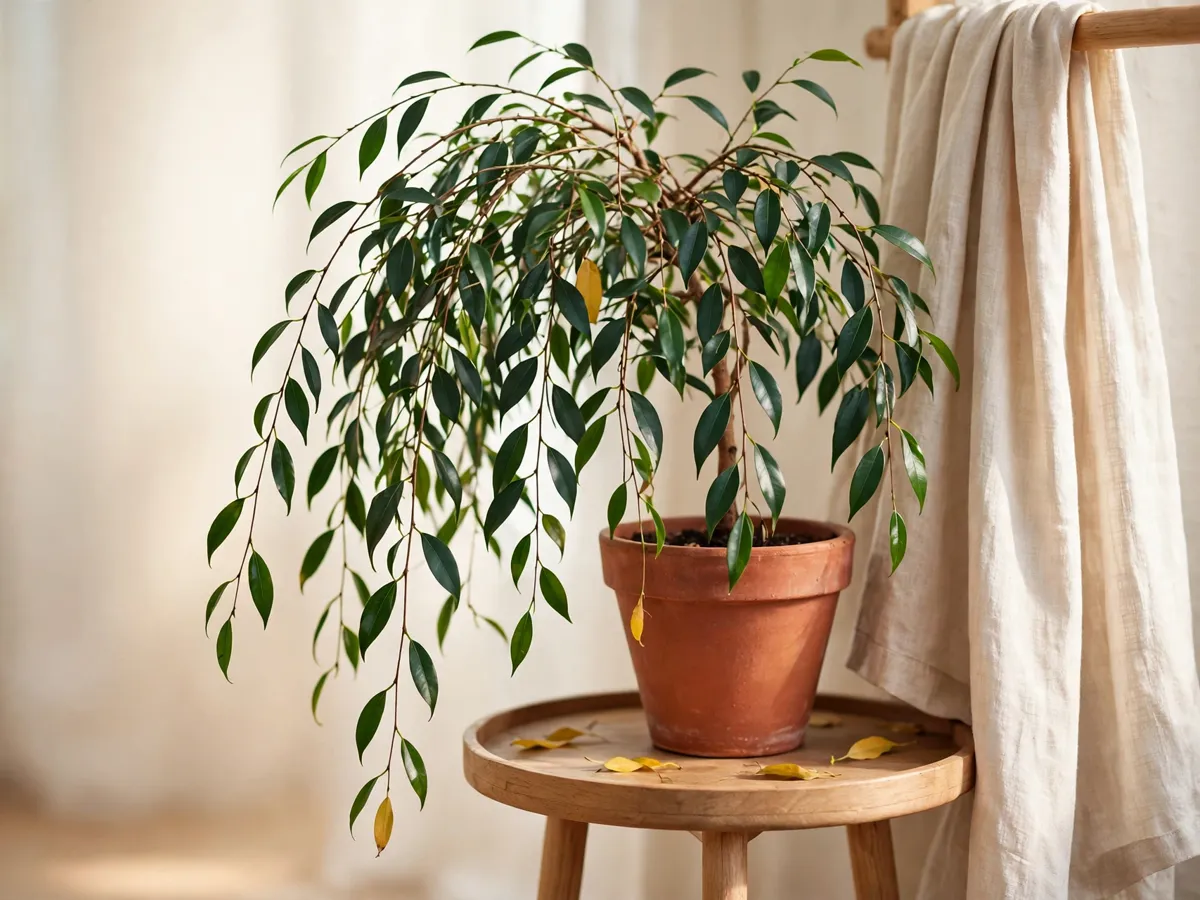
So the rule is procedural. Choose the spot before you buy and keep the plant there. Do not answer a post-move drop with feed, a repot or a bigger container; each adds a second change to the first. Give it weeks, not days.
Cost: $0. Time: 10 minutes reading the fallen leaves instead of reaching for the watering can. Caveat: a fig still dropping past six weeks, or showing soft dark stems, is a water problem and the rootball needs checking that day.
6. Light math per species: lyrata hungriest, benjamina tolerant
Ranked by appetite, it runs lyrata, then elastica, then benjamina. Lyrata wants the brightest window in the home and a few hours of unfiltered sun during the low-angle months, with the pot within two to three feet of the glass. Elastica is happy in bright indirect light three to five feet from a sunny window. Benjamina will hold in a moderately lit room for years, provided nothing about that room changes.
Too little light shows as gaps opening between leaves, stems thinning and lengthening, and a lyrata trunk leaning toward the glass. Too much shows as pale bleached patches on the upper surfaces facing the window.
For a genuinely dark room, a full-spectrum bulb on a timer, eight to ten hours a day above the canopy, is the real fix.
Cost: $0 to rearrange, $25–$60 for a bulb and fixture. Time: 10 minutes measuring the distance from the glass. Caveat: moving a fig into a brighter spot is still a move, so expect a drop.
7. Watering: the shared dry-layer-middle habit
All three species want the same thing, and it is not a schedule. Water when the mix has dried to roughly the middle of the rootball, not when the surface looks pale. Push a finger or a long skewer two to three inches down and read what comes back. Dry at that depth means soak: pour until water runs freely from the drainage hole, let the pot drain fully, and empty the saucer within ten minutes.
In a bright warm room during growth that works out to roughly every five to ten days, and in the dark months every two to four weeks is normal. A small rootball in a large pot is the classic trap: the plant cannot drink the water the extra mix is holding, so it sits wet for weeks. That is the condition root rot grows out of, and it is also where fungus gnats come from.
Species nuance: elastica stores water in thick leaves and forgives a dry spell that would stress the others. Benjamina drops for being too wet and for being too dry, and the fallen leaf tells you which.
Cost: $0, or $5–$8 for a moisture skewer. Time: 5 minutes per check. Caveat: a saucer still holding water an hour after watering is the most common way a fig is killed.
8. Soil and repotting: the one-size-up fit
Ficus roots are fine, wiry and woody with age, and they need air as much as water. A dense peat brick holds a week of wetness after one pour and suffocates them from the bottom up. The workable mix is a plain all-purpose potting soil loosened with perlite at four parts mix to one part perlite.
A drainage hole is non-negotiable. Terracotta suits elastica and benjamina, because porous clay pulls moisture out of the mix and its weight braces a top-heavy plant; plastic keeps a lyrata rootball cooler.
Repot in spring, while light is rising, every two to three years for elastica and benjamina and about yearly for a young lyrata. Act on signals, not dates: roots escaping the drainage hole, water running straight through without wetting the mix, the pot tipping. Move up one size only, about two inches wider across, and set the rootball at the same depth. The sizing and handling logic is in repotting houseplants one size up.
Cost: $8–$20 for mix and perlite, $10–$25 for a pot one size up. Time: 30 minutes. Caveat: repotting a fig that is already dropping after a move adds a second shock, so wait until it is pushing new leaves.
9. Woody stems and legginess: the pinch and the cutback
Every fig kept in average light eventually shows the same shape: a bare lower stem with a sparse tuft at the top. That is legginess, and it is a light record rather than a disease.
Elastica is the easiest. Pinch the soft growing tip out in spring and the stem breaks into two side shoots below the pinch, and in two seasons you have a branched small tree rather than a pole. A tall leggy one can be cut back with a clean knife to a point where a leaf scar or a dormant side bud sits, and it re-shoots from there. Sap runs from any cut, so gloves first.
Benjamina is the shearing species. It takes a hard cutback into old wood and flushes dense new growth from dormant buds along the branches. Lyrata is the difficult one: it branches reluctantly from bare wood, so the honest options are a cut high on the trunk in spring, or improving the light so the next season comes in compact. Never take more than a third of the live foliage at once.
Cost: $8–$16 for bypass pruners or a dedicated knife. Time: 15 minutes. Caveat: a hard cut on a plant still sitting in a dim room grows back leggy again, so fix the light first.
10. Leaves: wiping the elastica, and whether lyrata needs a shine
Elastica is the species that rewards wiping. Its thick, smooth blades hold dust along the midrib, and one pass with a damp cloth, one leaf at a time with a hand under the blade to steady it, takes twenty minutes a month. The real value is the inspection you do on the way, because the undersides and the leaf joints are where trouble shows first.
Lyrata shine is optional and mostly cosmetic. Leaf polishes and high-gloss sprays leave a film that traps grit and makes the next wipe harder, so skip them; plain water on a cloth does the same job. Misting does not raise humidity in any way a plant can use, since the leaves dry again within minutes.
Benjamina is the opposite case: hundreds of small leaves cannot be wiped one by one. Dust them with a soft brush, and rinse the whole plant under a gentle shower when it is genuinely filthy, letting it drain in warm air before it goes back near cold glass. That shower is also the first response to spider mites, the dry-air pest of small-leaved figs: look for pale stippling across a leaf and fine webbing at the branch forks. Figs like humidity between forty and sixty percent, and heated winter air runs far below that, so a humidifier near the plant is the only lever that moves the number.
Cost: $0 for a cloth, $10–$20 for a soft brush. Time: 20 minutes a month. Caveat: no shine spray or leaf coating is needed, and the film they leave is harder to clean than the dust it replaced.
11. Sap: the milky latex fact, stated plainly
Every fig in this genus bleeds a milky latex from any cut, snapped leaf stalk or bruised stem. It dries within minutes into a sticky brown smear, and it is difficult to get out of fabric and upholstery, so lay cardboard or an old towel under the plant before you prune.
On skin the latex is a real irritant for some people: it carries enzymes and furanocoumarins that can leave a rash after repeated bare-handed contact, which is why pruning figs is a gloves job. Wash your hands afterwards and keep cut stems away from faces and eyes.
For pets, the honest sentence is that a ficus is not a pet-safe plant. The latex makes leaves and stems unpalatable and irritating on contact, and a cat or dog that chews one can drool, paw at its mouth, or vomit. Phone your veterinarian if a pet chews a lot rather than waiting to see. The practical fix is placement, and the keeping cats out of indoor plants guide covers the barriers and which rooms to simply close.
Cost: $6–$10 for gloves and paper towels. Time: 5 minutes of setup. Caveat: this is a material fact about the sap, not veterinary advice; any suspected exposure is a call to your vet.
12. Winter: the slow-down and the draft problem
Most ficus trouble arrives in the dark months, and almost all of it is the room changing rather than the plant failing. A fig that pushed a leaf a week in July may push nothing between November and February. It is not dormant in the tropical sense, but it is close, and it drinks a fraction of what it did.
Feeding follows the same curve. In the growth months, a balanced liquid houseplant feed at half the strength on the bottle, once a month and never into a dry mix, is enough; heavy nitrogen pushes soft stretched growth that dilutes the dark compact leaves the plant is kept for. Nothing at all from roughly November through February.
Then the drafts. Cold glass, an exterior door, a forced-air vent and a radiator are four versions of the same problem, and a benjamina standing against a freezing window overnight will drop for it. Keep any fig six to twelve inches off cold glass, out of the line of a supply vent, and off the surface of a radiator. Heated winter air also runs dry, often twenty to thirty percent humidity in a January room, which is the condition spider mites prefer.
To overwinter a fig that spent summer outdoors, bring it in before the first frost and in steps: a week in a shadier outdoor spot, an inspection of the joints and the top of the mix for hitchhiking insects, then bright indirect light indoors. The cold-season routine is in winter houseplant care.
Cost: $0 for the rearrangement, $30–$70 for a small humidifier. Time: 30 minutes before the first freeze. Caveat: answering a post-move drop with water and feed turns a temporary sulk into wet roots.
13. Cost reality: $12–$120 by size and species
The plant is where the money goes. An elastica in a six-inch pot at twelve to eighteen inches tall runs $12–$25 at a garden center, and a three-foot one $45–$80. A two or three foot benjamina is $15–$40, and a bushy four-footer $50–$90. Lyrata is priced by height: a six-inch starter $15–$30, three feet $50–$80, four to five feet $90–$120.
The setup is a pot one size up from the nursery at $10–$25, a bag of all-purpose mix at $8–$14, perlite at $6–$10, nitrile gloves at $6–$10, and a soft cloth at $0. The first year asks for nothing else beyond a $6–$12 bottle of feed.
The trade worth naming is height against time. Buy the cheap small plant and let light and three years do the growing, or pay for a tall specimen and accept that a five-foot fig shipped from a warm greenhouse into a dim apartment is the most expensive way to learn the drop rule. For the floor-standing lane, see large indoor plants; for the genus alongside its tropical neighbors, see tropical houseplants for beginners.
Cost: $12–$120 for the plant, $30–$60 for pot, mix and gloves. Time: one afternoon of shopping and potting. Caveat: an $18 elastica in a bright room outgrows a $150 specimen in a dark corner within two years.
Common questions
Why is my ficus dropping so many leaves so fast?
Because something changed: usually a location, a draft or a heating cycle, not a missed watering. Pick up a fallen leaf. Firm and cleanly detached means the drop rule, and you hold the care steady for two to six weeks. Soft and translucent with a mushy stem base means water, and the rootball needs checking the same day.
How often should I water a ficus indoors?
No interval holds, because light, pot size, mix and season move the drying time more than the date does. Water when a skewer pushed two to three inches down comes out dry at that depth, then soak until water runs from the drainage hole and empty the saucer. In a bright warm room that is roughly every five to ten days, and every two to four weeks in the dark months.
Can I cut back a leggy ficus and will it grow again?
Yes on elastica and benjamina, reluctantly on lyrata. Rubber plants break into side shoots from a cut above a leaf scar or dormant bud, and weeping figs take a hard shear into old wood. Fiddle-leaf figs branch poorly from bare stems, so a high cut in spring is one option and better light is the other. Gloves first, because the latex runs.
Is a ficus safe around cats and dogs?
Not really, and the reason is the sap rather than a dramatic toxin. The milky latex irritates on contact and is unpalatable, and an animal that chews a leaf can drool, paw at its mouth or vomit. Keep figs where chewing animals cannot reach them, and phone your veterinarian if a pet chews a lot.
Which of the three ficus plants is easiest for a beginner?
Elastica. It tolerates a dimmer room, forgives a dry spell, takes a wipe, and costs twelve to twenty-five dollars as a starter. Benjamina comes second, and only in a home where the spot can stay put for two years. Lyrata comes last: priciest per inch and hungriest for light.
Save these on Pinterest
Pin the drop rule and the per-species light math, the two sections that decide whether a fig keeps its leaves through a first winter. This guide and the rest of the gardening tips live together there.