 Plant As Deco
Gardening & Planting Tips
Rosemary Plant Indoors: A Mediterranean in a Wet House
By Plant As Deco · Updated 23 November 2026
Rosemary is a cliff-side shrub, and an apartment is nothing like a cliff. It wants fast-draining grit, sharp light, lean soil and moving air. Take away any one of them, usually drainage, and it dies from the roots up while the top still looks green.
Weekend-ready: $8–$30 for the plant, a terracotta pot and the three-part mix, one afternoon. Ten minutes of checking after that, and less in winter.
1. Why rosemary is hard indoors: not a houseplant by origin
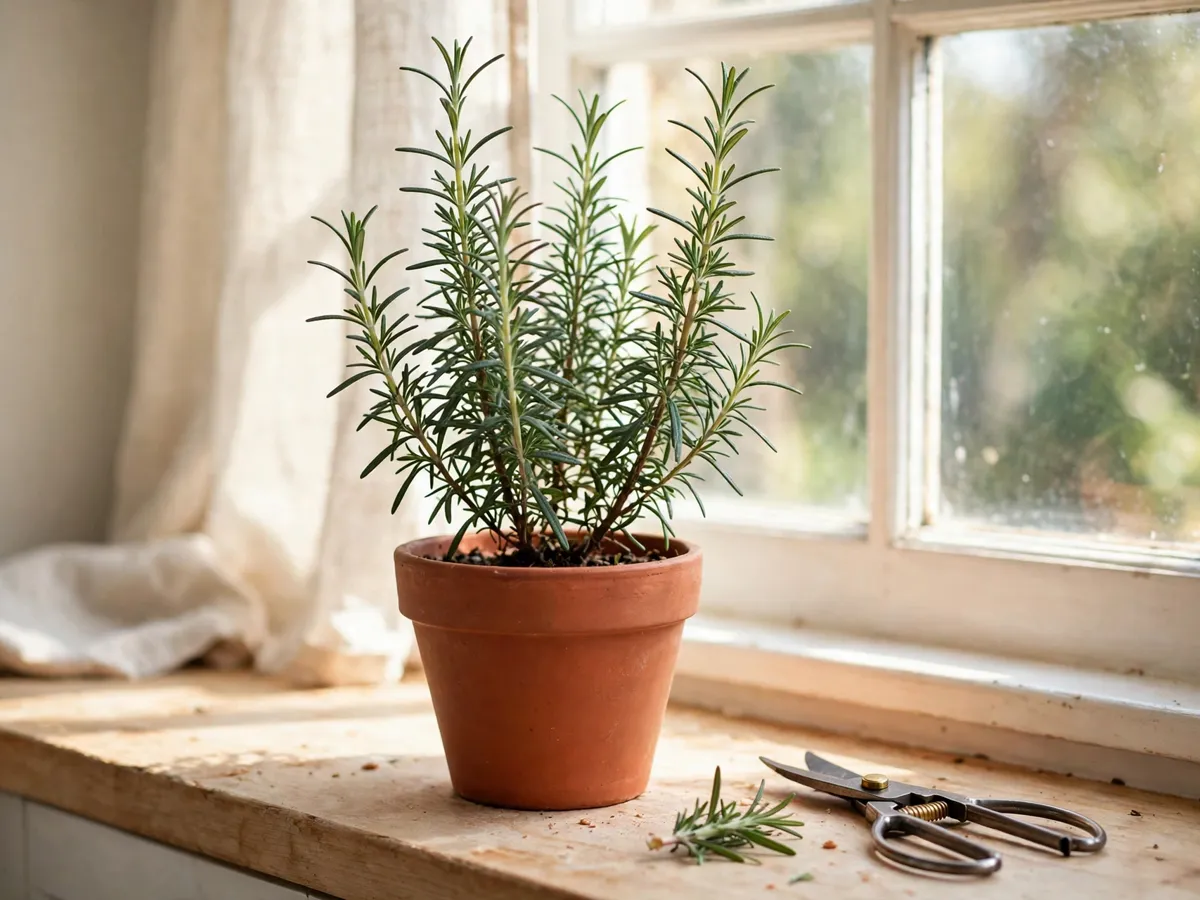
Salvia rosmarinus, still printed as Rosmarinus officinalis on most nursery tags, is a woody member of the mint family, Lamiaceae. The native home is scrub and cliff country around the Mediterranean basin: shallow rocky soil, relentless sun, and winters that wet the ground and then drain it away fast.
None of that makes it a houseplant. Most of what people buy for indoors is a jungle understory species, comfortable in humidity and soil that stays evenly damp, and the routine written for those plants is the routine that kills this one.
The plant is specific rather than difficult. This guide covers that one shrub in depth; for the shared windowsill setup, the indoor herb garden ideas page covers the many-plant version.
Cost: $0. Time: 5 minutes to read the tag and reset expectations. Caveat: a greenhouse-raised plant arrives soft and sheds needles while it settles into a drier, dimmer room.
2. The two killers: wet feet and a dark window
Almost every indoor rosemary fails from two things at once, and neither of them is neglect: water sitting in a pot that cannot drain it away, and a window that cannot give the plant enough light to pull that water up through the stems.
Rosemary roots need air as much as they need water. In a dense, moisture-retentive mix, in a pot with no drainage hole, or over a saucer nobody empties, the bottom of the rootball stays saturated for days. The roots brown from the tips inward, the stem softens at the soil line, and the needles above go pale and limp. Because the surface still looks dry, the instinct is to water again, and that is the trap: the plant is drowning below while the top reads as thirsty.
In weak light the plant grows long, thin, pale stems with wide gaps between the needle clusters, and a stretched plant moves water slowly, so the mix stays wet longer. The same loop runs on the other Mediterranean woody shrub indoors, and the lavender plant care guide covers it from the flowering side.
Cost: $0. Time: 10 minutes to tip the pot out and look at the roots. Caveat: firm white roots mean the plant is salvageable; soft brown roots below the soil line mean only the top half is.
3. Pot choice: terracotta, a drainage hole, the size rule
Start with the hole. A rosemary pot needs at least one drainage opening, and one generous hole beats three small ones that clog with sand. If a decorative ceramic has no hole, treat it as a cover: slip the growing pot inside and lift it out at the sink to water.
Unglazed terracotta is the right default. Fired clay is porous, so the walls pull moisture sideways out of the mix and the whole rootball dries evenly instead of only from the top. Plastic holds water against its smooth sides and keeps the outer ring damp for days, and a light pot tips under an untrimmed shrub.
Size it snug. A six-inch pot suits a four-inch nursery plant, and a plant that fills its pot is a plant that dries its pot. Go one size up at a repot, never three, because a cavernous pot wraps a small rootball in mix the roots never reach, and unused mix is wet mix.
Cost: $5–$12 for a terracotta pot with a hole. Time: 10 minutes to pot up. Caveat: a pot without a drainage hole is decoration, not planting, and no careful watering fixes the difference.
4. The grit mix: potting mix, perlite, coarse sand
The recipe is three parts. Take ordinary potting mix, add an equal volume of perlite, and add an equal volume of coarse sand, roughly thirds of each, blended dry before anything goes in the pot. The finished mix should pour loosely through your fingers like damp gravel, and water should run out of the bottom in seconds rather than soak in slowly.
Straight bagged potting mix is the most common reason a good-looking rosemary declines eight weeks after it moves indoors. Most of it is peat-based and blended to hold water. Perlite adds the air pockets; coarse sand adds weight and keeps those pockets from collapsing under the rootball. Fine play sand and builder sand are the wrong grit: they set into a brick.
A bagged cactus mix straight out of the bag is close to correct and is a fair first buy. The wider comparison of bagged mixes sits in the best potting soil for indoor plants guide, and rosemary belongs at the grittiest end of that range.
Cost: $13–$27 for the three bags, which is $4–$8 per pot. Time: 20 minutes to blend and fill. Caveat: any mix labelled moisture control or water-holding is blended against this plant on purpose.
5. Window math: south or west, minimum hours, the rotation
Do the arithmetic before the purchase. Rosemary wants direct sun on its needles for six hours or more every day. Behind glass that means a south-facing window as the honest minimum, with a west-facing one a close second for the long hot afternoon. An east window gives a couple of low-sun hours and will usually hold a plant through summer without thickening it, and a north window is the wrong room in every season.
Rotate it a quarter turn every week. Rosemary grows toward the brightest side, and an unrotated plant builds a dome that leans, the window side thickening while the shadow side thins until the shrub tips out of its pot. Firm needles and short gaps between the clusters are the visible proof the light is enough.
Cost: $0 to move the pot, $15–$30 for a small grow light if the only window faces north. Time: 2 minutes of rotating, weekly. Caveat: a lamp only counts within about a foot of the needles, which limits where the plant can live.
6. Watering: the dry-top-inch habit and the winter cutback
Water by feel, never by the calendar. Push a finger an inch into the mix. When the top inch has gone dry and the mix has pulled slightly from the pot wall, water slowly across the whole surface until it runs freely from the drainage hole, then empty the saucer ten minutes later.
Winter asks for the opposite habit. Short days slow the plant to almost nothing and the roots drink a fraction of their July amount, so cut the watering back and check twice as deep before each soak. In a heated room the surface dries fast while the bottom stays wet, which makes the surface a liar; the weight of the pot is the honest guide.
Cost: $0, or $3 for a long wooden skewer for the deep check. Time: 3 minutes per soak. Caveat: when the reading is ambiguous, wait three more days; a dry week does little here and a wet one does the damage.
7. Humidity and airflow: the mildew tell on the needles
Rosemary wants the air around its branches to move. In a crowded, still corner, humidity settles in the middle of the shrub and stays there.
Learn the powdery mildew tell. It appears as a fine white film on the needles, most visible on the inner growth nobody sees from the front, and it wipes off under a fingertip. It spreads in still, humid air and stops spreading when the air moves. The answer is space and circulation rather than a spray: move the pot away from its neighbors, thin the stems that cross so air can pass through the middle, and let room air move across the sill sometimes.
Humidity is the other half of that sentence, and indoors the answer is less of it. Winter air in a heated apartment is dry, and dry suits this plant, so do not mist it and do not give it the humid bathroom corner. The tradeoff of dry air is spider mites, which flare on dusty leaves in hot still spots near a radiator, so a rinse at the sink every month or two keeps spider mites from establishing.
Cost: $0, or $12–$25 for a small desk fan on a still sill. Time: 5 minutes to respace the shelf. Caveat: a white film is a symptom of the air, not the plant, so treating the leaves and leaving the crowding unchanged only brings the film back.
8. Feeding: the half-strength light touch
Lean soil is the native state of this plant, and a rosemary pushed rich grows soft: long gaps between the clusters, pale green needles, floppy stems, and less of the oil inside the needle that gives rosemary its smell and its taste in the pan.
Feed rarely and feed weakly. From spring through early autumn, one application a month of a balanced liquid houseplant feed at half the strength on the bottle is plenty, and half strength matters more than frequency. Water the mix before you feed it, never into dry soil, since salts against dry root tips burn the fine feeder roots.
Stop feeding for the winter months. A dormant plant absorbs almost nothing, and what it does not absorb accumulates until a white crust shows on the soil or on the terracotta rim. That crust is the signal to flush: pour plain water through the pot until it runs freely, then skip the next feeding.
Cost: $6–$10 for a bottle that lasts two seasons at half strength. Time: 5 minutes, monthly in the growing season. Caveat: feeding cannot fix a light problem, and a stretched plant fed harder only stretches faster.
9. Pruning and pinching: bushy, not leggy
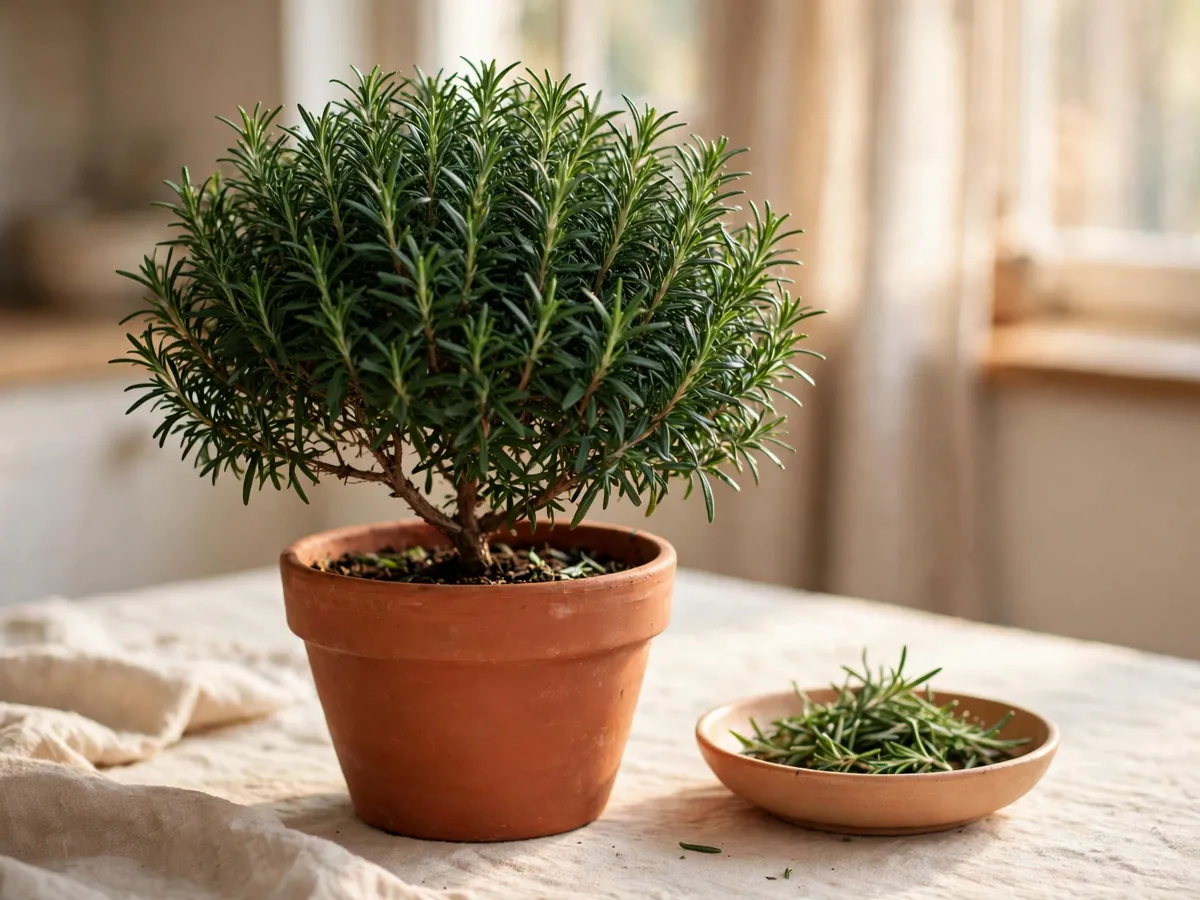
Shape is made by cutting, not by time. Left alone, rosemary sends up a handful of stems that lengthen, thin out at the base and end in a sparse tuft of needles. Pinched, it branches from the dormant buds hidden at each needle joint, and those branches fill it into the domed little shrub the plant is bought for.
Pinch soft growth. In spring and again in midsummer, pinch the growing tip off each new shoot between thumb and forefinger, about half an inch, stopping just above a set of needles. Every pinch turns one growing point into two or three.
Cut back with care, and never into old wood. Rosemary does not reliably push from bare gray stems the way a jade will, so a cut below the last green needles leaves that branch bare for good. The working limit is one third of the leafy growth in a single session, always cut just above a cluster of needles.
Cost: $0 for kitchen scissors, $8–$14 for bypass snips. Time: 15 minutes per session. Caveat: the growth already stretched never tightens; only new shoots come in compact, so fix the light before the cut.
10. Harvesting for cooking, and rooting the sprigs
Its flavor lives in the oils inside the needles, and those oils concentrate when the plant grows slowly in bright light and lean soil, the same conditions that keep it alive indoors. A stretched windowsill stem tastes of almost nothing; a firm, sun-grown one smells the moment you roll it between your fingers.
Harvest from the top and the side, never the middle of the shrub. Take a sprig where the stem is still partly soft, count back to the last set of green needles and cut there. Keep to the one-third rule: no more than a third of the leafy growth comes off at one sitting. A pot on a kitchen sill gives off its scent every time someone walks past and brushes the branches.
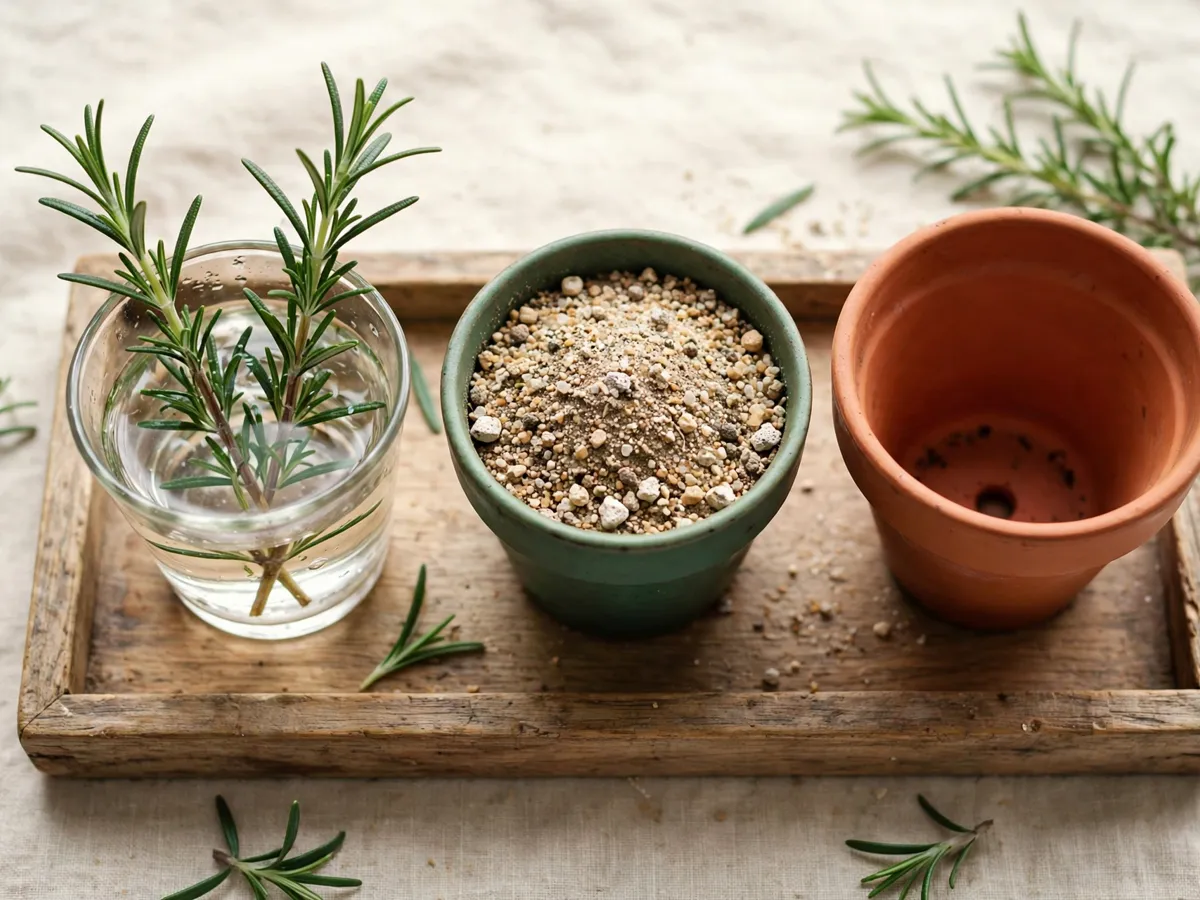
Woody stems root slowly, and this is the patience note. A soft green tip usually makes roots in three to six weeks; a stem that has gone hard and brown takes far longer and often fails outright. Take cuttings from the newest growth in spring, strip the lower needles, and stand them an inch deep in the same gritty mix.
When more than one plant shares the sill, the pairing question is its own subject, covered on the herbs to grow together page.
Cost: $0 for cuttings from your own plant, $5–$9 for a glass and a little extra mix. Time: 10 minutes to cut and plant, then six weeks of waiting. Caveat: a cutting from old wood is a coin toss, so take four and expect two.
11. The frost deadline: bring it in before the freeze
Rosemary tolerates a light chill and does not tolerate a hard freeze in a pot, because the container lets cold reach the rootball that open ground would insulate. A plant spent outdoors through summer has a deadline, and it arrives earlier than most people expect: bring it in before the first hard freeze rather than after frost has blackened the needles, which across much of the country means watching the forecast from late September through October.
Foliage built for full sun burns behind ordinary window glass, so give it an afternoon in deep shade, then a few days of short morning light, then its permanent window over the course of a week. It will drop needles during the change, and new growth follows from the dormant buds.
The best overwintering room is bright and cool, somewhere in the forties or low fifties with a south-facing window, which is why a spare room or a glazed porch beats the middle of the living room. A hot, dry, dim room is the worst option: the heat keeps the plant awake while the light starves it, and a radiator under the window dries the rootball from below. How much time a plant should spend inside versus outside is a bigger question, and the indoor or outdoor plants guide works through it by season.
Cost: $0, or $10–$20 for a window insulation kit on a drafty pane. Time: 15 minutes to move in, 10 to inspect. Caveat: overwintering in a warm, dark room is the pattern that turns a two-year plant into a one-season purchase.
12. Common mistakes: the saucer, the sealed pot, the shower
The failure list is short, and every entry is a small habit repeated rather than one big mistake.
- The saucer that stays full. Water left under the pot wicks back up through the drainage hole and keeps the base of the rootball wet for days. Empty it ten minutes after every soak, every time.
- The decorative pot with no hole. A sealed cachepot is a cover, not a planter. Drill through the glaze at the shop, or keep the growing pot inside it and lift it out to water.
- The shower routine. A cup of water a day keeps the top inch damp while the bottom stays permanently wet. Water deeply, then let the mix dry back.
Two smaller ones. Fungus gnats hover over a mix that never dries, and fungus gnats stop breeding the day the top inch is allowed to go dry between soaks; a yellow sticky trap catches the adults while the habit changes. And a plant parked in a corner three feet from the window is not being kept, it is being slowly stretched.
Cost: $0–$6 for sticky traps. Time: 10 minutes to walk the pot and fix the saucer, the cover pot and the distance in one pass. Caveat: correct two of these and the plant recovers; correct one and the loop keeps running.
13. Cost reality: $8–$30 to start well
The plant is cheap and the upkeep is cheaper. A four-inch rosemary at a garden center runs $3–$8, and the small, bushy, inexpensive one is the right buy. The tall single-stem topiary cone costs $25–$60, was shaped under commercial lights, and spends its first year indoors undoing that shape. A two-gallon shrub at $18–$30 is a reasonable start if the window already exists.
The setup is a six- or eight-inch unglazed pot at $5–$12, perlite at $4–$8, coarse sand at $3–$7 in a bag that lasts years, and potting mix at $6–$12. A bottle of balanced liquid feed is $6–$10 and covers two seasons at half strength.
After that the running cost is close to nothing: a repot every second or third spring, and the monthly check. At the store, two minutes of inspecting for firm needles, a clean base and no white film on the inner growth beats any price comparison.
Cost: $8–$30 to start well, plant, pot and mix included. Time: 45 minutes of shopping and one afternoon of potting. Caveat: an $8 plant in a south window outlasts a $60 topiary in a dim corner every time.
Common questions
Can a rosemary plant live indoors all year?
It can, with the right window: a south-facing sill, a three-part grit mix in unglazed terracotta with a drainage hole, a dry winter routine and space around the branches. What ends most attempts is a mix that holds water and a window that cannot dry it out.
How often should I water rosemary plant indoors?
Whenever the top inch is dry and the pot feels light, which is never a fixed number of days. In strong light during the growing season that lands roughly every four to ten days; in winter, every two to four weeks or longer.
Why has my indoor rosemary got a white film on the needles?
Powdery mildew, and it is an airflow problem before it is a plant problem. Still, humid air trapped inside a crowded shrub lets the film settle on the inner needles first.
Can I root a sprig from a store-bought rosemary?
From the soft new growth, yes, though it is slow: three to six weeks before roots form, and woody brown stems frequently fail. Strip the lower needles, stand the cutting an inch deep in gritty mix, and take four expecting two.
Does rosemary need a grow light indoors?
Only if the window cannot give six real hours of sun. A south or west sill needs no lamp and an east one can hold a plant without one. A north-facing room is the case where a lamp within a foot of the needles is part of the setup rather than an upgrade.
Save these on Pinterest
Pin the three-part grit mix and the window math, the two set-up decisions that decide whether a rosemary reaches its second winter indoors. This guide and the rest of the gardening tips live together there.