 Plant As Deco
Gardening & Planting Tips
Herbs to Grow Together: Which Combinations Work in One Pot
By Plant As Deco · Updated 19 November 2026
A mixed herb pot looks good in the garden centre and dies in the kitchen. The problem is almost never the pairing itself - it is that the plants in it want different things from the soil underneath them. Rosemary comes from dry rocky slopes and basil comes from river valleys that flood. Put them in the same pot and one of them spends every week in conditions it was not built for.
Weekend-ready: $18-$45 for three to six herb starts, one trough or three pots, and one bag of mix. About an hour to plant, ten minutes a week to harvest.
1. Why most mixed herb pots fail
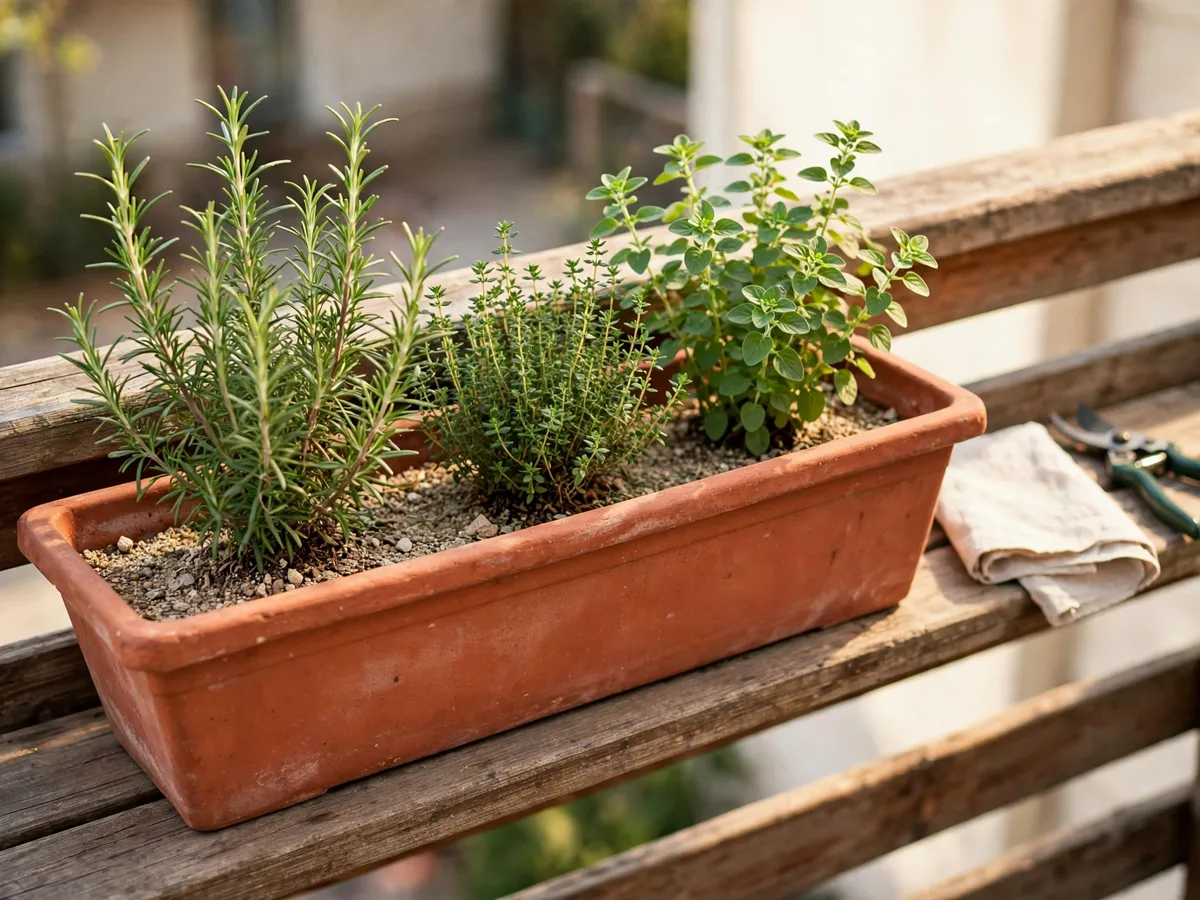
The shared pot is attractive for a practical reason: culinary herbs are expensive as starts, and a six-pack of plugs planted individually needs six containers and six watering routines. One trough solves the storage problem and looks better on a railing.
It fails for three reasons, and a beginner usually only sees the last one. The first is water: a plant that wants a dry rest sits in a pot whose neighbour keeps pulling moisture out of the same soil, so it never gets that rest and its roots suffocate. The second is feeding: rich, regularly fed mix pushes soft leafy growth in herbs that want lean conditions, and they lose flavour and woody structure at once. The third is vigour. Mint and basil out-root and shade the slower herbs beside them, and by week six the pot is one plant wearing three dead ones as decoration.
None of this is folklore about herbs repelling each other. It is competition for four resources: water, light, nutrients and root space. When those match, combinations work for years. When they do not, the pot fails quietly from the edges inward.
2. The three-conditions rule for pairing
Before you put two herbs in the same container, check that they agree on three things. If they disagree on any one of them, give them separate pots.
- Water. Does it want the mix to dry between drinks, or does it want the mix evenly moist? This is the split that decides most pairings, and it is the one people ignore.
- Light. Full sun herbs and part-shade herbs can share a pot only if the sun requirement is the softer end of full sun. A windowsill that gives six hours suits one group and slowly starves the other.
- Vigour. Two plants of similar size and speed hold each other in check. A fast runner beside a slow woody shrub is a countdown, not a combination.
Soil type follows from those three rather than sitting alongside them. Herbs that want dry conditions want open, gritty, low-nutrient mix; herbs that want moist tolerate and prefer a mix that holds water. Match the mix to the group and the watering rule becomes simple. Match the plants but not the mix, and you compensate every week.
The rest of this guide is that rule applied to the herbs a US kitchen buys. The two groups below cover nearly every culinary herb on a garden centre shelf.
3. The Mediterranean group: dry, sunny, lean
Rosemary, thyme, oregano, sage, marjoram and summer savory come from the same climate - hot, bright, dry summers on thin soil. They share one requirement set, which makes them the most reliable herbs to grow together in a single container.
- Rosemary. The biggest of the group and the one that keeps its woody stems for years. It wants the most root room and the driest rest. Give it the end of a long trough, not the middle of a round pot.
- Thyme. Low, mat-forming, content in poor soil. It spreads sideways rather than down, so it fills the front of a shared planter well.
- Oregano. Faster and looser than thyme, with wider leaves. It tolerates a little more water and a little less light, which makes it the most forgiving member of the group.
- Sage. Bushy and medium-sized. It prefers the same lean mix as the others but dislikes sitting wet, so it needs the part of the pot that drains fastest.
- Marjoram and summer savory. Smaller, softer, and usually grown as annuals. They slot into the gaps between the woody members without competing for much.
The shared mix is open and gritty: a general potting mix cut with a third of coarse perlite or pumice, no added manure and no water retainer. Woody Mediterranean roots are fine and fibrous, and they need air channels as much as water. Compact, moisture-holding mix is what kills them in a shared pot.
One watering rule covers the group: soak, then let the top two inches dry fully - every five to eight days in summer, every two or three weeks in the cold months.
4. The moist group: even damp, richer soil
Basil, parsley, cilantro, chives and dill come from damper, richer ground. They grow fast, they have soft stems, and they show thirst within hours. These are the second set of herbs that work together in one pot, and they need the opposite conditions from the group above.
- Basil. The fastest and thirstiest of the moist group. It wants warmth above all, and a windowsill that is drafty in spring will stall it regardless of how well you water.
- Parsley. Slow to establish from seed but steady once going, and it tolerates less light than any other herb here. It is the right pick for a north-facing kitchen.
- Cilantro, sold as coriander. The difficult one. It bolts quickly in heat and long days, so it wants the coolest, shadiest corner of the shared pot and a harvest that keeps it leafy.
- Chives. Tough, clumping, and the most reliable perennial in this group. Their roots stay compact and they accept a wide range of conditions, which makes them the best neighbour in a mixed moist pot.
- Dill. Tall, feathery and short-lived, with a single taproot that dislikes disturbance. Grow it at the back of a pot and sow it directly rather than transplanting.
The mix here holds more water: a standard potting mix with a quarter of compost or coco coir, and no grit amendment. It still needs a drainage hole - evenly moist is not the same as sitting in a puddle, and basil roots rot in a waterlogged pot as readily as rosemary does.
The watering rule is the mirror of the dry group: check every two or three days in warm weather, and water the moment the surface starts to dry rather than waiting for depth. A six-inch pot on a hot sill can empty in a day.
5. The herbs that get their own pot
Three culinary herbs should never share a container with anything else, and the reason is root behaviour rather than water or light.
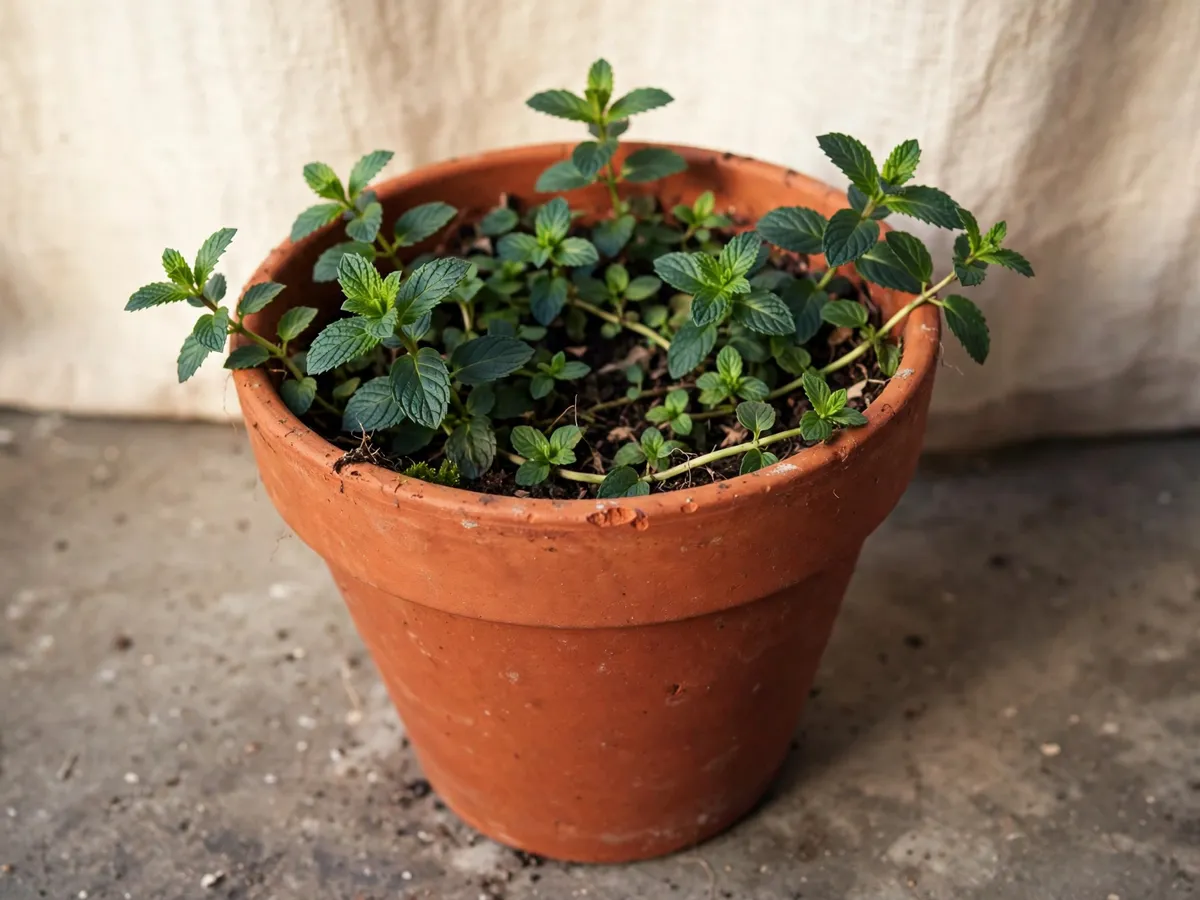
Mint, including spearmint, peppermint and chocolate mint, runs on surface rhizomes that spread in every direction. In a shared pot it takes the whole surface within one season and chokes everything else. It is also genuinely invasive in the ground - grow it in a pot only, and sink that pot below the surrounding soil line if it sits in a planter box. Mint is happy alone in average mix, watered often, and it will outlive most of what you grow beside it.
Lemongrass is a tropical grass that grows into a clump the size of a small bush. One plant wants a twelve-inch pot to itself; nothing competes well with it.
Fennel carries a deep taproot and cross-pollinates freely with other members of its family if you save seed. Grow it at the end of a row or in its own container, separate from dill, cilantro and caraway.
Rosemary deserves a mention even though it belongs to the dry group. A mature rosemary is a shrub, and in a small pot it occupies the root zone of everything sharing it within two years. Keep it at the far end of a long trough, or give it the pot to itself.
6. Combinations that work in the same pot
These are the pairings that hold up over seasons rather than weeks, with the pot size each one needs. All assume a drainage hole and a mix matched to the group. This list is the fastest way for a beginner to choose.
- Rosemary + thyme + oregano. The classic dry trio, and the best-looking one on a railing. Needs a 24-inch trough or three grouped eight-inch pots. Same water, same light, and the low pair never shades the rosemary.
- Thyme + marjoram + summer savory. A small, forgiving pot for a beginner. Twelve inches across, and it tolerates inconsistent watering better than any woody combination.
- Sage + rosemary. Two woody shrubs with identical demands, and the pair that survives a neglected fortnight. Ten inches of root room each.
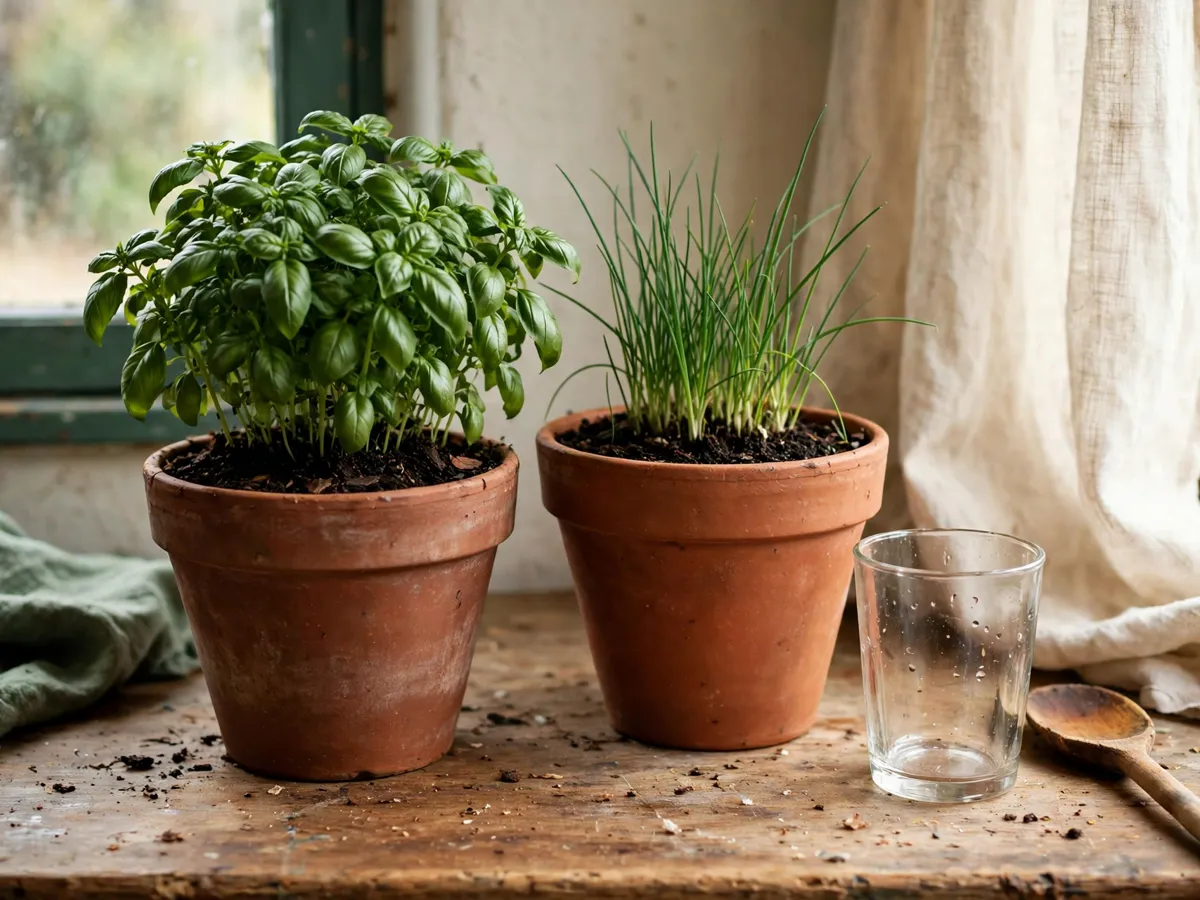
- Basil + chives. The most useful moist pairing for a kitchen windowsill. Basil fills the middle, chives hold the front edge in a tight clump. Fourteen-inch trough or two eight-inch pots.
- Parsley + chives. The shade-tolerant combination, and the pair to plant on a north-facing sill - both accept four to five hours of light and neither bolts.
- Basil + dill, at the back. Works for one season. Dill grows tall and thin at the rear while basil fills the front, and both want the same water. It ends when the dill sets seed.
- Oregano + thyme as a ground layer. At the front of any larger dry container this pair spreads over the surface and holds the mix in place - the best edge planting in a Mediterranean pot.
Notice that every working combination sits inside one group. Cross-group plantings - sage with basil, thyme with parsley - are the ones that look good in a catalogue and need constant compromise to survive.
Cost: $18-$36 for six starts. Time: forty-five minutes to plant a trough.
7. Pairings to keep apart
These combinations fail for a specific reason. Knowing the reason matters more than memorising the list, because it lets you judge a pairing nobody has written down.
- Mint with anything. It takes the pot. This is the one absolute rule in herb combining, and it is about roots, not aroma.
- Rosemary or sage with basil. Opposite water requirements in the same soil volume. Either the basil wilts or the woody herb rots, and you cannot water half a pot.
- Thyme with cilantro. Thyme wants full sun and dry air; cilantro wants cool, moist conditions and bolts in heat. The season each one is comfortable in barely overlaps.
- Any tall fast herb in front of a low slow one. Dill or lemongrass shading thyme is a light problem, not a water problem, and it shows up as a bare patch at the front of the pot within weeks.
- Two heavy drinkers in a small pot. Basil and mint in a six-inch container dry out faster than you can keep up with, even though their requirements match. Vigour has to fit the volume.
One pairing that comes up in every list of this kind is herbs next to vegetables. That is a different question - companion planting for pest pressure and pollination in an open bed - and it belongs to a container vegetable plan rather than a shared herb pot. The short answer for a balcony is that basil near tomatoes is fine and dill near carrots is not, but neither affects what you put in a herb-only pot.
8. Pot size, soil and spacing
Overcrowding is the most common reason a good combination fails, and it is invisible at planting time. Every herb here needs root room measured in inches of depth as well as surface width.
- Woody herbs - rosemary, sage - want 8 to 10 inches of root room each and 10 to 12 inches of surface spacing.
- Low spreaders - thyme, oregano, marjoram, savory - want 6 to 8 inches deep and 8 inches apart.
- Leafy moist herbs - basil, parsley, cilantro - want 8 inches deep and 8 to 10 inches apart. Basil is the thirstiest and the hungriest, and resents a tight neighbour.
- Clumpers - chives - want 6 inches deep and 6 across, and stay put for years.
- Taproot herbs - dill, fennel - want 10 inches of depth minimum and no transplanting once set.
A 24-inch, 8-inch-deep terracotta trough holds three woody herbs or four leafy ones, and no more. A round 12-inch pot holds two. Depth matters more than width for anything with a taproot, and width matters more than depth for surface runners.
Terracotta suits the dry group because its walls breathe and pull moisture out of the mix, shortening the interval and keeping the root zone airy. Glaze and plastic suit the moist group, which holds water longer. Grouping pots tight raises humidity around the leaves and slows surface drying - useful for basil and cilantro, a liability for sage and rosemary.
Planting layout follows the same logic as a bed: tallest at the back or centre, lowest at the front edge, and the most vigorous where you can see it, so you catch its spread early. The container garden layout guide covers the placement rules in more detail.
9. Watering and feeding a shared pot
Once the group is right, watering stops being a compromise. Soak the whole pot until water runs from the drainage hole, then apply the rule for that group: two inches of dryness for the dry set, surface dryness for the moist set.
Shared pots dry faster than single-species pots of the same size, because three root systems drink from one volume. Check them more often than you would check one plant, and expect the front edge of a trough - the part closest to the sun - to dry first.
Feeding is where a mixed pot forces a decision. The moist group wants a dilute liquid feed every third watering through the growing season. The dry group wants far less, and rich mix makes woody herbs grow soft, leggy stems with muted flavour. Use one group per pot and feed to that group only. If you have already mixed them, feed at half the label rate and accept that the rosemary will be less strongly scented.
In the cold months, stop feeding for both groups and stretch the interval. A pot that needed water every three days in July may need it every ten in January, and overwatering in low light is how a shared herb pot gets thrown out in February.
10. Harvesting is what keeps the combination alive
In a shared pot, harvesting is not just cooking. It is the mechanism that stops one herb from outgrowing the others. Cut often, cut from the top, and cut before a plant tries to seed.
Pinch basil above a leaf pair every time it grows four inches, and never let it hold flower buds - a basil that bolts stops making leaves. Snap thyme, oregano and savory just above a set of leaves so the woody base keeps pushing. Snip chives to about two inches rather than picking individual blades. Cut cilantro and dill from the outer edges inward.
The rule that saves most shared pots: never take more than a third of any plant at once. Woody herbs stripped to bare stems often do not regenerate, and a bare stem in a mixed pot is a gap the fastest neighbour fills.
11. Indoor and outdoor combinations differ
The same pairing behaves differently on a windowsill and on a balcony, because light intensity, airflow and drying speed all change. Pick the combination for the place, not for the recipe.
Indoors, the reliable combinations are the ones that tolerate lower light and steadier temperatures: parsley with chives, basil with chives on a bright south sill, oregano in a corner that gets four hours. Mint grows indoors in its own pot, and cilantro only in the cool half of the year. Everything else wants more light than a typical kitchen gives, and a lamp fixes the shortfall for basil and parsley cheaply.
Outdoors, the dry group wins, because sun and airflow give it exactly what it evolved for. A railing trough of rosemary, thyme and oregano needs almost nothing but water and the occasional cut. The moist group does better in part shade in a hot climate, since full afternoon sun in July scorches basil and bolts cilantro within days.
The two dedicated guides cover the setup detail for each place - the indoor herb garden plan for windowsills and kitchens, and the outdoor herb garden plan for railings, patios and beds. Where the outdoor plan mixes herbs with edible plants, the companion planting for balcony containers guide handles the adjacency questions this one deliberately leaves out.
12. Your first planting, in order
Do these in sequence and the pot will still be good in a year. Skipping step two is what produces the mixed herb pot that dies by August, and it is the most common beginner mistake.
- Choose the spot first, and measure the light. South or west railing, six hours or more, means the dry group. A north or east windowsill means the moist group, and parsley plus chives is the safest bet.
- Pick one group, not two. Write down the water rule for that group before you buy anything, and refuse to add a herb that breaks it - however good it looks in the tray.
- Buy the container before the plants. A 24-inch trough for three woody herbs, or a 12- to 14-inch pot for two leafy ones, with a drainage hole. Terracotta for the dry group, glaze or plastic for the moist one.
- Mix the soil to the group. Gritty and lean for Mediterranean, richer and water-holding for the moist set. Do not use garden soil in a pot under any circumstances.
- Plant the tallest at the back, the spreaders at the front, and space each plant to its own mature width rather than the plug it came in.
- Soak once, thoroughly, and then start the group watering rule. Do not feed for the first month - fresh mix already carries nutrients.
- Harvest within three weeks, and take a third at most. The first cut is what turns a set of plugs into a established clump instead of a leggy, one-sided pot.
- Reassess at the end of the first season. Which plant spread furthest, which one lagged? That tells you whether to split the pot next spring or keep the combination.
Herbs to grow together is a smaller question than it looks - most of the answer is simply keeping the dry set and the moist set in separate containers. Everything in the gardening tips collection assumes you make that split before you buy the pot.
Common questions
What herbs to grow together in one pot for a beginner?
Thyme, oregano and marjoram in a single twelve- to fourteen-inch pot with gritty mix. All three want full sun, all three tolerate a dry week, and none of them grows fast enough to smother the others. If you want a moist pot instead, take basil and chives, and water it every two or three days in warm weather.
Can I grow rosemary and basil in the same pot?
Not successfully for long. Rosemary wants the mix to dry two inches deep and prefers lean, gritty soil; basil wants the mix evenly moist and feeds heavily. One watering rule cannot serve both, and the rosemary loses first, because root rot takes longer to show than wilting does.
Why does mint need its own container?
Mint spreads on surface rhizomes that run through the top inch of any soil they reach. Inside a shared pot it fills the whole surface in one season and shades out slower herbs, and its roots take the water and nutrients first. A pot of its own, or a pot sunk into the ground with its rim above the soil line, is the only reliable containment.
How many herbs can I plant in a 24-inch trough?
Three woody herbs, or four leafy ones, counting the tallest at one end. Rosemary occupies a full foot on its own, sage and basil about ten inches each, and thyme, oregano, chives and marjoram about eight inches apiece. Going over that is how a good combination turns into a thin, leggy pot by midsummer.
Do herbs planted together share flavour or pests?
Flavour does not transfer between plants in a pot - that idea comes from old gardening folklore rather than from how a plant makes its own oils. Pests do transfer, and quickly, since leaves touch. That is a reason to inspect the whole pot weekly and to separate any container that shows spider mites or whiteflies, not a reason to avoid combinations.
Is it better to grow each herb in its own pot?
For a first season, yes. Separate pots let you water each group on its own rule and they make it obvious which plant is failing and why. Once you know the two groups, a shared trough saves space and looks better on a railing. The mistake is not the shared pot - it is sharing one between the dry set and the moist set.
Save these on Pinterest
Pin the two groups and the seven working combinations - the two lists that decide whether your herb pot is still full in September. This guide and the rest of the gardening tips live together there.