 Plant As Deco
Gardening & Planting Tips
Best Potting Soil for Indoor Plants: The Mix Is the Whole Game
By Plant As Deco · Updated 23 November 2026
Most houseplants that die indoors do not die of neglect. They suffocate. A dense, waterlogged mix drowns the roots long before the watering schedule gets the blame. Potting mix is not soil at all: it is a built material with four working parts. This page breaks those parts down, gives the recipe by plant type, and shows the honest money math of bagged versus mixing your own.
Weekend-ready: $8–$30 covers a year of mix for a small apartment of plants, one Saturday afternoon. About 30 minutes of measuring per batch after that.
1. Why the mix matters more than the watering schedule
Roots drink, but they also breathe. Every root cell pulls oxygen out of the air pockets between the particles, and a watering that floods those pockets for days leaves the roots underwater in the dark. The brown, soft, sour-smelling roots of a dead houseplant ran out of air, not out of water. That is why the same schedule kills one plant and grows another: a fast, open mix drains in seconds and forgives a heavy hand, while a dense blend holds every drop for a week and drowns a plant on a normal routine.
The test takes one watering: water should sink in within seconds and run from the hole in under a minute. Water pooling on top, or a pot that stays heavy for days, names the mix as the problem. Winter raises the stakes, because a plant drinking almost nothing in short cold days leaves a dense mix wet for weeks, and that is its own page: winter houseplant care.
Cost: $0. Time: 5 minutes and one glass of water. Caveat: a mix that passes the pour test in a warm room can still fail in a cold one, because water leaves the pot at the speed the plant drinks.
2. Anatomy of a potting mix: the four parts and what each does
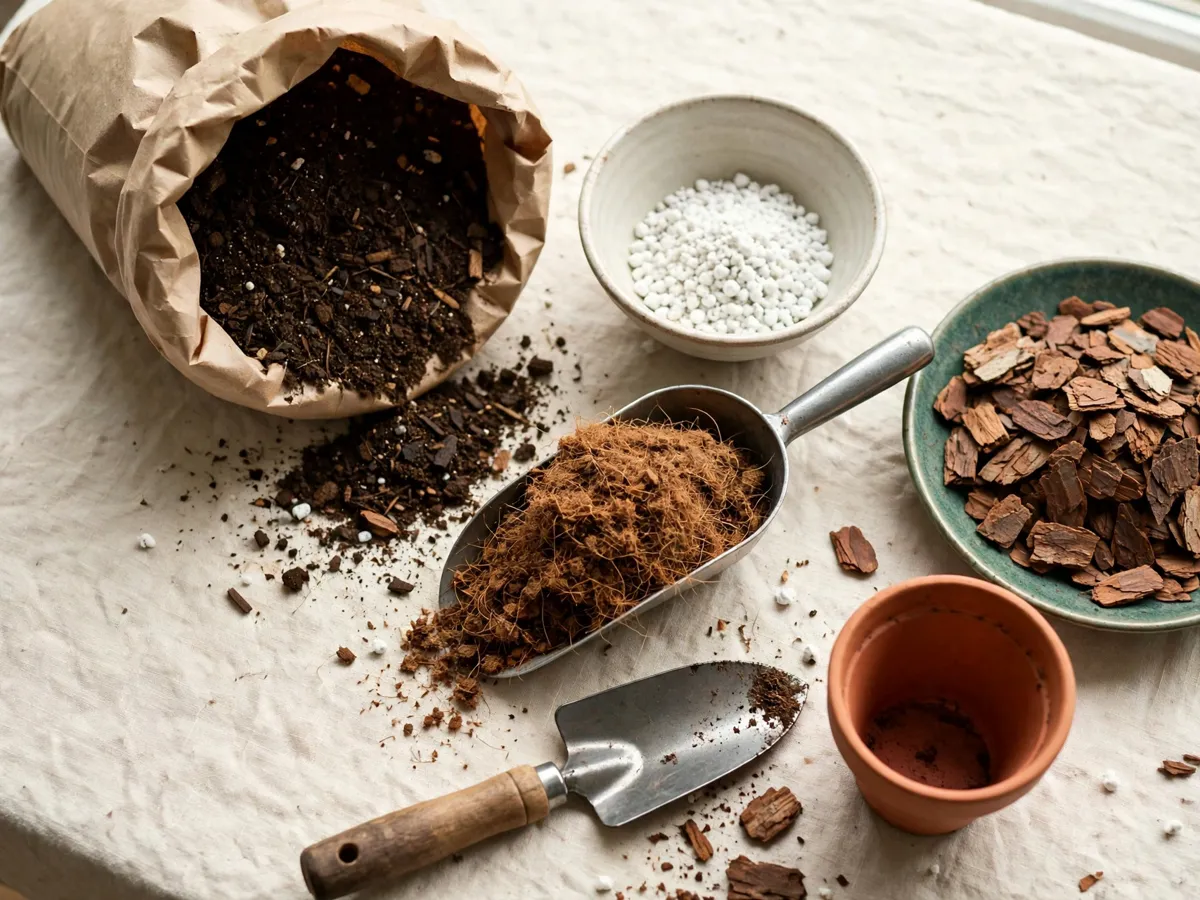
A houseplant mix is engineered, not dug. Every recipe on this page is the same four materials in different ratios, and each part has one job. The base is the sponge: coir or peat, 40 to 60 percent of most recipes, holding several times its weight in water and releasing it as roots pull. The aeration is the air: perlite or pumice, the white or gray grit that keeps the sponge from packing into itself. The chunk is bark, the coarse pieces that create big gaps for thick roots. The nutrition is compost or worm castings, a small fraction that holds minerals and feeds gently between feedings. One optional fifth part: peat is naturally sour, so peat-based recipes carry a dusting of lime to bring the acidity back toward neutral. Coir needs none. Ratios, not ingredients, are the whole difference between a fern blend and a cactus blend.
Cost: $0. Time: 10 minutes of reading. Caveat: the four parts are a menu, not a mandate; recipes change ratios, not materials.
3. Coir vs peat moss: the sponge vs the renewable swap
Peat moss is the classic sponge: partly decayed sphagnum from bogs, holding many times its weight in water. It built the bagged mix industry, with two honest flaws indoors. Once peat dries completely it shrinks and starts repelling water, so a neglected pot takes water down the gap between mix and pot wall while the rootball stays dry. And harvesting it drains ancient peatlands. Coco coir is the swap: coconut husk pith that rewets easily even from bone dry, sits close to neutral, holds water well and lets the excess go. In every recipe here, coir and peat trade places one for one. Coir arrives as a compressed brick: soak one for 15 minutes and it crumbles into five to seven times its shipped volume. Buy washed coir; unwashed bricks can carry salts that burn fine roots.
Cost: $3–$5 per coir brick, $10–$15 for a multi-brick pack. Time: 15 minutes, most of it waiting for the brick to soak. Caveat: brick sizes vary, so measure the expanded volume once and write it on the bag.
4. Perlite and pumice: the air pockets that stop root rot
Perlite is volcanic glass heated until it pops like popcorn: white, featherweight, full of sealed bubbles. It holds a little water on its rough surface, but its real job is structural, keeping permanent air channels open inside the sponge so the roots can breathe two waterings later. Pumice is the same idea in solid rock, heavier, staying put in large pots where perlite floats up over a season. This is the material that stops root rot, and it works with physics: water cannot sit where air holds the space, and roots in air-rich mix stay white and firm. Leafy tropicals want about a quarter of the blend as perlite; succulents want half. Two handling notes: perlite dust is unpleasant to breathe, so moisten it before mixing, and water a perlite-rich mix slowly the first time, since dry perlite floats before it takes on water.
Cost: $6–$10 for an 8-quart bag, $15–$20 for the large one. Time: 5 minutes of pouring. Caveat: perlite drifting to the surface over months is normal, not a defect; stir it back in at the next repot.
5. Bark and grit: what aroids and orchids actually want
Monstera, pothos, philodendron, anthurium and orchids are aroids or their cousins, and in the wild many of them do not grow in the ground at all. They perch on trees, roots gripping bark in open air, drinking from rain and humidity. A smooth, fine, dense mix is the opposite of that life. Bark is the answer: sold as orchid bark in quarter to half inch pieces, it creates the wide gaps those thick roots are built to grab, and it decays slowly enough to hold structure for a couple of years. Aroids want bark as a third to half of their blend; true orchids want nearly pure bark in a slatted pot. Grit plays the same role for desert plants: coarse granite chips or crushed lava, heavy enough to stay mixed, sharp enough to keep big pores open. Fine sand is not grit, and section 13 explains why it does the opposite of the job.
Cost: $8–$12 per bag of bark, $10–$15 for horticultural grit. Time: 5 minutes. Caveat: bark holds almost no water, so a bark-heavy blend needs more frequent watering, not less careful watering.
6. Compost and worm castings: how much nutrition to hold
The fourth part is the pantry. Worm castings and finished compost hold minerals in a form roots can take up gently, and they hold moisture too, which is why every recipe here carries a little and none carries a lot. The ceiling is about 10 percent of the blend. Past that, the organic matter starts doing the job of the sponge, holding water longer than the roots want, and the mix drifts toward the soggy end. Houseplants also get a dilute liquid feed through the season, so the mix needs a pantry, not a full kitchen. Two rules: castings from a sealed bag are consistent and clean, while garden compost is not, because outdoor piles carry fungus gnat eggs; and a peat-based blend with castings still wants its lime dusting.
Cost: $8–$14 for a bag that lasts a year of batches. Time: 5 minutes. Caveat: castings vary by producer, so the nutrition in a finished blend is a range, not a number; feed through the season rather than loading the mix.
7. The recipes: leafy tropical, succulent, aroid, fern
Parts are measured by volume, not weight: any scoop works, a cup, a yogurt tub or a trowel load, so long as it is the same scoop. Dampen the blend as you fold it, because a dry mix separates as it pours. Leafy tropical, for pothos, philodendron, peace lily, ZZ and monstera: two parts coir or peat base, one part perlite, one part bark, half a part castings. It holds moisture about a week and drains in seconds.
Succulent and cactus, for aloe, jade, haworthia and echeveria: one part base, one part perlite or pumice, one part grit or bark, no castings. The blend should look half mineral and dry within a day or two. The succulent mix in action, on the plant most people already own, is aloe vera care.
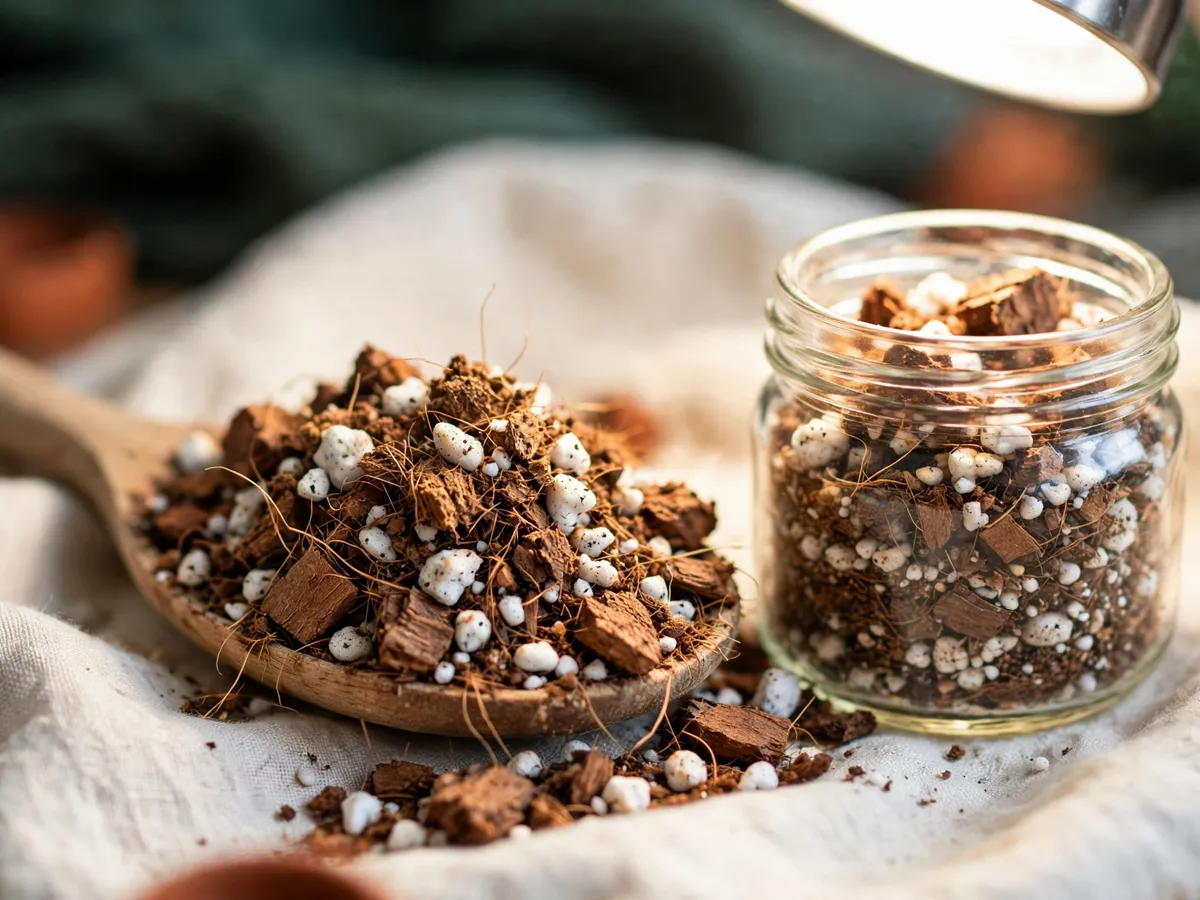
Aroid, for monstera, pothos, anthurium and philodendrons kept too wet: two parts bark, one part coir, one part perlite. Chunky enough that water disappears almost as fast as it lands. Fern, for boston, maidenhair and rabbit foot ferns: two parts coir, one part perlite, half a part castings, no bark or a light sprinkle. Ferns want even moisture with air still in the blend, the trickiest balance here.
The squeeze test tells you if you landed it. Squeeze a handful: it should form a loose clump that breaks at a touch. A wet fist that stays a ball is too spongey; one that will not clump is too gritty.
Cost: $0 with ingredients on hand. Time: 15 minutes per batch. Caveat: pots dry at different speeds, so the plant sets the watering rhythm, not the recipe.
8. Bagged mix: how to read the label and what premium hides
Bagged mixes list ingredients in order by volume, and the first two lines tell most of the story. Peat moss or coir first is normal. Perlite and composted bark in the next spots means the bag actually carries aeration; a short list of peat, wetting agent and fertilizer means a sponge with no air plan. The word premium is marketing, and it usually means two things: a wetting agent so the peat rewets, and slow-release fertilizer beads mixed in. Neither is aeration. The honest test is weight and feel: a dense, heavy bag is a dense, heavy mix. Open it and squeeze a handful; it should spring back, not pack into a wet ball.
Fertilizer beads are fine for leafy plants and wrong for succulents, which want a lean, fast blend. Moisture control labels mean gels that hold water longer, the opposite of what an overwatered plant needs. Price runs $8 to $20 for 8 to 16 quarts, and the lighter bag at the same price is usually the better buy.
Cost: $8–$20 per bag. Time: 10 minutes of label reading. Caveat: stock varies by region, so judge the ingredient list and the squeeze, never the printing.
9. Mixing your own: the one-bucket Saturday job
The shopping list is short: one coir brick, one bag of perlite, one bag of orchid bark, one bag of worm castings, and horticultural lime only if the base is peat. The tools are shorter: a five-gallon bucket, a scoop, gloves and a dust mask. The job is one flow. Soak the brick until it crumbles, about 15 minutes, and pour off the free water. Add perlite and bark in the ratios of section 7, fold rather than stir so the chunks stay whole, and moisten until a handful clumps and breaks. Scoop straight into pots or store the remainder as the next section explains.
Cost: $20–$30 for the first set of ingredients. Time: 30 minutes. Caveat: perlite dust is the one hazard, so moisten it first and work in moving air.
10. The no-bugs rule: storage, sterilizing, old mix
Fungus gnats are the small black flies that rise off a freshly watered pot, and their larvae live in the top inches of wet, organic mix. Fresh sealed bags are usually clean; bags stored outdoors, opened for a season, or scooped from a shared bin can carry eggs. What lives in bad mix is its own subject: indoor plant pests guide.
Storage is the first defense. Decant open bags into a bin with a sealing lid, keep it dry and off the floor, and write the opening date on the lid. A sealed bin of dry mix holds a year or more. Sterilizing is the second. Spread moist mix on a baking sheet and hold it at 180 to 200 degrees F for 30 minutes, enough to cook eggs and larvae, then cool it completely before potting. The kitchen smell is honest, so some growers pour boiling water through the mix in a bucket instead.
Cost: $0–$15 for a storage bin. Time: 20 minutes active, 30 more if oven-sterilizing. Caveat: sterilizing leaves the blend biologically empty, so fold in fresh castings before use.
11. Reusing old mix: when it works and the refresh recipe
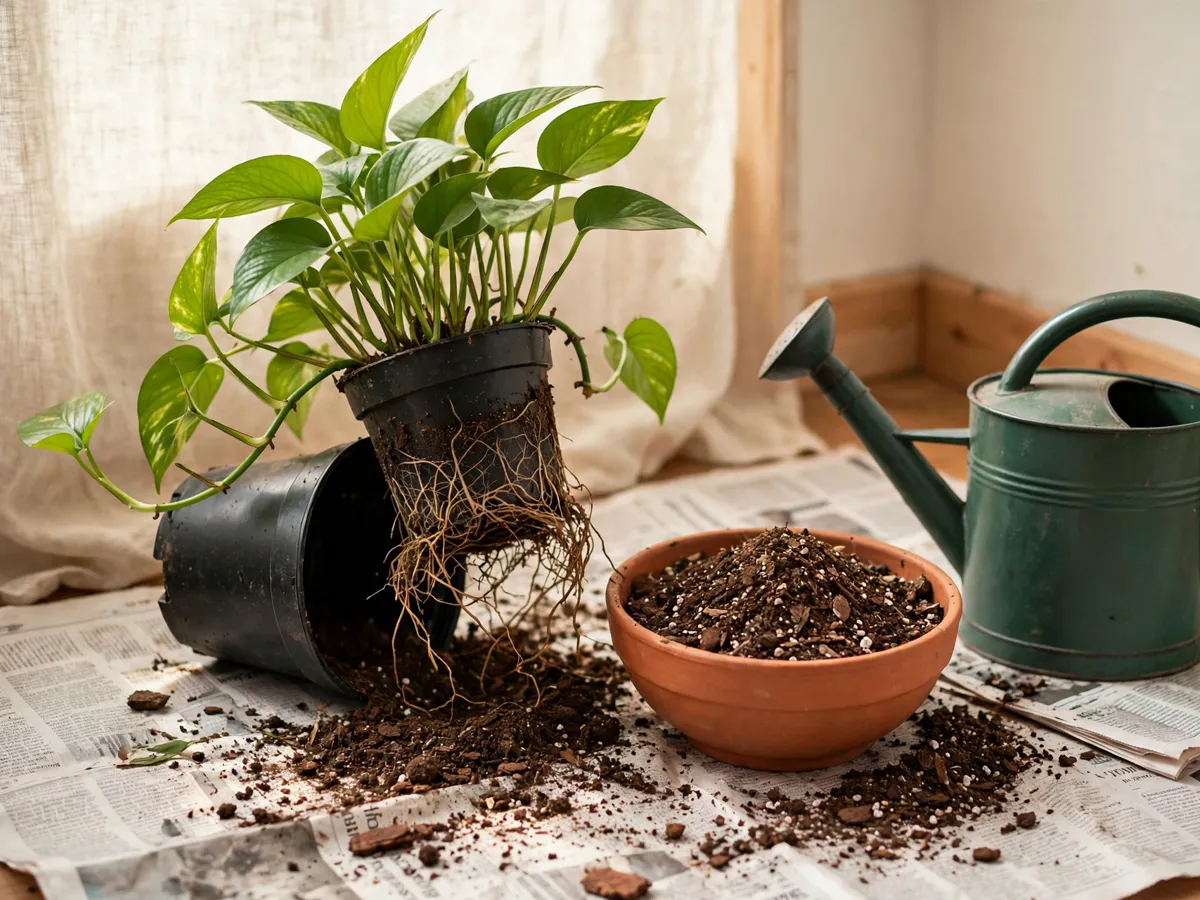
Old mix from a healthy plant is a raw material, not a finished blend. What it has lost: structure, because the coir and bark have collapsed to finer particles, and nutrition, because the previous plant took it. What it may carry: root fragments and, if the plant struggled, eggs. The refresh recipe works when the plant was healthy: pick or sift out the old roots, sterilize as in section 10, then blend two parts refreshed old mix with one part fresh coir, one part perlite and half a part castings. The new ingredients rebuild what age removed: sponge, air and food.
The line is firm on the other case. Mix from a plant that died of rot or lived through an infestation goes outdoors into a garden bed or the green waste bin, never into a fresh pot. Saving four dollars of mix is not worth repotting a healthy plant into a suspect one.
Cost: $0. Time: 15 minutes. Caveat: a refreshed blend is fine for sturdy plants; keep ferns and anything precious on new mix only.
12. The 12-18 month clock: when every pot needs a refresh
Every mix ages out, on a clock of roughly 12 to 18 months. Coir and peat compress under repeated watering. Bark decays into fine particles that fill the air pockets it was put there to hold. Perlite migrates upward and washes out the drainage hole. Tap water and feed leave salts behind, the white crust on pot rims that fine roots resent. The blend still in date announces itself in the watering. Water channels straight down the gap between mix and pot wall; the surface pulls into a hard cake; a pot that used to dry in five days now dries in two, or stays wet for weeks. Those are structure failures, not watering failures.
The calendar answer is a spring refresh. When to move up a pot, and how to check the roots while you are in there, is the whole subject of repotting houseplants. A refresh without a size-up keeps the old pot and swaps the blend around the rootball.
Cost: $8–$18 for mix per refresh round. Time: 30 minutes per plant. Caveat: fast growers fill a pot before the mix expires, so the root check decides the job.
13. Common mistakes: garden soil, sand, rocks at the bottom
Garden soil in a pot is the oldest mistake. Ground soil is built by worms, weather and a full ecosystem that a pot does not have; watered indoors, it compacts near concrete and holds its puddle for days. It also carries weed seeds, eggs and fungi that a sealed bag does not. That material belongs outside, in the outdoor version of this whole subject: raised bed soil mixture. Fine sand is the second mistake, and it hides inside helpful advice: the fine grains settle into every air pocket the perlite opened and seal them, wet cement by another name. Drainage in a small pot comes from perlite, pumice or bark, all coarse on purpose. Rocks at the bottom are the persistent myth. A gravel layer does not create drainage; it moves the saturated zone up, closer to the roots, because water will not cross into the coarse layer until the fine mix above it is fully wet. A drainage hole with a mesh square does the job the rocks were supposed to do.
Cost: $0. Time: 5 minutes to audit your pots. Caveat: mesh over the hole is optional; the hole itself is not, whatever the decorative cache pot suggests.
14. Cost reality: $8–$30 for a year of mix per household
A small household, six to ten plants, needs one good bag of mix a year: $8–$15 for 12 to 16 quarts, the opened remainder stored sealed for the next repot. The mixing route spends $20–$30 once on ingredients and covers two years of the same plants, closer to $12–$15 a year, with blends tuned to each shelf: chunky for the aroids, gritty for the succulents. Larger collections, twenty plants and up, are where the savings get real, because five-gallon batches cost about half the equivalent bagged volume.
The cheapest line item is the invisible one: mix that keeps the plants you already own. A replacement houseplant costs more than a year of mix, and most dead houseplants trace back to the blend rather than the gardener.
Cost: $8–$30 for a year of mix per household. Time: one Saturday, plus a few repots through spring. Caveat: prices move by region and season; the ratios, not the dollars, are the fixed part.
Common questions
What is the best potting soil for indoor plants?
There is no single best soil, because there is no single indoor plant. The blend that fits most leafy houseplants is two parts coir or peat, one part perlite, one part bark and half a part worm castings, by volume. Succulents, aroids and ferns bend those ratios their own way.
Can I use garden soil for indoor plants?
No. Garden soil compacts inside a container, holds water for days, and carries weed seeds, eggs and fungi from outdoors. Potting mix is coir or peat with perlite, bark and a little nutrition, built to stay open and drain fast in a small volume. Ground soil belongs in beds and borders.
How often should I replace potting mix?
On a 12 to 18 month clock. Coir and peat compress, bark decays to fine particles, and salts build up from tap water and feed. Water running straight down the pot wall, a hard cake on the surface, or drying times that swing wildly mean the blend aged out early.
Do I need to sterilize potting mix?
Fresh, sealed bagged mix usually arrives clean enough to use as-is. Sterilize anything reused or anything that sat open outdoors: spread it moist on a tray, hold it at 180 to 200 degrees F for 30 minutes, or pour boiling water through it. Cool it fully, then fold in fresh castings.
Can I mix perlite into potting soil?
Yes, and it is the fastest single improvement to a dense bagged blend. Roughly a quarter of the volume for leafy tropicals, up to half for succulents, folded in evenly rather than layered. Moisten the perlite first to keep the dust down.
Save these on Pinterest
Pin the four-part anatomy, the recipe card with all four blends and the no-bugs storage rule, the three sections that decide whether a plant sits in engineered air or packed mud. This guide and the rest of the gardening tips live together there.