 Plant As Deco
Gardening & Planting Tips
Indoor Fern Plants: The Humidity Contract
By Plant As Deco · Updated 23 November 2026
A fern is the oldest plant on the houseplant shelf: a spore plant that covered forest floors long before any plant flowered. The trade is simple. Keep the air around the fronds moist and the soil evenly damp, and it pays in cascading green no flowering plant copies. Break the air half of the deal and frond edges crisp within days, usually by February, over a radiator. Here are the five apartment ferns ranked by how much they forgive, then the humidity ladder that carries them to spring.
Weekend-ready: $9–$30 for a starter fern, a saucer and a pebble tray, one afternoon. Ten minutes a week of water and frond checks after that.
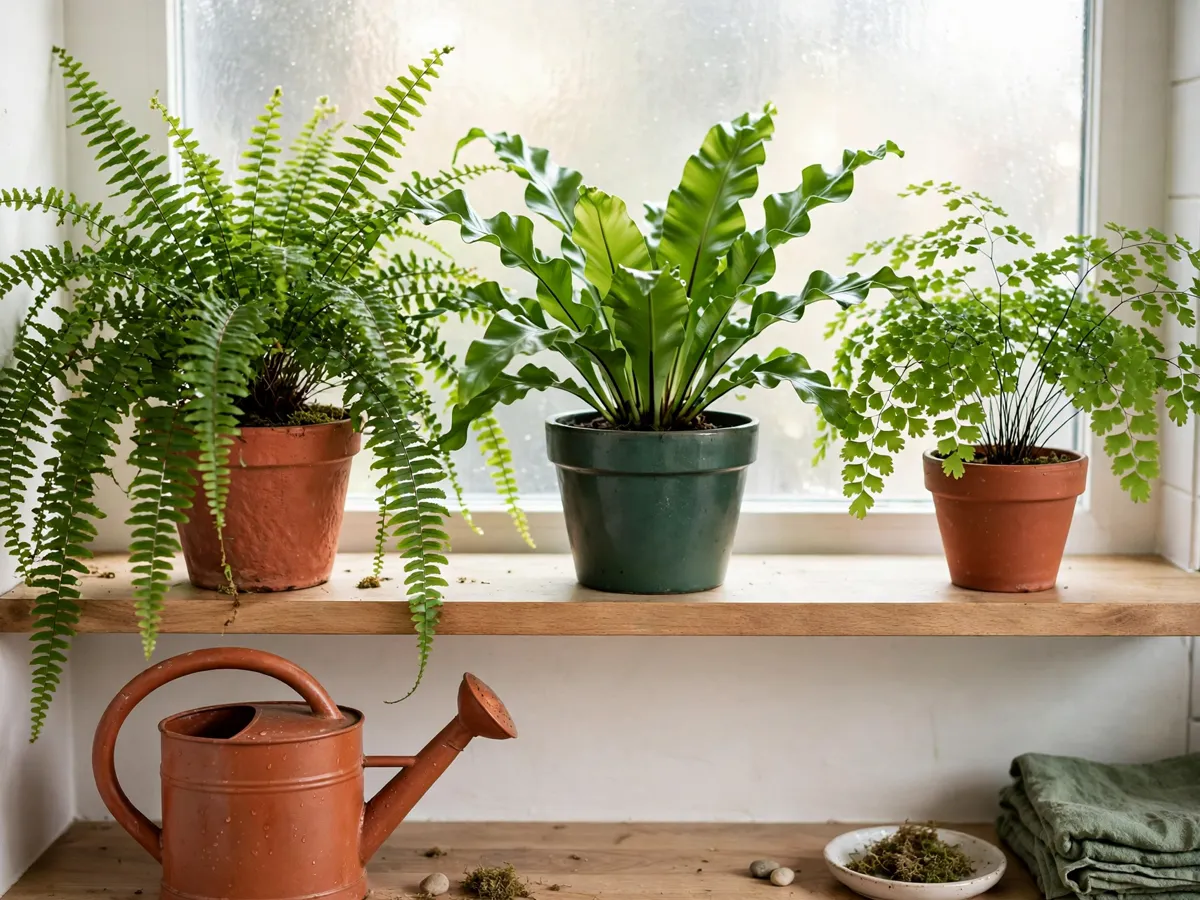
1. What a fern actually is: ancient spore plants, no flowers, no seeds
Ferns were green on the ground tens of millions of years before the first flower opened, so they never built flowers, seeds, or the thick waxy leaf a flowering plant uses to hold water in. A frond is thin and generous with surface, which is why dry apartment air hurts a fern first on any shelf.
Turn a healthy frond over and look along the veins: rows of small brown dots in tidy lines. Those are sori, spore clusters, the fern answer to seed, and the most misread thing in houseplants: a beginner sees brown dots and reaches for an insect spray. Spore rows sit flat in the tissue; scale insects sit like bumps a fingernail can nudge off. A fern grows steadily while light and warmth hold, slows through short winter days without going fully dormant, and asks the same two things all year: moist air and damp soil.
Cost: $0. Time: 5 minutes. Caveat: identify the brown dots before treating anything, because a spray over healthy spore rows leaves a fern stressed for no reason.
2. The humidity contract: what every fern is trading you
The whole relationship in one sentence: a fern trades cascading fronds for air that never fully dries. Most indoor ferns come from forest floor understory, where air under the canopy stays damp all day. A heated apartment in January can sit near 20 percent relative humidity over a running radiator, and a thin frond loses water faster than the roots can replace it.
The plant tells you where the deal stands. Deep green fronds with supple tips mean the air is holding up its end. Pale, papery edges creeping inward mean the air has broken the contract, and no amount of watering fixes air. Whole fronds collapsing dark and soggy is the opposite failure, too much water at the root.
Cost: $0 to look, $8–$12 for a hygrometer. Time: 5 minutes. Caveat: the number on one wall is not the number on another, so measure where the fern will live.
3. The ranked five: survival odds from forgiving to fussy
Ranked by how much they forgive a normal apartment, most to least: asparagus fern, which is not a true fern at all; bird's nest fern, the best beginner plant in the group; Boston fern, the classic that sheds when the air drops; rabbit's foot fern, forgiving if you water lightly and often; and maidenhair fern, the drama queen that crisps first and is worth it anyway.
The ranking is about dry air, not general difficulty. An asparagus fern shrugs at 30 percent humidity; a maidenhair at 30 percent is brown lace within two weeks. Light and water needs run close to even across the five, so pick your first fern by the room you have: a dry, bright room leans asparagus, the steamy bathroom leans maidenhair, and everything between leans bird's nest. All five start in the $6–$25 band.
Cost: $6–$25 for any one of the five. Time: 10 minutes. Caveat: buy for the room you have, not the room you plan to have.
4. Boston fern: the classic porch-and-bathroom cascade
Nephrolepis exaltata is the fern on every shaded porch, a fountain of arching, divided fronds that fills a hanging basket two to three feet across indoors. It is also why many people believe ferns are difficult: a porch-grown Boston arrives lush from greenhouse air, meets a living room, and yellow-sheds a third of its fronds in the first month. That is the plant reporting dry air, not dying.
The care is steady rather than fussy: bright indirect light, evenly damp soil, and the coolest bright spot you can offer in summer. Cut yellowed fronds off at the base rather than pulling. In spring, a hard haircut, every remaining frond back to the crown, restarts a ragged basket dense and fresh, because new fronds unroll from the center all season. Gardeners overwinter porch Bostons by cutting back before the first frost, and an overwintered pot comes through the dark months to regrow by May.
Cost: $8–$20 for a full basket. Time: 15 minutes. Caveat: a Boston that drops everything in a dry December usually regrows from the crown by April, so cut it back and wait before replacing it.
5. Bird's nest fern: the beginner's best fern (and why)
Asplenium nidus grows as a flat, wavy rosette of whole, undivided fronds, glossy green from a brown fuzzy center. It is the beginner's best fern for one structural reason: whole fronds lose water slower than the finely divided fronds of a Boston or a maidenhair, so it holds up through an ordinary apartment week that would crisp a lace-leaf fern by Friday.
The one rule that matters: water the soil, not the plant. The rosette center is where new fronds emerge, and a crown kept wet rots from the middle out, so pour around the rim of the pot. It also takes the deepest placement of the five, though not a dark corner: near a north window it grows slower and asks for less water. Repot one size up in spring without burying the rosette.
Cost: $10–$25. Time: 10 minutes. Caveat: a soft, browning center is crown rot, and the fix works best before it starts, so pour at the rim from day one.
6. Maidenhair fern: the drama queen with black stems
Adiantum is the fern people buy twice. Fan-shaped leaflets carried on wiry black stems look like green lace, and in humid air they move with every draft like fabric. In dry air they crisp to brown paper, sometimes over a single radiator weekend, and the plant earns its drama-queen name honestly.
The care is not harder, it is stricter: bright shade, evenly damp soil, never a dry spell, and air near 50 percent, which in most apartments means the bathroom shelf, a humidifier corner, or a tight group of plants. Skip the misting bottle, which wets the leaflets for minutes and leaves water standing where leaflets meet the stem. The rescue is the part nobody believes: a fully crisped maidenhair is usually alive at the root. Cut every frond to the soil, keep the pot evenly damp, and new fronds push up within weeks if the rhizomes are still firm.
Cost: $8–$18. Time: 15 minutes. Caveat: buy this fern for a room that is already humid, not one you intend to humidify, or it costs you a plant every winter.
7. Rabbit's foot fern: the creeping paw that climbs the pot
Davallia grows shallow, and its signature sits on the outside of the pot: fuzzy, creeping rhizomes that crawl over the rim and down the sides like a paw gripping the container. The fronds are fine and lacy, but the plant is sturdier than it looks, because those surface rhizomes hold reserve water and forgive a missed watering better than any other true fern here.
Two rules come with the rhizomes. Never bury them: when repotting, set them on top of the mix so they can creep and breathe, and choose a wide, shallow pot over a deep one. And water lightly and often rather than soaking, because a shallow root run dries fast but a flooded one rots the rhizome. It is also the most forgiving true fern through a dry week: fronds may gray and fold, then recover when water returns, where a maidenhair in the same week becomes brown lace.
Cost: $12–$25. Time: 10 minutes. Caveat: the rhizomes are the plant, so a repot that buries them trades the display feature for a rot risk.
8. Asparagus fern: not a fern at all, and why that helps
Asparagus setaceus is not a fern, and the distinction is useful. It belongs to Asparagaceae, the asparagus family: it makes no spores, and in bright light it produces tiny white flowers followed by red berries, which no true fern can do. The feathery green that reads as frond is made of cladodes, flattened stem tissue doing leaf work.
Why that helps indoors: a true frond is engineering for humid air, while a cladode is ordinary green stem, tough enough for a room at 30 or 40 percent. Give it the brightest light of the five, including a few hours of gentle morning sun, let the top half of the soil dry between waters, and it stays a dense, airy green mound with almost none of the ladder work; drier soil also keeps fungus gnats uninterested. It grows fast and wants cutting back a few times a year, and it is the one to keep away from pets: the plant and its berries are listed as toxic to cats and dogs.
Cost: $6–$15. Time: 10 minutes. Caveat: the plant that forgives your air still needs your light, and a dim corner thins it into strings.
9. Light: the bright shade band, the window logic
The band every fern wants is bright shade: as much light as possible without direct sun beams landing on the fronds. An east window a foot from the glass is the classic fit. A north window works for bird's nest and maidenhair. A south or west window needs a sheer curtain or three feet of setback, because an hour of summer sun bleaches fronds to pale scorch patches that never green again.
Too little light shows differently and slowly: sparse new fronds, long gaps between them, a plant leaning hard toward the glass. Turn the pot a quarter turn each week so growth stays even. If your best wall is genuinely dim, match the plant to the wall instead of pushing a fern uphill. The low-light companion list: low light houseplants that need less water.
Cost: $0, or $10–$15 for a sheer curtain. Time: 10 minutes. Caveat: light is fixed and water is not, so pick the window before you pick the fern.
10. Watering: keep it even, never soggy, never bone dry
Even is the whole instruction: evenly damp, never soggy, never bone dry. Water when the top inch of soil has dried, pour slowly until water runs from the drainage hole, and empty the saucer ten minutes later so the pot never stands in its own runoff. A pot sitting in a full saucer pulls water back up through the hole and keeps the bottom of the rootball saturated, which is where root rot starts.
The finger test beats any calendar, because pot size, temperature and season all change the pace: a small fern may need water twice a week in bright July and every ten days in a cool January, and a fern never goes dormant the way a bulb does, so keep checking all winter. A dense, peaty mix holds water into a soggy week, while a loose, fibrous one drains and re-wets evenly. The moisture-holding mix: best potting soil for indoor plants. Soggy soil also breeds fungus gnats, the tiny flies over wet pots, so persistent gnats are a watering signal rather than a pest crisis: let the surface dry more between waters.
Cost: $0. Time: 10 minutes. Caveat: when a fern wilts, check the soil before you pour, because a soggy pot wilts exactly like a dry one.
11. The humidity ladder: pebble tray, grouping, bathroom, humidifier
The ladder has four rungs, and you climb only as high as your air requires. Rung one is grouping: plants release moisture through their leaves, and five or six pots within a foot of each other make a pocket of air damper than the room around it.
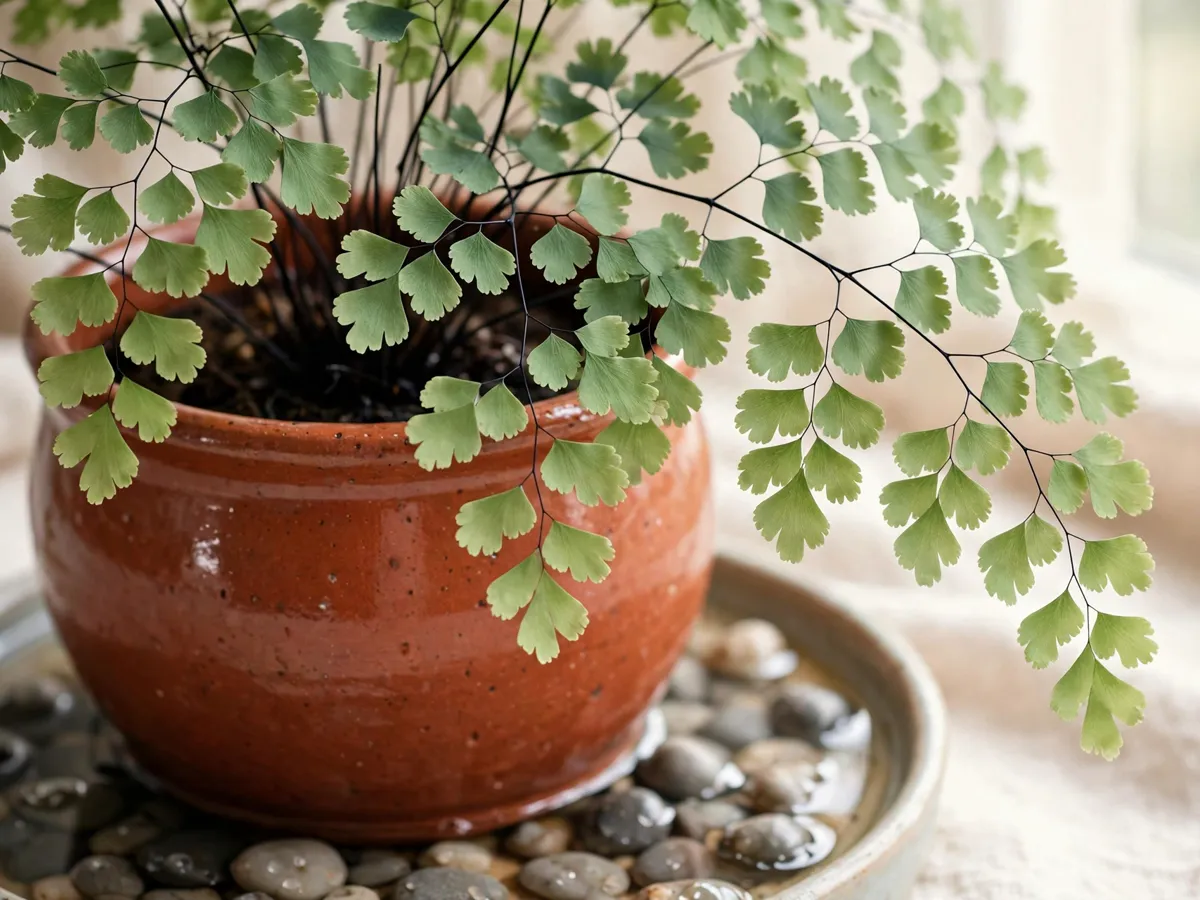
Rung two is the pebble tray: a wide saucer of pebbles and water, the pot standing on the stones above the waterline so the roots never soak while evaporation rises around the fronds all day. Rinse the pebbles monthly so the tray does not build algae. Rung three is the bathroom or laundry room, where daily shower steam keeps the air past 50 percent for hours. The room that helps most: indoor plants for bathroom.
Rung four is a small humidifier at $30–$60, the real fix once you keep several ferns or any maidenhair in a dry room, run near the plants and cleaned on its schedule. Two honest notes: a pebble tray changes the air for one plant, not a room, and misting wets fronds only for the minutes the water takes to evaporate.
Cost: $0–$5 for a pebble tray, $30–$60 for a humidifier. Time: 20 minutes. Caveat: climb one rung at a time and watch the fronds for a week before deciding the ladder is not working.
12. Winter: the radiator is the enemy, the December plan
A running radiator or forced-air vent drops the air around a fern to desert levels for five straight months: heated indoor air in January commonly sits near 20 to 30 percent relative humidity, and a frond in that draft loses water faster than any root can replace it. This is why so many ferns fail in February rather than August. The plant did not get harder; the room got drier.
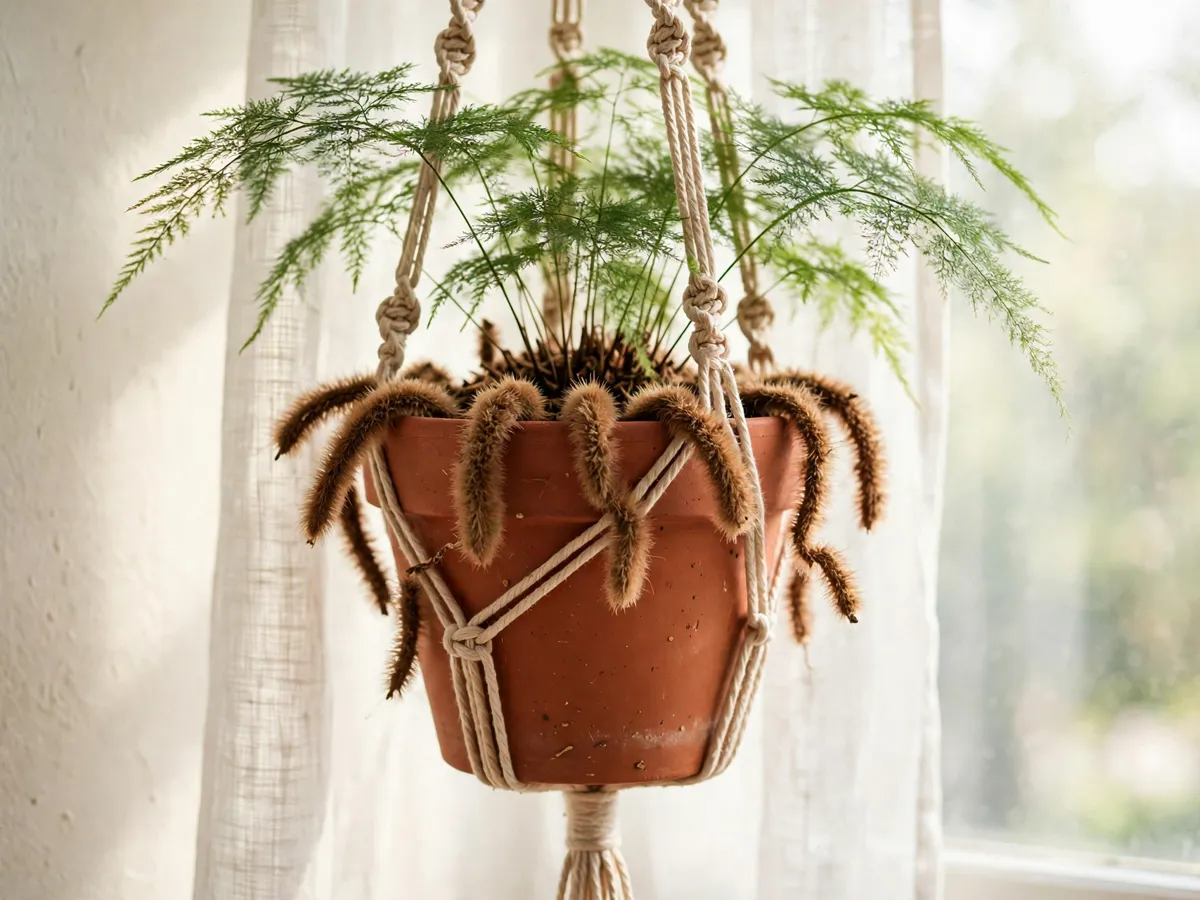
The December plan is four moves, one afternoon. Move every fern three feet or more from radiators and floor vents, and never let fronds touch cold window glass overnight, which freeze-spots them. Close or deflect the nearest vent. Tighten the plant group, and start the humidifier if the room reads under 40 percent. Water less often, because growth has slowed without the plant going dormant, but do not stop. The radiator plan: winter houseplant care.
Dry winter air is also spider mite season. The mites look like pinprick dots on frond undersides with fine webbing where leaflets meet the stem, and a hot, dry shelf is where spider mites get started, so a weekly look underneath catches them early. Frond pests: indoor plant pests guide.
Cost: $0–$30. Time: 20 minutes. Caveat: the radiator under the sill wins every argument with a fern, so the move matters more than anything in the watering can.
13. Cost reality: $9–$30 for a full cascade
The plants are cheap and the ladder is mostly free. Asparagus ferns start at $6–$15, bird's nest ferns at $10–$25, Boston ferns at $8–$20 for a full hanging basket, maidenhairs at $8–$18, and rabbit's foot ferns at $12–$25. A pebble tray is a $3–$6 saucer and a $2 bag of pebbles, a hygrometer runs $8–$12, and the top rung, a small humidifier, is $30–$60.
The honest starter build for one shelf: a bird's nest fern at $10–$18, a pebble tray at $5, and two or three plants you already own grouped close around it. That is the $9–$30 of the title, and it tests your air before you spend anything above rung two. If the bird's nest holds its fronds deep green through February, the room will carry a Boston and a rabbit's foot next year. What you do not need in year one: a misting bottle, a glass cloche, a special fern feed, or a larger pot before roots crowd the surface.
Cost: $9–$30 to start, fern, tray and grouping included. Time: 45 minutes. Caveat: a $10 bird's nest in the right room outgrows a $25 one in the wrong room by June.
Common questions
Which indoor fern is easiest for a beginner?
The bird's nest fern, Asplenium nidus. Its whole, undivided fronds hold moisture better than the finely cut fronds of a Boston or a maidenhair, it forgives a missed watering, and its one real rule, water the soil rather than the center of the rosette, is easy to keep. Start there, add a Boston for a hanging spot, and leave the maidenhair until a humid room exists for it.
Why are my fern fronds turning brown and crispy?
Almost always dry air, and in winter, dry air plus radiator heat. Crisping starts at the frond edges and tips and moves inward, and the soil underneath is often still damp, which is the clue that the air is the problem rather than the watering. Move the plant back from the heat source and add a rung of the ladder. Brown patches in the middle of fronds usually mean sun scorch or cold glass instead.
Should I mist my fern?
Misting is the famous advice and the weakest rung. The water sits on the fronds for the minutes it takes to evaporate, which wets leaves briefly without changing the air around them. Grouping, a pebble tray, the bathroom, or a small humidifier changes the air itself, which is what the fronds are asking for.
Can I keep a fern happy without a humidifier?
Yes, if the fern and the rung match. An asparagus fern or a bird's nest holds up in average room air with grouping alone. A Boston wants at least a tray and some steam nearby. A maidenhair in a dry room without a humidifier is a plant you will rebuy, so put it in the bathroom instead. A five dollar tray plus a tight group carries most beginners through, and in winter the plants slow down without going dormant, so their demands ease just as the air gets worst.
Are these ferns safe for cats and dogs?
The true ferns here, Boston fern, bird's nest fern, maidenhair fern and rabbit's foot fern, are listed as non-toxic to cats and dogs. The exception is the one that is not a fern: asparagus fern, Asparagus setaceus, is listed as toxic to pets, and its red berries are the tempting part, so keep it high or pick the berries off. Any suspected chewing is a question for your veterinarian.
Save these on Pinterest
Pin the humidity ladder and the December radiator plan, the two sections that decide whether a fern makes it to spring. This guide and the rest of the gardening tips live together there.