 Plant As Deco
Gardening & Planting Tips
Philodendron Indoor Plant: The Forgiving Trailer
By Plant As Deco · Updated 23 November 2026
Philodendron is a genus of roughly five hundred tropical species, not one plant, and the handful sold in American stores share a single trait: they keep growing when you forget them. The heartleaf form will root in a jar of tap water on a shelf that never sees the sun. The Brasil is the same plant wearing a cream racing stripe. The pink princess costs more than the shelf it sits on, and the reason why takes a paragraph.
Weekend-ready: $10–$60 depending on variety, plus a pot with a drainage hole and a chunky mix, one afternoon. Ten minutes of checking after that, about once a week.
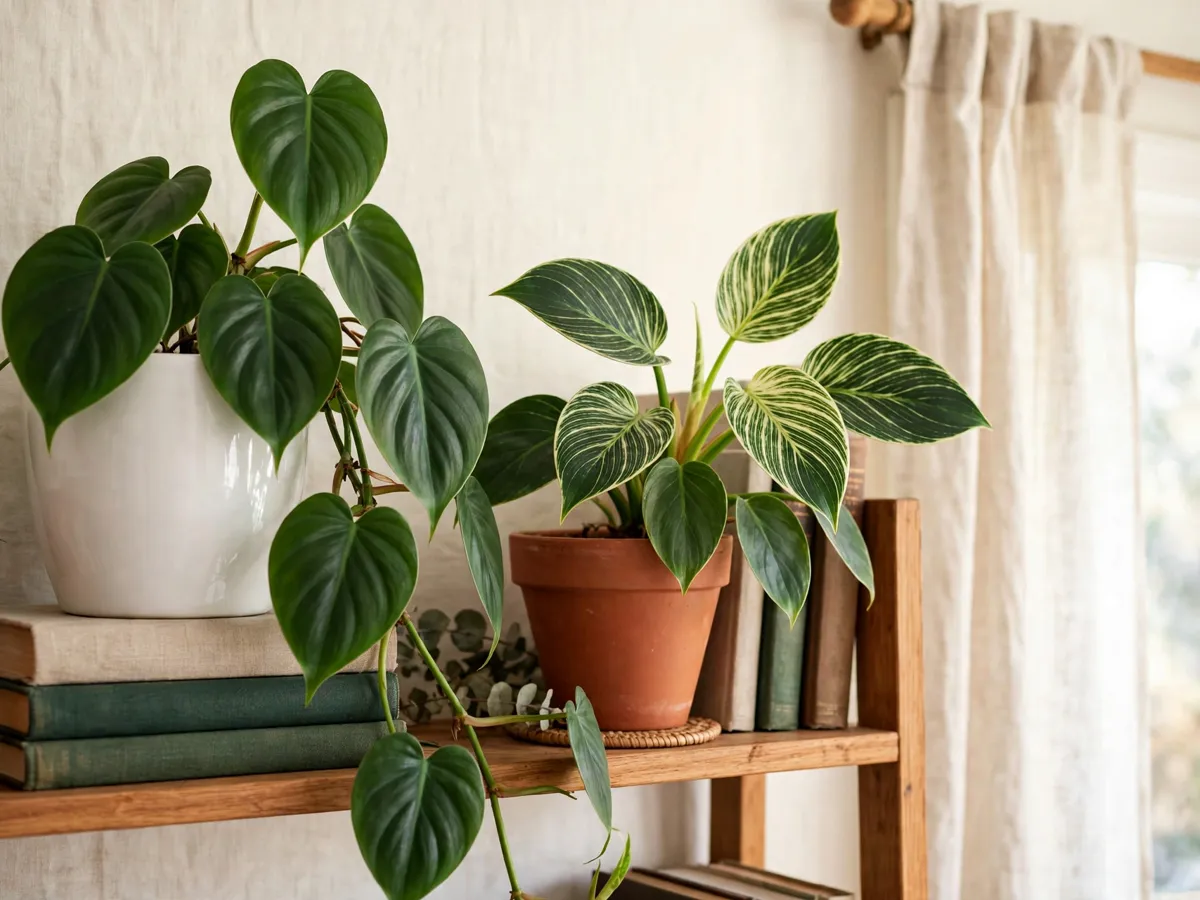
1. What a philodendron actually is: a genus, not one plant
Philodendron sits in the arum family, Araceae, alongside pothos, monstera and peace lily. Most species start life in leaf litter on the rainforest floor of Central and South America, then grip tree trunks with aerial roots and climb toward light. That ancestry is why the supermarket plant wants airy chunky soil rather than dense dirt, and why it tolerates a dim shelf.
Two features identify the genus on the shelf. New leaves emerge wrapped in a papery sheath called a cataphyll, and the leaf blade cups around the stem in a deep heart. A pothos, the plant most often confused with it, has a flat leaf base and no sheath.
Cost: $0. Time: 5 minutes. Caveat: the label on the pot is often a marketing name, so read the leaf shape rather than the tag.
2. Vining versus self-heading: the split that decides care
Every care decision downstream comes from which of two habits you bought. Vining types, heartleaf and Brasil among them, send runners that lengthen by inches a month and branch when pinched. They look best trailing from a shelf or climbing a pole.
Self-heading types, moonlight and lemon lime among them, build a rosette: petioles rise from a short central stem and arch outward. They do not climb, so a moss pole on a lemon lime is a waste of money, and they stay compact longer than a vining form does.
Light, water and soil overlap across both groups. The difference is what happens when the plant outgrows its spot: a vining type gets cut back and the cuttings rooted, a self-heading type gets divided or repotted.
Cost: $0. Time: 5 minutes to sort your plant into one group. Caveat: a few cultivars sit between the two, arching on long petioles without either climbing or forming a tight rosette.
3. Heartleaf: the plant that grows in water on a dark shelf
Philodendron hederaceum is the species everything else here descends from, and the one sold as cordatum. In the trade, cordatum is the darker, glossier selection of hederaceum: two names, one plant. It runs two to three feet in a year in decent light.
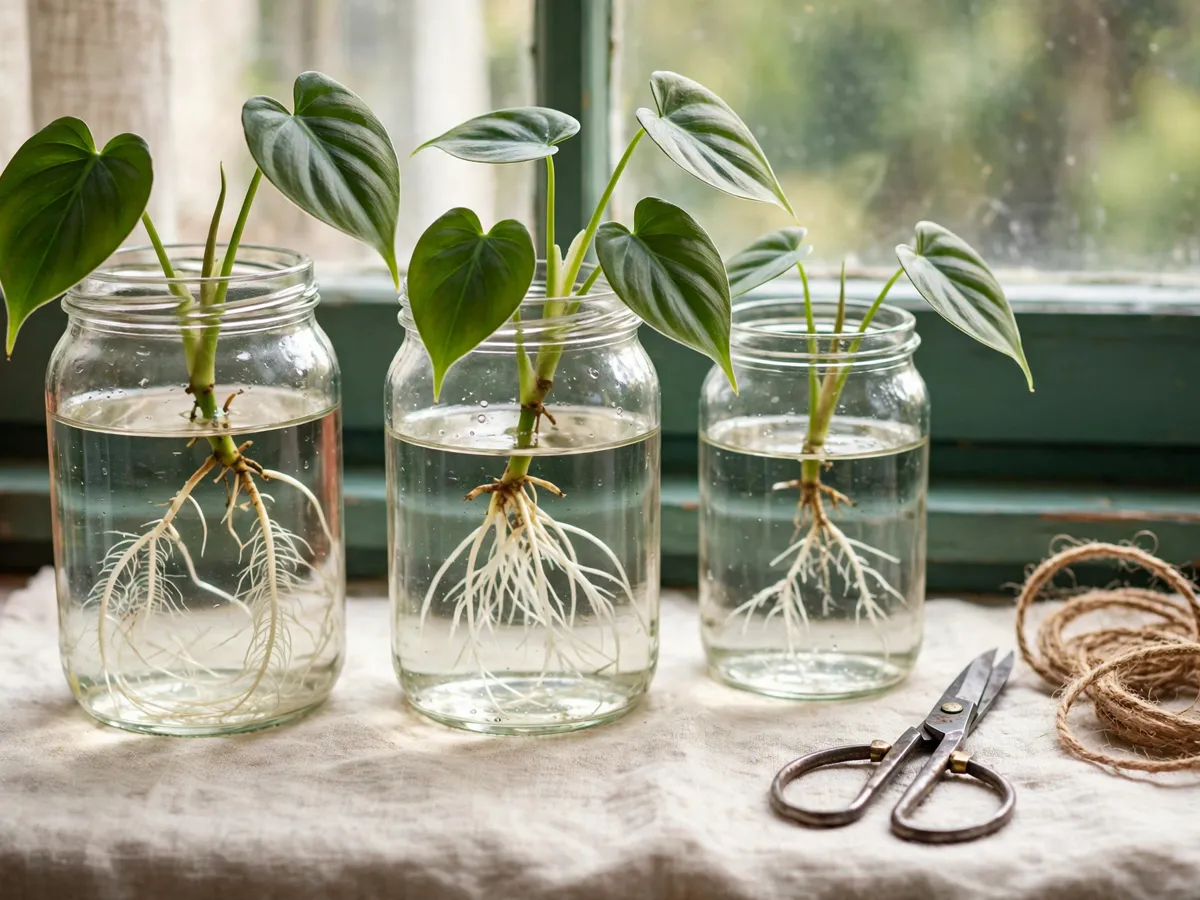
It is also the only houseplant that will genuinely live in a jar of water on a windowless shelf. Water culture works: change the water weekly, keep one node submerged and the leaf clear of the surface. The trade is that water roots store nothing, so the plant droops within a day of running dry and never grows as thick. In soil and bright indirect light, the same plant puts out leaves twice the size.
Two forms fill the shelves: the deep green original and a silver-back whose underside carries the fuzz. Same care, slightly more light to hold the contrast. For a hallway or a windowless bathroom, nothing else at this price does more.
Cost: $5–$15 for a four-inch starter, $15–$30 for a six-inch trailing plant. Time: 10 minutes to pot or set in water. Caveat: a plant that has lived in water its whole life arrives with thin roots and needs a slow switch to soil, not a sudden one.
4. Brasil: the racing-stripe upgrade, same care
Brasil is not a species. It is a variegated sport of heartleaf, a spontaneous bud mutation found in Brazil and then propagated endlessly because it looked good. Each leaf carries a cream and yellow-green stripe down the middle, with green margins.
Care is identical to heartleaf except light. The pale portions hold no chlorophyll, so a Brasil needs one step brighter than a plain green plant to push the same growth. In a dark corner it survives but slows, and the stripes fade toward pale green. Soft morning sun deepens the stripe; harsh afternoon sun bleaches it brown.
Because it is a mutation carried forward by cutting, an occasional all-green leaf shows up. Pull it at the petiole rather than snipping around it, or the green wood takes over the vine.
Cost: $12–$30 for a six-inch pot, $20–$45 for a long-trailing specimen. Time: 10 minutes to move it one step closer to the window. Caveat: sellers also list a plant called Brazil or Brazil Green, which is the plain species without the stripe, sold at the variegated name.
5. Pink princess: why it costs what it costs
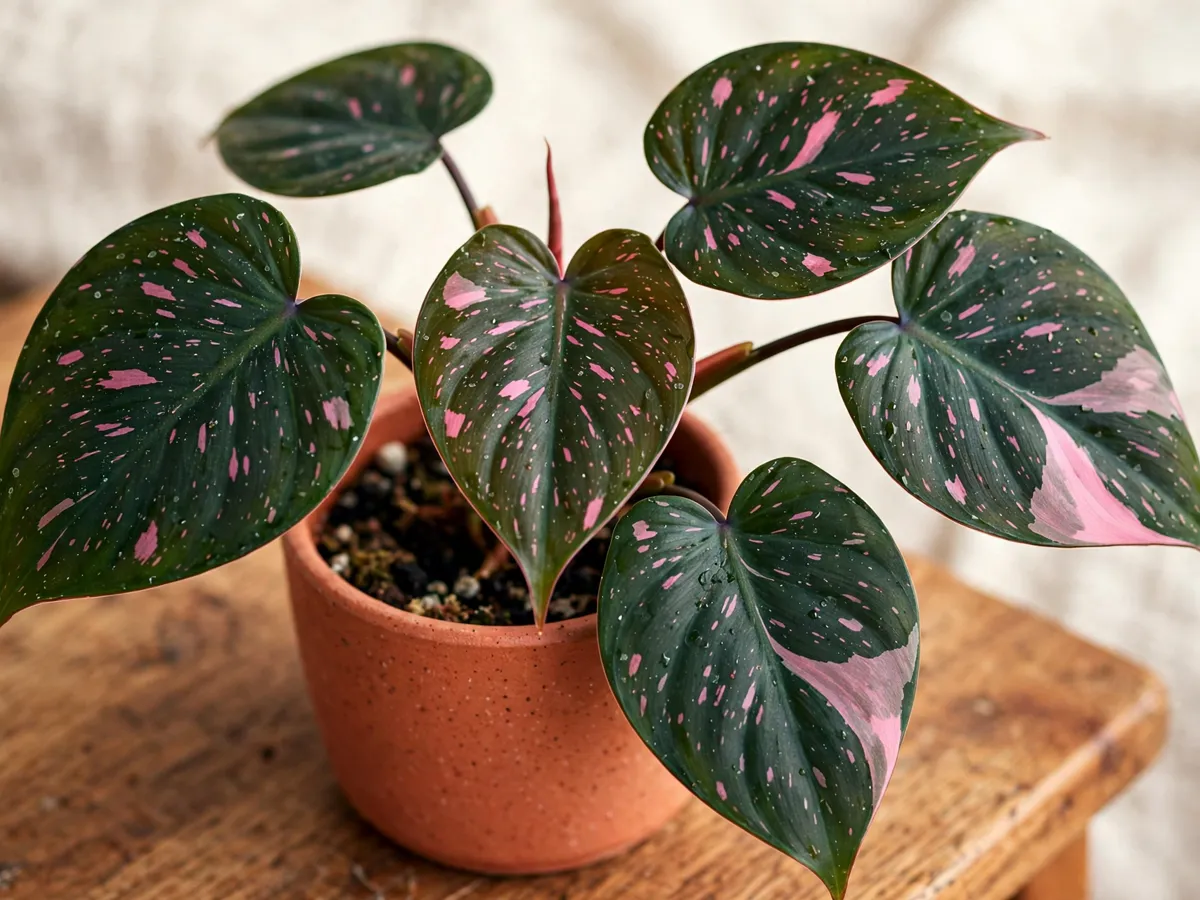
Pink princess is a hybrid selected for pink variegation. The cells in the pale patches lack chlorophyll, and what you read as pink is what shows through when the green is missing. The variegation is unstable: a leaf can come out half pink, entirely green, or entirely pink, and the plant does not decide until it unfurls. That instability is the price tag. Every cutting is a lottery, and the strongly pink ones are picked by hand from thousands of plugs, so you are paying for the sorting rather than rarity.
Two consequences. Fully pink leaves cannot feed the plant, so a heavily pink specimen grows slowly and needs more light than a green one. And a reverted, all-green branch outgrows the pink wood, so remove green shoots at the petiole. Bright indirect light, the same chunky mix, the same watering: heartleaf care at four times the price.
Cost: $15–$25 for a two-inch tissue-culture plug, $35–$60 for a four-inch plant with visible pink. Time: 15 minutes to inspect a listing before you buy. Caveat: a photo of a single spectacular leaf is not a promise about the plant in the pot, and the pink fades fastest in a dim room.
6. Lemon lime and moonlight: the bright-yellow corner picks
These two are the self-heading answer: a corner that needs color without a vine to manage. Both are hybrids, both build a rosette of arching petioles, and both hold their color without the pink princess gamble.
Lemon lime opens chartreuse and keeps the brightest tone on new growth. Moonlight is the softer version: a pale, buttery yellow-green that reads as a neutral in a room with warm wood. Neither needs anything beyond a bright spot.
The practical difference is shape. A self-heading plant fills a six-inch pot outward rather than downward: better for a desk, a narrow shelf or a bathroom counter, worse if you want something to drape a bookcase by August.
Cost: $15–$35 for a six-inch pot, $30–$55 for an eight-inch established plant. Time: 5 minutes to pick the spot. Caveat: a self-heading type sold as a climber is the same plant with a stake in it, and the stake buys nothing.
7. Light: the low light it tolerates versus the bright shade it loves
Tolerate is the operative word. A heartleaf will live six feet from a north window, in a hallway, under ceiling lights, and look acceptable for years, but it grows slowly, holds small leaves, and stretches the gap between nodes. Bright indirect light, an east window or a few feet back from a curtained south one, doubles the leaf size and triples the pace.
Direct sun is the other failure. Midday western sun through glass scorches pale papery patches that never heal, and variegated forms burn at the cream edges first. The test is simple: if you cannot read a book comfortably in that spot, the light is wrong.
Read the plant rather than the window. Evenly spaced nodes and short, sturdy petioles mean the light is right. A vine running six inches between leaves needs one step brighter, moved over two weeks rather than all at once.
Cost: $0. Time: 10 minutes to relocate. Caveat: leaves already stretched never tighten up, and only the next three or four come in correct.
8. Watering: the dry-knuckle test that never fails
Overwatering is how most philodendrons die, and the fix is a physical test instead of a schedule. Push a clean finger two inches into the mix, up to the second knuckle. Dry at that depth: water. Damp: wait three days and check again. In a warm bright room that lands near weekly; in a cool dim one, every two or three weeks.
When you do water, soak. Pour over the whole surface until it runs freely from the drainage hole, then empty the saucer ten minutes later. A pot standing in water pulls it back through the bottom and the lower rootball stays wet for days, which is the condition root rot grows out of. Half-pouring the top inch keeps that surface damp and leaves the deeper roots dry.
Two leaf signals. A gradual droop with the whole plant going soft is thirst, and it bounces back within hours of a soak. Yellow leaves that feel soft and wet, with dark waterlogged patches, are water, and the pot needs lifting today.
Cost: $0. Time: 10 minutes per soak. Caveat: a fixed weekly calendar is the most common way a philodendron loses its roots, because drying speed changes with season, pot size and light.
9. Soil and support: the chunky mix, the moss pole for climbers
Dense peat-based soil holds water for a week after one pour and suffocates an understory root system from the bottom up. The correction is air. Two parts all-purpose mix, one part coarse perlite, one part orchid bark: it drains in seconds and still holds enough moisture for a weekly soak. The best potting soil for indoor plants breakdown covers the ratios by plant type.
A drainage hole is not optional. A decorative ceramic without one is a cover pot: keep the plant in a cheap nursery pot and drop it inside. Terracotta is the default for a forgetful waterer, because porous clay dries the mix faster than plastic.
Support applies to vining types only. A moss pole gives the aerial roots something to grip, and the leaves enlarge as the plant climbs. A twelve to twenty inch pole is $10–$25 and needs a pot heavy enough not to tip. For the full range of options, see the roundup of indoor climbing plants.
Cost: $8–$16 for a bag of mix and bark, $5–$12 for a terracotta pot, $10–$25 for a pole. Time: 30 minutes to repot, plus 10 to stake. Caveat: a self-heading type gains nothing from a pole, and a pole in a light plastic pot tips the plant over within a month.
10. Propagation: the six-inch cutting, water then soil
Philodendron is the plant people learn propagation on, because a cutting roots from a node in a glass on the kitchen counter. Take a six-inch piece of vine with at least one node, the bump where a leaf stem meets the vine, and strip the lower leaf so the node sits bare. Cut just below it. Without a node there is nothing to root, and a leaf alone rots in the jar.
Stand it in room-temperature water in bright indirect light, node submerged, leaf clear of the surface. Change the water weekly. Roots appear in two to four weeks in a warm room, longer in winter, and the plant is ready for soil once they run three or four inches. Water roots are brittle, so pot gently into chunky mix and keep the top inch damp for two weeks while it grows soil roots.
Rooting directly in the mix skips the fragile transition: bury the node an inch deep in damp chunky soil and tug lightly after a month to feel for resistance. Rooting hormone changes nothing on this plant. The general method is in the houseplant propagation walkthrough.
Cost: $0 for the cutting, $5–$10 for a jar and a small pot of mix. Time: 15 minutes plus six weeks of waiting. Caveat: cuttings taken in late autumn root slowly and arrive at soil just as growth stops for the winter, so spring and early summer are the cheap months.
11. Pests and the pothos confusion: how to tell them apart
Start with the confusion, because it costs people money. Pothos is Epipremnum aureum, a different genus in the same family, and the names get swapped constantly in stores. Four differences settle it. Philodendron leaves are thinner, softer and matte to satin, with a deep heart that cups around the stem; pothos leaves are thicker, glossier and waxy, with a flat base. Philodendron new leaves emerge wrapped in a papery cataphyll; pothos has none. Philodendron aerial roots are thin and wiry; pothos pushes short, thick nubs. And pothos marbling runs yellow on green, while heartleaf variegation runs cream or silver.
On pests, the genus is unusually clean in a healthy room. Fungus gnats appear when the top layer of mix stays damp. Spider mites show up as fine stippling above a dry radiator in February, and scale arrives as small brown bumps under a leaf. Treatment for all three starts with wiping the leaves and isolating the plant, and the indoor plant pests guide covers identification and the sprays.
Cost: $3–$5 for rubbing alcohol and cloths. Time: 10 minutes per check, three checks a month apart. Caveat: a plant stressed by wet soil attracts the gnats, so the bug problem is usually a watering problem wearing a different costume.
12. Toxicity: calcium oxalate, pets and kids
Every philodendron carries calcium oxalate, microscopic needle-like crystals packed into the sap and leaf tissue. Chew one and the crystals drive into the soft tissue of the mouth and throat, so the reaction is immediate: oral pain, drooling, pawing at the mouth, swelling, and in pets vomiting or difficulty swallowing. Pothos, monstera, peace lily and anthurium carry it too, so switching genera does not solve the problem.
Philodendron is listed as toxic to both dogs and cats in the standard pet-poison references. Most exposures are mouth-level and self-limiting, because the pain stops the chewing, but the amount and the size of the animal vary, so a suspected chew is a call to your vet or a pet poison helpline the same day.
Placement is the entire management plan, and the rule is the same for a cat and a toddler: if the plant sits at paw or mouth height, it is in the wrong spot. A high shelf, a hanging holder, or the top of a closed cabinet removes the problem for the price of a hook. Where nothing can go high, the list of pet safe low light houseplants covers species that live at floor level.
Cost: $0–$8 for a hook or a macrame hanger. Time: 10 minutes to re-place the plant. Caveat: this article is care guidance, not veterinary advice, and the sap of a cut stem is the part most often missed by people who only move the leaves out of reach.
13. Cost reality: $10–$60 by variety
The green forms are among the cheapest foliage plants sold. A four-inch heartleaf at a garden center runs $5–$15, a six-inch trailing Brasil $12–$30. Both grow fast enough that one plant becomes four in a season, which makes the starter the whole cost. Self-heading lemon lime and moonlight sit a step higher at $15–$35 because they multiply more slowly.
Pink princess is the exception, and the range is wide because you are buying the quality of the pink. A two-inch tissue-culture plug with faint pink runs $15–$25 and may revert. A four-inch plant with several strongly pink leaves is $35–$60, the sensible entry point. Anything sold as a large specimen under $40 deserves a hard look at the photos.
Setup beyond the plant: a six-inch terracotta pot at $5–$12, mix and bark at $8–$16, a moss pole at $10–$25 if you are climbing a vine. A bottle of balanced liquid feed at $6–$10 lasts two seasons at half strength, monthly in the growing season. For a trailing display, the options in indoor hanging plants cover hangers, hooks and weight limits.
Cost: $10–$60 depending on variety, pot and mix included. Time: 45 minutes of shopping and one afternoon of potting. Caveat: an $8 heartleaf propagated three times costs less than a $45 pink princess and fills the same shelf.
Common questions
Is a philodendron the same thing as a pothos?
No. They sit in the same family and share almost the same care, but pothos is Epipremnum aureum and philodendron is its own genus. Tell them apart by the leaf base, which cups into a deep heart on a philodendron and sits flat on a pothos, and by the papery sheath a new philodendron leaf emerges from.
Can a philodendron live in just water?
A heartleaf or Brasil will live in a jar of water indefinitely, with weekly changes and one node submerged. It grows slower and holds smaller leaves than a potted plant, and it wilts within a day if the jar runs low, because water roots store nothing. Start in water and finish in chunky mix.
Why are the leaves on my philodendron turning yellow?
Read the texture. A yellow leaf that feels soft and wet, with dark waterlogged patches near the base, is overwatering and the roots need checking today. A yellow leaf that dries and drops while the mix is bone dry is thirst. One or two old yellow leaves at the bottom while new growth pushes normally is the plant shedding its oldest foliage.
Will a pink princess stay pink indoors?
It holds pink in bright indirect light and fades toward green in a dim corner. The variegation is unstable regardless of care, so new leaves can come out fully green or fully pink. Remove a fully green branch at the petiole, since green wood grows faster and overtakes the plant.
How do I make my philodendron bushy instead of leggy?
Pinch the growing tip of each vine just above a node, and the plant pushes two side shoots instead of one long runner. Do it in spring, repeat once a season for the first two years, and give it a pole or shelf edge to send the new growth into. The cut tips root, so the shaping costs nothing.
Save these on Pinterest
Pin the vining versus self-heading split and the pothos identification list, the two sections that decide which plant you buy and whether you water it correctly. This guide and the rest of the gardening tips live together there.