 Plant As Deco
Gardening & Planting Tips
Coleus Plant Indoor: Grown for the Leaves
By Plant As Deco · Updated 23 November 2026
Coleus gives you the most color per dollar in the houseplant aisle: maroon, lime, salmon and velvet black on one leaf, in a four dollar pot. It is a mint-family shrub grown for foliage rather than flowers, and two decisions set the display: how much light the leaves get, and whether you pinch.
Weekend-ready: $3–$15 for the plant, a pot and a bag of mix, one afternoon. Ten minutes of pinching and a finger in the soil after that, twice a week.
1. What a coleus actually is: a mint-family leaf plant
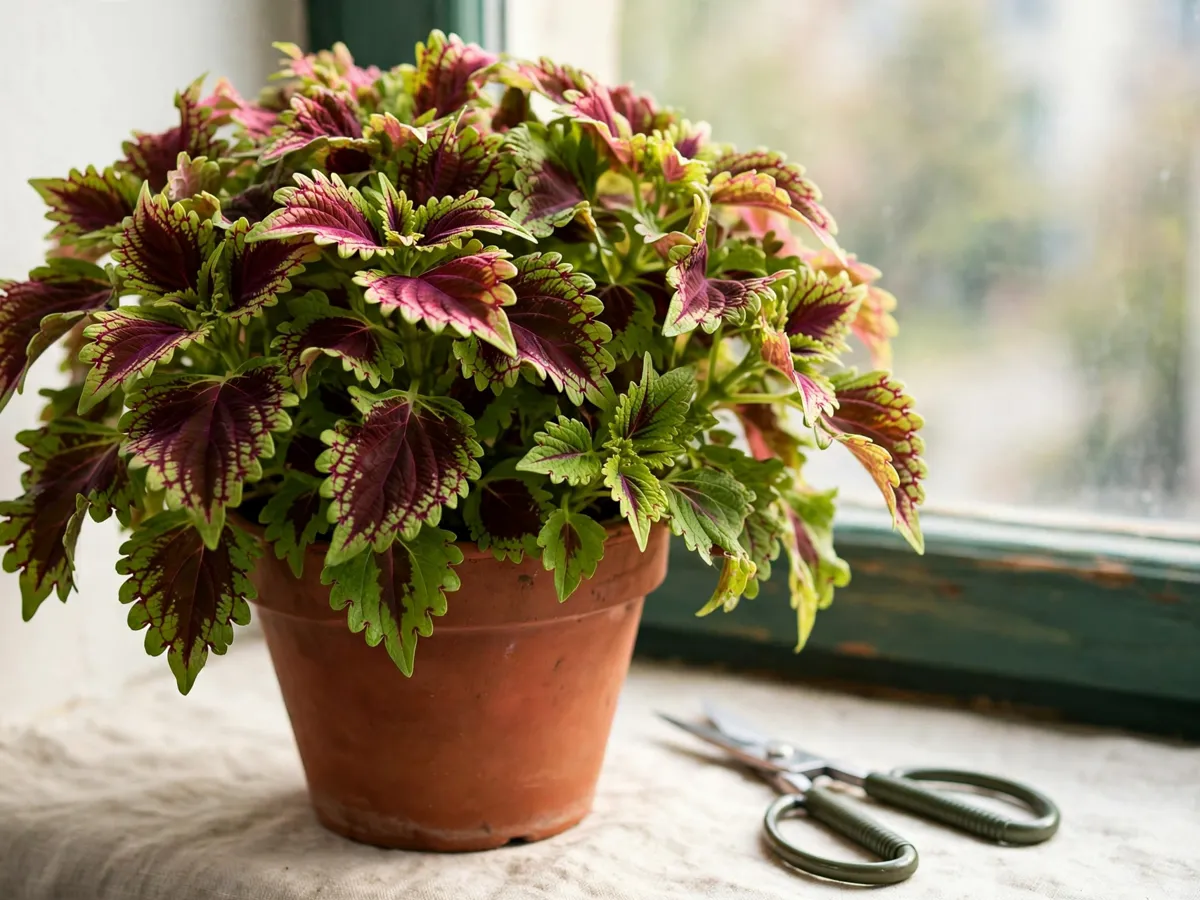
The current genus name is Coleus, and nearly every indoor plant is Coleus blumei. A tag may still read Solenostemon scutellarioides or Plectranthus scutellarioides: two older rounds of reclassification, not three species on one shelf.
It sits in Lamiaceae, the mint family, with checkable traits: a square stem rather than a round one, leaves in opposite pairs, a faint herbal smell when a leaf is bruised. Those square stems root readily. It is a tender perennial, grown as an annual outdoors and kept two or three seasons indoors.
Cost: $0. Time: 5 minutes to read a label properly. Caveat: a greenhouse-raised coleus arrives soft-grown and loses a few leaves while it settles into a drier room.
2. The color rule: sun intensifies, shade fades
The reds, purples and bronzes in a coleus leaf are sun pigments, compounds the plant builds to shield its chlorophyll, and the amount is set by the light the leaf receives. Give one cultivar eight hours of bright light and it paints itself deep and saturated. Move it to a dim corner and green takes the leaf back, leaving a muddy outline of what you bought.
That works both ways as a diagnostic. Fading color means too little light, even when the plant is still growing new leaves. Bleached papery patches in the middle of a leaf mean too much harsh sun, usually a south window in July, and the answer there is a curtain. Judge the newest leaf at the top: it records the last few weeks, while the skirt records the past.
Cost: $0. Time: 2 minutes to check the newest leaf. Caveat: a faded leaf stays faded, because only new growth carries the color.
3. Light: the balanced band that keeps color without scorch
The target is a few hours of direct sun plus bright light for the rest of the day. An east window is the safest answer, because morning sun is strong enough to set color and soft enough not to burn. A west window works with a sheer curtain over the hot afternoon, and a north window grows a green plant with a suggestion of design in it.
Distance counts as much as direction. Keep the pot within a foot or two of the glass, because light spreads thin fast: two feet back is roughly half the intensity. Turn the pot a quarter turn each week. Never move a coleus from a dim shelf into full sun in one jump: leaves built for low light scorch, and the scar is permanent, so walk it up over ten to fourteen days.
Cost: $0 to use the window you have, $10–$15 for a sheer curtain. Time: 10 minutes to move, two weeks to walk it up. Caveat: the brightest window in a home with cats or toddlers is often the wrong window, so settle placement before light.
4. Watering: the droop-and-recover signature
Coleus has thin, soft leaves on shallow fine roots, and it says when it is thirsty. The whole plant relaxes downward at the end of a hot day, then stands back up within an hour of a drink. That droop-and-recover signature is normal language rather than an emergency.
Check the top inch of mix with a finger. When that inch reads dry, water slowly until it runs freely from the drainage hole, let the pot drain, and empty the saucer ten minutes later, because a pot standing in a saucer keeps the rootball wet for days and that is where rot starts. In a bright warm room expect two to four soaks a week in summer and about one in winter. Crisp brown edges that stay crunchy mean one severe drought, not thirst.
Cost: $0. Time: 5 minutes per soak. Caveat: when the signature is ambiguous, wait a day and check again; a thirsty coleus bounces back by evening and a drowned one does not.
5. Humidity and the crisp-leaf problem in dry rooms
Thin leaves lose water from their edges, so the air matters as much as the soil. Below about forty percent relative humidity, which is every heated room in winter, leaf tips go crisp, margins curl, and the plant stops pushing new leaves for weeks. The pattern looks like thirst, and a change in watering does not fix it.
Raise the air around the pot rather than the whole room. Group the plants, or move the coleus to a bathroom or kitchen window where cooking keeps the air moister. A compact humidifier is the only option that holds relative humidity through a heating season. Misting is the popular wrong answer: it wets the leaves briefly, invites spotting in still air, and changes nothing the plant breathes.
Cost: $0 for grouping, $8–$12 for a hygrometer, $25–$60 for a small humidifier. Time: 10 minutes to rearrange. Caveat: a pot standing in its saucer water is an overwatering mistake wearing a disguise.
6. Soil and pot: the light mix that drains fast
Fine shallow roots need air. A dense peat-heavy soil packs into a brick, holds a week of water after one pour, and suffocates the rootball from the bottom up. Cut all-purpose potting soil with coarse perlite at three parts soil to one part perlite, or buy a bagged fast-draining blend outright. The finished mix should fall apart like damp crumbs between your fingers, not clump like wet clay.
A drainage hole is the one non-negotiable, because a sealed pot is a bathtub with a plant in it. Use a decorative ceramic as a cover pot and lift the inner pot out to water at the sink. Terracotta dries faster and forgives less, plastic holds moisture and forgives more, and coleus is not a succulent, so either suits it. Size the pot snug: a four inch starter wants five or six inches, not eight, because extra mix around a small rootball stays wet longer than the roots can drink. The recipe is spelled out in The fast-draining mix: best potting soil for indoor plants.
Cost: $6–$12 for a bag of mix, $5–$10 for a pot with a hole. Time: 20 minutes to mix and pot. Caveat: soil dug from an outdoor garden is a different product; it compacts in a pot and brings pests indoors with it.
7. Pinching: the 10-second habit that makes it full
Left alone, a coleus grows one tall stem, stretches six inches between each leaf pair, then flops over the pot with a bare leg at the bottom. Pinched, it becomes the dense mound the cultivar is sold for. At the point where a leaf pair joins the stem, two dormant buds sit waiting; remove the soft tip above that point and both wake into branches instead of one continuing leg.
Pinch a new plant at four to six inches, then pinch each branch again once it carries three or four leaf pairs: through spring and summer that is a ten-second pass every two to three weeks, the highest-return minute you will spend on this plant. Snap the tip at the node between thumbnail and forefinger, or use small scissors wiped with alcohol between plants. Two limits: never strip more than a third of the plant at once, and do not expect bare old wood to break anew, so cut a leggy specimen back to a leafy node.
Cost: $0 with scissors you own, $6–$10 for snips that cut clean. Time: 10 minutes every two to three weeks. Caveat: pinching fixes shape and nothing else, so a stretched plant in a dark room grows back stretched until the light changes.
8. Flower spikes: why to remove them and what you lose
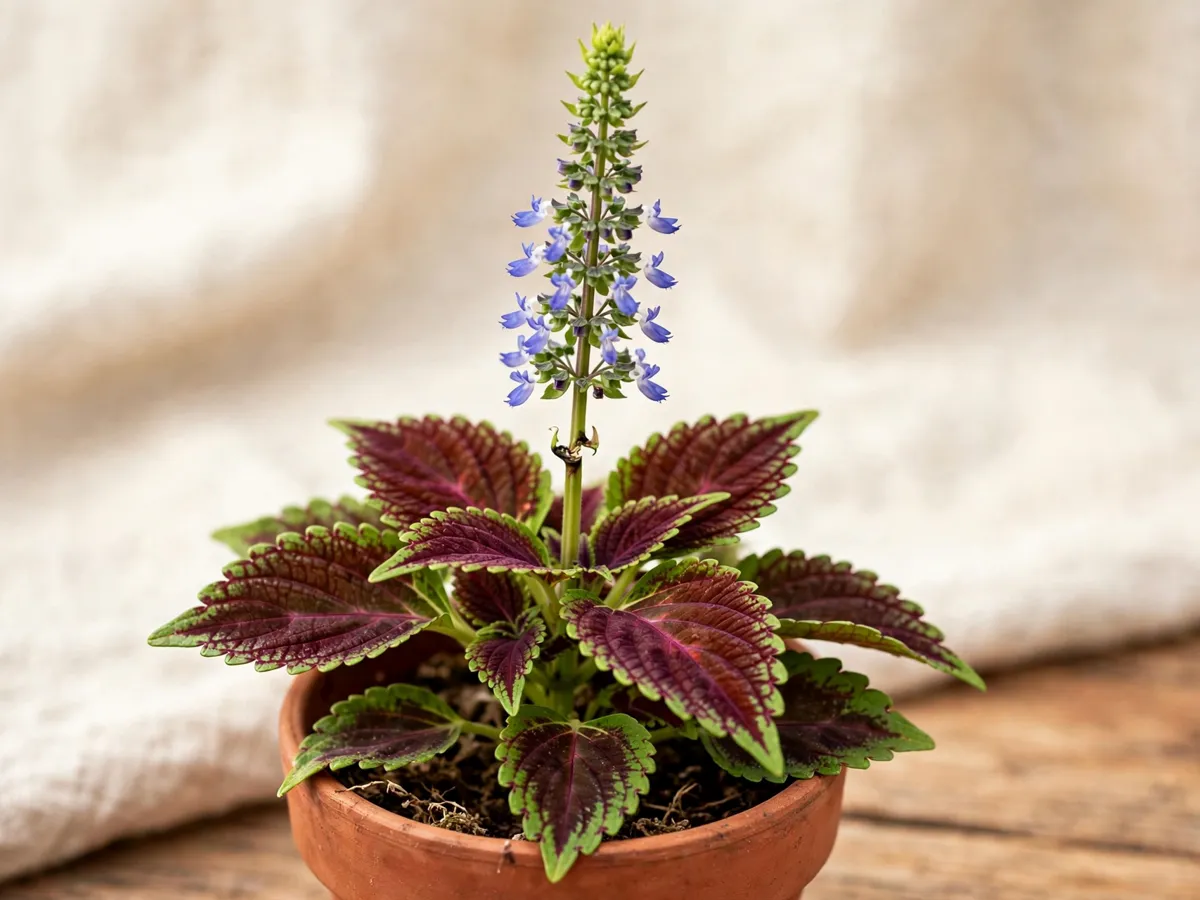
In summer a slender stalk rises from the center of the plant carrying small blue flowers in whorls up its length. It looks like a bonus and it is the beginning of the end for that stem: once a spike forms, resources switch from leaves to seeds, the stem hardens, the leaves near the tip thin and fade, and sideways growth stops. You are growing a plant for foliage, so the flowers are the wrong product.
Pinch each spike off low, at the node where it leaves the stem, while the bud is still tight rather than open. The two buds below the cut wake, the plant throws leaves outward, and the mound fills in. Check the centers weekly through the warm months, because spikes rise where a glance at the leaf faces misses them. What you give up is nothing you can see: the blooms carry no ornamental value on a foliage cultivar, and the seed is not worth saving.
Cost: $0. Time: 5 minutes a week through summer. Caveat: a spike left to set seed hardens that stem for good, so the fix is catching the young bud rather than pruning the old stalk later.
9. The frost deadline: bringing an outdoor coleus inside
Coleus has almost no cold tolerance. Leaves take damage when nights sit near 45 to 50 degrees, and a light frost blackens the top of the plant overnight. So get it inside before the first expected frost in your area, two weeks early if you can, because a cold snap ignores the calendar.
Prepare the move. Rinse the foliage to knock off aphids and spider mites, then check the leaf undersides and the joints where a leaf meets the stem, the two places hitchhikers hide, and look at the top of the mix for fungus gnat flies. The smarter move for a big outdoor plant is not to bring it in at all: take six to ten tip cuttings, root them in water on a windowsill, and let the mother plant finish its season outside, so you carry the cultivar indoors without a summer of weather on it. The wider timing question is answered on The timing verdict: indoor or outdoor plants.
Cost: $0 for the move, $5–$10 for insecticidal soap if the rinse turns up insects. Time: 30 minutes to rinse and inspect, or 15 minutes to take cuttings. Caveat: expect the outer leaves to drop in the first fortnight indoors, because outdoor light is far stronger than any window.
10. Indoor winter survival: the light and the pest check
Winter is won or lost on light, not temperature. Short days starve the plant of what it needs to paint leaves, so between December and February the stems stretch, the color washes out, and the gaps between leaves open up. A clip light on a timer, twelve to fourteen hours a day and twelve inches above the canopy, is the one purchase that changes the outcome. Water less, check the top inch rather than the calendar, and stop feeding from roughly November through February, because a plant that is barely growing cannot use the salts. Keep the pot off cold glass and away from a heating vent.
Make the pest check a habit rather than a reaction. Once a week, turn a few leaves over and run a fingertip along the stem joints: sticky honeydew, fine webbing, small black flies, or clusters of pale insects are the four things to look for. Catching a colony on one stem is a swab of rubbing alcohol; catching it on the whole shelf is three rounds of soap and a month of evenings. Isolate any new plant for a week before it joins the shelf. The full seasonal routine is in The winter move: winter houseplant care.
Cost: $18–$40 for a modest clip light, $8–$15 for a timer. Time: 5 minutes a week of checking, one afternoon to set the lamp. Caveat: a coleus kept through winter in a dim room arrives in spring as a long bare stick with no buds left for pinching to work on.
11. Propagation: the water-rooting cutting that always works
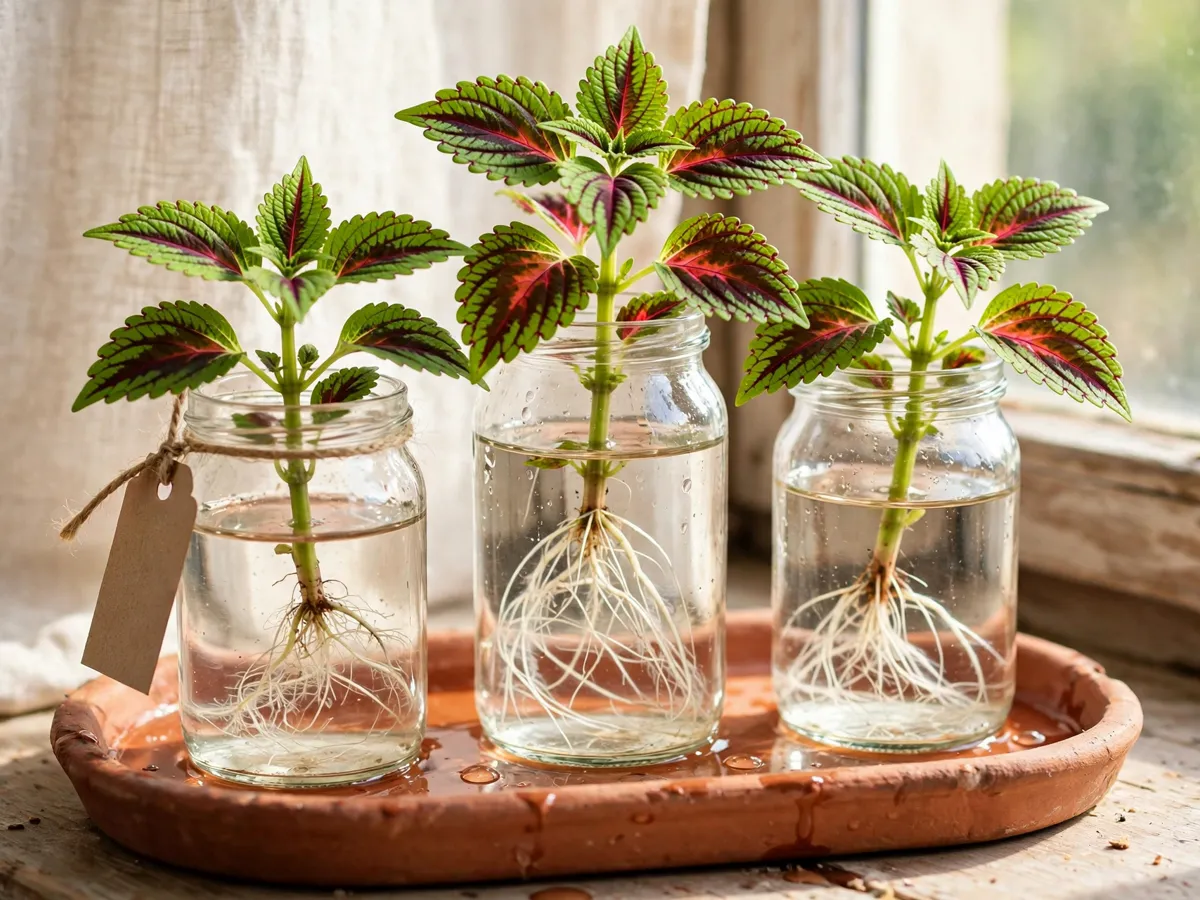
This is what makes coleus the cheapest color in the house. Cut a stem, stand it in water, and roots appear through the glass in days. Unlike a jade or any succulent, coleus needs no drying stage before the cut end touches a medium. Snip a four to six inch tip just below a node, strip the lower leaves so none sits under water, and stand the bare stem in an inch of room temperature water in bright indirect light. Change the water every two to three days so it stays oxygenated. Roots show at the node in three to ten days and reach an inch or two in two to three weeks.
Pot up when the roots are a couple of inches long. Water-rooted cuttings make watery roots that prefer mix, so keep the new pot evenly moist for the first fortnight and expect a few lower leaves to drop during the switch, which is the transition rather than a failure. The same tips root straight into damp mix with no water stage, and the trade-off is covered in Rooting cuttings: houseplant propagation. Take cuttings only from a plant you know is clean, because an infested mother plant roots happily and then hands the problem to the new shelf.
Cost: $0 for the cuttings, $0–$10 for a jar and a tray of mix. Time: 5 minutes to cut, three weeks to pot. Caveat: a cutting from a stretched, faded plant produces a stretched, faded plant, so take tips from the one in the bright window.
12. Toxicity: the mild sap caution, pets and kids
Coleus is listed as toxic to dogs and cats, and the caution is worth stating plainly because the reputation of this plant runs mild. The sap carries compounds that irritate the digestive tract when a pet chews through foliage, and the usual result is a brief episode of drooling, vomiting or loose stool, with severe cases uncommon. Uncommon is not never: how an animal reacts depends on how much it chewed and on its size, so a suspected exposure is a call to your veterinarian rather than a wait-and-see.
Placement is the entire management plan, and the answer is the same for a cat and for a toddler: both sit at leaf height, and neither should reach a plant you would not eat yourself. Coleus suits elevated placement well because it trails happily, so a hanging planter or a high shelf keeps the color at eye level and the leaves out of reach. For a home where pets share every reachable surface, The color roundup: colorful houseplants. shows which painted species sit lower on that list.
Cost: $0 to move the pot, $3–$5 for gloves. Time: 10 minutes to choose the spot. Caveat: this page is plant care, not veterinary advice; confirm any chewing with your vet.
13. Cost reality: $3–$15 for a color that costs nothing to multiply
A four inch starter in spring runs $3–$8 on a rack where the flowering annuals beside it ask $10–$15, and named cultivars at a specialty nursery reach $6–$12 for the same size. Pay for the pattern you like, because care is identical across hundreds of cultivars, and never for size, because a big coleus is a leggy coleus with a bare bottom. The setup is a five or six inch pot at $5–$10, a bag of all-purpose mix at $6–$12, coarse perlite at $4–$8, and a saucer at $3–$6.
The optional list is short: a clip light at $18–$40 with a timer at $8–$15 buys color through a dim winter, and insecticidal soap at $5–$10 sits in a drawer until the season you need it. Then the arithmetic flips. One outdoor plant in September gives ten to twenty tips, each of them a plant at zero cost, so a four dollar starter becomes a shelf and a windowsill in every room. Buy the cheap one, put it in the bright window, and let the cuttings do the expensive part.
Cost: $3–$15 for the plant and pot, $20–$45 with mix, perlite and a saucer. Time: 45 minutes of shopping, one afternoon to pot. Caveat: a four dollar starter in an east window outcolors a $25 plant in a north corner, because the light sets the leaves, not the price tag.
Common questions
Does coleus live indoors year after year?
Yes, and most people underestimate it. Coleus is a tender perennial rather than a true annual, so indoors it never meets a frost and can stay productive for two or three seasons with a bright window and a pinch every few weeks. It gets woody with age, so around year three it is usually replaced by cuttings from itself, which gives the same cultivar in a young, full shape.
Why is my coleus losing its color and turning green?
Light. The reds, purples and bronzes are sun pigments, and a plant in a dim room stops building them, so the pattern fades toward green even while the plant grows happily. Move it to the brightest window, walk it up to more direct sun over two weeks, and judge the result on new leaves only.
Should I cut the flower spikes off my coleus?
Yes, if you want leaves. A spike switches the plant away from foliage and toward seed: the stem hardens, sideways growth stops, and the leaves near the tip thin out. Pinch each spike low at the node while the bud is still tight, and the two buds below it grow into branches instead.
Is coleus a problem for dogs, cats or small children?
It is listed as toxic to dogs and cats, and the sap can irritate the digestive tract if a pet chews through leaves. The usual outcome is a mild, short episode and severe cases are uncommon, but any suspected exposure is a veterinary question rather than something to wait out. A hanging planter or a high shelf keeps trailing foliage out of reach.
Can I root a coleus cutting in a glass of water?
Easily, and it is the fastest way to multiply the plant. Snip a four to six inch tip just below a leaf node, strip the lower leaves, stand it in an inch of water in bright indirect light, and change the water every two to three days. Roots appear in three to ten days; pot up once they reach a couple of inches.
Save these on Pinterest
Pin the color rule and the five-minute cutting, the two sections that decide whether a four dollar starter becomes a shelf full of free plants or a faded leggy stick by March. This guide and the rest of the gardening tips live together there.