 Plant As Deco
Gardening & Planting Tips
Prayer Plant Care Indoor: The Leaves That Fold at Night
By Plant As Deco · Updated 23 November 2026
A prayer plant raises its leaves at dusk and opens them flat again at dawn, every day, without being touched. That daily movement is the reason people buy it, and it is also the plainest reading instrument on the shelf: the fold stays sharp when the light and the air are right and goes sluggish when either one is not. Humid air is the one non negotiable. Past roughly 50 percent the leaf edges stay soft, below it they crisp from the rim inward, and no amount of watering in the pot reverses air. Here is the care, the decoder, and the honest comparison with its calathea cousin.
Weekend-ready: $12–$35 for the plant, a 6 inch pot with a drainage hole, a pebble tray and a light mix, one afternoon. About ten minutes a week of watering and an edge check after that.
1. What a prayer plant is: Maranta leuconeura, the low patterned clump
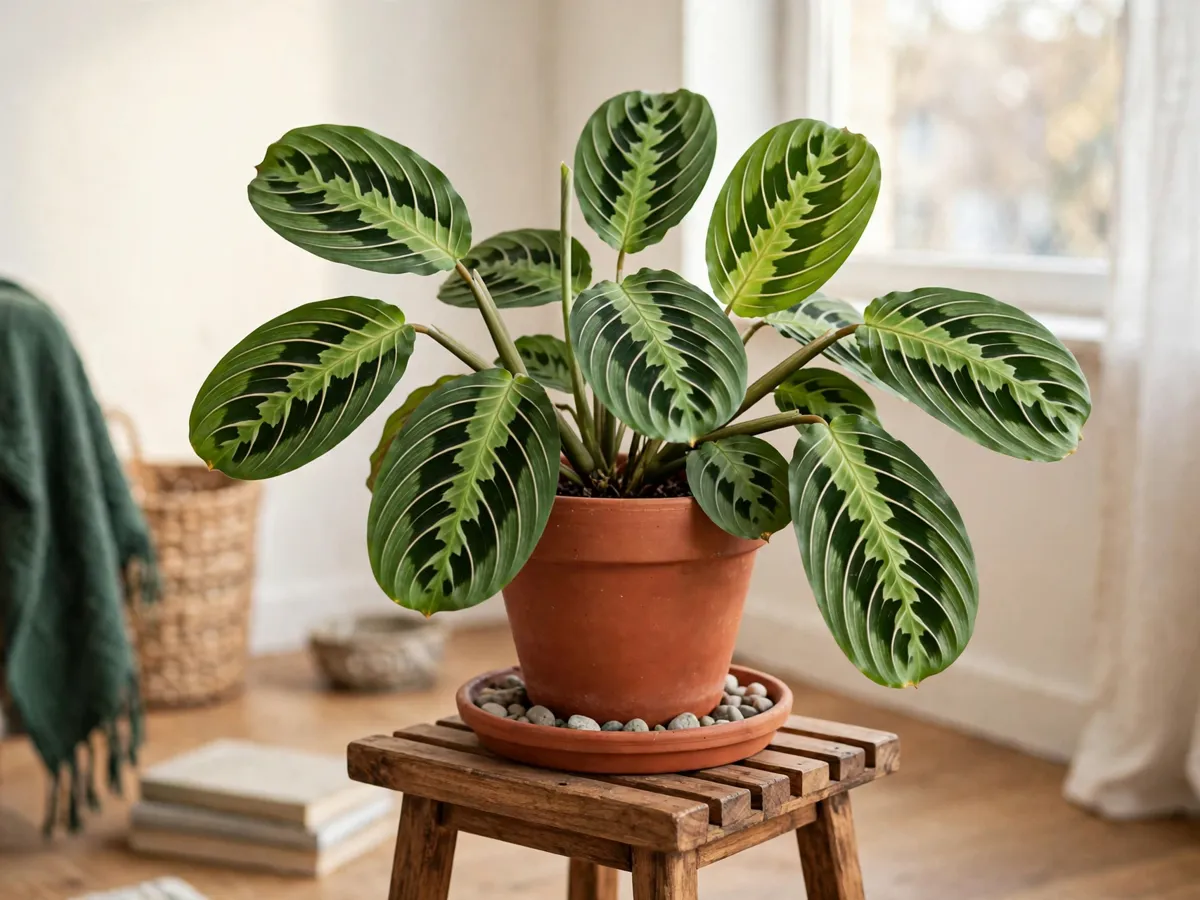
The prayer plant is Maranta leuconeura, a member of Marantaceae, the family of folding leaves. It grows low on Brazilian forest floors in the shade of everything else, and that origin sets the care sheet: bright shade, damp air, loose soil, no direct sun. Indoors it stays small. A mature clump stands about 6 to 8 inches tall and spreads 10 to 12 inches wide on short underground stems, so it is a shelf, dresser, or stand plant rather than a floor plant.
The leaves do the selling. Each oval blade carries a dark green field, a pale green center, and a midrib in silver or deep red. New leaves unroll pale and tight from the base of the clump and darken as they open, which is how you read growth: fresh leaves at the center mean the plant is content, and a clump that stops producing them has hit a limit in the room.
Cost: $12–$35. Time: 5 minutes. Caveat: buy the size the shelf has room for, because a prayer plant spreads sideways and a wide low spot serves it better than a tall one.
2. Why the leaves fold at night: the plain-language answer
At dusk the leaf blades lift and close upward, held together like hands in prayer, and they open flat again in the morning light. The mechanism is a hinge. At the base of each leaf stalk sits a swollen joint called a pulvinus, which changes the pressure of water inside its own tissue and tilts the blade. The plant runs the tilt on an internal daily clock, so a clump under steady indoor light keeps folding at the same evening hour with no sunset to mark it.
Because the hinge runs on water pressure, the movement reads the room. Sharp, punctual folding means the light is strong enough to run the clock and the air is damp enough to fill the joint. Fold that arrives late, sits half open, or stops altogether points at a dim window or dry air, and it is worth checking both before you touch the watering can. The humidity contract neighbor: indoor fern plants.
Cost: $0. Time: 5 minutes. Caveat: judge the fold at two hours of the same day, because a single look at noon tells you nothing about the evening.
3. The humidity line: where the crisp edges start
The number to remember is about 50 percent relative humidity. Above it, leaf edges stay soft and green to the rim. Below it, the very edge dries first, then browns into a thin papery line that creeps inward from the tip, and this happens while the soil is still damp. That combination is the diagnosis: crisp edges over moist soil mean the air, not the watering. A heated apartment in January commonly sits near 20 to 30 percent over a running radiator, which is why the crisping shows up in February.
Climb the ladder in order and stop when the edges hold. Group four or five pots within a foot of each other, since plants release moisture from their own leaves and the pocket between them stays damper than the room. Add a pebble tray: a wide saucer of stones and water with the pot on the stones above the waterline, so evaporation rises around the leaves all day without the roots soaking. Then consider the bathroom counter, where daily shower steam pushes the air past 50 percent for hours. The steam-room option: indoor plants for bathroom. A small humidifier is the last rung and the only one that changes a whole room.
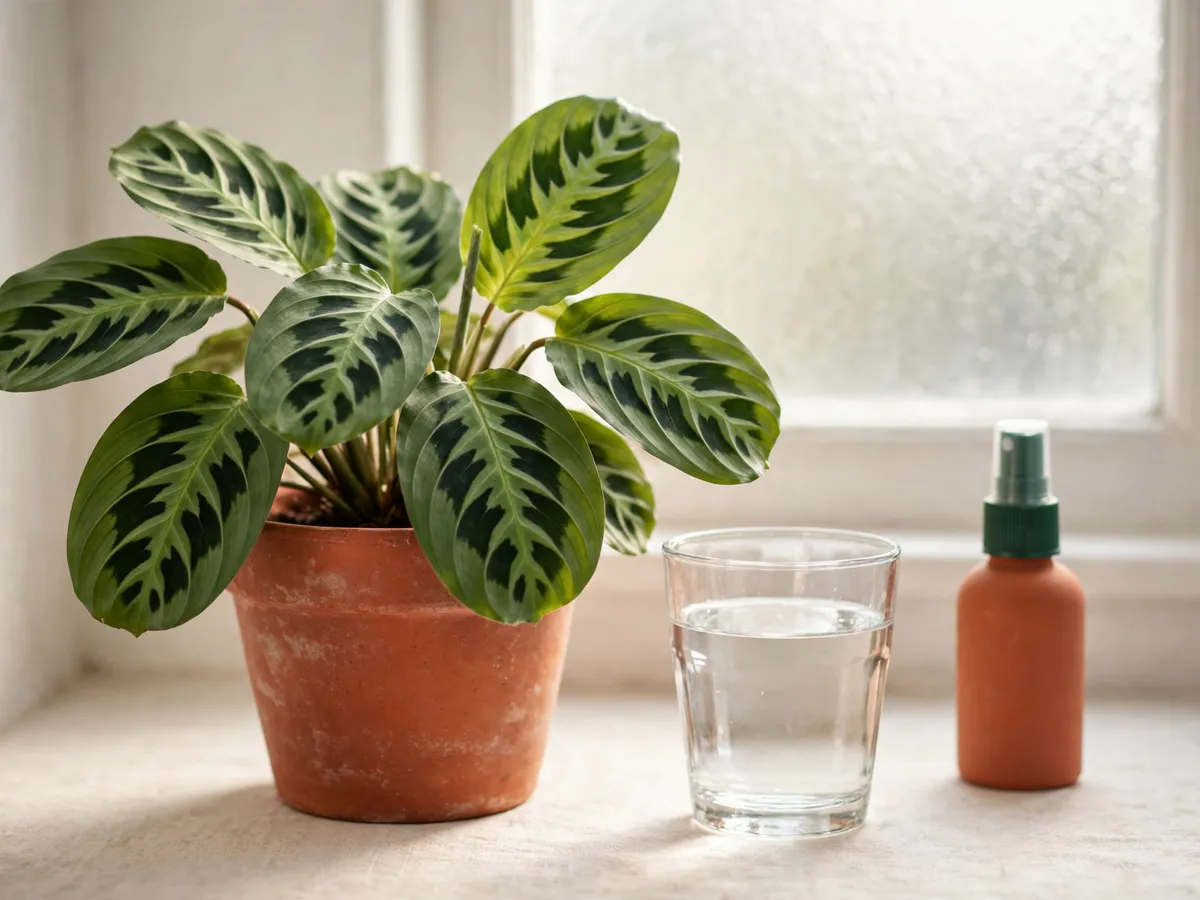
Cost: $0–$5 for a pebble tray, $30–$60 for a small humidifier. Time: 15 minutes. Caveat: read the leaf edges rather than the gauge on the wall, because the number at shelf height is the number the plant lives in.
4. Light: bright indirect, and the fade-and-curl tell
The pattern is a light gauge, which makes this plant easier to read than most. In the right band, the pale center and the dark green field stay sharply separated and the midrib keeps its color. Too much direct sun and the whole blade washes toward one pale green, the pattern thinning until it is faint, often with a curled edge where the beam landed. Too little light and the opposite happens: the dark field expands, the stalks stretch long and thin, and new leaves come out smaller and farther apart.
An east window a foot off the glass is the classic spot. A north window works and grows the clump slower. A south or west window needs a sheer curtain or three feet of setback, because one hour of summer sun bleaches pigment that does not come back on a leaf that has already opened. Turn the pot a quarter turn each week so growth stays even.
Cost: $0, or $10–$15 for a sheer curtain. Time: 10 minutes. Caveat: faded pigment never returns on an open leaf, so fix the light and wait for new growth rather than chasing the old leaves.
5. Watering: the room-temperature rule
Water when the top inch of mix has dried, pour slowly until it runs from the drainage hole, and empty the saucer ten minutes later so the pot never stands in its own runoff. The second half of that sentence matters more than the first here: Maranta roots are shallow and fine, and a waterlogged bottom of the rootball rots them faster than a dry week hurts them. In bright warm months a 6 inch pot may need water twice a week; in a cool January, every ten days or so.
Use water that has sat out to room temperature. Ice-cold water straight from the tap jolts a shallow root system and the clump responds by drooping the lowest leaves within a day, which reads exactly like a watering mistake. Fill a jug in the morning and water it in the evening. Folded leaves that open on schedule are the signal that the watering is settled; a clump that stops folding is telling you about light or air, not about the jug.
Cost: $0. Time: 5 minutes a week. Caveat: check the soil before you pour, because a soggy pot droops the same way a dry one does and the two fixes are opposite.
6. Water quality: the fluoride edge, and how it differs from a crisp edge
Minerals in tap water travel up the stalk and stop at the tip, where the water evaporates and leaves them behind. The tell is a dry brown triangle at the very point of the leaf. Compare that with the humidity crisp: dry air browns the outer rim of the blade in a jagged line along the edge, while minerals brown the tip first. Same plant, two different complaints, and the fixes do not overlap. This is the same fluoride sensitivity the spider plant is famous for, and the two are usually kept in the same rooms. The fluoride-edge twin: spider plant care indoors.
Three workable answers, in rising order of effort. Collect rainwater or use distilled water. Run tap water through a carbon pitcher, which cuts chlorine and some of the dissolved solids. Or keep the tap and flush the pot monthly: carry it to the sink, pour through it a volume roughly twice the pot size, and let it drain fully. Pick one source and stay on it, because tap hardness changes week to week and a clump settles into consistency faster than it settles into alternation. Trimmed tips do not regrow to the cut, so the goal is stopping new ones rather than fixing old ones.
Cost: $0–$25 for a pitcher, $2–$4 a month for distilled water. Time: 10 minutes. Caveat: brown tips spread inward when the source keeps changing, so pick one water and stay on it for a month before judging.
7. Soil: the light, airy mix
The mix has to hold moisture and drain fast at the same time, which sounds contradictory and is simply a matter of particle size. A standard peat-based potting mix loosened with one part perlite fits a prayer plant well. What it cannot take is dense, compacted soil: a heavy mix packs around shallow roots, holds water against them for days, and the clump loses leaves from the bottom up with no other visible cause.
Test the mix by watering it. Pour and the water should spread across the surface within a few seconds and run clear from the bottom; a puddle that sits on top for a minute is a mix too settled, and the pot needs repotting rather than a different watering routine. Fungus gnats follow the same clue, since the tiny flies breed in the surface of a mix that stays wet on top. Let the top inch dry between waters, and the gnats lose their nursery without any spray. The airy mix: best potting soil for indoor plants.
Cost: $8–$15 for a bag of mix and perlite. Time: 15 minutes. Caveat: a drainage hole is not optional, and no mix can save a pot that has none.
8. The prayer plant against the calathea cousin
Both belong to Marantaceae and both fold their leaves at dusk, so the two names get traded for each other on shelf tags. They differ in size, in price, and in what they complain about first. A calathea stands 15 to 30 inches tall on long stalks with larger, rounder blades and costs more, commonly $18–$45, and it is the one that shows mineral spots across the middle of a leaf as well as at the tips. A prayer plant stays under a foot wide, sells for $12–$35, and puts its complaints along the edges and in the fold.
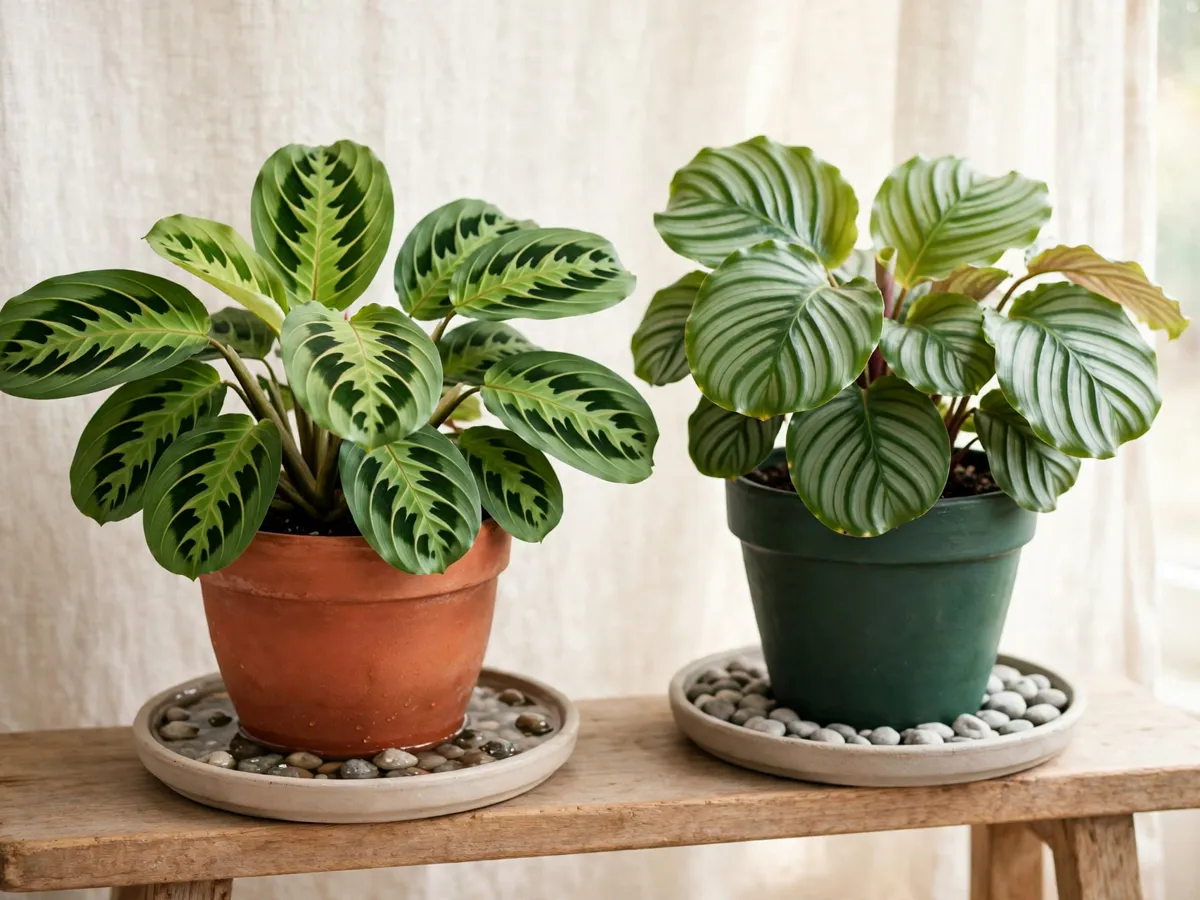
Neither one is forgiving about dry air, and neither is weaker than the other in the fold: the prayer plant forgets nothing less, it simply reports smaller and cheaper. So the choice is about your room rather than your skill. If the air is the problem, the prayer plant is the lower-cost way to learn what your shelf actually runs at, and a calathea is the better buy once you know the answer. Buy the smaller plant first, keep it one winter, and let it grade the room.
Cost: $12–$35 for the prayer plant, $18–$45 for the calathea. Time: 5 minutes. Caveat: the two are sold in the same aisle and the price gap is real, so check the leaf shape before paying the calathea price for a Maranta.
9. Feeding: the weak half-strength rhythm
A prayer plant is a modest feeder and grows mostly in spring and summer. Dilute a liquid houseplant fertilizer to half the label strength and give it about once a month through those growing months, always onto a mix that is already damp rather than bone dry, so the salts are diluted the moment they reach the roots. Water first, then feed. Stop in late autumn and skip it entirely through winter, when growth has slowed.
Cost: $8–$14 for a bottle that lasts two seasons. Time: 5 minutes. Caveat: more feed does not mean more leaves, and the first sign of salt burn is a brown edge that looks exactly like dry air, so the two causes get confused and the wrong one gets treated.
10. Repotting: the shallow-root move
The roots run wide and shallow rather than deep, so this plant wants a snug, low pot: 6 inches across is a mature size, and a wide bowl shape suits it better than a tall one. Repot in spring, one size up at a time, and only when roots circle the surface or push over the rim. Set the rootball at the same depth it was growing, fill the gaps with the same light mix, and water it in once, then resume normal watering when the top inch dries.
The classic mistake is going straight to a big pot in the hope of faster growth. Extra soil holds more water than a shallow root run can drink, and the wet mass sits against the roots for days after every watering. Expect a droopy week after a repot, which is transplant settle rather than a failure, and do not compensate by pouring more. If the clump has gone wide and the outer leaves are thinning, that is the moment to split it.
Cost: $3–$8 for a pot one size up. Time: 20 minutes. Caveat: a pot deeper than the rootball needs is a rot risk rather than a faster plant.
11. Pests: spider mites in dry air
Dry air is the pest problem on this plant, literally. Spider mites arrive on a hot, dry shelf near a radiator and show up first as pinprick pale dots stippling the leaf and fine webbing where the stalk meets the blade, mostly underneath. Check the undersides weekly through the heating months. Rinse the clump under lukewarm running water, both surfaces, and repeat weekly until the stippling stops appearing on new leaves. Wipe dust off monthly, since dusty blades hold less moisture.
The second visitor is the mealybug, a white cottony mass in the leaf joints; a cotton swab dipped in rubbing alcohol takes it off one at a time. Both problems come back to the same root cause as the crisp edges: the room is too dry. Raise the air on the ladder in section 3 and both become far less likely, which is why the humidity work is also the pest work on this plant.
Cost: $0–$10 for alcohol and swabs. Time: 15 minutes. Caveat: treat the air as well as the leaves, because mites return to the same dry shelf every February.
12. Propagation: the node cutting in water
Two routes work, and both are easiest in spring. The reliable one is division: lift the clump at repotting, cut the underground stem with a clean knife into two pieces that each carry several leaf stalks and roots, and pot them separately. The interesting one is a water cutting. Take a 4 to 5 inch piece from the outer edge of the clump with two or three leaves and a visible node, the swollen joint on the stalk, set it in a jar with the node below the waterline, and change the water weekly. White roots push from the node in three to five weeks; then pot into the airy mix and keep the air around it high while it settles.
Water roots are thinner than soil roots and need a damp, humid first month, so a small pot under a grouped cluster does better than a lonely shelf. Rooting cuttings: houseplant propagation.
Cost: $0, or $2–$5 for a jar and a clean blade. Time: 20 minutes, then weekly water changes. Caveat: a cutting without a node grows leaves for a month and never roots, so locate the joint before you cut.
13. Cost reality: $12–$35
The plants are cheap and the air is the budget. A 4 to 6 inch prayer plant runs $12–$18 at a grocery or garden centre, and $20–$35 for a larger clump or a named pattern form online. A 6 inch pot with a drainage hole is $3–$8, a bag of mix plus perlite is $8–$15, a hygrometer is $8–$12, a pebble tray is a $3–$6 saucer and a $2 bag of stones, and a small humidifier is $30–$60. Half-strength fertilizer is $8–$14 for a bottle that lasts two seasons.
Cost: $12–$35 for the plant, $15–$25 to set it up properly. Time: 45 minutes. Caveat: spend on the tray and the gauge before the pot, because a $12 plant in the right air outlasts a $35 one on a dry shelf.
Common questions
Why are my prayer plant leaves not folding at night?
The fold runs on the daily light clock and on water pressure in the leaf joint, so a missing fold points at a dim spot or dry air. Fix the light first, add one rung of the humidity ladder, and give it two weeks: new leaves that fold on time are the answer, and the old ones will not change.
Should I cut the brown tips off?
Yes, with clean scissors, and cut along the natural shape of the leaf so the trimmed tip still reads as a point. The trimmed part does not grow back, so the cut is cosmetic and the real work is finding the cause: a brown tip at the extreme point is minerals from the water, while a jagged brown line along the outer edge is dry air.
Can I keep a prayer plant in a low light room?
Not happily. It survives a north-facing room, but the pattern darkens, the stalks stretch, and the fold gets sluggish, so you buy the plant for its leaves and get neither the leaves nor the show. Move it within a few feet of a bright window with a sheer curtain, or put a shade-tolerant plant in the dim room instead.
Why did my prayer plant drop leaves after I brought it home?
The lowest leaves, on the outside of the clump. A greenhouse delivers a plant grown in near-perfect air to a room that is drier and dimmer, and it sheds the oldest leaves first to concentrate on the center. That is a one-off adjustment rather than a failing, provided new leaves are still unrolling. Raise the humidity and the outer ring is replaced from the middle over the following months.
Is a prayer plant safe around cats and dogs?
Maranta leuconeura is listed as non-toxic to cats and dogs, which is one reason it gets recommended over its calathea cousin in a pet household. Chewing a few leaves still means a stomach to upset, so keep the pot out of paw reach, and for any suspected ingestion ask your veterinarian rather than this page.
Save these on Pinterest
Pin the humidity ladder and the crisp-edge decode, the two sections that decide whether the leaf edges make it through February. This guide and the rest of the gardening tips live together there.