 Plant As Deco
Gardening & Planting Tips
Spider Plant Care Indoors: The Free Plant Factory
By Plant As Deco · Updated 23 November 2026
A spider plant is the houseplant that makes more houseplants. Give it bright indirect light and water on the almost-dry rhythm, and a mature Chlorophytum comosum sends out runners hung with plantlets you snip and pot for nothing. It forgives dark corners, missed weeks and cheap potting soil. It does not forgive fluoride in tap water, which browns the leaf tips.
Weekend-ready: $8–$18 for the plant, pot and mix, one afternoon. Ten minutes of checking after that, about once a week.
1. What a spider plant actually is
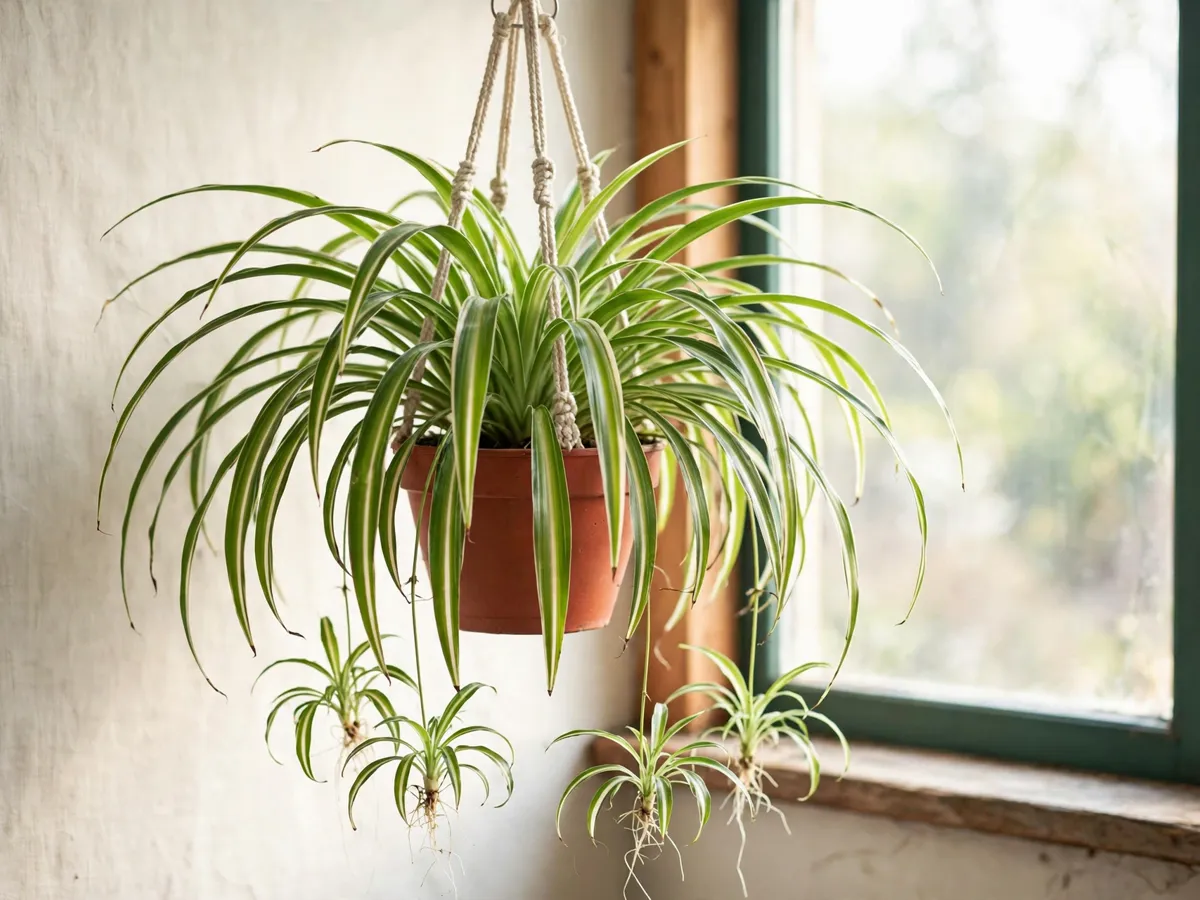
Chlorophytum comosum is a clump-forming perennial from the forest margins and river valleys of South Africa, kept indoors for its arching striped leaves and its habit of cloning itself. Below the soil it builds thick white tuberous roots that store water, and that single fact sits behind most of its behavior: it survives a forgotten week the way a camel survives a dry month. Its native hardiness translates indoors into tolerance: ordinary room temperatures year-round, steady growth through a bright winter room when most houseplants sulk. It asks for two things, decent light and water without tap-water chemicals, and it complains loudly about the second while enduring almost everything else quietly.
Cost: $0. Time: 5 minutes to know what you own. Caveat: the plain-green form grows faster than the white-striped forms, so a slow striped plant is being normal, not neglected.
2. Brown tips: the tap water tell and the three fixes
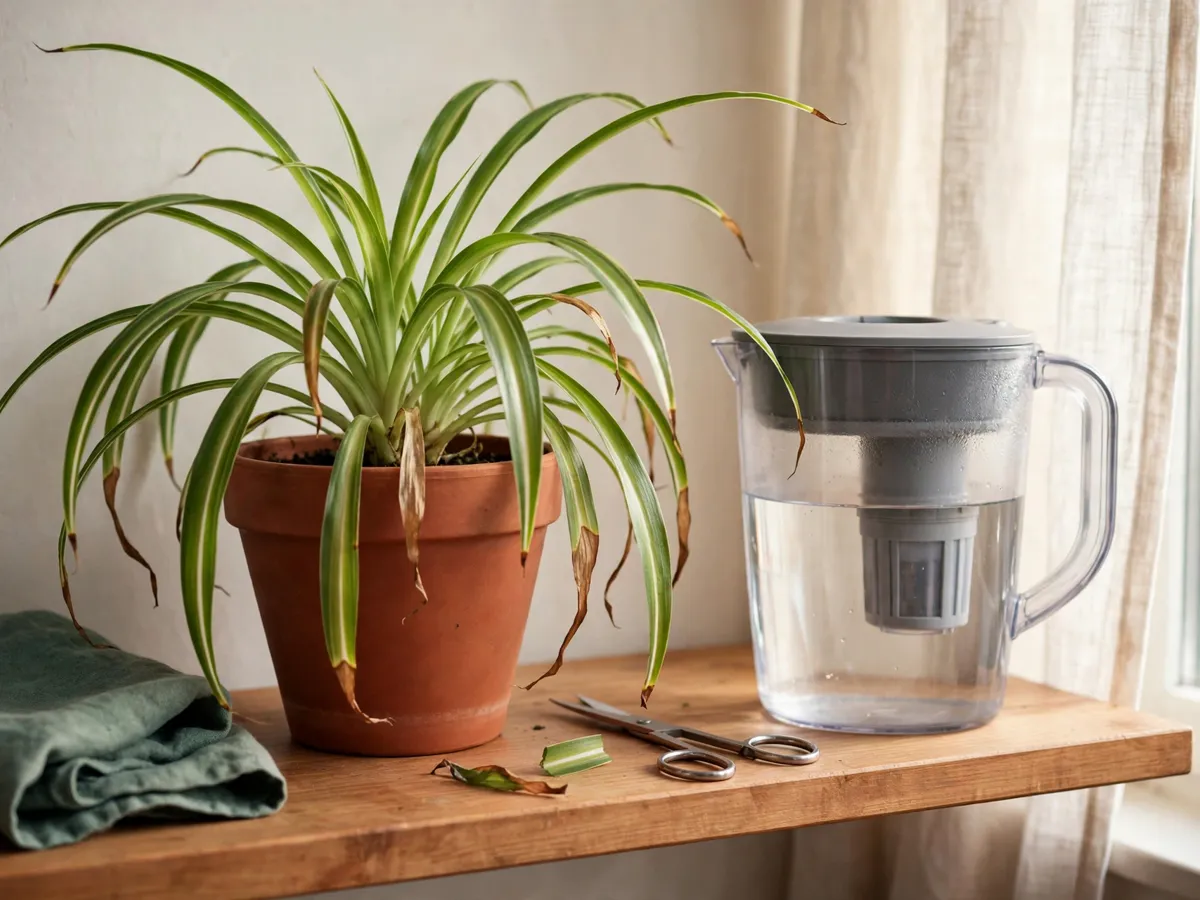
Brown tips are not a mystery, and they are almost never thirst. On this species the usual driver is tap water: spider plants are sensitive to the fluoride and chlorine most municipal supplies carry, and the leaf tips, which carry the least water in the plant, are where those dissolved salts collect. The pattern is a crisp beige edge creeping up the last half inch of many leaves at once. A pot standing in its saucer, a hot dry draft, or fertilizer salts in old mix look the same, so rule those out first.
Fix one, the water: switch to distilled water, collected rain water, or tap water left open in a jug overnight, which lets the chlorine dissipate. Fix two, the flush: every month or two, pour water through the pot at the sink until it runs from the drainage hole for a minute, carrying accumulated salts out. Fix three, the trim: snip brown tips with clean scissors, following the leaf shape, because the damage is dry and dead and does not spread.
Cost: $0–$2 for a jug of distilled water. Time: 10 minutes to reset the routine. Caveat: already-brown tips never green again, so judge the fix by the new leaves, a month or two out.
3. Light: the bright indirect band and the sunburn line
The target is bright indirect light: the glow near east or north glass, or a south window softened by a sheer curtain. Within a couple of feet of an east window is the easiest version, with gentle morning sun on the leaves for an hour or two. The plant also grows, slowly and paler, across a north room.
The line to respect is midday summer sun through south or uncurtained west glass. Hot direct sun scorches leaves into bleached gray-white patches, and the striped forms burn first because their white margins carry no green tissue to absorb light safely; the damage is permanent on that leaf. A west window that is safe in winter can become the burn window in June, so rotate the pot a quarter turn each week and re-check spots when the season turns.
Cost: $0 to $12 for a sheer curtain. Time: 5 minutes to read the leaves and move the pot. Caveat: change light gradually, because leaves grown dim burn fast when moved into sudden sun.
4. Watering: the almost-dry rhythm, and why it forgives neglect
Water when the top inch of mix is dry, then water well. That is the whole rhythm, and in most homes it works out to roughly once a week in the growing season and every two to three weeks in winter. The tuberous roots hold a reserve, so a dry week costs a slight droop that recovers overnight, while a soggy month costs roots. That asymmetry is the forgiveness this plant is famous for.
Test with a finger pressed into the mix, or lift the pot: a well-watered hanging basket is noticeably heavy and a thirsty one feels light. When you water, pour slowly until water runs from the drainage hole, then empty the saucer ten minutes later. A pot left sitting in its drained water pulls it back up, and the lowest roots sit in a swamp.
The failure mode is blackened, soft roots from a pot that never dries: outer leaves yellow and pull loose, and the mix smells faintly sour. Unpot, trim the rotten roots, repot into fresh barely damp mix, and water only lightly for the first week. A plant with a third of its roots left usually recovers within a month.
Cost: $0. Time: 5 minutes per watering. Caveat: a weekly schedule fails in winter, when the plant drinks a third as much, so water by dryness, not by calendar.
5. The root-bound paradox: why crowded roots make more babies
Here is the counterintuitive core of spider plant care: a slightly root-bound plant produces more runners and plantlets than one swimming in soil. In its native habitat, reproduction by runners is a response to stress, and a crowded root system is exactly the stress that flips the switch. A plant snug in its pot, white tubers filling the space, reads the situation as time to send its genes out: it flowers briefly in small white blooms along the stem, then hangs plantlets.
This is why eager repotting backfires. A newly moved plant in a roomy pot spends a season growing roots and fat leaves and produces few or no runners. Nothing is wrong: a comfortable plant settles in, and a packed one gets busy making copies.
So leave the plant snug until roots circle the surface or the plant visibly lifts itself out of the pot, then move it a single size up. At one size up it keeps its runner habit; a jump of two resets it to pure root growth.
Cost: $0. Time: 10 minutes of watching instead of repotting. Caveat: snug is not bone-crushed, and a plant drinking every two days has crossed into too tight and does need the move.
6. Potting: one size up, and the roots that crack cheap pots
Those thick tuberous roots do more than store water: they expand with force. A spider plant left long in a thin plastic nursery pot develops roots that split the walls seam by seam, and old cheap ceramic has been cracked the same way. Unglazed terracotta suits it, breathing through its walls and heavy enough to anchor a wide arching plant, and a hanging basket needs a drain hole plus a drip tray.
When it is time, repot in spring: water the day before, tip the pot and slide the rootball out, trim any roots circling the bottom, and settle it into the new pot one size up at the same depth. Backfill, firm lightly, water. If the plant is cracking its pot and you want to keep that pot, divide instead: cut the clump into two or three wedges, each with its own tuber mass and leaf crown. Two spider plants where you had one, and no larger pot needed.
Cost: $6–$14 for a terracotta pot, or $10–$16 for a hanging basket. Time: 20 minutes, plus 5 for a division. Caveat: never step up two pot sizes at once, because the unused wet mix is where the roots rot.
7. Soil: the light mix it wants
Spider plants are unfussy about soil the way they are unfussy about rooms: an ordinary bagged houseplant potting mix keeps them content, and a light, freely draining mix keeps them happiest. Dense garden soil in a pot is the one true mistake, holding water long past the point the thick roots want. If your mix leans heavy, cut in a handful of perlite or orchid bark.
Two details matter more than anything printed on the bag: keep the pot shallow rather than deep, because the root mass is wide and deep pots bury half their volume in permanently wet mix, and refresh the mix every couple of years, because old mix compacts and holds the very salts that brown the leaf tips. The mix it wants: best potting soil for indoor plants.
Cost: $6–$14 for a bag that fills several pots. Time: 10 minutes to pot, 20 to refresh. Caveat: mix from an open bag left outdoors all summer can carry fungus gnats, so store the bag sealed and inside.
8. The runners: how a mature plant starts cloning
A runner is a modified stem, properly a stolon, that a mature plant sends out on a long arch like a fishing line, often two or three at once. Along each runner the plant first opens a scatter of small white flowers, each lasting only days, then sets plantlets at intervals, each a ready-made daughter plant with a tiny leaf tuft and small aerial root bumps on its underside. A runner that reaches soil pins its plantlet in place, where it roots on the spot; in a hanging basket they dangle, waiting to be potted.
Three conditions start the show: maturity, usually a plant at least a year old with a full crown; bright light; and that mild root-bound squeeze from the last section. A young plant in a fresh big pot may never run, while a three-year-old snug plant in a bright window may run so hard it needs a haircut. Feed at quarter strength monthly through the growing season, because runners are the most demanding growth the plant makes.
Cost: $0. Time: 5 minutes to prune runners you do not want. Caveat: a heavy set of babies on a thin, pale parent means feed and light first, plantlets second.
9. Plantlets: the snip-and-pot method for free plants
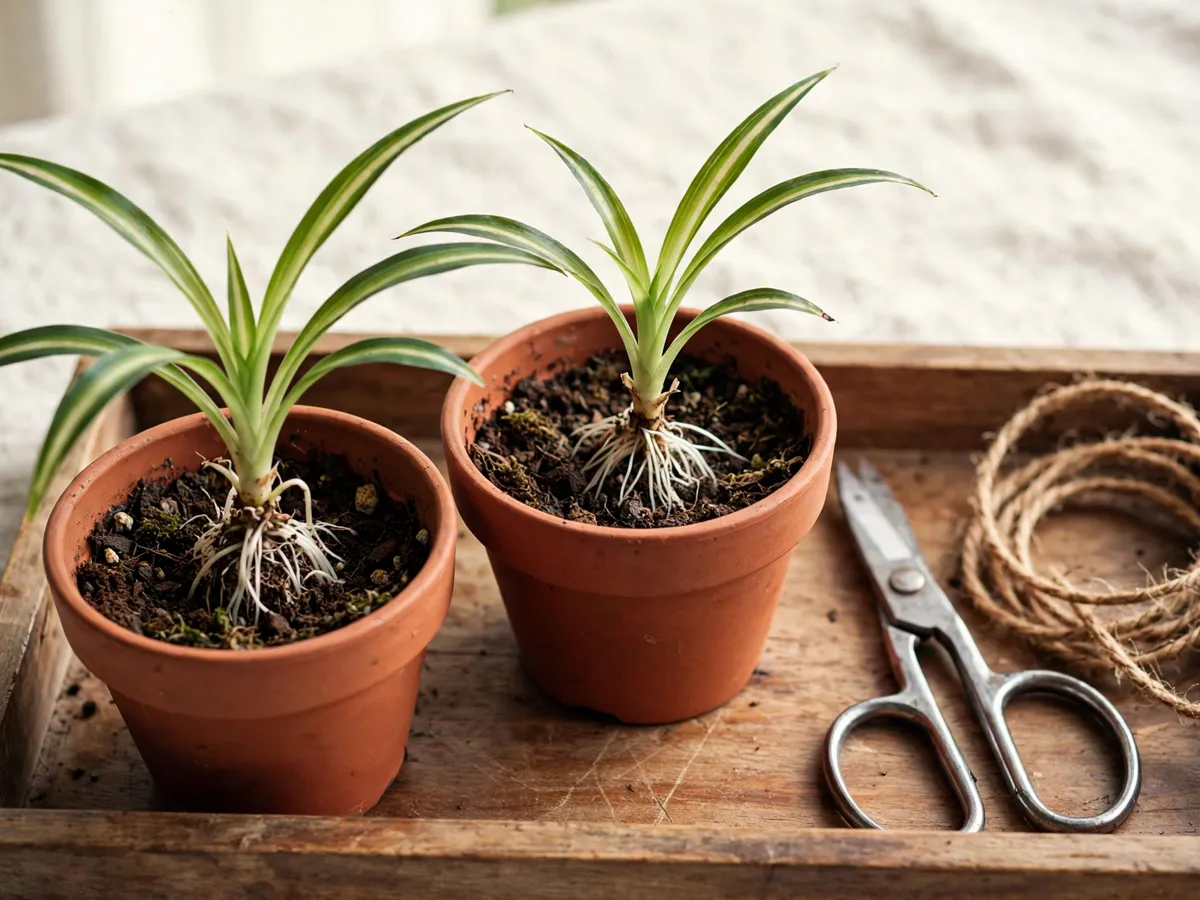
Take a plantlet with visible aerial root bumps, ideally a chunky one two or three inches across. Fill a small pot, three or four inches, with light potting mix and dampen it. Pot it directly: snip the plantlet free of the runner an inch or two on either side, set the base in a shallow hole just deep enough that it stands on its own, firm the mix around it, and keep the mix lightly damp for a few weeks in bright indirect light.
Or root it on the parent first, the surer route: set a small pot of mix directly beneath the hanging plantlet without cutting anything, and pin the baby onto the soil with a bent paperclip. It roots while still drinking from its mother through the runner, and you cut the cord only once new leaves appear, two to four weeks later. Detaching too early is the one common failure: a plantlet with no reserves of its own sits unchanged for weeks.
Roots take hold quickly either way, and by month two you have a small independent spider plant. One healthy mature plant can produce a dozen or more plantlets a year. More ways to make free plants: houseplant propagation.
Cost: $0 for the plantlet, $3–$8 for small pots and mix. Time: 10 minutes now, 10 more at the cut. Caveat: plantlets from a variegated parent come true to stripe, though the plain-green form sometimes outgrows its mother.
10. Growing plantlets in water first: the transition rule
Water rooting is the display method: a plantlet suspended with only its base touching water, in a clear glass on a bright shelf, sends out white water roots within days and sits happily for weeks. Change the water weekly.
The transition rule decides whether the whole thing succeeds: water roots are not soil roots. They are finer and built for water, so a plantlet moved carelessly into soil often dies back at the roots. Pot it while the roots are short, under an inch, into damp rather than wet mix, keep that mix consistently damp for two weeks so the roots never meet a shock, then ease toward the normal almost-dry rhythm. A plantlet that wilts a few days after potting is usually making this swap, not dying. The honest trade-off: plantlets rooted directly in soil skip the transition problem and establish faster, so water first is for looks, timing and holding stock, not for growing the strongest plant.
Cost: $0 to $3 for a glass jar. Time: 5 minutes a week for water changes. Caveat: the longer a plantlet lives in water, the harder the move to soil, so pot within a few weeks of rooting.
11. Pests and the rare problems: spider mites in winter heat
Spider plants sit near the bottom of the pest trouble list. The one regular visitor is spider mites, in winter, when heating dries the air to the levels a mite colony loves. The sign is stippling: leaves that look dusty and faded up close, with pale pin-prick speckles on the upper surface and, in a bad case, fine webbing where leaves meet the crown. Winter mites: indoor plant pests guide. The short version is a firm rinse under the tap, then insecticidal soap on the leaf undersides, weekly for three rounds.
Rarer complaints are worth naming. Scale, small brown discs fixed along the leaves, wipes off with rubbing alcohol on a swab. Fungus gnats, tiny flies hopping on the mix surface, are a too-wet signal rather than a real pest; let the surface dry between waterings. Tip browning is water chemistry, and floppy pale growth is a light or feed gap.
Cost: $4–$8 for insecticidal soap, or $3 for the rinse and alcohol route. Time: 10 minutes per round, three rounds. Caveat: mites travel on new plants, so quarantine arrivals for a couple of weeks.
12. Pet-safe bonus: the ASPCA listing and the hanging height rule
The ASPCA lists Chlorophytum comosum as non-toxic to cats and dogs, a plain fact and one reason the plant turns up in homes with animals. Within the terms of that listing, a chewed leaf is not a poison emergency. Any animal can still get an upset stomach from eating houseplant material, and anything unusual after a chewing session belongs with a veterinarian.
Pet-safe does not mean cat-proof. A cat will still bat at the arching leaves and swing from a dangling runner, and the plant loses every one of those contests. Hence the hanging height rule: keep the crown above nose level, trim runners short or root them before they grow into toys, and a hanging basket by a bright window handles both. The hanging roundup: indoor hanging plants. For everything else that can live at nose level, the full pet-safe list: pet safe low light houseplants.
Cost: $0. Time: 5 minutes to pick the height. Caveat: the listing covers the plant itself, not fertilizer residues on the leaves, so rinse off any spray feed before a pet can lick it.
13. Cost reality: $8–$18, or free from a friend's runner
A starter spider plant is one of the cheapest houseplants sold: a four inch pot runs $6–$10 at a garden center or big-box store, and a fuller six or eight inch hanging basket $12–$18. The striped forms carry no premium worth paying, selling at the same price as plain green. What you are buying is a plant that becomes several plants within the year.
The rest of the setup is light. A hanging basket with a drip tray is $10–$16, a small terracotta pot with a saucer $6–$14, and a bag of potting mix $6–$14 covers several plants for a year. Skip the extras: no special feed beyond a basic houseplant fertilizer at $6–$10 lasting two seasons, and no grow light unless your only room is dark.
Or spend nothing. Every spider plant owner you know is sitting on surplus plantlets, and a runner from a friend's plant, potted the snip-and-pot way, is a free full houseplant inside three months. One plant becomes the next, and the only bill is the pot.
Cost: $8–$18 to start well, plant, pot and mix included, or $0 with a gifted runner. Time: 30 minutes of shopping and potting. Caveat: a $6 starter in a bright window beats a $25 basket in a dark hall.
Common questions
How often should I water a spider plant indoors?
Water when the top inch of mix is dry, roughly once a week in the growing season and every two to three weeks in winter. Soak the surface until water runs from the drainage hole, then empty the saucer. The thick roots carry a water reserve, so a dry spell of a few days is harmless, while a pot that stays wet is the real risk.
Why are the tips of my spider plant turning brown?
Usually tap water. Spider plants are sensitive to the fluoride and chlorine in municipal supplies, and those salts collect at the leaf tips. Switch to distilled, rain or overnight-aged water, and flush the pot through the drain hole every month or two. Brown tips never green again, so trim them to shape and judge the fix by the new leaves.
Should I cut the babies off my spider plant?
Cut them when you want more plants, or when the plant is running so hard it looks tired. Pot the chunkiest plantlets, the ones with visible aerial root bumps, and compost the small ones, because each runner costs the parent energy. If you want no new plants, trim runners at the base as they appear.
Are spider plants safe for cats and dogs?
The ASPCA lists Chlorophytum comosum as non-toxic to cats and dogs, so a chewed leaf is not a poison emergency in the terms of that listing. Any animal can still get an upset stomach from eating plant material, and anything unusual after chewing any plant belongs with a veterinarian. Practically, cats damage the plant more than the plant bothers the cat, so hang it above nose level.
Why has my spider plant never produced babies?
Three gaps, in order of likelihood: maturity, light and root room. Plants usually need about a year and a full crown before they run. Runners are powered by bright indirect light, and a dim corner grows leaves, not babies. And a plant in a too-large pot grows roots instead of cloning, because the mild squeeze of a snug pot is the trigger. Bright window, snug pot, quarter-strength feed, and one patient spring.
Save these on Pinterest
Pin the brown-tip water fix and the snip-and-pot method, the two sections that turn one spider plant into a shelf of them. This guide and the rest of the gardening tips live together there.