 Plant As Deco
Gardening & Planting Tips
Croton Plant Indoor Care: The Paint-Splash Plant
By Plant As Deco · Updated 23 November 2026
A croton is a shrub that wears paint: green, yellow, orange and red on the same leaf, from a South Pacific species that expects strong sun, steady warmth and humid air. Indoors it stays a two to four foot plant, and the color is the scoreboard. Bright light paints the leaves, dim light lets green take back over, and a move, a draft or a watering mistake is answered with dropped leaves within days.
Weekend-ready: $12–$40 for the plant, the pot and the rich mix, one afternoon. Ten minutes of checking a week after that, less in winter.
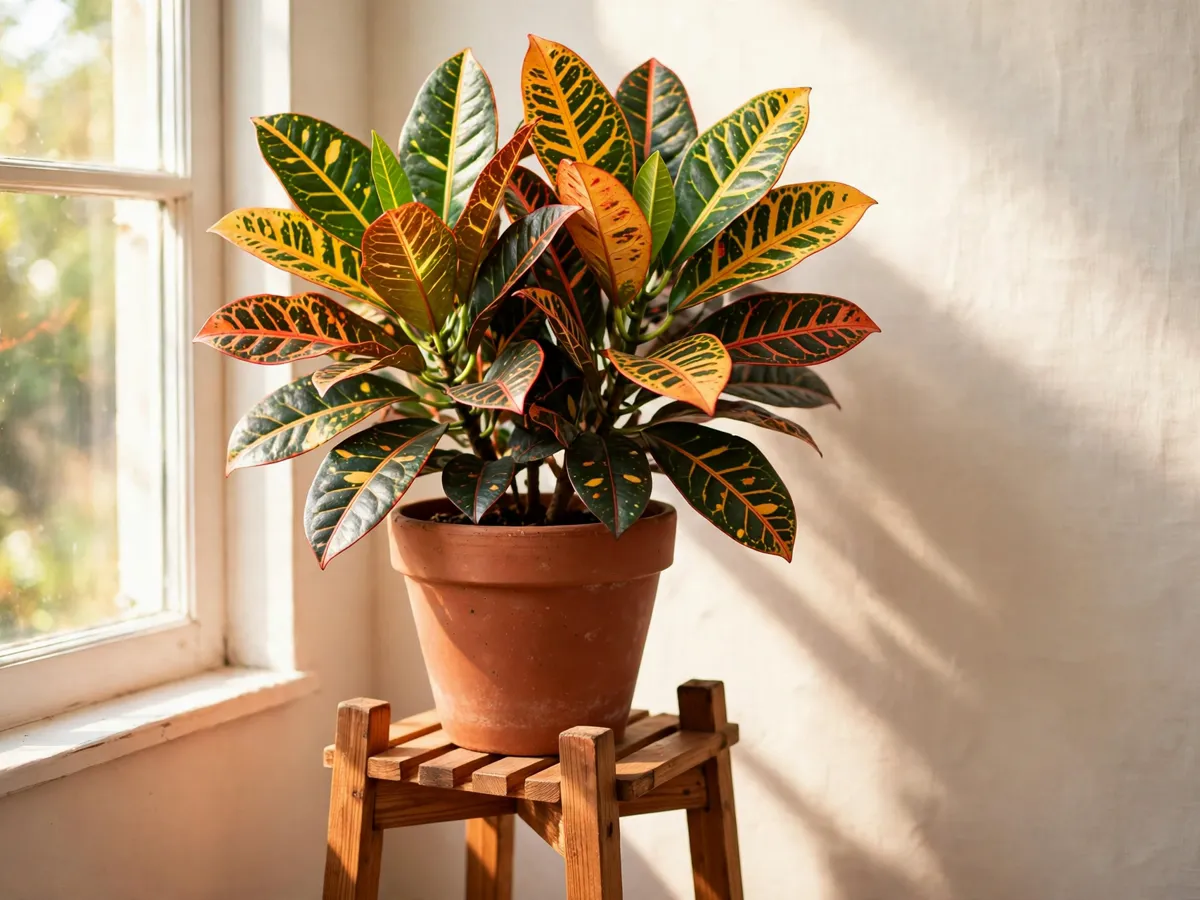
1. What a croton actually is: Codiaeum variegatum from the South Pacific
Codiaeum variegatum is an evergreen shrub from the warm islands between Malaysia and the western Pacific, and its family explains half its behavior: Euphorbiaceae, the spurge family, the same clan as the poinsettia. That family carries a milky sap, which is why gloves come up later on this page. In habitat the plant grows head high; indoors it stays compact, and the leathery leaves hold their paint for months.
The paint is real variegation, not a bloom. Shop shelves hold a handful of shapes, all one species: Petra, the broad-leaf default with four colors in one canopy; gold dust, small green leaves speckled yellow; Zanzibar, narrow twisted leaves like colored grass; Mammy, curled and rippled. Care is identical across them all, which is convenient, because labels rarely name the form.
Cost: $0. Time: 5 minutes to know what you bought. Caveat: a greenhouse-raised croton arrives soft-grown and will lose a few leaves no matter what you do right.
2. The color rule: sun makes the paint, shade washes it out
A green croton is not a different plant, it is the same plant on a dimmer budget. The yellows and oranges come from carotenoids and the reds from anthocyanins, pigments that sit inside every leaf but stay hidden while strong green chlorophyll dominates. Bright direct light tips the balance toward color; low light tips it back toward green, because green is the cheapest pigment to run and the plant defaults to it when light is scarce.
This is why a croton that looked like a firework in the shop turns quiet at home: the shop grew it under strong filtered sun, and your corner gives it a fraction of that. The wash-out happens over weeks and it is cosmetic rather than a sickness. The fix is light, not food.
New leaves are the honest scoreboard. They open mostly green and color up over a few weeks in good light, so a plant that keeps producing painted new growth is getting what it needs. Painted foliage goes well beyond this one species. The full color roundup: colorful houseplants.
Cost: $0 to give it the window, $20–$45 for a grow bulb if no bright window exists. Time: 10 minutes to move the plant, three weeks to see new paint. Caveat: a leaf that already turned green will not repaint; only the leaves that come after the move carry the change.
3. The move rule: why relocation drops leaves
Crotons protest relocation by dropping leaves, and the protest is mechanical rather than sulking. Each leaf is built for the exact light level it grew in: thickness, pigment, water plumbing. Move the plant and every leaf is suddenly wrong, so it sheds some and builds replacements. A few lost leaves is normal adjustment.
The rule that follows: move it once, then leave it alone. The trip from the shop to your window is the biggest single change the plant will face, so choose the final spot before it arrives: bright, warm, away from a drafty door and a vent. Then hold everything steady for two to three weeks. A croton shuffled weekly never stops rebuilding leaves, and it spends the season thin.
One exception: light upgrades. A jump from medium to full sun in a single move can scorch tissue built for shade, so a big step up goes in stages over a week. A quarter turn of the pot every month or two costs nothing.
Cost: $0. Time: 10 minutes to choose the spot, two weeks of patience. Caveat: judge a new croton after three weeks, not three days; the first dropped leaves say nothing about the future.
4. Light: the east or west window and the two-hour sun band
The working target is two to four hours of direct sun a day, with bright ambient light the rest of the time. An east window is the gentle fit: mild morning sun, then bright shade. A west window runs hotter, and in high summer a sheer curtain takes the edge off the afternoon. A south window works with the pot pulled a foot back or a thin curtain; a north window is where paint goes to fade, and no watering fixes that.
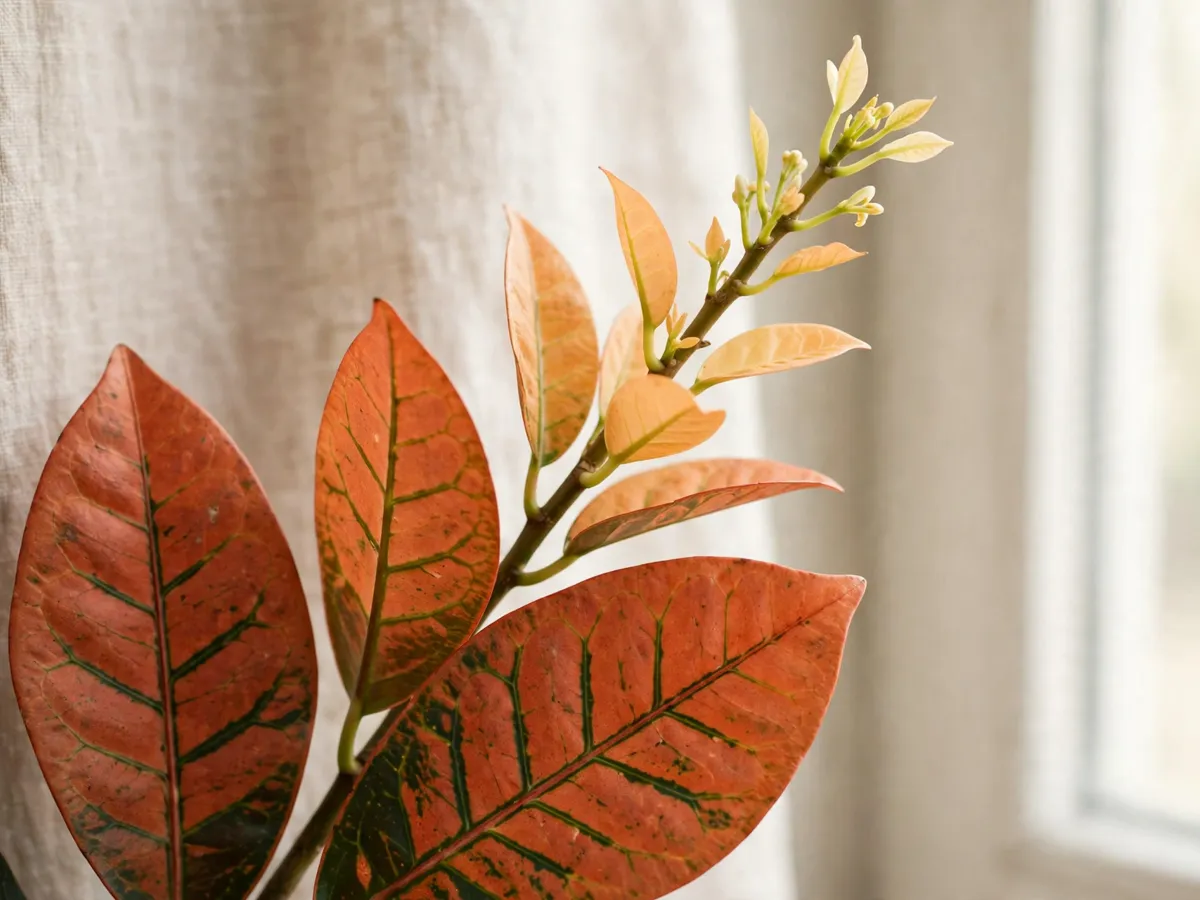
Keep the pot within a couple of feet of the glass; light falls off fast with distance. Wash the leaves every few weeks, because dust is a filter between the sun and the pigment.
Read the plant rather than the calendar. Enough light: new leaves appear and paint up. Too little: greens take over and the gaps between leaves widen. Too much harsh sun: bleached, papery patches on the leaf faces that aim at the glass, the sign the curtain is overdue.
Cost: $0 for the window, $10–$15 for a sheer curtain on hot afternoons. Time: 10 minutes to place, 5 minutes a month to wash leaves. Caveat: scorch patches never recover; the leaf keeps its scar until the plant replaces it.
5. Watering: the see-saw between swamp and drought
A croton wants its mix evenly moist through the growing season, which is a narrow band between two failures. Water when the top inch of mix is dry: pour slowly over the whole surface until water runs from the drainage hole, let the pot drain, and empty the saucer ten minutes later. Room-temperature water suits a tropical root system better than cold tap water.
Both ends of the see-saw show up in the leaves. Too dry: lower leaves droop, edges crisp and curl, and a badly droughted plant drops whole leaves overnight. Too wet: leaves yellow softly and drop while the mix stays dark and heavy, and the base of the stems can go soft, which is root trouble rather than thirst. When the signs disagree, check the mix with a finger first.
Winter halves the rhythm. Short days and a cooler room mean the plant drinks far less, and the weekly pour that was right in July becomes a swamp by January. Check the top inch and water roughly half as often.
Cost: $0. Time: 10 minutes per watering. Caveat: when unsure on the see-saw, wait a day and check again; a thirsty croton recovers by tonight and a drowned one does not.
6. Humidity: the 50 percent line and the grouping trick
The plant reads about 50 percent relative humidity as home and treats drier air as an insult. Browning leaf edges, curled tips and an open invitation to spider mites are the usual reply. Most heated apartments sit well below the line in winter, which is why a croton that coasted through autumn shows crisp edges by January. The grouping trick is free: plants release moisture through their leaves, so a cluster of pots makes a small humid pocket. Stand the croton with three or four companions rather than alone on an end table. A pebble tray adds more: wet pebbles with the pot above the water line, never in it. Misting does little; the water is gone in minutes.
The serious fix for a dry-air season is a small humidifier near the plant group, running while the heating runs. It pays for the whole shelf, not only the croton. Dry air season: winter houseplant care.
Cost: $0 for grouping, $10–$20 for a pebble tray, $25–$60 for a humidifier. Time: 10 minutes to rearrange. Caveat: a pot standing in its pebble water is the overwatering mistake wearing a disguise.
7. Leaf drop decoder: 5 causes and what each looks like
Leaf drop is the croton alarm system, and the fallen leaf carries the diagnosis. Five causes cover almost every case, and two of them have opposite fixes, which is why reading comes before watering.
One, the move. Leaves yellow and let go within days of a relocation, while stems stay firm and the mix is normal. Fix: hold the care steady and wait. Two, cold and drafts. Leaves droop first, then drop, often after a night near an open window, a door gap or a vent; anything below about 55 degrees is trouble. Fix: warmth and a calmer spot. Three, too much water. Leaves yellow, feel soft, and drop while the mix stays wet for days, and stems can soften at the base. Fix: stop watering, unpot, trim damaged roots, replace the soggy mix.
Four, thirst and dry air together. Lower leaves crisp at the edges, curl, and fall dry, and the mix is dust deep down. Fix: a thorough soak and a raise in humidity. Five, spider mites. Leaf faces turn pale and stippled, fine webbing appears where leaf meets stem, and the drop comes with visible specks underneath. Fix: the next section. A plant showing two signatures at once is being hit twice, so fix one cause at a time.
Cost: $0. Time: 10 minutes to read the leaves and the mix. Caveat: soft stems over wet mix mean the roots are failing; unpot and look the same day.
8. The spider mite problem in dry winter air
Spider mites are the croton pest, and they arrive with the heating season. Dry warm rooms are their native climate, and crowded leathery leaves give them cover. The first sign is pale stippling on the leaf faces, pinprick dots where cells have been emptied, then fine webbing in the joints. To confirm, hold white paper under a leaf and tap: specks that crawl are mites. The treatment is persistence rather than strength. Carry the plant to the sink or shower and rinse it under lukewarm water, top and bottom, which knocks off most of the colony. Follow with insecticidal soap on the leaf undersides, and repeat both every five to seven days for three rounds, because the gaps between sweeps catch the eggs as they hatch. Keep the plant off the shelf until the third clean round. Winter mites: indoor plant pests guide.
The standing shield is humidity and clean leaves. A monthly wipe with a damp cloth dislodges arrivals before they colonize, and a new plant earns two weeks apart from the others first.
Cost: $5–$10 for insecticidal soap. Time: 15 minutes per round, three rounds. Caveat: two rounds and a pause is how a colony returns; the third round is the one that finishes it.
9. Soil and pot: the rich mix that holds moisture
Unlike a succulent, a croton is a moisture plant: it wants a rich mix that holds water while still draining. A peat-based houseplant mix cut with a generous handful of perlite is the working recipe, damp crumbs that cling to a finger rather than a wet brick. The rich mix it wants: best potting soil for indoor plants.
The pot needs a drainage hole and a size close to the rootball. A cavernous pot holds wet mix the plant never drinks from, which tips the see-saw toward rot. Unglazed terracotta pulls moisture out fast and suits a heavy waterer; glazed ceramic or plastic holds it longer and suits a forgetful one. Repot every year or two in spring, one size up, when water runs straight through a broken-down mix, roots circle the surface, or growth stalls despite good light.
Cost: $6–$14 for mix, $8–$18 for a pot with a hole. Time: 20 minutes to repot. Caveat: soil from an outdoor garden is a different product; it compacts in a pot and carries pests with it.
10. Pruning: the shape-up that makes it branch
Left alone, a croton grows a few long stems with a tuft of leaves on the end of each. Pruned, it branches: cut a stem just above a node, the point where a leaf joins, and the plant usually pushes two shoots below the cut. One snip turns one leg into a small bush.
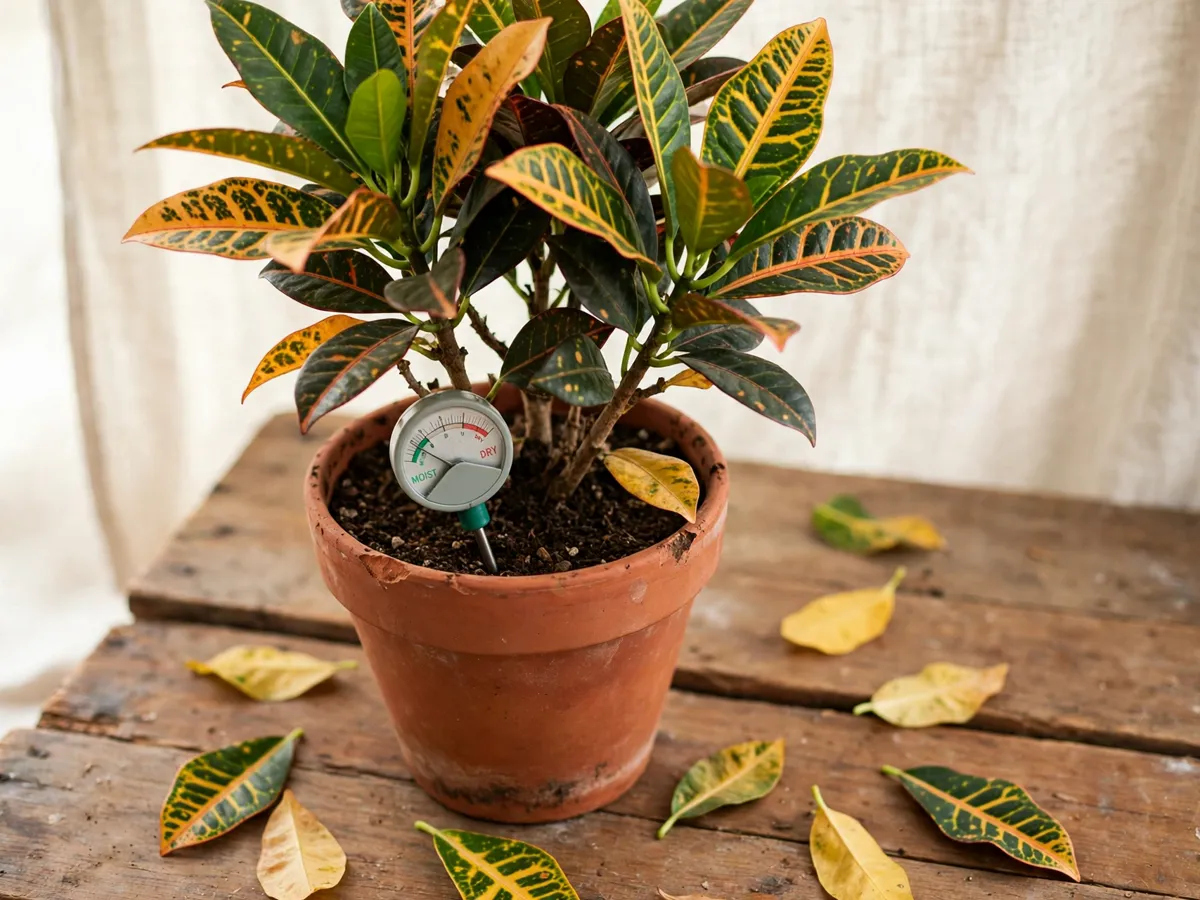
Early spring is the window, when rising light pays for regrowth. Take no more than a third of the plant at once, cut above an outward-facing node so the new shoot grows away from the center, and thin stems that cross and rub. Wipe the snips with rubbing alcohol between plants, and wear gloves: the cut bleeds milky sap, and that sap is a skin irritant, as it is across the spurge family.
The cuttings are free plants. A tip cutting four to six inches long, stood in water or damp mix in bright warmth, roots in about a month and grows into the parent colors given the same light.
Cost: $0 with clean scissors you own, $6–$10 for proper snips. Time: 15 minutes a season. Caveat: wash hands and snips afterward; any sap that finds skin gets rinsed with soap and water.
11. Toxicity: the milky sap, pets, kids and the glove rule
The sap is the fact to manage. Like most of the spurge family, every part of a croton carries a white latex that irritates skin on contact and upsets stomachs when chewed. The ASPCA lists the plant as toxic to cats and dogs: chewing typically brings drooling, vomiting or diarrhea, usually mild, and a pet that has chewed it is a call to a veterinarian rather than a wait. The same caution applies to small children.
The glove rule: gloves for pruning, gloves for repotting, soap and water for any skin the sap finds, and a rinse for eyes if it splashes. Washed hands are enough after routine leaf-cleaning, when no sap is flowing. Placement does the rest: a croton belongs at window height, not floor level, in a home with a cat, a dog or a crawler. If the brightest window sits at pet height, use a tall plant stand, a hanging planter, or trade to a species that tolerates noses. Safer picks for pet homes: pet safe low light houseplants.
Cost: $3–$5 for a pair of gloves. Time: 5 minutes to set the rule. Caveat: this page is plant care, not veterinary advice; any suspected chewing goes to your vet.
12. The comeback story: nursing a bare plant back
A croton reduced to a bare stem is not automatically a dead plant. The test is the scratch: nick the bark lightly with a fingernail, and green underneath means living tissue, brown means the stem is gone. A living stem, even leafless, can regrow a canopy. The comeback runs in spring. Cut the dead tips back to green tissue, keep the plant warm and inside the two-hour sun band, water just enough to keep the mix barely moist, and raise the humidity around it. A leafless plant drinks almost nothing; treating a bare stem like a full shrub is how a rescue drowns. New shoots emerge from the nodes within three to six weeks, and each one becomes a branch if it is pinched once. Feed only after real leaves return, at half strength, and expect the paint to arrive on the new leaves. By late summer a rescued stem carries a small painted canopy.
Cost: $0–$15 for fresh mix if the old batch is spent. Time: 15 minutes of work, months of patience. Caveat: the scratch test decides first; a brown stem is a $15 replacement at the garden center, not a rescue.
13. Cost reality: $12–$40 for a small painted shrub
The plant itself is modest money. A six-inch Petra, the broad-leaf default, runs $12–$25 at a big-box garden aisle; gold dust runs $12–$18 in the same size; Zanzibar and Mammy sit in the same band at plant shops. Eight and ten-inch specimens with a full painted canopy run $30–$60, and the honest advice is to start small: a bigger plant survives a dim room no better, it just drops more paint on the floor.
The setup is a pot with a hole at $8–$18, a bag of rich mix at $6–$14, and a saucer at $3–$6. A sheer curtain is $10–$15 if your window is a hot west one. The extras earn their money only in specific homes: a humidifier at $25–$60 for dry winter air, a grow bulb at $20–$45 when no window qualifies.
The running cost after the first month is ten minutes a week and a repot every year or two. Buy the fifteen dollar plant, give it the window it needs, and the color keeps arriving a leaf at a time.
Cost: $12–$40 for the plant, $25–$60 with pot, mix and saucer. Time: 45 minutes of shopping, one afternoon to set up. Caveat: an $18 croton in a bright window outpaints a $50 one in a dim corner.
Common questions
Why is my croton dropping leaves after I brought it home?
Almost always the move. Leaves built for greenhouse light are wrong for your window, and the plant sheds some while it builds replacements. Choose a bright final spot, keep the mix evenly moist, and hold everything steady for two to three weeks. Firm stems with a few fallen leaves means adjusting, not dying.
Can a croton live in low light?
It survives, but it will not stay painted. In dim conditions green chlorophyll takes over and the yellow, orange and red fade over weeks. Two to four hours of direct sun is the band that keeps the paint; a north window is not that.
How do I get the color back in my croton leaves?
Move the plant into the two-hour sun band, in stages if the step up is big. Leaves that already turned green will not repaint; the change shows on new leaves, which open green and color up within weeks in strong light. Feeding does not repaint a dim plant; only light does.
Is a croton safe for cats and dogs?
No. The plant is listed as toxic to both, and its milky sap irritates skin and upsets stomachs when chewed. Keep it at window height or in a room pets do not use, wear gloves when pruning, and treat any chewing as a veterinary question.
How often should I water a croton indoors?
Water when the top inch of mix is dry, roughly weekly in a bright warm summer room and half as often through winter. Soak until water runs from the drainage hole, empty the saucer, and let the top dry again. The mix, not the calendar, is the trigger.
Save these on Pinterest
Pin the leaf drop decoder and the color rule, the two sections that decide whether a croton stays painted or settles into quiet green. This guide and the rest of the gardening tips live together there.