 Plant As Deco
Gardening & Planting Tips
Christmas Cactus Care: The Holiday Bloomer That Returns
By Plant As Deco · Updated 23 November 2026
A Christmas cactus is a jungle plant wearing a cactus name, and most failures trace to one mistake: somebody treated it like a desert cactus. It wants water, humidity and a dark-night schedule, and it repays that with a cascade of tubular blooms in late November when nothing else is flowering. This page covers the part nobody explains: the six weeks of long nights that decide whether you get flowers at all, the chunky mix that keeps the pads firm, and the cutting that turns one plant into a family tradition.
Weekend-ready: $8–$25 for a blooming plant, a wide pot and loose mix, one afternoon. Or a free cutting and ten minutes in spring, then a twice-a-month check and six weeks of dark nights each autumn.
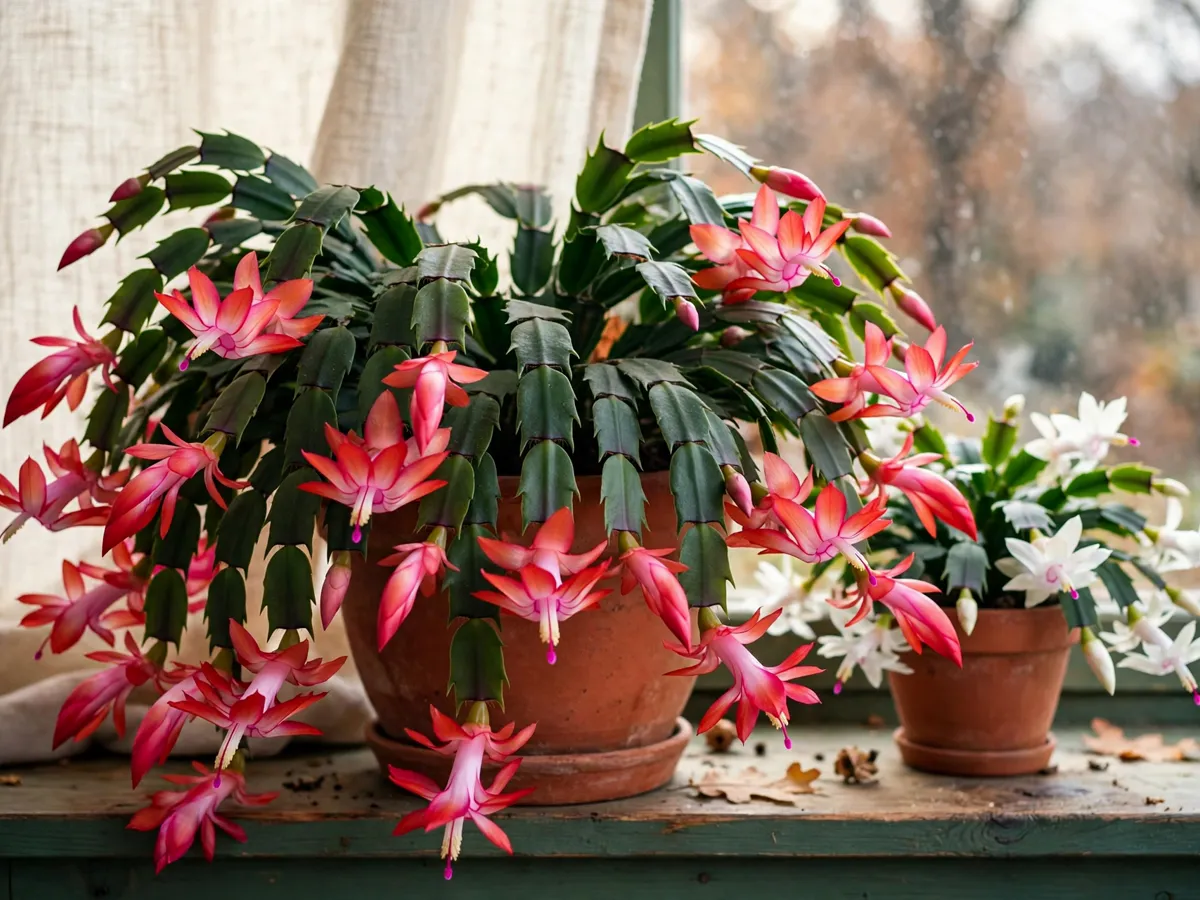
1. What a Christmas cactus actually is: a jungle epiphyte
Schlumbergera is a Brazilian jungle plant, not a desert one. In the wild it grows as an epiphyte, rooted in leaf litter wedged into tree forks and rock crevices of the coastal mountains. The flat, jointed green pads are modified stems, not leaves, and from the tip of the last pad the plant throws a tubular flower that opens sideways and hangs.
Three facts follow from that origin. It wants water often, because its home is damp humus rather than sand. It wants air around its roots, because litter is loose. And it reads the calendar by night length.
Cost: $0. Time: 5 minutes to reset the care instinct. Caveat: a greenhouse plant arrives soft with buds and needs a few weeks to settle before you can judge it.
2. The three holiday cacti and the leaf-edge test
Three plants share the holiday counter, and the honest way to tell them apart is the edge of a pad rather than the date on the tag. The true Christmas cactus, Schlumbergera buckleyi, has pads with two rounded scallops per side and blooms last, from mid-December into January. The Thanksgiving cactus, Schlumbergera truncata, has pointed teeth like small claws and blooms first, so the plant on a November shelf is very likely this one. The Easter cactus, sold as Rhipsalidopsis, has rounded edges but pointed petals and opens in spring.
Read the pad, not the label. Nurseries grow the species side by side, they look identical in a pot of buds, and every one gets tagged Christmas cactus between October and January. The care is identical, so the mislabeling only matters for the calendar: a truncata starts its count earlier, and a Thanksgiving bloomer needs the darkness held longer for Christmas.
Cost: $0. Time: 2 minutes with one pad between two fingers. Caveat: hybrids blur the edges, so treat an in-between plant as whatever date you want it to bloom.
3. The bud-setting trick: 12 to 14 hours of darkness for six weeks
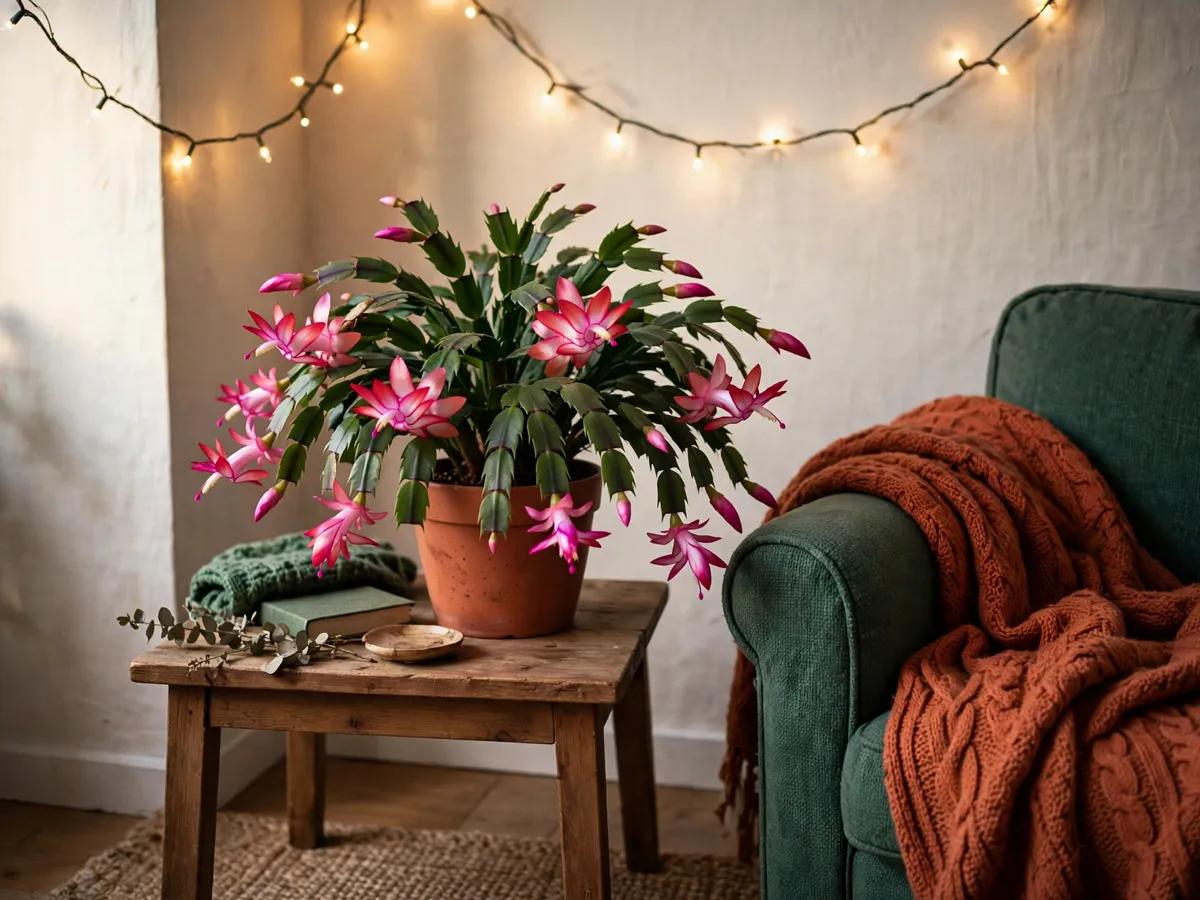
This section decides whether the plant blooms again, and no gift tag mentions it. Schlumbergera is a short-day plant: it sets buds in response to uninterrupted long nights, roughly 12 to 14 hours of darkness followed by bright day, held for about six weeks. Cool nights around 50 to 55 F speed the process. The count only runs on darkness that is truly dark, because a lamp does not dim the schedule, it cancels it.
Pick a method you can hold for six weeks without thinking. A dark closet shelf with a sealing door costs nothing and is the best option. An unused bedroom with no electronics works if the room is genuinely dark. A box or cloth cover works too, but only if it goes on and off at the same hour. Start in early October for late-November color, and pick the flowering spot first.
When buds the size of a grain of rice appear, return the plant to normal light gradually over a week of partial cover. Dropping the darkness abruptly at that point costs the young buds, the irony of the trick: six weeks of patience can end in one careless evening.
Cost: $0 for a closet, $8–$14 for a cloth or box cover. Time: 5 minutes a night for six weeks. Caveat: repotting or dividing inside those six weeks resets the count, which is how a plant that bloomed last year misses the next season.
4. Why it blooms late or not at all: five causes
Cause one is night light, and it is the majority of the failures. A plant that gets lamp light after dark every evening receives no long nights at all, so it grows pads happily and never flowers. The test: stand in the room at 10 p.m. and count the light sources. Cause two is age, because a first-year cutting rarely blooms and most plants need two or three seasons before they carry a show. Cause three is a reset: repotting or heavy pruning inside the long-night window starts the count over.
Cause four is heat: a steady 70 F room through October slows bud formation, and a plant over a warm radiator may never get the signal. Cause five is too much water and nitrogen during the induction weeks, because both say grow and the plant obeys by making pads instead of buds. Diagnose in that order, because the first fix costs nothing.
Cost: $0. Time: 15 minutes to audit the room after dark. Caveat: a plant repotted in October will not bloom that season, so plan the work for spring.
5. Light: bright indirect, the east window, the summer outdoors
Under a canopy the light is bright but never direct, and that is the target indoors. An east window is the easy answer. South or west glass works from two to four feet back, or behind a sheer curtain in high summer. Hot direct sun damages slowly: pads fade to a dull red-purple, thin out, and a plant stressed in July produces a weak show in December.
Summer outdoors is genuinely better for this plant. From the last frost, set it on a shaded porch in dappled light. Bring it back before nights fall toward 50 F, and inspect the pad joints on the way in, because anything that rode in on a summer plant walks straight into the December collection. Once inside, dry radiator air is the other problem, and the winter houseplant care guide covers the routine.
Cost: $0 to move the pot, $10–$15 for a curtain. Time: 10 minutes, plus two weeks of acclimating outdoors. Caveat: a plant moved from a dim shelf into strong sun in one step scorches, and burned pads never green back over.
6. Water: the almost-dry rule and the desert contrast
The rule is almost dry, not bone dry. When the top inch of the mix feels dry, soak until water runs from the drainage hole, let the pot drain, and empty the saucer. Thirst shows as a readable signal: pads go limp and slightly soft, sometimes flushing faintly red at the edges, and a good soak returns them within a day. The opposite texture is the trouble sign: mushy translucent pads, a dark soft base, pads that release at a touch. That is rot, and more water is the last thing that helps it.
Here is the desert-cactus contrast that explains everything. A desert cactus survives months without rain because its stem is a reservoir. A jungle cactus has fine, shallow roots in loose humus, drinking often and breathing always, and it tolerates neither a drought nor a swamp. The aloe vera care page shows the desert version of the same soak-and-drain logic. One calendar note: through the bud-induction weeks keep the mix barely moist, because a thirsty plant drops the buds it just set.
Cost: $0. Time: 10 minutes per soak. Caveat: ice cubes and a fixed weekly schedule are both wrong for this plant, because neither reads the mix, and the mix is the only honest answer.
7. Soil and pot: the chunky mix and the wide cascading pot
Tree litter is loose, so the mix has to be loose. Straight potting soil holds a week of water after one pour and suffocates the shallow roots from the bottom up. Cut a bagged cactus mix with coarse perlite and fine orchid bark, two parts mix to one part each of perlite and bark, and the finished handful should fall apart when you squeeze it rather than clump.
A drainage hole is non-negotiable, and a decorative ceramic with no hole is a cover: the plant stays in a plain nursery pot inside it, lifted out to water at the sink. Size the pot wide and shallow rather than deep, because the roots spread sideways and a saucer-shaped 8 to 10 inch pot keeps a top-heavy cascade upright. Terracotta pulls moisture out of the mix and adds weight; plastic suits a hanging basket. Repot every three or four years, in spring after flowering, one size up at most.
Cost: $6–$14 for mix and bark, $5–$12 for a wide pot with a hole. Time: 25 minutes to mix and repot. Caveat: a heavy glaze with no drainage is a planter-shaped bathtub, whatever the label says.
8. Feeding: the bloom-cycle rhythm, then rest
Feed follows the growth cycle rather than the month. From spring, when new pads start at the tips, through midsummer, a balanced liquid houseplant feed at a quarter to half the bottle strength, every two weeks, is plenty. From midsummer to early autumn switch to the low-nitrogen end of the shelf, because the plant is being asked to build buds rather than pads. Once the buds appear, feeding stops and does not restart until the new growth of spring.
Water before feeding, never into a dry mix, because salts against dry roots burn the fine tips, and the burn shows weeks later as reddened, stalled pad edges that people blame on the light. Feed dilute rather than strong: a heavy feed pushes soft growth that flops over the rim. The reasoning behind the ratios is in the indoor plant food guide.
Cost: $6–$10 for a bottle that lasts two seasons. Time: 5 minutes, every two weeks in growth. Caveat: feed never substitutes for the darkness schedule, and no bottle makes a lit room flower.
9. After the flowers drop: the rest period people skip
When the last bloom falls, the plant wants four to six weeks of cooler, brighter, drier conditions with no feed at all. Ease the watering back, let the mix go drier between soaks, keep the plant in a cool bright room, and leave it alone. Skip this by returning to a weekly soak and a bottle of feed, and the cost shows up in June: soft new pads, a leggy crown, and a weak bud set.
The rest is also the work window. Take cuttings while the pads are firm. Repot a crowded plant into the chunky mix. Pinch off the last pair of pads on long, floppy stems to keep the cascade dense. Resume dilute feed when new growth appears at the tips.
Cost: $0. Time: 10 minutes a week to withhold everything. Caveat: a rest in a dark warm room is not a rest, it is a pause with damage; the cool brightness is part of the treatment.
10. Dropping buds: the move, the draft, the dry air
Bud drop is the most common holiday complaint, and it is almost always a shock story rather than a care story. Culprit one is the move: a bought plant travels greenhouse to truck to shelf to car to home in days, and the buds abort from the disturbance alone. Culprit two is a draft, cold glass in December or a heat vent in January. Culprit three is dry air, because heated indoor air pulls moisture out of a bud faster than out of a pad. Culprit four is a watering swing, deep dry followed by a flood.
Read the timing to find yours. Buds that tighten and drop within days of a move are shock; buds that shrivel slowly over weeks in a warm dry room are humidity; pads that release at the base with a dark crown are water and belong in the salvage section below. There is no remedy for a dropped bud, and none is needed: the plant keeps its pads and sets a full round next season. Choose the flowering spot before the count starts, and do not move a blooming plant to show guests.
Cost: $0. Time: 10 minutes to pick a permanent spot in October. Caveat: a discounted plant with buds bought in December is a coin toss, so expect color this season and a real show the next.
11. Propagation: two-segment cuttings, the callusing day, giving them away
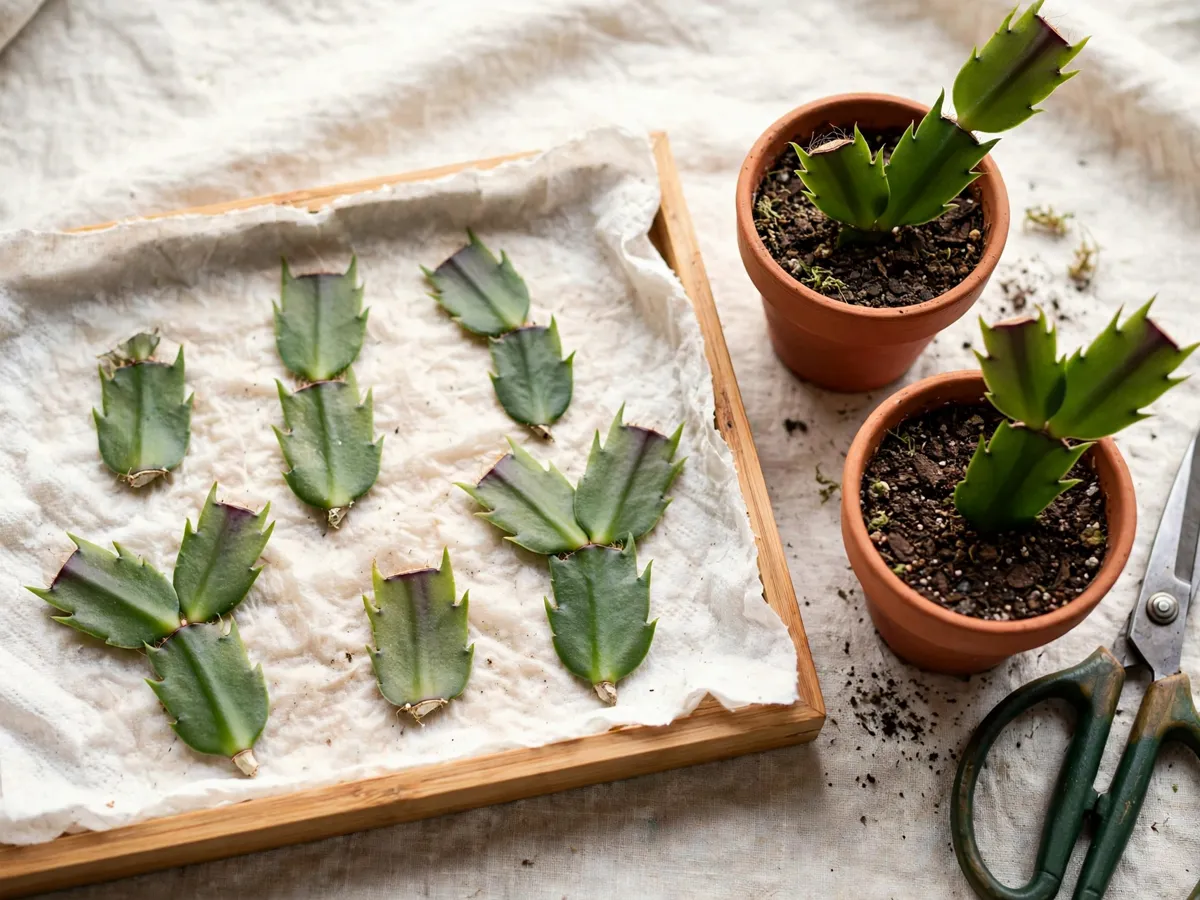
This is how the plant became a tradition, because a holiday cactus travels as a cutting in an envelope rather than as a purchase. Take two segments, not one: twist the last two pads off a healthy stem with a firm rolling motion, because a clean break at the joint seals faster than a sliced wound. Lay the cuttings on a paper towel in dry air, out of sun, for a day or two until the end dries into a callus, the step that separates a new plant from a soft pad in a pot.
Press the bottom segment about an inch deep into the same loose chunky mix, firm it lightly, mist the surface, and set it in bright indirect light. Do not soak it and do not enclose it in a plastic dome; this cutting rots from standing wet. In two to three weeks it resists a gentle tug, the only honest root test. A glass of water works too, and the trade-offs are in the houseplant propagation walkthrough.
On the giving: the best moment is right after flowering, when the recipient has the whole growing season ahead. A rooted segment in a three-inch pot, with a note on when to start the dark nights, is the oldest houseplant gift there is.
Cost: $0 for the cuttings, $3–$6 for a small pot and mix. Time: 10 minutes plus two days of drying. Caveat: a cutting planted before it calluses usually fails, and it looks healthy for the first fortnight.
12. Pests and rot: mealybugs, soft stems, the salvage cut
Mealybugs are the insect to know, because they hide where a glance misses: the joints where pads meet, in the crown, and on the surface of the mix. They look like small white cottony fluff and leave a sticky film on the tips. Treat by pressing rubbing alcohol on a cotton swab directly onto each clump, working over a sink, and repeat weekly for three rounds, because the first pass misses what sits deep in the crown. Identification and the alternatives are in the indoor plant pests guide.
Rot arrives through the base: a dark soft crown, pads that release at a touch, and usually a history of wet mix. The salvage cut is the honest fix, and it works because this plant grows from the tips. Find where the stem turns firm above the soft section, twist off two or three healthy segments, throw the old mix and wash the pot, callus the cutting for two days, and root it in fresh chunky mix. You keep the plant and lose the years, which is a fair trade.
Cost: $3–$5 for alcohol and swabs, $6–$14 for fresh mix. Time: 10 minutes per swab round. Caveat: the third sweep is not optional, and a plant with a soft crown waits for nobody; act the day you find it.
13. Cost reality: $8–$25 for a rooted bloomer, or one free cutting
The plant is cheap and the multiply is free, which is the whole economics of it. A blooming four-inch pot at a garden center or a big-box store runs $8–$15 in November, and every colored form is the same genus under one holiday tag, so buy by the buds and the firmness of the pads. A large trained specimen in a hanging basket asks $30–$60 and must re-adjust to your windows.
The setup is a wide shallow pot with a hole at $5–$12, a bag of cactus mix plus perlite and bark at $6–$14, and a bottle of liquid feed at $6–$10 that lasts two seasons. The first year asks for nothing beyond that: no grow light unless the only window faces north, and no repotting.
The long tail is where the value sits: a repot every three or four years and a free cutting every autumn from your own plant. The smartest spend is nothing at all: two segments from a coworker in March plus a three-inch pot at $3–$6 replaces the $15 purchase with the price of the mix.
Cost: $8–$25 to start well, or $3–$6 from a cutting. Time: 30 minutes of shopping and one afternoon of potting. Caveat: the $8 plant in an east window with a dark October outperforms the $60 specimen in a lit hallway.
Common questions
Is a Christmas cactus a real cactus?
By family yes, by habit no. Schlumbergera is an epiphyte from Brazilian cloud forest, which is why it drinks often and wants loose airy mix, while a desert cactus wants the opposite.
How do I get my Christmas cactus to bloom again?
Six weeks of long, truly dark nights in autumn, then bright cool days and a barely moist mix. Start in early October for late-November color, and stop moving the plant once buds appear. A plant that never blooms in a living room is usually getting lamp light after dinner.
Can I use coffee grounds on a Christmas cactus?
Not as a substitute for feed. Grounds are a slow, uneven nutrient source, and in a shallow pot they hold water against the stems, the exact condition this plant rots in. A diluted liquid feed every two weeks in growth does the job.
When should I repot, and what pot size?
In spring, after flowering, every three or four years, and only one size up. Choose a wide, shallow pot with a drainage hole, roughly 8 to 10 inches across for a mature plant, because the roots spread sideways. Withhold water for about a week after the move so the bruised root tips seal first.
Why did my bought plant drop all its buds in a week?
Transplant shock, and it is normal rather than a defect. A store plant has been moved, cooled, warmed and watered by other people, and the buds are the cheapest thing it can shed. Keep the mix barely moist, set it in bright indirect light away from the door and the vent, and expect the real show next December.
Save these on Pinterest
Pin the six-week darkness schedule and the five-cause bloom decoder, the two sections that decide whether this plant flowers again next December or simply lives on the shelf. This guide and the rest of the gardening tips live together there, along with the other holiday plant on the counter: Norfolk Island pine care.