 Plant As Deco
Gardening & Planting Tips
Neem Oil for Indoor Plants: Mix, Spray and When It Fails
By Plant As Deco · Updated 23 November 2026
You spotted the bugs, you identified them, and now the internet shouts one word at you: neem. The bottle costs ten dollars, the promises are huge, and the label is written for gardeners spraying acres, not someone with six pots on a windowsill. This page is the treatment side: when neem is the right tool, how to mix a safe strength in a kitchen, and the five situations where it quietly fails. The indoor plant pests guide identifies the usual suspects first. This page assumes you know the enemy and need the response.
Weekend-ready: $8–$15 for a bottle that outlasts the year, 10 minutes per spray session, three weeks of cadence. Renter-safe: the smell fades, the residue wipes off wood.
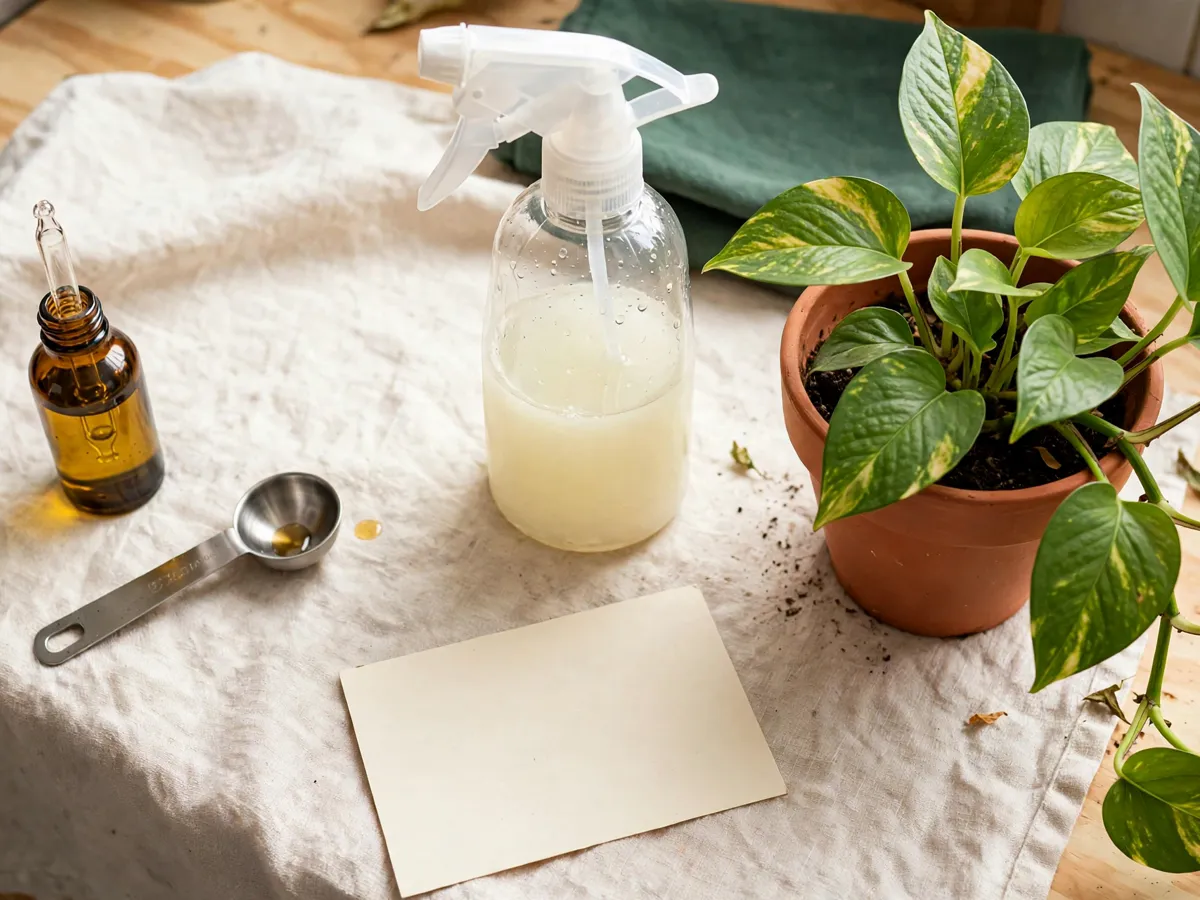
1. What neem oil actually is (and what the bottle is not telling you)
Neem oil is a vegetable oil pressed from the seeds of the neem tree, native to the Indian subcontinent and used in gardens for centuries. The part that matters for your pothos is a compound called azadirachtin, present in varying amounts depending on how the oil was pressed. That variance is the first thing the bottle hides: two products labeled neem can carry very different strengths, which is why label rates differ between brands.
It is not a poison in the way a synthetic pesticide is. Neem interferes with insect feeding, molting and egg laying over days rather than killing on contact. Spray an aphid and it keeps walking for a while; it stops feeding, fails to molt, and the population collapses over one to two life cycles. That is the gentle reputation, and the reason it disappoints anyone expecting results overnight. Pure cold-pressed neem is thick, cloudy, smelly and carries the most azadirachtin; clarified hydrophobic extract is a refined fraction with the compound largely removed, smothering insects and eggs like a mild horticultural oil. Both are sold as neem, and the strong smell belongs to the cold-pressed kind.
Cost: $8–$15 for the bottle. Time: 5 minutes of label reading before the first mix. The ingredient name on the back matters more than the word neem on the front.
2. What it kills and what it merely inconveniences
An honest hit list saves you three weeks of spraying the wrong enemy. Neem does its best work against the soft-bodied and the slow:
- Aphids. The best case for neem indoors. They are soft, they sit on new growth where spray lands easily, and they feed constantly, so a feeding deterrent bites hard.
- Spider mites. Neem helps, with two conditions: hit the leaf undersides where the mites live, and repeat, because eggs survive and hatch between sprays.
- Mealybugs and scale. Partial credit. Neem inconveniences the crawlers, but adults hide under wax and shells that block the oil. An alcohol swab on each adult, then neem for the young you missed, is the honest pairing.
- Whiteflies. Adults fly off the moment you spray, so neem lands on the stationary nymphs and eggs. One application always looks like failure; repeats win.
- Fungus gnats. Mostly a soil problem. A labeled soil drench can reach larvae, but letting the top inch of soil dry between waterings does more, faster, and costs nothing.
What neem barely touches: anything that flies well between sprays, anything armored like adult scale, and anything already inside the plant. For the stubborn ones, the indoor plant pests guide has the pest-specific playbook, including the soil change that ends gnat cycles for good.
Cost: $0 to re-read this list. Time: 2 minutes. Three weeks spent on a pest neem only inconveniences is the biggest waste of a month in houseplant care.
3. The dilution math: teaspoons per liter
Raw oil straight from the bottle will burn foliage and glue leaf pores shut, so neem must be diluted first.
- Start from the label rate. Most concentrate labels land between 1 and 2 fluid ounces per gallon. In kitchen units that is roughly 1 to 2 teaspoons of neem per liter of water, plus about a quarter teaspoon of mild soap to emulsify, because oil and water refuse to mix without it.
- Use warm water and shake. Warm water keeps the oil liquid long enough to disperse. Shake hard for 30 seconds and again every few minutes, because the mixture separates.
- For a first pass, halve it. Half a teaspoon of neem plus a drop of soap per liter is the gentle starting strength for a plant you have never sprayed. No burn after two days means you can move up to the full label rate.
Two rules protect your plants better than any exact number. Mixed neem does not keep: whatever the bottle holds at the end of a session goes down the drain. And never eyeball it, because a doubled dose is the classic cause of the leaf burn beginners then blame on the oil.
Cost: $0–$1 of product per liter mixed. Time: 5 minutes to mix correctly. Label rates differ between brands, so the number on your bottle always outranks the one in any guide.
4. How to spray: the underside rule and the drip guard
Spraying is where apartments go wrong. Coverage matters more than anything on the label.
- Move the plant to the sink or shower first. A bathtub catches the drip that would otherwise land on a wood shelf or a rug. Outdoors on a mild day works too, but in shade, because fresh oil plus sun scorches leaves.
- The underside rule. Almost every pest here lives on the leaf underside. Flip each leaf and spray the bottom directly, then give the top a lighter pass. Spraying only the tops is the most common reason a neem routine reports zero progress.
- Mist, do not soak. The leaf should look lightly speckled, not dripping. Runoff pools in the saucer against the pot base.
- Hit the stems and the soil surface. Scale and mealybug crawlers travel stems; gnats emerge from soil. A brief pass over both, without a deep drench unless the label allows one.
- Wipe the pot and shelf after. Neem leaves a faint film that collects dust on painted shelves and varnished wood. A damp cloth finishes the session.
Spray in the evening for plants near windows, so the oil dries overnight instead of cooking under afternoon sun. Under a grow lamp, same caution.
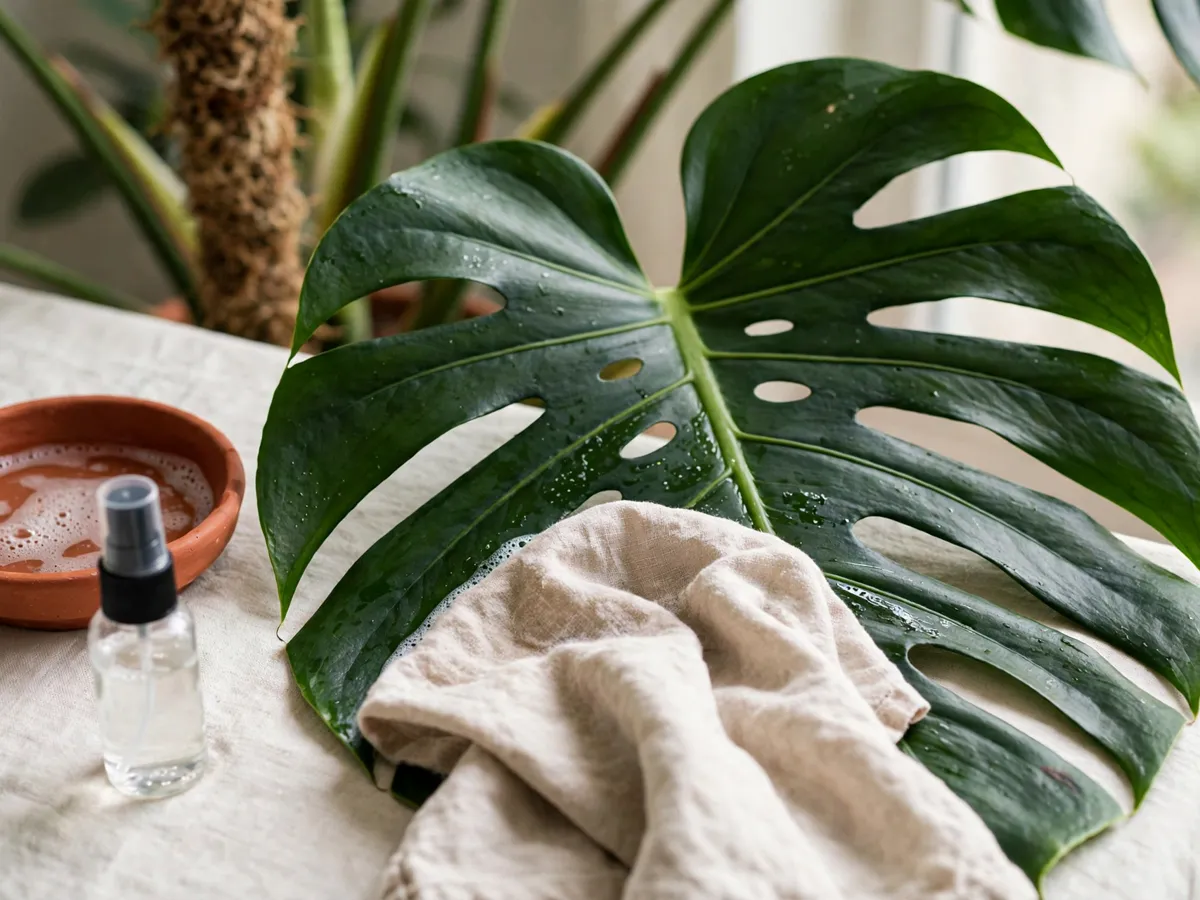
Cost: $0 beyond the mixture. Time: 10 minutes for a six-pot collection. Ten careful minutes beats three rushed ones.
5. The smell and the mess: living with neem in a small apartment
Nobody puts the smell on the front of the bottle. Cold-pressed neem smells like garlic, roasted peanuts and old cooking oil having a bad day, and the note hangs in a studio for a few hours after a session. Clarified extracts smell far less. If your tolerance for odd smells is low, that fact alone should steer you to the refined product or the soap alternative in section 8.
The mess is manageable but real. Neem is an oil, so it leaves a faint film on leaves, pots and shelf edges. On fabric it stains like cooking oil, which is the honest reason to spray over the sink and not the couch. The film is harmless and wipes off with a damp cloth whenever you want the gloss back.
Storage is the quiet apartment problem: the concentrate keeps best cool, dark and away from a curious cat, so a high cupboard rather than the shelf next to the watering can. For the wider plant-safety picture, see keeping cats out of indoor plants.
Cost: $0. Time: 2 minutes of airing out per session. Spraying before you go out, with a window cracked, handles the smell for most homes.
6. The spray cadence: once a week for three weeks, then reassess
The default cadence that actually clears an infestation: spray once every 5 to 7 days, for three consecutive weeks, then stop and look honestly at the plant. One spray never clears anything, because neem does not reliably kill eggs, and every egg that hatches a few days later starts the clock again. Three weeks covers a full generation of aphids and mites.
The gap matters as much as the count. Daily spraying is tempting and wrong: it stresses leaves without waiting for eggs to hatch into the vulnerable crawlers your next spray targets. Wait five days minimum; longer than ten and the new generation is old enough to lay the next round.
Week four is a reassessment, not a fourth spray. Pests gone and new growth clean means stop and shift to the weekly inspection in section 10. Live bugs still visible means switch tools; section 7 explains what to reach for instead. When a plant comes out of treatment, feeding can resume on the gentle half-strength rhythm in the indoor plant food guide, because a recovering plant spends resources on repair.
Cost: $1–$2 of mixed spray across the cycle. Time: 10 minutes a week for three weeks. The calendar discipline is the treatment; the mixture is just the tool.
7. When neem fails: the five situations and what to do instead
Neem has honest failure modes, and recognizing them early is the difference between a three-week fix and a two-month slog. If your situation is on this list, skip the neem.
- Heavy adult scale or mealybug colonies. The wax and shells block the oil. Physical removal wins: an alcohol swab on every visible adult, then neem for the hatchlings.
- A plant covered in hundreds of aphids. A firm stream of lukewarm water in the sink strips most of them off in two minutes. Neem is for the survivors, not the initial clear-out.
- Fungus gnats breeding in wet soil. No leaf spray touches larvae below the surface. Dry the soil out between waterings and use sticky traps for the adults.
- Thrips inside buds and leaf folds. Sprays rarely reach them where they hide. Blue sticky traps catch the adults, but thrips is a long campaign and the likeliest case for giving up one plant to save the shelf.
- A plant too weak to spray. Freshly repotted, badly underwatered, or sitting in a dark corner: neem adds stress to a plant with no spare capacity. Fix water, light and location first.
The unifying rule: neem is a maintenance tool and a population-reducer, not a rescue tool. It shines in the first week of a noticed infestation and after a stronger method has done the heavy lifting. When the result does not show up, the indoor plant pests guide points to the right escalation for the specific pest.
Cost: $0 to make the call. Time: 2 minutes of honest assessment at week two. Switching tools is not failure, it is the cheapest move on this page.
8. The alternatives: soap, alcohol, the shower, sticky traps
Every tool below beats neem in some situation, and most cost less. A complete indoor arsenal is three items, not a cabinet.
- Insecticidal soap. A true contact killer for soft-bodied pests, acting in minutes rather than days. It is the better first move when you want a moderate aphid or mite population knocked down now. Use a product labeled for plants; plain dish soap can burn sensitive leaves.
- 70 percent rubbing alcohol. The precision instrument. A dipped cotton swab dissolves mealybug cotton and scale shells on contact, and it is the only method that reliably clears an adult colony on a small plant.
- The shower. A firm lukewarm rinse strips aphid and mite populations mechanically and raises humidity around the plant, which spider mites hate. Free, fast, and the most underused tool in the drawer.
- Sticky traps. Yellow cards for fungus gnats and whiteflies, blue for thrips. They catch flying adults and tell you whether numbers are rising or falling.
The honest summary: soap and the shower handle speed, alcohol handles armor, traps handle flight, and neem handles the long grind. Most apartment infestations are best fought with two of these in sequence, not one on repeat. For plants that make all of this feel like too much, the low maintenance indoor plants list favors species that shrug off the pests that ride home on nursery stock.
Cost: $5–$12 for the alternative kit. Time: 5 minutes for any single method. A soap bottle and a pack of traps cover more situations than a second neem product ever will.
9. Safety: pets, kids, surfaces and herbs
Neem is one of the gentler options on the shelf, gentle being a relative word. For cats and dogs, the residue on leaves matters more than the spray cloud: an animal that chews treated leaves can get an upset stomach, so keep treated plants out of reach until dry and store the concentrate in a closed cupboard. It is far safer than most synthetics, and it is not a treat. The wider plant-safety discussion lives in keeping cats out of indoor plants.
For surfaces, treat neem like cooking oil: it stains fabric, leaves a film on wood, and wipes off sealed surfaces with a damp cloth. For people, wear gloves if your skin is sensitive and avoid breathing the mist.
For herbs and any plant you eat: use a product labeled for edibles, and observe the label waiting period between spraying and harvesting. Some labels clear harvest the next day, some ask for a week. Rinse leaves before eating, and keep ornamentals-only products on ornamentals.
Cost: $0–$3 for gloves. Time: 1 minute of care per session. The waiting rule for herbs is a label question, so read the back of the bottle you own.
10. Prevention: the weekly 30-second inspection that beats any spray
Every infestation in sections 3 through 8 started as a few bugs that would have taken one minute to remove. The prevention habit costs nothing: once a week, while you check whether plants need water, flip one leaf per plant and look at the underside and the newest growth. Sticky speckling, fine webbing, cottony dots, small flies at the soil. Treat that one plant the day any of those appear, and keep it away from the shelf until clean.
Isolation is the second half, and it starts at the store. A new plant lives apart from the collection for two weeks, because greenhouse shelves are where every pest on this page commutes. A leaf check every few days catches nearly every hitchhiker.
Stress prevention is pest prevention. Crowded shelves with stale air and bone-dry winter heating grow mites; constantly soaked soil grows gnats. The seasonal side is covered in winter houseplant care, and winter is exactly when most indoor pest stories begin.
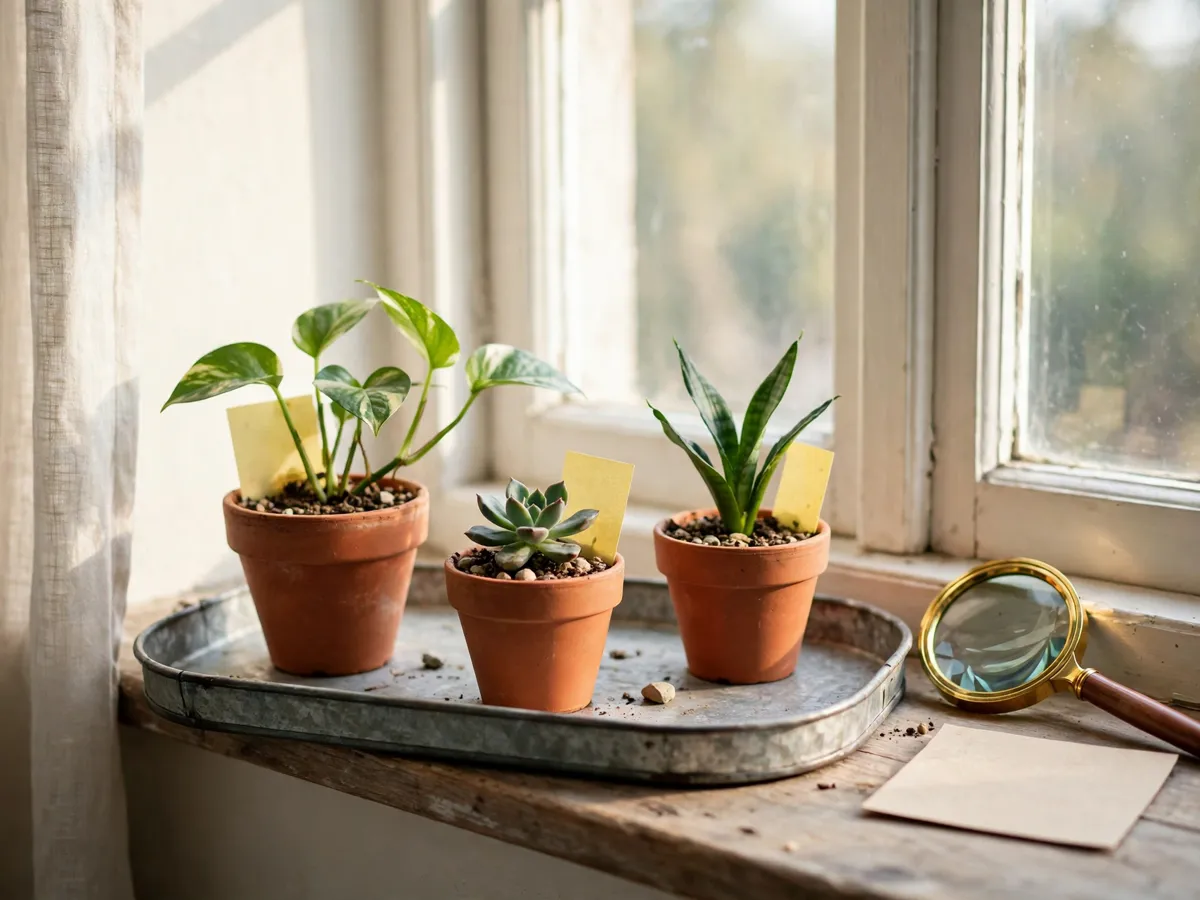
Cost: $0. Time: 30 seconds per plant, once a week. Nothing else on this page pays back so reliably for so little effort.
11. The pesticide drawer: what to actually own
The shelf wants to sell you six products. An apartment needs three, and the whole drawer costs less than one replacement plant:
- Neem oil concentrate, $8–$15. The generational tool for aphids, mites and the long tail after a cleanup. One bottle makes dozens of liters and keeps for years.
- Ready-to-use insecticidal soap, $5–$10. The fast knockdown for soft-bodied pests, useful the day you spot something and want it slowed now.
- Yellow and blue sticky traps, $5–$8 a pack. The diagnostic that tells you whether gnat or thrip numbers are climbing or falling, plus the rubbing alcohol already in your bathroom cupboard.
That is the honest complete list. Skip systemic granules indoors, skip bug bombs, and skip second neem products with a different label and the same job. Add one spray bottle dedicated to plant treatments only.
Cost: $15–$25 for the three-item drawer. Time: one shopping trip. Buy it before the infestation, because shipping times and pest clocks run at different speeds.
12. Cost reality: a year of neem
Run the arithmetic and neem is one of the cheapest line items in houseplant care. A $10 concentrate, mixed at a teaspoon per liter, makes roughly 40 to 50 liters of spray, and a typical apartment collection uses a liter or two per session. Even a bad pest year burns a fraction of the bottle. Yearly spend lands at $8–$15 for the concentrate, plus a dollar or two of soap.
Compare that to the alternatives. Replacing a $15 pothos that a two-week infestation killed costs more than the entire drawer. The cheapest strategy is a small drawer plus the weekly inspection.
The time budget matters as much as the money. Three weekly sessions of ten minutes plus the inspection habit totals under an hour a month in the worst month. For plants that make even that feel heavy, the low maintenance indoor plants guide ranks the species that go longest between problems.
Cost: $8–$15 per year. Time: under an hour a month at the worst. A budget that skips prevention spends the savings on replacement plants instead.
Common questions
How much neem oil per liter of water for indoor plants?
Follow the label first, since brands differ. The common garden rate converts to roughly 1 to 2 teaspoons of concentrate per liter, with a quarter teaspoon of mild soap to emulsify. For a first spray, halve that and watch the leaves for two days.
Can I spray neem oil on indoor plants every day?
No. Once every 5 to 7 days is the working cadence. Daily spraying stresses leaves without waiting for eggs to hatch. Three weekly sprays, then reassess, beats a month of daily misting.
Does the neem oil smell go away?
Mostly, yes. The garlic-peanut note of cold-pressed neem fades from a room within a few hours and off leaves within a day or two. Clarified extracts smell far less from the start. If the smell is a dealbreaker, insecticidal soap covers most of the same pests with almost no odor.
Is neem oil safe for cats and dogs?
Safer than most synthetic pesticides, not risk-free. The main concern is a pet chewing treated leaves before the spray dries, which can cause stomach upset. Keep treated plants out of reach until dry, store the concentrate in a closed cupboard, and call your vet if an animal eats a treated plant.
Neem did not work after two weeks. What now?
Check the failure list before buying a bigger bottle. Adult scale needs an alcohol swab, heavy aphid populations come off faster under a firm shower rinse, and fungus gnats need drier soil and sticky traps. If you never sprayed the leaf undersides, start there.
Do I wipe neem oil off the leaves?
Only when you want the gloss back. The residue is harmless to the plant and mildly unpleasant to pests, so leaving it for days is fine. Wipe with a damp soft cloth, supporting each leaf from underneath.
Save these on Pinterest
Pin the dilution math and the three-week cadence, the two parts of this guide you will reach for the next time a bug appears. This page and the gardening tips collection live together there.