 Plant As Deco
Gardening & Planting Tips
Unique Indoor Plants: 8 Statement Picks That Stay Renter-Doable
By Plant As Deco · Updated 23 November 2026
Most "unique indoor plants" lists are auctions in disguise: a six-inch start at $80, a waitlist, and a care sheet written for a greenhouse. This page runs the opposite filter: eight plants chosen for shape and novelty that stay under about $45 and ask for care a busy apartment owner can keep. Every entry says how big it gets, what it costs, and how it usually dies.
Weekend-ready: $8–$45 per plant, and a starter trio lands at $25–$90 with pots. Nothing here is bolted to the building.
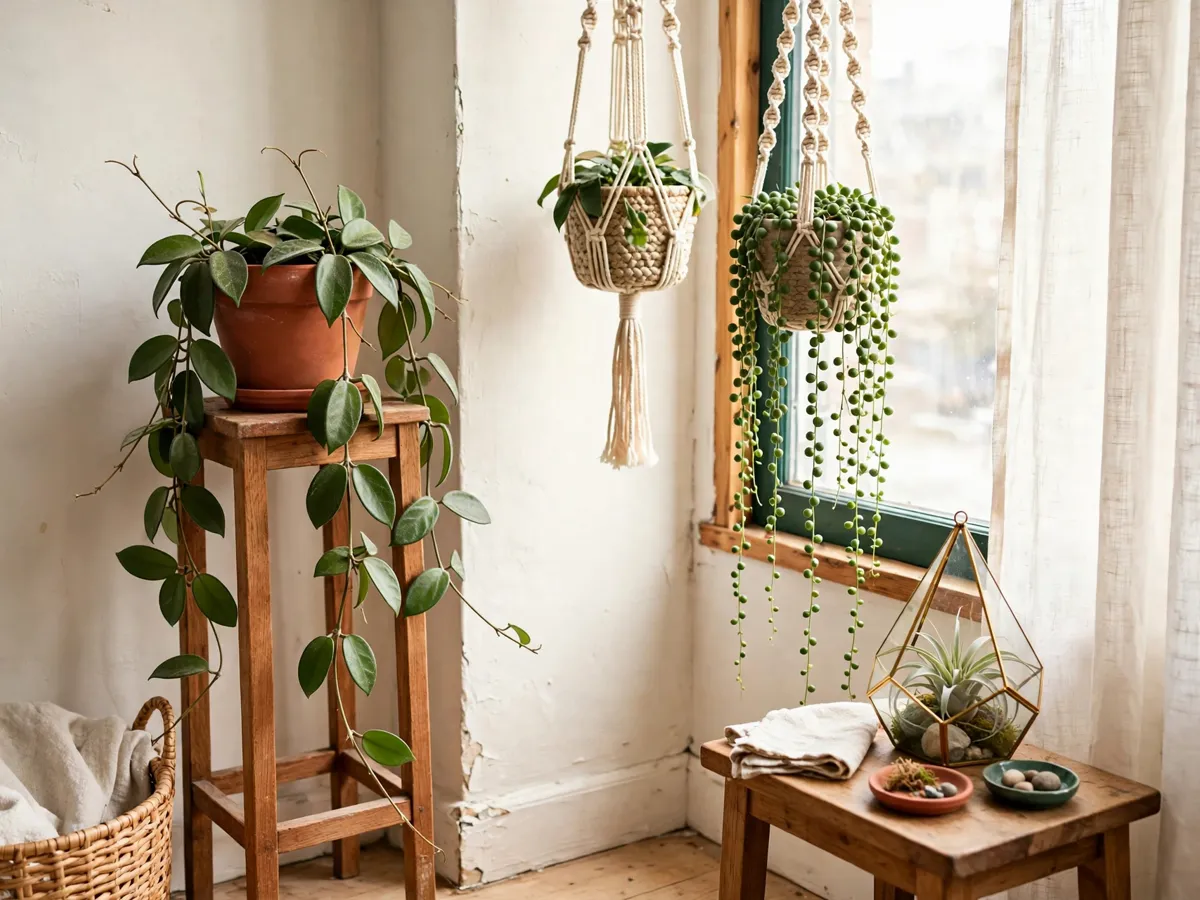
1. What "unique" actually means in a small apartment
The word "unique" pulls shoppers straight into the rare-plant market, and that market is a hobby with its own price floor rather than a decor strategy. This guide uses three filters instead. Shape first: a plant you notice from across the room because it looks like a stone, an antler, a painted leaf or a hanging heart. Size second: a ceiling that fits a small apartment, roughly three feet or one trailing reach. Cost third: under $45.
The fourth filter is honesty. Two of the eight, the rex begonia and the pitcher plant, want humidity a radiator-heated room does not hold in January, and each entry says so plainly. If effort matters more than novelty, the low maintenance indoor plants rank comes first, and a few plants appear on both lists: a weeks-between rhythm does not become harder because the leaf is unusual.
Cost: $0. Time: 5 minutes. The three filters decide every pick below.
2. The eight picks at a glance
The eight, in the order the sections cover them:
- Hoya. Waxy trailing vines, porcelain blooms on a settled plant. 4 to 8 feet of vine. Easy.
- Air plants. Sculptural gray-green rosettes with no soil. 3 to 12 inches. Easy, one drying rule.
- Lithops. Living stones, a pebble that is a plant. 1 to 2 inches. Moderate, light-hungry.
- String of hearts. Marbled hearts on thin trailing vines. 2 to 6 feet of fall. Easy.
- Staghorn fern. Antler fronds mounted on a board. 1 to 3 feet across. Moderate.
- Rex begonia. Leaves that read as painted fabric. 8 to 18 inches. Moderate, wants humidity.
- Pitcher plant. Lidded traps hanging from leaf tips. 2 to 4 feet of vine. Demanding in dry air.
- Polka dot plant. Freckled leaves in pink, red or cream. 6 to 12 inches. Easy, and cheapest.
Three near-misses get one line each. The bead-strand trailer everyone photographs is not repeated here. String of pearls earns its own guide: water math, pots and revival. Aluminum plant offers quilted silver leaves at about $8. Rabbit foot fern wants the hoya rhythm and the begonia humidity at once.
Cost: $0. Time: 3 minutes. The detail sections run in the same order.
3. Hoya (wax plant)
The hoya is the unusual plant that also forgives. Thick, waxy leaves in silver-speckled green hold water the way a succulent does, the vines trail or climb depending on how you train them, and a settled plant produces clusters of porcelain flowers with a faint vanilla scent. Blooms come only on older, pot-bound canes.
- Light: bright indirect, two to four feet from an east or west window; afternoon sun blisters the leaves.
- Water: when the top half of the mix is dry, roughly every two to three weeks, less in winter.
- Size ceiling: 4 to 8 feet of vine over several years.
- Difficulty: easy. The failures are overwatering and repotting too early; a cramped hoya is a compliment.
- Realistic price: $8–$25 for a common kind in a 4-to-6-inch pot, $25–$45 variegated.
Where it stars: a plant stand beside a chair, or the top of a bookcase with one vine trained down. Cuttings root in water within a month, so the second hoya is free.
Cost: $8–$25. Time: 5 minutes every two to three weeks. A hoya left sitting in a saucer rots from the base, so empty the saucer.
4. Air plants (Tillandsia)
Tillandsia removes soil from the equation entirely. Gray-green leaves arrange into rosettes, curls and spikes, the plant sits on glass, driftwood or a stone, and the care holds one rule: after each soak it must dry completely within four hours. Water trapped in the crown rots it faster than drought does.
- Light: bright indirect with airflow; noon sun through glass bleaches the leaves.
- Water: a 20 to 30 minute soak once a week, then shake it upside down and let it dry fully.
- Size ceiling: 3 to 12 inches; xerographica curls wider than a dinner plate.
- Difficulty: easy, with the drying rule as the catch that kills beginners.
- Realistic price: $3–$15 for singles, $10–$25 for a multi-pack, $20–$45 for a large xerographica.
Where it stars: the geometric terrarium on a side table, a sill stone, any shelf that needs a specimen and no pot. Zero dirt, and it moves house in a shoebox. The rosettes pup freely, so the next plant is free.
Cost: $3–$15. Time: 10 minutes a week, soak and drying handled. An air plant that stays wet dies faster than one that stays dry.
5. Lithops (living stones)
Lithops are the living stones: a pair of fused leaves that looks like a pebble, split by a seam from which a white or yellow daisy appears in autumn. Arid southern Africa explains the two catches. A lithops drinks perhaps once a month, and not at all while the old leaf pair shrivels to feed the new pair, a cycle that reads as dying and is simply the plant working. The second catch is light, the sunniest requirement of the eight.
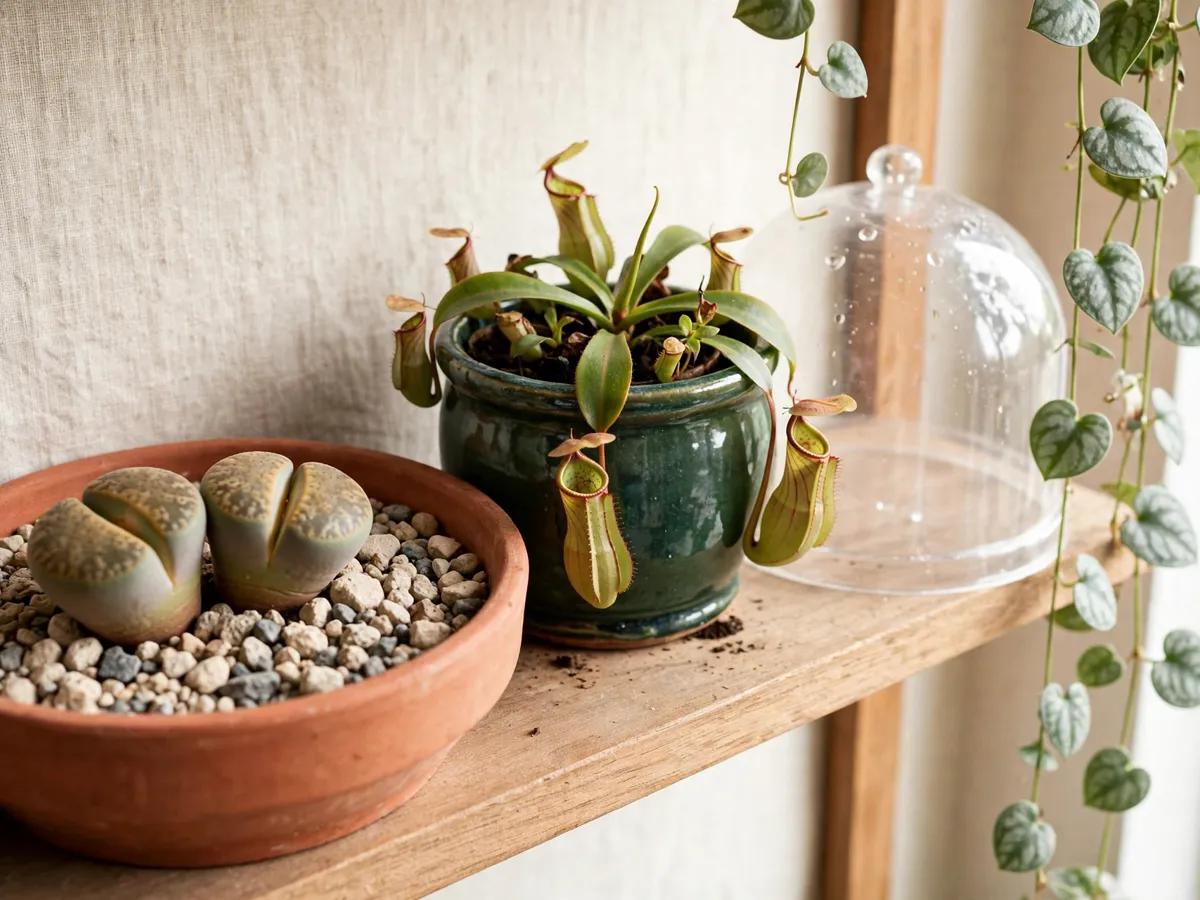
- Light: the direct south or west sill, or a clip LED six inches above; the least forgiving light demand here.
- Water: a bottom soak once a month in the growth season, none in winter and none during the split.
- Size ceiling: 1 to 2 inches per head, colonizing slowly into a clump.
- Difficulty: moderate. The restraint is easy; the light is the hard half.
- Realistic price: $5–$15 for a single, $15–$45 for a clump or an unusual species.
Where it stars: the shallow terracotta dish on the sill that produces the "is that a rock?" moment, and the only plant here that fits in a pocket on moving day.
Cost: $5–$15. Time: 5 minutes a month. Restraint is the care here; water is the killer, always.
6. String of hearts (Ceropegia woodii)
Ceropegia woodii is the trailing pick that out-looks a pothos in the same space. Heart-shaped leaves, marbled silver-green above and purple beneath, hang on vines thinner than a shoelace, and tiny tubular flowers appear in good light. Bead-like tubers along the stems store water, which is why the rhythm runs in weeks.
- Light: bright indirect, a few feet from a window; variegated forms fade toward plain green in a dim corner.
- Water: when the mix is dry, roughly every two to three weeks; never let the tubers sit in water.
- Size ceiling: 2 to 6 feet of fall, staying slim, so it never crowds a shelf.
- Difficulty: easy. The failures are overwatering and a cold draft against a winter window.
- Realistic price: $8–$20 for a settled pot, with full-length vines at the top of that band.
Where it stars: the shelf edge or a hanging, where thin vines read as lace rather than clutter. Trailing statement plants get the full hanging treatment in indoor hanging plants, including the hook ratings that matter in a rental ceiling.
Cost: $8–$20. Time: 5 minutes every two to three weeks. The tuber nodes root wherever they touch soil, so a pinned strand becomes a second plant.
7. Staghorn fern (Platycerium)
Platycerium is the antler-shaped fern, an epiphyte that sits on bark rather than in soil, and indoors it is sold mounted on a cedar board with a sphagnum base. Flat round shield fronds hug the board, and arching forked antler fronds give the plant its silhouette. It is the only one of the eight that lives on a wall.
- Light: bright indirect; morning sun is fine, harsh noon sun scorches the antler fronds.
- Water: soak the whole board in a sink for 15 to 20 minutes once a week, stretching the cadence in winter.
- Size ceiling: 1 to 3 feet across over several years, growing outward rather than upward.
- Difficulty: moderate. The soak is simple; the mount, the weight and the eventual remount are the commitment.
- Realistic price: $20–$60 for a mounted piece, $15–$45 unmounted on your own board.
Where it stars: the wall above a desk or a headboard, the plant that reads as sculpture. Renter honesty: a mounted fern weighs two to three pounds wet, so it needs a rated picture hook rather than a nail in drywall, and nothing requires drilling into the building. Lower shield fronds turning tan is normal aging.
Cost: $20–$60. Time: 15 minutes a week for the soak. A board that dries out bone-dry for weeks drops fronds.
8. Rex begonia
Rex begonias are grown for leaves that look painted: silver, plum, bronze, pink and green layered like fabric on a compact mound. The color holds for months. The honest catch is the air: thin leaves lose water quickly, and a heated apartment in January runs drier than the plant wants, so the edges crisp first.
- Light: bright indirect to medium; direct sun burns the painted leaves and deep shade dulls the colors.
- Water: when the top inch feels barely dry, evenly moist and never soggy; a pebble tray supplies the humidity.
- Size ceiling: 8 to 18 inches across, staying desktop-sized for years.
- Difficulty: moderate. The humidity is the whole game, and winter is the season that decides.
- Realistic price: $10–$30 for common cultivars, $25–$45 for unusual ones.
Where it stars: the desk or the nightstand, the color pick for the window band the lithops cannot use. A dried-out begonia is not necessarily finished: a hard cut back and steadier care push new leaves from the tuber.
Cost: $10–$30. Time: 10 minutes a week, tray included. Dry winter air is the one real obstacle, not the watering.
9. Pitcher plant (Nepenthes)
The tropical pitcher plant is the windowsill novelty that earns the double take: lidded pitchers hang from the tips of the leaves, glossy in green, red or speckle, and each one is a modified leaf rather than a flower. This page covers the look and the placement, because the full insect-eating story lives in the carnivorous plants guide. The bog-style kinds sold for outdoor ponds need full sun; the Nepenthes here is the indoor kind.
- Light: bright indirect, the same band a hoya wants, with more tolerance for a sheer-curtained sill.
- Water: rain, distilled or reverse-osmosis only, kept lightly moist; tap-water minerals blacken the tips.
- Humidity: the real demand, 50 percent and above, which means a bright bathroom window.
- Size ceiling: 2 to 4 feet of vine for the common apartment kinds.
- Difficulty: demanding in dry air, easy in a steamy bathroom. There is no middle.
- Realistic price: $12–$35 for a potted vine with pitchers already formed.
Where it stars: a tray under a humid corner, where new pitchers fill in across the year. No bright bathroom, skip this one.
Cost: $12–$35 plus a seasonal jug of distilled water. Time: 10 minutes a week. Tap water is the usual killer here, not insects.
10. Polka dot plant (Hypoestes)
Hypoestes is the cheapest color on this list: leaves freckled in pink, red, cream or yellow over a compact bushy stem. It reads as a fabric flower from across the room. The trade is lifespan: it is grown as a biennial, winding down across a season or two, and the fix is scissors, because cuttings root in water within weeks.
- Light: bright indirect to medium; the freckles fade in a dim corner and scorch in direct sun.
- Water: when the top inch dries. It droops fast and recovers fast, the best teacher plant among the eight.
- Grooming: pinch the tips back every few weeks to keep the mound full instead of leggy.
- Size ceiling: 6 to 12 inches, bushy rather than tall.
- Difficulty: easy. Legginess is cosmetic, and the recovery signal is loud.
- Realistic price: $5–$15 for a 4-inch pot, the lowest entry fee on the list.
Where it stars: the shelf gap-filler and the nightstand color pop, the plant that makes a corner look finished for under $10. Root a cutting while the mother plant is still handsome.
Cost: $5–$15. Time: 5 minutes a week, pinch included. Plan the cuttings early; the plant is short-lived by design, not by your mistake.
11. The five checks before buying any statement plant online
Online plant shops make a six-inch lithops photograph like a specimen. Run these five checks before the cart:
- Mature size, not photo size. A "mini hoya" is a six-foot vine in three years, and the listing rarely says so in plain numbers.
- The window first, then the plant. Match the light band in each entry to your brightest sill. The lithops and the pitcher fail in a corner a rex begonia tolerates.
- The pet check. The begonia is a known irritant, and a chewing animal will sicken on almost any leaf. The ASPCA database is the reference, and a high shelf is the rule that never fails.
- The live-arrival policy. Check the refund window and the shipping route. A four-day courier in January is a real risk, and reputable sellers ship heat packs or pause the order until spring.
- The first 48 hours. Unpack, inspect leaf undersides and stem joints for webbing or cottony bits, and let the plant acclimate for a week before any repotting.
The checks have an honest variant for the corner you keep losing plants in: the faux indoor plants guide covers when fake wins. One convincing faux piece beside three real ones is a finished room rather than a defeat.
Cost: $0 to check. Time: 10 minutes before the checkout button.
12. Where to place statement plants so they actually get seen
Placement is the care plan, because the ones that die are the ones tucked out of the walking lines.
- The shelf edge at eye level: the trailers, string of hearts and hoya, where vines fall into open air.
- The wall: the mounted staghorn above a desk or a headboard, at sitting height rather than gallery height.
- The nightstand and the desk: the rex begonia and the polka dot plant, the two that reward a close look.
- The sill dish: the lithops and the air plants, where a small size reads as a specimen.
- The bathroom window: the pitcher plant and any hoya, the humid corner doing the work a pebble tray cannot.
Two rules hold across all of them. Rotate a quarter turn weekly so the shape fills evenly instead of leaning to the glass, and keep everything off radiators and the cold side of a winter window. Group plants for humidity where it helps, but leave an inch between pots so air can move.
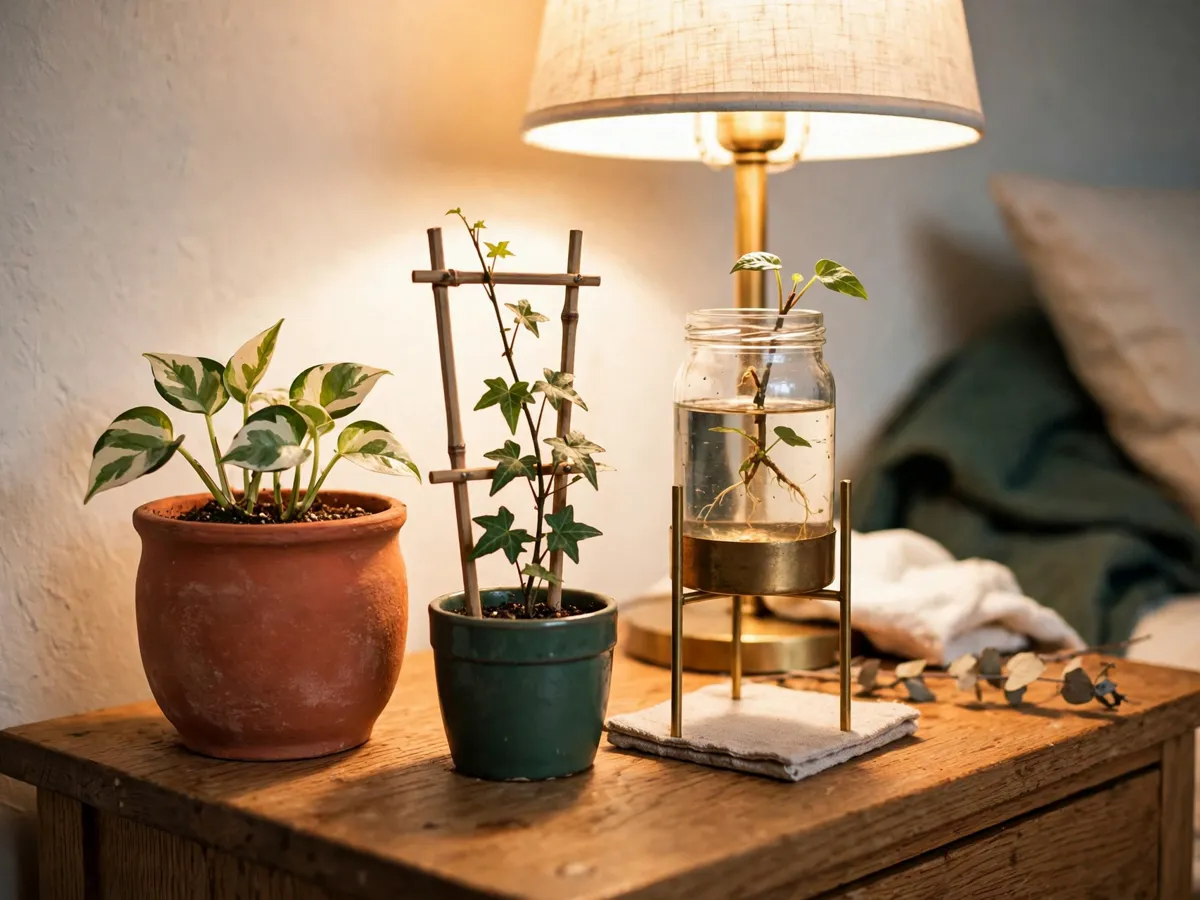
Cost: $0–$25 for a stand or a rated hook. Time: 20 minutes to place the first three.
13. The honest budget: $8–$45 per plant and a starter trio
The per-plant reality, US big-box and nursery prices with online specialty shops at the upper edge of each band:
- The cheap four: air plants $3–$15, polka dot $5–$15, lithops $5–$15, string of hearts $8–$20. Novelty at coffee prices.
- The middle two: hoya $8–$25, rex begonia $10–$30. The picks worth buying well, because both live for years once settled.
- The priced two: pitcher plant $12–$35, staghorn fern $20–$60 mounted, where the setup, a water source or a board, is half the real cost.
The starter trio math: one trailer, one sculptural, one color. A hoya at $12, an air plant at $6 and a polka dot at $8 land under $30, and two pots plus saucers add $15–$30. The full eight-plant shelf runs $60–$180, and the honest advice is to never buy it at once. Three plants survived for a season earn the fourth.
The trap line: a variegated rarity at $60 and up is not a better plant, it is a scarcer one, and it wants the identical light and water of the $12 version. Budget one replacement, $12–$30, because a pitcher or a rex may not survive its first dry winter. Maturity is the real bargain: a $12 hoya becomes the $40 vine.
Cost: $25–$90 for a starter trio with pots. Time: one nursery trip. Buy the cheap three first and let the collection prove itself.
Common questions
Are unique indoor plants hard to keep?
The eight split three ways. Four are easy on a weeks-between rhythm: hoya, air plants, string of hearts and polka dot plant. Two are moderate for a cheap fix: lithops need serious light, which a $20 clip lamp solves, and the staghorn needs a weekly soak. Two need real humidity: the rex begonia manages with a pebble tray, while the pitcher wants a bright bathroom window or nothing.
Which unusual houseplants are safe around cats?
The hoya, the air plants and the staghorn fern are regarded as low concern, and the string of hearts usually is listed that way too. The rex begonia is the one to keep high, because begonias carry oxalates that irritate a chewing mouth. The ASPCA database, not a shop tag, is the reference, and a shelf the animal cannot reach is the rule that never fails. Call a veterinarian if a pet chews one and keeps vomiting.
Do rare-looking plants cost more to keep?
The purchase price can be far higher and the care cost stays identical. A variegated version of a $12 plant can ask $60 or more while wanting the same window, the same mix and the same watering rhythm. The eight here are chosen to stay under $45, and the honest upgrade path is maturity rather than rarity: an old staghorn or a long hoya vine costs more because it grew, not because it is scarce.
Can I keep statement plants in a dark apartment?
Partly. The rex begonia and the polka dot plant tolerate medium light, and the hoya survives there, but it will not flower. The lithops and the pitcher plant need genuine brightness, and the string of hearts thins out in a dim corner. The workable answer is one clip LED, $20–$35, six inches above the shelf for eight to ten hours a day.
Why did my unusual plant die within a month?
Check the leaf type first, because the usual cause is a rhythm mismatch rather than bad luck. The drought-adapted picks, hoya, air plants, lithops and string of hearts, rot from the watering frequency a thin-leaved plant wants, so kindness is the number one killer. The thin-leaved picks crisp from dry air, and the pitcher fails on tap minerals. Check two inches down before the next drink.
Save these on Pinterest
Pin the eight-plant list and the five checks before buying online, the two parts of this guide that decide whether an unusual plant is still alive next year. This guide and the rest of the gardening tips collection live together there.