 Plant As Deco
Small Room Decor
Window Plant Shelf: The Ledge as a Stage
By Plant As Deco · Updated 23 November 2026
A window plant shelf turns the glass you already pay for into a display case. The frame holds the shelf, the window feeds the plants, and the room gets a row of green at its brightest point, all without a drill. In a small apartment the trade is close to free: the floor has no room for more pots, the walls may be off limits, and the window is sitting there empty.
This page walks the four ways to build the stage, the tension rod, the suction shelf, the floating span, and the sill you already own, plus the sun-map to draw before spending anything, the sag rule that keeps a wide board honest, and the plants that read best with daylight behind them rather than in front of them.
Weekend-ready: $15–$90, one afternoon. Renter-safe: every setup here holds by pressure, suction, or its own weight, and comes down without a repair bill.
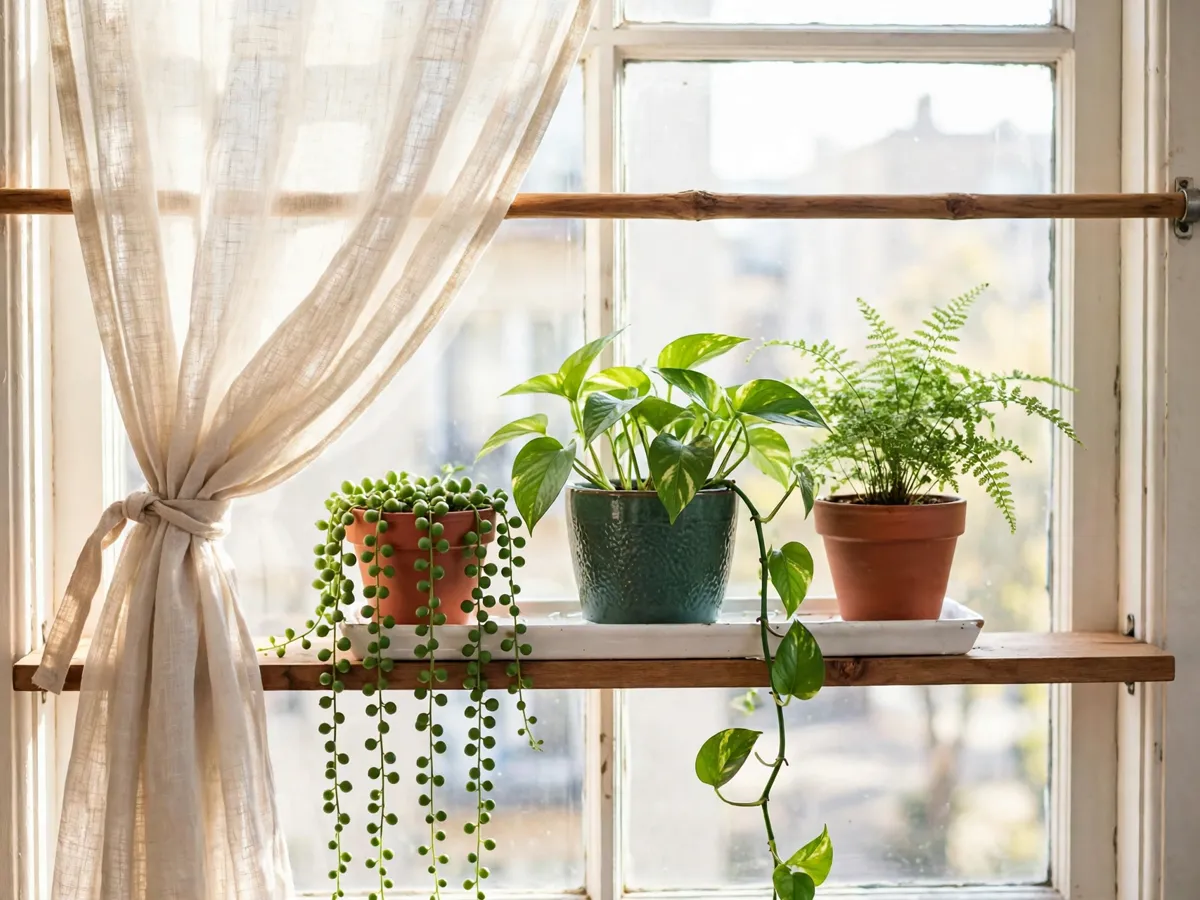
1. Why the window is the best stage in a small space
Every other shelf in a small room is secondhand light. A plant three feet from the window gets a fraction of what lands on the ledge, and a plant across the room is decorating in the dark. At the glass itself the light is full strength, so the window is the one spot where a shelf of plants actually thrives instead of slowly fading.
The window is also free display. The eye lands on the brightest rectangle in the room on its own, a row of green there reads as a deliberate composition, and the frame and the reveal give hardware something to press against. It spends no floor space, touches no wall, and keeps the lease clean. The wall version: the indoor plant wall guide takes the row up the wall when the frame runs out of room.
Cost: $0. Time: 10 minutes. Stand in the room at midday and watch where your eye lands first; that window is the one to stage.
2. The sun-map first: track what your window actually does
Before any hardware, find out what the window actually does with light. Check the ledge every couple of hours across two clear days and write down when sun lands on it and when it does not. An east window gets gentle morning sun and shade by noon. A west window heats up in the afternoon, the strongest and hottest stretch. A south window runs sun from late morning into evening. A north window stays bright without a direct beam, which is a different job entirely.
The shadow test reads the beam itself: hold a hand flat where the pots would sit at midday. A crisp shadow with visible fingers is direct sun, a soft-edged shadow is bright indirect light, and a shadow you have to hunt for means the ledge is dim. If your window is dim, the low light indoor plants guide keeps the shelf green without waiting for a beam that never comes.
The map decides two things: which plants survive the ledge, and whether a sheer curtain belongs between noon and three. Draw it before buying anything, because hardware is returnable and a scorched fern is not.
Cost: $0. Time: 20 minutes across two days. Winter sun runs a season lower and weaker, so a ledge mapped in July changes temperament by December.
3. Tension rods: the $15 renter answer that holds a whole row
The tension rod is the classic renter build: a spring-loaded or twist-tension rod wedged horizontally inside the window reveal, above the sill line, holding small pots from S-hooks or carrying a lightweight board as a shelf. Nothing is drilled and nothing is glued, and the whole stage comes down by hand at move-out. One rod spans a typical apartment window and costs $10 to $18 at any hardware store.
The practice that keeps it up: treat wet weight as the real weight, because a planted pot roughly doubles after a thorough soak. Four to six inch pots in plastic or thin ceramic, hooks spread along the span rather than bunched, and a monthly check that the rubber ends still grip the frame. Two rods can stack one above the other for a two-tier run, which doubles the plants without doubling the footprint.
Cost: $10–$30 for one or two rods. Time: 20 minutes to level, hook and load. Load the center first and add pots outward, so the grip is tested as the row grows.
4. Suction and glass shelves: the invisible stage
The suction shelf presses straight onto the glass: brackets with suction cups, a glass or acrylic plank across them, and the row appears to float in front of the window with nothing visible holding it. It is the most picture-like of the four stages and the one with the strictest weight discipline, because a suction cup is honest about only a few pounds.
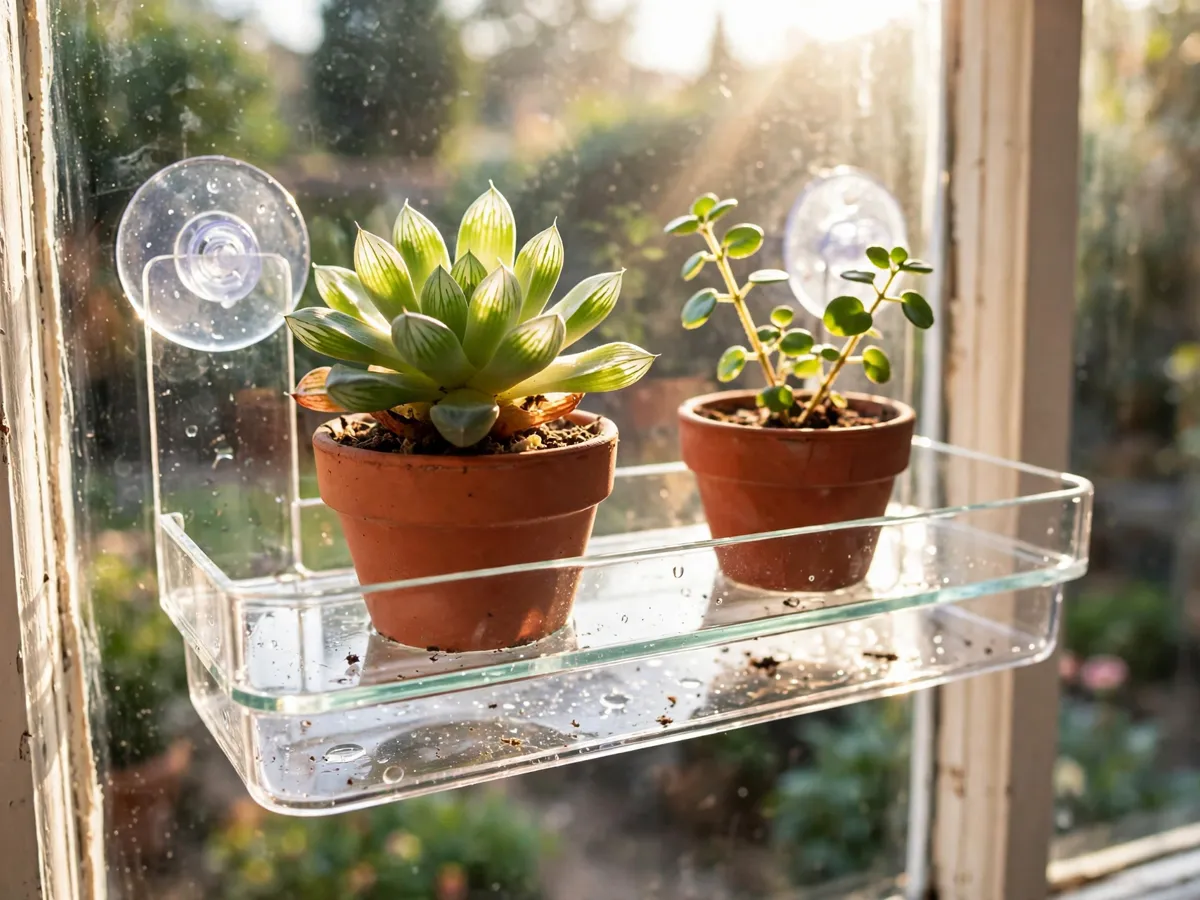
The practice: clean the pane with rubbing alcohol and let it dry, press each cup firmly until it holds, and give the shelf a day unloaded before the first pot goes up. Small pots only, one row, no terracotta. Suction also loosens with temperature swings and dust, so re-seat the cups at the change of seasons and after any window cleaning. In a cat household, treat glass shelves as high-mount only; a leaping cat beats the rating.
Cost: $12–$25. Time: 15 minutes plus a day of waiting before the first pot. Suction holds best on clean, warm glass; a cold or dusty pane lets go without warning.
5. Floating spans: the wide-window run and the sag rule
A wide window wants one long board rather than three small shelves, and the renter version needs no fasteners at all: a board cut to rest on the shoulders of the window reveal, sitting on the trim the way a sill sits on the frame. Pressure fit, gravity, done. For windows without a usable reveal, two tension rods set a few inches apart can carry a lightweight board as a floating span.
A hardware store will cut a standard one-by-ten or one-by-twelve board to your measurement for a dollar or two, and sanding the edges takes the lumber-yard look off. The fit rule is tight but not forced: a board that has to be wedged into the opening pushes on the frame every day it sits there.
Cost: $8–$25 for the board. Time: 60 minutes including the fit and the sanding. Cut it a quarter inch short of tight; the reveal will still hold it and the frame stays square.
6. The span rule: how long a shelf can go before it bows
Wood creeps under load. A stock one-by-twelve pine board carrying a row of small planted pots stays visibly flat to roughly thirty inches on two end supports; past that the middle begins to drop, and the drop shows up over weeks, not hours. The sight test catches it early: place everything, then look along the top edge of the board from the side once a month. A sound board reads straight; a bowing one shows a shallow dip.
Three fixes, in order of cost: move the heaviest pots to sit over the end supports with the light ones mid-span, add a center prop, or step up to thicker stock. Glass behaves differently: it does not creep like wood, it fails at the mount, so a glass span lives strictly inside its stated pound rating with the wet weight of everything on it counted.
Cost: $0 to sight-test, $5–$15 for a center prop or thicker stock. Time: 10 minutes. The bow arrives slowly enough that a monthly check is enough to catch it.
7. Deep sills: the ledge you already own
The deep sill is the stage that comes with the apartment. Measure yours before assuming anything: four to six inches of depth is common in newer buildings, and older ones often run eight or more, which is a proper shelf with no build at all. The work is all in protecting it, since the sill is usually painted wood and a wet pot ring is the kind of thing a deposit inspection remembers.
A single boot tray or baking tray under the row catches the drips, felt pads under saucers keep the tray from sliding, and condensation on the glass gets a weekly wipe so the paint line at the sill edge stays dry. Keep the row inside the drip line, with the heaviest pots toward the wall side of the ledge rather than the glass side.
Cost: $0–$15 for saucers or a tray. Time: 10 minutes. A narrow sill under four inches still works; it just wants four inch pots and a single row.
8. Plant stands at window height: the stage extension
When the ledge and the frame are full, the next move is a narrow plant stand placed in front of or beside the window at sill height. A three-tier stand turns one window into a bank of green: tall plants at the back against the glass, trailers spilling forward at the front, the whole arrangement reading as depth. Freestanding means renter-safe by definition, and the stand travels to the next apartment with the pots.
The stand also does something no fixed shelf can: it follows the sun. Sliding it a foot left in December, when the beam moves, keeps the front row in the light. When the window and the wall are both full, the ceiling version is the indoor hanging plants guide, which takes plants off the shelf line entirely.
Cost: $25–$60. Time: 30 minutes to place and level. Check the footprint before buying; a stand wider than the window itself eats the room.
9. What reads best backlit: the translucent and fine-leaf picks
A window shelf is backlit by default: the light comes from behind the leaves, which is a completely different look from a plant lit from the room side. Thin and translucent leaves glow. String of pearls becomes a strand of lit beads, string of hearts shows its silver backing, and an asparagus fern reads as a piece of lace hung in the window. Hoyas catch the beam on waxy leaf faces, and a pothos turns into stained glass for the hour the sun passes behind it.
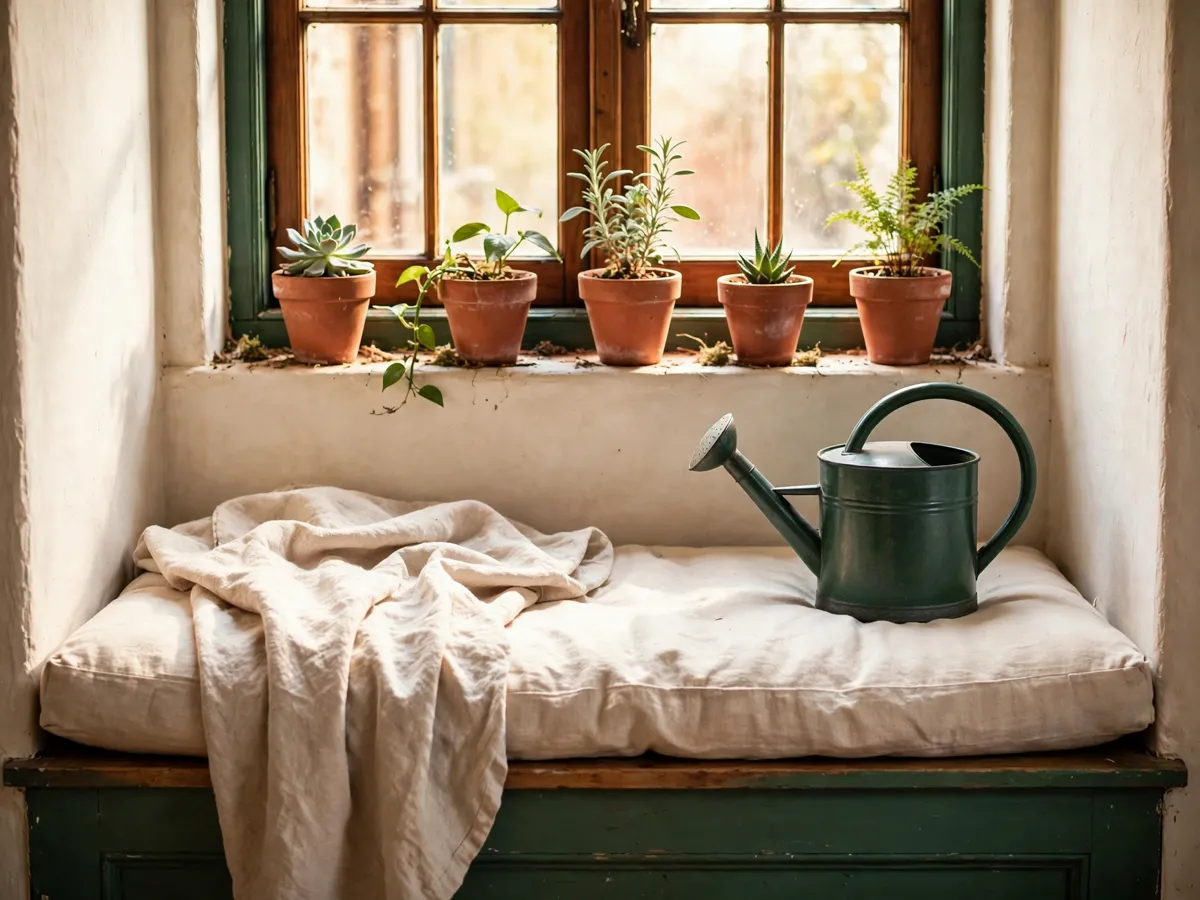
Arrange the row for the backlight rather than the front view: stagger the heights, put the finest texture where the beam lands, and keep one dark leaf in front so the glow reads deeper. Placement by tradition: the feng shui indoor plants guide sorts the same picks by room zones rather than light logic, a second way to organize the same ledge.
Cost: $6–$18 per plant in four inch pots. Time: 30 minutes to arrange the row. Turn the row a quarter rotation weekly so the lean toward the glass stays even.
10. What fries on a south ledge (the sun trap list)
A south ledge is direct sun for most of the day, and glass adds heat on top of the light. Thin leaves burn there: ferns, calatheas, fittonia and peace lilies develop dry brown scorch patches within weeks, African violets spot, and pothos and philodendron, usually unkillable, slowly yellow in a full afternoon beam. The leaves do not recover; the marks stay until the leaf is replaced.
What belongs on south glass: the sun lovers. Succulents, jade plants, aloe, cactus, and string of pearls and string of hearts, which take direct light the way most houseplants take bright shade. The fix for everything else is one of three moves: a sheer panel between noon and three, a foot of setback from the glass, or a trade to the east window where the same plants are happy.
Cost: $0 to rearrange, $8–$15 for a sheer panel. Time: 10 minutes. Move the plant at the first brown patch; sunburn is cumulative.
11. Watering at the window: the drip tray and the curtain rule
Window shelf soil dries faster than shelf soil anywhere else in the room: the light is stronger, the glass warms, and small pots hold little reserve. The routine is one watering morning a week with a long-spout can for the pots in place and a sink trip for anything awkward, with a finger test before every pour. The tray underneath is not optional; it is what stands between a drip and the sill paint.
The curtain rule: fabric and wet foliage do not mix. Pull the sheer aside while you water, let the leaves dry, and let the curtain fall back clean. A curtain that rests on damp leaves stays damp along that line, and the glass behind it clouds. In the heating season check the row twice a week instead of once; warm panes pull water out of small pots faster than a summer window does.
Cost: $8–$20 for a tray and a long-spout can. Time: 10 minutes a week. The first three weeks reveal the real pace of your window; note the waterings down before trusting a routine.
12. Cats and windows: the battle for the sill
To a cat, a warm window ledge is the best seat in the apartment, and a new row of pots is furniture that arrived in the seat. Suction shelves and cats are a poor match at paw height, and even a tension rod flexes when a cat lands on it. The honest arrangements are height and weight: keep the glass shelves above leap height, weight the tray so a nudge cannot slide the row, and leave the end seats to pots that can survive a fall.
The plant side matters too: pothos and string of pearls are toxic if chewed, so in a cat home they ride high on the rod, above the leap line, while the safer plants hold the low ground. Deterrents are a mixed record from cat to cat, and the honest order is arrangement first, sprays second. The sill battle: the keep cats out of indoor plants guide carries the full toolkit of what works and what quietly does not.
Cost: $0 to rearrange the row, $10–$15 for a heavier tray. Time: 15 minutes. Treat the first week as a durability test before anything fragile goes up.
13. The $40 starter: one rod, three plants, one tray
The whole idea can be tested in one afternoon for about forty dollars. The list: one tension rod, $10 to $15; three plants in four inch pots, a pothos for any window short of full south, a hoya for a bright ledge, an asparagus fern for east or north, $6 to $8 each; one boot tray, $8 to $12. Total, $38 to $48, and nothing in it a landlord could object to.
The order of operations: map the sun on day one, mount the rod on day two, tray down first, then pots center-outward, then a week of checking the grip before adding anything. Three plants is deliberately few. The row tells you within a month whether it wants company, and a fourth plant bought after that decision costs the same as one bought before it.
Cost: $38–$48 all in. Time: one afternoon plus a week of checks. Start with three, not seven; the shelf earns its density.
14. Cost reality: $15–$90
The full band by build. A tension rod with two starter plants and a saucer line lands around $15 to $25. A suction shelf or a cut-board span sits mid-band at $20 to $45. The top end, a two-tier rod run plus a three-tier stand and six to eight plants, reaches $80 to $90. Each level is honest at its price: the rod is the cheapest working stage, the span the most custom, the stand the most plant capacity.
Where the money should go is the load-bearing layer, not the plants. A rod that holds its grip is worth twice a decorative one, while a $6 pothos grows exactly as fast as a $16 pothos. Spend once on what holds, stay cheap on what grows, and set the plant cap before the second nursery trip; the shelf fills faster than the budget expects.
Cost: $15–$90 total across the four builds. Time: 20 minutes of planning before any purchase. Plants are the line that grows past the plan.
Common questions
Can I put a plant shelf in my window without drilling?
Yes, four ways. A tension rod wedged inside the reveal, a suction shelf pressed on the glass, a board resting on the reveal shoulders, and the deep sill itself all hold plants without a hole, a strip or a hook. The limits are weight and temperature: light pots only, and a re-seat for suction cups at each season change.
How much weight can a tension rod plant shelf hold?
Think in terms of the row, not a single number. A quality rod carries a row of four to six inch pots in plastic or light ceramic, with the hooks spread along the span instead of bunched. Count the wet weight, roughly double the dry, and check the rubber grips monthly. Terracotta and anything above a six inch pot belong on the sill or a stand, not the rod.
What plants grow best on a window shelf?
East and west ledges: pothos, hoya, string of pearls or string of hearts, asparagus fern, and anything that likes bright indirect light. South glass belongs to succulents, jade, aloe and cactus, which take the direct beam. A north window runs the low-light list. The window-specific bonus is the backlight: thin and fine leaves glow, so the finest textures earn the beam-side spots.
Will plants on a window shelf damage the sill or frame?
Not if the drip line is respected. A boot tray or saucer under every pot catches watering water, felt pads keep trays from sliding, condensation gets a weekly wipe, and suction cups come off the glass with warm air and a slow peel at move-out. The failure mode to avoid is the overwatered pot without drainage, which announces itself as a stain.
How do I stop my cat from knocking the plants off the window shelf?
Height, weight and arrangement: glass shelves above leap height, a heavy tray a nudge cannot slide, toxic trailers high and the safer plants low, nothing fragile at the end seats. Deterrents work cat by cat, so arrange first and spray second. The full toolkit lives in the guide to keeping cats out of indoor plants.
Save these on Pinterest
Pin the four stages and the two rules that decide between them, the sun-map and the sag rule, so the next empty window starts with a plan instead of a guess. The rest of the small-room ideas live in the Small Room Decor collection, and the plant half lives in the Gardening & Planting Tips collection.