 Plant As Deco
Small Room Decor
Modern Organic Home Decor: Warm Neutrals, Real Texture
By Plant As Deco · Updated 23 November 2026
Modern organic decor is a warm-neutral palette plus natural texture, in a room where the shapes stay simple. The look lives in the materials (linen, jute, oak, stoneware, paper) rather than in color or ornament. This guide walks renters through the palette, the four textures that do the work, the shape rule, and the buy order that keeps it affordable.
Weekend-ready: $130–$310 for the first stage, one afternoon. Renter-safe: everything leans, sits, or hangs from hardware you can take with you.
1. What modern organic actually is
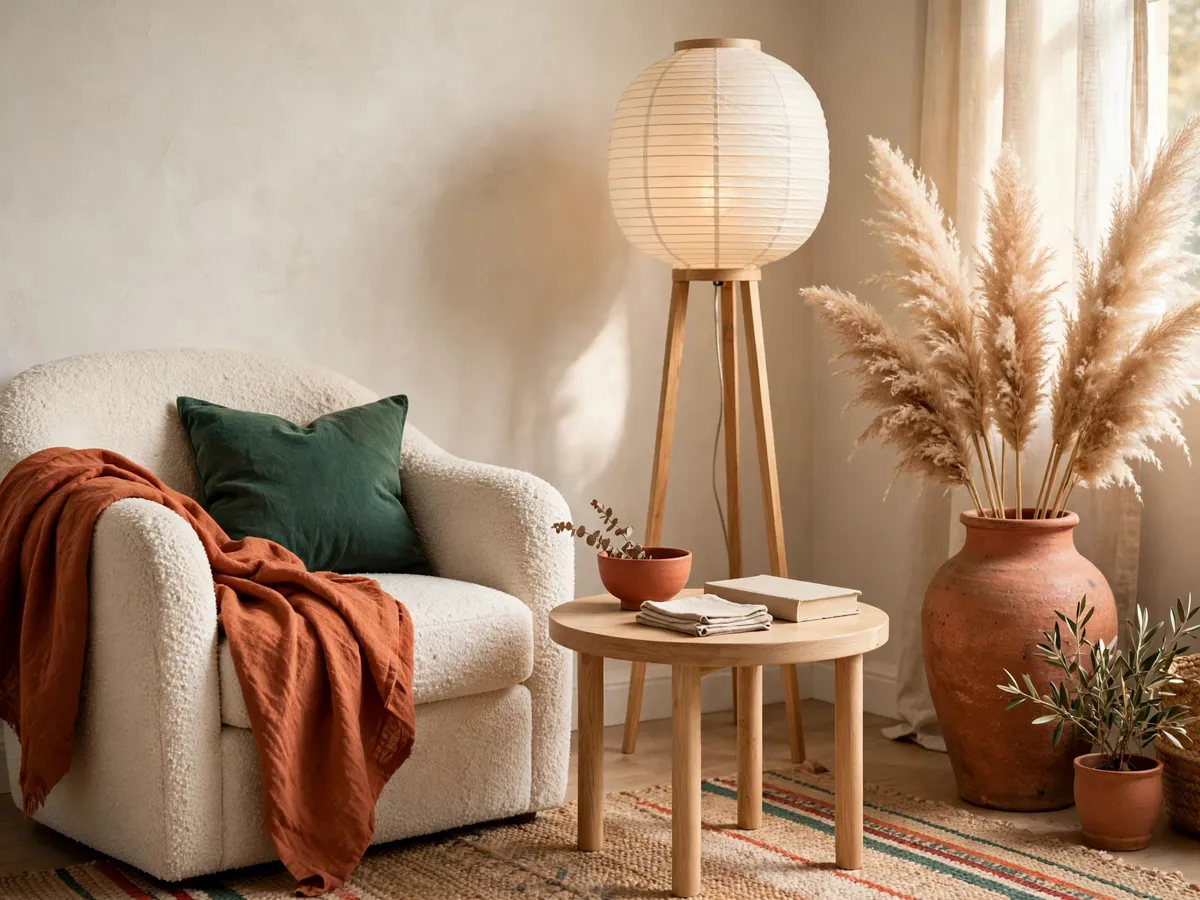
Strip the name down and two words are doing all the work. Organic names the palette and the materials: warm neutrals, plant fibers, wood, clay, unbleached cotton, paper. Modern names the discipline: quiet shapes, low contrast, nothing ornate, every piece earning its place. The style reads expensive in photographs because the light is warm and the materials are honest, and it reads calm in person because the colors never argue with each other.
Here is why that suits a plain rental. The look borrows beige walls and laminate floors instead of fighting them. Builder beige is already a warm neutral, and dark laminate is already the grounding note the palette wants. Every piece in it is freestanding, leaning, or hung from a rod, so you are building on the rental, and the lease never notices.
The spine of this guide is an order: palette first, texture second, shape third, plants last. Each step makes the next one smaller. The palette narrows the texture list, the textures make the shape decision one piece instead of five, and plants arrive to fill gaps rather than build the look. Buy in the wrong order and every purchase is a full-price decision made in the dark.
Cost: $0 to understand. Time: 10 minutes, and it is the frame the rest of this page hangs on.
2. The palette: warm neutrals and one quiet accent
The working palette is small and every color in it leans warm. Oat, greige, warm white, soft sand, muted clay: those five carry the whole style. They sit next to each other without a hard border, which is why a modern organic room photographs as one soft block instead of a set of pieces. If your rental walls are already a warm off-white or a builder beige, the base layer costs you nothing.
One accent, and it comes from outside: olive, rust, or pine green. Pick one, hold it to roughly a tenth of the room, a cushion, a throw, one pot, and it reads like the room brought a leaf in from the yard. Two accents, or a tenth that grows to a third, turn the calm palette into a negotiation.
Two rules keep the palette honest. Whites are warm, never blue-white: a cold white trim next to oat walls reads as a mistake in daylight and worse at night, so hold any white you are buying against an oat swatch and reject anything icy. Blacks are soft and matte: a matte black lamp base or a charcoal basket rim grounds the room, while a gloss black surface bounces light around and breaks the matte language the style runs on. The logic of staying this quiet is walked in the calming paint colors guide, and the small-room version of dressing a neutral room is in the neutral color scheme guide.
Cost: $0, your walls may already qualify. Time: 20 minutes with swatches, and it narrows every purchase after it.
3. Linen: the texture that leads
Linen is the first texture to buy and the one that does the most explaining about the style. A linen throw over a plain sofa arm, linen curtain panels, linen cushion covers on an ordinary seat: the fabric carries the organic half of the look on its own. The weave is loose, the color sits slightly uneven, the light lands soft, so the eye reads material before it reads price.
The honest part most care labels skip: linen wrinkles, and in this style the wrinkles are the look. A crushed linen throw reads relaxed and lived-in, and ironing it flat removes half the texture you paid for. If a wrinkle-free house matters to you, keep linen to the throw and the curtains and use washed cotton for cushion covers, which carries a softer version of the same character.
Cost: $25–$60 for a throw and two covers, $40–$90 for curtain panels. Time: 15 minutes to layer, and no ironing.
4. Jute and the honest underfoot trade
The jute or sisal rug is the anchor of the room, and in this style the rug does a specific job: it defines the seating zone and sets the texture floor everything else sits on. A woven natural rug under the sofa and the coffee table gathers the furniture into one island, which is the single move that makes a rental living room read intentional rather than arranged.
The honest trade: jute is rough under bare feet, coarse rather than harmful, and it is the one texture here you feel every time you cross the room. Two fixes, both legitimate. Layer a smaller soft rug, a wool or a cotton kilim, over the jute where feet actually land, a modern organic move in its own right. Or accept a shoes-on house and let the jute be the whole rug. Sisal is the smoother cousin of the same fiber if you want the look with less bite.
Cost: $90–$220 for a 5x8 natural rug, $30–$70 for a soft layer on top. Time: 30 minutes, and the room reads 70 percent styled after this step alone.
5. Oak against dark laminate
Wood is the skeleton of the look, and the direction matters: pale oak and light woods. A light oak side table, oak-framed prints, legs and frames in pale wood against warm neutral fabric, that contrast is what reads styled in a photo. The grain does the ornament work so nothing else has to.
Most rentals run dark laminate or honey-orange floors, and this is where the light wood earns its keep. Dark furniture on a dark laminate floor disappears into one brown mass, while light oak legs and frames stand off the floor and create separation: the floor reads as the grounding note and the furniture as the layer above it. Pale floors get the contrast free. Dark floors need the light wood, or the room goes muddy.
Cost: $50–$150 for a small oak side table, $20–$40 per oak frame. Time: 20 minutes, freestanding, nothing to install.
6. Stoneware, clay and the matte rule
The hard surfaces in a modern organic room are stoneware, clay and matte ceramic: vases, bowls, planters, the objects that sit on shelves and tables. What they do is weigh the room down. The fabrics are loose and the wood is light, and a heavy matte vessel in a clay or sand tone gives the eye a place to land and stop. It is the same job a coffee table book stack does, done in material instead of paper.
The rule is matte glazes only. A glossy vase catches a highlight, and one shine is enough to break the matte language every other surface is speaking. Unglazed terracotta, speckled stoneware, raw clay finishes, a sand-toned matte cylinder, those are the shapes to hunt. This is also the easiest layer to buy secondhand, since estate sales overflow with exactly this pottery, and nobody can tell a $6 market find from a $60 boutique piece once it is holding dried stems.
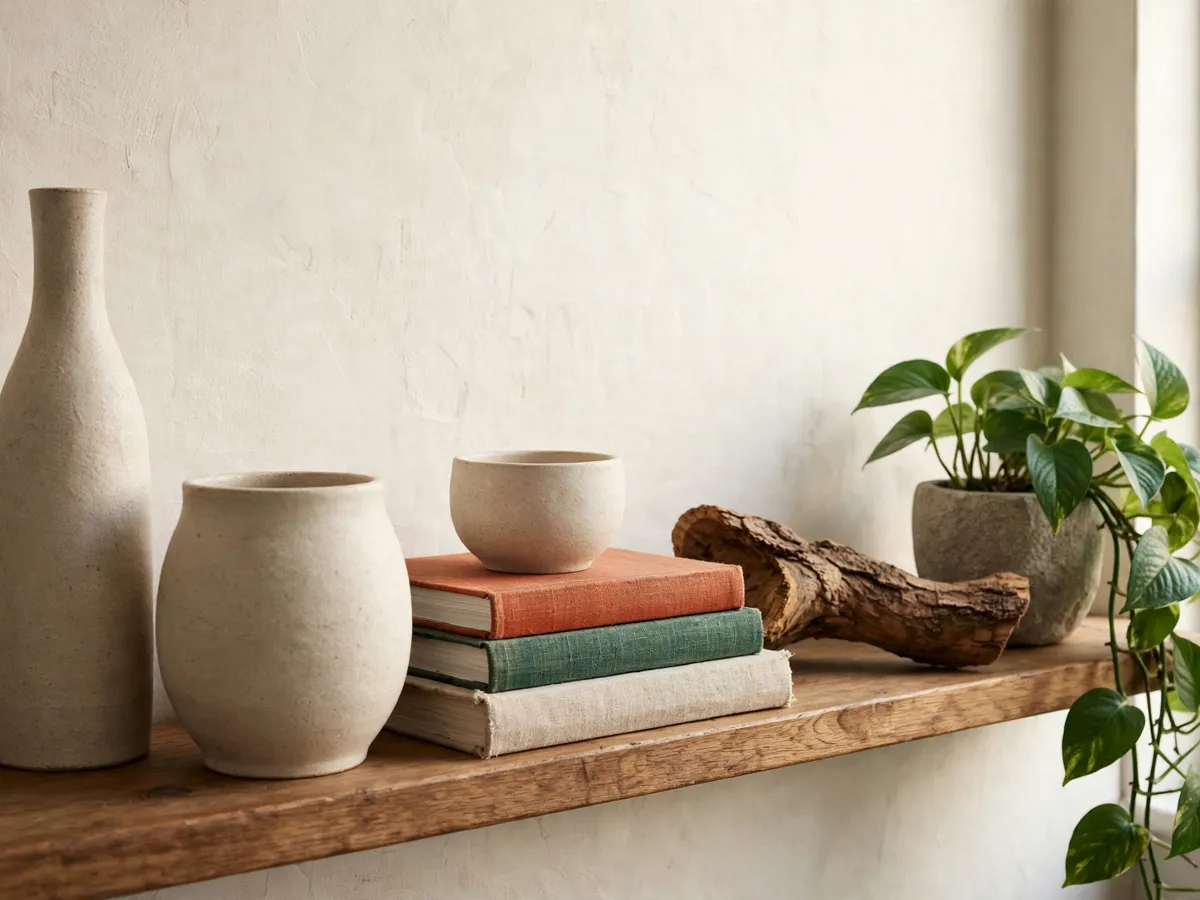
Two supporting textures sit under the big four, and both cost almost nothing. Paper shows up as lampshades and lanterns, and what it does is diffuse, turning one bulb into a soft glow instead of a point of glare. Rope shows up as baskets, and what it does is hide and hold at once: the throw, the cable nest, the off-season bedding, all of it in a woven vessel that counts as texture in the room instead of clutter on the floor.
Cost: $15–$60 for two or three vessels, $15–$35 per rope basket. Time: 15 minutes to arrange, and three objects beats a shelf of ten.
7. Shape discipline: one curve, not five
The modern half of the name is a shape rule, and the rule is small: one rounded armchair, or one curved sofa line, and the rest of the room stays rectilinear. One round coffee table, or one arch mirror, and the other pieces keep their straight lines. The curve is a seasoning, a single soft note against the linen and the oak, and one of it reads intentional.
Here is the trap, and it is the most common way a modern organic room goes wrong. Buy the curved sofa, then the round table, then the arched mirror, then the round cushions, and the room tips into a different style entirely, a soft maximalist look with none of the calm this one sells. Over-curving a room reads as a themed set, and the eye stops counting materials and starts counting circles. The bones of this style stay quiet and mostly straight, one curved gesture per room.
Cost: $0 to decide. Time: 5 minutes per purchase, and it is the line between styled and themed.
8. The buy order for a renter
The order below is ranked by what each purchase changes per dollar, and it assumes you own nothing yet. Follow it and the room should look about 70 percent right after the first two steps alone, which is the honest test that the order is working. Every step is renter-safe: the rug lies on the floor, the curtains hang from a tension rod or the existing hardware, the armchair stands on its own legs, and the art leans.
- 1. The rug. $90–$220. Defines the seating zone, sets the texture floor, and turns four floating pieces into one composition. Everything after it has a home.
- 2. Linen curtains, hung high and wide.$40–$90. The biggest visual change per dollar in the whole list. Hung from a rod above and wider than the window frame, they make the window wall read a head taller, and the room reads finished the evening they go up.
- 3. One textural armchair, or the sofa re-cover. $150–$400. A boucle or linen armchair is the signature piece, freestanding and moveable, and one in a corner does more than three throw pillows. A washable linen throw over a dark sofa does the same job for the sofa you already own.
- 4. The light. $40–$90. A paper lantern floor lamp, plus warm bulbs in what you already own. Warm light makes oat look expensive and cool light makes the same oat look like cardboard.
- 5. Vases and books for the shelf.$25–$70. Two or three matte vessels, a stack of art books. This is the styling layer, the last 10 percent, and it should be bought almost entirely secondhand.
- 6. Plants, last. $20–$60. Plants cost little and multiply, so they fill the gaps the other five steps leave instead of building the look. A room that needs plants to look finished bought the wrong first five things.
The honest cost line, so you can plan it: a full modern organic corner (an armchair, a throw, a side table, a lamp and a vase) runs $250–$600 built secondhand-heavy or $450–$900 new, and the full living room version runs $900–$2,500, with the armchair and the sofa decision carrying most of the range. Your own market may run cheaper or dearer than those planning numbers.
This style is built in stages, months of them, and the stages are the correct way to buy it. The room should look about 70 percent right after the rug and the curtains alone, which cost $130–$310 together, and every stage after that is a smaller purchase making a smaller improvement. If the room does not read most of the way there after step two, the problem is the palette or the floor plan, and no armchair fixes that.
Cost: $365–$930 followed in order, $130–$310 for the first stage. Time: one afternoon to start, months to finish, no need to rush it.
9. Lighting it warm: paper and linen shades
Modern organic reads best in warm light, and this is the step people skip. The whole effect of the style is oat and clay surfaces holding a soft glow, and a cool white ceiling bulb flattens every warm neutral into a gray one. The cheapest single upgrade in the style is a bulb swap, 2700K warm in every socket, and it changes the palette more than any decorative object you could buy.
Shades do the softening: paper and linen, and the paper lantern floor lamp is the signature light of the style, a tall soft globe that weighs nothing and moves with you. The layout that works in a rental is one floor lamp plus one table lamp at opposite corners of the seating zone, rather than the ceiling fixture, which renters often cannot change anyway. The two lamps beat it: warm pools of light at sitting height instead of one flat pour from the ceiling. The bulb specs and the three-layer layout are walked in the warm lighting guide.
Cost: $8–$14 for warm bulbs, $40–$90 for a floor lamp if you own none. Time: 20 minutes, and judge it at 9pm, not at noon.
10. Plants: the finishing layer, not the star
Plants come last in the buy order, and the reason is arithmetic: they cost little and they multiply. A pothos cutting becomes a trailing shelf plant in months, so plants fill the gaps the room still has after the rug, the curtains and the lamp. Buying them first is decorating with the material that should be your gap-filler.
The look uses three roles. One large statement plant, a fiddle leaf fig, a rubber plant or an indoor olive, standing alone in a corner as the room's single tall gesture. One trailing pothos on a shelf, softening the hard line of the shelf edge. And dried stems, pampas or bunny tails, in a tall matte vase: the zero-care texture, needing neither water nor window, holding the exact sand and oat tones the palette runs on.
How to keep the big ones alive is a whole subject of its own, and the large indoor plants guide covers it. This page only claims the look role: tall statement, trailing shelf, dried stems, and no more than that. A modern organic room with six plants and no rug is a plant room.
Cost: $20–$60 for one large plant, $10–$25 for dried stems. Time: 10 minutes to place, and the dried stems need nothing after that.
11. The secondhand advantage
Here is the budget truth nobody puts on a mood board: of the big decorating styles, modern organic is one of the cheapest to build secondhand, and you can verify it at any estate sale. The style runs on oak furniture, stoneware vessels and woven baskets, and those are exactly the objects that estate sales and marketplace listings overflow with. Decades of households left this inventory behind in bulk, and it sells for a fraction of new because it does not photograph like the trend pieces it sits next to.
The practical split if the budget is thin: buy the rug and the lamp new, the two items where the secondhand market is thin and condition matters most, and let everything else come from estate sales and thrift shelves. An oak side table with a scratched leg, a speckled stoneware bowl, a rope basket with a loose handle, all carry the exact texture this style wants, and the wear reads as character rather than damage.
Cost: roughly half to a third of new for the secondhand half of the list. Time: two or three weekend visits, and go with measurements in your phone.
12. Small rooms: fewer, larger pieces
The luxury this style actually sells is negative space, the calm of empty surface around a few honest objects. A modern organic room photographs serene because half of it is nothing. That is awkward in a small apartment, where the instinct is to fill every wall and corner, and the honest answer is the counter-instinct: own fewer, larger pieces.
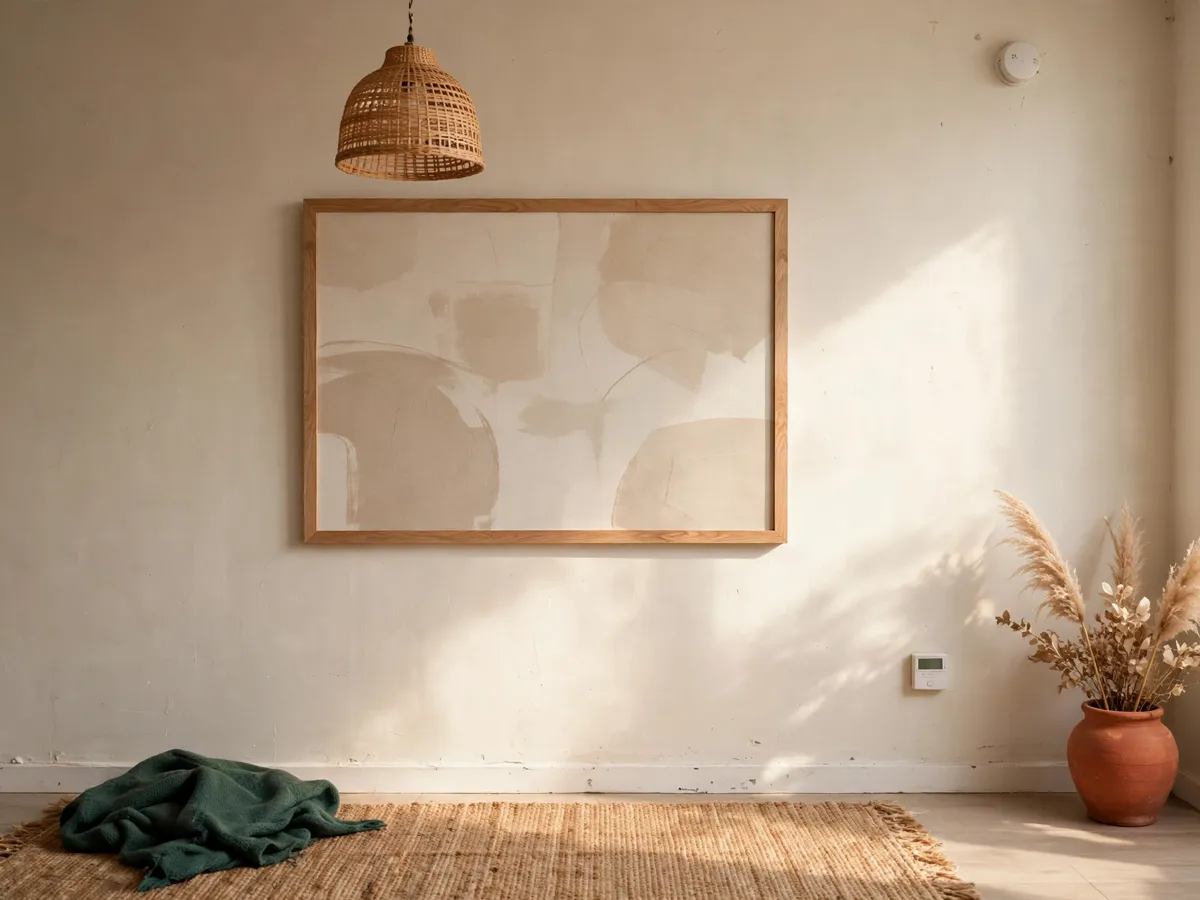
One big vase beats five small ones, one large artwork beats a busy wall, one substantial basket beats a shelf of little boxes. A large object anchors the eye once, where five small objects give it five stopping points, and a small room pays for every stop. Large art also solves the lease problem for free: a big framed print resting on the floor or a side table against the wall is a signature of the look, needs zero holes, and the no-drill options and the honest anti-tip notes for leaning pieces are covered in the no-drill wall decor guide.
Cost: $0, it is an editing decision, and it usually pays you back. Time: 30 minutes, one honest pass with a donate box.
13. What not to buy
The skip list protects the look more than the buy list builds it. Glossy anything: shine breaks the matte language every other surface is speaking, and one glossy vase undoes a room of linen. Cold grays and blue-whites: they fight the warm palette at the level of the light itself, so the room reads divided even when everything else is right. Ornate carved pieces: the shapes stay simple in this style, and a heavily carved leg introduces the ornament the whole look just finished removing.
Plastic linen-look curtains: the texture is the look, and a printed fake reads flat the moment the light crosses it, while real loose-weave panels cost little more. More than one animal hide, or a heavily patterned rug on top of the jute: the style wants calm floors, one hide or one pattern reads as a deliberate note and two read as a theme, and busy floors fight the negative space the small room is trying to keep.
Cost: $0. Time: the decision, and the money it does not spend.
Questions renters ask
What is modern organic home decor in plain words?
A warm-neutral palette (oat, greige, warm white, soft sand, muted clay) plus natural texture (linen, jute, oak, stoneware, paper) in a room where the shapes stay simple. The look comes from materials rather than color or ornament, which is why it suits plain rentals: it borrows beige walls and laminate floors instead of fighting them.
Is modern organic decor expensive?
A full corner runs $250–$600 built secondhand-heavy or $450–$900 new, and the secondhand market is unusually deep for this look because estate sales overflow with oak furniture, stoneware and woven baskets. Buy the rug and the lamp new, let the rest come secondhand, and the room reads right for roughly half the new-buy price.
What order should I buy modern organic decor in?
Rug, then linen curtains hung high and wide, then one textural armchair or a sofa re-cover, then the light, then vases and books, and plants last. The order is ranked by visual change per dollar, and the room should look about 70 percent right after the rug and curtains alone.
Can I do modern organic in a rental with beige walls?
Yes, and the beige is a head start. Builder beige is already a warm neutral, and dark laminate is already the grounding note the palette wants. Add pale oak against the dark floor, linen and jute for texture, warm bulbs, and one curve. Every piece in the style is freestanding or hangs from hardware you can take down, and the art leans instead of drilling.
Does modern organic need a lot of plants?
No. Plants are the finishing layer: one large statement plant, one trailing pothos on a shelf, and dried stems for zero-care texture. A room that needs six plants to look finished skipped the rug and the curtains.
What is the most common mistake in this style?
Curving everything. One rounded armchair or one arch mirror reads intentional, and five curved pieces tip the room into a soft maximalist look with none of the calm. The second most common is glossy objects, one shine breaks the matte language the rest of the room runs on.
Save these on Pinterest
Pin the buy order, rug, curtains, chair, light, vessels, plants, because the order is what keeps a renter budget from becoming a renter overspend. More small-room guides for plain apartments live in the Small Room Decor collection.