 Plant As Deco
Gardening & Planting Tips
Air Purifying Indoor Plants: The Honest Pick List
By Plant As Deco · Updated 22 November 2026
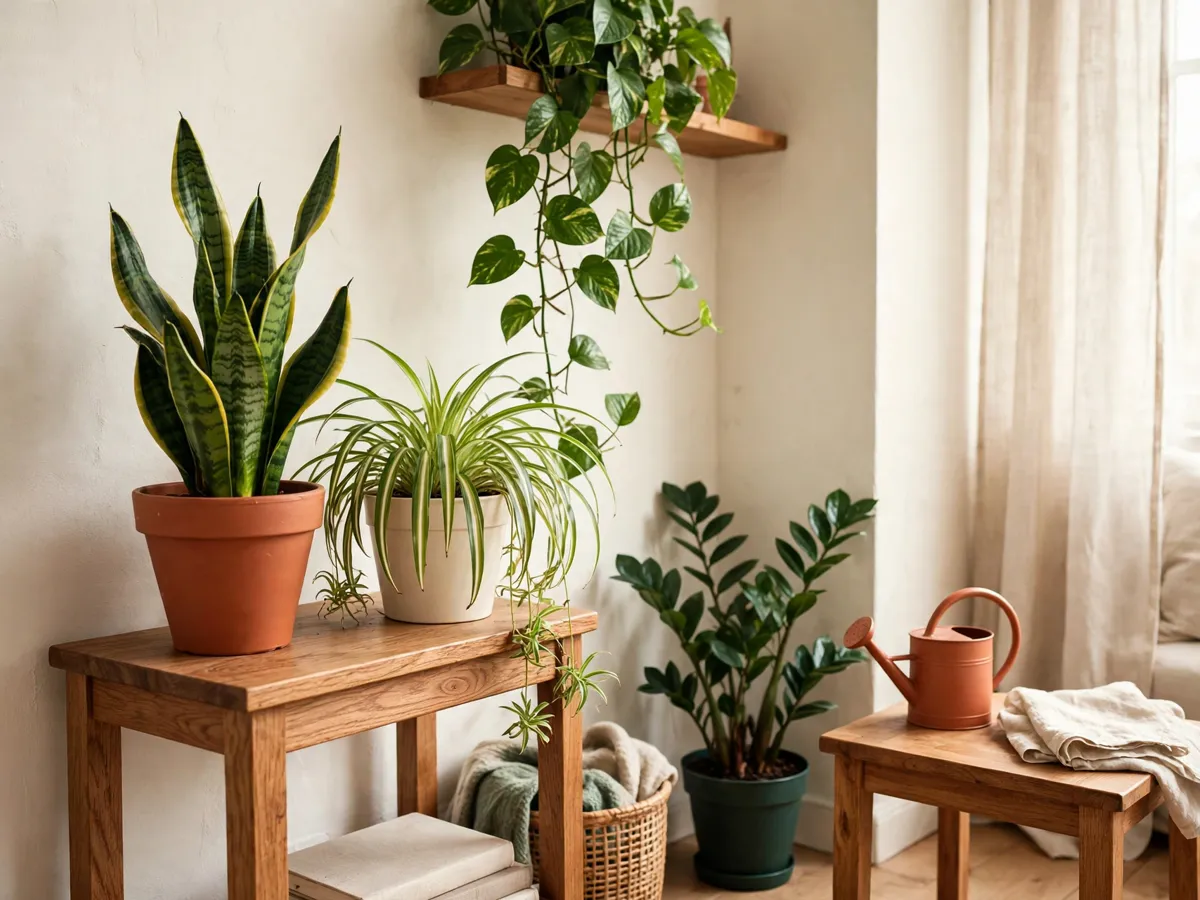
Air purifying indoor plants are the most promised houseplants and the least delivered on. You probably read that a pot of pothos will clean the air in your home, and that is why you are shopping. The honest answer is smaller. A plant does move air and water vapor through its leaves and its soil, and in a real room those amounts are tiny next to everything else moving through that space. That does not make the plants worthless. It changes the reason you buy them, and the new reason is still a good one. Here is what a houseplant actually does indoors, the six forgiving species that earn a shelf on looks and routine alone, how many fit a small room, and the watering habit that keeps them alive past month three.
Weekend-ready: $30-$70 for two starter plants, two pots with drainage holes and one bag of houseplant mix. One afternoon to set up, five minutes a week to check the soil.
1. What the air-cleaning claim actually says
The claim repeats itself on nursery tags, gift guides and dorm-room listicles: buy these plants and they clean your air. It deserves a straight answer, because it is why most people buy their first houseplants, and it is also why so many of them stop paying attention once the novelty fades and the plant dies of a broken promise.
Chase it back to where it came from and it leads to tests run in sealed containers. A plant sat inside a box with a measured dose of one pollutant and no air moving in or out. In a box like that, whatever the leaves and the soil take up has nowhere else to come from, so the level inside falls. A bedroom is not a box. It has a gap under the door, it leaks through the window frame, and most US homes run a system that trades the room's air several times an hour whether you do anything or not.
So the biology is real and the scale is not. Leaves exchange gases, soil hosts microbes, and a plant absorbs small amounts of whatever touches it. But a houseplant is a few square feet of still surface in a room that keeps moving. The rule that follows is simple: never pick a species for what it is supposed to do to your air. Pick it because it survives your light, your watering habits and your pets. Then it earns its spot on the merits, and anything else is a bonus no one can measure at home.
Cost: $0. Time: five minutes to reset what you thought you were buying. Caveat: if a listing promises clean air, that is a marketing line, not a spec.
2. What plants genuinely do in a room
A living plant is not a static object. In daylight it takes in carbon dioxide through pores in its leaves and releases oxygen, and at night most houseplants reverse that and take in a little oxygen instead. A few, snake plant among them, run their pores on the opposite clock and open them after dark, which is why that species ends up in every bedroom list.
The plant also moves water. Roots pull it from the mix, most of it evaporates out of the leaf surface as transpiration, and the rest leaves the open soil in the pot. This is the one effect you can actually notice. Group several pots in a small bathroom or a corner and the air right around them feels cooler and damper on a dry morning. The reach of that is inches rather than the whole room, and it goes away once the soil dries.
Leaves catch dust too, which is why wiping broad ones every few weeks matters more for the plant than for the room. A coated leaf takes in less light, so it works harder and grows slower in a corner that was already marginal. The same logic covers the mix: one that stays soggy starts to smell, so give the pot drainage and let the top dry on a rhythm that suits the species.
Cost: $0. Time: two minutes a week to wipe leaves and check the soil. Caveat: everything above happens within arm's reach of the pot, not across the room.
3. The honest reasons to fill a room with plants
Drop the air story and four reasons remain, and they hold up in a rental with bad light and a busy week.
- The room reads differently. A bare corner in a small apartment looks unfinished. One plant with height and one trailer over a shelf change where the eye lands, for less than a framed print costs.
- Something living resets your week. Checking the soil, turning the pot, cutting back a leggy vine. It is five minutes with a visible result, which is rare in a screen week.
- The air feels different where you sit. Not the whole room. A cluster by the desk or the bathtub makes that pocket damper in the dry months, and that is enough to matter for those plants.
- They multiply. A pothos or a spider plant gives you new plants for free within a season. Cuttings root in a glass of water, become gifts, and fill the shelf without another nursery trip.
None of these needs a claim you cannot check for yourself. They are also the reasons that keep somebody watering in month six, which is the month most plant collections end.
Cost: $30-$70 to start. Time: one afternoon to place the first two. Caveat: buy for the room you have, not for the photo you saw.
4. The plants that earn a spot
These six show up in every air-cleaning list. Here they are recommended for a different reason: they are hard to kill, they tolerate average apartment light, and they look good doing it. Sizes are what each one reaches indoors in a pot, given a year or two.
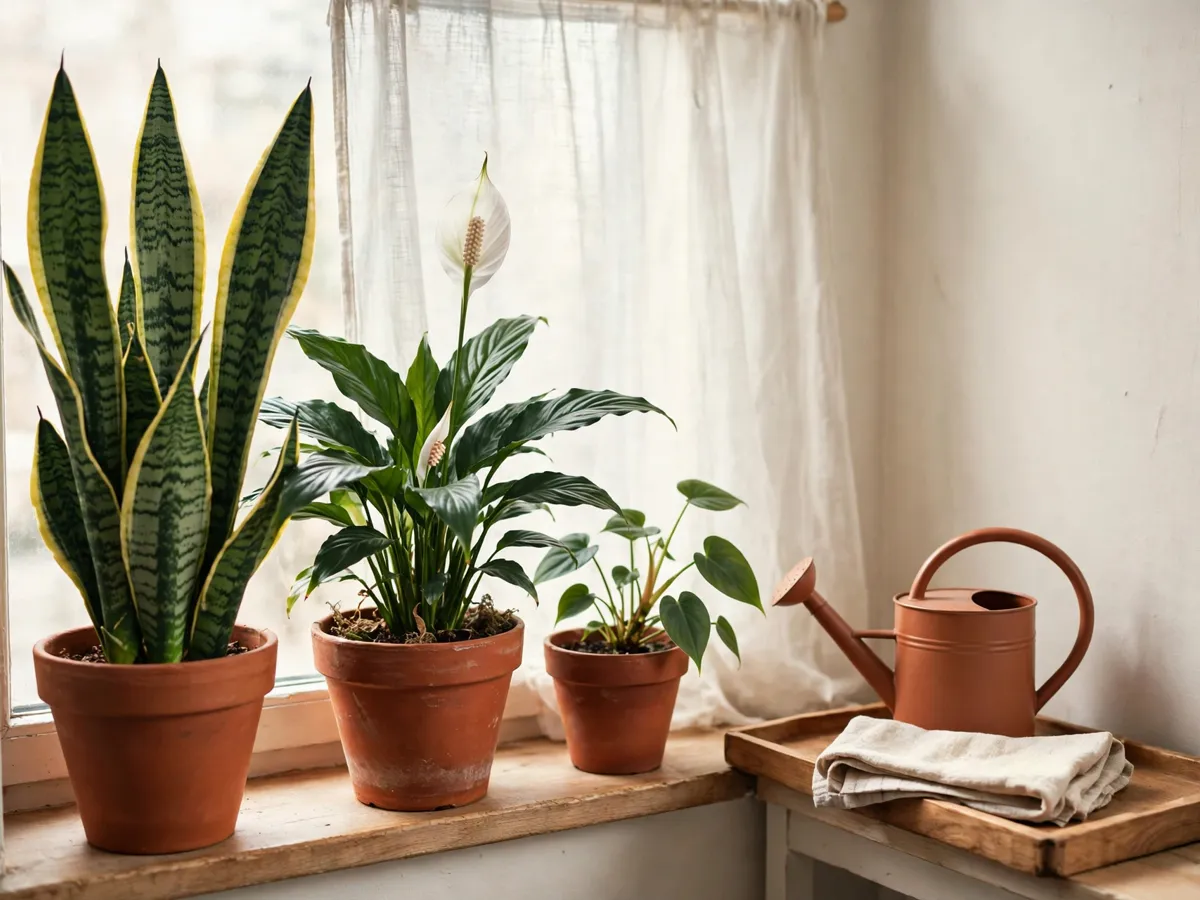
- Snake plant. Upright sword leaves, 1 to 2 feet tall, 8 to 12 inches wide, slow. Light: tolerates a dim corner, thrives in bright indirect. Water: let the mix dry almost completely, then soak and empty the saucer. The most neglect-tolerant plant you can buy, and the one most often killed by somebody who waters on a schedule.
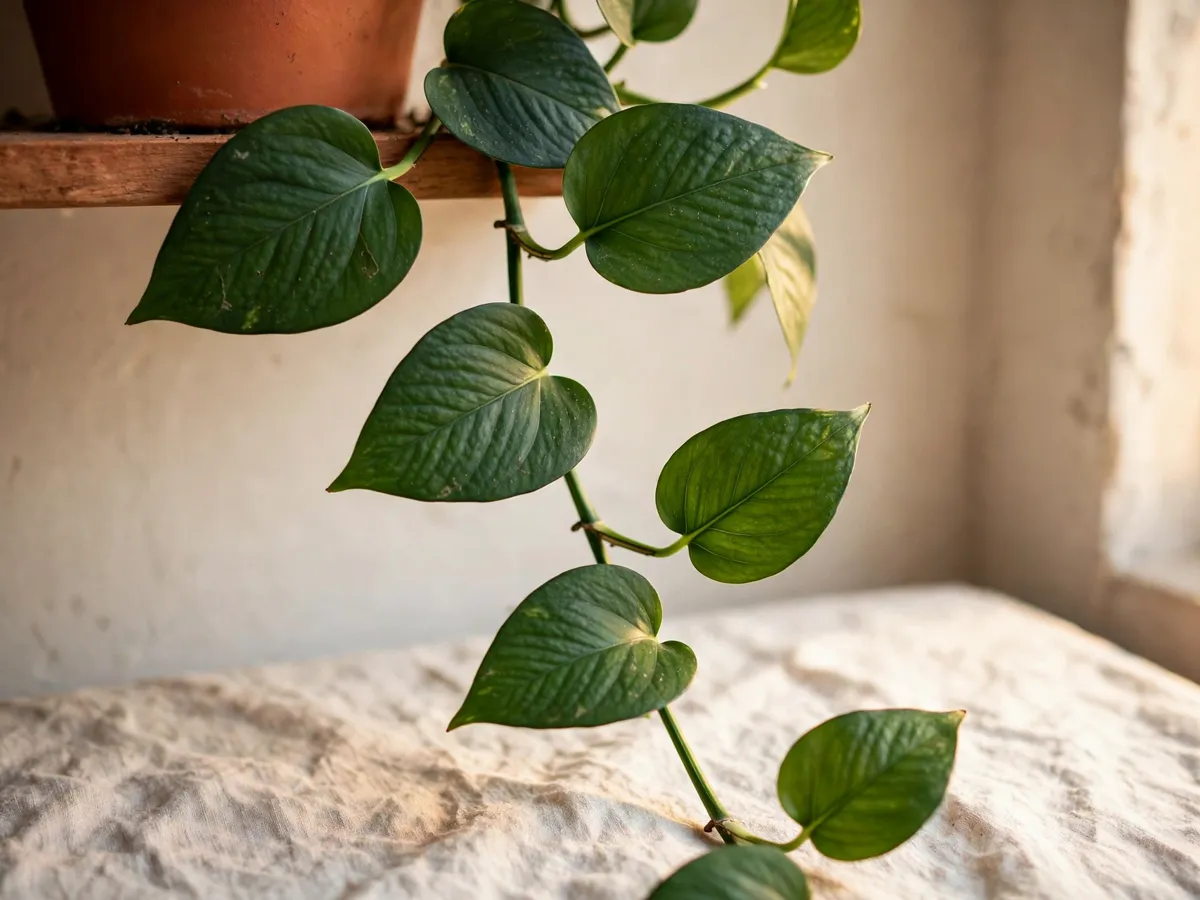
- Pothos. Trailing vine with heart-shaped leaves, a few feet of growth in a season. Light: bright indirect, though it holds in medium. Water: let the top inch or two dry, then soak. Cheap, fast, and it roots from a cutting in a glass of water, which makes it the best first plant for a shelf or a hanging pot.
- Spider plant. Arching strap leaves and dangling plantlets, 12 to 18 inches across. Light: bright indirect with some morning sun. Water: barely damp in its growing months, less in winter. It curls when thirsty, and it is the only plant on this list a pet can chew without harm.
- Peace lily. Glossy leaves and a white spathe, 1 to 2 feet tall. Light: bright indirect, and it flowers nowhere dark. Water: evenly damp, never soggy. It droops dramatically when thirsty and recovers within an hour, which is either a useful signal or a very loud one, depending on your tolerance.
- Philodendron. Heart-shaped leaves on trailing or climbing stems, 1 to 3 feet depending on whether you give it something to climb. Light: medium to bright indirect. Water: dry the top inch, then soak. Forgiving about the things beginners get wrong, and the easiest of the six to shape into a corner.
- ZZ plant. Thick, glossy leaves on stout stems, 2 to 3 feet at maturity, slow. Light: tolerates genuine low light better than anything else here. Water: its fat underground rhizomes store water, so it wants a long dry stretch. Underwatering is almost never fatal; overwatering usually is.
Five of the six are not the picks for a home where a cat or a dog chews everything green. The pet safe low light houseplants guide covers the species that sit in the safe column, and spider plant is the only overlap with this list.
Cost: $10-$25 per plant in a 6-inch nursery pot. Time: ten minutes to pick two. Caveat: skip anything with soft, drooping or spotted leaves at the nursery, whatever it is supposed to do for your air.
5. How many plants a small room can hold
This is display arithmetic, not air arithmetic. The question is how much floor and shelf a room can give up before the plants start costing you the thing you bought the room for.
- A 6-inch pot claims roughly an 8-inch square of surface, plus an inch of clearance so you can water it without knocking the rim.
- An 8-inch pot claims 10 to 11 inches square, which is the practical limit for a nightstand or a side table.
- A 10 to 12-inch floor pot claims 16 to 20 inches once you count the canopy, and it reads best in a corner where two walls absorb it.
In a 10 by 12 living room, a realistic ceiling is one floor plant, two mid-size pots on a stand, and one trailer on a shelf. That is four, and it looks full. Push past it and you start blocking the path to the window, which is the fastest way to lose the plants you just bought, because the pots in the back stop getting light.
Three rules make a group read as a design instead of clutter. Vary the heights so the silhouettes do not stack into one line. Leave two or three inches between pots so air moves between the leaves and fungus gnats have a harder time crossing. Let one plant be the tall one everything else sits under.
The pots cost more than the plants, so buy the greenery first and add vessels slowly. Indoor plant decor ideas covers stands, shelves and hanging placements for a rental wall.
Cost: $12-$40 per pot with a drainage hole. Time: twenty minutes with a tape measure. Caveat: measure the walkway, not just the shelf.
6. Where they actually thrive
All six are bright-indirect plants with a wide tolerance band, which is why they survive apartments. Here is what that means per window.
- East window. The best all-round spot for this group. A few hours of gentle morning sun, then indirect light. Pothos, philodendron, spider plant and peace lily look their best here, a few feet from the glass.
- North window. The dimmest of the four orientations, and workable for the tolerant half. Snake plant, ZZ plant and philodendron hold their leaves there. Peace lily will live but rarely bloom, and a variegated pothos fades to plainer green.
- South or west window. Bright enough to scorch. Either hang a sheer curtain or keep the pots three feet back from the glass. Direct afternoon sun on pothos and philodendron leaves leaves pale, papery patches that never heal.
- Interior corners and hallways. ZZ plant and snake plant tolerate them for a while, and both slow down noticeably. If a corner is dark enough that you need a lamp to read in it at midday, the plant there is surviving rather than growing.
Two habits do more than any placement. Rotate each pot a quarter turn every week, or the plant leans and one side goes pale. And group pots that want the same light rather than averaging one compromise across all of them. The walkthrough for reading a room's light properly lives in the low light indoor plants guide.
Cost: $0 to rearrange, $15-$45 if a room genuinely needs a lamp. Time: fifteen minutes. Caveat: move a plant in stages and watch it for a week before moving it again.
7. Watering these six without guesswork
Every plant on this list stores water somewhere. A snake plant in its leaves, a ZZ plant in underground rhizomes, a pothos in thick stems, a peace lily in nothing at all, which is why it droops. That one fact sorts them into three watering groups, and the groups matter more than any calendar.
- Dry-out group: snake plant, ZZ plant. Let the mix dry almost to the bottom of the pot, then soak thoroughly. In a dim room that can mean every two or three weeks. Both are killed by kindness far more than by neglect.
- Top-inch group: pothos, philodendron, spider plant. Let the top inch or two dry, then soak and empty the saucer. Spider plant wants a shorter dry stretch in its fast-growing months.
- Evenly-damp group: peace lily. Keep the mix moist but never sitting wet. It signals thirst dramatically and recovers fast, so wait for the droop rather than counting days.
The check is the same for all three groups. Push a finger into the mix to the first knuckle. Damp and cool means wait. Dry and warm means water. In a pot deeper than six inches, sink a wooden skewer to the bottom and pull it out; clinging damp soil means the roots are still drinking from somewhere below.
Then the two rules that break more of these six than anything else. Every pot needs a drainage hole, and the saucer gets emptied ten minutes after watering. A snake plant or a ZZ sitting in a shallow puddle is a plant with rot starting at the bottom of the rootball. The full routine, including feeding and the seasonal shift, is in the care of houseplants guide.
Cost: $0 for the finger test, $3 for a wooden skewer. Time: two minutes per plant. Caveat: stretch every interval in winter, when light and growth both drop.
8. If air quality is the real goal
Suppose the real reason you went looking is dust, stuffiness, cooking smells or a room that never feels aired out. Four things move the needle there, and none of them is a plant.
- Move the air. Open two windows on opposite sides of the apartment for ten minutes and the room turns over. A cross-breeze does more in that window than a shelf of greenery does in a month. When the weather forbids it, a fan pointed out of a window at least pushes the stale layer along.
- Run the exhaust you already own. The kitchen hood while you cook, the bathroom fan while you shower and for twenty minutes after. Those two pull the source out of the room instead of spreading it.
- Stop it at the source. Dust with a damp cloth rather than a dry one, so it leaves instead of lifting. Take shoes off at the door. Vacuum the floor and the soft things on a regular pass. Bring paint, solvents and garden chemicals to the disposal point your city lists rather than storing them under the sink.
- Filter, if you buy anything. A portable air cleaner rated for your room's square footage, sized honestly, run continuously on a low setting, with the filter changed on the schedule the maker states. It does a job because air is being pushed through a filter, which is exactly the mechanism no plant pot has.
Watch moisture in the other direction as well. Damp that climbs too high in a sealed room grows mold in the corner behind a wardrobe, and that is a worse problem than the one the plants were meant to solve.
Cost: $0 for the window and the cloth, $80-$300 for a room-sized air cleaner if you want one. Time: ten minutes a day. Caveat: this account makes no health claims, so treat all of it as room maintenance.
9. What usually goes wrong
Four failure patterns cover almost every dead plant bought for the air-cleaning reason.
- Overwatering the peace lily and the ZZ. Yellow lower leaves, mushy stems at the base, a sour smell from the mix. Both want a dry-down. Lift the plant out and look at the roots: healthy ones are firm and pale, rotted ones are dark and slack.
- Direct sun on the pothos and the philodendron. Pale, papery, bleached patches mid-leaf. They do not heal, so those leaves have to grow out or be cut off. Move the pot back from the glass or add a curtain.
- The dark corner. A plant chosen for a claim gets shoved wherever there is spare floor space. Leggy stems, wide gaps between leaves, smaller new growth, and eventually a slow decline nobody can explain.
- Buying for the claim, then stopping the care. This is the real one. The promise fades in week three, the finger test stops, and the plant dies of an unremarkable watering problem. Buy for the looks and the routine, and the routine is what keeps going.
Cost: $0 to diagnose, $10-$20 for fresh mix and a correctly sized pot if you start over. Time: thirty minutes per plant. Caveat: a plant rotted past the base is cheaper to replace than to rescue.
10. Common questions
Do air purifying indoor plants actually clean the air in a room?
Not in any way you can notice. A plant exchanges gases through its leaves and its soil absorbs small amounts of what touches it, but a houseplant is a few square feet of surface in a room that trades its air constantly. Open a window, run the kitchen hood, and stop dust at the source. Buy the plant for the room and for your own routine.
Which of these six is the hardest to kill?
Snake plant and ZZ plant, in that order. Both store water, both tolerate a dim corner, and both would rather be forgotten for two weeks than watered twice. The one thing that kills either is a pot that stays wet, so a drainage hole and a long dry-down cover almost everything.
How many plants can I keep in a small room?
Four is a realistic ceiling for a 10 by 12 living room: one floor pot, two mid-size pots on a stand, and one trailer on a shelf. Beyond that you block the window and the walkway, and the pots in the back stop getting light. Judge it by the footprint of the pot plus an inch of clearance.
Should I water these on a weekly schedule?
No, and that is the most common reason a forgiving plant dies. The mix dries at a different rate by season, pot size, room temperature and light. Push a finger to the first knuckle instead: damp and cool means wait, dry and warm means water. Stretch the interval through winter, when growth slows.
Do houseplants raise the humidity in a room?
Locally, yes. Leaves release water vapor and open pot soil evaporates, so a cluster of pots feels damper within arm's reach, which helps the plants themselves in a heated winter. It does not change the humidity of the whole room. Too much damp in a sealed room grows mold.
Save these on Pinterest
Pin the six-plant list and the three watering groups. Those two sections decide whether your first shelf survives the winter, and this guide and the rest of the gardening tips live together there.