 Plant As Deco
Gardening & Planting Tips
Strawberry Raised Bed: Bearing Types, Spots and Jobs
By Plant As Deco · Updated 23 November 2026
Strawberries are a genuinely small-space crop, and they behave differently from vegetables: the plant is a perennial, the first year is establishment, and the real harvest math is crowns per square foot rather than days to maturity. This guide makes the decisions in order, picking the bearing type and sizing the bed, then the three jobs, mulch, runner control and netting, that decide whether the bed feeds you.
Weekend-ready: $115–$255 for a low bed, soil, crowns, straw and netting, one afternoon. The bed and the soil are the real cost, the crowns are cheap.
1. The sun floor comes first
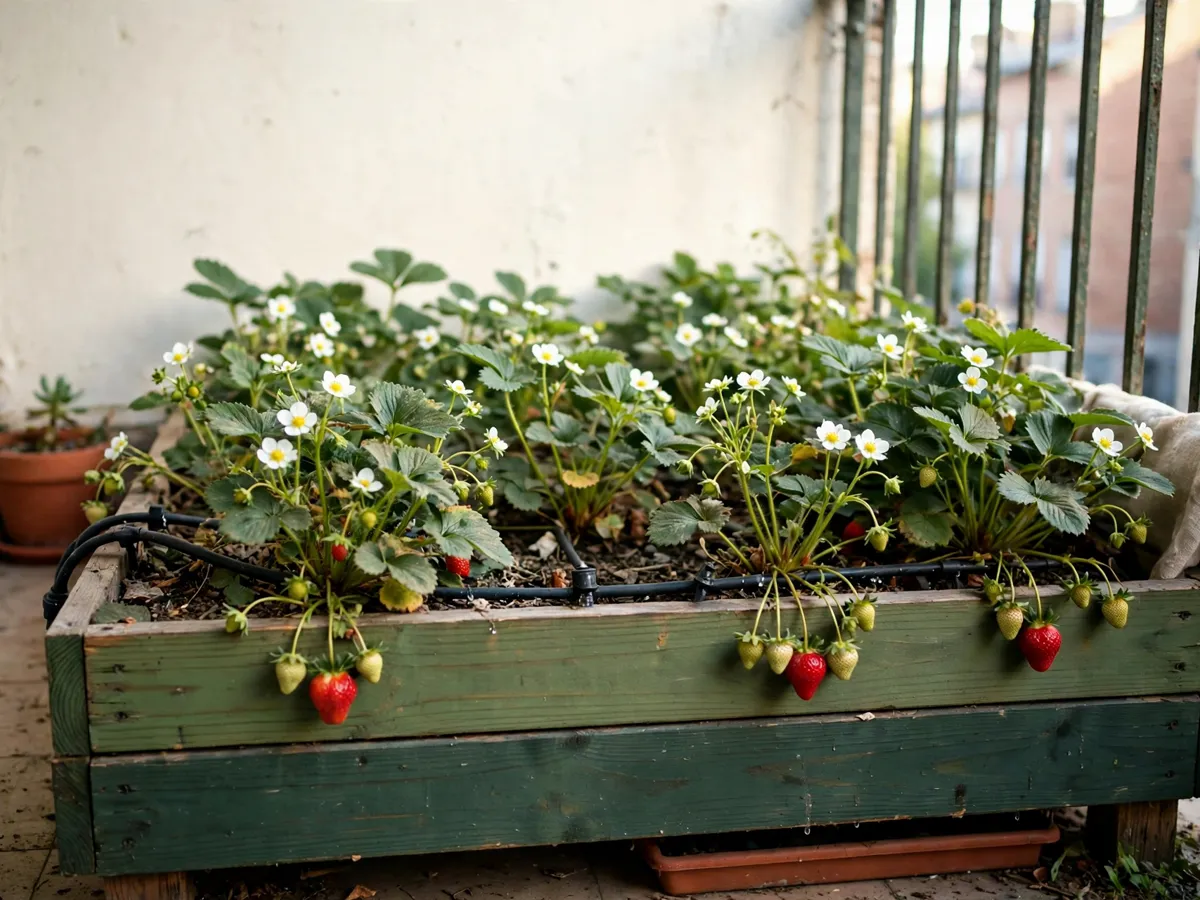
Six-plus hours of direct sun, every day, is the real floor for sweet berries. It comes before any buying advice because it is the one input you cannot fix later: strawberries in less sun grow leaves and make pale, bland fruit.
Count the hours before building anything. Watch the spot on a clear day and count only the hours the sun lands on it directly. A south-facing spot or an open west one clears the bar. A bright east spot gets morning light and then loses it, which usually is not enough for fruit that needs sugar.
A pale wall behind the bed reflects light and warmth back onto the leaves and can tip a near-miss over the line, but it cannot rescue a shaded corner. If the best spot tops out under six hours, grow salad greens or herbs there instead.
Cost: $0. Time: one clear day of counting sun hours. The count decides everything that follows.
2. June-bearing, everbearing or day-neutral
Strawberries come in three bearing types, and the type decides the shape of your season more than any other choice. The labels sound like varieties. They describe calendars.
| Bearing type | Season shape | Runner pressure | Best fit |
|---|---|---|---|
| June-bearing | One big crop over two to three weeks in late spring | Heavy | Jam and freezing, when one big flush suits you |
| Everbearing | Two to three smaller flushes through summer | Moderate | A steady snack pick for one household |
| Day-neutral | A trickle from late spring to frost, regardless of day length | Light | A small bed where every plant must earn its spot |
The honest line for a small raised bed: day-neutral or everbearing. A 4x4 bed of June-bearers is a feast-then-famine project, two or three weeks of more berries than you can eat, then nothing until next year. In a bed this size, the same total spread across months is worth more, unless jam is the goal.
June-bearing is the classic for one big flush and what most farms grow, because a single harvest suits machinery and markets. None of that logic travels down to a balcony-sized bed. Day-neutrals also throw fewer runners, which shrinks the job in section 7.
Cost: $0. Time: 10 minutes of reading. The type choice costs nothing and it shapes the whole season.
3. Bare-root crowns or potted starts
The same plant arrives two ways. Bare-root crowns are how strawberries are usually sold by mail and in early spring, and they cost about a third of the potted price, roughly $1–$2 each in bundles of ten or twenty-five. Potted starts run roughly $3–$5 each and fruit sooner.
Here is the part that catches everyone the first time: bare-root crowns arrive looking dead. Dried, brown, twisted little knots with a tuft of pale roots. They are dormant, not dead, and an hour-long soak in a bucket of water before planting wakes them up. Give them a week before judging.
Choose by timing more than by price. Bare-root is the normal buy in early spring, the moment the soil can be worked, and it costs the least. Potted starts are the late-spring buy, when the bare-root window has closed, and they forgive a late planting because the roots are already growing. Fall works for both (section 12). Order roughly 16 to 25 crowns, a bundle of twenty-five with a couple spares covers the bed in section 4.
Cost: $12–$40 for a bare-root bundle, $3–$5 per potted start. Time: 15 minutes to order, one hour to soak. Soak bare-root crowns the day they arrive, never overnight.
4. Bed height and size for shallow roots
Strawberries are shallow-rooted. Six to eight inches of finished soil is genuinely enough, which makes them the rare crop where a LOW bed works. A two-course timber frame, a low kit bed, or even a row of grow bags along a driveway edge grows the same berries as a knee-high frame, with less soil to buy and an easier reach.
Width matters more than height, and the rule is your reach: you must be able to tend the middle without stepping on the soil, because compaction is the quiet killer in a shallow bed. Four feet is the honest maximum. Length is whatever fits.
The counting: a 4x4 bed holds roughly 16 to 25 crowns at 12 to 15 inch spacing, loose enough to move your fingers between plants when checking crowns (section 5). At six to eight inches deep, it takes roughly 8 to 11 cubic feet of soil, about four to six bags.
If you are still choosing the frame, the raised bed ideas guide covers sizes, materials and placement for small spaces, and the raised bed soil ideas guide covers what to fill it with.
Cost: $80–$170 for a low 4x4 frame and its soil. Time: one afternoon to build and fill. Measure the inside of the frame, and expect the soil to settle an inch after the first watering.
5. Crown depth, the detail that kills
The crown is the short, thick stem where the leaves meet the roots. It must sit exactly at the soil line. Bury it and the plant rots from the top. Set it high with the roots exposed and they dry out. This single detail kills more first-year strawberries than anything else on this page.
Bare-root planting, step by step. Trim the roots to about four to five inches with clean scissors so they dangle straight down instead of bending into a J. Mound a small cone of soil in the hole, fan the roots over the cone, and set the crown so its base sits level with the surface. Firm the soil and water the same hour.
Potted starts are easier: slide the root ball out intact and plant at the same depth it was growing in the pot. The nursery solved the crown line for you, so keep it.
Go back a week after planting, once the first rain has settled the soil, and check the crowns again. Settling lifts some plants and sinks others. Top up soil around the ones sitting high, and gently lift the ones that sank.
Cost: $0. Time: 20 minutes for 20 crowns. Re-check depth after the first rain, it is when the mistakes show.
6. The straw mulch job
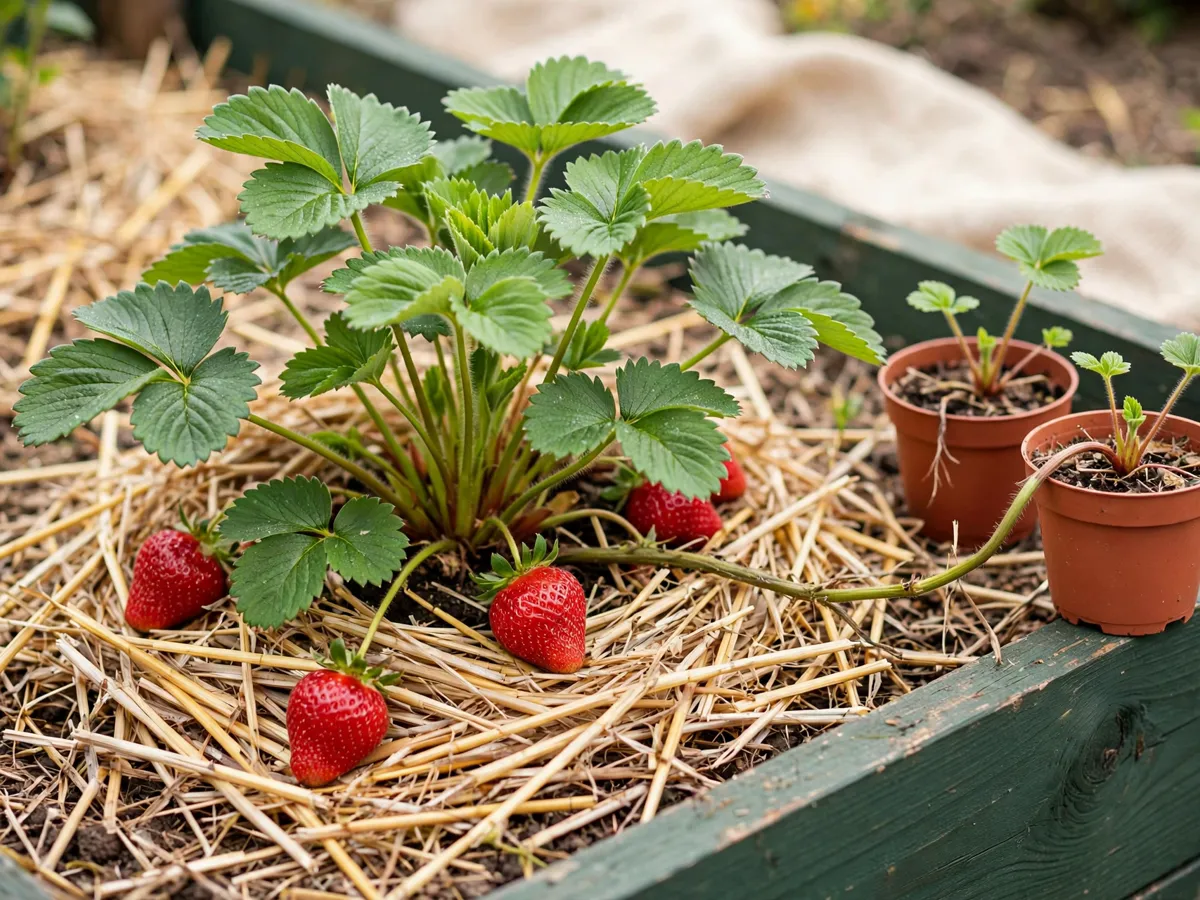
The name is literal: straw is the classic strawberry mulch, and it is the first of the three jobs. A two to three inch layer holds the berries off wet soil, holds moisture in a shallow bed that would otherwise dry fast, and shades out most of the weed seeds waiting in the soil.
The disease logic matters most. A berry resting on damp soil sits in the exact conditions gray mold needs (section 11). The same berry resting on straw dries between waterings and comes in clean, a flake of straw instead of a loss of crop.
Pine needles work the same way if straw is hard to find, and they look tidy in a bed near the house. Avoid wood chips for this layer, they are too coarse to nestle under the fruit.
The one rule that matters: tuck the straw around the crowns, never over them. A crown buried in mulch rots the same way a buried crown in soil does. Leave the growing point open to light and air, and pack the straw between and under the plants. Refresh the layer once mid-season, because it packs down and thins by July.
Cost: $8–$15 for a bale that covers a 4x4 bed several times over. Time: 20 minutes to tuck. Keep the crowns open, the straw goes around them.
7. The runner job
A runner is a stem that walks. It stretches out from the mother plant, sets a baby plantlet at its node, keeps walking, sets another. A healthy June-bearing plant wants to make well over twenty of these in a season. In a field that is how a strawberry patch spreads. In a 4x4 bed it is a jungle by August.
Every runner is also energy leaving the fruit, so cutting runners is a yield decision. The weekly job through summer: walk the bed with snips and cut most runners at the soil line. Snip, do not pull. Pulling tugs at the shallow mother crown and can lift it half out of the soil.
Keep two or three, and only the strong ones, as free replacement plants. Set a small pot of soil next to the bed, lay the plantlet on it, pin the stem down with a hairpin, and cut the cord to the mother once the plantlet has rooted, about two to three weeks later. Those pots are the year-three succession plan.
The long-horizon part of the job: the whole bed gets replaced every three to four years. Crowns crowd, berries shrink, and no amount of feeding reverses an old bed. Day-neutral plants throw far fewer runners, so the runner job shrinks almost to nothing on them.
Cost: $0–$10 for a few small pots. Time: 10 minutes a week through summer. Snip at the soil, never pull, the mother crown is shallow.
8. The netting job
Birds can take the entire crop in about two days once the berries start ripening. You get a quiet week of green fruit, then every ripe one is gone in a single morning. The third job exists because of that morning.
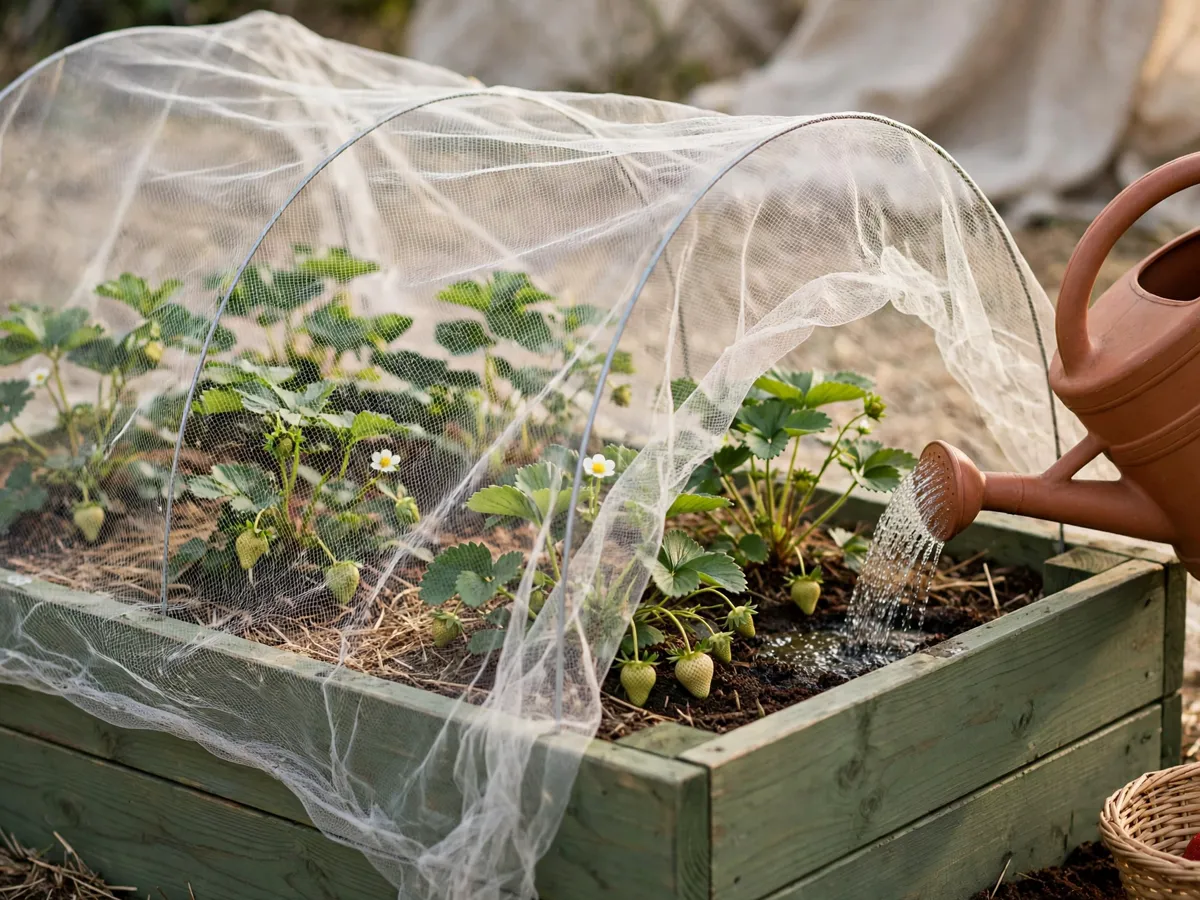
Netting on hoops is the honest answer. Drape fine bird netting over hoops so the fabric sits well off the leaves, pin the edges to the frame so nothing walks underneath, and lift one side on picking days. The hoops for raised beds guide covers the heights and the setup.
Why hoops, and not netting laid straight on the plants: a bird lands on flat netting and pecks through it. The fabric needs to float above the canopy so the birds have nowhere to stand.
The things that do not work: dangles of string, foil pie plates, a fake owl on a post. All of them buy about a week, until the birds learn the owl is furniture. Squirrels are not fooled for long either. Netting slows squirrels, and a hinged lid stops them.
Cost: $15–$30 for netting and hoops. Time: 30 minutes to set up. Check the netting every few days, a bird inside needs an exit.
9. Water and food
Steady moisture is the whole watering story, and it matters most while the fruit is swelling. About an inch of water a week is the working number, more in a heat wave. The failure mode is deep irregular watering: a thirsty plant that gets a sudden flood pulls water up fast, and the swelling berries crack and split.
Check the top inch with a finger. A drip line or a soaker hose laid under the straw waters the soil and never the leaves, and wet leaves are how fungal problems start.
Feeding follows the same logic of small and steady. Work a balanced organic mix into the top few inches at planting, then feed again after each flush of fruit, because fruiting is expensive and strawberries are hungry. If your fill needs help, the raised bed soil mixture guide covers the blend that holds food between feedings.
Cost: $10–$18 for a season of organic feed, $0–$25 if you add a drip line. Time: 5 minutes a week. Water the soil, not the leaves, the straw keeps the fruit out of it.
10. The honest yield math
A mature crown makes roughly a pint of berries over a season. A June-bearing crown delivers that pint in one flush, a day-neutral crown spreads it across months. Neither type makes more total fruit per plant, they only schedule it differently.
A 4x4 bed with 16 to 25 crowns is a snack-and-shortcake harvest: berries for cereal, a shortcake in June or July, and handfuls eaten warm off the plant on the way past. It is not a farm stand, and no spacing trick turns it into one. A household that eats berries weekly still buys most of them.
Year one runs smaller. June-bearers are busy establishing roots, and the flower pinching in section 12 trades this year fruit for next year yield. Day-neutral plants fruit in year one, but a modest trickle. The math peaks in years two and three, then declines.
Cost: $0. Time: 5 minutes. Knowing the real number before building is what keeps the project honest.
11. Problems, read quickly
A small strawberry bed meets a short list of problems, and each has a fast read.
- Gray mold. A fuzzy gray-brown patch that goes soft, usually on the fruit sitting lowest. Fix: mulch so berries rest on straw (section 6), and open the airflow by spacing at planting and trimming crowded leaves. Pick affected berries and bin them, do not compost them beside the bed.
- Slugs. Holes chewed into fruit overnight, on the underside facing the soil. Fix: a beer trap, a cup set into the soil with the rim level, emptied each morning, or a ring of diatomaceous earth around the frame.
- Birds. Whole ripe berries vanish, usually in the morning. Fix: netting on hoops (section 8), installed before the first berry turns red.
- Squirrels. A single bite taken out of nearly ripe berries, the rest left on the plant. They are not fooled for long by decoys. Netting slows them, a hinged cage lid stops them.
One deliberate line for this guide: sprays are out of scope. The physical fixes above cover what a small bed usually meets, and a bed this size is small enough that hand work solves most of it.
Cost: $0–$10 for a beer trap cup or a small bag of earth. Time: 2 minutes of looking per visit. Catch the mold early, everything else has a patient fix.
12. The season arc and when to replace the bed
The arc starts with planting in early spring, as soon as the soil can be worked, which is when bare-root crowns are cheap and available. Fall planting also works and gives a head start: the crowns settle roots before winter and start faster in spring.
The first-year flower question, answered plainly. With June-bearing plants, pinch the flowers off for the first few weeks so the plant builds roots instead of fruit, the single cheapest upgrade to year two. Day-neutral plants can fruit in year one, so let them, and only remove the first flush of flowers if the plants are small and slow.
Summer is the three jobs on repeat: mulch topped up, runners snipped weekly, netting checked. When the first hard frosts have blackened the leaves, blanket the bed with a few inches of straw for winter, then pull it back in early spring when the new leaves push, leaving it between the rows as the season mulch.
The replacement plan is a year-three or year-four job. Crowns crowd, berries shrink, and the honest response is to pull the old plants, work in compost, and replant with the potted runners from section 7 or fresh crowns. Feed the bed at the same time, three years of strawberries drains the soil.
Cost: $0 for the routine, $12–$40 when replacement crowns are due. Time: 10 minutes a week in season, one afternoon at the replacement. Pinching spring flowers is the step people skip and regret.
13. The balcony version, briefly
Everything above transfers to containers, because the plant is the same shallow-rooted perennial. A fabric grow bag works like a low bed, or give two crowns a 12-inch pot with drainage. Crown depth, straw, runner snips, netting: all of it applies at pot scale.
What changes is the water math. A pot dries faster than a bed, and in summer heat that means daily checks instead of weekly, roughly double the attention. A strawberry tower, the pocketed kind that stacks plants up a column, saves the most floor space and dries out fastest of all, with the top pockets going dry first. Towers suit someone already watering daily.
Netting still matters three floors up. A bird on a railing takes the same harvest your ground-level bed loses, so a light net over the pots earns its cost the first season. If the whole project is new, the beginner balcony garden guide starts from the containers you already own.
Cost: $15–$35 for bags or pots and soil. Time: 20 minutes to plant, 5 minutes a day to water in heat. The tower trades floor space for watering time.
Questions beginners ask
How many strawberry plants fit in a 4x4 bed?
Roughly 16 to 25 crowns at 12 to 15 inch spacing. Tighter planting crowds itself by year two, and wider spacing wastes the bed you paid to fill.
How deep should a raised bed be for strawberries?
Six to eight inches of finished soil is genuinely enough, because strawberries are shallow-rooted. A low frame or a row of grow bags grows the same berries as a tall one, which makes this the rare crop where the cheap bed is the right bed.
Do strawberries come back every year?
Yes, they are perennials. The crowns survive winter under a straw blanket and leaf out again in spring. Production peaks in years two and three, then declines, so replace the bed every three to four years.
Should I cut the flowers off the first year?
With June-bearing plants, yes, pinch the flowers for the first few weeks so the roots establish. With day-neutral plants, let them fruit the first year, and only remove flowers if the plants are small and slow to start.
Why are my strawberries small and bland?
Read it in order: sun (under six hours means pale, bland fruit), crowding (old crowns needing the year-three replacement), and uneven water during fruit swell. It is almost always one of those three.
Do I really need netting for a small bed?
If you want to eat the ripe berries, yes. Birds can clear a small bed in about two days once ripening starts, and they arrive the morning the first berry turns red. String and fake owls buy about a week.
Save these on Pinterest
Pin the bearing-type table and the three jobs, the decisions that make a small strawberry bed before the first crown goes in. This guide and the rest of the gardening tips collection live together there.