 Plant As Deco
Gardening & Planting Tips
English Ivy Indoor Plant: Cool Air and Mite Watch
By Plant As Deco · Updated 24 November 2026
English ivy is one of the most forgiving climbing plants you can keep in a pot and one of the easiest to place badly. It grows hard in warm, dry rooms, where the air pulls moisture from the leaves faster than the roots replace it, and it rewards a cool, bright window with dense new growth. The plant is Hedera helix, a woodland climber in the aralia family, sold in pots as trailing vines, as topiary shapes on a frame, or as a shelf cascade. This guide covers the forms, the watering by weight habit, the humidity job, the spider mite check on leaf undersides, the cool winter window, and the plain fact that the plant is toxic to cats and dogs.
Weekend-ready: $12–$40 for the plant, pot, mix and one simple support, one afternoon. Five minutes of checking each week after that.
1. What English ivy actually is: a woodland climber in a pot
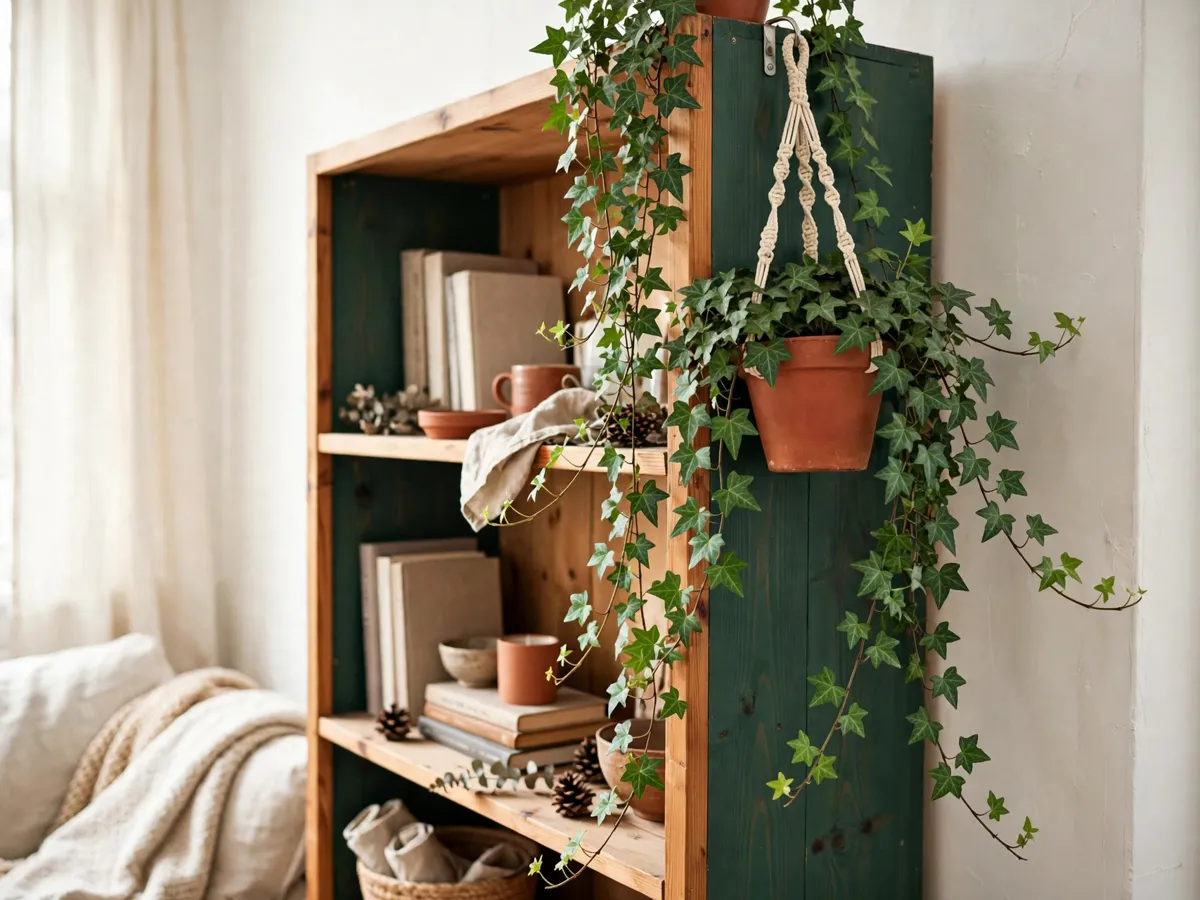
English ivy is Hedera helix, one species in the aralia family, and the same plant arrives in nurseries as a trailing vine, a topiary shape on a frame, or a shelf cascade. It is a woodland climber, using small aerial rootlets along its stems to grip bark and moss, and in a pot those stems run up a pole or trail over a shelf edge. The leaves indoors are the juvenile form: small, pointed, cut into shallow lobes. Mature growth looks different, and section 11 covers what that means for a plant that lives behind glass.
Cost: $0–$12. Time: 10 minutes to check the plant tag and the pot. Caveat: a plant sold without a species label may be one of the lookalikes in section 12, so buy by the lobed juvenile leaf.
2. The one mechanism: dry warm air is the enemy, dim light is not
English ivy indoors rarely fails from too little light. It fails because the room is warm and dry while the plant is built for a damp woodland floor. A heated apartment in winter holds very little moisture, and a pot beside a radiator loses it faster than a pot on a shelf does. Leaves thin out, edges turn brown, and stems that grew last summer look tired by February.
Cost: $0–$30. Time: 10 minutes to move the pot and find a cooler spot. Caveat: the stretched stems already on the plant never shorten, so only new growth comes back compact.
3. Forms: trailing basket, topiary frame, and the shelf cascade
The same plant is sold three ways, and the shape changes the job more than the care does. The trailing basket is the easiest: let the stems run over the rim and trim them when they get shaggy. The basket lane has its own details in the indoor hanging plants guide. The topiary frame is a sphere or cone of wire the ivy is trained around, with the pot sitting upright underneath. The shelf cascade is the in-between case: the pot sits on a shelf, the stems fall over the edge, and the leaves face the room.
Training details live in the indoor climbing plants guide. For an ivy, the frame matters more than most climbers, because the stems want something vertical and textured to grip. A moss pole or a rough wooden stake gives the rootlets something to hold, and soft clips hold a young stem against it while the wood hardens.
Cost: $4–$30. Time: 30 minutes to set up a form and tie the first stems. Caveat: a wire frame without a stake can tip as the plant gets top-heavy, so anchor the pot before the ivy arrives.
4. Light: the bright-indirect truth and the window choices
Bright indirect light is the honest answer, and it is a wider band than people expect. An east window with morning sun, a south window behind a light curtain, or a west window where the pot sits a couple of feet back from the glass all work. What does not work is a shelf six feet into a room, where the light has spread thin by the time it reaches the leaves. Put the ivy close to the window and let the glass and the wall do the filtering.
A little direct sun is harmless and often helpful, provided it arrives slowly. Leaves grown under filtered light can scorch in an hour of hard afternoon sun, so move a new plant in over one to two weeks. A pale papery patch means too much sun, and new leaves arriving small and widely spaced mean too little.
Cost: $0–$25. Time: 10 minutes to test the window and turn the pot. Caveat: scorch marks on old leaves do not fade, so judge the plant on its newest growth rather than on damaged leaves.
5. Watering by weight: the lift-the-pot habit
Pick the pot up. A dry ivy pot feels light and the mix looks pale; a watered pot feels heavy and the top layer is dark. Learn what those two weights feel like for your particular pot, because soil volume changes them, then use the weight as the watering signal instead of a day on the calendar. A finger test works as a backup: push it in about an inch and water when the mix feels dry all the way to that depth.
When you do water, soak the whole surface slowly until water runs from the drainage hole, let the pot drain, and empty the saucer. Then wait for the pot to feel light again. Ivy likes a thorough drink followed by a real drying period, and small sips on a schedule keep the root zone damp enough for fungus gnats to start and never give the leaves the wash they enjoy. In a cool room the drying period stretches out, so the same pot may need half as many waterings in winter as it did in summer.
Cost: $0–$12. Time: 5 minutes per watering. Caveat: a pot with no drainage hole holds water at the bottom, and the weight test then tells you nothing useful.
6. The humidity job: which room windowsill it actually wants
Humidity is the job, and the room decides it faster than any device. English ivy does well in a bathroom or kitchen where the air already holds moisture from showers and cooking, especially if that room also has a window. A grouped corner in a dry living room helps too, because several plants together keep a small pocket of damper air around their leaves. Moving the pot into the right room for the season costs nothing and does more than a bottle of spray.
A pebble tray is the classic move and it helps a little, mostly by keeping the immediate air around the pot a touch damper. Misting the leaves is not the same thing and can work against you: wet foliage stays wet for hours, and mites and leaf spot both like a damp leaf surface. If you spray anything, spray the air around the plant in the morning so it dries by evening, and keep the mist away from the leaves.
Cost: $0–$20. Time: 10 minutes to choose a room and move the pot. Caveat: a humid bathroom with no window gives the ivy the moisture but leaves it in the dark, so light and humidity still have to be solved together.
7. Spider mites: the underside check and the early tells
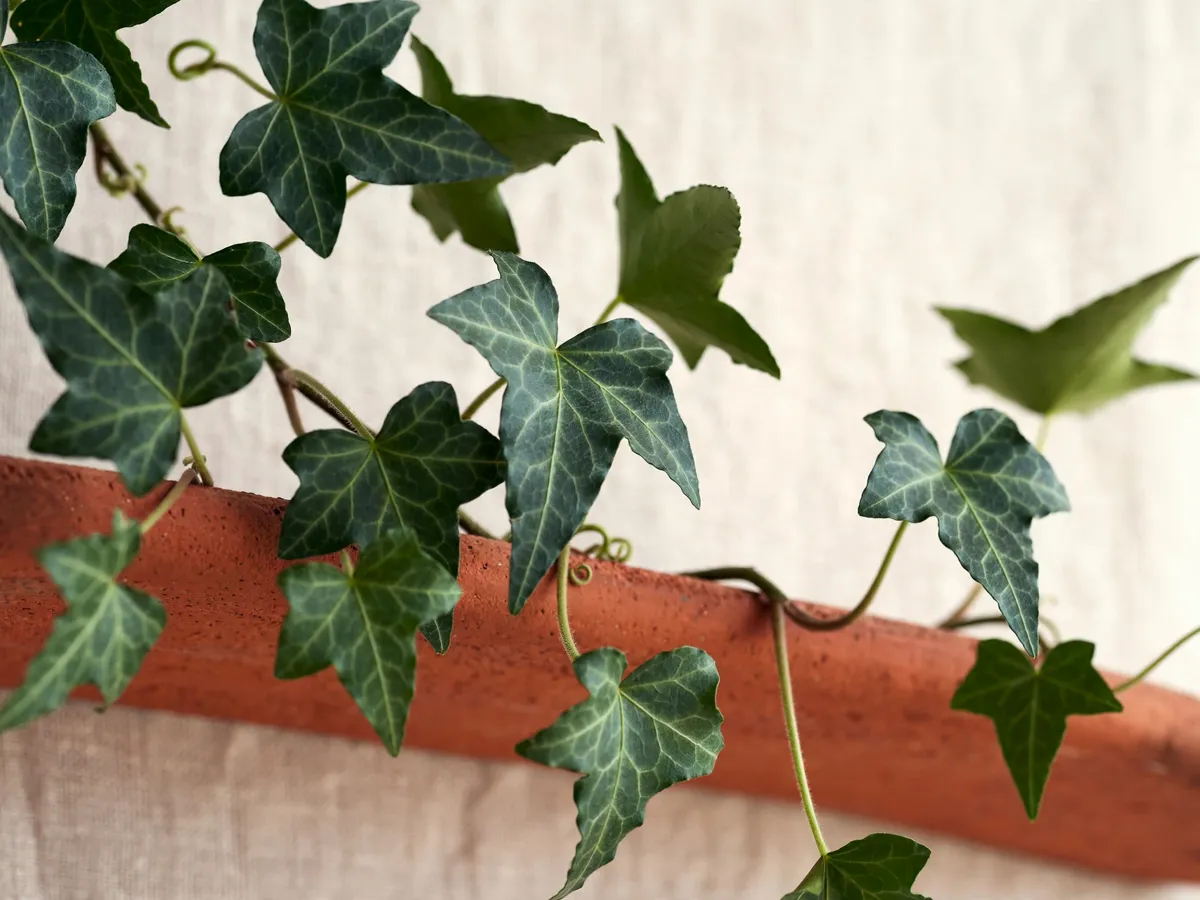
When you find them, isolate the pot first, then rinse the foliage in the sink or shower, paying attention to the undersides, and let the leaves dry before the plant goes back in place. Insecticidal soap is the straightforward treatment, and the timing detail lives in the neem oil on indoor plants guide. The full identification chart, including mealybugs and scale, is in the indoor plant pests guide. Repeat treatments every five to seven days for three rounds, because eggs survive the first pass, and expect the leaves to look tired for a few weeks after the mites are gone.
Cost: $5–$15. Time: 15 minutes per treatment round. Caveat: the third round is the one that matters, and skipping it is how a colony returns.
8. Feeding: the light-touch schedule
English ivy is not a hungry plant. A balanced liquid houseplant feed at half the strength on the label, applied every four to six weeks from spring through early autumn, is enough for a vigorous vine. Feed only moist soil, because salts against dry roots burn the fine tips and show up as brown leaf edges that look like a watering problem. If you pot the plant fresh in a good mix, skip feed for the first two months.
The rest of the year is a rest. In winter the plant slows down rather than stopping, but the light is weak and the roots drink less, so feed stops until spring. A slow release granule in the mix at the start of the season is the low-effort option, and heavy feeding is the wrong direction: extra nitrogen gives long, soft shoots with wide gaps between leaves, which is the same stretched look a dim corner produces.
Cost: $6–$12. Time: 5 minutes a month in the growing season. Caveat: feed never fixes a light problem, and an overfed ivy in a dim room grows longer and weaker than one that was simply left alone.
9. Pruning and training: pins, clips, and the cutback that thickens
Ivy grows where you point it, and its stems lengthen quickly without branching unless you cut them. Take the soft growing tip of a long stem and the plant sends out two side shoots instead, and the result is a dense, full plant rather than three bare runners. Do this every few weeks in spring and summer, and the plant stays bushy enough for a shelf without looking cut back.
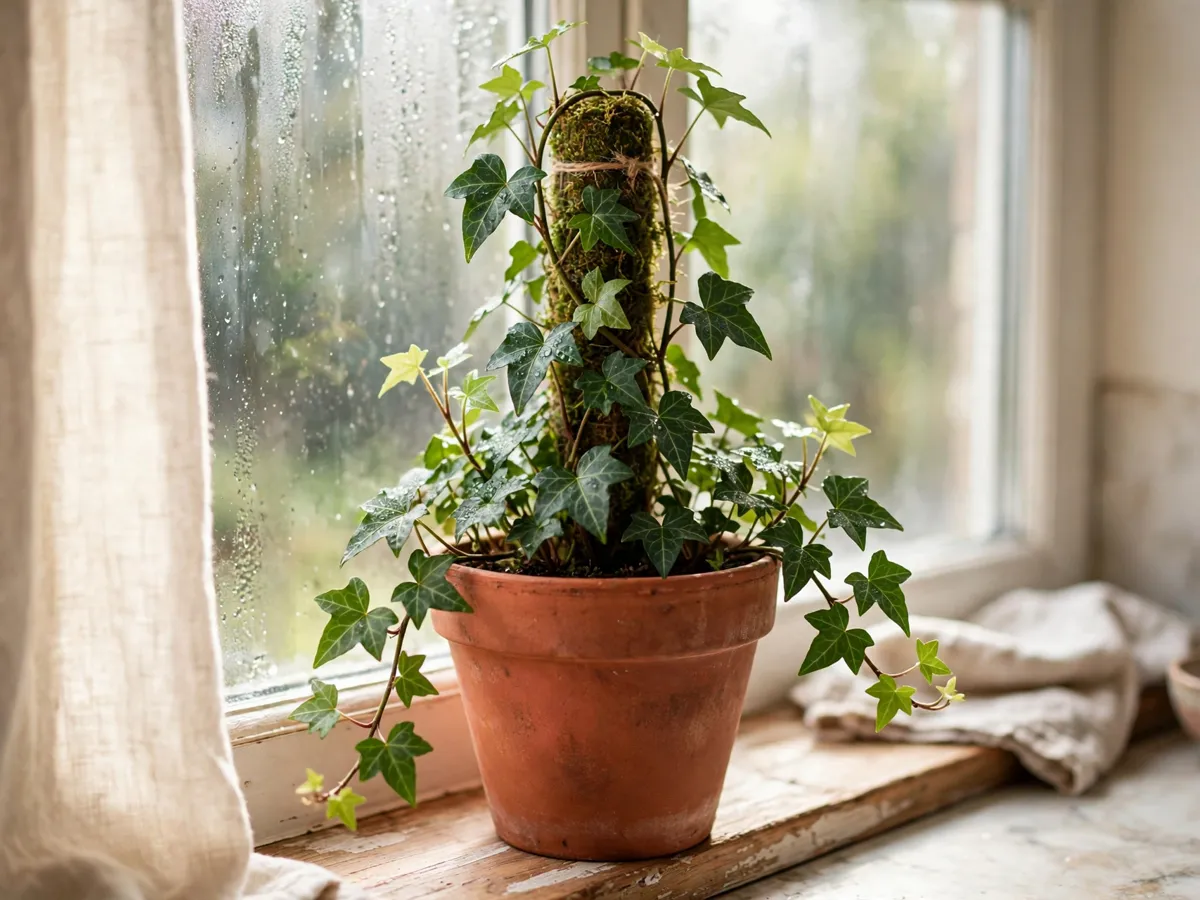
Training a stem up a frame takes patience and soft ties. Guide the stem against the support with clips or a couple of turns of plastic-backed tape, and check the ties every couple of weeks because a stem thickens fast and a tight tie marks it. Root a length of stem in a glass of water, change the water every few days, and move the rooted cutting into mix once the roots are a couple of inches long. Two cuttings in the same pot, trained in opposite directions, fill a topiary shape faster than one.
Cost: $3–$10. Time: 20 minutes a month of trimming. Caveat: prune in dry conditions and clean the snips between plants, because a wet wound on a crowded pot spreads trouble quickly.
10. Repotting: the tight-fit rule ivy prefers
Ivy grows fast and its roots fill a pot faster than people expect. Repot in spring when light is rising, usually every year for a young plant and every second year for a large one. The signals are roots circling the surface or leaving the drainage hole, water running straight through without wetting the mix, a pot that tips under the weight of the plant, or growth that stalls even though the light is good. A root that barely fills the pot is not a reason to move up.
Go one pot size up and no further. A pot two sizes larger holds more wet soil than the roots can drink, and the extra water sits where fungus gnats and rot start. Tip the old plant out, loosen the root ball a little, trim any dead roots with clean snips, and settle it into fresh indoor potting mix with a little perlite mixed in for drainage. Water lightly for the first week while the roots settle, and skip feeding until the plant shows new growth.
Cost: $8–$20. Time: 30 minutes at repotting. Caveat: a plant that has just been repotted and a plant that is wilting from a dry root ball look similar, so check the mix before you water.
11. Winter: the cool window that earns blooms, honestly stated
Winter is the season this plant can overwinter indoors, and the window you choose matters more than in any other season. A room kept around 55 to 65 degrees with the pot away from the radiator gives the ivy the cool, bright, slightly damp conditions it wants, and growth slows into a near rest. In a heated living room the plant does not go dormant, it simply keeps stretching and losing leaves at the tips. Moving it to the coolest bright room in the house for the winter solves more problems than any other single change.
Cost: $0–$12. Time: 10 minutes to move the plant once a year. Caveat: a cold draft straight from a window can damage leaves in one night, so keep the pot off the glass and away from the frame.
12. English ivy vs its impostors: swedish, grape, and devil's ivy
Three plants get sold and labeled as ivy, and they behave differently enough to matter. Swedish ivy, often written with a capital S when it is sold as a houseplant, has thick, fuzzy, scalloped leaves with a purple underside and a mint-like scent when brushed. It is a tender perennial that sulks in cold drafts and wants more water than English ivy. Grape ivy is a true vine from a different family, with glossy heart-shaped leaves, thin wiry stems, and a climbing habit that needs a trellis rather than a moss pole.
Cost: $0. Time: 5 minutes to compare leaves. Caveat: the same common name appears on nursery labels in different regions, so the leaf shape and the seller label together are worth more than the name alone.
13. Pets and handling: the toxicity fact and the sap caution
Placement is the whole management plan. Put the pot on a high shelf that still catches light, in a bathroom or laundry room the pets do not use, or behind a closed door in a room nobody enters. The shelf rule is simple: if a pet can knock it, chew it, or climb to it, it does not live there. Practical ways to keep a curious cat away from a bright windowsill are in the keeping cats out of indoor plants guide.
Cost: $0–$8 for gloves. Time: 10 minutes to choose the spot and wash your hands after pruning. Caveat: this is care guidance, not veterinary advice, so confirm any exposure with your vet.
14. Common problems decoder: what each symptom is telling you
Brown crisp edges on older leaves usually mean dry air rather than thirst, so check the humidity of the room before you add water. Yellow leaves that drop while the mix is still damp point to overwatering and weak roots; unpot the plant and look. Yellow leaves with dry soil and a light pot point the other way, and one thorough watering fixes it. Leaves that curl downward without changing color usually mean the plant is drying out faster than the roots can keep up, which is the same dryness problem as brown edges.
Cost: $0–$15. Time: 20 minutes to read the plant and the mix. Caveat: two problems at once is common after a move, so check the light and the weight before you change anything else.
Common questions
Is English ivy safe for cats and dogs?
No. English ivy is listed as toxic to cats and dogs, and it is also listed for horses. Chewing it can cause vomiting, diarrhea and lethargy. Most reported cases are mild and pass without lasting harm, but any suspected exposure is a veterinary question rather than a wait-and-see. Keep the pot on a high shelf that still gets light, or in a room the pets do not use, and choose genuinely pet safe species for anything at floor level.
How often should I water an English ivy plant indoors?
There is no fixed interval, because pot size, light, mix and season change the drying time. Use the weight of the pot instead: lift it, and when it feels light and the top inch of mix is dry, soak the surface until water runs from the drainage hole, then let it drain fully. In a warm bright room that is often every five to seven days, in a cool winter room every two to three weeks. A finger an inch into the mix is a good backup check.
Why are my English ivy leaves turning yellow?
Look at the mix before you change anything. Yellow leaves with wet soil mean overwatering, and the roots may already be damaged, so stop watering and check them. Yellow leaves with dry soil and a light pot mean the plant is thirsty. Yellow leaves that are soft and fall easily point to wet roots, while yellow leaves that drop from a dry plant often follow a sudden change in light or temperature. A single old yellow leaf is normal; a flush of them is a signal.
Does English ivy flower indoors?
Sometimes, rarely, and never on a young plant. The lobed leaves on a potted ivy are the juvenile form, and the flowers and berries belong to the mature form that develops on outdoor growth. An older specimen kept on a cool bright windowsill through winter may produce a few small greenish flower clusters. Do not plan around it, and do not expect berries from a plant that lives indoors.
Can English ivy live in a bathroom with a dim window?
It can, and the bathroom is often the best room in the house for this plant, but light still sets the pace. A dim window gives the ivy the humidity it wants and not nearly enough light, and the result is long thin stems with wide gaps between leaves. Add a grow light on a timer, move the pot to a brighter room, or accept a slower, smaller plant. In winter, remember that a closed window and a running radiator can leave the air drier than the room feels.
Save these on Pinterest
Pin the humidity job, the watering by weight habit, and the problems decoder, the three sections that decide whether an English ivy keeps growing in a warm room. This guide and the rest of the gardening tips live together there.